
Pulling weeds all summer gets old fast, especially when California’s dry heat makes bending over the garden feel like a workout you never signed up for. The good news is that some native groundcovers spread so thick and low that weeds barely get a chance to sprout, and they do it without a single squirt of herbicide. These plants shade the soil, sip very little water, and feed the bees and butterflies your yard depends on. Here are seven California natives that crowd out weeds while keeping your yard alive and wildlife-friendly.
1. Yarrow (Achillea millefolium)
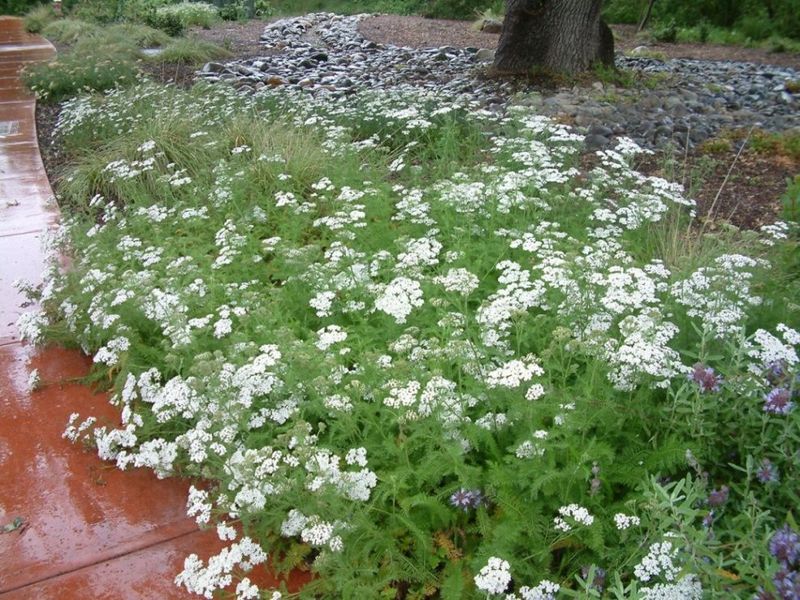
Soft and feathery on top but tough as nails underneath, yarrow spreads by underground runners that knit into a mat weeds struggle to break through. Mow it, walk on it, or let its white flower clusters rise for the bees, and it keeps coming back.
What sets yarrow apart is how it doubles as a lawn stand-in. Left unmowed it tops out around a foot, but a few passes with the mower turns it into a soft green carpet that needs a fraction of the water a fescue lawn demands.
Native pollinators love the flat flower heads, which give butterflies and beneficial insects an easy landing pad. Fun bit of history: the plant’s Latin name honors Achilles, who legend says used it to treat soldiers’ wounds. In your yard it mostly treats one problem, the endless summer weed patrol, and it may reduce your watering guilt at the same time.
2. Creeping Wild Rye (Elymus triticoides)
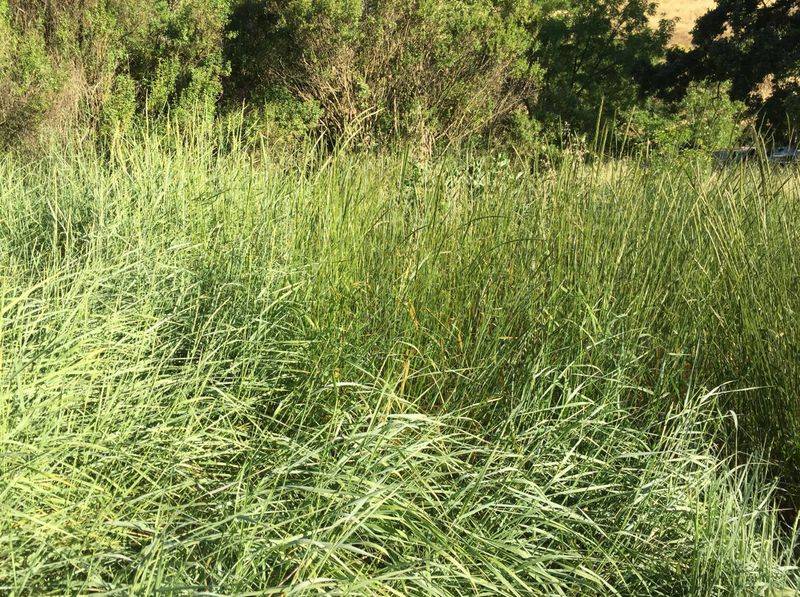
If your weed trouble lives on a slope where nothing seems to hold, creeping wild rye deserves a hard look. Its roots run sideways underground, weaving a dense sod that grabs soil and elbows out invaders before they establish.
Homeowners in hot inland valleys tend to fall for this one because it laughs off drought and shrugs off clay. The blue-green blades give a meadowy look, and you can leave it tall and swaying or trim it down for a tidier feel.
Because it forms such a tight underground network, unwanted seedlings have almost nowhere to sink a root. It also holds hillside soil during winter rains, which matters a lot in fire-prone areas where bare ground washes away after a burn. Give it room, since that same spreading habit means it can wander into beds you would rather keep clear.
3. Coyote Mint (Monardella villosa)
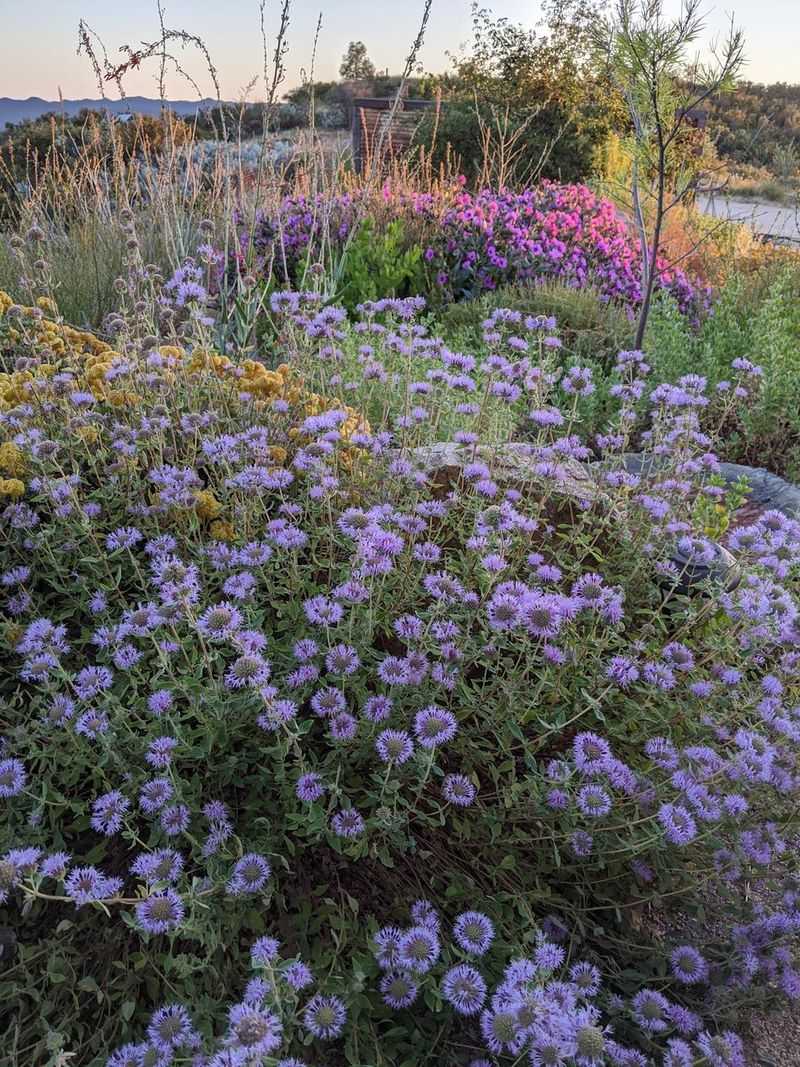
Brush against coyote mint on a summer afternoon and you get a wave of minty fragrance that tells you exactly why the bees can’t stay away. Round lavender pom-pom flowers cover the low mounds and pull in pollinators from all over the block.
Its scent does more than smell nice. The aromatic oils seem to make the surrounding ground less inviting to weed seedlings, and its bushy low growth shades the soil so sprouts get little light.
Coastal and foothill gardeners appreciate that it stays compact, rarely sprawling out of bounds the way some spreaders do. It sips water once established and rewards neglect better than fussing. For anyone worried they’re accidentally starving native bees by planting sterile store lawns, swapping in a drift of coyote mint offers a fragrant, guilt-easing fix.
4. Beach Strawberry (Fragaria chiloensis)
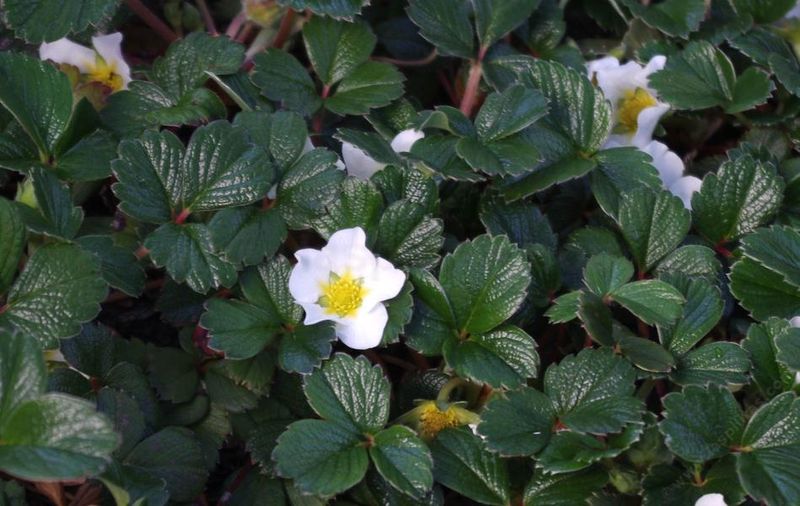
Glossy, leathery leaves that shine like they’ve been polished make beach strawberry one of the prettiest weed-blockers on this list. It sends out runners that root as they go, stitching bare dirt into a thick green blanket in a single season.
The payoff is layered. You get pollinator-friendly white blooms, occasional tiny edible berries the birds usually claim first, and a mat so dense that light barely reaches the soil where weed seeds wait.
Coastal homeowners find it especially forgiving of salt air and sandy ground, though it adapts inland with a little afternoon shade. Because it stays under six inches tall, it works beautifully along paths, between stepping stones, and under taller natives. Water it while it settles in, then step back and let those runners do the crowding for you.
5. Point Reyes Ceanothus (Ceanothus gloriosus)
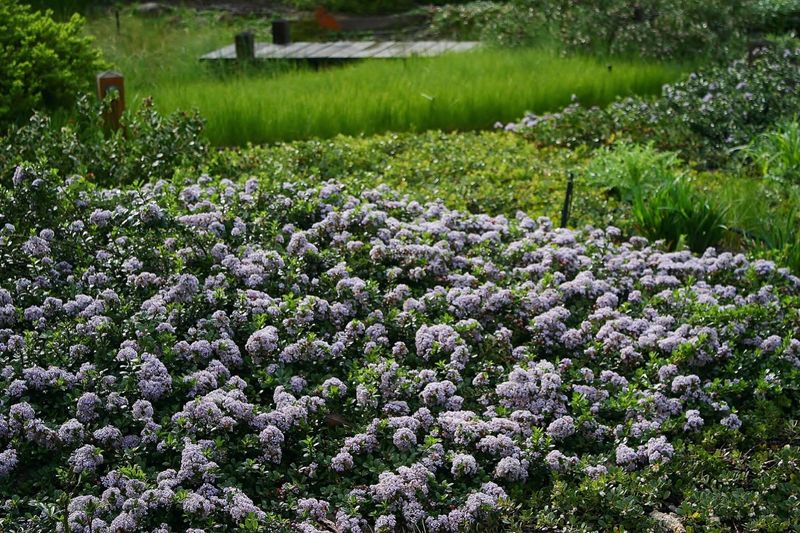
Come spring, this low-growing ceanothus erupts in a haze of blue flowers so thick the leaves nearly disappear beneath them. The rest of the year it stays a dense, evergreen carpet that spreads several feet wide while barely climbing knee-high.
Weeds don’t stand much chance under that woody, layered canopy. The tightly overlapping stems and small dark leaves smother the ground, and once rooted the plant asks for almost no summer water.
Native bees, butterflies, and even hummingbirds swarm the blue clusters, making it a favorite for homeowners who want their yard buzzing rather than sterile. It’s a strong pick for banks and hillside edges where mowing is a pain and erosion is a worry. A word of caution common to ceanothus: it dislikes heavy summer irrigation, so plant it and mostly leave it be.
6. Dwarf Coyote Brush (Baccharis pilularis)
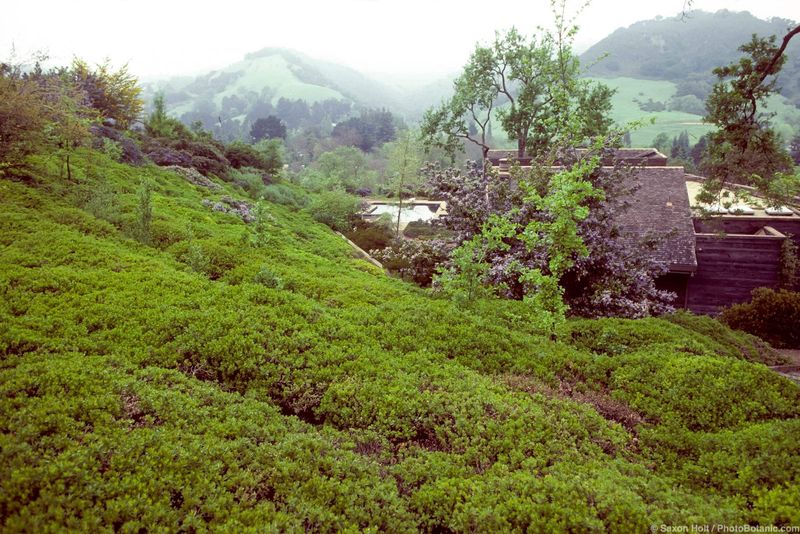
Workhorse is the word that fits dwarf coyote brush best. It forms a tough, low, spreading green mat that shrugs off drought, poor soil, and coastal wind while quietly blanketing the ground weeds want to claim.
Landscapers reach for it constantly on big slopes because a few plants fill in fast and stay dense enough to shut out invaders for years. The tight foliage blocks light at the soil line, so there’s little room for anything unwanted to muscle in.
For hillside and wildland-edge homeowners, it carries an extra bonus. Kept low and irrigated occasionally near the house, it can serve as part of a defensible-space planting because its living, hydrated foliage resists ignition better than dry weedy growth. It won’t win a beauty contest, but for covering ground and staying green through a brutal summer, few natives work harder.
7. California Fuchsia (Epilobium canum)
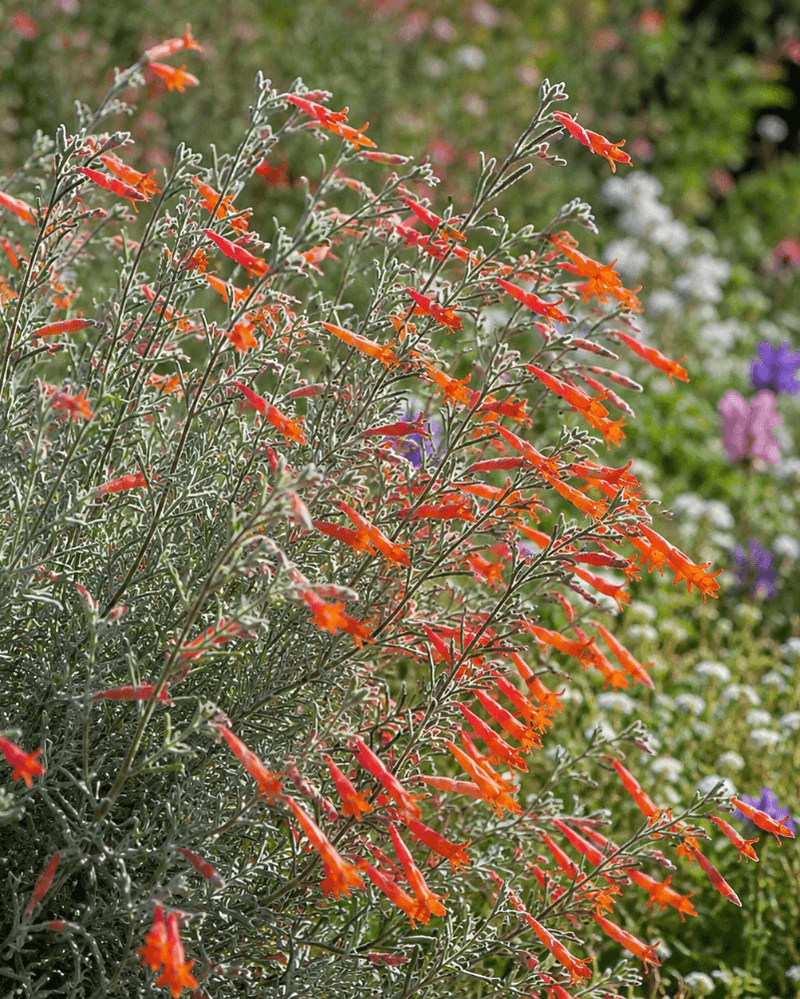
Just when most of the garden looks parched and tired in late summer, California fuchsia lights up with tubular scarlet flowers that hummingbirds chase like it’s a private buffet. That timing alone earns its spot here.
Beneath the fireworks, silvery foliage spreads by runners into a loose, drought-proof mat that fills gaps where weeds usually creep in during the dry months. It thrives on neglect and actually blooms harder when you stop babying it with water.
Because it peaks in August and September, it keeps your yard both colorful and covered during the very stretch when weeds and bare soil are most obvious. Hummingbirds migrating through California count on late-blooming natives like this one, so planting a patch can support them right when other nectar sources have faded. Cut it back in winter and it returns thicker every spring.