
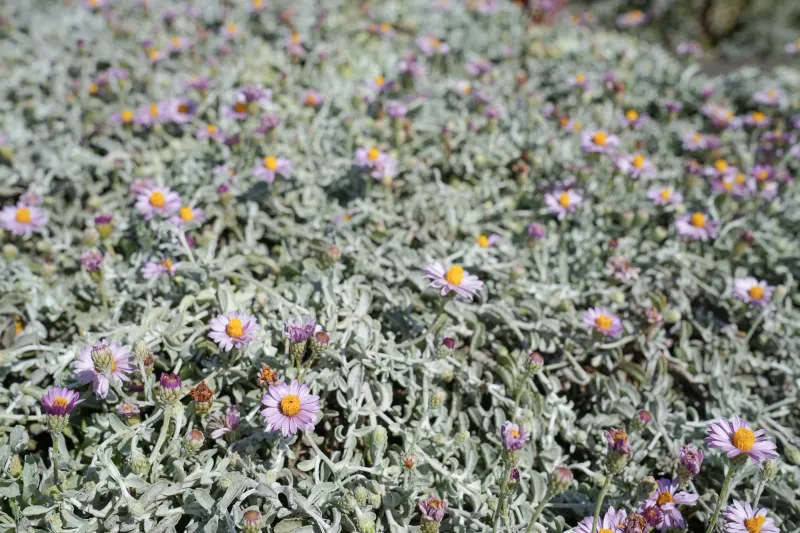
Bare patches in a garden can make even a well-planted yard look unfinished. The good news is that some California native groundcovers fill space quickly without turning into a constant control job.
If you want a yard that looks fuller, uses less water, and still leaves room for other plants, these are smart choices to know.
1. California Strawberry
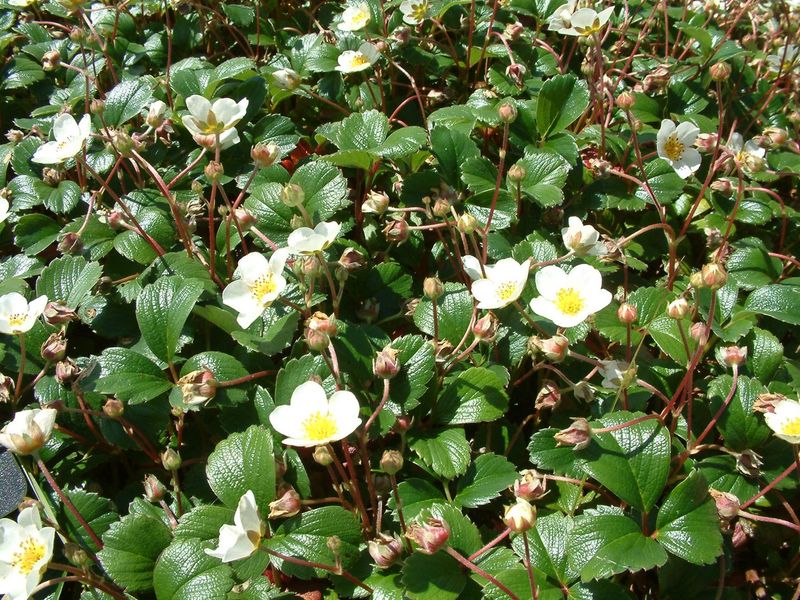
Nothing makes a bare bed look settled faster than a plant that spreads with purpose, and California strawberry does exactly that. It sends out runners, but not with the wild, hard-to-stop energy that gives some groundcovers a bad name.
In a home landscape, it usually forms a tidy, knitted carpet about 4 to 8 inches tall, which makes it useful for softening edges, covering slopes, or filling open spots under taller native shrubs.
Gardeners who want a little life beyond plain green foliage often end up loving this one. Spring brings simple white flowers, and after that you may see small berries that birds appreciate.
The leaves stay attractive through much of the year, especially in coastal and mild inland gardens, so the plant keeps earning its space even when nothing is blooming.
Where it really shines is in part sun to full sun with decent drainage and occasional water while establishing. Once settled, it can handle dry periods far better than many common bedding plants.
If you want quick coverage that still feels gentle around neighboring perennials, California strawberry is one of the easiest natives to picture in a real backyard.
2. Yerba Buena
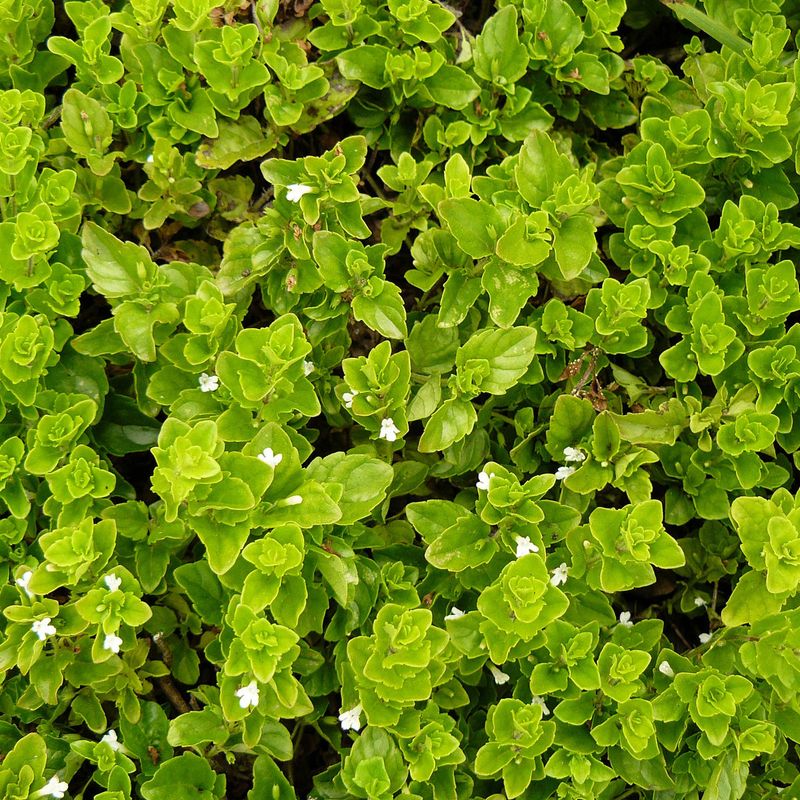
Shady dry spots can feel impossible, especially under trees where many plants struggle, but Yerba Buena has a calm, capable way of settling in. Instead of racing across the bed, it creeps along the surface and creates a fresh-looking layer of small fragrant leaves.
That restrained habit is exactly why it belongs on a list like this one. You get coverage, but you do not usually get a bully.
Touch the foliage and the plant gives away one of its best traits: a light minty scent that makes the space feel more alive. In a woodland-style garden, between stepping stones, or around the base of native shrubs, it can turn dusty-looking soil into a soft green patch that feels intentional.
The tiny flowers are not flashy, yet they add a delicate charm if you take a closer look.
Yerba Buena prefers part shade to shade and appreciates some moisture while getting established, especially in warmer inland California gardens. Near the coast or in protected shaded beds, it can stay especially happy.
For homeowners trying to make use of awkward low-light areas without planting something invasive, this little native often feels like a smart secret.
3. Creeping Sage
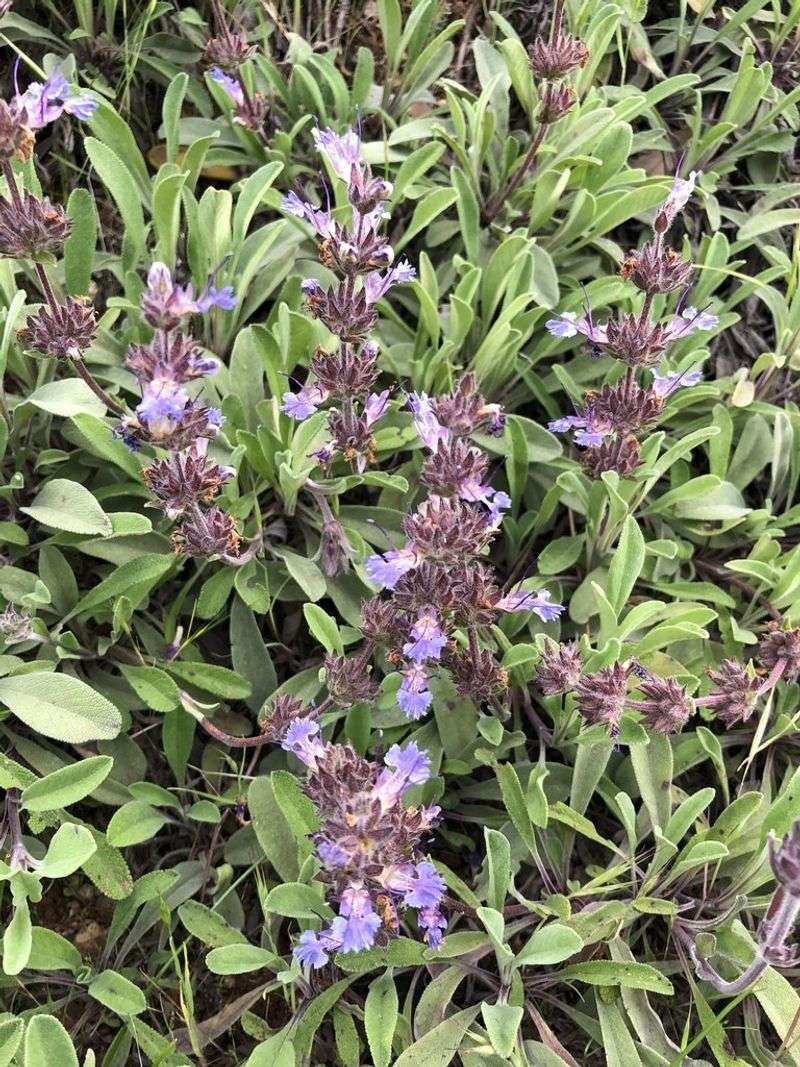
For a sunny bank that needs help fast, creeping sage brings a different kind of energy. It hugs the ground, spreads outward in a broad mat, and helps tie a planting together without getting tall enough to block everything around it.
The effect is fuller and more natural than bark mulch alone, especially in a native garden that needs a strong backbone near paths or on slopes.
Spring is when the plant really starts showing off. Blue to violet flower spikes rise above the foliage and pull in pollinators, while the leaves add that classic aromatic sage character many California gardeners love.
Even when not in bloom, the foliage still gives texture and a slightly wild look that fits beautifully with manzanitas, buckwheats, and other dry-garden favorites.
A little patience helps during establishment, but once rooted, creeping sage is well matched to the long dry season that shapes so many California yards. Good drainage matters, and it performs best in full sun or light shade.
If your goal is to cover soil quickly on a slope or broad sunny bed without choosing something that climbs into every crown nearby, creeping sage is a strong, practical option.
4. Bearberry
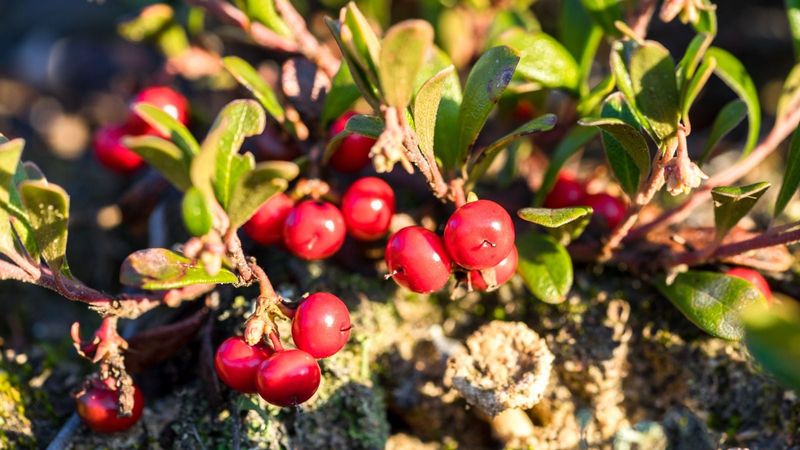
Some groundcovers are useful because they fill fast. Bearberry earns its place because it fills fast enough while looking polished the whole time.
Its evergreen leaves stay low and dense, giving the bed a finished appearance even in seasons when many other plants are quiet. For gardeners who want structure without a clipped or formal feel, that is a big win.
There is also more visual interest here than many people expect from a low plant. Depending on conditions, bearberry can offer pinkish white flowers and later small red berries, plus handsome stems that add color up close.
The growth stays close to the soil, so it works well near boulders, along borders, or in places where you need a groundcover that does not rise up and compete with the stars of the bed.
Bearberry tends to be especially good in coastal areas and cooler parts of California, where it can settle in with less stress. It likes good drainage and usually does best when not overwatered after establishment.
If you have a bed that needs year-round coverage and you are tired of plants that look shaggy or pushy after one good season, bearberry offers a steadier, more disciplined answer.
5. Dwarf Coyote Brush
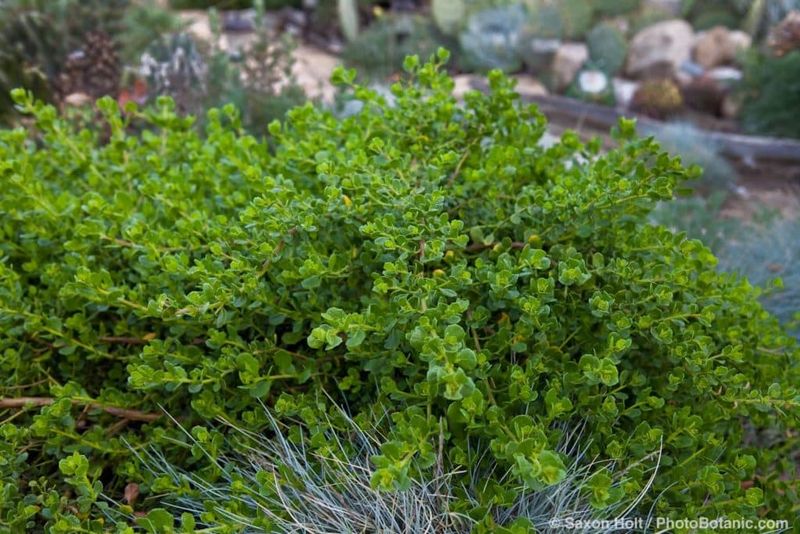
Here is the workhorse of the group, the plant many designers reach for when a space needs to be covered and held together. Dwarf coyote brush grows low, broad, and dense, which makes it especially handy on slopes, wide median-style strips, and open front-yard beds where soil can bake in summer.
Unlike taller shrubs that crowd a mixed planting, the dwarf forms stay close enough to function as a true groundcover.
The texture is plain in the best possible way. You are not planting it for flashy flowers or dramatic color shifts.
You are planting it because it knits a bed together, reduces weed openings, and creates a clean green base that lets nearby salvias, penstemons, or native grasses stand out. In a practical homeowner yard, that kind of reliability matters more than people sometimes admit.
Full sun and good drainage suit it best, and once established it handles dry California summers with very little fuss. Give it room that matches its mature spread, and it usually behaves far better than many imported groundcovers used for the same job.
For covering difficult real estate without setting up a future maintenance battle, dwarf coyote brush is one of the smartest native picks available.
6. Silver Carpet Aster
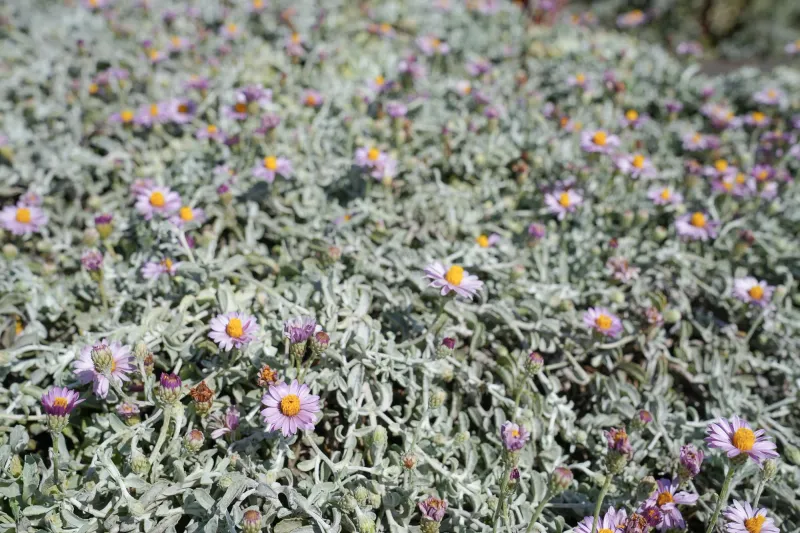
Color can change how a groundcover behaves in a design, and Silver Carpet Aster proves the point. Its pale silvery foliage brightens a planting right away, so even before the blooms appear, the bed stops looking empty.
That lighter leaf color also plays beautifully against dark mulch, stone, and the deeper greens of chaparral shrubs.
Later in the season, lavender to purple daisy-like flowers add another reason to keep it around. Pollinators notice them, and the plant brings a loose, relaxed look that feels right at home in California native landscapes.
The spreading habit is useful, but it usually reads more as a soft drift than an aggressive takeover, which is exactly what many gardeners want in a filler plant.
Use it in full sun with well-drained soil, especially in dry gardens where you want a little visual lift near walkways or among rocks. It can be a smart answer for hot spots where plain green foliage disappears into the background.
If your planting bed needs quick coverage and a brighter, cooler-toned texture without inviting chaos, Silver Carpet Aster gives you both function and personality.
7. California Yarrow
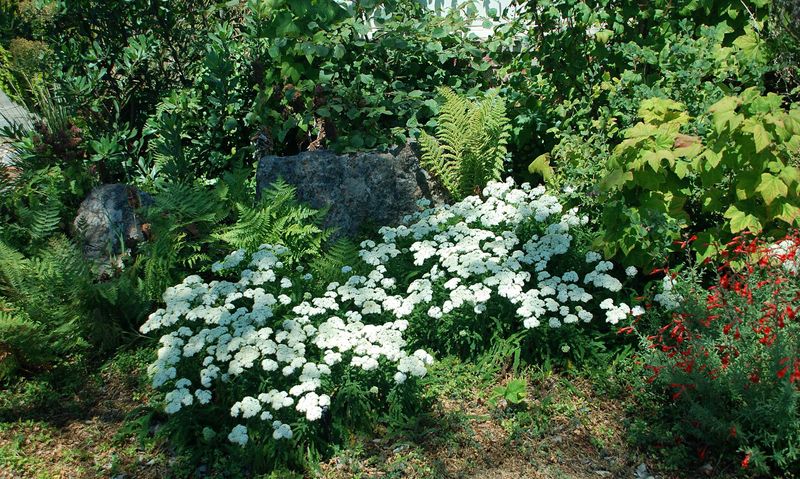
Anyone who likes a plant that multitasks should give California yarrow a serious look. It covers soil, softens the front of a bed, and sends up flower clusters that bring in beneficial insects.
The ferny foliage creates a finer texture than most mat-forming groundcovers, so it can keep a planting from feeling heavy or flat.
Yarrow spreads by rhizomes, but in many home landscapes it is manageable if you place it wisely and avoid rich, constantly watered soil. That detail matters, because lush conditions can push it to behave more aggressively than it does in a leaner native-style setting.
In the right spot, though, it expands at a useful pace and helps close gaps where weeds would otherwise move in.
Full sun is best, and once established it is notably tough through California’s dry months. White flower clusters are most common, though local forms can vary, and the blooms fit well with both cottage-style native borders and looser meadow-inspired spaces.
For homeowners who want quick soil coverage plus real pollinator value, California yarrow offers a practical middle ground between decorative perennial and hardworking ground layer.
8. Canyon Gray Sagebrush
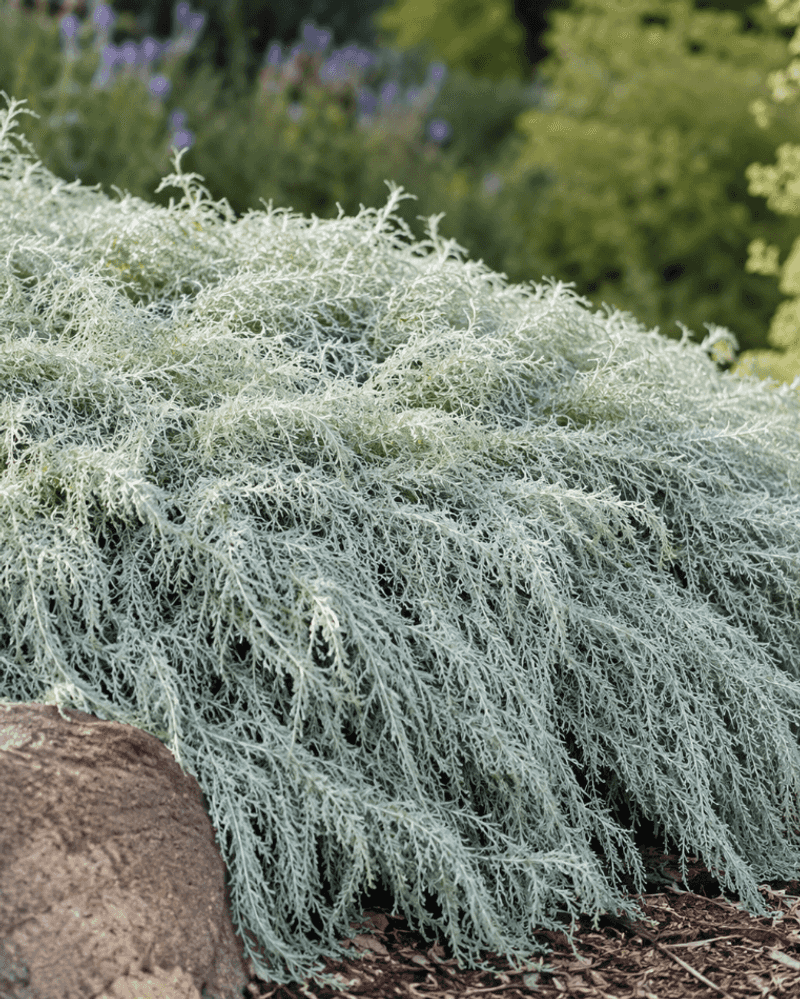
Few plants make a hot slope look intentional as quickly as Canyon Gray Sagebrush. The silver-gray foliage spills and mounds just enough to soften rough ground, and that cool color can make a baked area look calmer and more designed.
It is especially effective where a planting needs to connect rocks, pathways, and larger shrubs into one whole picture.
Unlike a groundcover that disappears into the background, this one acts almost like living mulch with style. The leaves are aromatic, the form stays low, and the spread tends to be broad rather than wildly invasive.
That gives you a useful blanket over exposed soil while still leaving enough visual breathing room for accent plants such as buckwheats, monkey flowers, or compact manzanitas.
Drainage is important, and so is restraint with summer water after establishment. In full sun, particularly in dry inland and coastal gardens, it can become one of the easiest performers in the whole bed.
Homeowners trying to replace thirsty filler plants often find that Canyon Gray does the job with a lot less fuss and a stronger California look.
9. Seaside Daisy
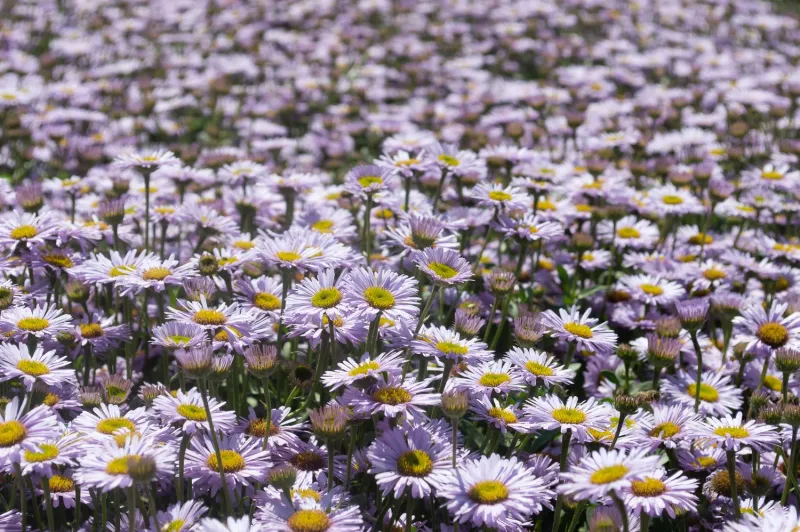
Right near the coast, or in gardens that borrow that coastal style, Seaside Daisy brings a cheerful answer to open soil. It stays low, spreads into a pleasing patch, and produces flowers that instantly make the bed feel less sparse.
There is something almost effortless about the way it brightens a border without looking stiff or overmanaged.
The daisy-like blooms, often in shades of lavender or pinkish purple with yellow centers, keep the plant from reading as mere filler. Gray-green foliage underneath gives it a soft, tidy base that works well at path edges, in raised beds, or at the front of mixed native plantings.
It has enough presence to stand on its own, yet it rarely overwhelms neighboring plants when given normal spacing.
Best performance usually comes in full sun to light shade with good drainage, and it is especially comfortable in coastal conditions. Inland gardeners can still grow it, though some sites may need a little more care with heat exposure.
For anyone who wants a fast-covering native that also brings visible flower power and a neat footprint, Seaside Daisy is an easy favorite.