

Rosemary earns its spot in so many California yards because it shrugs off drought and smells amazing, but it also gets leggy, turns woody at the base, and does almost nothing for local bees and birds. The good news is that California has native shrubs that give you the same tough, water-wise, evergreen good looks without the woody mess, and they actually feed the wildlife your yard depends on. If you have ever felt a little guilty planting something that looks great but leaves pollinators hungry, these swaps let you fix that without extra fuss. Here are nine native shrubs that pull their weight and keep your yard alive.
1. California Fuchsia (Epilobium canum)
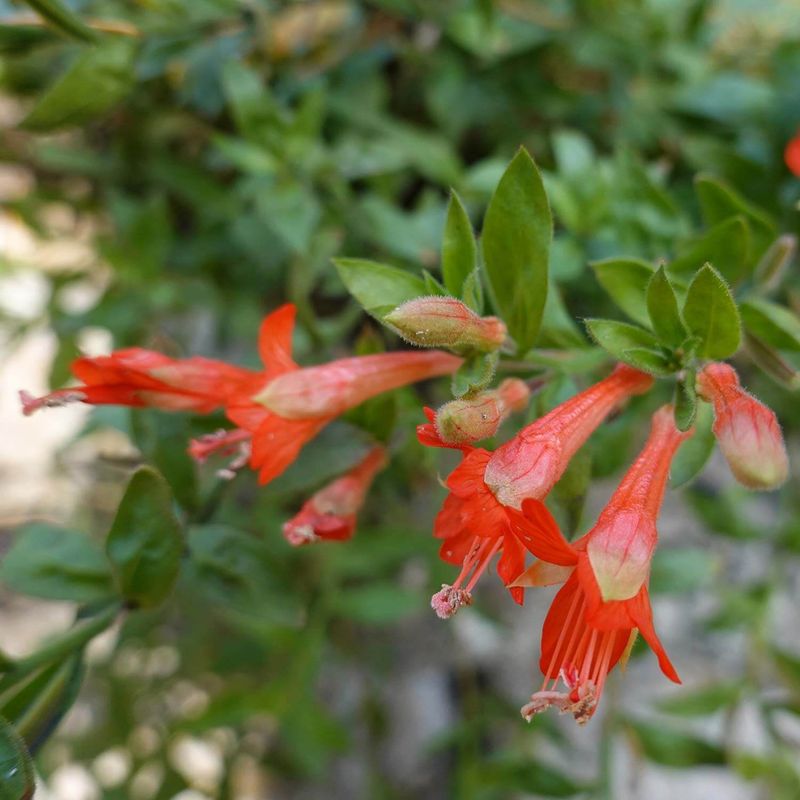
Picture a plant that waits until late summer, when almost everything else has given up, and then bursts into fiery scarlet-orange trumpets. California fuchsia does exactly that, filling the hungry gap when hummingbirds most need nectar and rosemary offers them nothing.
It stays low and spreads into a soft silvery-green mat, so it never builds up the thick woody trunk that makes old rosemary look like a tangle of gray sticks. A hard cut back in winter keeps it fresh and dense every single year.
Coastal, valley, and foothill gardeners can all grow it, and it asks for almost no summer water once established. Anna’s hummingbirds are especially loyal to it, and planting a patch can turn a quiet corner into a daily show. If your goal is a drought-tolerant filler that actually earns its keep for wildlife, this one is hard to beat.
2. White Sage (Salvia apiana)
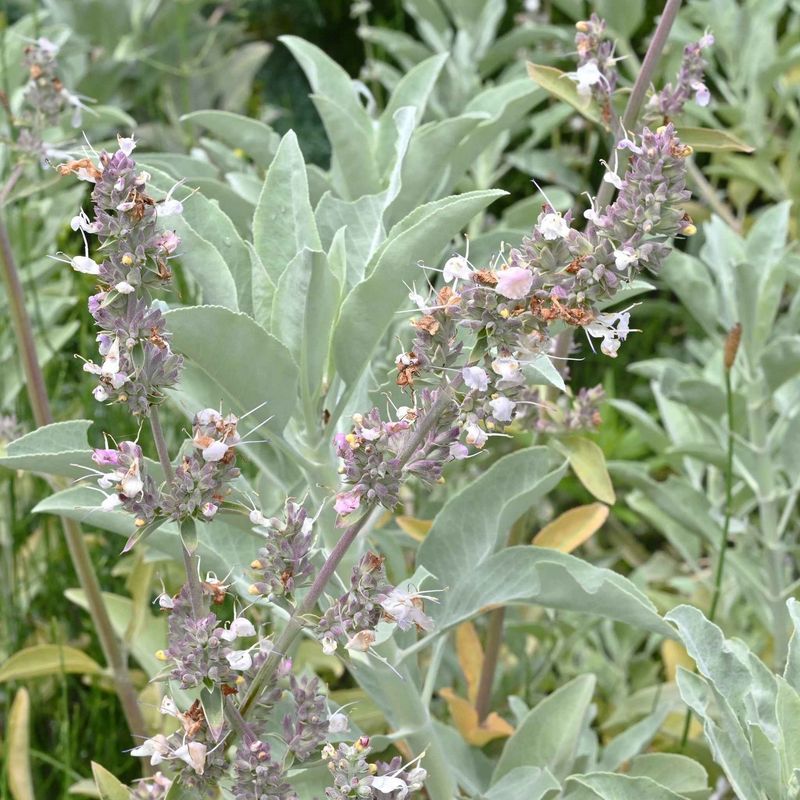
Rub a leaf of white sage between your fingers and you get that same clean, resinous punch people love from rosemary, but this one is a true California native with silvery-white foliage that glows in the sun. It brings the aromatic, brush-your-hand-and-smell-it quality without any of the invasive baggage.
Tall flower spikes rise in late spring and summer, loaded with pale blooms that native bees, carpenter bees, and hummingbirds work all day long. That is a big upgrade from rosemary, which feeds far fewer local pollinators.
Give it fast-draining soil, full sun, and very little summer water, and it will reward you for years, especially in inland and foothill yards. A light shaping keeps the plant tidy rather than letting it sprawl into bare wood. Please buy nursery-grown plants instead of harvesting wild stands, since wild white sage has been badly over-collected across Southern California.
3. Cleveland Sage (Salvia clevelandii)
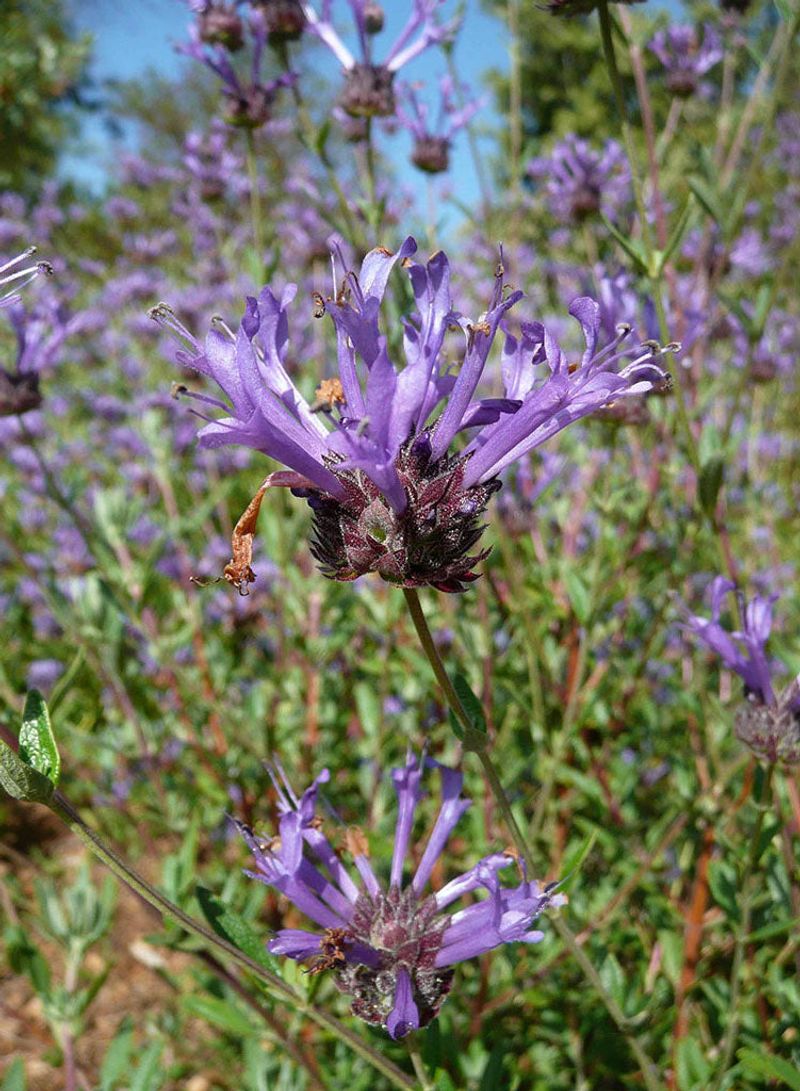
Few native shrubs perfume a whole patio the way Cleveland sage does. On a warm afternoon the scent drifts on its own, and gardeners often say it out-smells rosemary without any effort.
Come late spring, it sends up whorled clusters of violet-blue flowers stacked along the stems like little floral lanterns. Bumblebees and native bees pile onto them, and the dried seed heads later feed finches and other small birds through summer.
Mounding to roughly three or four feet, it holds a rounded shape when you shear it lightly after bloom, which stops the woody legginess that plagues aging rosemary. It thrives in sun and lean, well-drained soil across most inland California zones and drinks almost nothing once its roots are down. Cultivars like Winnifred Gilman were bred for compact, garden-friendly form, so you get the fragrance and the wildlife value in a package that fits a real backyard bed.
4. Coyote Mint (Monardella villosa)
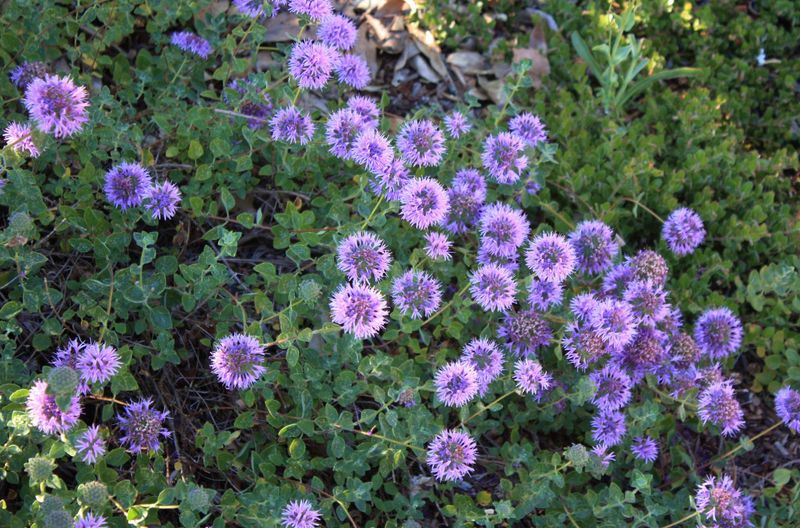
Crush a sprig of coyote mint and you get a bright, minty-herbal aroma that rivals any Mediterranean herb, which makes it a natural stand-in for rosemary along a path edge. It stays modest in size, so it never towers into a woody thicket.
Rounded lavender-pink pom-pom flowers open in summer and act like a magnet for native bees, butterflies, and even the occasional hummingbird. Watching a single clump buzz with visitors is the kind of moment that reminds you the yard is doing its job.
Best suited to coastal and foothill gardens with a bit of afternoon relief in the hottest inland spots, it appreciates good drainage and only occasional summer sips. Cut it back after flowering and it returns soft and full the next year rather than getting scraggly. For a small, fragrant, pollinator-packed edge plant, coyote mint punches well above its size.
5. California Buckwheat (Eriogonum fasciculatum)
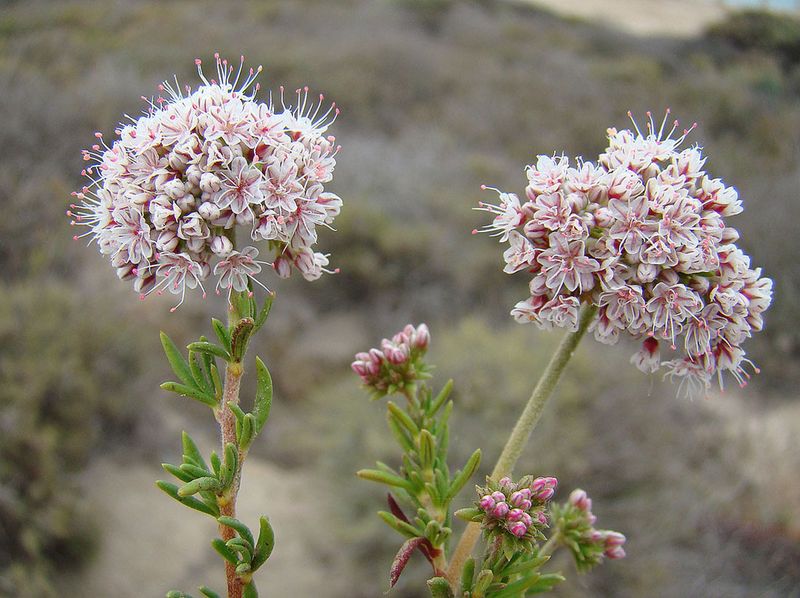
If any single plant deserves a wildlife medal, it might be California buckwheat. Its clusters of tiny cream flowers, aging to a warm rusty brown, support an astonishing range of native bees, butterflies, and beneficial insects across a long bloom season.
The needle-like green foliage gives it a fine, rosemary-ish texture that reads well in a dry border, and it forms a neat mounded shrub rather than a leggy trunk. Left standing, the faded flower heads feed seed-eating birds and add soft structure through the dry months.
It is one of the toughest, most fire-adapted natives you can plant, at home in coastal bluffs, inland valleys, and hillside yards alike. Lean soil and almost no summer water suit it perfectly, and a light trim in late winter keeps it compact. As a keystone plant that dozens of species rely on, it is arguably the single biggest wildlife upgrade a rosemary-loving gardener can make.
6. Black Sage (Salvia mellifera)
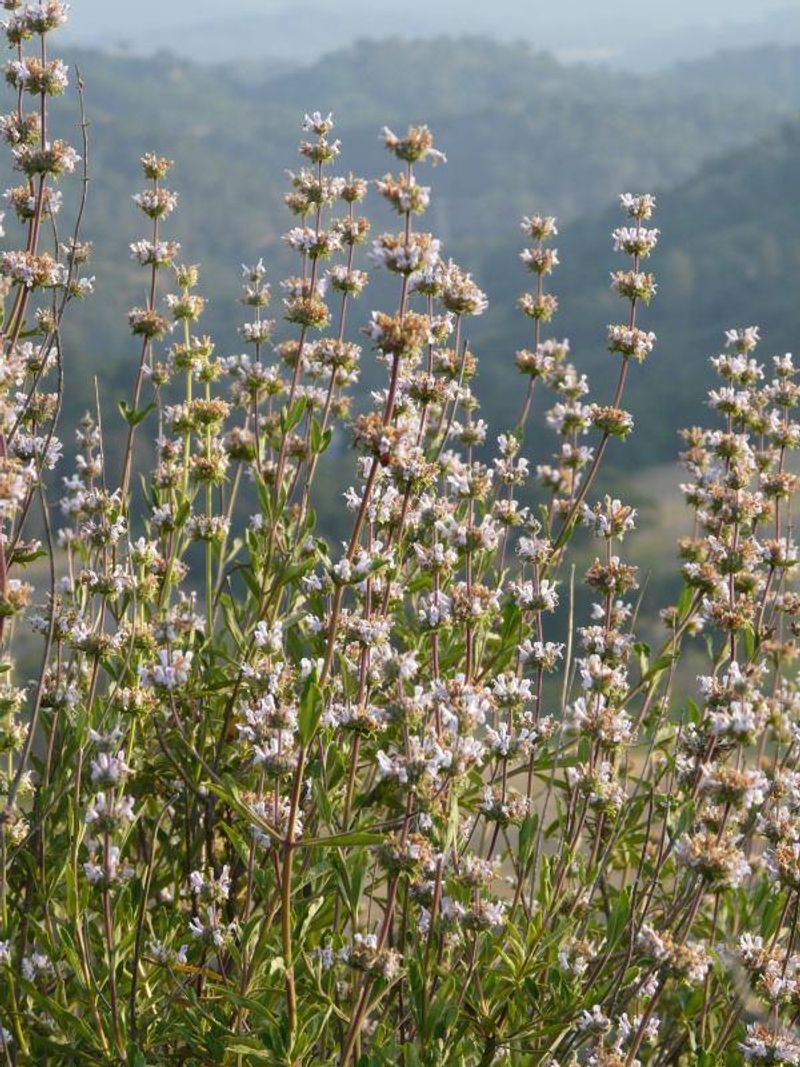
Beekeepers quietly treasure black sage, and its species name mellifera literally nods to honey. The pale bluish-white flower whorls that ring its stems in spring pour out nectar that native bees and honeybees adore.
Aromatically it delivers that same herb-garden hit you reach for in rosemary, releasing a warm sagey scent whenever you brush past. The foliage stays a fresh dark green and the plant keeps a tidy mound when sheared after bloom, sidestepping the woody sprawl of tired old rosemary.
Widely adapted through coastal and inland California, it handles heat, drought, and lean soils with ease, making it a smart pick for fire-wise, low-water plantings. Birds pick through its seed heads later in the season, so the plant keeps giving long after the flowers fade. Pair it with buckwheat and a sage or two and you have the backbone of a genuinely alive California garden.
7. Bush Monkeyflower (Diplacus aurantiacus)
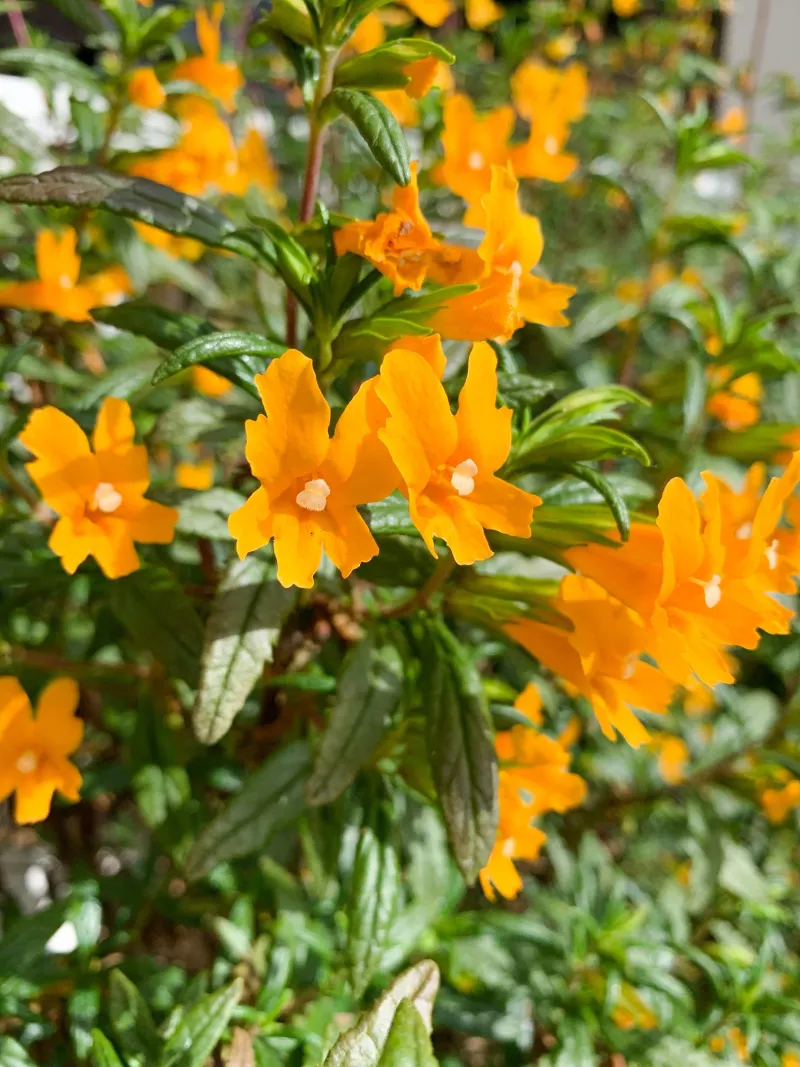
Sticky to the touch and cheerful to look at, bush monkeyflower opens apricot-to-orange blooms that seem to grin at you from spring into summer. It brings a splash of warm color that rosemary’s muted blue flowers simply cannot match.
Hummingbirds probe the tubular flowers, and it serves as a host plant for the common buckeye butterfly, meaning caterpillars feed on it too, so you are supporting the whole life cycle rather than just the adults. That is a level of wildlife service most Mediterranean herbs never provide.
Compact and softly rounded, it grows happily on coastal slopes and in filtered light in hotter inland gardens. It wants sharp drainage and light summer water, and a gentle pinch keeps it bushy instead of leggy. For gardeners who want personality, color, and real ecological payback in a small footprint, this sticky little charmer delivers.
8. Hummingbird Sage (Salvia spathacea)
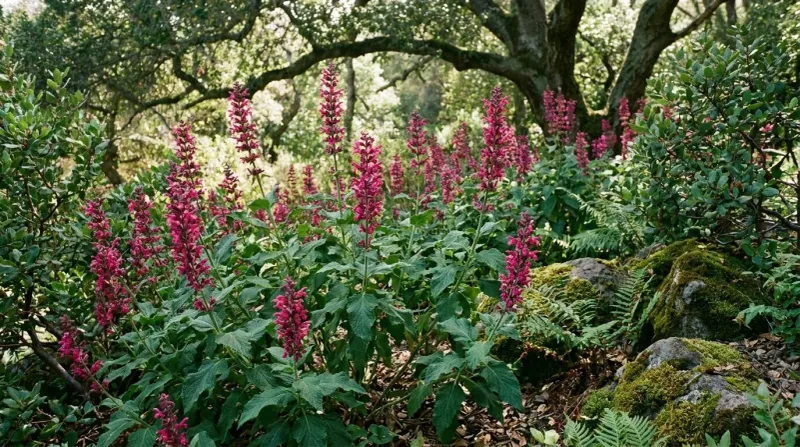
Unlike most of its sun-loving sage cousins, hummingbird sage actually welcomes shade, thriving under oaks and along the cool north side of a house where rosemary would sulk. That alone makes it a problem-solver for the tricky spots in a yard.
Tall spikes of deep magenta-rose flowers rise above big, softly fragrant leaves that smell faintly of fruit when brushed. Anna’s and Allen’s hummingbirds treat these blooms like a filling station, and bees join the party too.
It spreads gently by underground runners to form a lush groundcover, filling bare shady ground without ever becoming a woody eyesore. Give it part shade, occasional summer water, and a spot with decent leaf litter, and it settles in beautifully across coastal and inland gardens. When people ask what to plant in dry shade that still feeds pollinators, this is one of the easiest and most rewarding answers.
9. California Yerba Buena (Clinopodium douglasii)
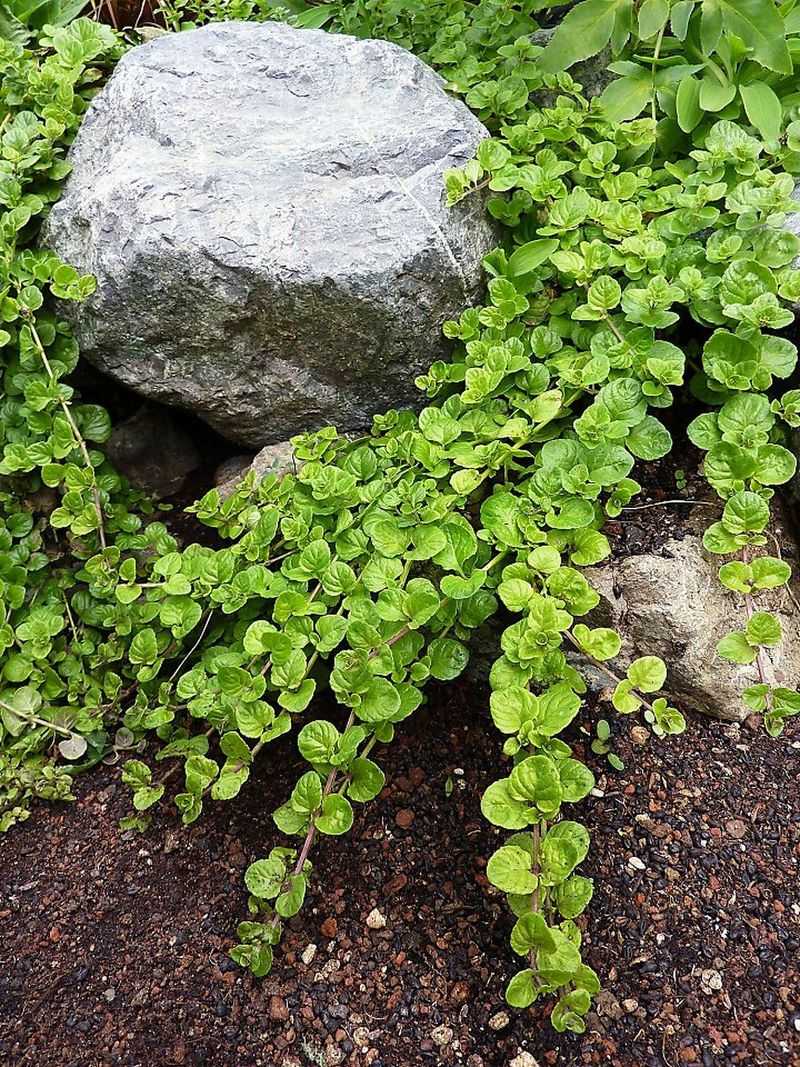
Long before rosemary ever reached California, the plant that gave San Francisco its old name, Yerba Buena, was already scenting the coastal woods with its sweet, minty fragrance. Native people and early settlers steeped its leaves into a gentle, refreshing tea.
Trailing and delicate, it hugs the ground as a fragrant evergreen mat rather than piling up into brittle wood, so it fits perfectly as a soft, aromatic groundcover between stepping stones. Tiny white flowers dot it in the warm months and quietly feed small native bees.
It favors the cooler, partly shaded, slightly moister spots of coastal and foothill gardens, where it forms a living, walkable carpet. A brush of your shoe releases that lovely herbal scent, giving you the sensory reward of rosemary in a completely different, more grounded form. For a fragrant, low, wildlife-friendly cover that carries a slice of California history, Yerba Buena is a charming way to close out the list.