
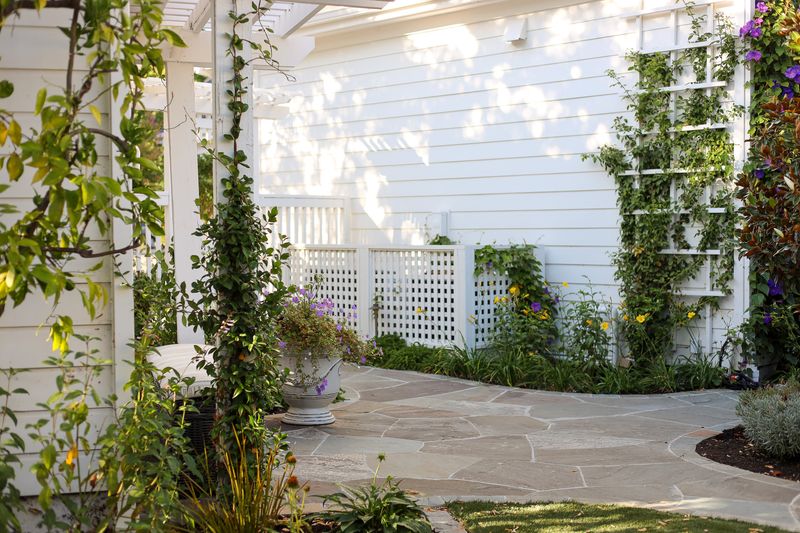
Plenty of California homeowners want a vine that fills in a fence quickly, adds some privacy, and does not quietly creep toward the roof before fire season arrives. The appeal is real, but the promise in that idea needs a closer look.
No vine stops itself at a roofline, and a fast grower on the wrong support can become a fuel ladder in a dry summer. Choosing the right plant is only the first step; where you put the support and how often you inspect it matter just as much.
Roof separation is a maintenance result, not a plant trait
Picture a fast-growing vine running the full length of your fence in one season, then quietly bridging to a nearby oak, slipping under the eaves, and settling onto the roof before you notice. That is not a horror story unique to careless gardeners.
It is what vigorous vines do when left without a containment plan, and it matters most in California communities where a dry August can turn accumulated plant material into a serious hazard.
The reviewed sources do not identify any vine, including the California natives discussed here, as one that will naturally halt at a roofline. UC Marin Master Gardeners’ guidance on vines advises gardeners to understand a vine’s mature size and climbing method before planting, precisely because some vines become difficult to control once established.
That is a planning warning, not a reassurance that any species will self-limit.
What the sources do support is a manageable installation built on deliberate choices: selecting a species with a climbing habit you can redirect, placing the support well away from the structure and any nearby trees, and pruning on a schedule matched to the vine’s growth rate. UC Master Gardeners warn specifically about California wild grape wandering beyond its support and reaching neighboring structures or trees, which underscores why separation must be designed in from the start rather than assumed.
CAL FIRE’s home-hardening guidance is clear that vines and other combustible vegetation should not reach the roof, eaves, or other building components. A manageable vine installation is one where the homeowner preserves that separation actively, through inspection, redirection of new shoots, and removal of any growth that escapes the intended support.
California wild grape is a well-supported fast-coverage candidate
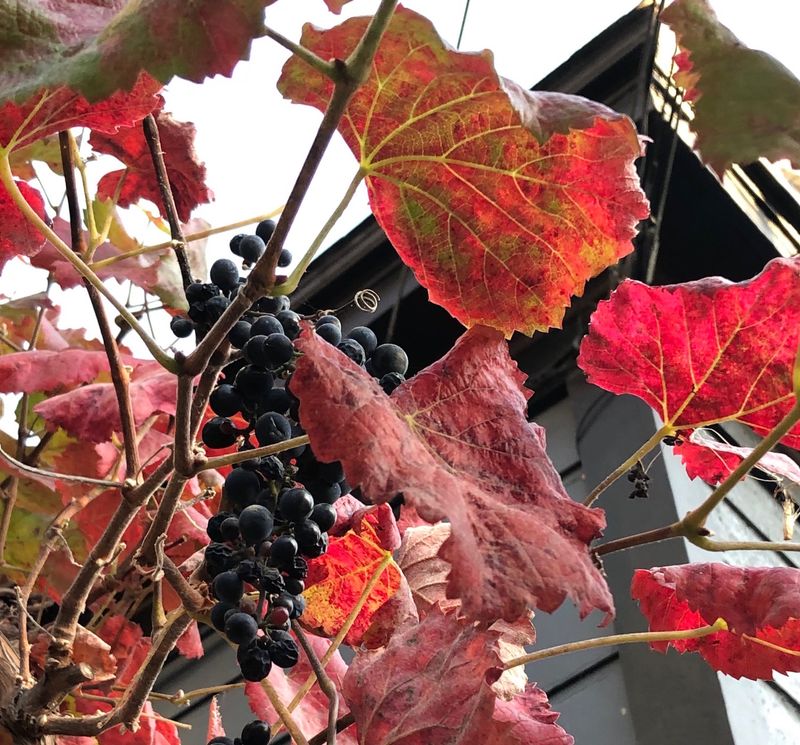
Among California native vines, California wild grape – especially the cultivar known as ‘Roger’s Red’ – comes up repeatedly in regional plant guides as a strong candidate for fast fence coverage. That is not a claim based on comparative trials, but on how UC sources consistently describe its growth habit: vigorous, fast-growing, and capable of covering a fence or trellis in a relatively short period.
UC Master Gardeners describe ‘Roger’s Red’ as a deciduous cultivar suited to fences, trellises, arbors, and even groundcover use. It is drought-tolerant once established, which makes it a reasonable fit for inland and northern California settings where summer irrigation is limited.
Drier soil conditions may reduce how aggressively it spreads, but they do not eliminate the need for pruning or ongoing attention.
A Los Angeles County-compatible plant guide lists California wild grape as a native vine suitable for growing on fences and near oaks, noting that it is less rampant in dry conditions. Still, the same sources make clear it can wander off its support and reach neighboring trees or structures, so it requires a homeowner who is willing to stay engaged with it through the growing season.
The fruit is a genuine wildlife benefit. Grapes attract birds, and UC IPM notes that birds are drawn to grape plantings reliably.
For a homeowner who wants a yard that supports wildlife, that is a plus. The practical side includes fallen fruit on walkways, increased bird activity, the possibility of volunteer seedlings sprouting from dropped seeds, and seasonal leaf cleanup once the vine drops its foliage in fall. ‘Roger’s Red’ earns its name with foliage that turns a deep red in autumn, adding ornamental value alongside its privacy function.
UC ANR plant highlights for ‘Roger’s Red’ confirm this fall color display as one of its standout features. None of that makes it low-maintenance, and homeowners on fire-prone hillsides should treat its vigor as a reason to inspect more often, not less.
Chaparral honeysuckle brings a different growth form and space demand
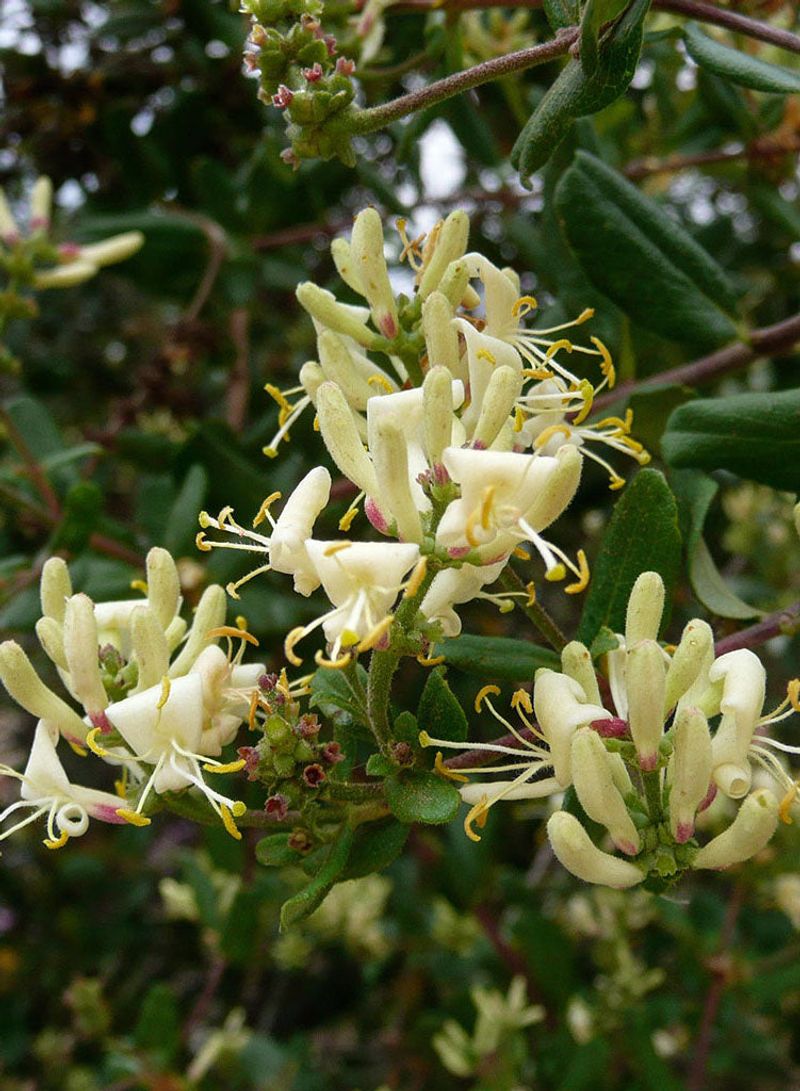
Chaparral honeysuckle (Lonicera subspicata) is not a vine in the same sense as California wild grape. It is a vine-like shrub, meaning it sprawls and can be trained onto a fence, but it does not climb with tendrils or twining stems the way a true vine does.
That growth form changes what a fence installation looks like and how much space the plant genuinely needs.
The Oak View Land Conservancy native plant guide lists chaparral honeysuckle as fast-growing, drought-tolerant to occasional water, and capable of reaching approximately 8 feet tall and 20 feet wide. That mature width is the number to take seriously.
A plant spreading 20 feet sideways needs room, a planned support system wide enough to accommodate it, and regular shaping to keep it from overwhelming adjacent plants or structures.
The Theodore Payne Foundation’s native plant database confirms its California-native status and drought tolerance, making it a reasonable candidate for dry-summer gardens. However, native status and drought tolerance do not by themselves reduce wildfire risk.
UC Marin Master Gardeners’ fire-smart landscape planning guidance is consistent on this point: plant placement, spacing, irrigation, and removal of dead material shape fire risk far more than a plant’s regional origin. Chaparral honeysuckle still needs a support plan, adequate space, and ongoing control to stay within its intended boundaries.
California pipevine fits a shadier, moister wildlife plan
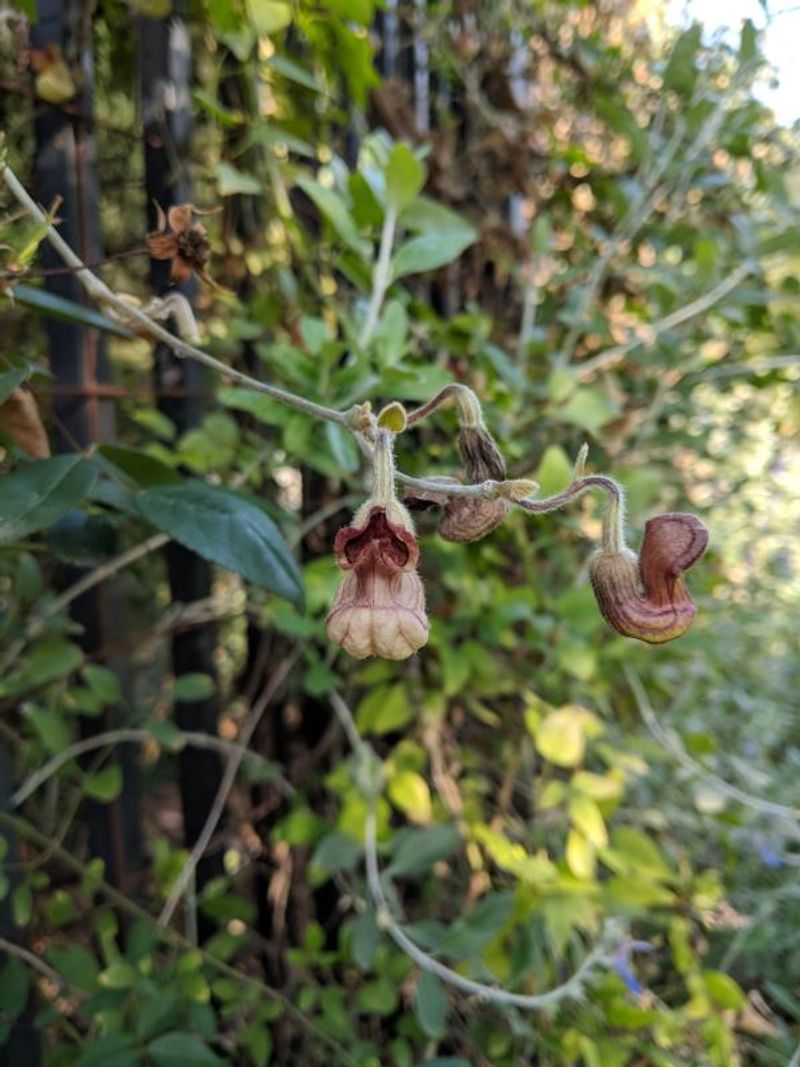
California pipevine (Aristolochia californica) has a devoted following among native-plant gardeners, and for good reason. It serves as the larval host plant for the pipevine swallowtail butterfly, a striking species that depends on this plant to complete its life cycle.
California Native Plant Society guidance on gardening for butterflies highlights pipevine specifically for this role, and for wildlife-focused gardeners, that is a compelling reason to find a place for it.
The catch is site compatibility. Sacramento Valley CNPS describes California pipevine as a vine that climbs 6 to 12 feet with support and generally prefers shade and moisture.
A sunny, south-facing hillside with dry, fast-draining soil is not where this plant performs best. Putting it in the wrong conditions means a stressed, slow-growing vine that delivers neither the privacy screen nor the wildlife habitat it is capable of providing in a better-matched site.
CNPS writing on the value of vines notes that California pipevine can be a rewarding garden plant when sited correctly. The wildlife benefit is also location-dependent: pipevine swallowtails are unlikely to use this plant outside its natural range, so the ecological payoff depends on where in California you garden.
For a homeowner with a shaded north-facing fence, a moist microclimate, or a woodland-edge setting, pipevine can be a genuinely useful addition – but it should not be the default choice for a dry, open hillside privacy screen.
Design the support to limit escape routes
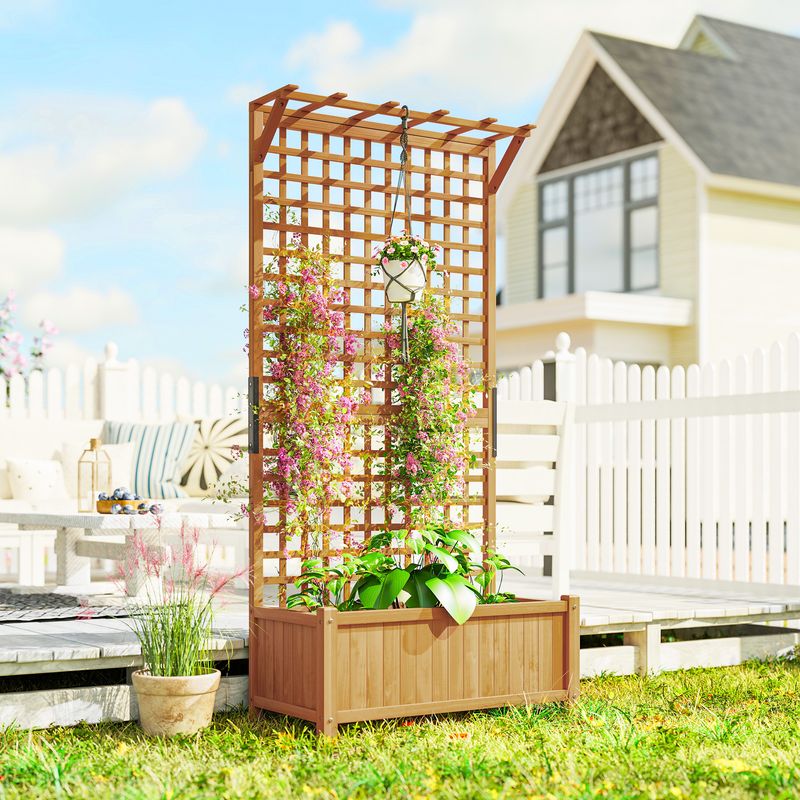
Support design is where a vine installation either stays manageable or becomes a problem. The goal is a freestanding structure that holds the vine where you want it, positioned so the vine cannot easily reach the house wall, eaves, roofline, nearby trees, or any other combustible feature.
No support material, whether metal, wood, or composite, makes a vine installation fire-safe on its own. Separation and placement do the actual work.
UC Marin Master Gardeners specifically recommend keeping vines off the house in fire-smart landscaping and advise choosing a freestanding support instead. That guidance also emphasizes understanding a vine’s climbing method before selecting a support.
California wild grape climbs by tendrils, which latch onto wires, mesh, or lattice and pull the vine upward. A support that does not give the tendrils anything to grab beyond its intended boundary makes redirection easier during inspections.
UC ANR’s homeowner wildfire mitigation guide on fences notes that climbing vines can be used on chain-link fencing for privacy, but they must be maintained so they do not become a fire hazard. That means the support’s position relative to trees and the house matters as much as its material.
A trellis placed 10 feet from the house with no tree canopy overhead creates far fewer escape routes than one tucked against the eaves.
CAL FIRE’s home-hardening program reinforces the principle that combustible vegetation and structural attachments near the house create pathways for fire to reach the building. Keeping the support freestanding, away from overhanging branches, and at a distance from the structure gives you a better chance of catching escaped growth before it bridges to something you cannot easily prune back.
Keep the fence installation outside the most vulnerable structure zone
A fence attached to the house is a fundamentally different situation from a freestanding fence across the yard. UC ANR’s wildfire mitigation guide on fences is direct about this: combustible fencing connected to a structure can carry fire directly to walls, eaves, or other parts of the building.
That pathway concern applies regardless of what is growing on the fence. Adding a fast-growing vine to an attached combustible fence increases the fuel load along a route that already leads straight to the house.
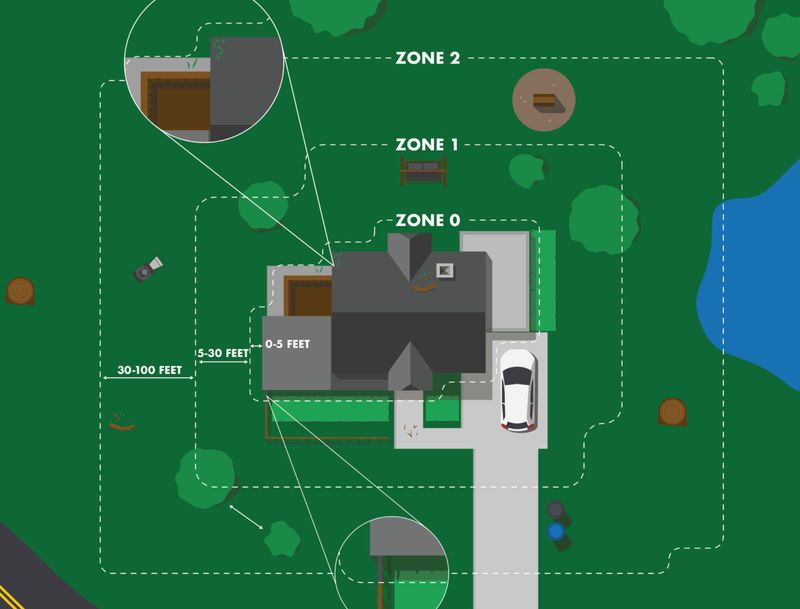
The area immediately surrounding a structure receives special attention in California’s defensible-space framework. CAL FIRE identifies the first 5 feet around buildings as a critical ember-resistant zone, sometimes called Zone 0, where combustible vegetation and materials should be minimized or eliminated.
A vine-covered trellis placed within or at the edge of that zone puts combustible plant material close to where embers are most likely to ignite something.
CAL FIRE’s home-hardening guidance describes how embers landing near vents, eaves, and attached structures are a primary ignition pathway during wildfires. Keeping a vine installation well outside that zone, with a visible gap between the support and the house, reduces the chance that plant material bridges back toward the building during the growing season.
UC ANR Fire Network landscaping guidance notes that statewide defensible-space rules set a baseline, but counties and local fire districts may impose stricter requirements. Before you plant anything near a structure in a fire-hazard severity zone, check with your local fire department or county fire district for rules that may go beyond what the state requires.
Match maintenance to the vine’s growth and the site’s exposure
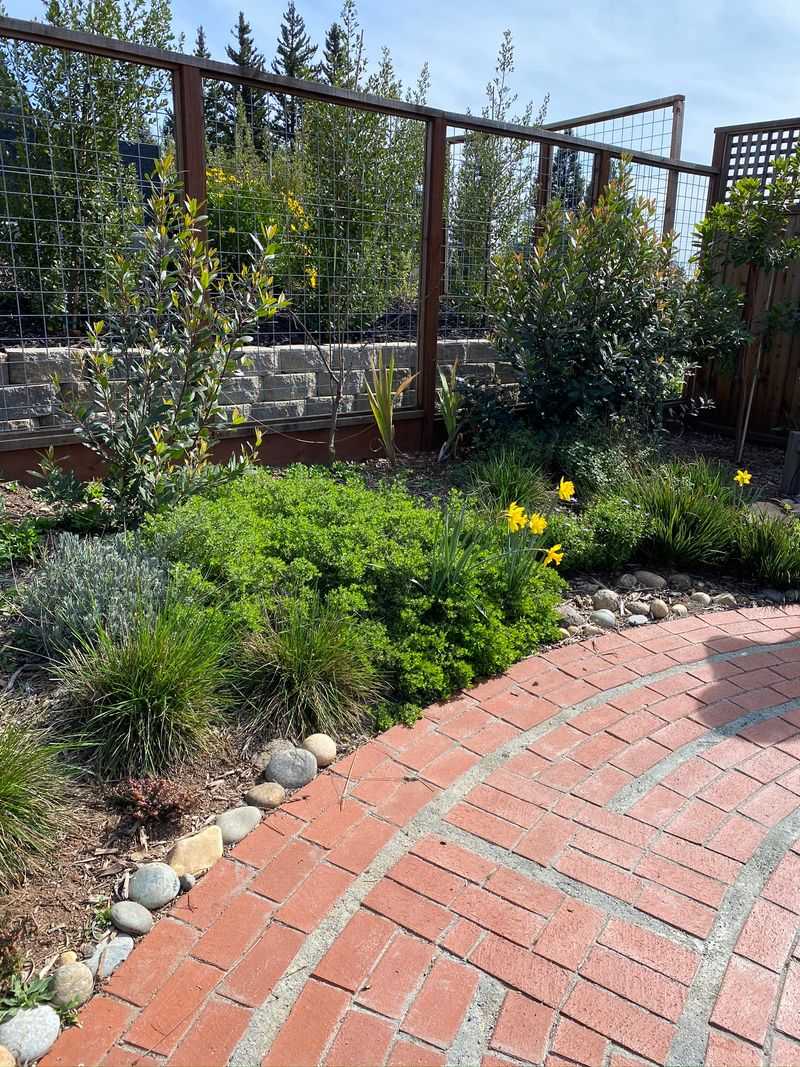
Fast coverage comes with a trade-off: a vine that fills in quickly also puts on new growth quickly, and that new growth needs to be checked more often than once a year. How often depends on the species, the climate, how much the plant is irrigated, and how close the support sits to the house or nearby trees.
A California wild grape on a fence 15 feet from the house in a dry, inland setting behaves differently from the same plant in a wetter microclimate with more frequent watering.
UC IPM guidance on minimizing fire hazards in landscapes emphasizes that placement, pruning, spacing, and removal of dead material are more decisive than any plant label. During active growth, inspect the vine at least monthly.
Look for shoots that have extended beyond the support, tendrils that have grabbed onto a nearby branch or wall, and any section of the vine that is working its way toward the house. Redirect or cut those shoots before they establish a hold somewhere harder to reach.
Debris removal is not optional. Fallen leaves, dry stems, dropped fruit, and accumulated litter at the fence base are all combustible.
CAL FIRE’s defensible-space program identifies debris removal from gutters, decks, and areas near the structure as a core fire-preparation task. A vine-covered fence adds to the debris load, so build that cleanup into your seasonal routine, not just an annual sweep.
Irrigation deserves a balanced approach. UC research on reducing building vulnerability to wildfire notes that drought-stressed plants accumulate dead material and can become more hazardous, but watering does not make a vine fireproof.
Appropriate irrigation for the species and site may reduce drought stress and slow the buildup of dry stems, but it does not eliminate seasonal leaf drop, fruit debris, or the need for hands-on inspection. Water within your local restrictions, and treat irrigation as one part of a broader maintenance routine rather than a substitute for pruning and debris removal.
UC ANR Fire Network guidance reinforces that no single practice replaces a complete approach to vegetation management.
Choose the vine you can keep within its boundaries
The decision comes down to site conditions and honest self-assessment. California wild grape, particularly ‘Roger’s Red,’ is the most well-supported choice when fast fence coverage is the primary goal and the site is sunny, moderately dry, and inland.
It earns that position based on consistent descriptions of its vigorous growth and adaptability, not because any comparative trial ranks it above every alternative. Accept it as a plant that requires regular containment, not a set-and-forget solution.
Chaparral honeysuckle makes sense when its vine-like shrub form, mature width of roughly 20 feet, and drought-tolerant nature fit the available space and the homeowner’s willingness to manage a wide-spreading plant. It is not a slower or lower-risk alternative by default; it simply has a different growth form that suits different fence configurations and garden layouts.
California pipevine belongs in a shadier, moister setting where its habitat role as a butterfly host plant can be realized. Using it as a fast privacy screen on a dry, exposed hillside sets both the plant and the homeowner up for disappointment.
None of these plants comes with a roof guarantee. CAL FIRE’s defensible-space framework makes clear that the homeowner is responsible for keeping combustible vegetation from creating pathways to the structure.
A vine belongs only where you can regularly inspect it, redirect escaped growth, and clear debris before conditions turn hazardous. The right plant in the wrong place, or the right plant with the wrong level of attention, carries the same risk.
Pick the vine that matches your site, your fence design, and the time you can genuinely give it.