
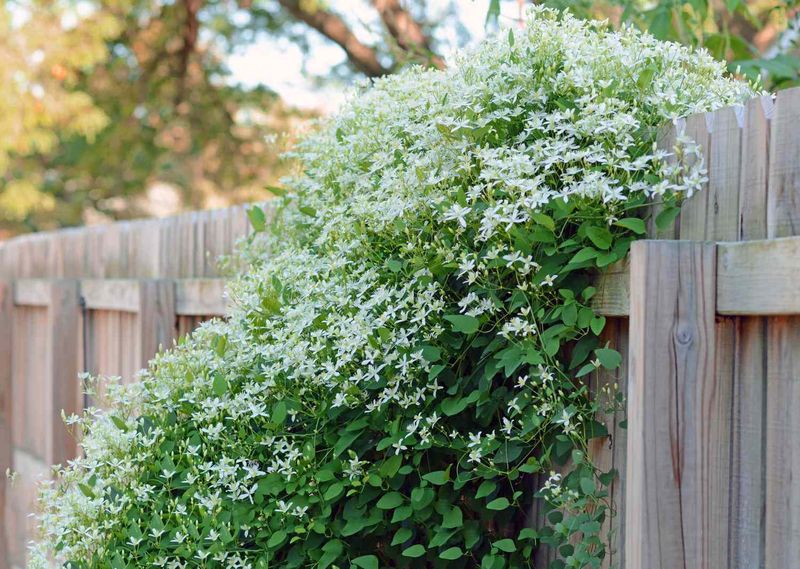
A blank wooden fence baking in the Texas sun is basically a wasted opportunity. With the right climbing plant, that plain barrier can turn into a green, flower-covered wall before summer even ends. The trick is picking vines that actually love our heat, shrug off drought, and grow fast enough to cover ground in a single season. Here are seven climbers that can transform your fence line while handling everything a Texas summer throws at them.
1. Coral Honeysuckle (Lonicera sempervirens)
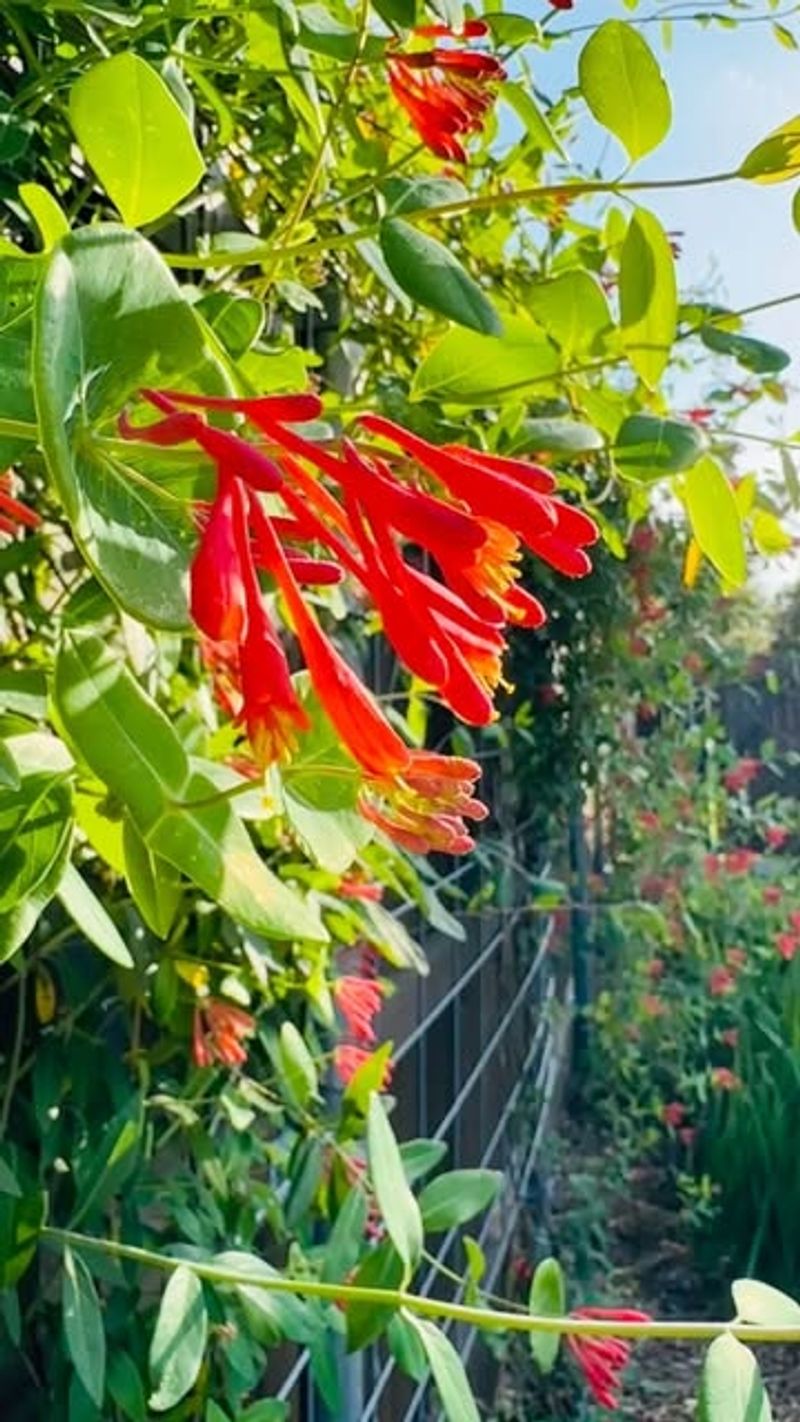
Hummingbirds will find your fence within days of this native vine blooming, which is half the reason Texas gardeners plant it in the first place. The trumpet-shaped red and coral flowers act like a dinner bell for pollinators all across the state.
Unlike its thuggish Japanese cousin, coral honeysuckle stays polite and won’t swallow your whole yard. It handles clay soils, sandy soils, and everything in between, and it laughs at drought once its roots settle in.
Give it a sunny stretch of fence and it can climb eight to fifteen feet in a season, weaving through wire or wood without much fuss. It sips water instead of gulping it, so it fits neatly inside most municipal watering restrictions. Fun bit of trivia: it holds its leaves nearly year-round in warmer parts of Texas, so your living wall doesn’t go fully bare come winter.
2. Crossvine (Bignonia capreolata)
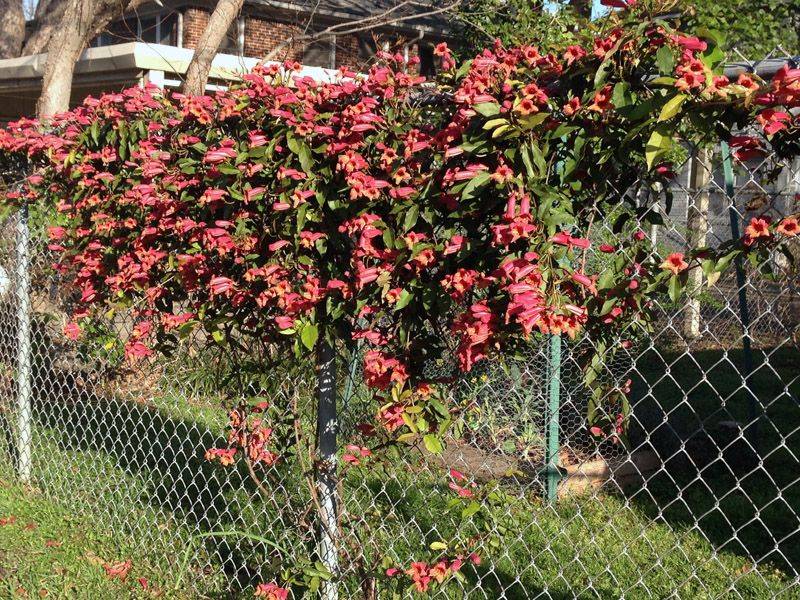
Few native climbers cover ground as fast as crossvine, which can rocket up thirty feet or more when it’s happy. Come early spring it erupts in orange-red trumpet blooms that look almost tropical against a plain cedar fence.
What makes this one special is its grip. It climbs using little tendrils tipped with tiny adhesive discs, so it clings to wood, brick, or wire without needing you to tie anything up.
Texas heat is no obstacle here, and neither is poor soil. Crossvine tolerates full sun and part shade, stays semi-evergreen through mild winters, and rarely asks for supplemental water once established. Hummingbirds treat those spring flowers like a fuel stop on their migration north, so you get wildlife traffic as a bonus. Slice a stem and you’ll see the pith forms a little cross shape inside, which is exactly how the plant earned its everyday name.
3. Carolina Jessamine (Gelsemium sempervirens)
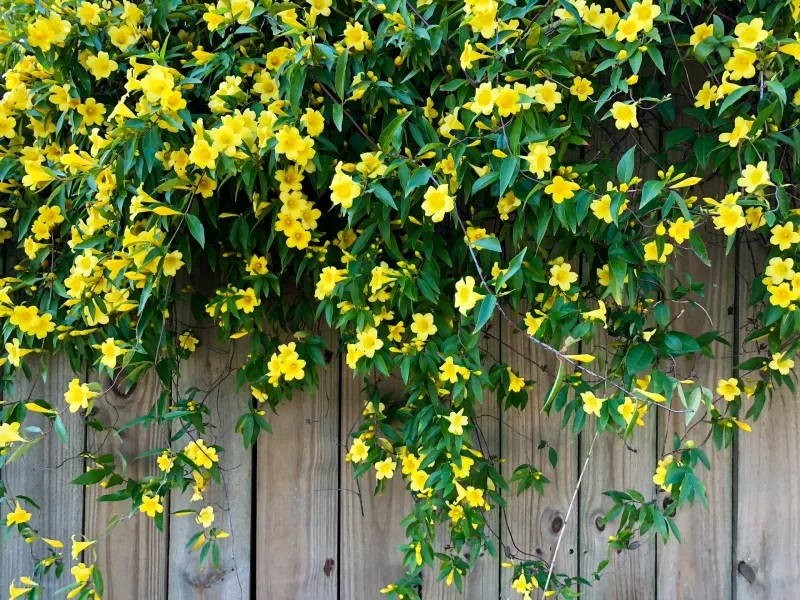
Picture a fence dripping with buttery yellow blooms while most of the yard is still shaking off winter. That’s Carolina jessamine’s party trick, and it’s one of the earliest splashes of color you’ll get in a Texas landscape.
The glossy evergreen leaves keep the wall looking full and green long after the flowers fade, so you’re never staring at bare stems. It twines gracefully rather than sprawling, making it a tidy choice for narrower fence panels.
Drought sits well with this vine, and it shrugs off the brutal afternoon sun that fries pickier plants. A word of caution worth repeating: every part of the plant is toxic if eaten, so keep it away from curious kids and pets who like to nibble. Give it a full season and it can stretch ten to twenty feet, spilling its fragrant yellow tubes over the top of your fence like a sunlit curtain.
4. Trumpet Vine (Campsis radicans)
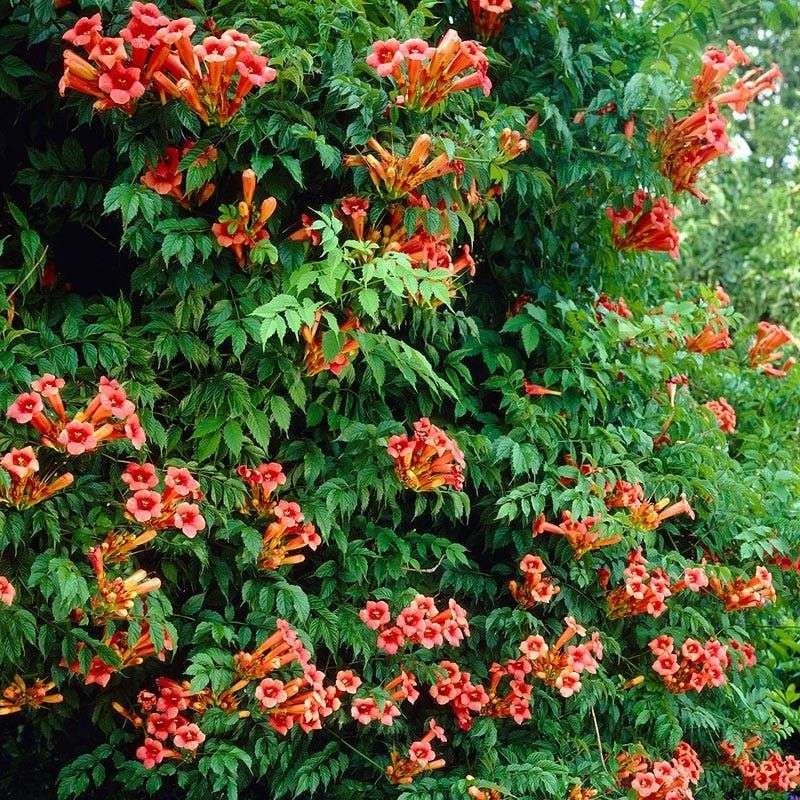
Bold, brash, and impossible to ignore, trumpet vine is the plant you choose when you want a bare fence buried in green and orange fast. This native powerhouse can sprint thirty feet or more in a single warm season.
Bees and hummingbirds absolutely mob the fiery orange trumpets that appear all summer long, turning your fence into a buzzing roadside diner. It thrives in the worst spots, cracked clay, rocky ground, blistering heat, and still refuses to quit.
Here’s the honest catch. Trumpet vine is aggressive, spreading by seed and underground runners, so plant it where you can keep it in check, ideally with a mow strip or root barrier nearby. On a sturdy fence far from the flowerbeds, though, its vigor becomes the whole point. Give it one season and you’ll have a solid living wall that survives triple-digit Texas summers without complaint.
5. Passionflower (Passiflora incarnata)
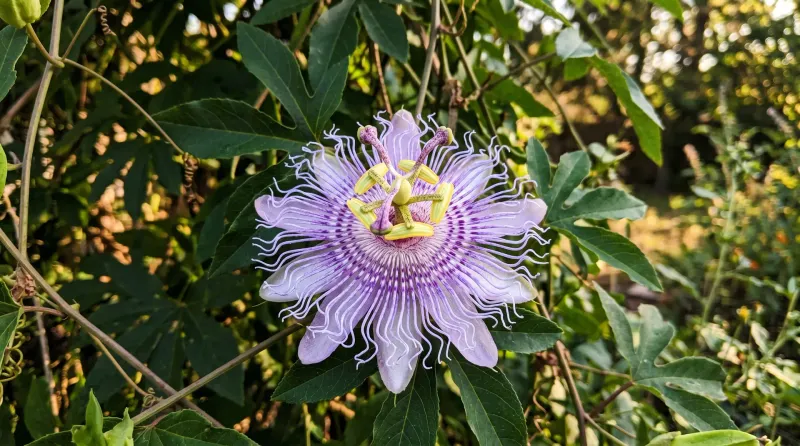
Nothing on this list looks quite as otherworldly as a passionflower bloom, with its fringed purple crown that seems beamed in from another planet. Native to Texas, this vine also happens to be a caterpillar cafeteria for gulf fritillary butterflies.
It scrambles up fences using curly tendrils and can gain fifteen to twenty feet across a growing season, especially through the muggy stretch of a Gulf Coast summer. The blooms give way to egg-shaped fruits called maypops that native folks have snacked on for centuries.
Heat and humidity only encourage it, and it tolerates the sandy or clay soils common across the state. Keep in mind it dies back to the roots in colder winters, then springs up again once the ground warms, so treat it as a fast seasonal cover rather than a year-round evergreen. If you want a fence that doubles as a butterfly nursery, this is your vine.
6. Star Jasmine (Trachelospermum jasminoides)
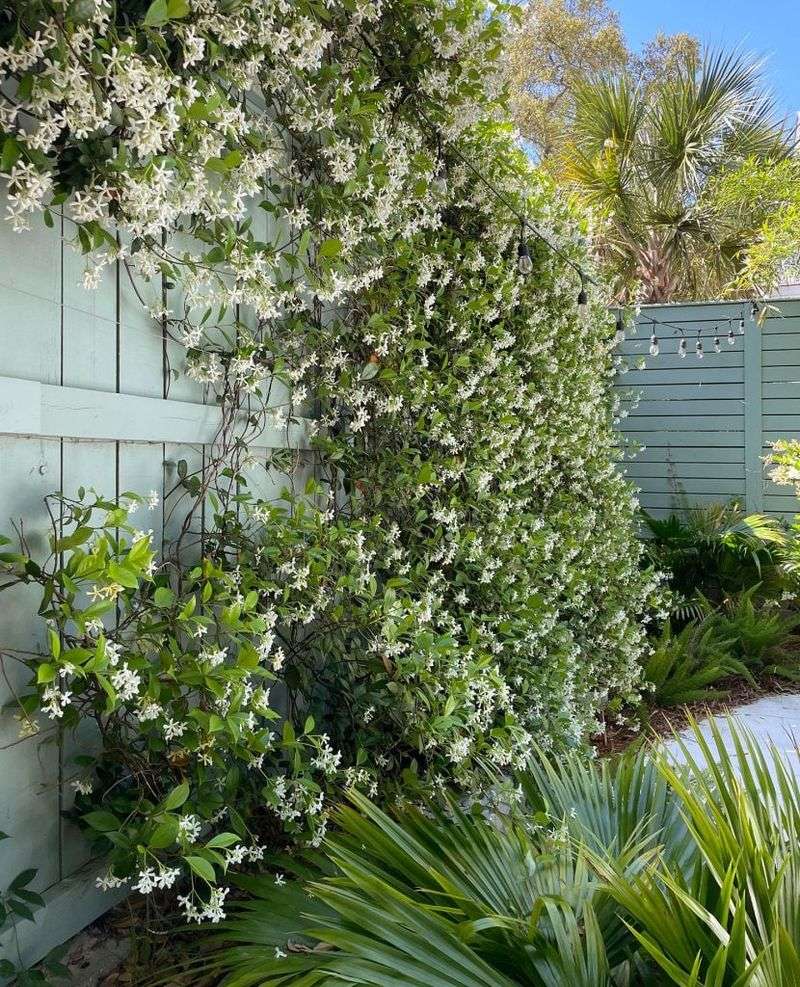
Walk past a fence covered in star jasmine on a warm May evening and the sweet perfume practically stops you in your tracks. Those tiny white pinwheel flowers pack a fragrance that fills an entire backyard.
The dark, waxy evergreen leaves form a dense green sheet that stays handsome through most Texas winters, giving you privacy as well as scent. It’s a twining climber, so a little guidance around fence wire or a trellis helps it settle in.
Once established, it handles heat and moderate drought with ease, though it appreciates a drink during the harshest July dry spells. It grows steadily, filling a fence over a season or two, and takes shearing well if you like a manicured look. For a shady side fence where flashier vines sulk, star jasmine keeps performing where others fade.
7. Climbing Rose (Rosa ‘Zephirine Drouhin’ and other heat-tough types)
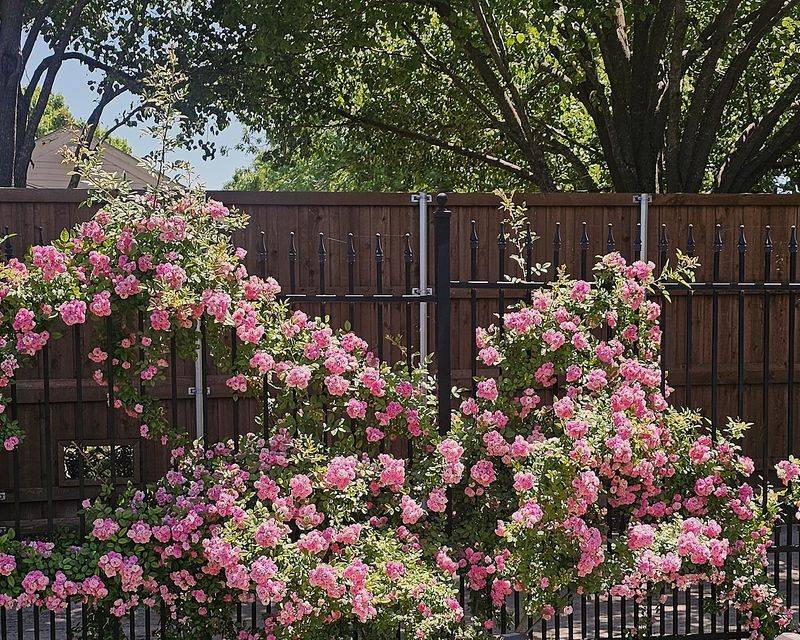
For the gardener who wants romance draped across the fence line, a heat-tolerant climbing rose delivers old-fashioned charm no vine can match. Varieties bred for Southern gardens push out flushes of blooms from spring straight through fall.
Roses need a bit more from you than the tougher natives here, mostly a deep soak during watering-restriction summers and the occasional feeding. In return they hand you fragrant color and cut flowers for the kitchen table.
Look for thornless or near-thornless heat champions if your fence borders a walkway where brushing past matters. Tie the long canes horizontally along the fence and you’ll trigger even more flowering shoots, filling a bare panel within a single strong season. A quick history note: the Zephirine Drouhin rose has been climbing Texas fences since the 1860s, proving these old workhorses were surviving our summers long before drip irrigation existed.