
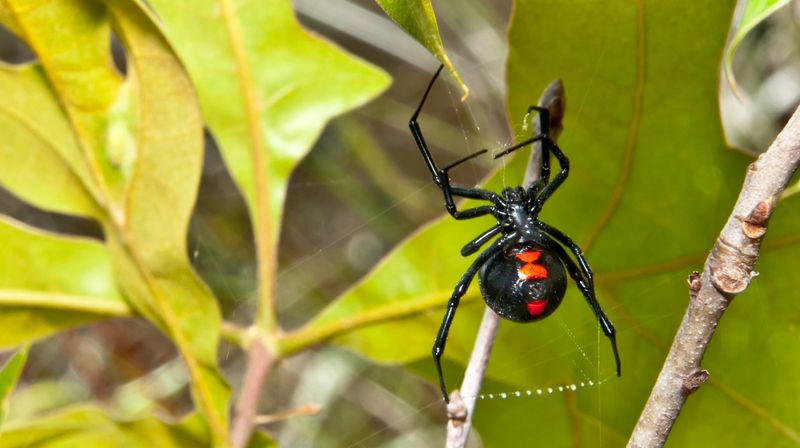
Summer in California brings long, dry days and the occasional heat wave, and many homeowners start noticing spiders they might have missed before. Western black widows are already common across the state, living quietly in sheltered corners of garages, sheds, and garden clutter year-round.
What changes during hot weather is not the number of spiders, but how visible the conditions that support them become. Understanding what those conditions are, and how to address them, is the most useful thing a California homeowner can do.
Hot Weather Does Not Create a Black Widow Infestation
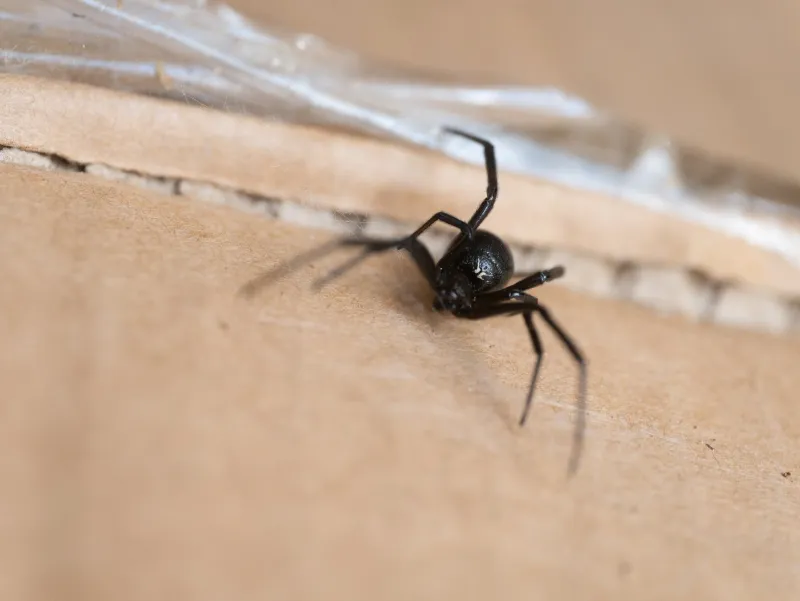
Western black widows, Latrodectus hesperus, are well suited to the hot, dry conditions that define California summers. They are not newcomers that arrive when temperatures climb.
UC IPM guidance on widow spiders confirms they are already widespread across the state, occupying holes, cracks, crevices, woodpiles, garages, and sheltered outdoor areas around homes throughout the year.
A heat wave does not trigger a population surge or drive spiders into yards from somewhere else. Research on urban heat island conditions and western black widows found no evidence that elevated urban nighttime temperatures directly increase black widow activity.
These spiders already adjust their behavior to avoid the hottest part of the day, retreating deeper into shaded retreats until temperatures drop.
A related study on the functional microclimate of urban arthropod pests reinforces that urban warmth creates microhabitats these spiders can exploit, but that is different from saying heat causes an infestation. What hot weather actually does is make preexisting conditions more apparent.
Dry, undisturbed corners become more sheltered. Insects congregate near water sources and lights.
Spiders that were already there become more noticeable when homeowners spend more time outdoors.
The practical shift this suggests is a useful one: stop worrying about the forecast and start looking at your yard. The conditions that matter, clutter on the ground, gaps in walls, vegetation touching structures, and insect-attracting lights, are all things you can change.
Weather is not one of them.
Start the Yard Audit at Ground Level
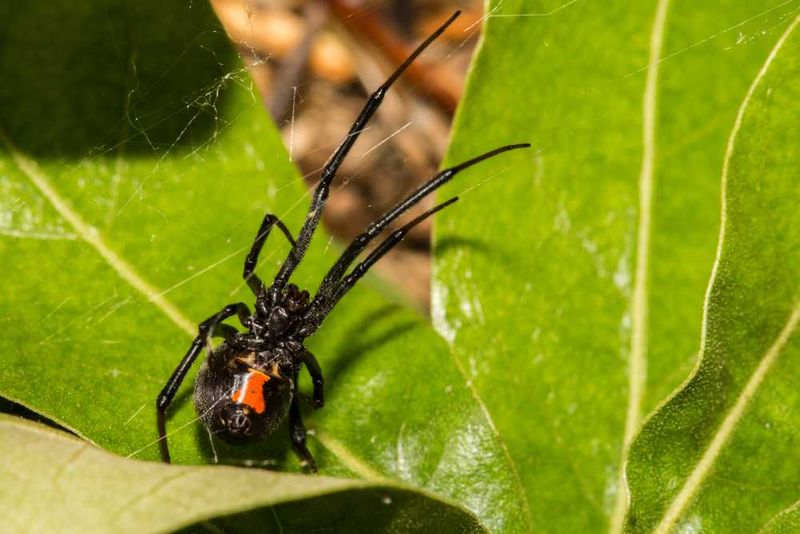
Before moving anything or reaching for a spray can, walk the perimeter of your house at a slow pace and look low. The most productive spider habitat in a California yard almost always sits within a foot or two of the ground, close to a structure.
Foundation edges, the undersides of wooden steps, gaps in block walls, and the dark corners of garages and sheds are all worth a careful look.
Pay attention to areas that rarely get disturbed. A stack of old boards left against the house wall, a pile of rocks used as a garden border, or a cluster of empty containers pushed into a corner are exactly the kinds of sheltered, low-traffic spots that UC IPM identifies as typical western black widow habitat.
The spiders are not drawn there by magic; those spots simply offer what they need: shade, protection, and proximity to prey.
Extension guidance on spiders recommends looking specifically at woodpiles, lumber, rocks, brush, containers, and building materials left directly on the ground near a house. The goal of the audit is not to make your yard spotless, but to identify which specific spots could provide hiding and web-building sites so you can address those first.
A useful audit also checks the undersides of seldom-moved objects, not just their tops. Egg sacs and irregular, tangled webs near the ground are two signs worth noting.
UF/IFAS guidance on widow spiders notes that unused pots, tires, trash cans, and stored equipment can all provide protected web sites. Carry a flashlight and use a long stick or broom handle to shift objects rather than reaching in bare-handed.
The audit is about seeing what is there, not about disturbing what you cannot see.
Move Stored Materials Away From the House

Once you know where the problem spots are, the most effective single correction is distance. Moving stored materials away from the foundation removes the sheltered contact zone between the house and the objects that can harbor spiders.
Even a gap of a foot or two makes a difference, because it breaks the concealed corridor between a web site and a building entry point.
Firewood is one of the clearest examples. Stacks kept directly against the house wall offer layered gaps, shade, and proximity to structural cracks all at once.
UF/IFAS widow spider guidance specifically lists firewood, lumber, rocks, building materials, and debris as objects that can provide protected web sites when left on the ground near a structure. Move the stack at least a few feet from the wall, keep it orderly, and bring in only what you plan to burn that day.
Extension guidance on common structural pests adds that unused pots, tires, trash cans, grills, patio furniture, irrigation boxes, and seldom-used equipment are equally capable of creating concealed web sites. Store containers upside down or off the ground when possible.
Flip furniture cushions and check the underside of chair and table frames before sitting down after a stretch of hot, undisturbed days.
Spider extension resources recommend inspecting equipment before handling and avoiding blind reaches into any stored pile. Wear gloves, use a stick or broom to shift objects first, and take a moment to look before you grab.
These habits cost almost nothing and address the most common way a black widow encounter actually happens: a hand reaching into a dark, undisturbed space.
Trim Routes and Seal Building Gaps

Shrubs and tree branches that press against exterior walls do more than create a cluttered look. They form physical bridges between the garden and the building, offering web-building surfaces and sheltered pathways right next to doors, windows, and vents.
Extension spider guidance specifically recommends pruning vegetation back from walls and frequently used entryways, particularly where branches or dense growth touch or nearly touch the structure.
The correction is straightforward: keep a clear gap between plant material and the building surface. Pay extra attention to shrubs near garage doors and side entries, spots where people reach past plants to open doors without looking carefully.
Thick groundcovers growing directly against a foundation can serve the same function as a woodpile, offering shade and a sheltered void at ground level.
Gaps in the building itself are worth equal attention. Cracks around foundations, damaged window screens, gaps around pipe penetrations, and worn door sweeps can all provide sheltered retreats or access points.
UC IPM guidance on spiders lists sealing cracks and gaps around foundations, doors, windows, and screens as a core exclusion step. NPIC guidance on spiders echoes this, recommending that gaps and cracks be sealed to reduce both potential retreats and access to the interior.
Caulk, weatherstripping, door sweeps, and patch screens are inexpensive and widely available. None of these changes will guarantee a spider-free yard, but they reduce the number of places where a spider can settle close to where people walk, reach, and sit.
That narrower, targeted goal is the right one.
Reduce Outdoor Lighting That Concentrates Prey
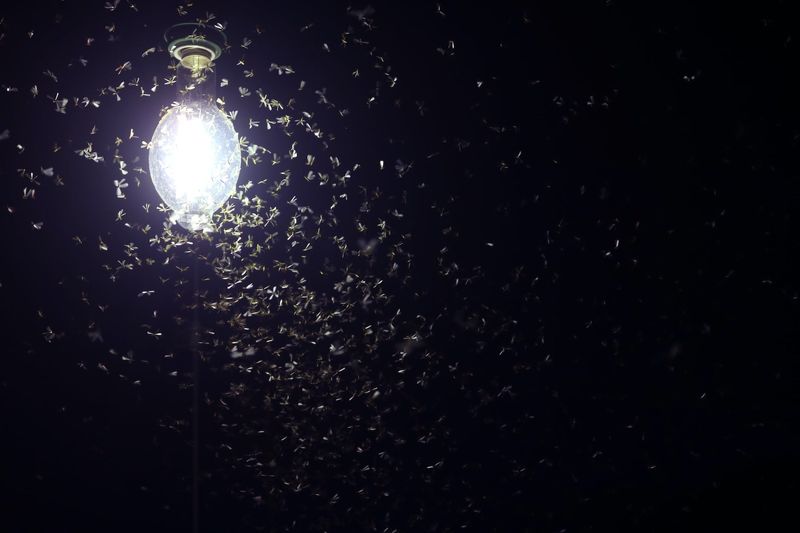
Outdoor lights do not attract black widows directly. What they do is pull in flying insects, and wherever insects concentrate, a spider that feeds on them has a reason to stay nearby.
Moth-heavy walls and insect-covered door frames become de facto feeding stations for any web-building spider already present in the area.
Spider extension resources note that exterior lighting can indirectly support spiders by concentrating prey near doors, walls, and other lit surfaces. The recommended correction is practical: turn off lights that are not needed, reposition necessary fixtures so they shine away from entry points rather than directly onto them, and consider bulbs marketed as less attractive to insects, such as yellow or amber LED options.
A PLOS One study on artificial light at night and spider-web prey abundance found that artificial lighting can increase the number of insects caught in spider webs, suggesting that lit locations may support more active web-building activity. That is a meaningful finding for anyone trying to reduce encounters near a frequently used door or garage entrance.
University of Minnesota Extension guidance on spiders reinforces that reducing insect populations around a structure is one of the more practical indirect ways to make an area less hospitable to web-building spiders. Lighting changes are a prey-management step, not a guaranteed spider deterrent, but they address a real and adjustable contributing factor.
Paired with habitat reduction and exclusion, they make the overall approach more complete.
Remove Webs Without Disturbing Hidden Spiders
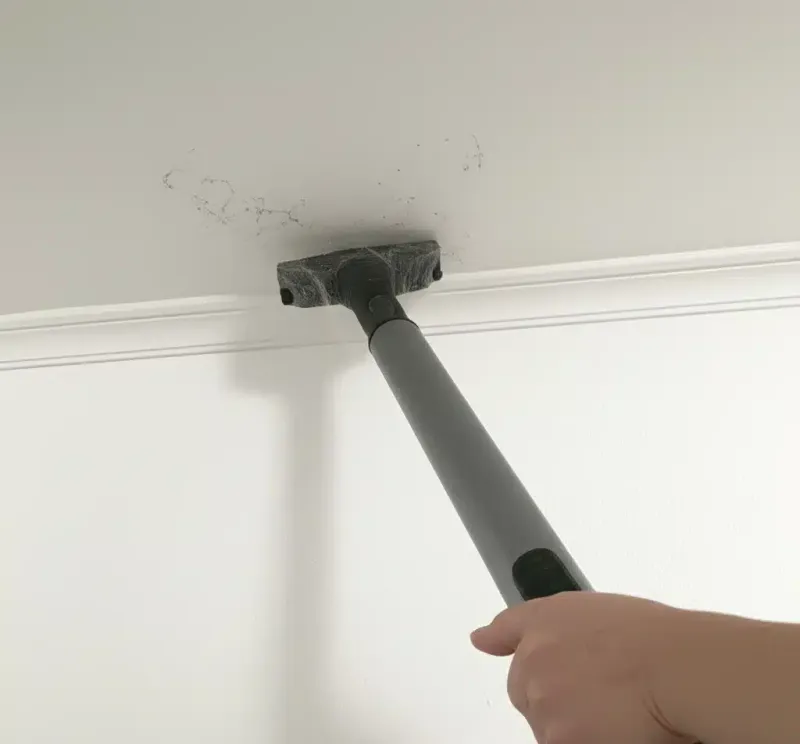
Seeing a web does not mean a spider is sitting in plain sight. Widow webs are typically irregular, tangled, and anchored close to the ground or in a sheltered corner, and the spider often retreats into a dark recess during daylight hours.
Removing the web mechanically is a more reliable first step than reaching into the space behind it.
A stiff-bristled broom, a vacuum with a hose attachment, or a strong stream of water from a garden hose can clear webs from exterior surfaces, fence posts, garage door frames, and foundation corners without requiring close contact with any hidden spider. UC IPM guidance on spiders lists mechanical removal as a preferred approach before reaching for pesticides, and extension spider resources describe sanitation and habitat reduction as the foundation of any spider management plan.
Gloves are not optional. CDC guidance on venomous spiders recommends wearing gloves when handling materials that may harbor spiders, and Poison Control’s guidance on black widow spiders notes that most bites occur when a spider is accidentally pressed against skin or trapped, not because it attacks.
Gloves, a flashlight, and a tool to shift objects before touching them are the three habits that prevent most unintended contact.
Avoid blind reaches into corners, behind stored items, or under furniture. If web activity keeps returning in a spot that is difficult to access, or if you find multiple active webs in a confined area like a crawl space or dense storage area, that is a reasonable point to contact a licensed pest professional.
NPIC guidance on spiders recommends professional help for heavy or hard-to-reach infestations rather than attempting to treat them alone. Removing visible webs is a good habit; blindly disturbing a densely occupied space without protection is not.
Use Pesticides Only After Habitat Reduction
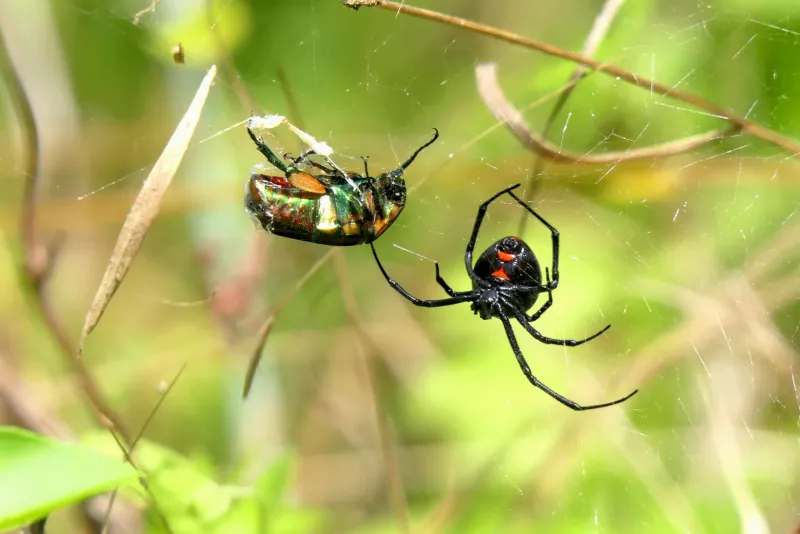
Reaching for a spray can before clearing clutter and sealing gaps puts the steps in the wrong order. Pesticides applied to a yard full of debris and open cracks have less contact with the spiders that matter and more contact with surfaces people and pets touch regularly.
UF/IFAS widow spider guidance cautions that broad perimeter sprays can degrade in sunlight quickly and increase exposure to people and nontarget organisms, making targeted treatment after sanitation the more sensible sequence.
If persistent activity continues after you have removed clutter, sealed gaps, trimmed vegetation, and eliminated obvious web sites, a targeted pesticide application can be a reasonable next step. Extension spider resources recommend choosing a product specifically labeled for the intended pest and site, and following the label exactly.
The label is a legal document, not a suggestion, and it specifies the application rate, locations, and precautions that make the product both effective and safer to use.
NPIC guidance on do-it-yourself pest control emphasizes that pesticides cannot substitute for removing the conditions that make a space attractive to spiders in the first place. A spray applied to an unchanged yard will not solve a recurring problem.
For persistent or extensive activity, particularly in crawl spaces, wall voids, or other areas that are difficult to treat safely, a licensed pest professional is better equipped to assess the situation and apply treatment where it will actually be effective.
Keep the goal proportionate. Most spiders in a California yard are ecologically useful predators.
The aim is reducing encounters in high-use zones, not achieving a spider-free property.
Identify Widow Spiders Without Handling Them
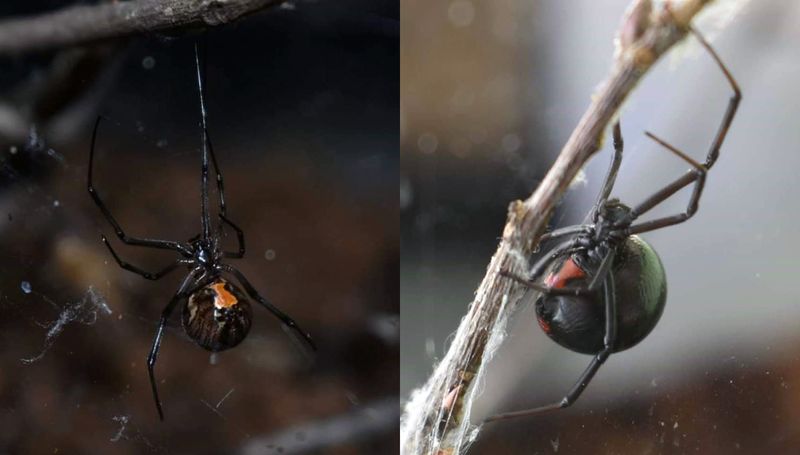
A shiny black body and a red marking on the underside can point toward an adult female western black widow, but those two features alone are not enough to make a confident identification, and they are certainly not a reason to pick the spider up. Immature females often show white, yellow, or red striping on the abdomen before they develop the solid black adult coloring.
Males are smaller, lighter in color, and look quite different from the females most people picture.
Brown widows, Latrodectus geometricus, add another layer of complexity. They are established across Southern California and are frequently found around human structures.
UC IPM’s widow spider guide notes that brown widows can be confused with immature black widows, and distinguishes their egg sacs clearly: brown widow egg sacs have distinctive pointed projections on the surface, while western black widow egg sacs are smoother and more rounded. That egg sac difference is one of the more reliable visual clues available without handling either spider.
False black widows and other cobweb spiders can also produce the dark, tangled, irregular webs that homeowners associate with widow spiders. UC IPM’s general spider guide and University of Minnesota Extension spider guidance both note that most spiders are beneficial predators and that misidentification is common when people rely on a single visual feature.
If you want a reliable identification, take a clear photograph from a safe distance and submit it to your local UC Cooperative Extension office or a licensed pest professional. Do not attempt to capture the spider by hand or handle egg sacs.
The practical goal here is reducing risky encounters in high-use areas, not eliminating every spider from your yard, most of which are doing useful work.
Respond to a Suspected Bite With Calm, Clear Steps
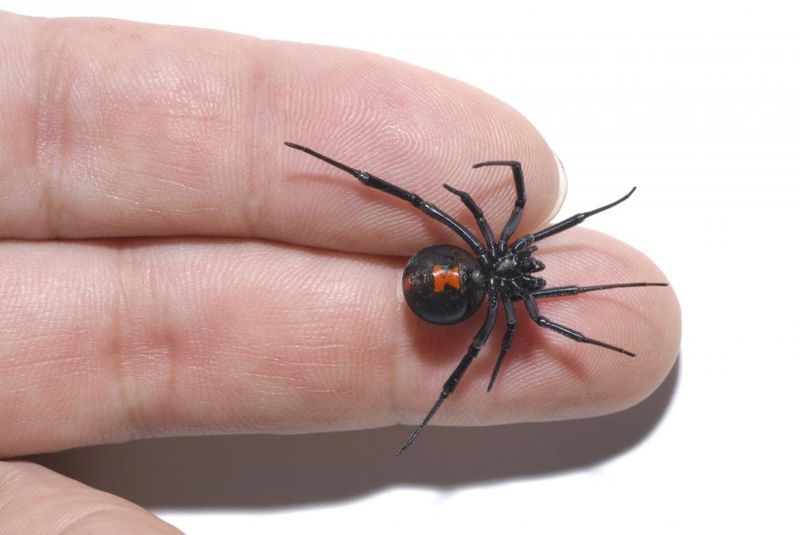
Most widow bites happen in a predictable way: a hand reaches into a woodpile, a foot slides into a shoe left in the garage, or a person sits against a wall where a spider was resting. The spider bites defensively when it is pressed against skin or trapped.
Black widows do not chase or attack people. Knowing that changes how you think about the risk and how you respond to it.
If you suspect a black widow bite, MedlinePlus guidance on black widow spider bites recommends washing the area thoroughly with soap and water, applying a cool compress to reduce discomfort, and staying calm. Contact Poison Control at 1-800-222-1222 right away for guidance specific to the person bitten.
CDC guidance on venomous spiders recommends seeking medical care promptly after any suspected widow bite.
Poison Control’s black widow spider resource identifies the symptoms that require prompt medical attention: severe pain at or away from the bite site, abdominal or chest cramping, muscle spasms, nausea or vomiting, weakness, or difficulty breathing. Children, older adults, pregnant people, and those with existing health conditions are at greater risk of more serious symptoms and should seek care quickly.
Fatal outcomes from western black widow bites are rare, but significant symptoms are possible and should be taken seriously.
After any bite incident, the most useful follow-up is a careful look at where it happened and what conditions allowed it. A specific habit change, moving that woodpile, adding a light to the garage corner, or keeping shoes off the floor, does more long-term good than a blanket spray of the entire yard.
Calm, targeted adjustments are what actually reduce the next encounter.