
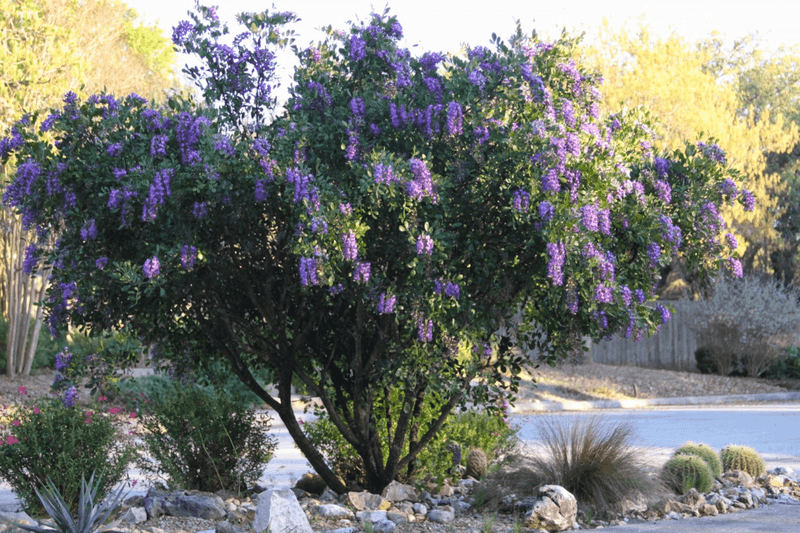
A tree growing quietly in yards across Central and South Texas has been making headlines with a startling claim: that it is more toxic than rattlesnake venom. The plant behind that warning is Texas mountain laurel, a native evergreen known for its gorgeous purple flowers and bright red seeds.
Those seeds do contain real toxins that can cause serious harm if chewed or swallowed. But before you reach for a chainsaw, the full picture is more measured and more useful than the headline suggests.
The tree behind the warning is Texas mountain laurel
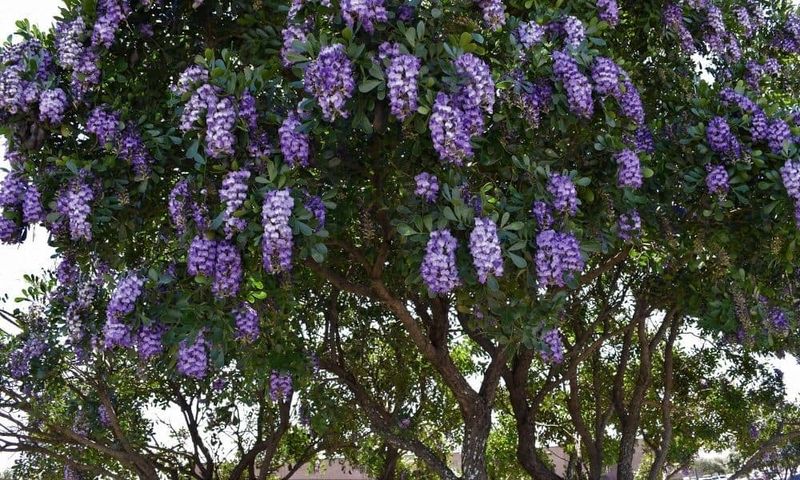
Spend any time in a Central or South Texas neighborhood and you have probably walked past a Texas mountain laurel without giving it a second thought. Formally classified today as Dermatophyllum secundiflorumSophora secundiflora and long known by its former scientific name , this slow-growing evergreen turns up in rocky limestone yards, along caliche driveways, and in the brushy edges of Hill Country properties.
According to Texas A&M AgriLife Extension, the plant is native to Central, South, and parts of West Texas, where it thrives in the alkaline, well-drained soils that defeat less adapted species.
The corrected answer to the headline’s question is worth stating plainly: yes, the seeds of this tree are genuinely poisonous when chewed or swallowed, and that risk deserves serious attention. What the evidence does not support is ranking its toxicity above rattlesnake venom.
Poison Control’s mescal bean toxicity resource documents real poisoning risk from the seeds, but no credible comparison places Texas mountain laurel above rattlesnake venom on a toxicity scale.
Calling the tree dangerous to touch, or treating it as something every homeowner must remove immediately, overstates what the science actually shows. The plant is also an officially recommended drought-tolerant native, valued by Texas landscape professionals for its resilience and beauty.
Understanding both sides of that picture gives homeowners a far more useful starting point than alarm alone.
Recognize the evergreen shrub by its flowers, pods, and seeds
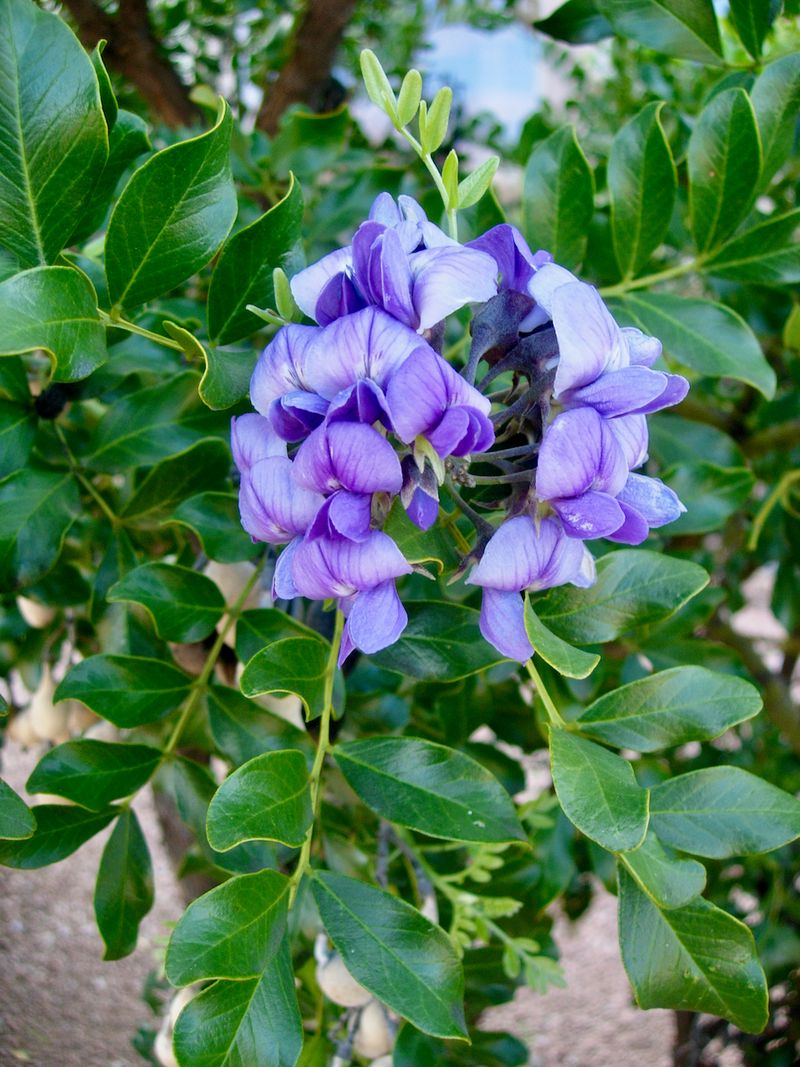
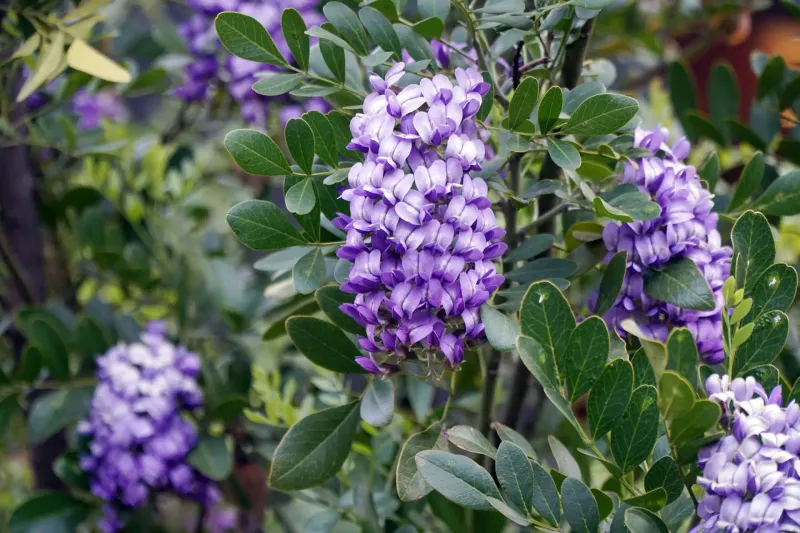
Few Texas natives announce spring as memorably as Texas mountain laurel. Each March and April, the tree erupts in dense clusters of purple flowers that smell almost exactly like grape soda, a scent strong enough to stop visitors mid-step.
Those blossoms give way to thick, woody pods that eventually split open to reveal hard, glossy seeds colored a vivid orange-red, sometimes called mescal beans.
The foliage is equally distinctive. Leaves are leathery, dark green, and arranged in a compound pattern along each stem, giving the canopy a dense, tidy look year-round.
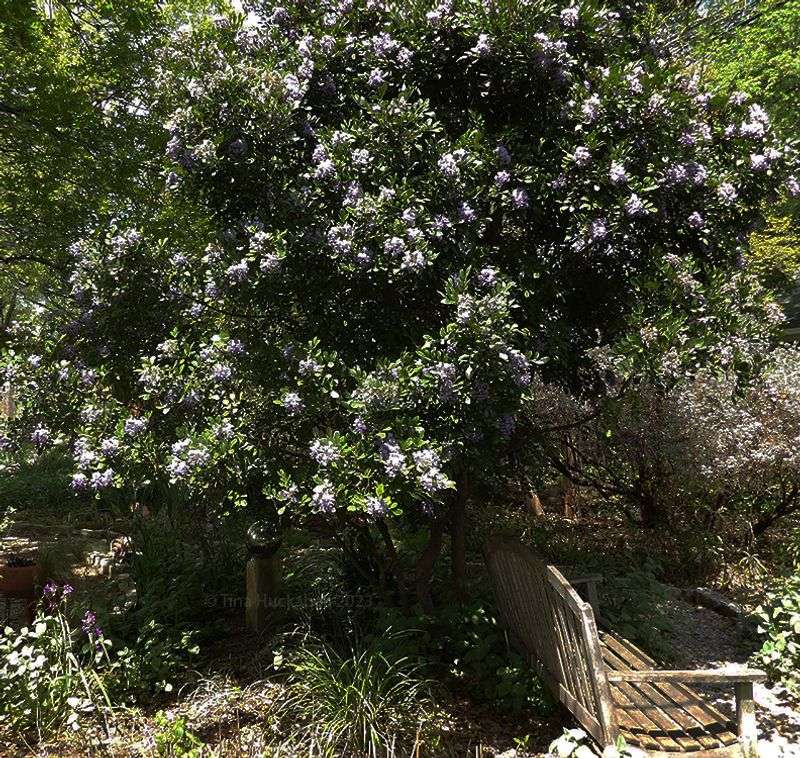
The plant grows slowly, typically reaching somewhere between 12 and 20 feet under good conditions, though many specimens stay shrub-sized for years. Texas A&M’s Texas Tree Selector describes it as a drought-tolerant native well suited to dry conditions and alkaline soils, making it a natural fit for the limestone-heavy landscapes common across the Edwards Plateau and South Texas brush country.
Gardeners in Austin and surrounding areas have long relied on it as a low-water, low-maintenance option. The City of Austin’s plant guide lists Texas mountain laurel as a plant that prefers good drainage and performs well with limited irrigation once established.
For a state where summer water restrictions are a fact of life, that combination of toughness and ornamental value is hard to beat. One important note for shoppers and readers: Texas mountain laurel is a completely different plant from true mountain laurel, Kalmia latifolia, which grows in eastern North America and carries different toxins entirely.
The red seeds contain the main toxic compounds
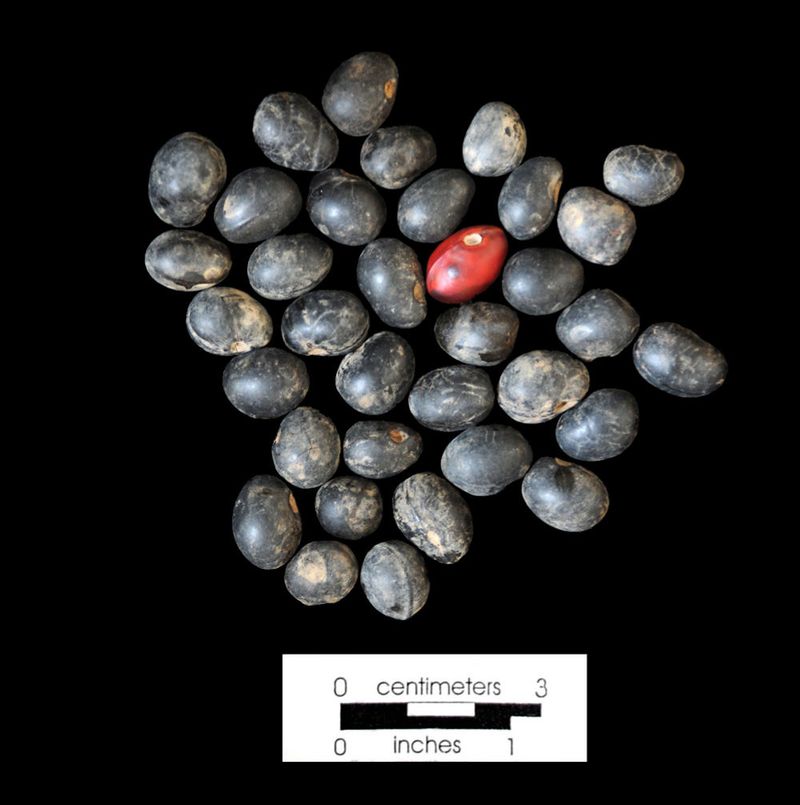
What makes Texas mountain laurel a plant worth understanding, rather than simply admiring, is what is packed inside those eye-catching red seeds. The plant contains a group of compounds called quinolizidine alkaloids, and Poison Control identifies cytisine as the principal alkaloid in mescal beans.
Cytisine works at the same receptors in the nervous system that nicotine targets, which is why poisoning from these seeds can produce effects that look a lot like severe nicotine toxicity.
Earlier chemical investigations support this identification. A published study on Sophora secundiflora seeds found cytisine to be the dominant alkaloid present, and related research into the structure and toxicity of alkaloids from this species helped characterize how these compounds behave.
That pharmacological background explains why mescal bean poisoning cases can progress quickly once a meaningful amount of cytisine enters the body.
How the seed is handled matters significantly. Texas A&M AgriLife Extension notes that whole seeds can pass through a livestock digestive system largely intact, while ground or chewed seeds are absorbed far more readily and therefore create greater concern.
That distinction is real and worth knowing, but it is not a green light for casual handling. Poison Control is clear that any possible ingestion warrants expert guidance, because a seed that was partially chewed, or one swallowed by a small child or a dog with a strong jaw, carries a very different risk profile than one that passes through unbroken.
Toxicity also depends on how much was consumed and the size and health of the person or animal involved. Treating an intact seed as automatically harmless is a mistake no responsible source recommends.
Poisoning symptoms can affect the digestive, cardiovascular, and nervous systems

Reports of mescal bean poisoning describe a range of effects that can span multiple body systems. On the digestive side, vomiting and abdominal pain are among the effects documented in the literature.
The cardiovascular system can show changes including low blood pressure and a rapid heart rate. Neurological effects reported in poisoning cases include confusion, agitation, tremors, and other changes in mental status.
Poison Control’s mescal bean resource notes that the desired hallucinogenic effects historically sought from these seeds come packaged with serious toxic effects, and that medical attention may be needed. Livestock accounts, compiled in sources like the Merck Veterinary Manual’s table of poisonous range plants, describe additional signs including trembling, stiffness, falling, and temporary recumbency in animals that consumed the foliage or seeds.
Those livestock observations are not a direct template for what a person or a pet dog would experience, but they reinforce that the alkaloids in this plant are pharmacologically active in mammals.
Not every exposure produces every symptom, and outcome depends on factors including the amount consumed, whether the seed was chewed, and the individual’s size and health. The central documented concern is ingestion, particularly chewing seeds.
Texas A&M’s range plant profile does not describe ordinary skin contact with intact leaves or bark as a routine poisoning hazard. That said, anyone who develops unexpected symptoms after handling the plant, or who is unsure about the nature of an exposure, should seek expert guidance rather than waiting to see what happens.
The rattlesnake-venom comparison is not supported
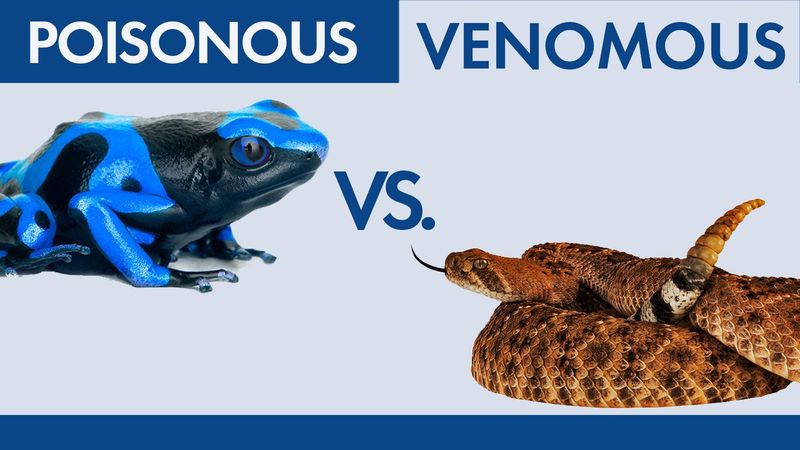
The headline’s most dramatic claim, that Texas mountain laurel is more toxic than rattlesnake venom, deserves a direct answer: the sources reviewed here do not support it. Before explaining why the comparison breaks down, a basic distinction helps.
Poison Control explains that venom is a toxin delivered by an animal through a bite or sting, while poisonous substances cause harm when ingested, inhaled, or absorbed. Texas mountain laurel is poisonous; it is not venomous.
Comparing the two requires bridging very different mechanisms of harm.
Even setting that distinction aside, a meaningful toxicity comparison must match the substance being tested, the dose used, the species it was tested in, and the route of exposure. Oregon State University’s Extension toxicology resource on dose-response relationships makes clear that LD50 values, the standard measure of lethal dose, can vary enormously depending on whether a substance is swallowed, injected, inhaled, or tested in a particular animal model.
Comparing an ingested plant alkaloid to injected snake venom using a simple multiplier is scientifically weak unless the underlying tests were designed to be directly comparable, and no such comparison is documented in the sources reviewed here.
A figure claiming something is
Manage seeds and respond promptly to possible ingestion
Keeping a Texas mountain laurel in the yard does not require extraordinary measures, but it does call for a few deliberate habits. The clearest priority is making sure children, dogs, and other pets cannot chew on the seeds or pods.
Young children explore the world with their mouths, and the bright red color of mescal beans makes them genuinely appealing to small hands. Teaching kids early that no yard seed or berry goes in the mouth, regardless of how attractive it looks, is a habit that protects against far more than just this one plant.
When pods drop and split open, picking up fallen seeds from play areas and pet runs is a practical step worth taking, especially during the weeks after the pods mature. Poison Control also cautions against using the seeds in homemade preparations, teas, or intentional experiments seeking hallucinogenic effects, noting that any psychoactive effects come alongside potentially severe toxicity.
There is no safe recreational dose documented in the reviewed sources.
If a person may have swallowed a seed, do not wait for symptoms to appear and do not attempt to induce vomiting or use a home remedy. Contact Poison Control immediately at 1-800-222-1222 or use the online tool at webPOISONCONTROL for real-time guidance.
If the person collapses, has a seizure, has trouble breathing, or cannot be awakened, call 911 without delay. Speed matters more than trying to manage the situation at home.
For pets, the response is equally time-sensitive. Contact a veterinarian or an animal poison service promptly if your dog or cat may have chewed a seed or pod.
Risk depends on the amount ingested, the animal’s size, and other individual factors, so professional assessment is always preferable to a wait-and-see approach.
Keep the native tree when you can control access to its seeds
Removing every Texas mountain laurel from every yard would mean losing one of the state’s most drought-capable native trees for no well-supported reason. Texas A&M’s Texas Tree Selector recommends it as a landscape choice precisely because it handles the alkaline soils and dry conditions that challenge so many other species.
For homeowners already dealing with water restrictions and triple-digit summers, that kind of resilience is a genuine asset.
The practical question is not whether the tree is dangerous to stand near, but whether you can manage access to its seeds and pods around the people and animals in your household. A yard without young children or seed-curious dogs presents a very different risk profile than one with toddlers and a breed known for chewing everything in reach.
Austin’s plant guide confirms the tree does best in full sun to partial shade with well-drained soil and minimal supplemental water after establishment, so siting it away from the main play area, or in a part of the yard where fallen seeds can be monitored and cleared, is often all the management needed.
When shaping is necessary, light pruning right after the flowering period works best. Texas A&M’s pruning guidance notes that slow-growing natives can struggle to recover from severe cuts, so removing only what is needed preserves the tree’s natural form and long-term health.
Texas mountain laurel is a plant that rewards thoughtful placement and steady attention far more than it demands fear. The real lesson is not that the tree is a hazard to be eliminated, but that knowing what it is and where its seeds fall puts you firmly in control.