
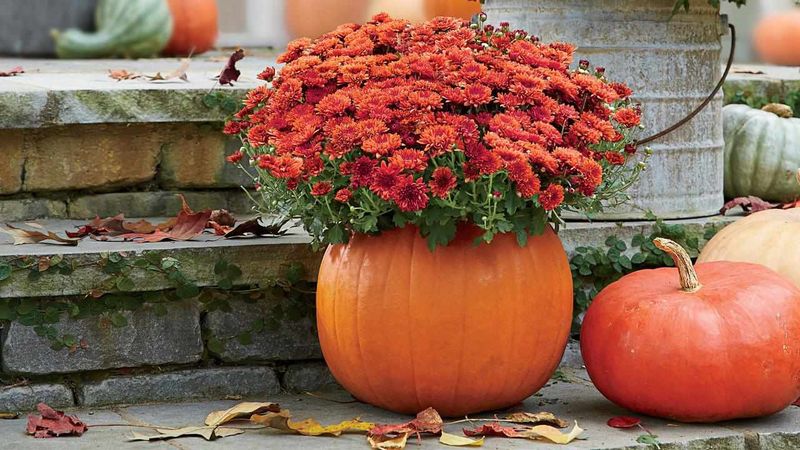
When summer annuals start looking ragged on a Central Texas porch, a garden mum can swap in and bring a fresh burst of color just as the season turns. These plants, also called hardy chrysanthemums, are not summer survivors so much as fall specialists that hit their stride when days get shorter and nights cool down.
Knowing what they can and cannot do makes all the difference between a beautiful autumn container and a frustrating disappointment.
A fall reset, not a summer miracle
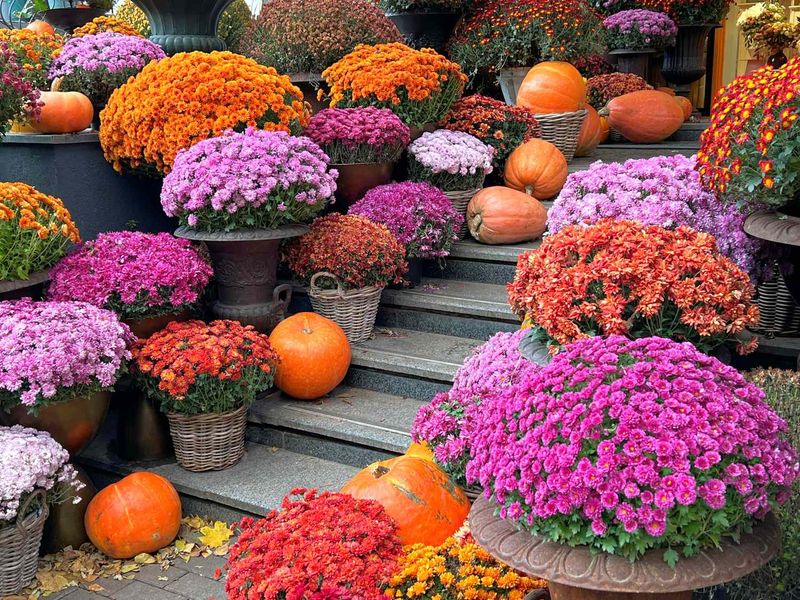
Garden mums, known botanically as Chrysanthemum x morifolium, are the plant behind that striking fall container you keep seeing on Texas porches once the heat finally begins to ease. Their strength is seasonal: they deliver a full, colorful display precisely when petunias, vincas, and other summer workhorses start looking burned out and thin.
Swapping a heat-worn pot for a mum loaded with jewel-toned flowers in rust, gold, or deep purple is one of the fastest visual resets a Central Texas gardener can make.
What “coming back” actually means for a mum deserves a straight answer, though. A plant can remain attractive in a container for several weeks through the fall season.
It can also survive winter, go dormant, and regrow from the crown the following spring. Or it can return weakly, flower poorly, or not return at all.
Texas Master Gardener guidance on mums describes them clearly as fall plants whose flowering is triggered by shorter days, not as plants that power through the hottest Central Texas summer weeks.
The word “reviving” also needs a quick correction before this article goes any further. A mum that pushes up new growth after winter is not recovering from summer heat stress.
That regrowth follows seasonal dormancy or crown survival, which is a different process entirely. Treating a garden mum as a fall-color plant that may become a repeat performer under favorable conditions is the most honest and useful way to approach it.
That framing keeps expectations realistic and helps gardeners make better decisions about where, when, and how to plant.
Buy a garden mum, not just any potted mum
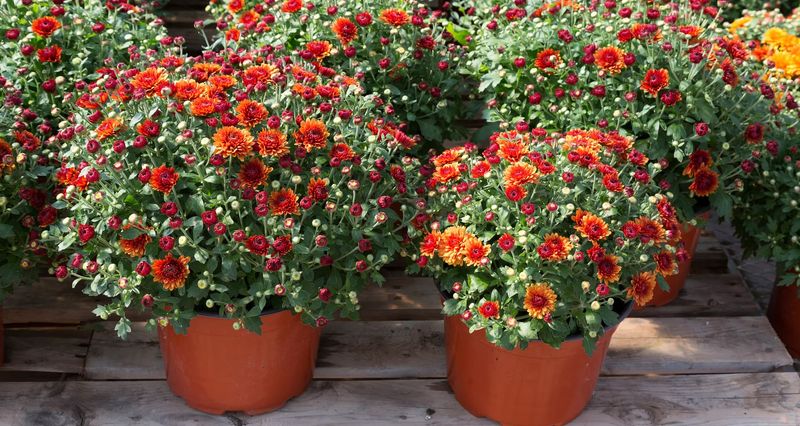
Not every chrysanthemum sitting in a nursery rack is built for outdoor performance. The distinction matters more than most shoppers realize.
Garden mums, sometimes labeled hardy mums or outdoor garden cultivars, are bred to grow, establish roots, and potentially rebloom in an outdoor setting. Florist mums and decorative pot mums are a different story.
University of Georgia Cooperative Extension guidance on florist versus garden mums explains that florist types are typically produced in greenhouses for short-term indoor or seasonal display and may not survive or rebloom reliably once placed outside.
When you are shopping at a garden center or big-box store in September, look at the tag before you look at the flowers. Words like “garden mum,” “hardy mum,” or “outdoor perennial” are better signals than a generic “chrysanthemum” label with no additional information.
A plant marketed purely as a decorative pot mum may give you a few beautiful weeks and then decline without any chance of returning next season, regardless of how well you care for it.
There is also a practical buying tip that applies to any mum you choose: pick the plant with the most unopened buds rather than the one already showing the most open flowers. Oklahoma State University fall mum guidance points out that fully open blooms look great at the point of sale but have less display time remaining.
A pot covered in tight buds will reward you with weeks of color that unfolds gradually, while a plant already in full bloom may start dropping petals within days of arriving home.
Shorter days create the mum’s best show
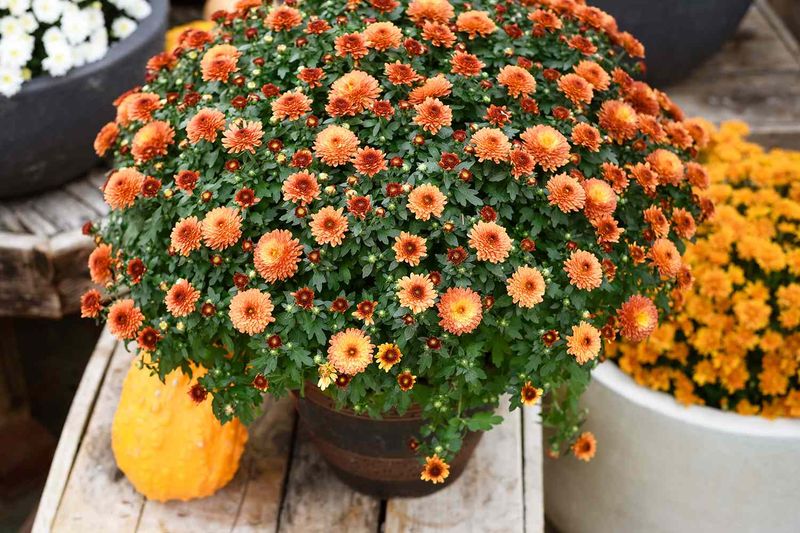
Mums do not bloom because the weather finally feels nice. They bloom because the days get shorter.
Galveston County Master Gardener plant notes on chrysanthemums confirm that mums are short-day plants, meaning they begin forming flower buds when nights grow long enough and remain uninterrupted by artificial light. That response is tied to the calendar, not to temperature alone.
Cooler autumn temperatures play a supporting role by helping those flowers last longer once they open. A mum blooming in September or October in Central Texas will hold its color far better than one forced to open during the heat of August, when high temperatures shorten flower life noticeably.
Grayson County Master Gardener mum coverage reinforces the point that mums are fall plants by design, not plants that push through summer and then happen to bloom.
Planting a mum in July or August and expecting a nonstop summer show is a setup for disappointment. The plant is not a dependable performer during Central Texas’s hottest summer weeks, and the flowering mechanism simply is not triggered until day length shortens in late summer and fall.
Texas Master Gardener guidance from Grayson County notes that mums need at least about six hours of direct sun, though afternoon shade can help during intense late-summer heat without eliminating the plant’s light requirement. Provide the light, time the planting for fall, and let the season do what it does naturally.
Build a container around shallow roots
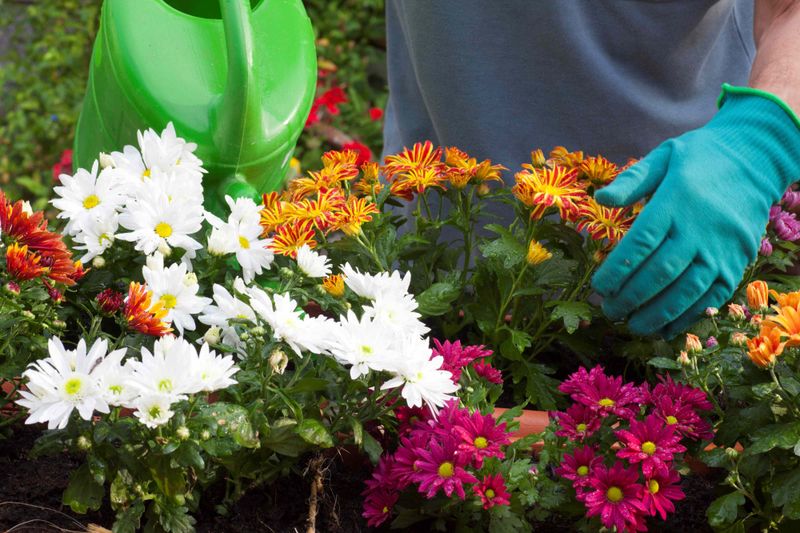
A good container setup for a fall mum starts at the bottom: drainage holes are non-negotiable. Oklahoma State University mum care guidance is direct about using a well-drained growing medium, because mum roots are shallow and react badly to standing water.
Constantly wet soil creates conditions where root problems develop quickly, which can end a plant’s season before the best blooms even open.
At the same time, those same shallow roots can dry out fast, especially in the warm, dry conditions that Central Texas often delivers well into October. Victoria County Master Gardener container guidance emphasizes checking the root ball directly rather than relying on how the surrounding soil looks or feels.
A small nursery root ball can be bone dry while the potting mix an inch away still holds moisture. Water thoroughly each time, let it drain fully, and then check again before the next watering.
Sun placement matters as much as water management. Aim for at least about six hours of direct light daily, but consider moving a container away from harsh west-facing afternoon exposure during the warmest weeks of early fall.
A spot that catches morning sun and gets some relief from the worst afternoon heat gives the plant strong light without cooking the root zone inside a dark pot.
September or early October is a reasonable general window for getting a garden mum established in Central Texas, based on Texas Master Gardener planting guidance, but local conditions vary widely across Austin, San Antonio, the Hill Country, and points south. Check your local frost patterns and current temperatures rather than following a fixed date.
Earlier establishment always gives roots more time to settle before cold weather arrives, so when in doubt, plant sooner.
What determines whether it returns
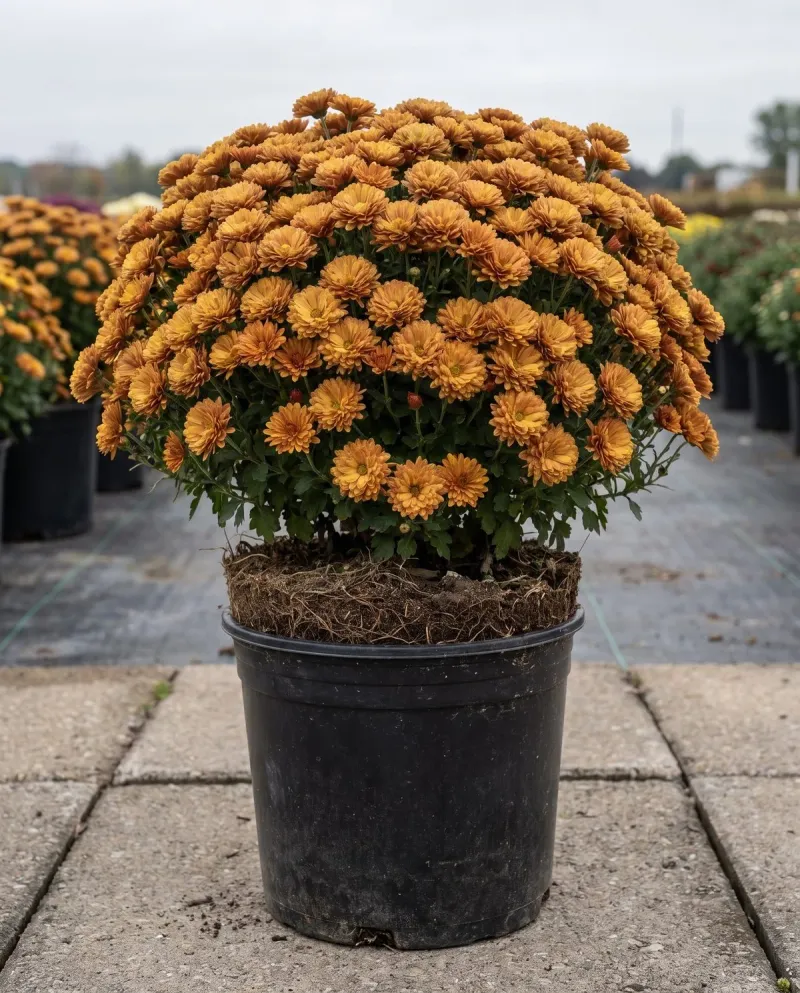
A mum that looks great on your porch through October is not automatically a mum that will reappear next spring. Those are two separate outcomes, and understanding the difference saves a lot of frustration.
One plant may remain attractive for several weeks and then decline after frost. Another may survive winter, go dormant, and send up new growth from the crown in spring.
A third may return but flower weakly or grow leggy. And some simply will not come back, regardless of care.
Container survival is generally more conditional than in-ground survival. A pot exposes the root system to faster moisture loss and wider temperature swings than garden soil does.
During a hard freeze, an above-ground container can drop to damaging temperatures far more quickly than the same plant would experience with soil insulating its roots from below. The safest honest statement is that a potted garden mum may return if conditions are favorable, not that it reliably will.
Oklahoma State University extension guidance on mum care makes a practical distinction: leaving a mum in its original nursery container works fine for temporary seasonal decoration. However, gardeners who want the plant to have any real shot at perennializing should plant it into the ground or a larger container promptly rather than leaving it in that small nursery pot through winter.
Root establishment before the first freeze significantly affects survival odds.
Several factors influence the outcome without any one of them being a guarantee. Cultivar selection, planting date, drainage quality, moisture consistency, how well roots established before cold arrived, freeze severity, and regional microclimate all play a role.
Grayson County Master Gardener mum guidance treats perennial performance as conditional throughout, which is the right framing for Central Texas gardeners who want honest expectations rather than a promise the plant cannot always keep.
Prepare a surviving crown for another season
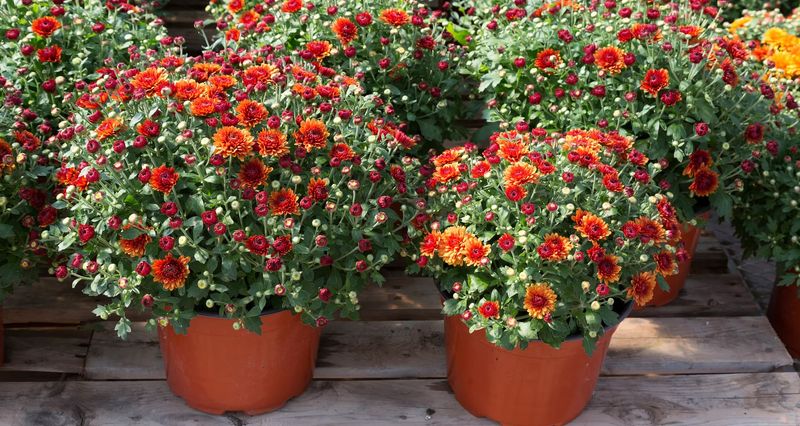
When a mum does survive winter and sends up new growth in spring, that is the moment to act rather than wait. Pinching is the key practice: removing the actively growing tips encourages the plant to branch out and fill in rather than grow tall and spindly.
A pinched mum going into fall will typically produce more flower buds across a fuller, more compact shape than one left to grow unchecked.
Texas Master Gardener guidance on mum pinching recommends continuing to pinch growing tips through the spring months but stopping around mid-July in southern regions. Pinching after that point removes the developing flower buds the plant needs for its fall display.
Miss the cutoff, and the plant may grow lush but bloom sparsely or not at all until very late in the season.
Preparing the plant for winter after it finishes blooming also helps improve its odds for next year. Trimming the plant back after flowering and adding a layer of mulch around the crown can reduce exposure to cold air and temperature swings.
Oklahoma State University mum care recommendations support both practices as winter preparation steps, and Williamson County Master Gardener fall newsletter guidance aligns with the mid-July pinching cutoff for the southern region. Neither trimming nor mulching is a guarantee of survival, but both give a surviving crown a better environment to wait out winter and respond to warming temperatures in spring.
Place the color where pets cannot chew it
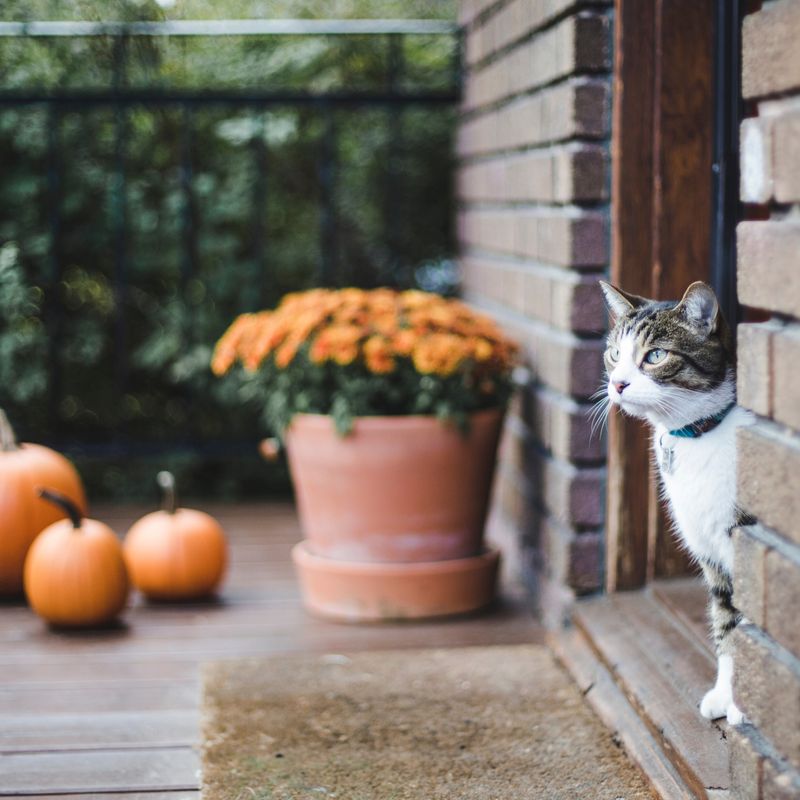
A front porch or patio is exactly the right place to show off a fall mum’s color, but the placement decision involves more than aesthetics. The ASPCA lists chrysanthemums as toxic to dogs, cats, and horses, and the reported signs of exposure include vomiting, diarrhea, excessive salivation, incoordination, and dermatitis.
Not every animal that sniffs a mum will show every symptom, but the risk is real enough to take seriously.
Placing the container on an elevated surface, a porch railing shelf, a tall plant stand, or a spot behind a barrier puts the foliage and flowers out of reach of curious pets. A dog that chews on mum stems or a cat that nibbles the leaves has access to the compounds that cause those reactions.
Moving the pot does not require sacrificing visibility from the street or the front door.
This is also a good moment to note what mums are not. They are not pest-repelling plants and should not be used as a substitute for actual pest control in the garden.
The presence of certain compounds in chrysanthemum plants does not mean a living ornamental mum produces enough of anything to reliably repel or harm yard insects. Use the mum for color, position it safely, and keep it away from animals that might treat it as a snack.
Use the mum for fall color, with realistic expectations
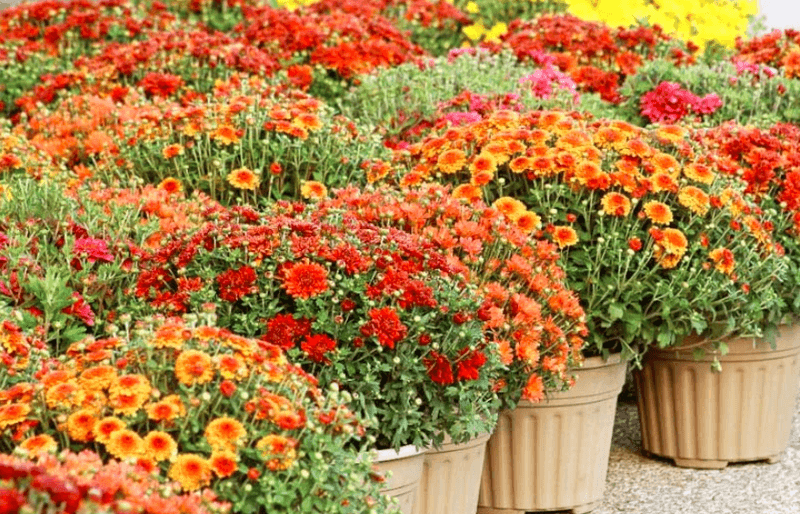
A garden mum earns a place in a Central Texas container when you want immediate fall color and can commit to direct light, regular moisture checks, and a pot with solid drainage. Oklahoma State University mum care guidance and Texas Master Gardener planting recommendations both point toward the same practical checklist: choose an outdoor garden cultivar, pick a plant with many unopened buds, and plant it promptly into a well-drained spot if repeat performance is the goal.
Repeat performance remains conditional. No potted mum is guaranteed to come back, and a “hardy” label describes the cultivar type rather than a promise for every container, microclimate, or freeze event.
Place the container where pets cannot reach the foliage, and do not use it as a stand-in for heat-tolerant summer annuals during the hottest weeks of the year.
Used honestly, a garden mum is one of the most visually satisfying fall swaps available to Central Texas gardeners. The best ones do not just look good for a few weeks; they remind you that fall in Texas has its own kind of gardening season worth preparing for.