
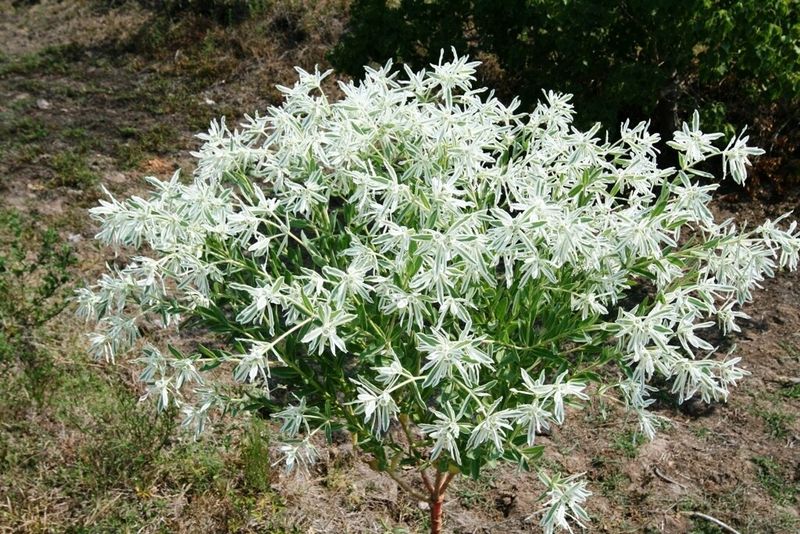
Hard clay soil turns most flower beds into a frustrating graveyard of wilted, struggling plants, but one Texas native actually prefers those conditions. Snow-on-the-prairie, known botanically as Euphorbia bicolor, puts on a pale, almost ghostly display of white-edged leaves from midsummer through fall, right when most of the garden has given up.
For Texas gardeners dealing with dense, difficult clay, this plant deserves a close look.
A Texas native that can handle hard clay
Snow-on-the-prairie, Euphorbia bicolor, is a Texas-native annual in the spurge family, and it stands out as a strong candidate for gardeners dealing with dense, difficult clay. Texas Parks and Wildlife specifically identifies this plant as preferring hard clay soils, which already sets it apart from the many ornamentals that sulk or fail in those conditions.
That preference, documented by a state agency familiar with Texas terrain, is the honest core of the plant’s reputation.
Reaching roughly one to four feet tall, snow-on-the-prairie grows in full sun to part shade. Harris County Master Gardeners, writing through Texas A&M AgriLife Extension, describe it as an excellent plant for poor soils that can tolerate both moist and dry conditions.
That combination of clay preference and moisture flexibility makes it genuinely useful in Texas beds that swing between baked-hard summers and soggy spring weeks.
The University of Texas notes that the plant often grows over three feet tall and can form large populations, so a single planting can build into a real seasonal presence over time. Still, calling it the only flower that can grow in clay would be an overstatement.
Texas supports many clay-adapted natives, and snow-on-the-prairie is best understood as a reliable, well-matched option for difficult beds rather than a guaranteed solution for every challenging site.
What “taprooted” really means
Botanical descriptions of snow-on-the-prairie consistently note that the plant is taprooted, meaning it sends a single main root downward rather than spreading a wide, shallow mat of roots near the surface. The University of Texas botanical description of Euphorbia bicolor confirms this taproot structure.
That detail is worth knowing because it shapes how the plant establishes and why it dislikes transplanting once it has settled in.
What the available sources do not tell us is how deep that taproot actually grows, or whether it physically cracks, loosens, or rehabilitates compacted clay around it. Taprooted plants are often associated with drought resilience because a central root can reach deeper soil moisture, but that is a general characteristic of the growth form, not a documented clay-busting superpower specific to this species.
Claiming that the roots break up hard soil or improve the surrounding clay for neighboring plants goes further than the evidence supports.
The honest and practical takeaway is this: snow-on-the-prairie’s clay tolerance is real and documented, but it comes from the plant’s documented preference for clay soils and its ability to handle variable moisture, not from any proven root-driven soil improvement. Texas Parks and Wildlife’s profile of the species grounds the plant’s value in its clay preference and late-season display, which is exactly where the confidence should sit.
Treat the taproot as a botanical fact about root structure, not as a promise about what happens to the soil around it.
The “snow” comes from bracts, not petals
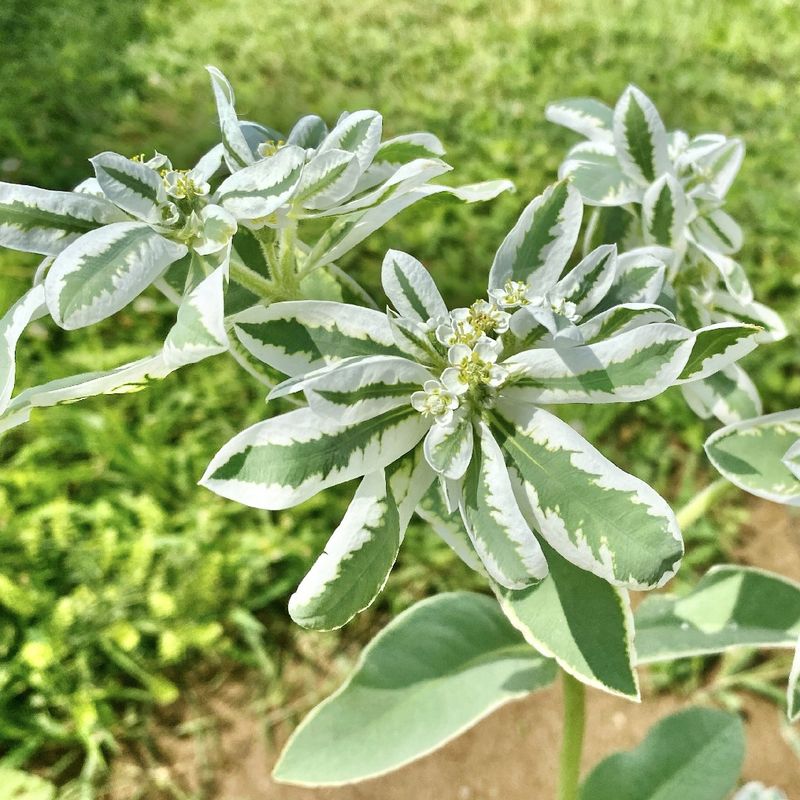
Look at a colony of snow-on-the-prairie in late July and you might genuinely do a double-take. The upper leaves of each stem develop wide white margins, and when hundreds of plants grow together, the effect really does resemble a pale dusting across a field.
That visual impact is what earned the plant its evocative common name, and it holds up in person.
The showy white portions are not petals, though. They are modified leaves called bracts, and the true flowers are tiny structures called cyathia tucked within those bracts.
Texas Parks and Wildlife explains this bract-and-cyathia structure clearly, and understanding it helps set realistic expectations: you are not getting a classic flower with large, showy petals, but rather a plant whose foliage transforms into something that reads as floral from a distance.
The bloom window runs approximately from July through October, which is a genuinely useful slot on the Texas gardening calendar. The University of Texas describes snow-on-the-prairie as sometimes the only conspicuously flowering plant during the hottest, driest part of summer, when bluebonnets and other beloved spring wildflowers are long gone.
That late-season presence is the plant’s most practical selling point for Texas gardeners who face a long, colorless stretch between spring bloom and fall cool-season planting.
Match the plant to the right Texas site
Geography matters before anything goes in the ground. Snow-on-the-prairie occurs naturally in eastern, central, and north-central Texas, including coastal-prairie areas, and that is where it is most likely to perform reliably.
The University of Texas wildflower database places Euphorbia bicolorEuphorbia marginata in those regions specifically. Gardeners in the western part of the state are more likely to encounter the similar snow-on-the-mountain, , which is a related but distinct species with broader bracts and a different natural range.
Within the plant’s documented Texas territory, site conditions still need a closer look. Snow-on-the-prairie suits full sun to part shade and performs in hard clay that can shift between moist and dry.
Harris County Master Gardeners confirm that adaptability, but clay tolerance does not mean the plant thrives everywhere clay exists. A low spot that stays wet for weeks after rain, a shallow rocky layer over limestone, or compacted construction fill can all behave very differently from the hard but reasonably drained clay where this plant naturally grows.
Thinking through what kind of clay you have is a genuinely useful step before planting. Texas A&M AgriLife Extension’s soil preparation guidance and UT Austin’s regional native plant lists both underscore that Texas soils vary enormously by region, and matching a plant to its actual site conditions beats relying on a general clay-tolerant label alone.
Improve the whole bed and manage water
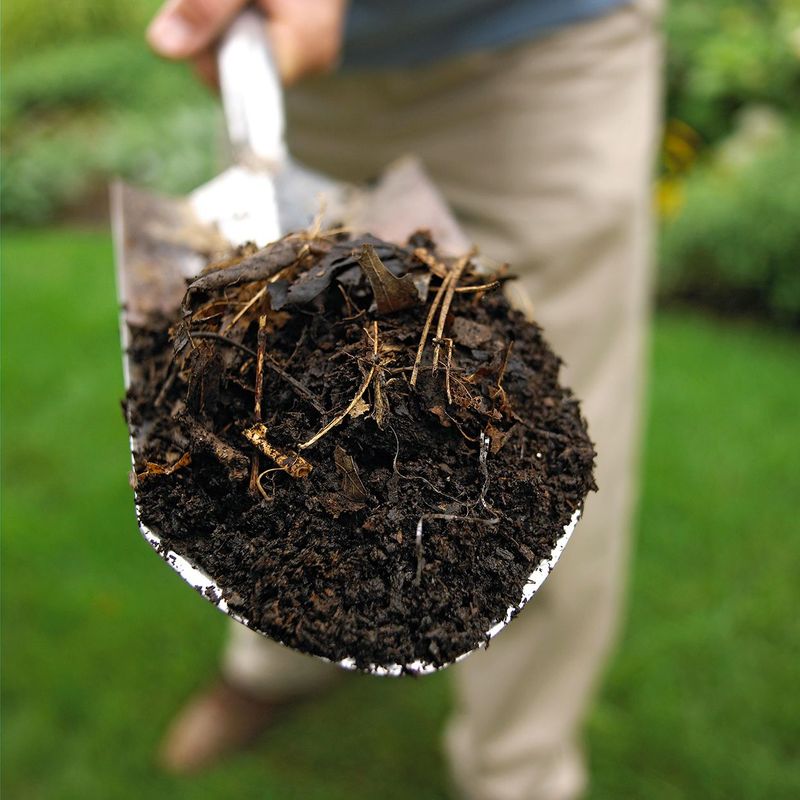
Getting snow-on-the-prairie off to a good start in clay begins with the bed, not just the planting hole. Texas A&M Earth-Kind guidance on compost use recommends working finished compost and other amendments broadly throughout the entire planting area rather than concentrating them in a single hole.
Creating a small pocket of fluffy amended soil around one plant while leaving surrounding clay unchanged can actually cause water to pool or drain unevenly at the boundary between the two very different soil textures, which harms rather than helps establishment.
Working compost into the full bed improves clay structure gradually and gives roots a more consistent environment to grow into. Texas A&M AgriLife Extension’s soil preparation recommendations support this broad-amendment approach for heavy Texas soils.
Even a few inches of compost tilled into the top several inches of the bed can reduce compaction, improve drainage slightly, and help new plants establish more reliably than untouched clay allows.
Watering in clay requires a different mindset than watering in sandy or loamy soil. Clay holds moisture longer, so the surface can look dry and crumbly while the soil several inches down is still quite wet.
UGA Extension’s guidance on watering frequency recommends watering thoroughly and then allowing the soil to begin drying before watering again, rather than applying small amounts on a fixed daily schedule. Shallow, routine watering keeps moisture near the surface and discourages roots from growing deeper.
Before planting in any clay site, run a simple drainage check. Dig a hole about twelve inches deep, fill it with water, and come back after 24 hours.
University of Arizona Cooperative Extension planting guidelines treat standing water remaining after that period as a sign of poor drainage. A site that stays waterlogged is not a suitable location for snow-on-the-prairie, regardless of how clay-tolerant the plant is described as being.
UGA Extension’s landscape watering overview reinforces the same point: both constant saturation and chronic shallow watering create problems that no plant’s tolerance can fully overcome.
Expect an annual display that may renew from seed
One of the most common misconceptions about snow-on-the-prairie is that it will come back reliably year after year from the same root system, the way a perennial does. It will not.
Snow-on-the-prairie is an annual herb, and it does not overwinter in the ground and resprout in spring. Texas Parks and Wildlife’s profile of the species confirms its annual nature, and that distinction matters for planning.
A recurring display is possible, but it depends on successful seed production and on seeds finding conditions favorable enough to germinate the following season. North Texas Farm and Ranch notes that local abundance can shift from year to year based on those conditions.
Gardeners who want a reliable return should allow some plants to set seed fully before cutting the bed back, and they should avoid heavy fall mulching that might bury seeds too deeply to germinate.
Wildlife does interact with this plant in documented ways. Butterflies may visit the cyathia for nectar, adding a bit of movement to what is already a visually interesting late-summer patch.
Mourning doves have been observed eating the seeds, which makes sense given how low to the ground the seed heads eventually fall. These are real and reasonable supporting details, but snow-on-the-prairie should not be marketed as a broad pollinator powerhouse.
The documented wildlife relationships are specific and modest, and they are worth mentioning as a bonus rather than a primary reason to plant.
Handle the milky sap safely
Every part of snow-on-the-prairie contains a milky white latex sap, and that sap deserves genuine respect. Poison Control warns that Euphorbia sap can irritate the skin, eyes, and mouth, and eye exposure in particular can cause blurred vision and temporary blindness.
This is not a reason to avoid the plant, but it is a firm reason to handle it carefully every single time you work with it.
Wear gloves and eye protection whenever you cut stems, pull plants, or handle any part that has been broken or damaged, because even brushing against a snapped stem can transfer sap to your hands. Keep your hands away from your face while working, and wash thoroughly with soap and water when you are done.
Never encourage children or pets to handle or chew on any part of the plant, and skip any home remedy that involves applying the latex to skin or using it medicinally. The sap is not safe to ingest or apply to the body, full stop.
If sap does reach the eye, act immediately. Rinse with comfortable-temperature water for 15 to 20 minutes without stopping.
After rinsing, call Poison Control at 1-800-222-1222 and follow their guidance. Seek medical attention promptly if you notice vision changes, persistent pain, or severe redness.
Quick rinsing makes a real difference in outcomes, so knowing the steps before an accident happens is worth the few seconds it takes to read them now.
A useful late-summer choice for suitable clay
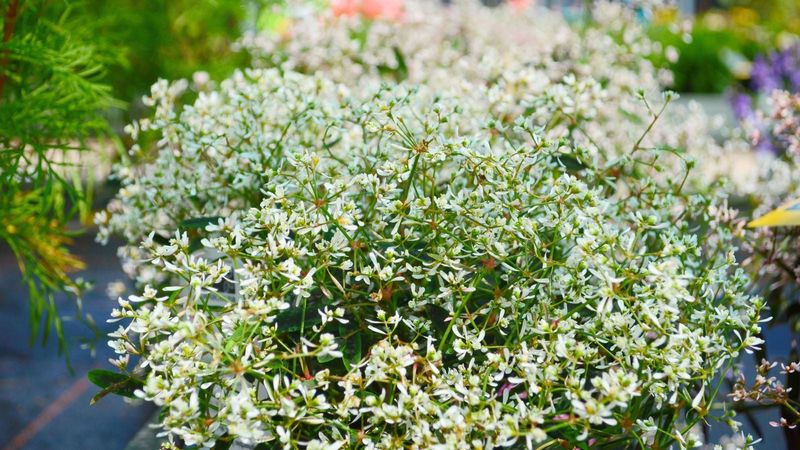
Snow-on-the-prairie earns a place in the Texas garden when the site actually fits the plant. Consider it when your location falls within eastern, central, or north-central Texas, the bed gets full sun to part shade, and the clay drains reasonably well even if it is dense and difficult.
Texas Parks and Wildlife and the University of Texas both document its clay preference and its approximate July-through-October flowering window, which is the honest core of its appeal.
What the plant offers is real: unusual pale color during the stretch of summer when most Texas gardens go quiet, in soil that defeats many ornamentals. What it does not offer is a deep root that busts through compacted earth or a guarantee of return every year.
Matching it to a site with adequate drainage and allowing it to set seed for possible future seasons are the two practical steps that separate a successful planting from a disappointing one. A plant that genuinely prefers your difficult soil and blooms when almost nothing else does is a rare find worth trying.