
If your boxwood hedge is turning brown and begging for water every dry California summer, you are not alone, and you are not doing anything wrong. The truth is that thirsty boxwood was never meant for our long, rainless months, and keeping it alive can quietly drain both your water bill and the groundwater our wildlife depends on. The good news is that California has its own tough, tidy shrubs that shrug off drought, feed local bees and birds, and still give you that clean, formal look along a driveway. Here are nine native swaps that stay green, stay neat, and barely notice when the rain stops falling.
1. Coffeeberry (Frangula californica ‘Eve Case’)
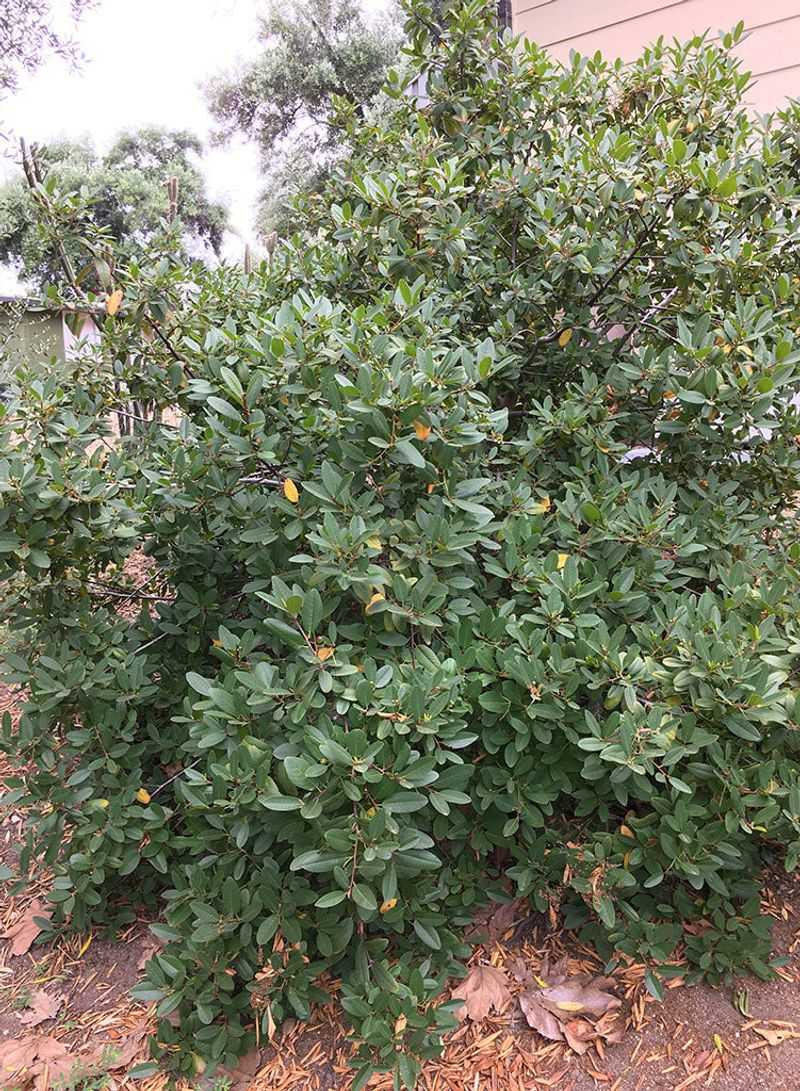
Picture a shrub so calm about summer heat that it barely blinks while your neighbor’s boxwood crisps up like a potato chip. Coffeeberry earns its spot at the top because it may be the closest thing California has to a plug-and-play boxwood replacement, with glossy dark leaves that hold their color straight through the dry season.
The ‘Eve Case’ variety stays compact, usually around four to six feet, and it takes a shearing without sulking. That means you can keep a crisp, rounded edge along the driveway if formal is your thing, or let it soften into a loose mound.
Birds absolutely love the small berries that ripen from red to black, so you get a hedge that doubles as a bird buffet. Once its roots are settled in the first year, it can survive on little more than what winter rains provide, which is a relief when water restrictions tighten.
2. Coyote Brush (Baccharis pilularis ‘Pigeon Point’)
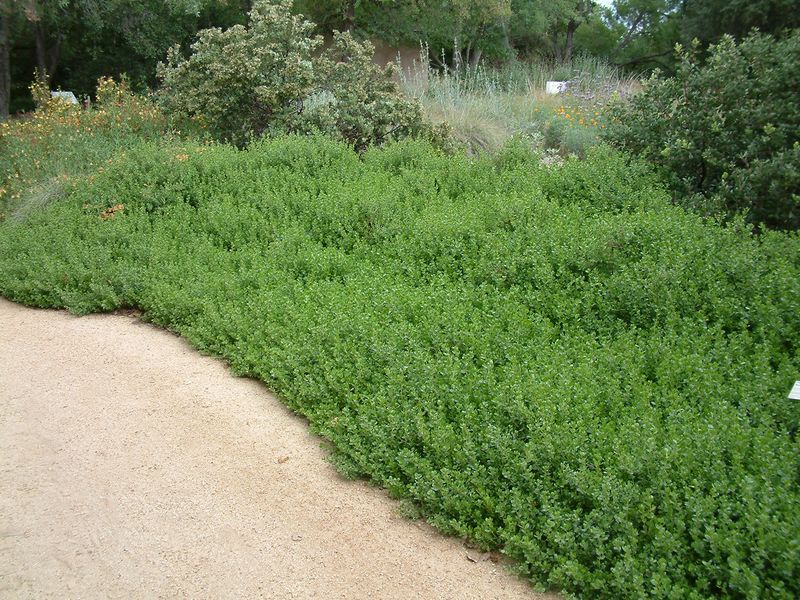
Firefighters and landscapers quietly respect coyote brush for a reason most homeowners never hear about: it stays green and moist deep into the dry season, which can make it a smarter pick near fire-prone driveways than dried-out ornamentals. The dwarf ‘Pigeon Point’ form hugs the ground and spreads into a dense, low mat of tiny bright green leaves.
Along a driveway, it reads almost like a manicured boxwood border once it fills in, minus the constant watering. It shrugs off coastal wind, poor soil, and salty air without complaint.
Late-season flowers are a magnet for native bees, hoverflies, and butterflies when little else is blooming, so you are feeding pollinators during the hungriest stretch of the year. Give it a light shearing in late winter and it comes back thicker than ever.
3. Dwarf Coyote Mint (Monardella villosa)
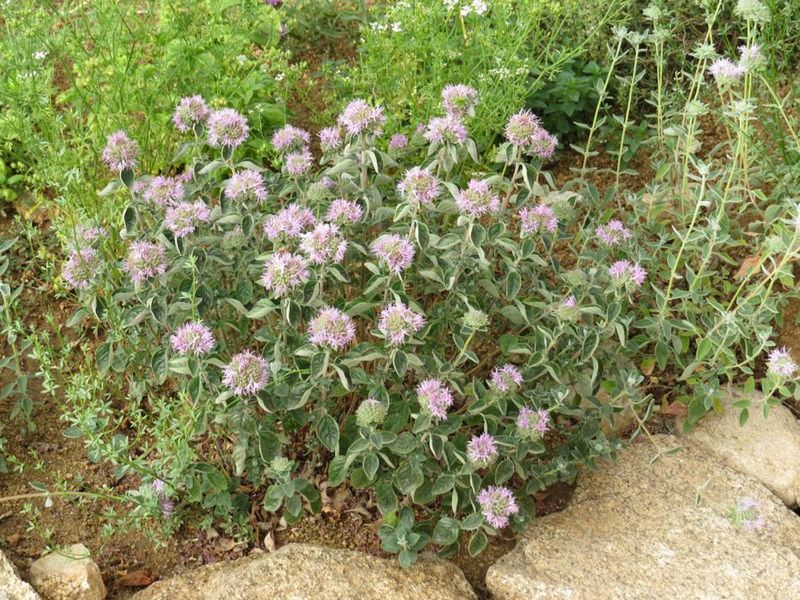
Crush a single leaf between your fingers and this little shrub introduces itself with a wave of minty, herbal scent that lingers on your hands. Dwarf coyote mint makes the list because it brings something boxwood never could: fragrance, and a cloud of lavender pom-pom flowers that hum with bees all summer.
It stays small and tidy, often under two feet, so it works beautifully as a soft front edge along a driveway where people brush past it. That contact releases the aromatic oils, turning a simple walk to the car into a tiny sensory moment.
Butterflies and native bees crowd the blooms, and the plant asks for almost nothing in return once established. A quick trim after flowering keeps it compact and encourages a fresh flush of growth.
4. Cleveland Sage (Salvia clevelandii ‘Winnifred Gilman’)
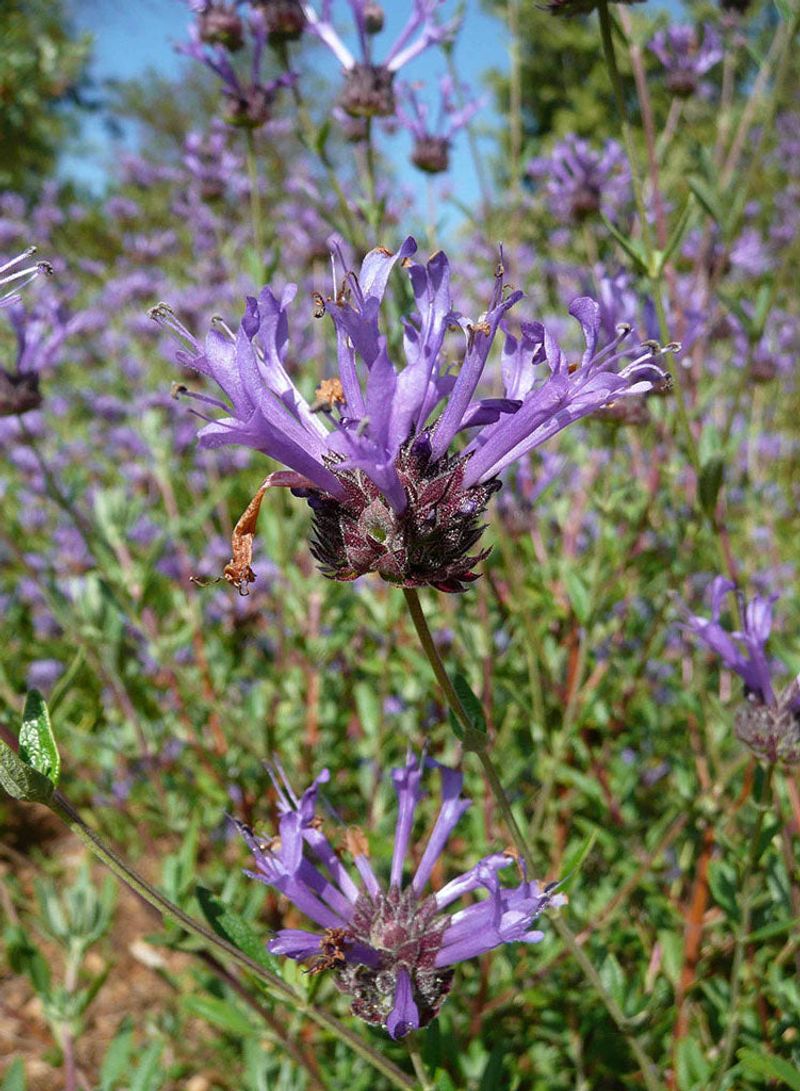
Some plants perfume an entire yard, and Cleveland sage is the champion of that trick, throwing off a rich, spicy scent that drifts on warm afternoon air. Gardeners often plant it near a driveway or path just so they catch that smell every time they come home.
What sets it apart on this list is drama. Tall whorls of electric blue-purple flowers stack up on the stems in late spring, and hummingbirds and native bees treat it like a favorite diner.
The silvery-green foliage stays handsome year-round and can be shaped into a loose, rounded form. Give it excellent drainage and full sun, then step back and stop watering, because too much summer water is one of the few things that can harm it. Skip the sprinklers and it thrives on neglect.
5. Bush Germander Alternative: Manzanita (Arctostaphylos ‘Emerald Carpet’)
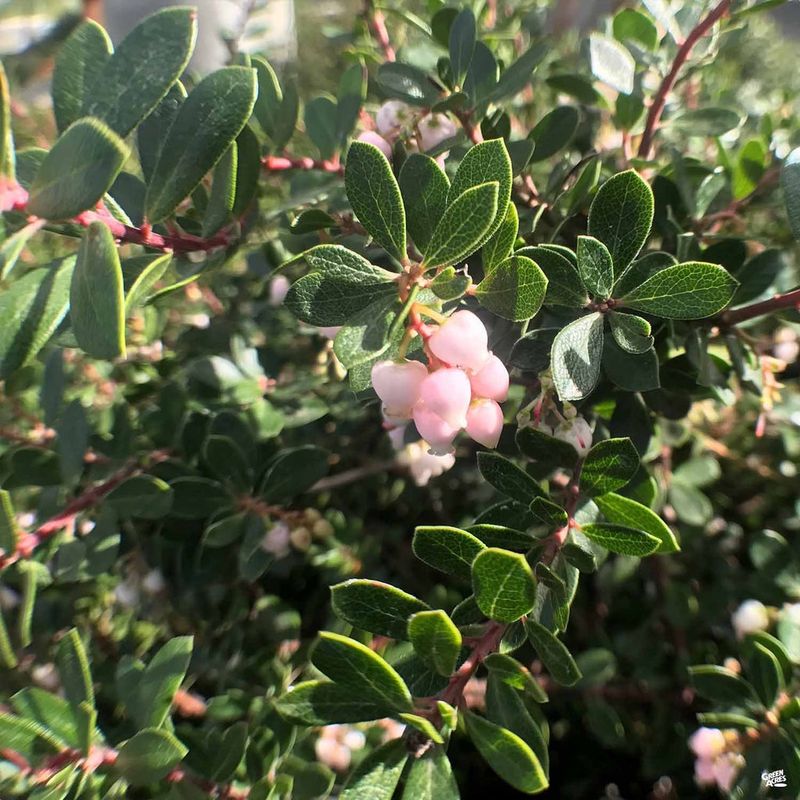
Run your hand over the smooth, mahogany-red bark of a manzanita and you understand why California gardeners fall a little in love with this one. ‘Emerald Carpet’ is the low, spreading cousin in a big family, forming a dense carpet of small, shiny green leaves that stays lush without irrigation.
Its unique claim here is year-round polish. The tidy evergreen foliage looks formal enough to line a driveway, while the winter-to-spring urn-shaped flowers arrive when hummingbirds most need an early meal.
Fun fact: manzanita means “little apple” in Spanish, a nod to the tiny fruits that follow the blooms and feed birds and mammals. It wants sharp drainage and a hands-off approach, so once it settles in, summer water is more likely to rot it than help it.
6. California Buckwheat (Eriogonum fasciculatum)
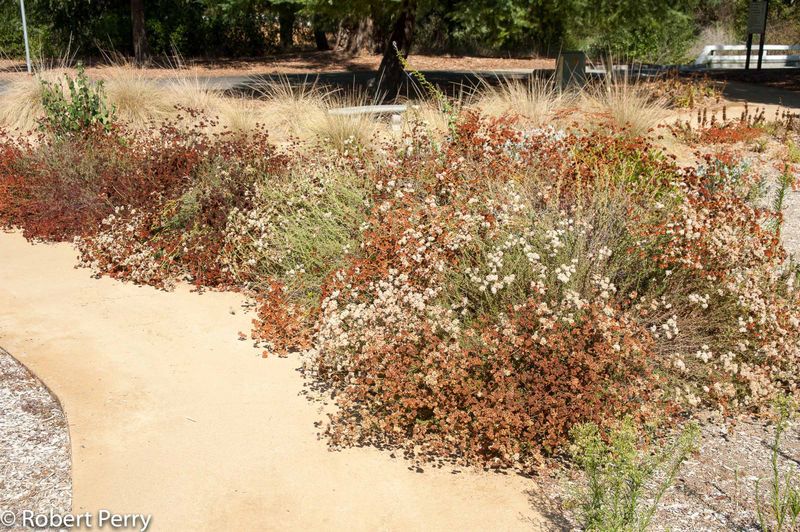
Ask any native-plant nursery which shrub does the most for local insects with the least effort, and California buckwheat comes up again and again. It is arguably the single most important pollinator plant in the state, hosting dozens of native bees and butterflies through the driest stretch of summer.
On a driveway edge it forms a neat, mounding cushion of narrow green leaves topped with creamy flower clusters that age to a warm rust color. That two-tone show stretches from late spring well into fall.
It laughs at rocky, sandy soil and reflected heat from pavement, which makes it a natural fit for that harsh strip beside the driveway. Leave the dried flower heads through winter and finches will thank you by picking through the seeds.
7. Toyon (Heteromeles arbutifolia)
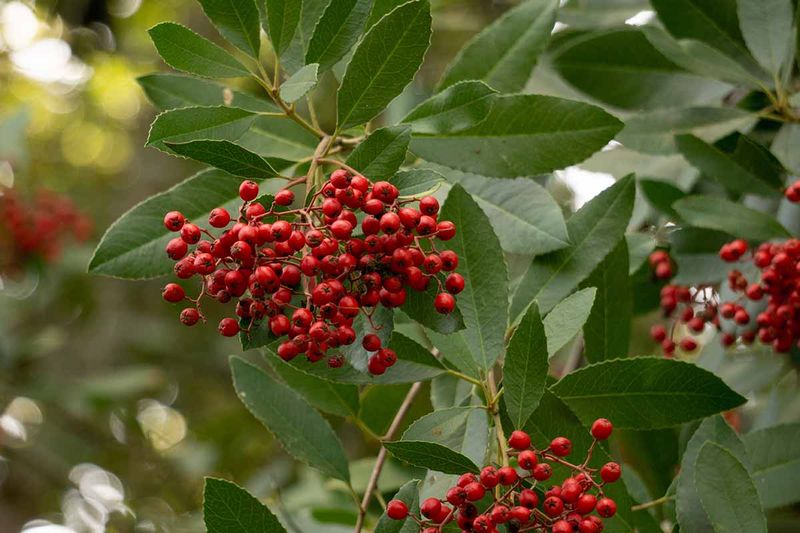
Hollywood supposedly got its name from the bright red berries of toyon blanketing the hills, and once you see them you will understand the fuss. As a driveway hedge, toyon brings a bold, upright presence that few natives can match, with leathery, serrated evergreen leaves that stay glossy through drought.
Where it truly earns a place is the holiday-season berry show. Clusters of scarlet fruit light up the plant in winter, drawing in cedar waxwings, robins, and mockingbirds when food is scarce.
It responds well to pruning, so you can keep it as a tall, dense screen or shape it into a more formal wall along the drive. Deep but infrequent soaks in the first year set it up to sail through every dry summer after that with barely a drink.
8. Sonoma Sage (Salvia sonomensis)
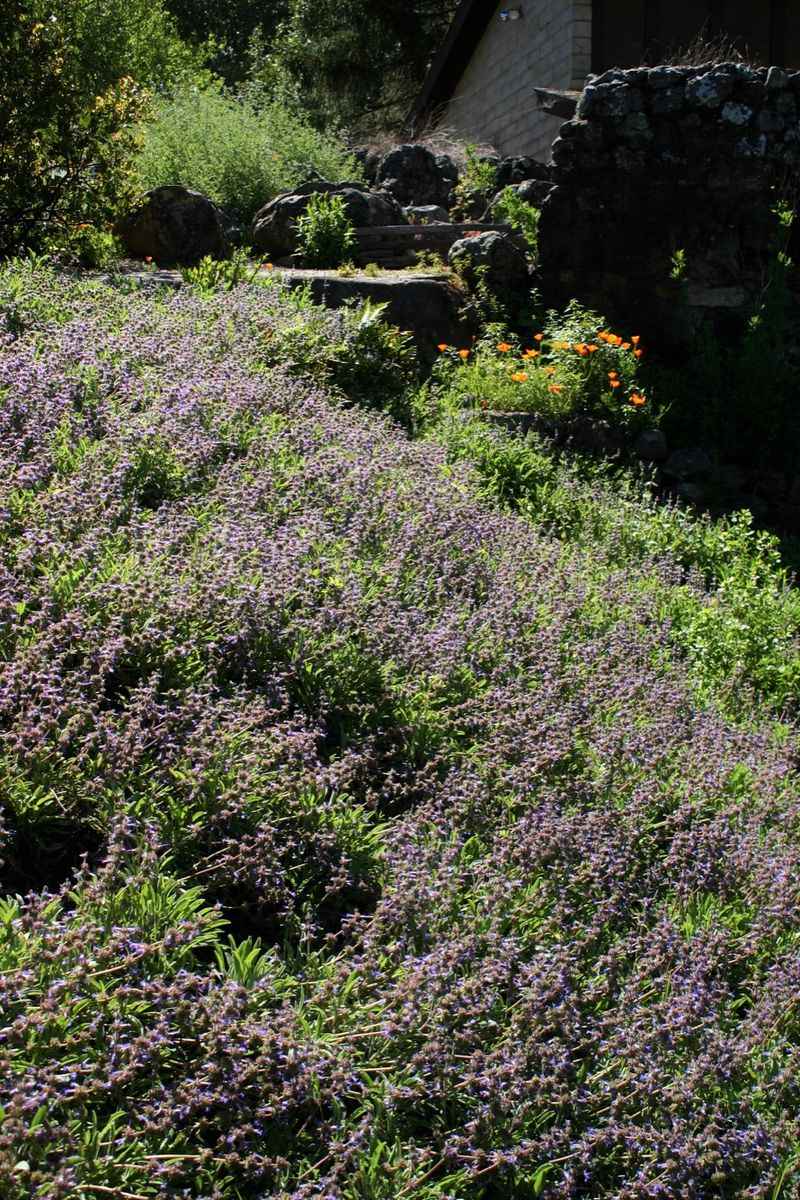
For the spots where you want green and flat rather than tall and bushy, Sonoma sage quietly steals the show. It creeps low across the ground, weaving a soft gray-green mat that can spill along a driveway edge like a living curb.
Its low profile is the whole point, filling the awkward strip where a full hedge would feel too heavy and gravel feels too bare. Small spikes of pale blue to lavender flowers rise up in spring for the bees.
Aromatic leaves release a clean, herbal scent when brushed, and deer tend to leave it alone, which is a bonus in hillside neighborhoods. Plant it on a slope or in fast-draining soil, keep summer water to a bare minimum, and let it knit into a tough, no-mow carpet.
9. Island Bush Snapdragon (Galvezia speciosa)
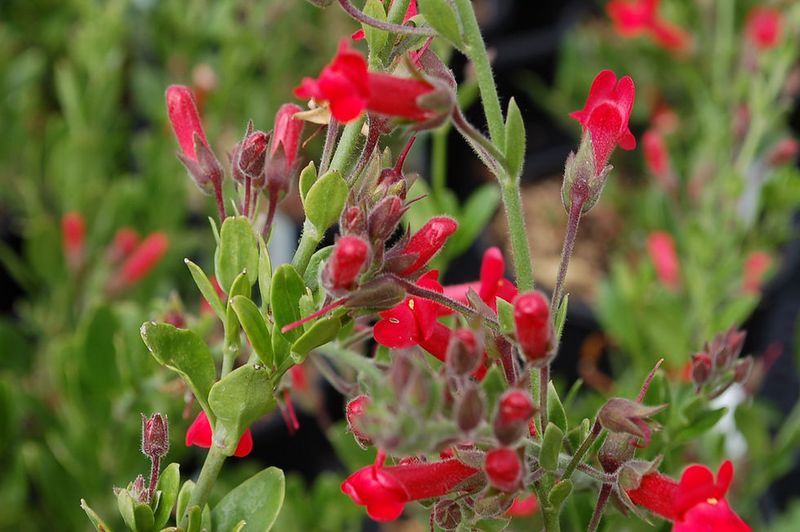
Just when the list feels all about greens and grays, along comes a shrub that blazes with tubular red flowers nearly year-round. Island bush snapdragon comes from California’s Channel Islands, and it brings a splash of color that hummingbirds simply cannot resist.
Its role here is the cheerful accent plant, softening a driveway corner or tumbling over a low wall with arching, bright green stems. Unlike many natives that peak in spring and coast, this one keeps flowering through the hottest months.
It handles coastal conditions, reflected pavement heat, and stretches of no rain with easy grace. Trim it back in late winter to keep it full and to reset a fresh round of blooms, then enjoy the hummingbird traffic all summer long.