
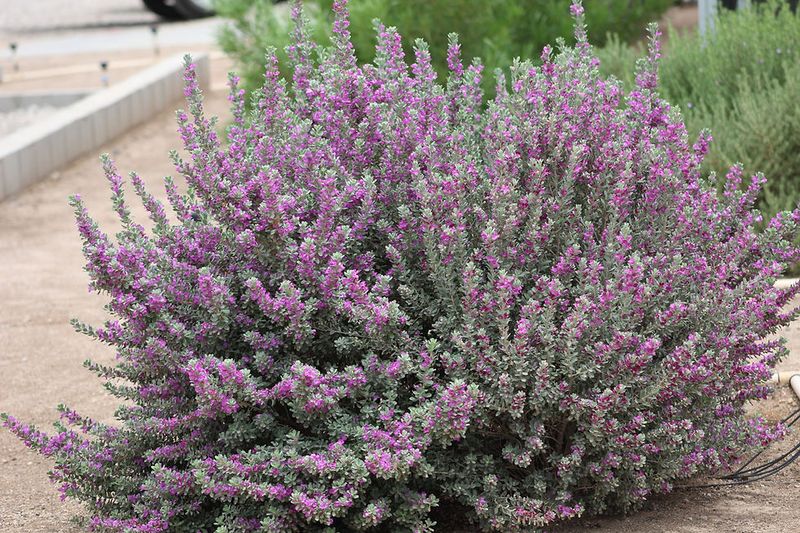
Most Texas gardeners spend summer fighting to keep plants alive, but one native shrub quietly thrives while neighbors are dragging out the hose. Texas sage – known botanically as Leucophyllum frutescens – is a silver-leaved, flowering shrub that handles triple-digit heat with surprising grace.
The real trick is understanding what “less water” actually means for this plant, because the benefit kicks in once it is established, not the moment it goes in the ground. Get the conditions right, and you end up with a low-maintenance landscape standout that earns its keep all season long.
Meet the silver-leaved shrub behind the low-water appeal
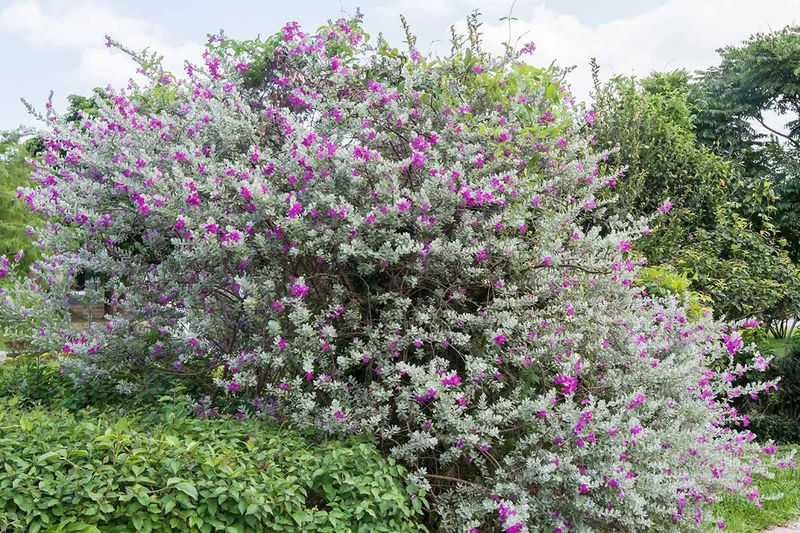
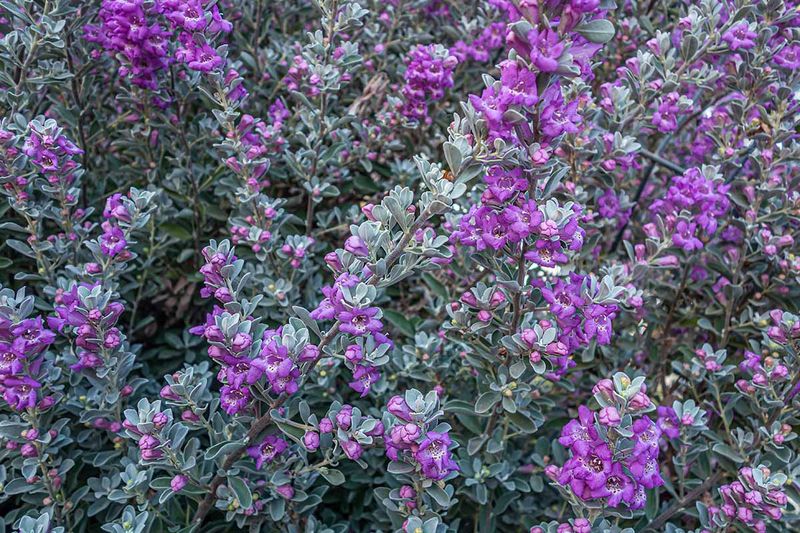
Leucophyllum frutescens goes by several names depending on where you ask: Texas sage, cenizo, Texas ranger, silverleaf, and barometer bush are all common handles for the same sturdy shrub. Native to southwest Texas and northern Mexico, it is a perennial, broadleaf evergreen or semievergreen plant with small, densely packed, silvery-gray leaves that give it a soft, almost frosted look even on the hottest afternoons.
That foliage alone earns it a place in the landscape before a single flower opens.
When blooms do arrive, they show up in short, eye-catching flushes of pink, purple, lavender, or white tubular flowers scattered across the canopy. The color contrast against the silver leaves is striking, and it can repeat several times through the warm season, often appearing after rainfall or shifts in humidity.
The NC Extension Gardener Plant Toolbox identifies it as a broadleaf evergreen shrub suited to hot, sunny conditions with good drainage.
Mature size varies considerably by cultivar and growing conditions. Plants commonly reach around 6 to 8 feet tall and wide, but some cultivars or conditions can push that range to roughly 6 to 12 feet.
Checking the mature dimensions of the specific cultivar before planting near a walkway, window, or foundation is worth the extra step.
The low-water advantage that makes this shrub so appealing to Texas homeowners under water restrictions is real, but it applies mainly after the plant has had time to establish its root system. “Less water” means avoiding unnecessary irrigation once the shrub is settled in, not withholding water from a newly planted specimen or ignoring severe drought symptoms. UF/IFAS Extension notes that excess moisture is a primary cause of decline in this species, which frames the entire low-water story correctly: the shrub rewards restraint, not neglect.
Avoiding overwatering helps established Texas sage perform
Chronically wet soil is one of the fastest ways to ruin a Texas sage. When established plants sit in waterlogged or constantly moist ground, the results can include leaf drop, leggy and stretched growth, poor flower production, root problems, and in serious cases, plant death.
UF/IFAS Extension’s Texas sage fact sheet specifically flags excess water as a key cause of decline, which explains why gardeners who cut back irrigation often see the shrub bounce back and look fuller.
That improvement is the real story behind the title of this article. An established Texas sage tends to perform better when overwatering stops and the soil is allowed to dry between deep waterings.
The benefit comes from removing a stressor, not from pushing the plant toward dehydration. Progressively reducing water past the point of what the plant needs does not reliably produce a better-looking or more floriferous shrub.
Flowering deserves a careful explanation here. Blooms often appear in seasonal flushes and are commonly associated with rainfall or changes in humidity rather than with how little water the gardener applied.
Deliberately stressing an established plant by withholding irrigation is not a supported strategy for forcing more flowers, and sources do not back up that approach. What they do support is avoiding excess moisture and letting the root zone dry appropriately between deep, thorough waterings.
The practical takeaway is a reframe, not a reversal of the title’s promise. Established Texas sage often looks its best when gardeners stop over-irrigating it.
A plant that has been getting too much water can visibly improve once irrigation is scaled back to match actual need. That is a meaningful and useful result for anyone dealing with summer water restrictions – the shrub rewards the kind of restraint that conserving homeowners are already practicing.
Choose sun and drainage before changing the watering routine
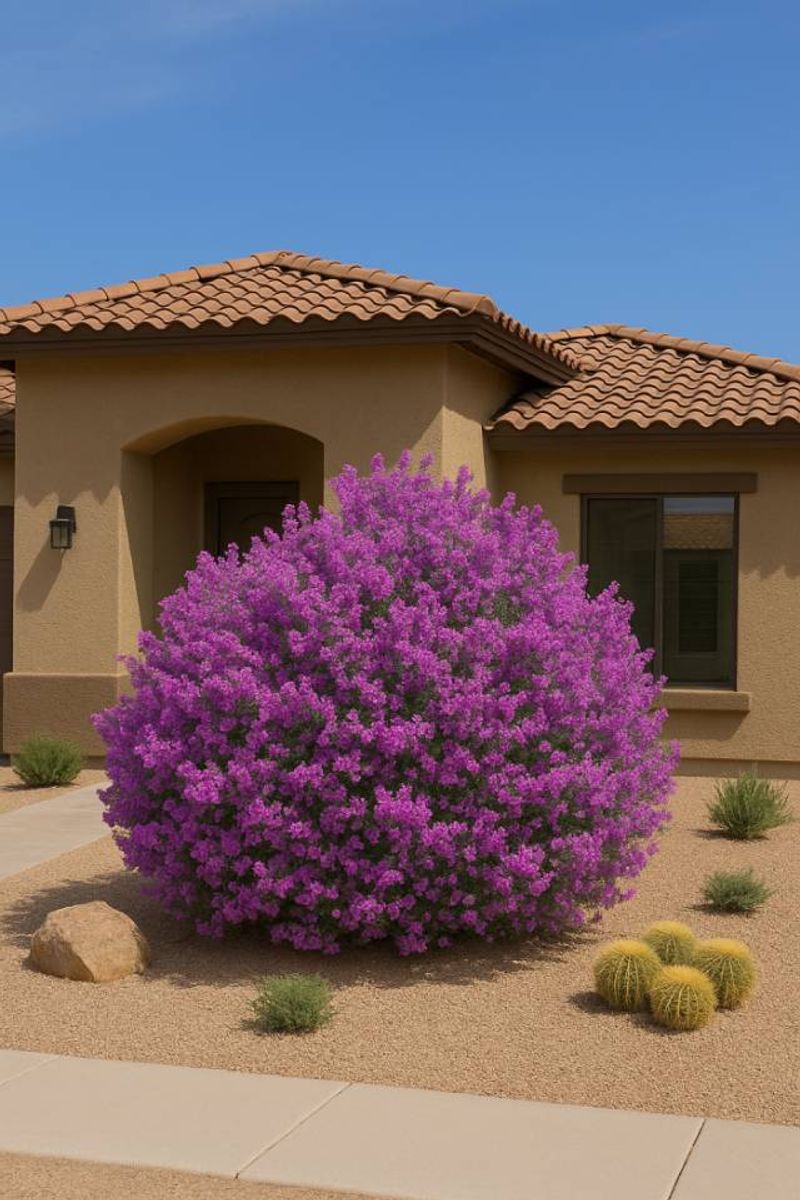
Where you put a Texas sage matters more than almost any other decision you will make about it. Full sun is non-negotiable for the best results: shaded plants tend to grow leggy, produce fewer flowers, and become more susceptible to the moisture-related problems that hurt this shrub most.
A site that receives at least six to eight hours of direct sun per day gives it the conditions it evolved to handle.
Drainage is the other half of the equation, and it may actually be the more critical factor. A plant in heavy, compacted, or poorly drained soil can run into trouble even if the gardener is being careful with the hose.
UF/IFAS Extension emphasizes that well-drained soil is essential, and that locations which stay wet after rain are poor choices for this shrub regardless of how conservatively the irrigation is managed.
Texas sage is associated with alkaline, calcareous, rocky, or relatively low-fertility soils in its native range, and it tolerates those conditions well. That tolerance should not be read as acceptance of any poor soil, though.
The consistent practical requirement across all reliable sources is good drainage. Soil that is lean or rocky can work beautifully as long as water moves through it quickly.
For sites with problematic drainage, raised beds or mounded planting areas can help. Elevating the root zone even a few inches above the surrounding grade can make a meaningful difference in how quickly the soil dries between waterings.
The NC Extension Gardener profile for Leucophyllum frutescens also points to well-drained soil as a primary site requirement, reinforcing that drainage improvement is a legitimate fix worth pursuing before planting.
Before selecting a spot, check the mature size of the specific cultivar you are planting. Most Texas sage varieties reach roughly 6 to 8 feet tall and wide, but some cultivars under favorable conditions can push toward 12 feet.
Planting one too close to a foundation, driveway, or window creates pruning work that could have been avoided with a five-minute label check at the nursery.
Water a new shrub until its roots establish
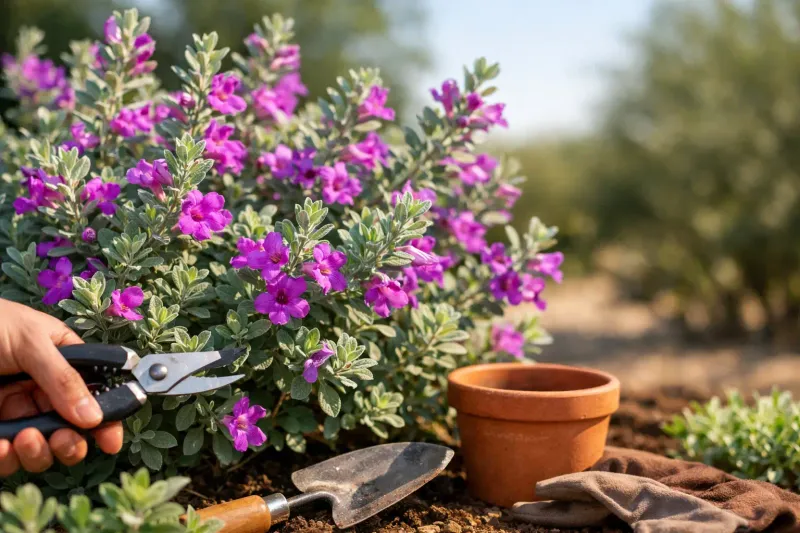
Drought tolerance is a description of an established plant, not a newly installed one. A Texas sage that went into the ground last month has a shallow, limited root system that cannot yet reach deeper soil moisture during a heat wave.
Treating a new planting the same as a mature, rooted shrub is one of the most common ways gardeners lose this plant early.
The Texas Water Development Board’s landscape watering guide makes this distinction clearly: new plantings require more frequent irrigation during the establishment period, while established plants generally need much less. The low-water message in this article applies after the roots have had time to spread and anchor, not before.
During establishment, check the soil around the root ball regularly and water when it begins to dry out. Pay extra attention during periods of intense heat, high winds, or reflected heat from paved surfaces, which can dry out a new planting faster than expected.
Sandy soils drain and dry more quickly than heavier ones, so new plants in sandy ground may need more frequent checks.
The transition toward less frequent watering happens gradually as the shrub settles in. Most sources suggest that establishment takes at least one full growing season under normal conditions, and longer in challenging sites or during drought years.
Stretching out the interval between waterings slowly, while watching the plant for signs of stress, is a safer approach than switching abruptly to a low-water routine. The goal is to ease the shrub toward independence, not abandon it mid-summer.
Let root-zone conditions guide established-plant watering
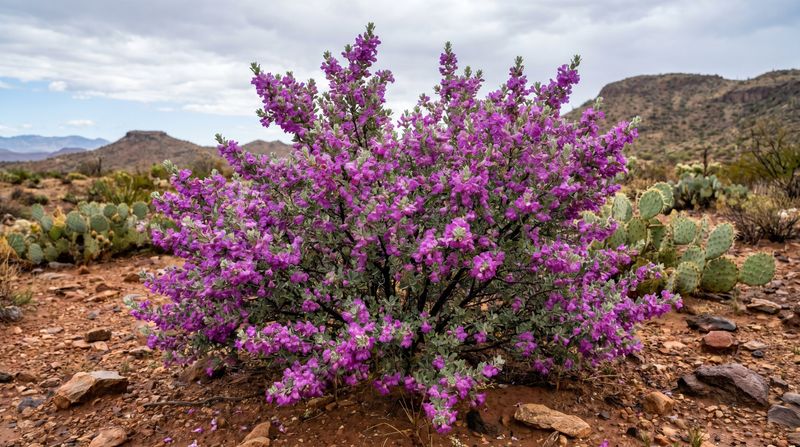
Once Texas sage is established, a fixed watering calendar is less useful than a quick check of what is actually happening in the soil. Root-zone conditions vary with soil type, recent rainfall, temperature, wind, and the age and size of the plant, so the same schedule that works in April can easily overwater in a cooler, wetter week or underwater during a stretch of triple-digit heat.
The Texas Water Development Board’s watering guide for Texas landscapes recommends wetting the soil to approximately 4 to 6 inches as a general landscape guideline and suggests using a screwdriver or soil probe to check moisture depth before irrigating. Push the screwdriver into the ground near the root zone – if it slides in easily, moisture is present.
If it meets resistance and comes out dry, the soil is ready for water. Treat 4 to 6 inches as a starting reference rather than a universal target, and adjust based on your soil, rainfall, heat, wind, and the plant’s visible condition.
When you do water, the goal is to soak deeply and then wait. A thorough, slow application that reaches the root zone is more effective than frequent light sprinkles that wet only the surface.
Shallow watering encourages roots to stay near the top of the soil, where they are more vulnerable to heat and drought stress.
If water runs off the surface before soaking in, pause and let it absorb, then resume slowly. Drip irrigation, bubblers, or other low-output systems can help by delivering water at a rate the soil can actually accept, reducing runoff and evaporation at the same time.
Morning watering is generally preferred because it gives foliage time to dry before nightfall, which helps reduce the risk of fungal issues. Evening watering is a reasonable second choice if morning is not practical, but try to avoid wetting foliage late in the day when it will stay wet overnight.
Use light maintenance to preserve shape and drought performance
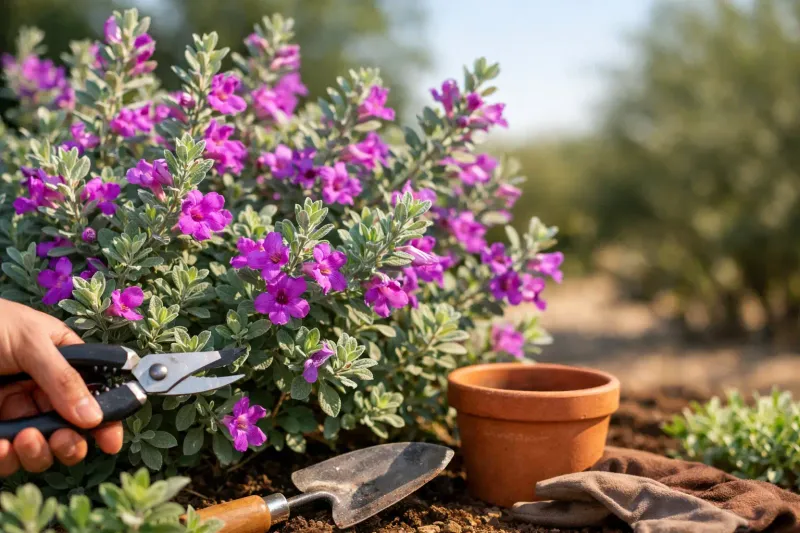
Mulch is one of the simplest tools for supporting Texas sage through a hot, dry summer. A 2- to 3-inch layer of organic mulch spread over the root zone reduces evaporation, moderates soil temperature, and slows the drying cycle between waterings.
Texas Water Development Board guidance includes mulching as a standard practice in water-efficient landscape management. Keep the mulch pulled back a few inches from the plant’s base so the crown stays dry and air can circulate around the stems.
Pruning Texas sage lightly is better than shearing it into a tight ball on a regular schedule. Hard shearing removes the new wood where flower buds form and can leave the shrub looking bare and stubby rather than full and natural.
UF/IFAS Extension’s fact sheet recommends pruning in late winter or early spring before new growth begins, which protects the current season’s flowering potential. Light shaping in early summer is possible if the shrub is getting out of bounds, but heavy cuts late in the season can reduce the number of blooms you see before fall.
Fertilizer is a category where less truly is more for this plant. Most authoritative sources describe fertilizer as unnecessary for established Texas sage, and some specifically recommend against it.
Excess nutrients push the shrub toward soft, fast, leafy growth that can reduce drought tolerance and make the plant more vulnerable to problems. University of Arizona Extension guidance on using fertilizers wisely supports a cautious approach to feeding landscape shrubs, particularly those adapted to lean soils.
Skip the fertilizer routine entirely for established Texas sage in most situations, and redirect that attention to checking drainage and mulch instead.
Match the shrub to your region and its real limitations
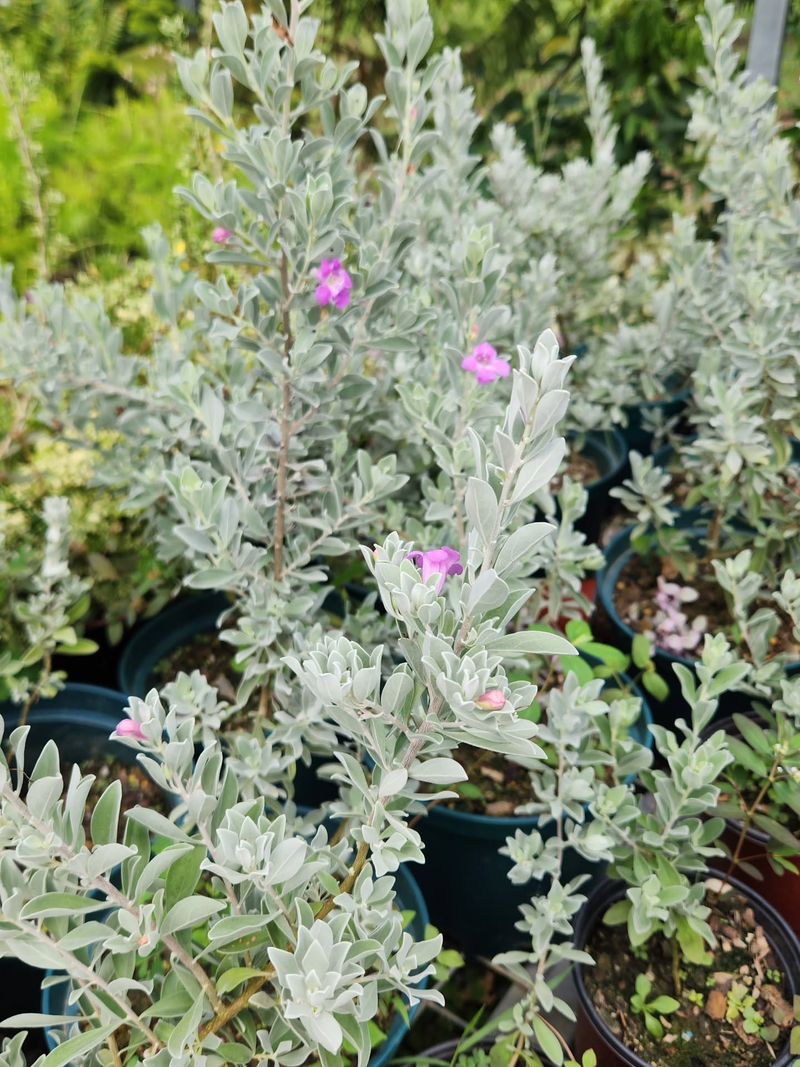
Cenizo is most at home in southwest Texas, where hot, dry, sunny conditions match its native range almost perfectly. Central and south Texas landscapes with good drainage and full sun are also strong candidates.
Performance becomes less predictable closer to the Gulf Coast, where high humidity and warm nighttime temperatures can create conditions the plant did not evolve to handle. That does not mean it cannot grow in Houston or Corpus Christi, but drainage and sun exposure become even more critical in those settings, and gardeners should expect some variability.
The NC Extension Gardener profile for Leucophyllum frutescens notes its association with hot, dry conditions and highlights drainage as a primary site requirement.
Florida gardeners can use Texas sage successfully, but the plant is not an effortless choice for every Florida yard. UF/IFAS Extension describes it as heat tolerant and usable in Florida landscapes while emphasizing full sun, alkaline and very well-drained soil, and the real danger of overwatering in a climate where rainfall can be frequent and heavy.
Wet, poorly drained, or heavily shaded Florida sites are not good candidates for this shrub.
The barometer-bush nickname comes from the observation that flowering sometimes follows rainfall or changes in humidity. A Texas Standard report on whether Texas sage can predict rain notes that experts commonly point to humidity or atmospheric-pressure shifts as possible triggers, but also acknowledges that formal scientific studies firmly establishing the rain-prediction connection are lacking.
Treat the blooms as a welcome seasonal event rather than a dependable weather forecast.
Wildlife value is genuine but should be described honestly. Texas SmartScape lists Texas sage as providing value for butterflies, bees, and other pollinators.
The shrub can provide habitat and attract pollinators when conditions are right, but no specific yard-wide response is guaranteed. Planting it in a sunny, low-traffic spot gives it the best chance to function as a quiet contributor to local wildlife habitat.
Let the soil dry between deep waterings, not past the point of stress
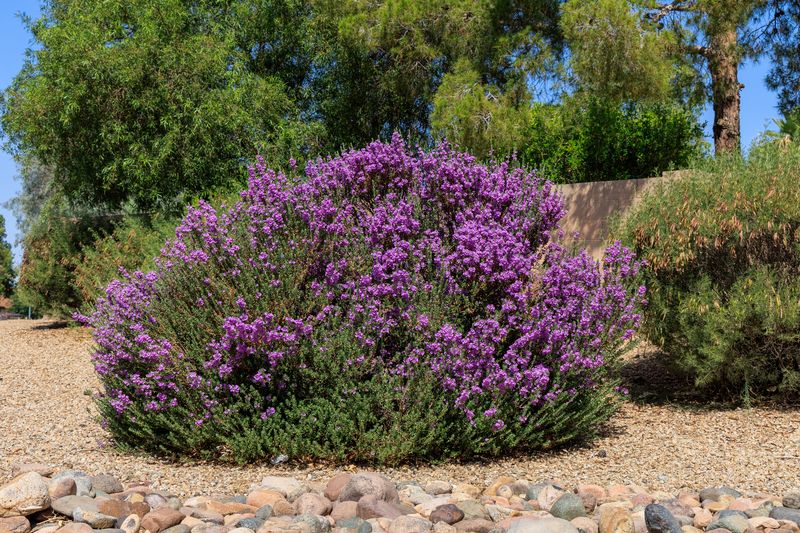
The decision rule for Texas sage is straightforward once you have the right frame. Plant it in full sun and fast-draining soil, water new specimens consistently during establishment, and then shift toward deep, infrequent irrigation guided by what the root zone actually needs.
UF/IFAS Extension and Texas Water Development Board guidance both support this approach as the foundation of low-water landscape management for adapted shrubs.
The attractive result that makes this plant worth writing about comes from preventing excess moisture, not from treating less water as an unconditional improvement. An established plant showing drought stress – wilting, leaf scorch, or significant dieback – still needs water.
Ignoring those signals in the belief that more neglect produces a better shrub is not what the low-water story means.
Matched to the right site and managed with honest attention, Texas sage is a low-maintenance silver-leaved shrub that can stay ornamental through a brutal Texas summer. The real payoff is a plant that asks very little once it is settled in – and actually looks the part.