
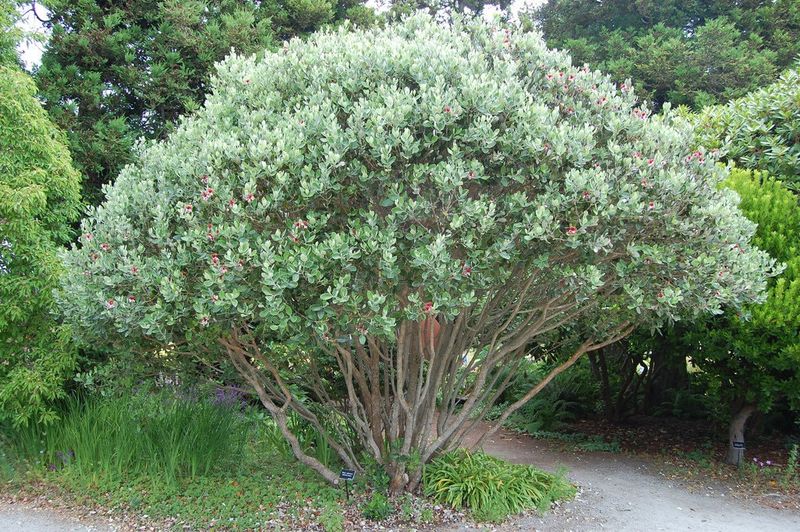
There is a plant sitting in the shrub section of most California nurseries that looks like a tidy ornamental, asks for very little once it is in the ground, and quietly drops edible fruit every fall. Most shoppers grab it for its silvery leaves and showy flowers without ever realizing it can feed them too.
That plant is pineapple guava, also called feijoa, and for the right California garden it may be one of the more practical fruiting landscape plants you can choose.
The ornamental shrub that also produces fruit
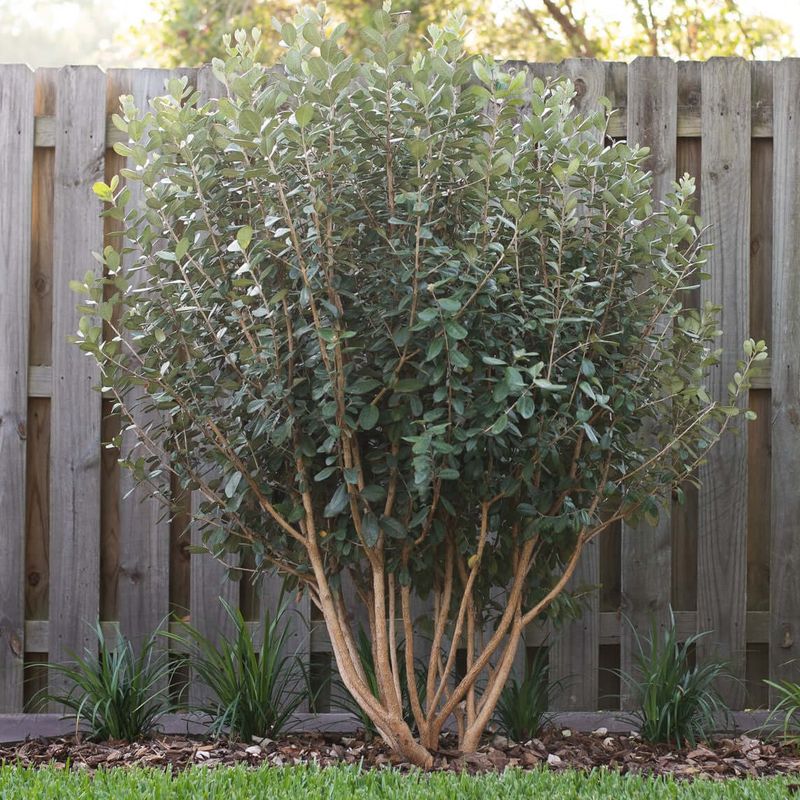
Pineapple guava carries two identities at once, and most people only notice one of them. Sold under its common name or its scientific name, Acca sellowiana (older tags may still read Feijoa sellowiana), it is an evergreen shrub or small tree that blends easily into any California landscape.
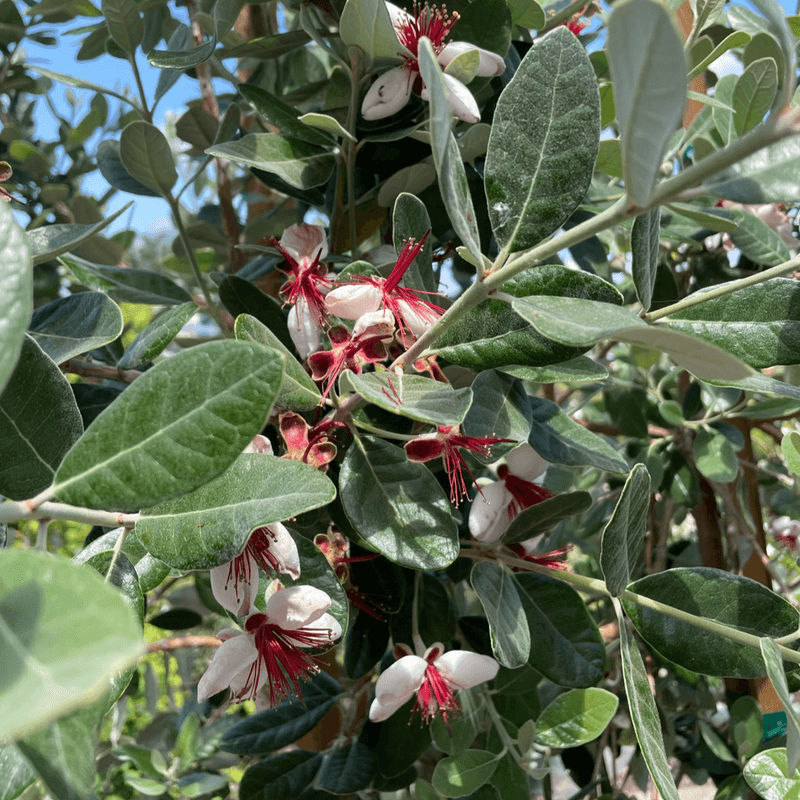
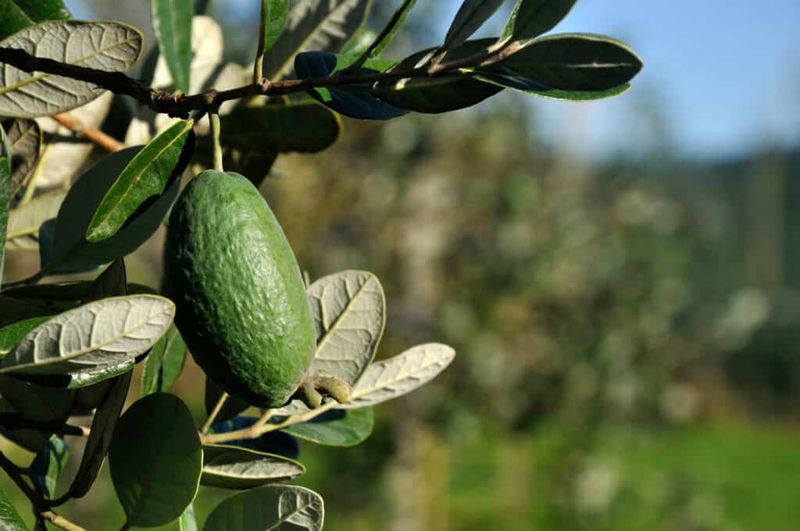
Its glossy green leaves flip to reveal silvery-white undersides, and in late spring it puts out flowers with bright red stamens and white petals that look almost tropical.
Those flower petals are edible. They have a mild, sweet flavor and can be eaten straight off the plant or scattered over a salad.
The fruit that follows in fall is also edible, with a flavor that sources describe as somewhere between guava and something faintly pineapple-like or minty, though the exact taste varies noticeably by cultivar, growing conditions, and how ripe the fruit is when you try it. Calling it a pineapple lookalike in flavor would be an overstatement.
UC Cooperative Extension guidance on feijoa notes that the plant has long been grown in California primarily as an ornamental shrub, which helps explain why its food-producing role gets missed. A shopper looking for a hedge plant sees exactly that: a good-looking, manageable evergreen.
The fact that it will also hand you fruit every October through December is easy to overlook when the tag is filed next to the boxwoods.
Treating the idea that “most gardeners walk past it for years” as a hard fact would be a stretch, since no one has measured nursery-shopping behavior that precisely. What is fair to say is that pineapple guava sits in a category most people think of as strictly decorative, and that framing makes its harvest potential genuinely easy to miss.
How pineapple guava earns a place in the landscape
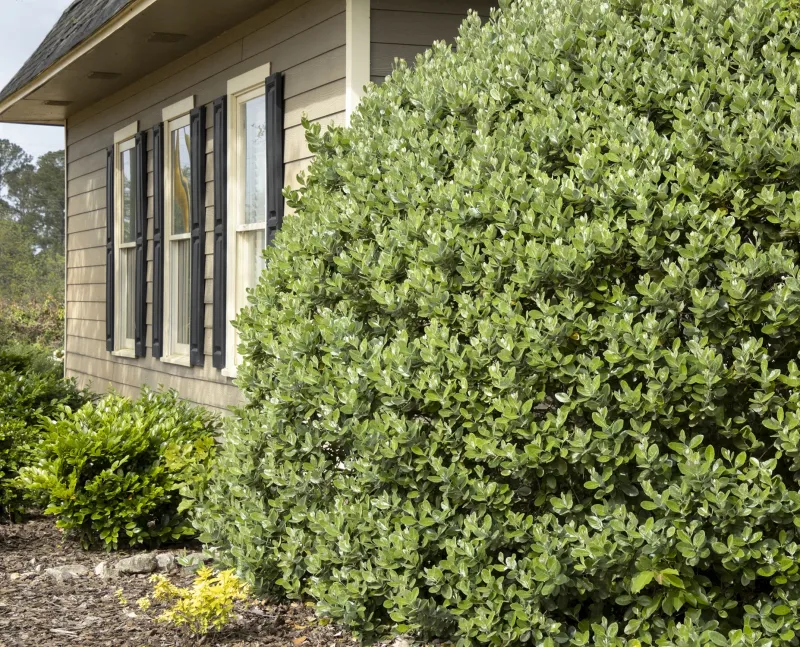
Before the first fruit appears, pineapple guava has already been doing useful work in the yard. It functions naturally as a large, multi-stemmed shrub, which makes it a strong candidate for a privacy screen, a property-line hedge, or a background planting that fills space without demanding constant attention.
Planted in a row and lightly pruned a couple of times a year, a group of plants can form a dense, attractive barrier that holds its leaves through every season.
A single-trunk tree form is also possible, but it requires deliberate training from the start. The plant does not naturally grow that way.
Achieving a clean specimen tree means selecting one strong central leader early, removing competing stems at the base, and continuing to remove basal suckers as they appear over the plant’s life. UC Master Gardener guidance on pineapple guava confirms that the plant tolerates this kind of shaping well, but the gardener has to commit to it.
Mature size is worth planning around before you plant. UC sources describe plants reaching approximately 15 to 25 feet tall and wide if left unpruned, while other references put the typical range closer to 10 to 15 feet.
Regular pruning keeps it much smaller, and most home gardeners maintain it well below its maximum. The key point is that an unpruned plant will eventually take up real space, so matching the plant’s role, hedge, screen, specimen, or informal shrub, to the available room is a decision worth making before it goes in the ground.
The plant’s visual appeal holds up year-round. Even in the months between flowering and fruiting, the two-toned foliage reads as polished and intentional, which is part of why it disappears into the ornamental section of the nursery so easily.
What low maintenance really requires
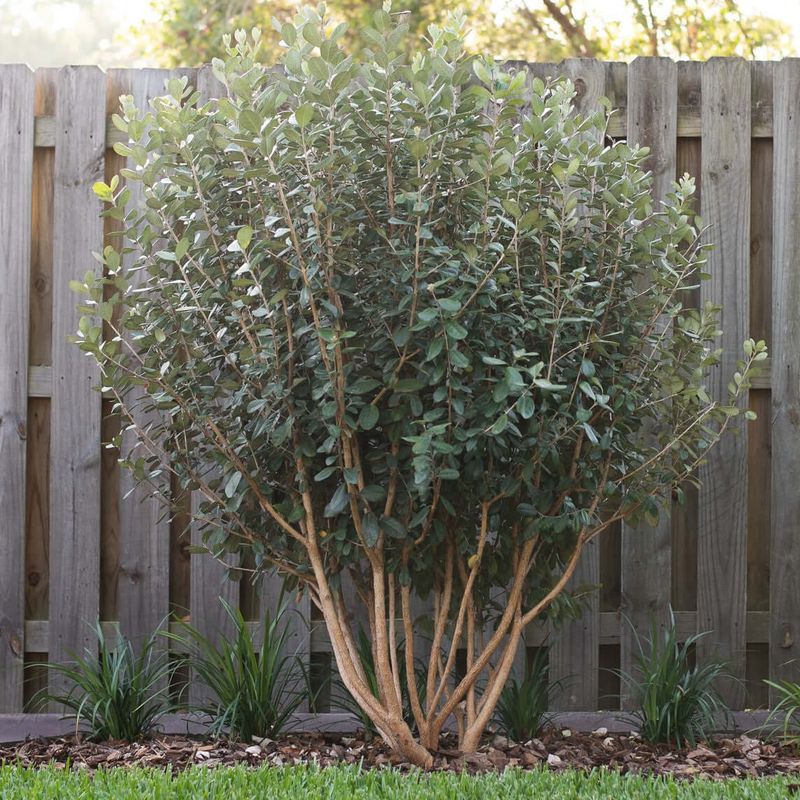
“Low maintenance” is a real description of this plant, but it needs a definition. Pineapple guava is relatively undemanding compared to many fruiting plants once it is established, but it still has requirements, and skipping them tends to show up in the harvest before it shows up in the plant’s appearance.
Start with site basics. The plant performs best in full sun, which generally supports better fruit production.
Part shade is tolerable, but fruit set may be reduced. Well-drained soil is important; standing water around the roots causes problems that pruning and fertilizer cannot fix.
Getting these two conditions right before planting is the most consequential step in the entire process.
Establishment irrigation is non-negotiable. A newly planted pineapple guava needs regular water for its first one to two growing seasons while its root system expands.
UC IPM guidance on irrigating fruit trees and shrubs makes clear that even drought-tolerant plants need consistent moisture during establishment, and that removing irrigation too soon can set back growth or reduce long-term productivity. Once established, the plant can handle California’s dry summers with less supplemental water than most fruit trees, but periodic irrigation during the dry season still tends to improve fruit size and overall crop quality.
Pruning keeps the plant in bounds and supports fruiting. UC’s feijoa fact sheet notes that heavier pruning works best in early spring, with a follow-up pass later in summer for gardeners maintaining a compact size.
If you are training a single-trunk form, basal suckers need to come off as they appear throughout the growing season. A plant that is never pruned will survive, but it may become dense and unruly and produce less accessible fruit over time.
Pest and disease pressure is genuinely light compared to many fruit crops, which is one of the plant’s honest advantages. That said, a neglected plant growing in poor drainage, receiving no summer water, and never pruned is not going to deliver the same fall harvest as one that has been given reasonable attention.
Where California climate affects the crop
California is not one climate, and pineapple guava does not behave the same way across all of it. UC Cooperative Extension reports that feijoa grows across a broad range, from southern Oregon down to the Coachella Valley, but that fruiting can be unreliable in the most extreme conditions on either end of that range.
Cooler coastal areas tend to produce better fruit quality. The mild temperatures, moderate humidity, and relatively consistent moisture of the California coast give the plant conditions close to what it evolved with in South America.
Gardeners in the Bay Area, the central coast, and coastal Southern California often report reliable fall harvests with modest effort.
Hot interior valleys present more of a challenge. Prolonged heat above roughly 100 degrees Fahrenheit can contribute to premature fruit drop before the crop is ready to harvest.
The fruit may still form, but heat stress during the growing season can reduce both quality and yield. Gardeners in Sacramento, the San Joaquin Valley, or the inland empire should plan for afternoon shade or supplemental irrigation during the hottest stretches, and should set realistic expectations rather than assuming the same results a coastal gardener gets.
Cold is less of a problem than heat for most California locations, but high-elevation gardens or areas with hard freezes should evaluate local winter lows before planting. The plant tolerates light frost reasonably well, but extended cold can damage fruit or reduce set.
Drainage and sun exposure matter as much as regional climate. A garden in a hot inland zip code with excellent drainage, a west-facing wall that moderates afternoon heat, and consistent drip irrigation can outperform a poorly sited coastal planting.
The UC feijoa fact sheet reinforces that site evaluation, not just regional location, should drive the planting decision.
Choose the cultivar before you choose the spot
A plant labeled “pineapple guava” at the nursery tells you relatively little about how it will perform in your yard. Cultivars differ in fruit size, flavor, ripening time, and, most importantly for a single-plant garden, whether they can set fruit on their own.
Pollination is the detail most buyers skip. Some pineapple guava cultivars are self-fertile, meaning one plant can produce fruit without a companion.
Others benefit significantly from cross-pollination with a second compatible plant, and a few may produce little fruit at all when grown alone. UC Cooperative Extension’s feijoa guidance consistently identifies ‘Coolidge’ as a self-fruiting option, making it a reasonable first choice for gardeners who only have room for one plant and want a reliable harvest.
Even ‘Coolidge’ tends to produce more heavily when a second compatible plant is nearby. Bees do the work of moving pollen between plants, so having a second cultivar within pollinator flight range is worth considering if fruit production is a priority rather than a bonus.
Other named cultivars worth asking about include ‘Pineapple Gem,’ ‘Nazemetz,’ and ‘Mammoth,’ each with different fruit characteristics and ripening windows. UC Master Gardener resources and UF/IFAS feijoa production guidance both emphasize that cultivar identity, known fruiting characteristics, and plant health should drive the buying decision more than appearance alone.
When you are at the nursery, ask specifically whether the plant is a named cultivar, whether it is self-fruiting or benefits from a companion, and whether the staff can confirm the plant’s fruiting history. A healthy plant of a known self-fruiting cultivar, properly sited, will almost always outperform a generic unlabeled specimen regardless of how good it looks on the shelf.
How the fruit ripens and reaches the kitchen
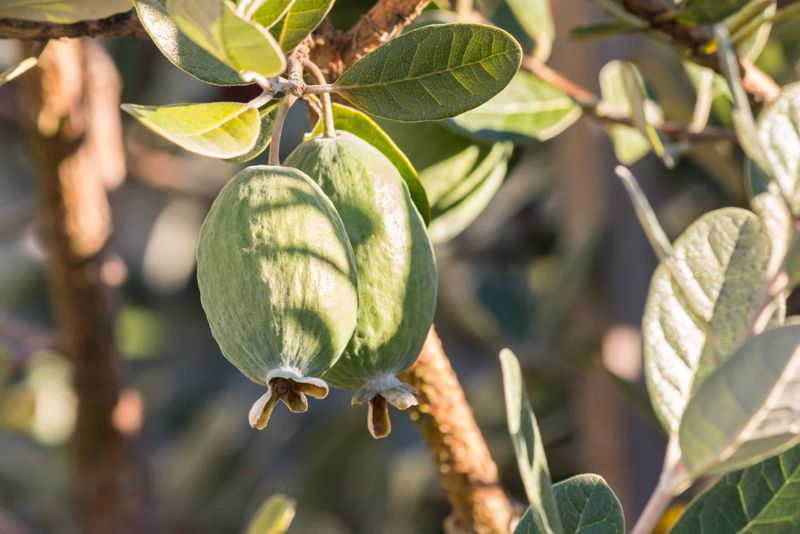
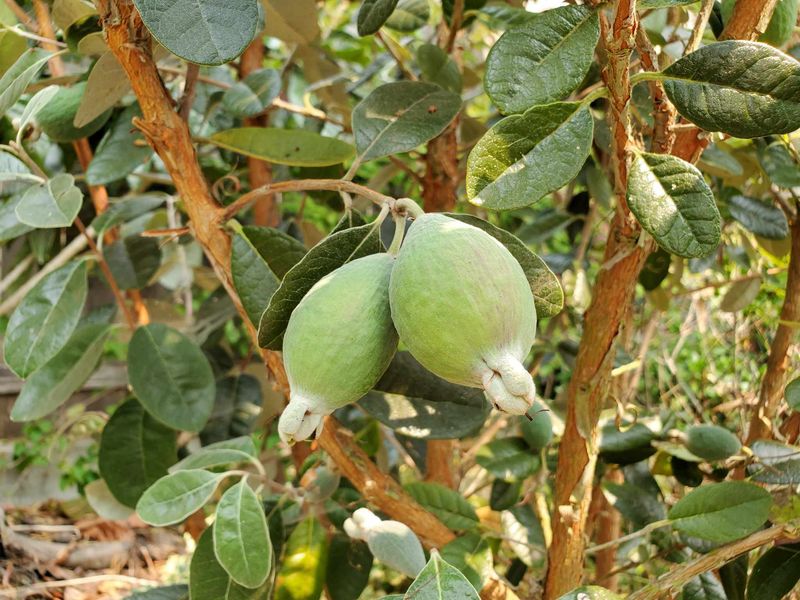
Pineapple guava does not announce itself the way a tree full of bright red apples does. The fruit is green when ripe, roughly egg-shaped, and stays on the branch until it is ready, at which point it falls.
That drop-based harvest is one of the plant’s practical advantages: you do not need to guess at ripeness or climb a ladder. When fruit appears on the ground beneath the plant, it is ready to collect.
The general California harvest window runs from October through December, though the exact timing shifts by cultivar and growing location. Coastal gardens may see fruit arrive earlier or later than inland sites in the same general region.
Checking under the plant every few days during fall is the main harvest task.
UC Master Gardener guidance notes that the fruit bruises easily, so it should be handled gently and used or refrigerated within a few days of collection. Gardeners who want to gather fruit before it drops can gently shake branches over a tarp or sheet and collect whatever falls naturally.
Forcing fruit off the branch before it is ready tends to give you fruit that never quite ripens to full flavor.
UF/IFAS reports that plants may begin producing in approximately two to four years after planting, though full fruiting potential typically takes longer and depends on cultivar, site conditions, pollination, and care. A two-year-old plant in a good location might give you a handful of fruit; a well-established five-year-old plant with a compatible companion nearby will likely give you considerably more.
The flavor is worth the wait for most gardeners who try it: aromatic, mildly sweet, and complex in a way that is hard to place. Scoop the flesh from the skin with a spoon, or slice it in half and eat it fresh.
The skin is edible but tends to be bitter, so most people skip it.
Wildlife and wildfire still shape the planting decision
Two questions come up reliably when California homeowners consider adding a new shrub near the house: will it attract unwanted wildlife, and will it become a fire hazard? Pineapple guava has reasonably good answers to both, with qualifications that matter depending on where you live.
On the wildlife side, the flowers are genuinely attractive to bees, which is a benefit for anyone trying to support pollinators. Birds are drawn to the plant as well, but UC Master Gardener program documentation notes that birds tend to show more interest in the edible flower petals than in the fruit itself.
That means your harvest is less likely to disappear to birds than it would be with, say, a fig or a mulberry. Deer are described as generally tending to ignore the plant, which is a meaningful advantage in hillside communities and rural-edge neighborhoods where deer pressure is high.
That said, wildlife behavior is site-specific: a deer that is hungry enough or accustomed to a yard will test plants it normally avoids.
On fire, the picture is more nuanced. Pineapple guava appears on some California fire-resistant plant lists, and its relatively high moisture content and dense foliage give it better characteristics than many alternatives.
UC IPM’s guidance on minimizing fire hazards in landscapes is direct: any plant can burn under the right conditions, and fire-resistant does not mean fireproof. What matters alongside plant selection is spacing, placement relative to structures, consistent irrigation, and prompt removal of dead branches and accumulated leaf litter.
For gardeners in wildland-interface neighborhoods, placing any large shrub directly against the house without attention to defensible-space guidelines is a risk regardless of species. Keep pineapple guava well-watered during fire season, prune out dead wood regularly, and follow local defensible-space requirements for setback distances.
Used thoughtfully, it is a better choice than many alternatives in a fire-aware California landscape, but no plant earns a pass from basic fire-safety planning.
The practical case for giving feijoa a second look
Feijoa earns a second look not because it is effortless, but because it delivers more than most people expect from a plant they were already planning to use for screening or structure. UC Cooperative Extension frames it well: this is a plant that has been used in California landscapes for decades as an ornamental, and its food-producing role is the part most gardeners have not fully accounted for.
The conditions for a good outcome are specific but achievable. Choose a site with full sun and well-drained soil.
Select a named cultivar with documented self-fruiting ability, or plan for two compatible plants if you want a heavier crop. Provide consistent irrigation through establishment and periodic supplemental water during dry summers.
Accept that some light pruning and fall harvest cleanup are part of the deal. Follow defensible-space guidelines if you are in a fire-prone area.
Under those conditions, pineapple guava is a relatively easy fruiting landscape plant for suitable California gardens. It is not the objectively easiest fruit tree for every gardener, and it will not thrive or fruit reliably on every site.
But for a homeowner who wants an attractive, water-wise evergreen that also provides edible petals in spring and fresh fruit in fall, it is one of the better-kept secrets sitting in the shrub aisle right now.