
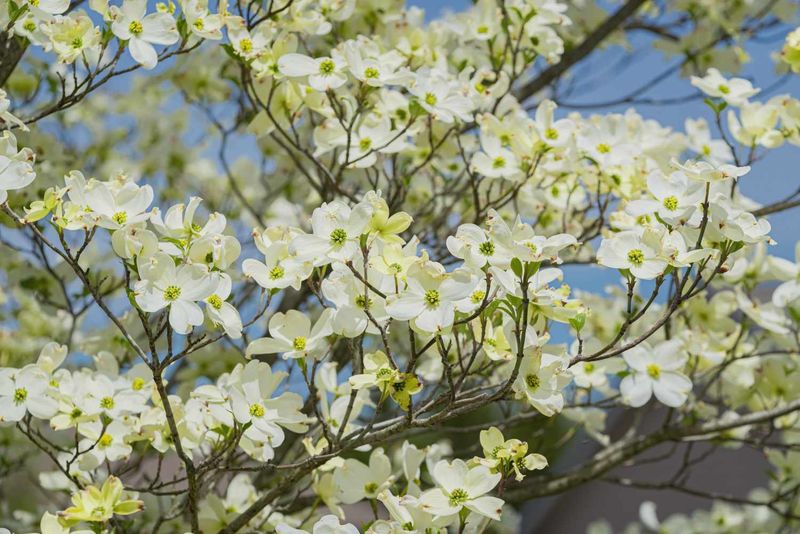
Your flowering dogwood may already be carrying next spring’s flowers right now, tucked into tiny buds along its branches. For North Carolina homeowners, fall is the season when one common mistake can quietly cost you a season of blooms.
Knowing what to leave alone, and what to check, makes the difference between a tree that delivers its full spring show and one that comes up short.
Identify the dogwood before you reach for pruners
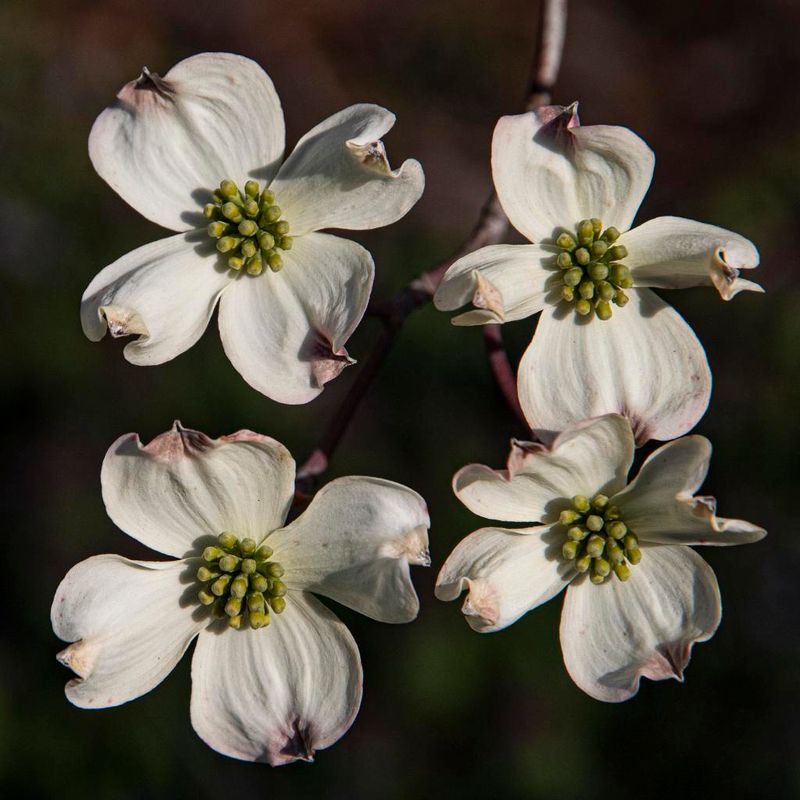
Not every tree or shrub sold as a “dogwood” in North Carolina responds the same way to fall pruning, and mixing them up can lead to misguided care. The advice in this guide applies specifically to flowering dogwood, Cornus florida, the native understory tree famous for its white or pink spring bracts and its deep roots in the North Carolina landscape.
According to the NC State Extension Gardener Plant Toolbox, flowering dogwood is a multi-season tree valued for its spring flowers, summer foliage, fall color, and winter berries.
Kousa dogwood (Cornus kousaCornus florida), a species often sold alongside at garden centers, blooms several weeks later in early summer and carries different disease resistance characteristics. Its pruning timing and flowering habits differ enough that advice written for flowering dogwood should not be automatically applied to it.
Similarly, shrub dogwoods such as red-twig dogwood (Cornus sericea) serve a completely different purpose in the landscape: red-twig dogwood is commonly cut back hard in early spring to stimulate the bright new stem color that makes it attractive in winter, a practice that would be harmful to a flowering dogwood’s spring bloom.
Before any fall care decision, confirm what you have. Flowering dogwood typically grows as a small to medium tree with horizontal branching, distinctive deeply ridged bark on mature specimens, and characteristic opposite leaves.
University of Maryland Extension notes that Kousa dogwood and flowering dogwood are often confused, but their bloom time, fruit shape, and disease profiles set them clearly apart. Getting the species right before reaching for pruners is the first and most foundational step.
Skip routine pruning of healthy live branches
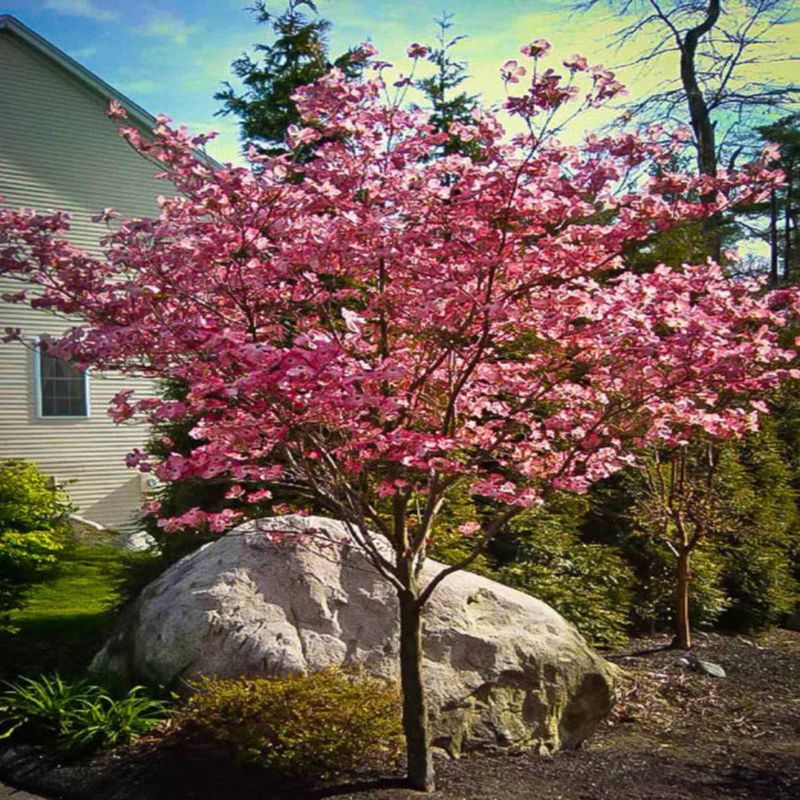
The single most useful thing most North Carolina homeowners can do for their flowering dogwood this fall is straightforward: put the pruning shears away when the branches are healthy and alive. Cutting back live, healthy growth in fall or late winter can remove the flower buds that are already sitting on those branches, waiting for spring.
That is not a hypothetical risk but a real consequence of how flowering dogwoods develop their blooms.
NC Cooperative Extension advises that early spring-flowering trees like dogwoods should be pruned as soon as their flowers fade, because they begin forming the next year’s flower buds shortly after. Fall and late-winter pruning can cut away those buds before they ever open.
The practical implication is that a well-intentioned fall cleanup that shortens live branches may leave the tree with noticeably fewer flowers the following April.
Pruning avoidance is a protective measure, not a bloom guarantee. A tree with all its buds intact can still produce a lighter-than-expected display due to drought, weather, disease, or other stressors.
But removing buds that are already on the tree closes off bloom potential that cannot be recovered until the following growing season. Healthy live branches that are not broken, dead, diseased, or hazardous should be left undisturbed when preserving spring flowering is the goal.
Reshaping or structural correction, when genuinely needed, belongs in a different season entirely.
The next spring’s flower buds form before winter
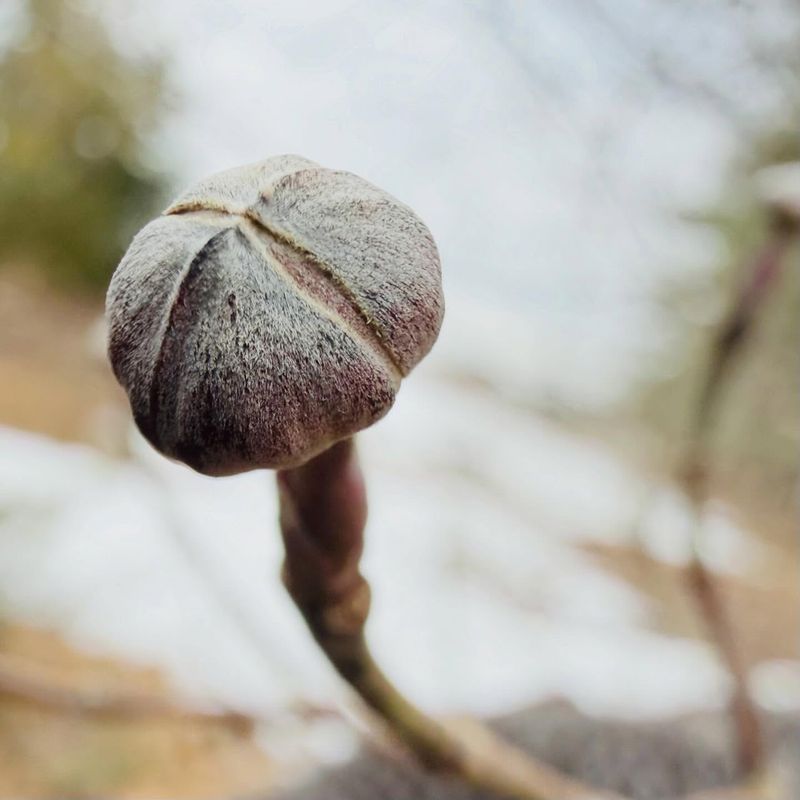
Flowering dogwood does something that surprises many gardeners: it builds next spring’s flowers during the current growing season, long before the first frost arrives. New floral and vegetative buds become evident in August, according to U.S.
Forest Service research on flowering dogwood, develop during summer, remain dormant through the cold months, and then expand into the familiar spring display. By the time leaves are dropping in October, those buds have been sitting on the branches for weeks.
What that means practically is that a branch you might glance at in November and see as “just a branch” may already be carrying a cluster of flower buds for April. The buds are small and easy to overlook, but they are present and vulnerable.
Any cut that removes a section of live branch also removes whatever buds were on that wood.
The NC State Extension Gardener Plant Toolbox describes flowering dogwood flower buds as rounded and flattened at the ends of stems, which helps distinguish them from the narrower, more pointed vegetative buds that will produce only leaves. Once you know what to look for, the buds are visible on the branch tips of a healthy tree.
Understanding this timing shifts how fall looks: it is not a neutral window for reshaping the canopy. It is the season when those buds need the branches they are sitting on to remain intact.
Inspect the canopy before making any cut
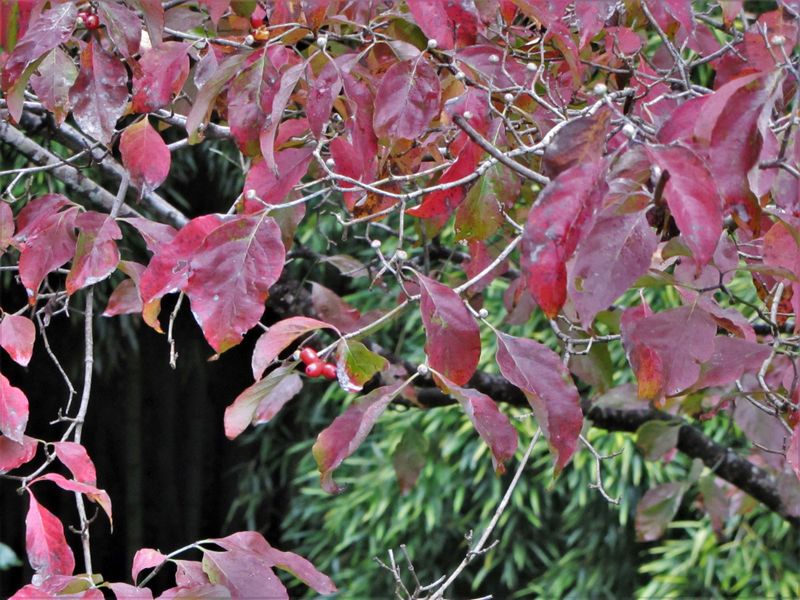
A slow walk around the tree with clear eyes beats any fixed pruning schedule. Before touching a single branch, spend time looking at the whole canopy from several angles.
You are not looking for branches to remove; you are looking for branches that genuinely require removal because they are dead, broken, crossing dangerously, or showing signs of disease.
At branch tips, look for the rounded, flattened buds that signal next spring’s flowers. Healthy live wood typically shows some flexibility when gently pressed, while dead wood snaps cleanly or shows dried, shrunken tissue beneath the bark when you nick it lightly with a fingernail.
A branch that looks bare may simply be dormant, especially in early fall before the tree has fully hardened off. Patience here protects buds that an impatient cut would eliminate.
The NC State Extension Gardener Plant Toolbox confirms that flowering dogwood flower buds appear as rounded, flattened structures at stem ends, making them identifiable before spring arrives. Once you spot them, you have a concrete reason to leave that branch undisturbed.
NC Cooperative Extension reinforces that a healthy, intact canopy benefits from being left alone when bloom preservation is the objective. The inspection itself is the action: a canopy that passes as healthy, structurally sound, and free of obvious disease or breakage needs nothing more from you this fall.
Remove problem wood when safety or health requires it
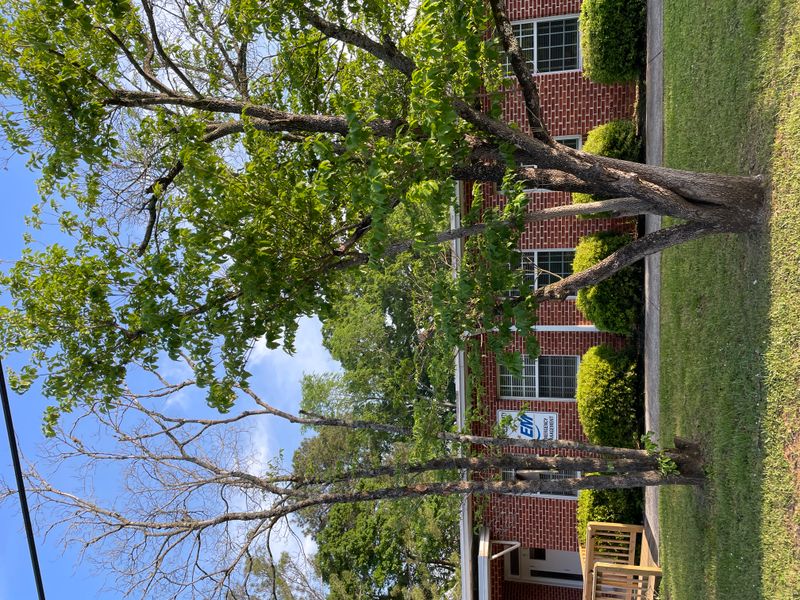
Leaving healthy live branches alone does not mean ignoring genuine problems. Dead, broken, dying, or hazardous branches should be removed when you find them, regardless of season.
A limb hanging by a thread after a storm, a branch that has died back from the tip toward the trunk, or wood that poses a safety risk to people or structures does not get a seasonal pass. Addressing those issues promptly is responsible tree care, not a contradiction of bloom-preservation advice.
Disease-related removal requires a bit more thought. NC Cooperative Extension notes that infected or diseased branches may need pruning to improve airflow and reduce the spread of disease through the canopy.
That kind of targeted removal, aimed at a specific symptomatic branch, differs fundamentally from broad fall reshaping that cuts back healthy live growth across the tree.
For North Carolina homeowners, dogwood anthracnose deserves specific attention. NC State Extension identifies dogwood anthracnose as the most serious dogwood disease in the southern United States, with detections in western North Carolina.
Symptoms include tan spots with purple margins on leaves, shoot dieback, and epicormic sprouts on the trunk or main branches. Spot anthracnose is a different, generally cosmetic condition that does not carry the same threat.
If you are uncertain about what you are seeing, consult your local NC Cooperative Extension office before cutting.
The key distinction to carry through the season: removing one dead limb or one diseased branch is not the same as shortening live, healthy canopy. Necessary removals can coexist with a commitment to leaving the rest of the tree undisturbed.
Shape the tree after flowering
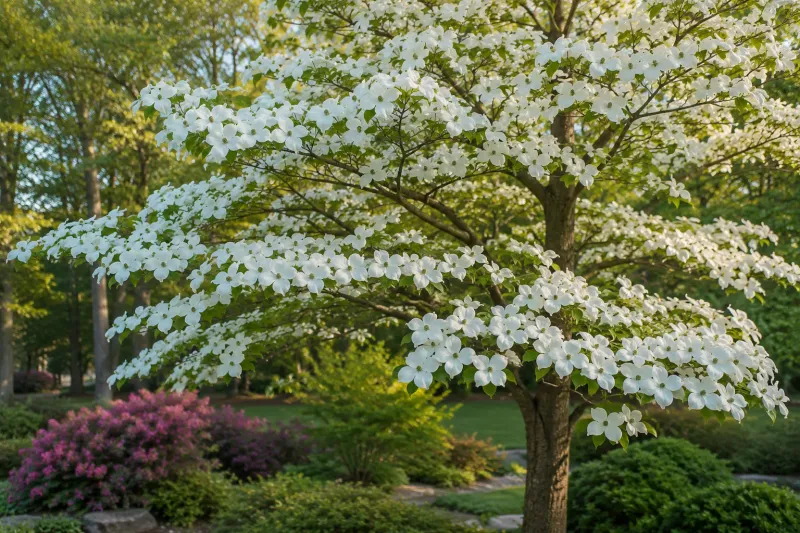
Routine pruning is usually unnecessary for a well-sited, healthy flowering dogwood. The tree’s natural form is part of its appeal, and most homeowners who feel the urge to reshape in fall are responding to a general sense that something should be done rather than a specific structural need.
Resisting that impulse protects the buds already present on the canopy.
When shaping or structural correction genuinely is needed, the preferred window comes after flowering and before the next season’s flower buds form. NC Cooperative Extension places this window after flowers fade in spring, generally in late spring or early summer, before the tree has locked in the following year’s buds.
Timing a cosmetic trim to that window means you are working with wood that has already delivered its flowers and has not yet set the next round.
That said, not every pruning decision is driven by bloom preservation. Clearance cuts to keep branches away from a roofline, structural corrections to address a weak branch union, or removal of crossing limbs that are rubbing and creating wounds can take priority over the post-bloom calendar.
Dead, broken, and diseased wood, as covered in the previous section, can be removed whenever it is found. The post-bloom timing applies most directly to cosmetic shaping and canopy thinning, where the risk of removing live, bud-bearing wood is highest.
One note worth knowing: dogwoods sometimes bleed sap after late-winter or early-spring pruning cuts. NC Cooperative Extension notes this can be alarming to see but is generally not harmful to the tree.
It is a normal response to cuts made as sap begins to move and does not require treatment.
Help a stressed tree without forcing a bloom
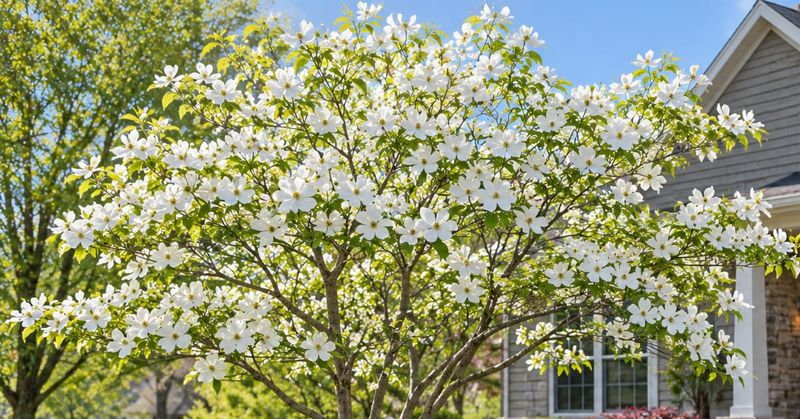
For newly planted dogwoods, trees recovering from a dry summer, or any flowering dogwood that showed signs of drought stress during the growing season, fall is a reasonable time to provide some basic support. That support does not come from fertilizer or a fixed watering schedule; it comes from checking what the tree actually needs and responding to those conditions.
Soil moisture is the place to start. University of Maryland Extension recommends checking approximately 4 to 6 inches deep and watering when that soil is dry, rather than following a calendar-based routine.
Established trees with adequate rainfall may need no supplemental water at all. Newly planted trees and those that struggled through drought may benefit from deep watering until soil conditions become reliably moist or temperatures drop enough to slow root activity.
Overwatering is a real risk: poor drainage and saturated soil can damage roots and create conditions that harm the tree over time.
A correctly applied mulch layer helps conserve moisture and protects the shallow root system that flowering dogwoods rely on. According to the NC State Extension Gardener Plant Toolbox, a roughly 2 to 3-inch layer of mulch, kept several inches away from the trunk and bark, supports root health without creating the moisture and disease problems that come from piling mulch against the trunk flare.
A flat ring of mulch extending out toward the drip line, not a mounded volcano shape touching the bark, is the correct application.
Fertilization is a separate matter. Extension guidance ties fertilizer decisions to soil-test results rather than routine fall applications.
Excess nitrogen, including nitrogen that drifts from a nearby lawn fertilization, can push the tree toward leafy growth at the expense of flowering. Skip the fall fertilizer unless a soil test has identified a specific deficiency that warrants it.
Sparse flowering has several possible causes
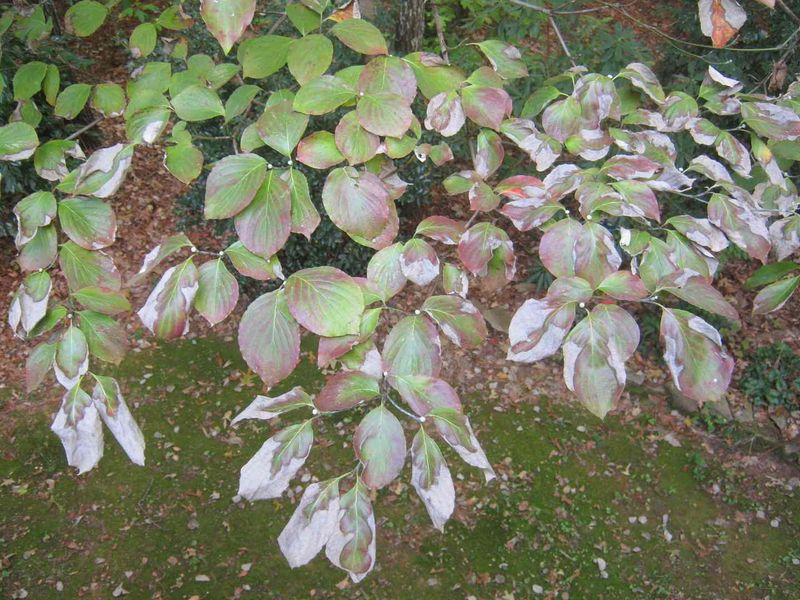
A disappointing spring bloom is frustrating, but pruning at the wrong time is only one of several possible explanations. Treating it as the automatic culprit can lead homeowners to blame themselves for a cut made months earlier when the real issue is something else entirely.
Accurate diagnosis starts with a wider view of what the tree has been through.
Drought stress is a significant contributor to reduced flowering in flowering dogwood. A tree that struggled through a hot, dry summer may have had fewer resources to put into bud development, which affects the following spring’s display.
Poor drainage and root problems can create similar stress from the opposite direction: waterlogged soil reduces oxygen availability to roots and limits the tree’s ability to function normally. University of Maryland Extension lists drought, poor drainage, excessive nitrogen, and unsuitable light among the factors that can contribute to sparse bloom.
Light exposure matters more than many homeowners realize. Flowering dogwood is a shade-tolerant understory tree, but it blooms most reliably with some direct or filtered sunlight.
A tree that has gradually been shaded out by taller trees growing around it may produce fewer flowers year after year as its light conditions change.
Disease, winter injury, and unusual weather can also reduce flowering. NC State Extension notes that dogwood anthracnose can cause significant canopy dieback, which affects bloom.
A late frost that catches open or swelling buds can damage them before they fully open. Tree age, cultivar differences, and normal year-to-year variation round out the list.
Some dogwoods simply have lighter bloom years, and that variation does not always point to a correctable mistake.
Protect the buds now and prune at the right time
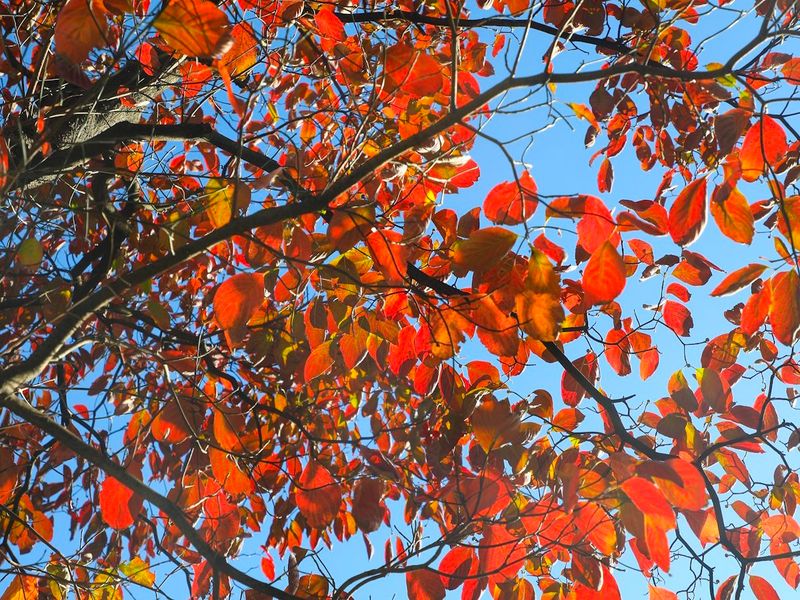
Putting together a fall plan for a flowering dogwood does not require a long checklist. Start by confirming you have Cornus florida, the flowering dogwood, rather than a Kousa dogwood or a shrub dogwood with different pruning needs.
Once you have that confirmed, the most important action is to leave healthy live branches undisturbed.
Walk the canopy and look for genuinely dead, broken, or diseased wood that warrants removal. If you find it, remove it cleanly.
If the canopy looks structurally sound and disease-free, the correct response is to do nothing with the pruning shears. NC Cooperative Extension and U.S.
Forest Service research both support the post-bloom window as the appropriate time for any cosmetic shaping, after the tree has flowered and before it sets the next round of buds.
Check soil moisture 4 to 6 inches down and water only when the soil is dry at that depth, keeping drainage and rainfall in mind. Apply mulch in a flat ring, 2 to 3 inches deep, several inches back from the trunk.
Skip routine fall fertilization unless a soil test points to a specific need, since University of Maryland Extension cautions that excess nitrogen can favor foliage over flowers.
These steps protect the bloom potential already present on the tree. They cannot guarantee a heavy April display, because weather, site conditions, and the tree’s own health all play a role.
What they do is avoid removing what the tree has already built, which is the most useful thing fall care can accomplish.