
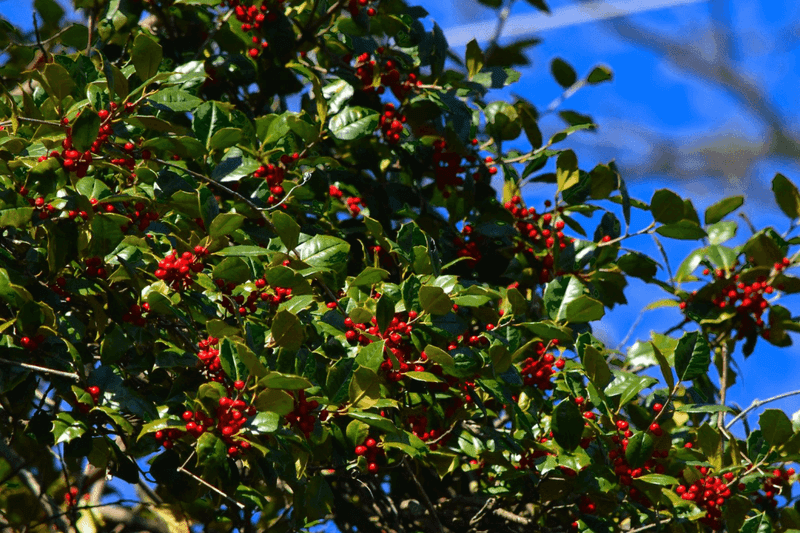
Most North Carolina homeowners look at their holly shrubs in fall and wonder if there is something they should be doing before winter arrives. For evergreen hollies like American holly and yaupon, the answer is often yes, but the right step depends on what your soil is actually doing, not a date on the calendar.
Deciduous hollies such as possumhaw and winterberry follow different rules entirely. Getting clear on which holly you have, and what it really needs, is the best place to start.
Start With the Right Holly and the Right Winter Expectation
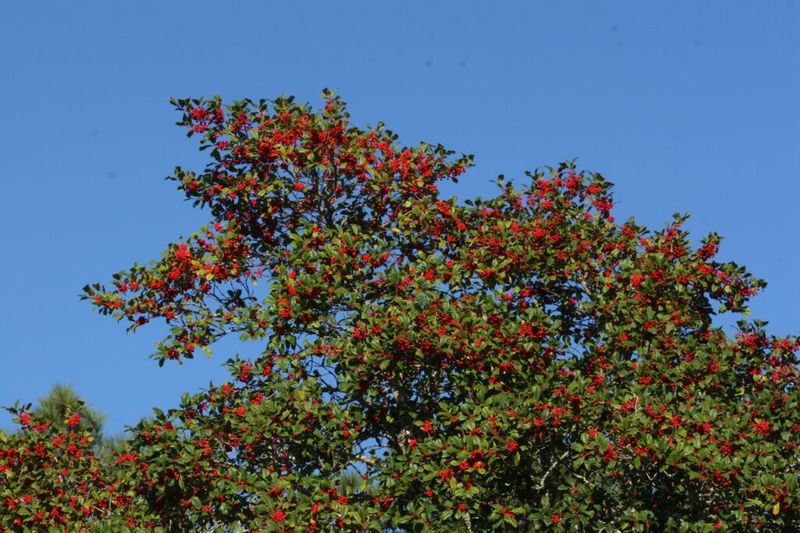
Not every holly in a North Carolina yard behaves the same way in winter, and the fall care that helps one type can be irrelevant for another. The distinction that matters most is whether your holly keeps its leaves year-round or drops them before cold weather sets in.
Evergreen hollies, including American holly and yaupon holly, hold their foliage through winter and continue losing moisture through those leaves even when temperatures drop. That ongoing moisture demand is exactly what fall care can help address.
Deciduous hollies work differently. NC State’s plant profile for possumhaw confirms it as a deciduous species that naturally sheds its leaves before winter, and winterberry follows the same pattern.
Telling a homeowner to water a possumhaw in fall to protect its winter foliage sets up a false expectation, because those plants are not meant to carry leaves through the cold months. Their winter display comes from berries on bare branches, and the factors that influence that display are rooted in spring and summer, not fall irrigation.
Berry expectations also vary widely by species and cultivar. A female American holly with the right pollination conditions may carry heavy red clusters into January, while a cultivar planted in shade or without a compatible pollen source may produce very little fruit regardless of how well it was watered in October.
NC State Extension’s native plants handbook identifies American holly, yaupon, possumhaw, and winterberry as distinct species with different habits and landscape roles. Understanding which one you have is the starting point for any realistic fall plan.
Fall timing also differs across the state. A coastal homeowner may go weeks without a hard freeze, while a mountain gardener could see frozen ground by late October.
There is no single statewide treatment date that makes sense for every holly in every region. The practical approach is to watch your specific conditions and respond to what the soil and weather are actually telling you.
Dry Soil Can Set Up Winter Damage
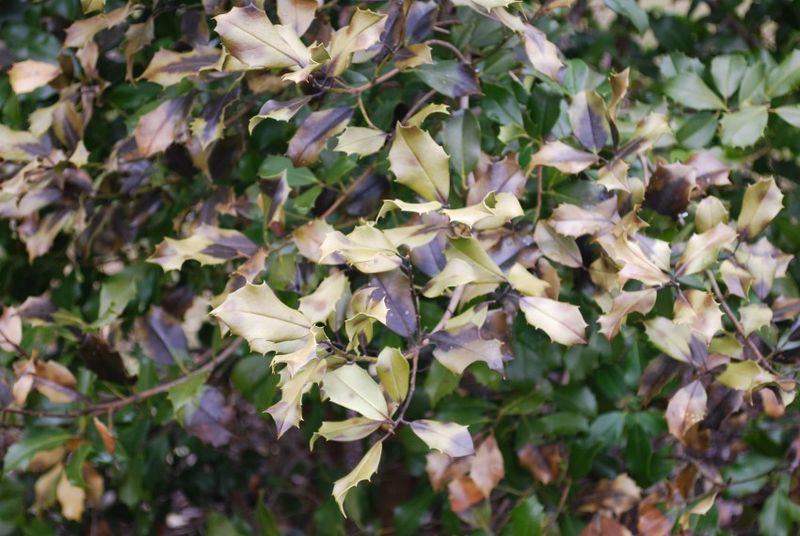
Evergreen hollies face a quiet stress during winter that most homeowners never see coming. The leaves keep releasing moisture into the air through a process called transpiration, but when the soil is dry or frozen, the roots cannot pull in enough water to replace what the foliage is losing.
That imbalance builds slowly and shows up later as winter burn, browning leaf edges, early leaf drop, or twig dieback that looks confusing in spring.
University of Maryland Extension guidance on watering trees and shrubs specifically recommends giving evergreen shrubs a deep watering in fall before the ground freezes when precipitation has been insufficient. The reasoning is straightforward: a root zone that enters winter with adequate moisture gives the plant something to draw from even as temperatures drop.
A root zone that is already dry when cold weather arrives leaves the plant with almost no buffer. The Iowa State Extension resource on preventing desiccation injury in evergreens describes the same dynamic for broadleaf evergreens, noting that the combination of dry soil and winter wind accelerates the moisture loss that leads to visible damage.
Recently planted hollies face greater risk than established ones. A shrub that has been in the ground for less than two or three years has a smaller, shallower root system that covers less soil volume.
During an extended dry spell in fall, that limited root zone can dry out faster and recover more slowly than the root system of a mature plant. Established hollies are more resilient, but they are not immune, particularly after a dry summer or an unusually warm fall that delays the natural slowdown of transpiration.
The NC State Extension handbook on woody ornamentals identifies fall drought as a real risk factor for landscape shrubs in North Carolina. Recognizing that the damage visible in February or March often traces back to dry soil in October or November is what makes fall attention worthwhile for evergreen hollies.
Check the Root Zone Before You Reach for the Hose
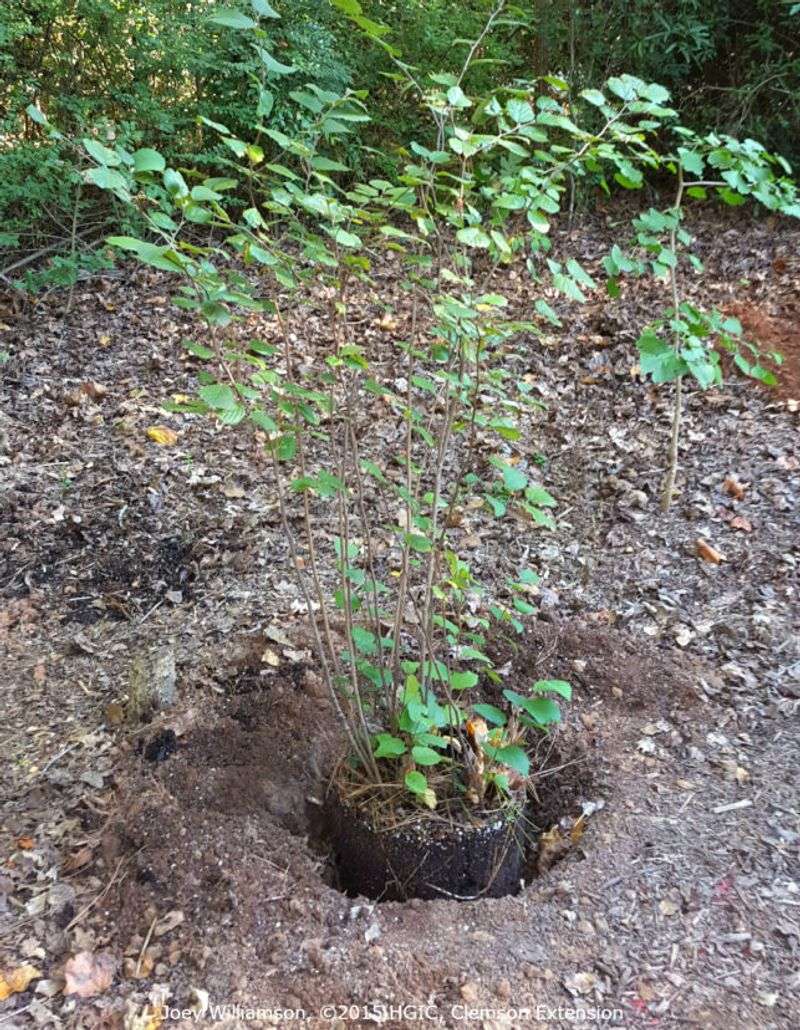
Before turning on the hose, check what the soil is actually doing. Push a finger or a screwdriver several inches into the root zone, which extends out roughly as far as the branch tips rather than just hugging the trunk.
If the soil feels moist and cool at that depth, the plant does not need water yet. If it feels dry and crumbly, that is the signal to act.
Watering based on what the soil tells you is more reliable than watering based on a date.
Conditions across North Carolina vary enough that a single statewide schedule does not hold up. Coastal areas often stay warmer longer and may experience dry stretches well into November without a hard freeze.
Piedmont homeowners may see alternating wet and dry periods that require checking conditions after each rainfall. Mountain sites can hit frozen ground earlier, and once the soil freezes, irrigation is no longer practical or useful because the water cannot penetrate.
The actionable rule is to water during dry fall weather while the soil is still able to absorb it, and to stop when conditions change.
Some situations call for holding off entirely. Clemson Extension’s holly disease and pest factsheet notes that excess moisture, particularly in poorly drained soil, increases the risk of root diseases including Phytophthora root rot and black root rot, with Japanese holly being especially vulnerable.
Adding water to a spot that is already saturated or drains slowly makes the situation worse, not better. If standing water lingers after rain or the soil feels soggy, skip irrigation and consider whether drainage improvements are needed instead.
Newly planted hollies deserve more frequent checks because their smaller root systems dry out faster. UF/IFAS guidance on established shrub irrigation notes that recently planted shrubs have not yet developed the root spread that helps them buffer dry periods, making soil checks especially important in their first few years.
Established plants still need attention after extended dry weather, but they can tolerate short dry spells better than young transplants.
Give a Slow, Deep Soak and Then Stop
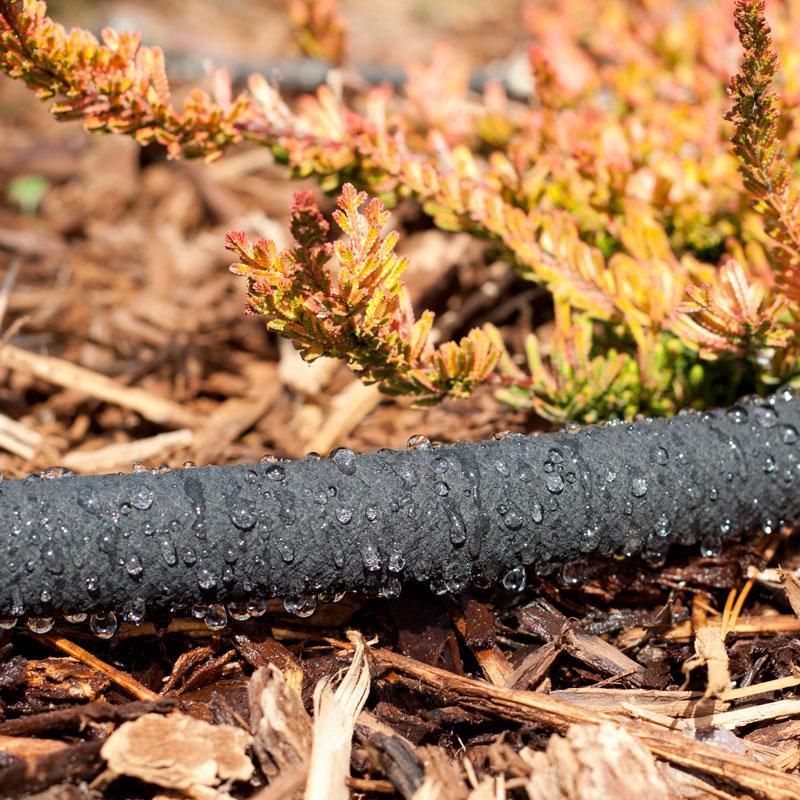
When the soil check confirms the root zone is dry, the goal is to get water deep into that zone, not just wet the surface. Applying water slowly, whether through a soaker hose, drip emitters, or a hose set to a trickle and moved around the root zone, gives the soil time to absorb the moisture before it runs off.
A slow application that soaks in is far more useful than a quick sprinkler pass that wets the foliage and barely reaches the roots.
The NC State Extension woody ornamentals handbook advises against frequent shallow watering for landscape shrubs, noting that it encourages roots to stay near the surface where they are more vulnerable to heat and drought. A single thorough soaking that reaches the full depth of the root zone does more good than repeated light sprinklings.
Foliage sprinkling is not the target here; the roots are doing the work, and they are underground.
There is no universal volume or watering schedule that fits every holly in every North Carolina yard, because soil type, plant size, recent rainfall, and drainage all affect how much water the root zone needs and how quickly it absorbs it. The practical approach is to apply water slowly across the area beneath the branch canopy, let it soak in, and then check the soil again.
When the root zone feels adequately moist several inches down, stop.
University of Maryland Extension’s tree and shrub watering guidance reinforces the point that deep, infrequent irrigation supports stronger root development than frequent shallow applications. Continue rechecking the soil as fall progresses, and water again only if dry conditions return and the soil can still absorb moisture.
Once the ground is frozen or winter rain has adequately recharged the root zone, the season for supplemental irrigation is over.
Use Mulch to Conserve Moisture Without Trapping It Against the Plant
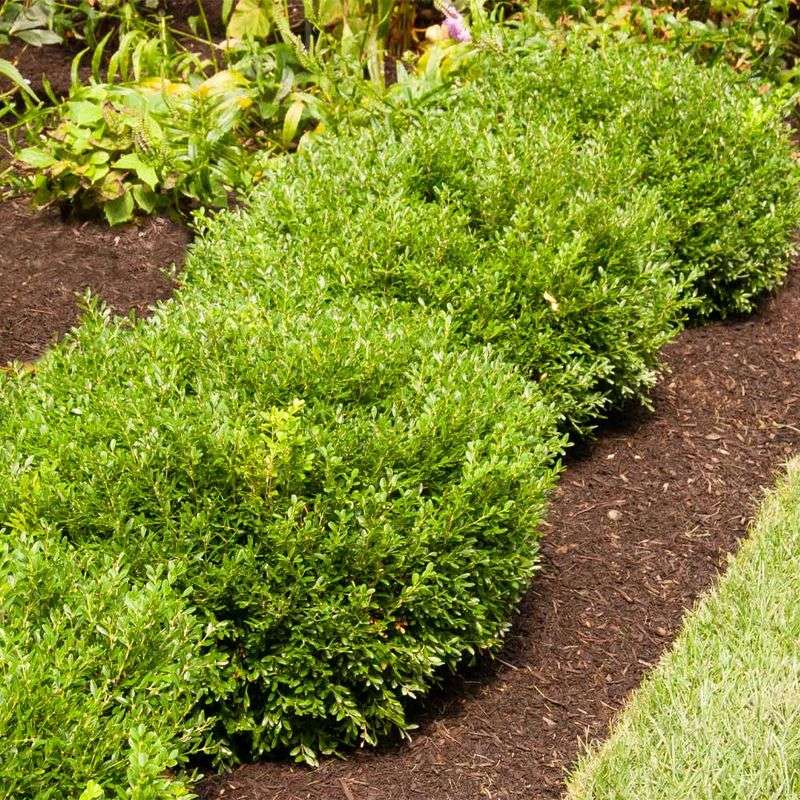
Mulch is the second part of the fall routine for evergreen hollies, and it earns its place by slowing the evaporation of soil moisture after a deep watering. A properly applied layer helps the root zone hold onto what it has absorbed, moderates soil temperature during freeze-thaw swings, and reduces competition from weeds.
Those benefits are real, but they depend on where and how the mulch is placed.
A layer of roughly 2 to 4 inches of organic mulch, such as wood chips or shredded bark, spread over the root zone is a reasonable target for most sites, though the right depth can vary with the material and local conditions. NC State Extension’s landscape management calendar and Virginia Cooperative Extension guidance on mulching both support keeping mulch at a moderate, consistent depth rather than piling it high.
Too little mulch provides minimal benefit; too much can hold excess moisture around the crown and interfere with air circulation at the soil surface.
Keeping mulch away from the stem and crown of the holly is not optional. Mulch piled against the base of the plant, sometimes called a mulch volcano, traps moisture against the bark, creates conditions that favor fungal decay, and can attract insects or rodents that damage the stem.
Pull the mulch back so there is a clear gap of a few inches between the mulch layer and the base of the plant.
Mulch also cannot fix a drainage problem. If the soil around a holly stays wet for extended periods after rain, adding mulch will not help and may make root conditions worse.
Clemson Extension’s holly disease factsheet connects persistently wet soil with Phytophthora root rot and other root diseases, particularly in Japanese holly. Improving drainage, or choosing a better-suited planting location, addresses the underlying problem in a way that mulch alone cannot.
Protect Berries by Limiting Fall Pruning
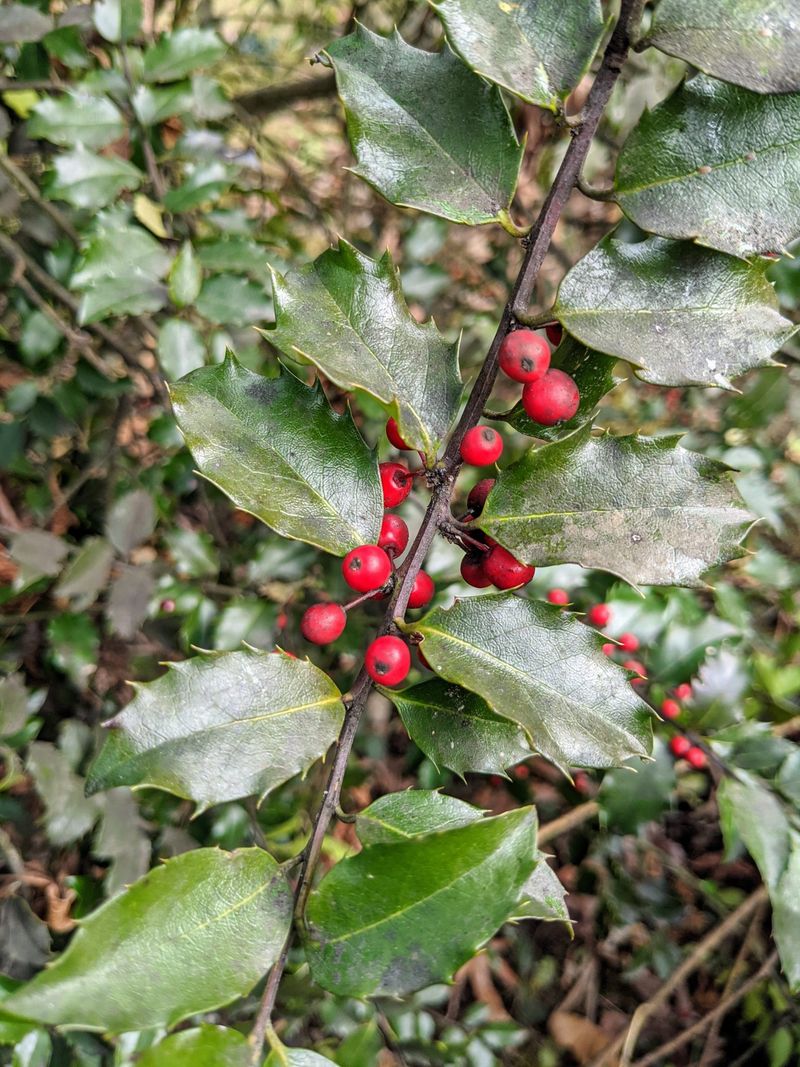
Picking up pruning shears in fall and cutting back a holly to tidy it up can seem like a reasonable seasonal task, but for a plant carrying berries or flower buds, it often works against the homeowner’s goals. Holly berries visible in fall developed from flowers that bloomed in spring, and the wood that carried those flowers may also carry next year’s flower buds.
Cutting that wood removes both the current display and potential future fruit.
NC State Extension’s general pruning guidance places most shrub pruning in late winter or early spring, after the worst cold has passed and before new growth begins. That timing avoids removing dormant flower buds and gives wounds a chance to heal quickly as the growing season starts.
Fall pruning does not fit that window for most hollies, and heavy rejuvenation cuts are especially better reserved for late winter when the plant’s response can be supported by spring growth.
The Henderson County Extension pruning calendar reinforces late-winter timing for holly pruning in North Carolina. If a specific holly’s pruning schedule is unknown, defaulting to late winter is a safer bet than acting in fall.
The exception is material that poses a genuine problem: dead, broken, diseased, or hazardous branches can be removed whenever they are identified, regardless of season, because leaving them creates more risk than the pruning does.
Some cultivars handle pruning differently. NC State’s Burford holly profile notes that fruit may develop on new growth in that cultivar, which affects how pruning timing influences berry set.
That kind of cultivar-specific detail is worth knowing before making cuts. The broader point is that fall pruning is not a tool for improving winter berries; it is more likely to reduce them.
Protecting the current berry display means leaving the plant alone unless there is a clear structural or health reason to cut.
Healthy Foliage Supports the Display but Cannot Guarantee Fruit
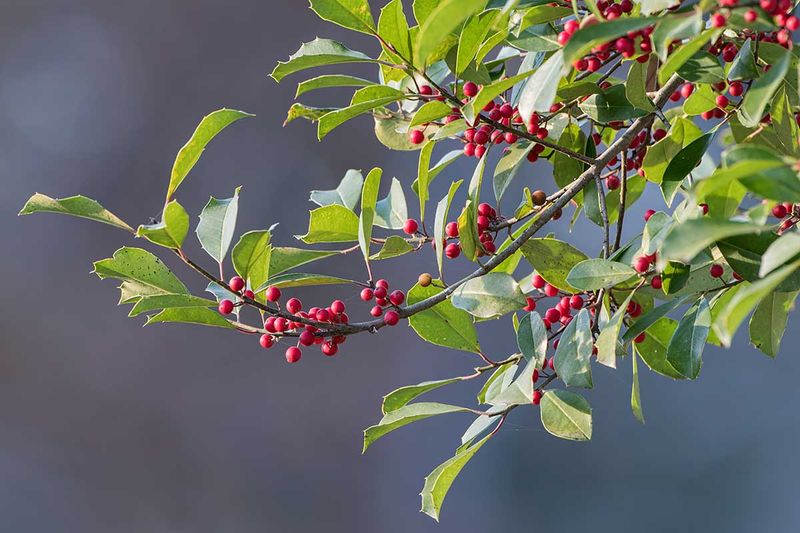
Fall watering and mulch can help an evergreen holly enter winter with well-hydrated foliage and a healthier root zone, and that is genuinely worth doing. What those steps cannot do is override the other factors that determine whether a holly produces berries.
Berry set is a biological process that runs on its own timeline and depends on conditions that fall care does not control.
Sunlight plays a significant role. Clemson Extension’s holly factsheet notes that sites with more sun generally produce better berry crops and denser growth.
A holly planted in heavy shade may be perfectly healthy and still produce sparse fruit. Soil quality, adequate drainage, plant age, and cultivar all contribute as well.
Young hollies often take several years to flower reliably, and some cultivars simply carry heavier fruit loads than others regardless of care.
Pollination is another piece that fall care cannot change. Many hollies are dioecious, meaning male and female flowers occur on separate plants.
A female plant generally needs pollen from a compatible male nearby to set fruit. Henderson County Extension’s holly guide explains the pollination requirements for common holly species and notes that matching the right male cultivar to a female plant matters.
However, not every holly follows this rule. NC State’s Burford holly profile identifies that cultivar as capable of producing a heavy fruit set without pollination.
Assuming every holly needs a male companion plant is not accurate, and a universal spacing rule does not apply across all species and cultivars. Checking cultivar-specific recommendations gives a more reliable answer than a general rule.
NC State Extension’s holly landscape feature also points to weather during the flowering period as a factor in fruit set, since poor conditions at bloom time can reduce pollination even when male plants are present. All of these variables sit outside the scope of a fall watering routine.
One more note on berries: they are food for birds and wildlife, but they are not safe for people or pets. Poison Control’s holly berry information reports that ingestion can cause nausea, vomiting, and diarrhea, and the ASPCA’s toxic plant list includes holly as harmful to dogs, cats, and horses.
Keep berries away from children and pets, and contact Poison Control or a veterinarian after any suspected ingestion rather than waiting to see how the situation develops.
Use This Conditional Fall Routine
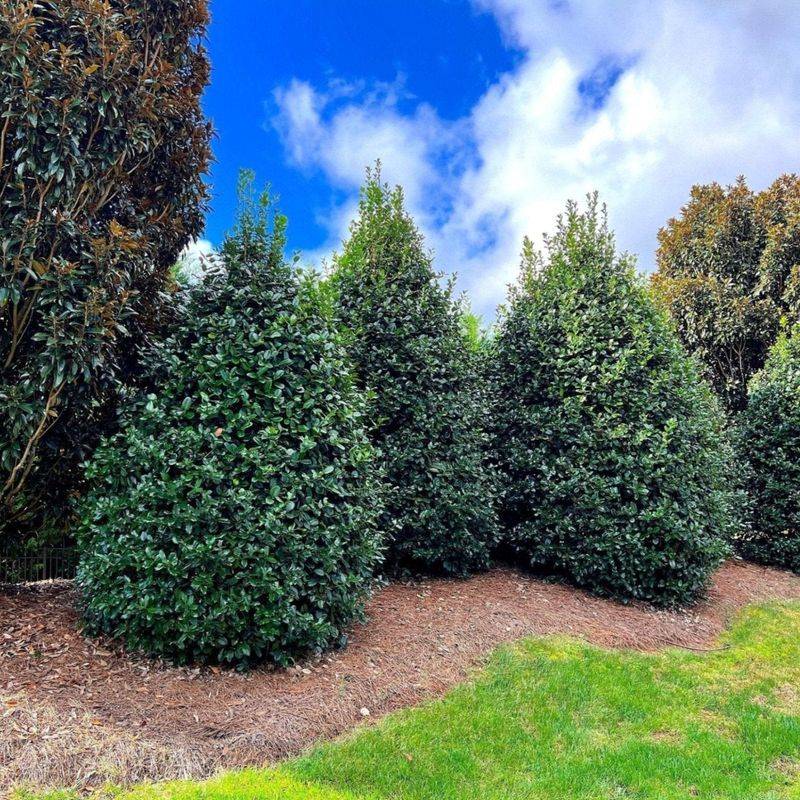
For evergreen hollies in North Carolina, the fall routine comes down to a short sequence of conditional steps. First, confirm that the holly is evergreen.
Deciduous species like possumhaw and winterberry do not need fall watering to protect winter foliage because they shed their leaves naturally. Second, check the root zone.
If the soil is moist, wait. If it is dry and the soil can still absorb water, water slowly and deeply across the root zone and recheck conditions as fall progresses.
Third, maintain a moderate mulch layer of roughly 2 to 4 inches over the root zone, keeping it pulled back from the stem and crown. NC State Extension’s woody ornamentals guidance and University of Maryland Extension’s watering resource both support this combination of deep watering and mulch as the most practical way to reduce winter moisture stress in evergreen shrubs.
Fourth, skip major fall pruning unless there is dead, broken, or hazardous material that needs to come out.
This routine can reduce drought and winter-desiccation stress and support healthier foliage going into the cold months. It cannot ensure a heavy berry crop, because berries depend on flowering, pollination, sunlight, cultivar, and plant age, none of which fall irrigation controls.
If a holly continues to look stressed despite correct watering and mulch, consider whether poor drainage, root disease, insects, or other environmental factors are involved. Clemson Extension’s holly disease and pest resource is a useful reference for sorting through overlapping symptoms.
A well-hydrated evergreen holly entering winter is more resilient, and that resilience is the real payoff of a fall routine done right.