
August in Central Texas is brutal, but it is also the month that decides whether you get a fall tomato harvest or miss the window entirely. Planting the right variety at the right time gives you a real shot at ripe fruit before cold weather shuts the season down.
The varieties and timing guidance below are built for Austin-area gardeners who want a practical plan, not a vague promise.
Set a rough late-August target, not a guaranteed deadline
Timing a fall tomato crop in Central Texas starts with a planning rule from Texas A&M AgriLife’s vegetable gardening guidance, which recommends setting out fall tomatoes roughly 100 days before the first expected frost. Apply that to Austin, and you need a local frost or freeze reference point to make the math work.
Austin’s National Weather Service climate summary puts the average first freeze at December 1, based on 1991-2020 normals. Counting back 100 days lands around August 23.
That date is a rough proxy, not a fixed 2026 deadline or a promise that fruit will be ready exactly 100 days after you plant. The Texas A&M guidance technically refers to frost, while the NWS figure tracks a freeze at 32 degrees Fahrenheit or below, so treat the August 23 estimate as a general planning anchor rather than a precise cutoff.
Austin’s freeze record also shows real variability. The earliest recorded first freeze has arrived as early as October 26, which means some years give you far less time than the average suggests.
Gardeners in other parts of Central Texas should factor in local elevation, valley exposure, and proximity to the Hill Country, because those factors shift freeze dates in either direction. Check your own local frost and freeze history before committing to any single target date.
For this late-season planting, start with a healthy nursery transplant rather than direct-seeding. Texas A&M’s tomato production fact sheet describes a healthy green transplant approximately 6 to 8 inches tall as the right starting material for a fall crop.
Seed-started plants take too long to reach transplant size and eat into an already short window. Buy the healthiest plant you can find from a current, reliable nursery source, and plan to get it in the ground around late August if you are gardening in the Austin area.
Choose for heat because August can block fruit set
Before picking a variety name, understand the problem every fall transplant faces in August. Tomato plants stop setting fruit when temperatures climb too high, and Central Texas in late summer regularly pushes past those thresholds.
Texas A&M’s vegetable growers handbook identifies daytime temperatures above 95 degrees Fahrenheit and nighttime temperatures above 70 degrees Fahrenheit as conditions that reduce fruit set and overall yield.
A separate Texas A&M tomato production document notes that temperatures above 92 degrees Fahrenheit contribute to blossom drop, poor fruit set, and catfacing. That is not a rare event in Austin during August and early September.
A transplant set out in late August may spend its first two to four weeks simply trying to establish roots while heat keeps blossoms from developing into fruit.
Hot-set varieties are bred to perform better under those elevated temperatures, but the advantage is relative, not absolute. University of Florida IFAS guidance on tomato varieties for early fall frames hot-set performance as improved fruit-setting ability during high temperatures, not guaranteed production under every August condition.
Extreme daytime heat, warm nights, drought stress, disease pressure, and poor pollination can still prevent fruit set even in cultivars selected for heat tolerance.
Choosing a hot-set variety is the first and most important decision you make, but it does not replace good establishment care. A heat-adapted plant in poor soil with inconsistent water will underperform a moderately heat-tolerant plant that is well-watered, mulched, and protected during its first week in the ground.
Variety selection and good cultural practice work together, and neither one alone is enough to guarantee a fall harvest in Central Texas.
Solar Fire is a well-documented hot-set choice
Solar Fire stands out as one of the most thoroughly documented hot-set tomato options for early fall conditions. University of Florida researchers developed it specifically to set fruit at warm temperatures, and the cultivar has a clear published record behind it.
A UF/IFAS announcement on Solar Fire describes it as heat tolerant and capable of setting fruit under high-temperature conditions that cause most standard varieties to drop their blossoms.
The fruit profile is also practical for a home garden. Proceedings from the University of Florida’s tomato institute report medium-to-large fruit size, early maturity under high-temperature growing conditions, and resistance to several Fusarium wilt races, Verticillium wilt race 1, and gray leaf spot.
Early maturity matters for a fall crop because it shortens the time between transplanting and first harvest, which is exactly what a compressed Central Texas fall window demands.
Those disease resistances are worth noting, but they require two qualifications. Resistance means reduced disease development or fewer symptoms under pressure, not immunity.
A plant labeled resistant can still be affected under severe disease conditions, especially in soil or microclimates with high pathogen loads. Always check the current plant tag or seed packet label to confirm which resistance codes apply to the specific lot you are buying, because labeling can vary by supplier and season.
Solar Fire is a well-documented option, but no head-to-head Central Texas comparison exists that proves it outperforms Florida 91 or Phoenix in Austin-area conditions. Climate, humidity, soil type, and local disease pressure differ between Florida, where most of this research was conducted, and Central Texas.
Treat Solar Fire as a leading candidate worth seeking out, verify that the transplant you find is healthy and currently labeled, and do not assume that any plant sold under that name is identical to the original trial material.
Florida 91 and Phoenix offer comparable backup options
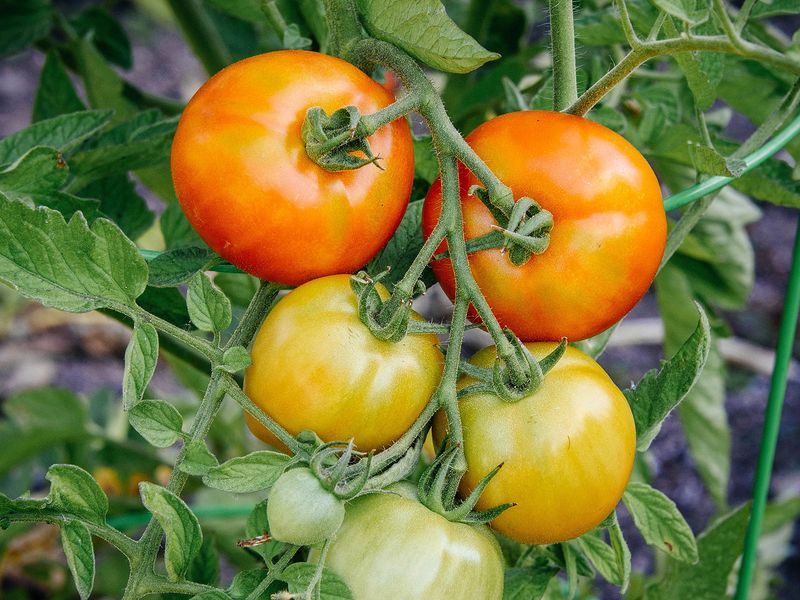
When a Solar Fire transplant is not available at your local nursery, Florida 91 and Phoenix are documented hot-set alternatives worth requesting or searching for. Both are identified in UF/IFAS tomato variety guidance for early fall conditions as cultivars with better-than-average fruit-setting ability during high temperatures, which is the core trait a late-August planting in Central Texas needs most.
A separate UF/IFAS cultivar profile for Florida 91 describes it as having good fruit-setting ability under high temperatures and solid overall production characteristics. Phoenix is listed alongside Solar Fire and Florida 91 as a hot-set type suited to early fall planting windows.
Neither cultivar has been ranked above the other in a published Central Texas comparison, so the practical guidance is to choose whichever healthy transplant you can actually find at a reliable current source.
The Florida origin of these recommendations matters for Central Texas gardeners. UF/IFAS research is conducted under Florida conditions, where humidity, soil composition, disease pressure, and seasonal temperature patterns differ from the Austin area.
These cultivars show useful hot-set traits, but their labeled performance in Florida trials does not translate directly into a guaranteed result in your Central Texas garden.
If you cannot find any of the three front-line options, the most important factor shifts to plant health rather than variety name. A stocky, dark-green, 6-to-8-inch transplant from a reputable current-season source will outperform a stressed or root-bound plant of the theoretically superior variety.
Check nursery stock carefully, confirm the variety name on the label, and plant promptly once you find a healthy specimen.
Use older Texas trials as backup evidence, not a current ranking
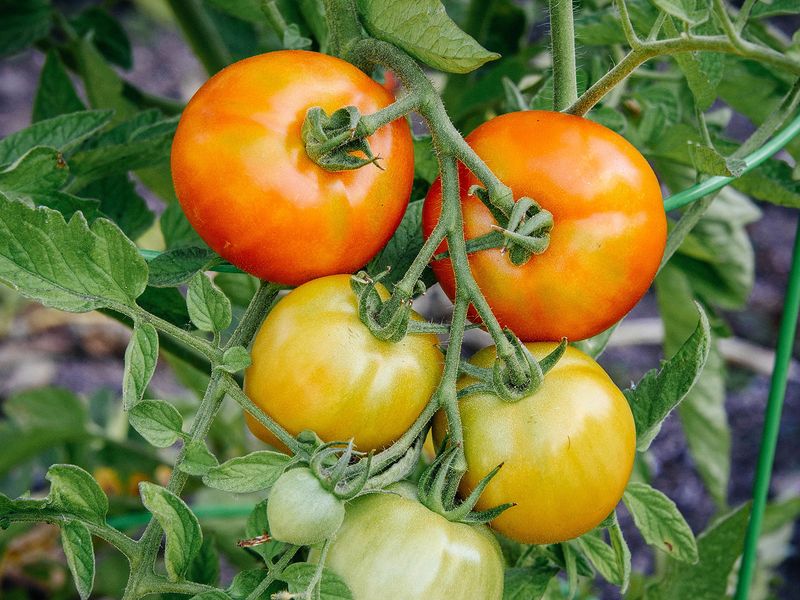
Heatwave, Sunmaster, and BHN 444 have solid Texas-specific performance records, and that history makes them worth considering when they are currently available and properly labeled. A 2001 Texas fall tomato trial found strong yields from all three cultivars, along with Celebrity and several others, under the specific conditions of that trial site, season, and management system.
Those results are useful context, but they come with real limits that any gardener should understand before treating them as current statewide rankings.
The 2001 trial reflects a particular location, growing season, irrigation and fertilization protocol, and seed lots from that period. Tomato varieties sold under the same name today may come from different seed sources and may not perform identically to the material tested more than two decades ago.
Seed company breeding programs update lines, disease-resistance packages change, and regional availability shifts. A cultivar that topped a 2001 Texas trial is not automatically the best choice from every supplier today.
Texas horticultural guidance on fall tomato selection has historically highlighted these cultivars as strong performers, which adds regional credibility beyond the single trial. That support is meaningful but should be read as historical evidence rather than a current comparative ranking.
Sunmaster and Heatwave, in particular, have long track records in Texas extension recommendations, while BHN 444 has appeared in commercial and home-garden trial contexts with positive results.
When any of these three cultivars shows up at your nursery as a healthy transplant with a current label, it is a reasonable choice to consider alongside the UF-documented options. Confirm the variety name, check that the plant looks vigorous, and plant it promptly.
The trial history gives you a reason to pick it up; good establishment care gives it a chance to perform.
Establish the transplant before asking it to fruit
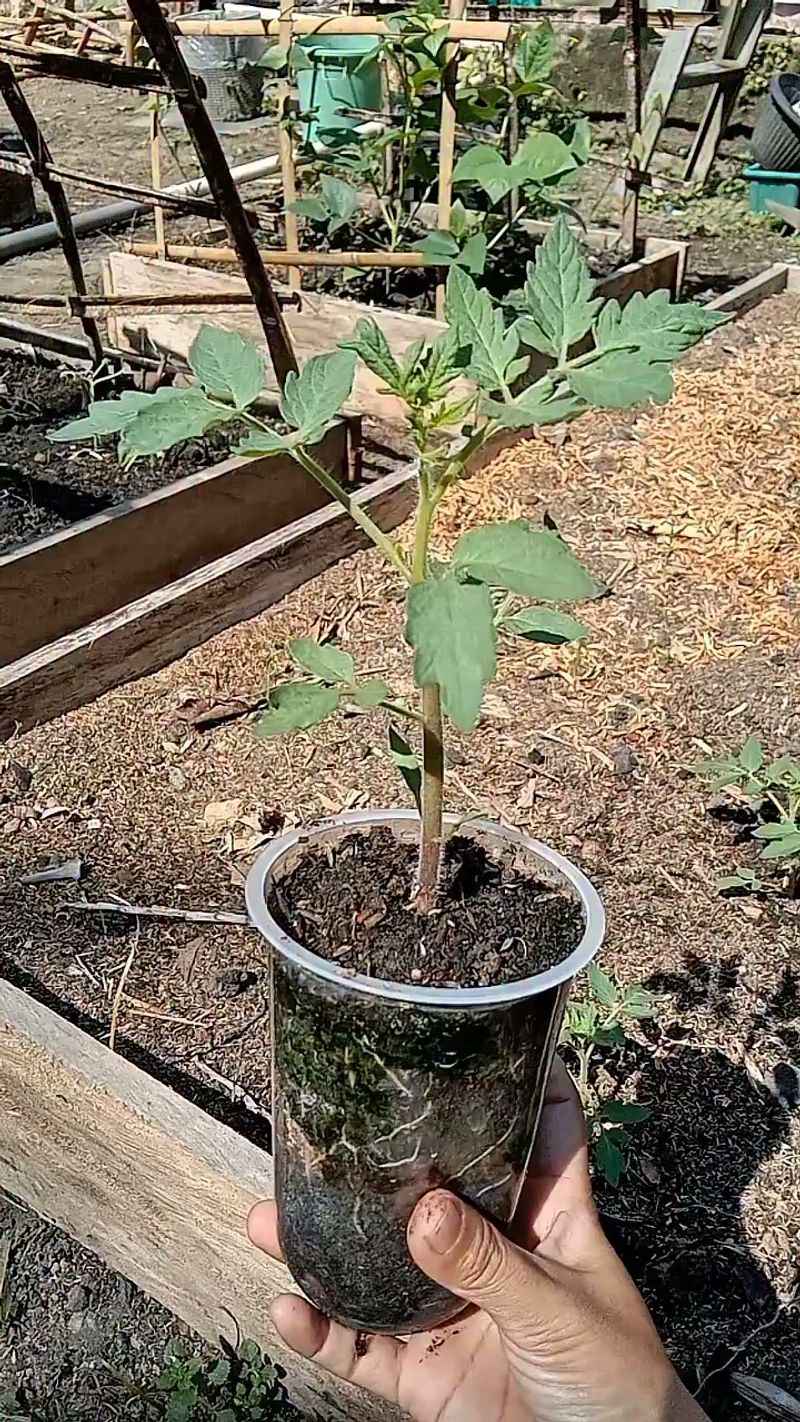
Getting a fall tomato into the ground is only the first step. What happens in the first week or two after planting largely determines whether the plant ever sets fruit at all.
Start by selecting a healthy green transplant approximately 6 to 8 inches tall, as described in Texas A&M’s tomato transplant guidance. Avoid plants that are yellowing, root-bound, or already heavily flowered, because stressed transplants take longer to establish and may never catch up in a short fall window.
Install a cage or stake at planting, not after the plant has grown. Texas A&M’s tomato production reference notes that support keeps fruit off the soil, improves air circulation, and makes harvest easier.
Adding it at planting avoids disturbing roots later and gives the plant a structure to grow into from the start.
Water slowly and deeply right after planting, and keep soil moisture consistent throughout the establishment period. Extension guidance on growing tomatoes links fluctuating soil moisture to blossom-end rot and poor fruit quality, while Texas A&M warns that severe wilting reduces both yield and fruit quality.
Deep watering encourages roots to follow moisture downward, which builds the root system a late-season plant needs to survive heat and produce fruit. Direct irrigation at the soil surface, not the foliage, because wet leaves and soil splash increase disease risk.
Mulch the root zone immediately after planting. A layer of mulch slows moisture loss, moderates soil temperature, and reduces the frequency of wilting between waterings.
This matters more in August than almost any other month.
New transplants also benefit from temporary afternoon protection during their first few days in the ground. Texas planting calendar guidance recommends diffuse light for young transplants while they establish.
A shade cloth angled to block the harshest afternoon sun can reduce heat stress without cutting off the full-day light the plant needs to grow. Remove or reposition the shade once the plant shows new growth and looks settled.
Permanent heavy shade, wet foliage, or restricted airflow will reduce growth and raise disease risk over time, so temporary protection is the goal, not a permanent setup.
Watch for frost before the first official freeze
Austin’s average first freeze of December 1 is a useful planning reference, but relying on it alone can cost you a crop. National Weather Service guidance on frost and freeze draws a clear distinction between the two: a freeze occurs when air temperature drops to 32 degrees Fahrenheit or below, while frost can form on plant surfaces at somewhat higher air temperatures under calm, clear, humid conditions.
Tender tomato plants can suffer damage before the thermometer officially hits 32 degrees, so waiting for a freeze warning before acting may already be too late.
Central Texas is not one uniform climate. Elevation, valley position, urban heat island effects, and proximity to the Hill Country all shift local freeze timing.
Additional NWS freeze information reinforces that microclimates within a region can differ significantly from official city averages. Austin’s own recorded first freeze has arrived as early as October 26, which is more than five weeks ahead of the December 1 average.
Gardeners in lower-lying areas, rural properties, or locations north and west of Austin should treat that early date as a realistic possibility, not an outlier to ignore.
Monitor local forecasts daily as October approaches. When a cold night is predicted, act before temperatures drop.
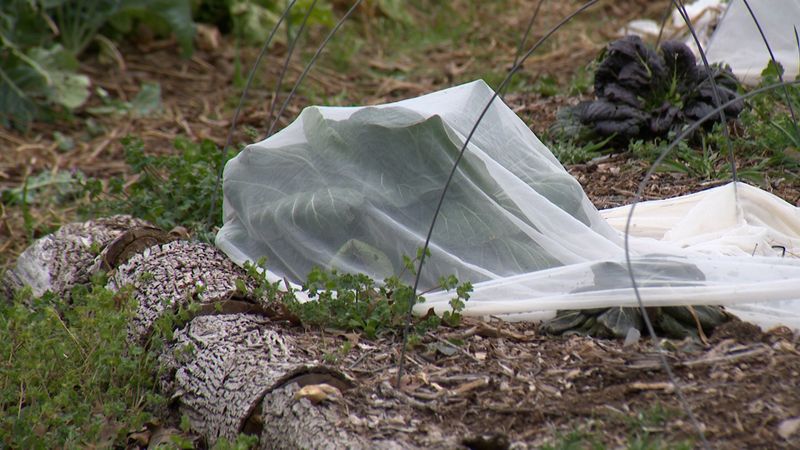
Texas A&M frost and freeze guidance describes row covers and water-filled containers as short-term protection options for small transplants. Row covers trap heat from the soil and slow temperature loss around the plant, while water-filled containers release stored warmth overnight.
Both methods offer limited protection and work best when temperatures stay above the mid-20s Fahrenheit.
Covers must be removed or ventilated during the following day if temperatures rebound into warm or hot conditions. A row cover left on during an 85-degree afternoon can overheat and damage the plant it was meant to protect.
These tools buy time during a brief cold snap, but they do not make tomatoes cold hardy or extend the season indefinitely.
Make the practical choice and plant promptly
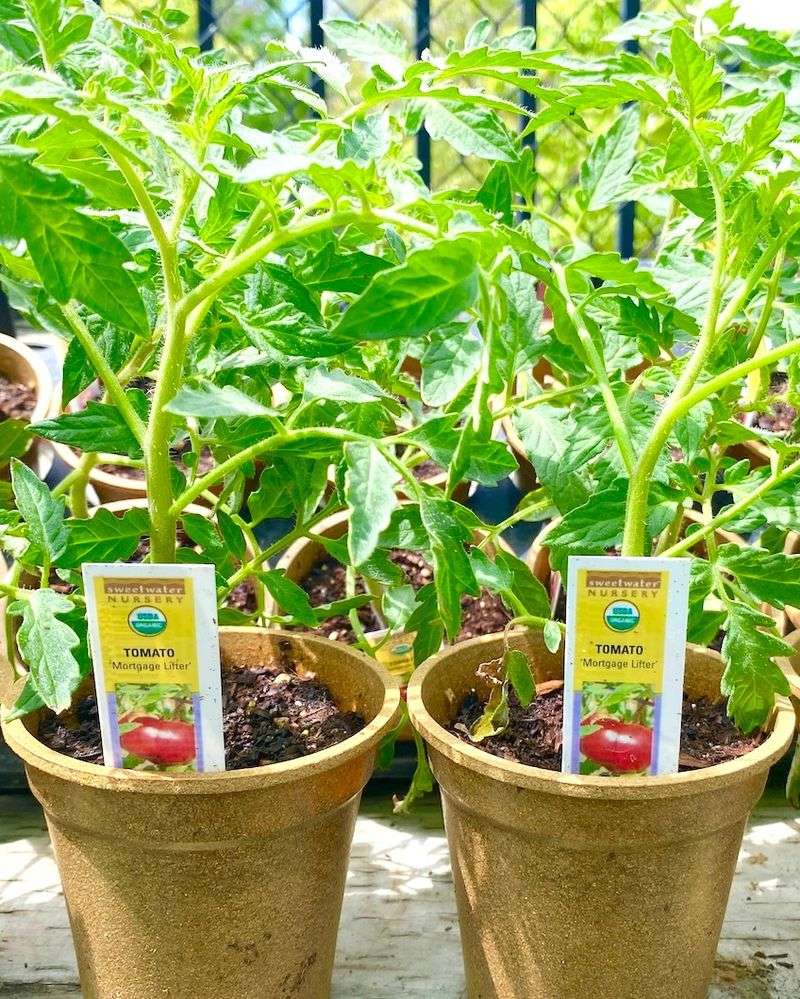
Once the local window opens, the decision comes down to what is healthy and available right now. Head to a reliable nursery and look for Solar Fire first.
UF/IFAS fall tomato variety guidance places Solar Fire, Florida 91, and Phoenix together as documented hot-set candidates for early fall conditions. If Solar Fire is sold out, a healthy Florida 91 or Phoenix transplant is a sound alternative with similar documented traits.
When none of those three is available, check whether Heatwave, Sunmaster, or BHN 444 is on the shelf with a current label and a vigorous appearance, drawing on their Texas trial history as supporting context.
Hot-set genetics improve your odds of fruit set during the heat of late August and early September, but they do not guarantee a harvest. Establishment care, consistent moisture, local frost timing, and a little luck with the weather all matter as much as the variety name on the tag.
Plant promptly, mulch well, water deeply, and keep an eye on the forecast as the season progresses.
A fall tomato in Central Texas is always a calculated bet against the calendar and the climate. Pick the best available plant, give it every advantage you can at planting, and let the season play out.