
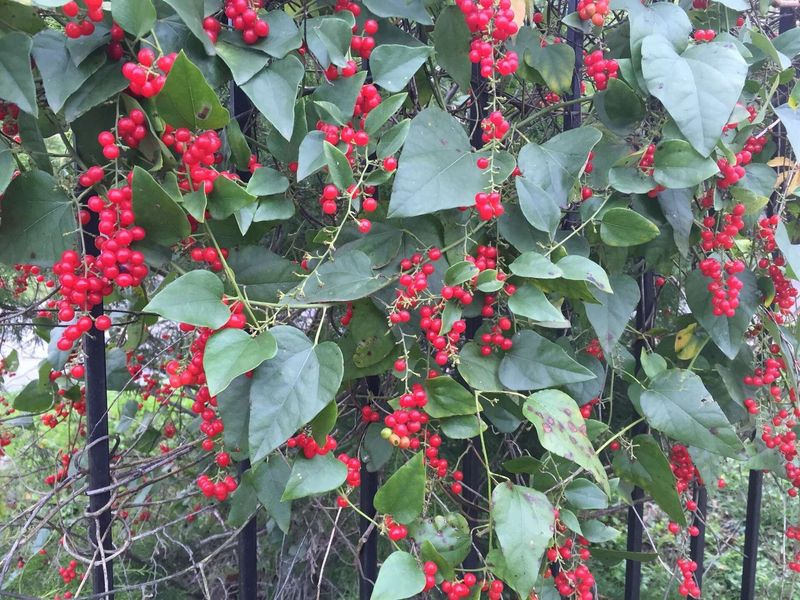
A bare wood or wire fence baking in the Texas sun is an invitation for the right native vine to come in and do something beautiful. Carolina snailseed, a thornless twining plant found across most of Texas, can climb a supported fence and produce glossy leaves through summer and a show of brilliant red berries in fall.
Getting there takes some preparation, honest expectations, and a willingness to guide those slender stems where you want them to go. Here is what the plant actually is, where it grows, and how to give it the best shot at turning your fence into something worth looking at by the time autumn rolls around.
Carolina Snailseed Offers Seasonal Fence Coverage
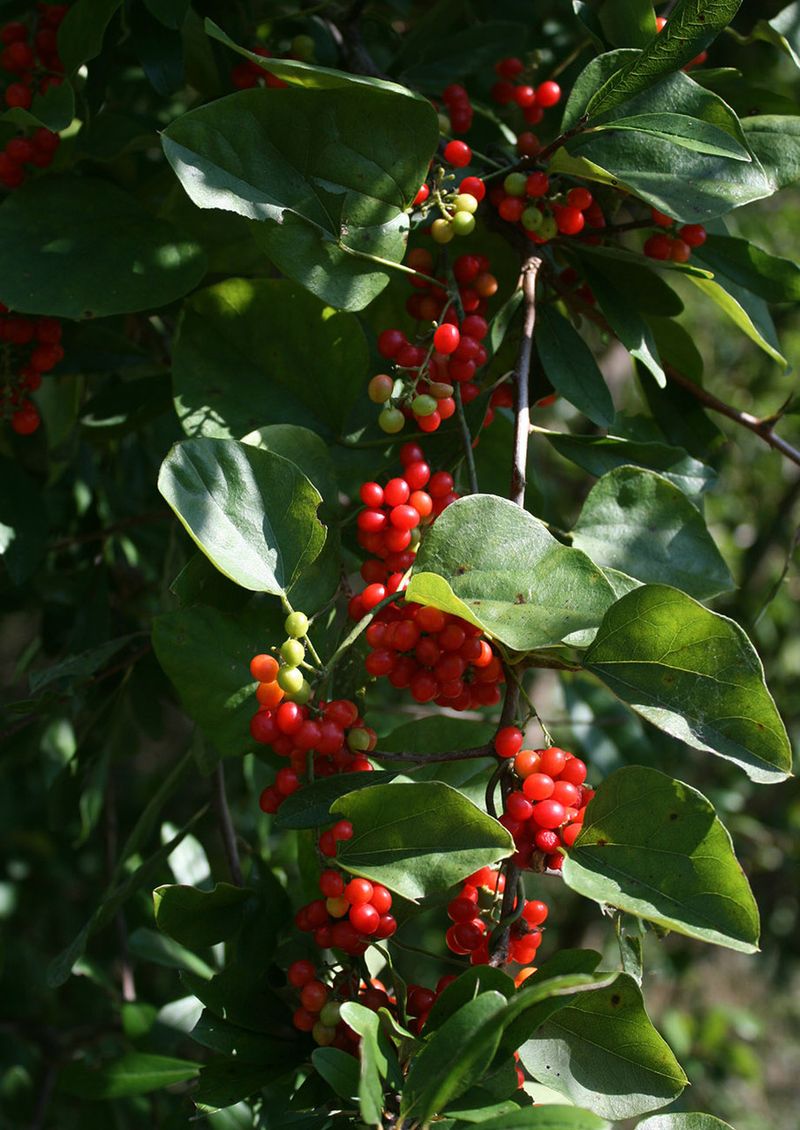
Carolina snailseed, known scientifically as Cocculus carolinus, is the thornless, fast-growing native vine that fits the promise of seasonal fence coverage better than almost anything else in the Texas plant palette. You may also hear it called Carolina moonseed or Carolina coralbead, names that hint at the glossy, moon-shaped seeds tucked inside its autumn berries.
Whatever you call it, the plant has a reputation for covering fences and scrambling through shrubs with surprising speed once it finds its footing.
The growth habit is a twining one, meaning the slender stems wrap around whatever they can reach rather than gripping a flat surface with adhesive roots. Texas A&M range plant documentation describes it as a perennial vine found climbing fences and trees throughout most of Texas, with a typical height range of roughly 3 to 15 feet.
North Carolina State Extension puts the upper end at 12 feet or more under good conditions, so a long, well-supported fence can realistically expect meaningful coverage from a healthy, established plant.
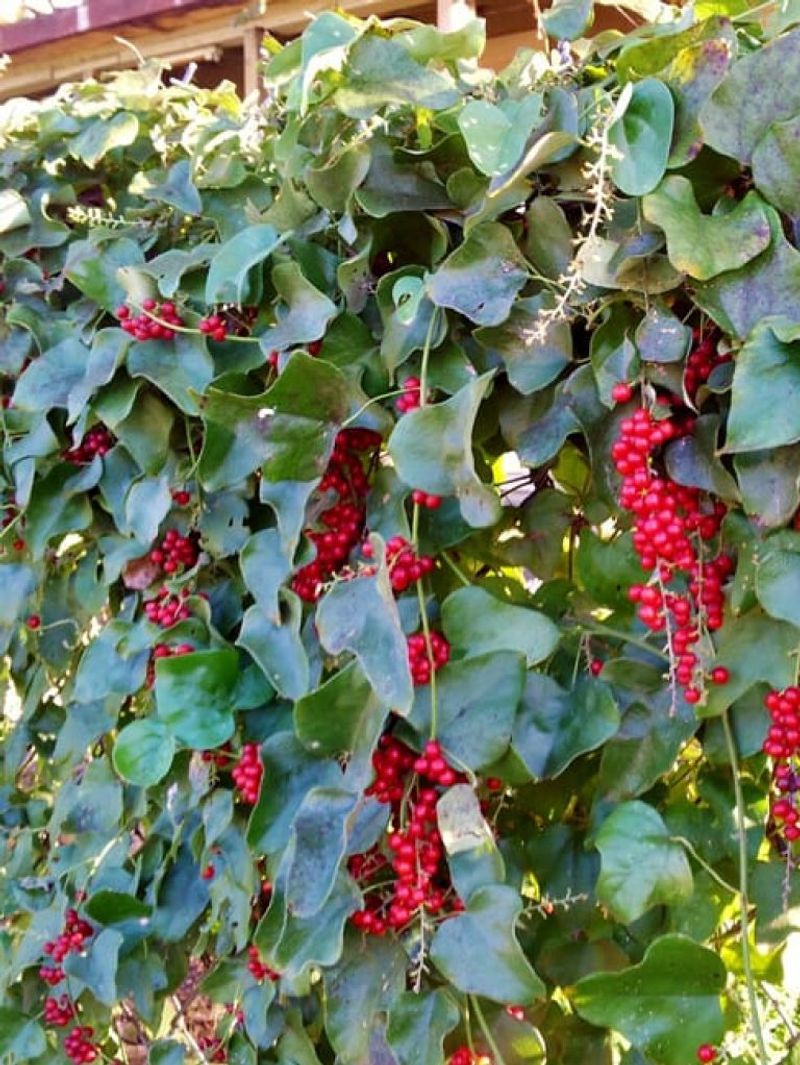
The foliage is the first seasonal reward: broad, heart-shaped leaves with a glossy surface that catches light and gives the fence a genuinely green, living appearance through the warm months. Then, as temperatures cool and days shorten, female plants produce clusters of small, round berries that ripen to a vivid red, creating the kind of fall display that stops people on the sidewalk.
The honest version of the transformation story is this: a suitable, supported Texas fence can gain real seasonal greenery and a showy autumn fruit display from Carolina snailseed, especially once the plant is established and given consistent guidance. Calling it a guaranteed opaque living wall by fall oversells what a slender twining vine can deliver in one growing season.
Think of it instead as a seasonal softening, a vine that moves a bare fence from stark to alive without asking much beyond a proper structure and some patient attention during establishment.
Most of Texas Can Grow It, but Every Site Differs
Gardeners across a broad swath of Texas have a genuine shot at growing Carolina snailseed, but the state is too large and too climatically varied to treat as one uniform planting zone. Texas A&M documents the species across the Pineywoods, Gulf Prairies and Marshes, Post Oak Savannah, Blackland Prairies, Cross Timbers and Prairies, South Texas Plains, Edwards Plateau, Rolling Plains, and Trans-Pecos regions.
The one area consistently listed as outside its natural range is the Panhandle, so gardeners in Amarillo and the surrounding high plains should verify local suitability before committing to a planting.
Outside the Panhandle, the vine’s preferred conditions give a useful picture of where it performs most reliably. North Carolina State Extension describes the plant as adaptable to full sun through part shade and performing best in average, well-drained soil with moderate moisture.
Richer, moister sites, such as the woodland edges and creek-bottom fences common in East Texas and the Post Oak Savannah, often produce the fastest, most vigorous growth because they match the species’ natural habitat.
Sites that are hot, dry, and fully exposed, think a west-facing cedar fence on a Hill Country property with thin caliche soil, are not off-limits, but they require closer attention during establishment. Texas Parks and Wildlife plant guidance notes tolerance for sands, loams, clays, and even the heavy gumbo soils around Houston, which is a meaningful range.
Still, a vine pushed through its first Texas summer on a bone-dry, rocky slope needs more irrigation support than one planted in amended soil with afternoon shade.
Matching the plant to the specific conditions on your fence line, including sun exposure, soil drainage, and access to supplemental water, will do more to determine first-year growth than any other single factor. Carolina snailseed is broadly suited to Texas, but broad suitability is not the same as guaranteed success at every address.
Build a Support System for a Twining Vine
Before the first stem goes in the ground, the fence needs to be ready to receive a twining climber. Carolina snailseed does not grip flat surfaces the way English ivy or Virginia creeper does, using adhesive rootlets to stick to walls.
Instead, it winds its stems around whatever physical structure it can find. A smooth wooden privacy fence with no gaps, rails, or attached wire gives the vine almost nothing to grab, and the result is a plant that flops at the base rather than climbing.
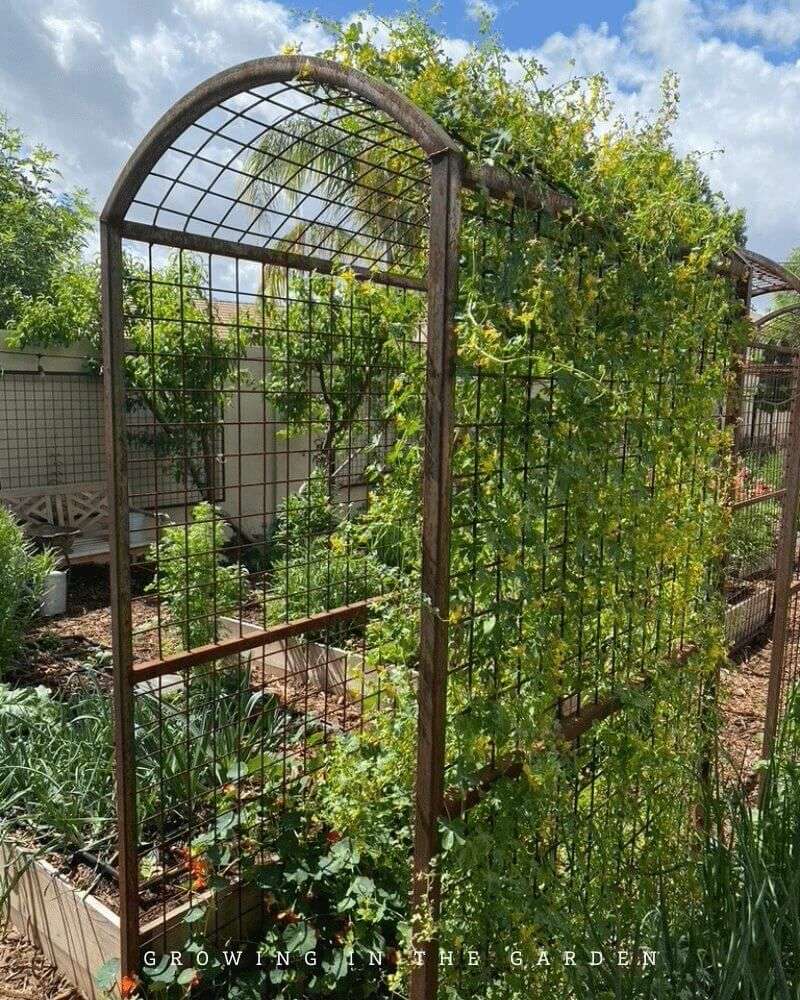
UF/IFAS ornamental vine guidance notes that twining vines need a structure they can wrap around, and that guiding them onto the right support early produces far better results than expecting the plant to find its way unaided. A chain-link or wire fence with openings works well because the stems can weave through the gaps naturally.
A wooden fence can be improved by stapling horizontal wires across the face at 6- to 8-inch intervals, giving the vine a grid to work with.
North Carolina State Extension confirms that a trellis, arbor, or comparable structure is the appropriate support for this vine, and that the plant should be guided onto it rather than left to self-direct. Arbors and freestanding trellis panels offer additional options if the fence itself is not well-suited to twining growth.
Keeping the vine on the fence rather than allowing it to jump to nearby trees is also worth planning from the start. University of Arkansas Extension advises using a trellis or fence specifically because birds spread the seeds and new plants can appear wherever the seeds are deposited, including at the base of valued trees.
Redirecting wayward stems back toward the fence during the growing season is much easier than removing an established root system from around a tree later.
Train Young Shoots for More Even Coverage
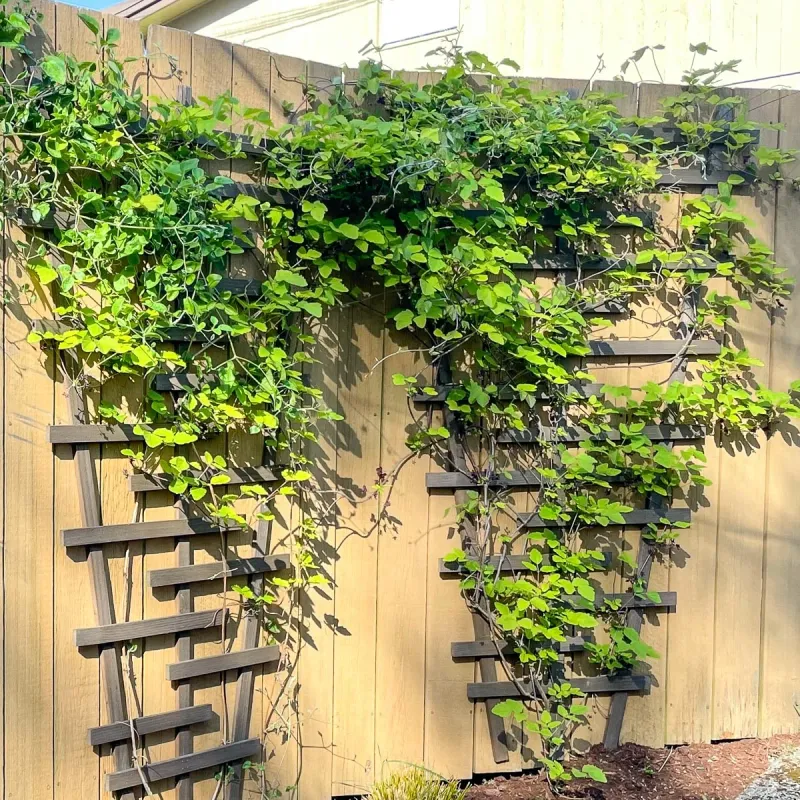
Getting even coverage from a twining vine takes deliberate effort from the beginning of the growing season. Left to its own devices, Carolina snailseed tends to shoot upward toward the brightest light, which produces a dense top and a sparse lower section that looks more like a tufted cap than a living wall.
The fix is to guide young shoots sideways as soon as they are long enough to handle, weaving them horizontally through the fence openings or around trellis wires before they harden and become difficult to redirect.
UF/IFAS vine training guidance recommends weaving young stems laterally through a trellis or fence structure, then redirecting stems downward once they reach the top of the support. That downward redirect is particularly useful for filling in the middle and lower sections of the fence, where bare spots are most noticeable from the street or the yard.
Soft plant ties or strips of old fabric work well for temporary anchoring while the stems find their grip.
Expect to check the fence every week or two during the peak growing season. Carolina snailseed moves fast once warm weather arrives, and stems that are not redirected promptly will lock into position and become harder to move without breaking.
North Carolina State Extension describes the vine as capable of rapid spread, which is an asset when you want coverage but a liability when stems are going in the wrong direction.
No amount of training will produce a perfectly uniform, opaque screen from a single slender vine in its first season. The goal is progressively better coverage over several growing seasons, with each year’s growth filling in gaps left by the last.
Patience and consistent redirection, rather than a set-it-and-forget-it approach, are what separate a fence that looks thoughtfully planted from one that looks like something wild escaped from the neighbor’s yard.
The Red Fall Display Depends on Maturity and Sex
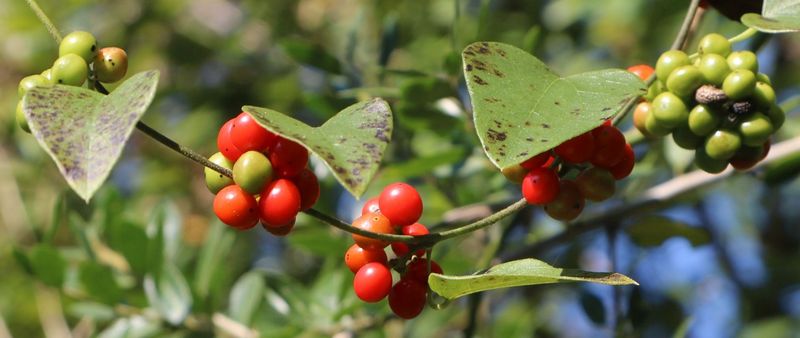
The red berry display is the most visually striking thing Carolina snailseed brings to a Texas fence, and it arrives in autumn, generally from September into October according to Texas wildlife guidance. The berries are small, round, and ripen to a deep, glossy red that stands out sharply against the green foliage still on the vine.
For a fence that spent most of the summer looking pleasantly leafy, the berry clusters add a new layer of color right when the rest of the yard is winding down.
Birds are the primary audience for those berries, and the list of species that use them reads like a Texas backyard birder’s wish list. Texas Parks and Wildlife plant guidance specifically names bluebirds, mockingbirds, cardinals, robins, warblers, and sparrows among the birds that relish the fruit.
Planting Carolina snailseed on a fence near a water feature or a brush pile essentially sets the stage for a fall bird-watching setup that builds itself.
There is a significant catch: only female plants produce fruit. Texas A&M confirms that male and female flowers occur on separate plants, meaning a vine grown from seed has roughly even odds of being male and producing no berries at all.
Buying a plant from a nursery that can confirm it is female, or purchasing from stock known to produce fruit, is the most reliable path to a berry display.
Timing adds another layer of honesty. North Carolina State Extension notes that newly planted Carolina snailseed typically does not produce fruit in its first few years.
A vine planted in spring of this year may deliver its first modest berry cluster two or three seasons from now, not by the coming October. Foliage coverage can develop meaningfully in the first season under good conditions, but the full autumn spectacle, berries, birds, and all, usually requires an established plant with a season or two already behind it.
Control the Growth and Treat the Berries Carefully
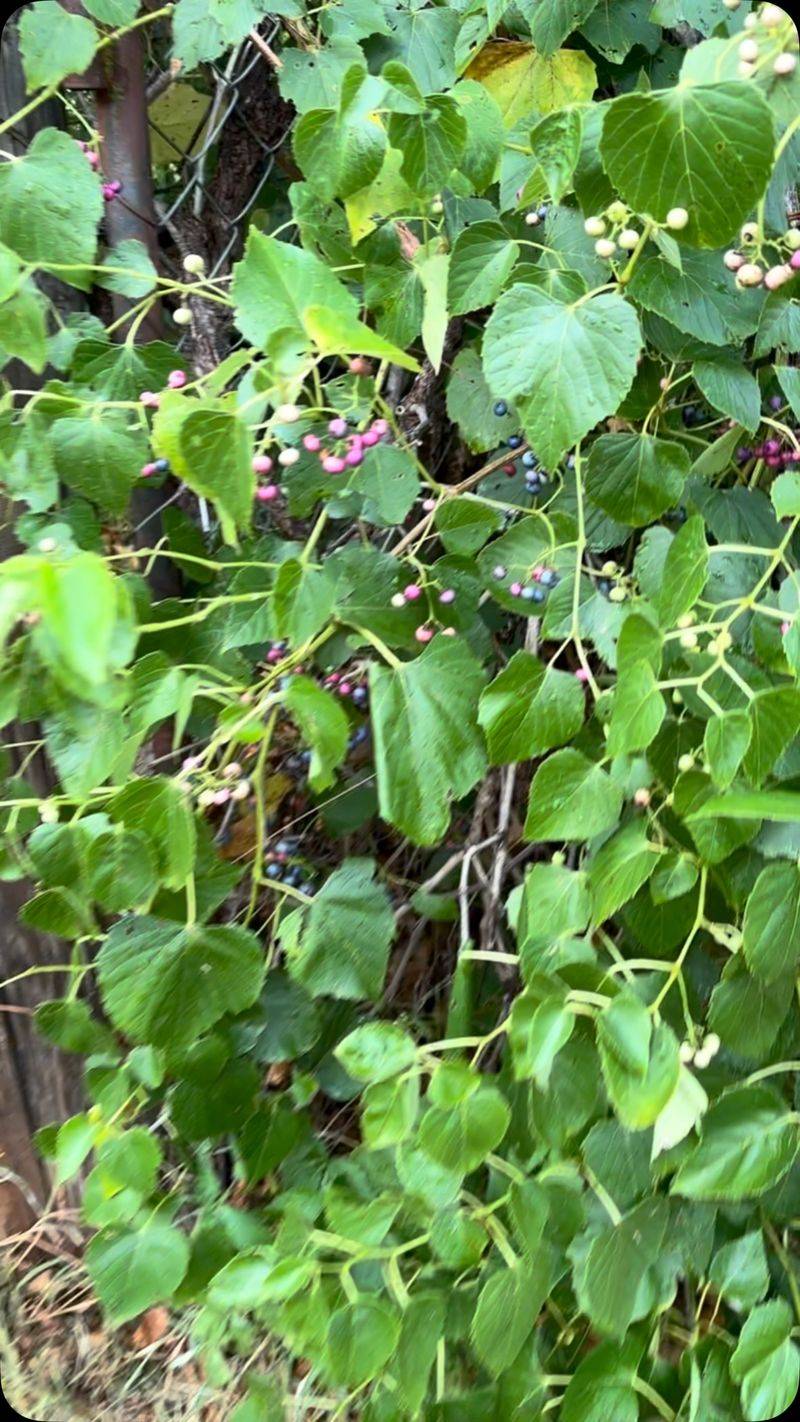
Carolina snailseed is not a plant that manages itself. Once established, it can spread rapidly through root expansion and bird-deposited seeds, and multiple extension sources flag it as potentially difficult to remove once its root system matures.
Setting clear boundaries from the beginning, both physical and in terms of your pruning schedule, will keep the vine working for your fence rather than against your yard.
Pruning serves two purposes: controlling overall size and removing growth that crosses, rubs, or interferes with the structure of the fence or with other plants. Texas A&M Aggie Horticulture pruning guidance recommends completing most structural pruning on Texas vines during the dormant period, roughly February through May, before new growth pushes hard.
That window gives you a clear look at the vine’s framework, makes it easier to identify dead or damaged stems, and allows you to reshape coverage before the growing season accelerates.
Corrective pruning, removing a stem that has jumped to a tree or is heading toward a structure you want to protect, should happen as soon as you notice it regardless of the season. University of Arkansas Extension specifically recommends keeping Carolina snailseed on a fence or trellis rather than allowing it to climb trees, precisely because birds spread the seeds and new plants can establish far from the original planting.
Texas A&M describes the vine as an aggressive colonizer, and North Carolina State Extension adds that it can become weedy and difficult to remove once roots are established. Walk the fence line every few weeks during the growing season to catch new shoots before they root deeply in unwanted spots.
The red berries deserve a specific safety note. University of Tennessee yard plant guidance identifies the fruit as not edible for humans, and extension sources consistently present the berries as wildlife food rather than a human food crop.
Keep children and pets away from the berries, and treat any accidental ingestion as a reason to contact Poison Control. The berries are an asset for birds and an ornamental feature for the gardener, but they are not food for anyone in the household.
Choose a Seasonal Softening Plant, Not an Instant Evergreen Wall
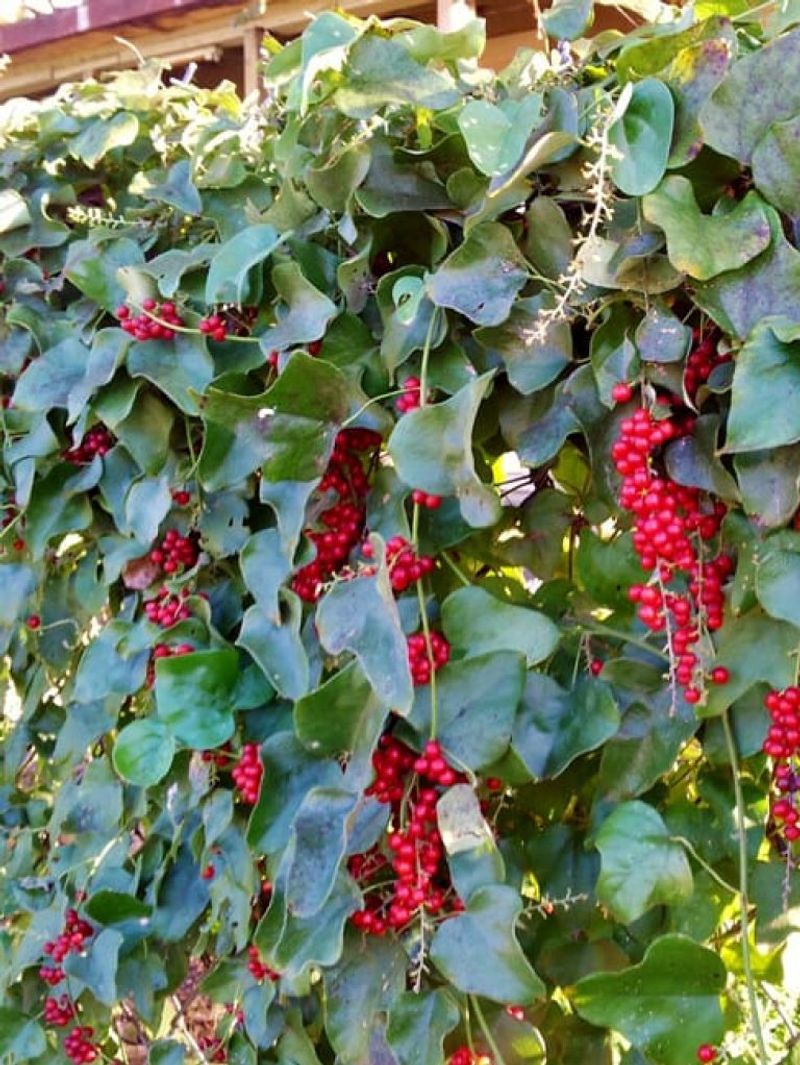
Carolina snailseed earns a place on a supported Texas fence when the goal is seasonal green coverage, native wildlife value, and a possible red fall berry display, rather than a year-round opaque screen. The vine is deciduous or partially deciduous across much of its Texas range, meaning winter will strip the leaves and leave the fence structure visible until warm weather returns.
That seasonal rhythm is part of the plant’s honest character, not a defect.
The vine fits best when you can commit to establishment watering adjusted for your soil, rainfall, and local restrictions, along with regular training during the growing season and annual pruning to keep growth where you want it. Verify that Carolina snailseed is documented in your ecological region, confirm your fence or trellis gives the stems something to wrap around, and plan for variable density rather than a guaranteed uniform screen.
If berry production is a priority, source a confirmed female plant from a reputable native plant nursery and accept that fruiting may take a few seasons to begin.
Texas A&M range plant records and North Carolina State Extension documentation together support a clear picture: this is a fast-moving, wildlife-friendly, native vine suited to a managed fence in most of Texas, with real seasonal payoff for gardeners who go in with accurate expectations. A bare fence will not look the same by fall, but whether it becomes a lush backdrop or a pleasantly softened border depends on the site, the plant, and the care it receives.
The birds, at least, will show up either way.