
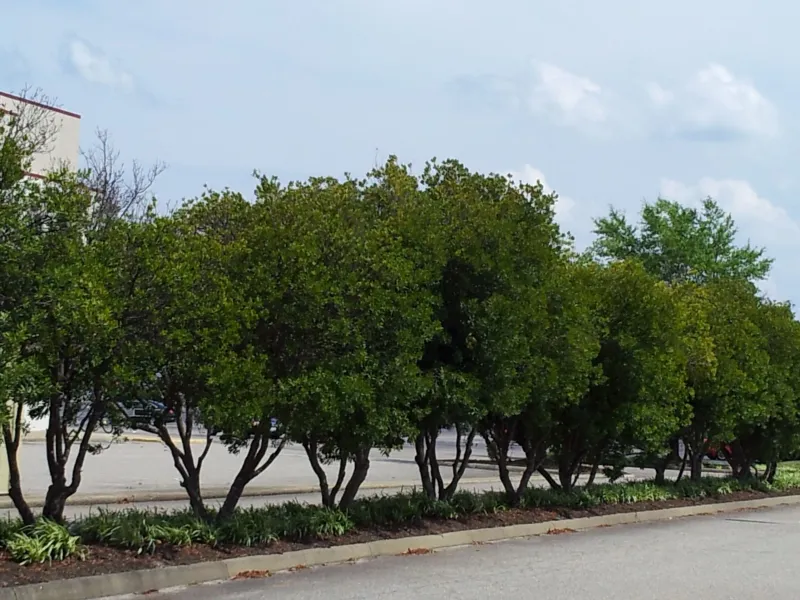
If you want to block your neighbor’s view of your yard without waiting a decade for results, southern wax myrtle might be the native plant you have been looking for. This evergreen shrub-tree grows quickly, stays green year-round, and thrives in many Texas conditions where other plants struggle.
The catch is that “privacy by next summer” depends on what size plant you start with, where you put it, and how well you care for it during the first growing season.
Southern wax myrtle offers a strong native option for an informal screen
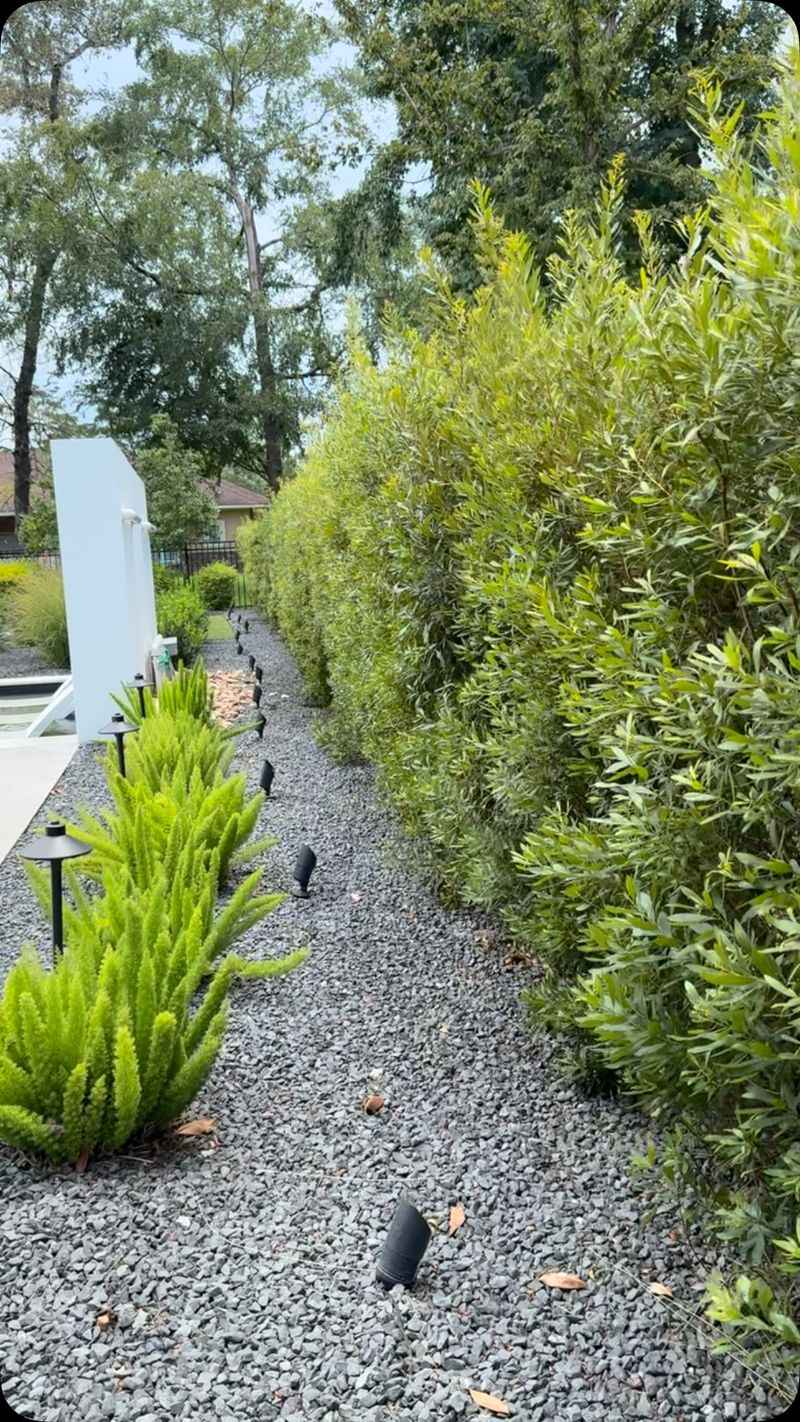
Southern wax myrtle, known botanically as Morella ceriferaMyrica cerifera and formerly listed as , is one of the more useful evergreen screening plants available to Texas homeowners. Both names remain in circulation, so you may see either on nursery tags or extension websites.
The Texas A&M Texas Tree Selector classifies it as a Texas native, evergreen, rapid-growing small tree that tolerates partial to heavy shade, drought, alkaline soils, poorly drained sites, and coastal conditions.
Before picturing a tidy, single-trunk shade tree, understand what you are actually buying. Texas A&M describes the plant as naturally shrubby, and UF/IFAS notes that landscape specimens typically develop multiple trunks with an open, spreading canopy.
A row of wax myrtles along your property line will look more like a dense, informal evergreen hedge than a line of manicured street trees, and that informal character is exactly what makes it work as a privacy screen.
The City of Austin plant guide recommends it specifically as a fast-growing evergreen screen, citing a typical mature height of at least 12 to 15 feet and a spread that can match or exceed that range. Those dimensions mean a well-established row can fill a sightline from ground to well above fence height.
The plant’s tolerances are real, but they have limits. UF/IFAS pasture research notes that wax myrtle does not perform well in soils that are extremely dry or extremely wet, despite its general reputation for adaptability.
Along the Gulf Coast, UF/IFAS coastal landscape guidance reports that intense direct salt spray can damage foliage or reduce survival, even though the species is broadly salt tolerant. Think of wax myrtle as a strong native evergreen screening option for suitable sites, not as a plant that succeeds everywhere without conditions.
What can “privacy by next summer” actually mean?
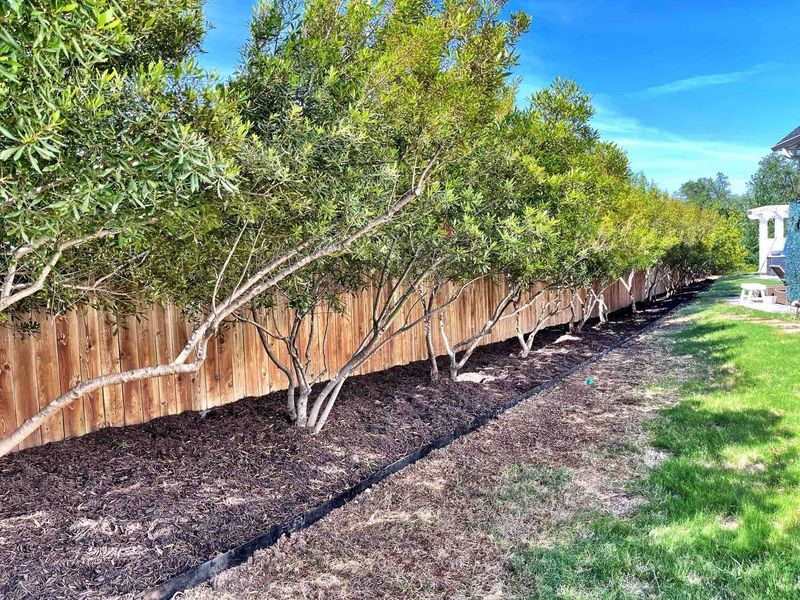
The phrase “privacy by next summer” sounds like a promise, but the honest version is more conditional. Growth rate reports for wax myrtle vary considerably across extension sources.
Clemson Cooperative Extension puts typical annual growth at 12 to 18 inches, while also noting that exceptional plants in ideal conditions can reach as much as 5 feet of growth in a single season. That upper figure shows up in other sources too, but it is consistently described as occasional or site-dependent rather than something you can count on every year.
Twelve to 18 inches of new growth in a year is genuinely fast for a native evergreen. Even so, a small 1-gallon container plant starting at knee height will not screen anything meaningful by the following summer, no matter how well you water it.
The math simply does not work out to a solid visual barrier in one growing season when you start small.
Starting size is the single biggest variable in the timeline. A 5- to 8-foot nursery specimen planted in spring can block a partial sightline on day one and may fill in noticeably by the following summer with consistent care.
The City of Austin lists a mature height range starting at 12 feet, which means a large nursery plant is already well along toward that mature dimension when it goes in the ground.
The defensible outcome to plan for is this: a row of well-sized specimens, planted correctly and watered consistently, can provide noticeable and growing coverage by the following summer under favorable conditions. That is meaningfully different from a guaranteed solid privacy wall.
ISA guidance on tree planting reinforces that establishment care in the first weeks and months directly affects how quickly a newly planted specimen puts on new growth rather than just recovering from transplant stress.
The right Texas site determines how quickly the screen fills in
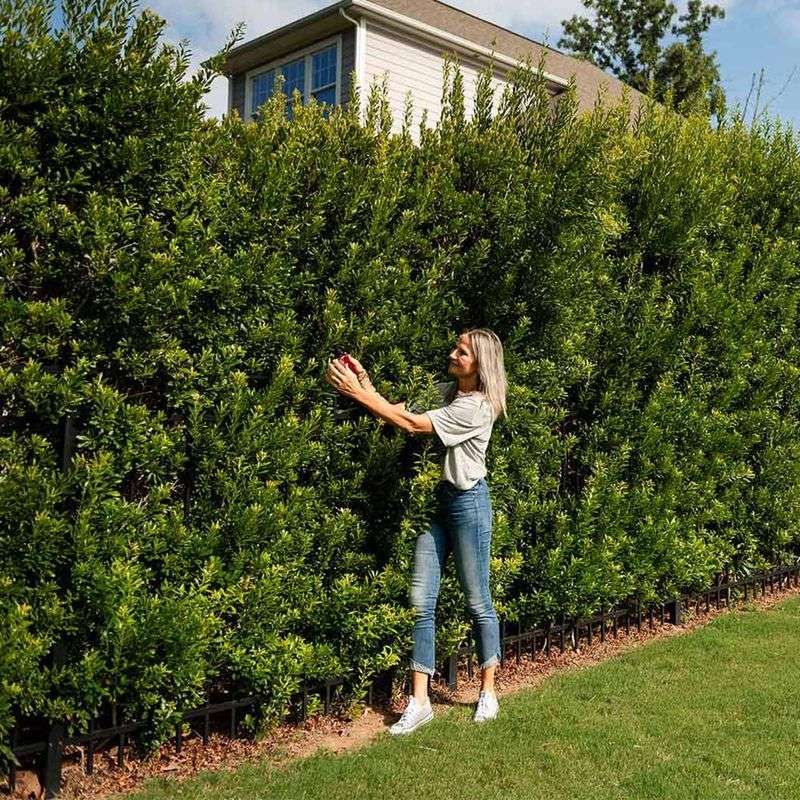
Full sun is where wax myrtle puts on its strongest, fullest growth. Texas A&M’s Tree Selector lists it for full sun to partial shade, and Oregon State University Extension emphasizes full sun as the condition that supports the densest canopy development in screening plants generally.
Wax myrtle planted in heavy shade will survive, but it will grow more slowly and produce a looser, less effective screen than the same plant in an open, sunny spot.
Texas is not one climate, and wax myrtle does not perform identically across the state. The plant is well represented in East Texas forests, Gulf Coast prairies and marshes, and portions of Central and South Texas.
Texas Parks and Wildlife lists it as a recommended native for Gulf Coast prairies and marshes, and it also appears in Central and South Texas coastal fringe plant communities. Arid West Texas, shallow caliche soils, and highly exposed upland sites present a different challenge, and wax myrtle is not automatically the right choice for every corner of the state.
Soil moisture extremes are where the plant’s broad tolerance runs out. UF/IFAS pasture research states directly that wax myrtle does not grow well in soils that are either extremely dry or extremely wet, despite the species being commonly described as adaptable to both wet and dry conditions.
A yard with standing water after every rain or with baked, cracking clay that never gets supplemental irrigation will not support the fast, full growth that makes a screen worthwhile.
Coastal siting adds one more specific consideration. UF/IFAS coastal planting guidance reports that wax myrtle generally handles salt-spray conditions well but can suffer foliage damage or reduced survival on sites exposed to intense, direct Gulf salt spray.
A yard several blocks from the water is likely fine; a site on the exposed front row facing open Gulf wind is a different situation that deserves more thought before you commit to a row of wax myrtles.
Plant the row for mature width, not panic-speed coverage
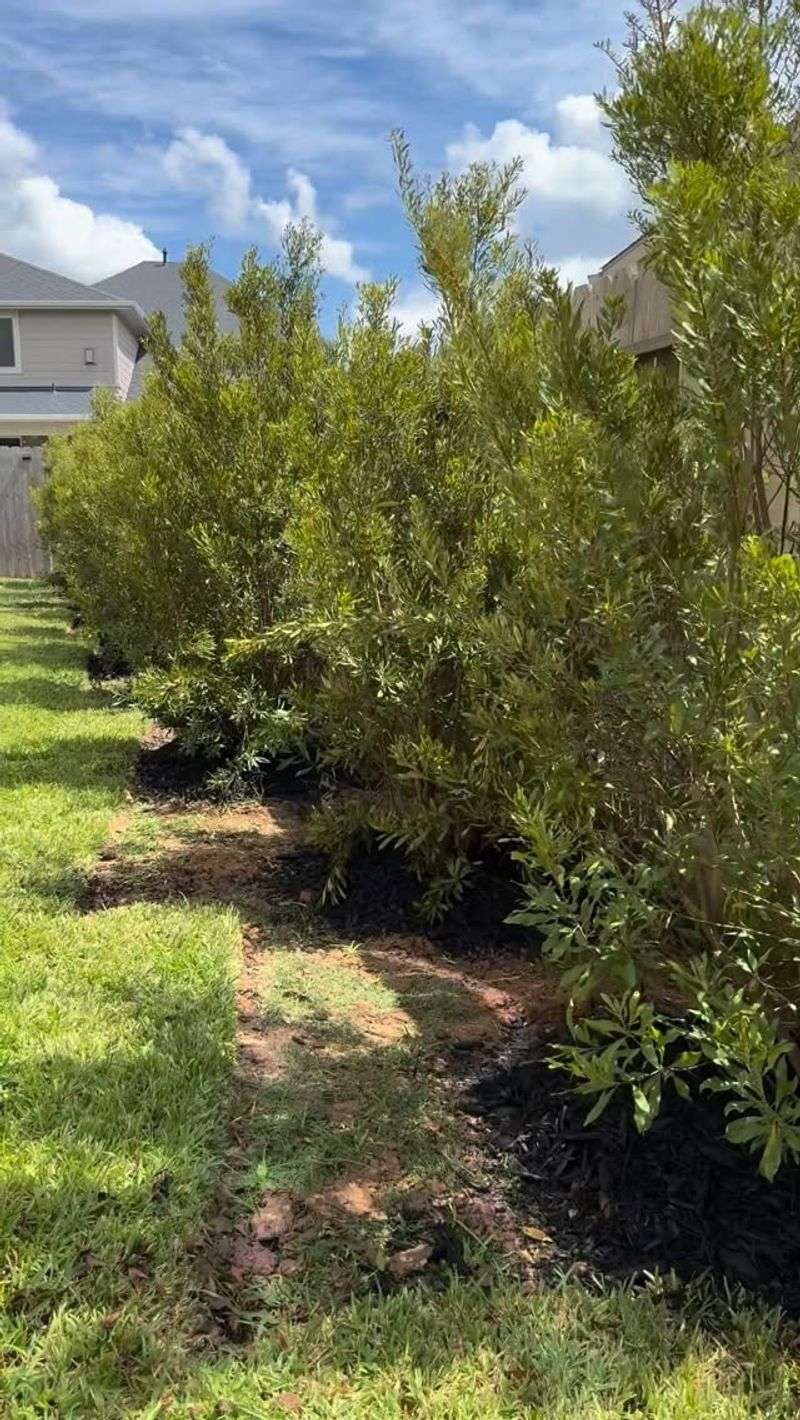
One of the most common mistakes with fast-growing screening plants is crowding them together to get immediate coverage. Wax myrtle can spread 8 to 15 feet or more at maturity depending on conditions, form, and how much pruning it receives.
UF/IFAS Nassau County’s screening recommendation suggests approximately 10-foot spacing for a wax myrtle privacy planting. That figure comes from a Florida screening context and is a useful reference point, but it should be adjusted for your specific mature width expectation, nursery size, desired density, and property boundaries.
UGA Extension’s hedgerow guidance makes the ownership issue plain: plants that grow across a property line become a legal and maintenance headache. Placing wax myrtles too close together also sets up a competition problem, as crowded plants fight for water, light, and root space rather than putting energy into upward and outward growth.
A row of plants that each have room to develop their full natural spread will fill in more completely over time than a tightly packed row that forces every plant into a narrow, stressed column.
The City of Austin plant guide notes a mature spread of roughly 15 feet, which means a 10-foot spacing still allows canopies to overlap slightly at maturity and produce a continuous screen. UGA’s small-space plant guide reinforces the principle that informal screening plants work best when their natural form is respected rather than forced into an artificially narrow footprint.
Plan for the full plant, measure your available depth from the property line, and set spacing that gives each specimen room to express its natural multistemmed spread without growing into a fence, structure, or your neighbor’s yard.
Correct planting and steady water support early growth
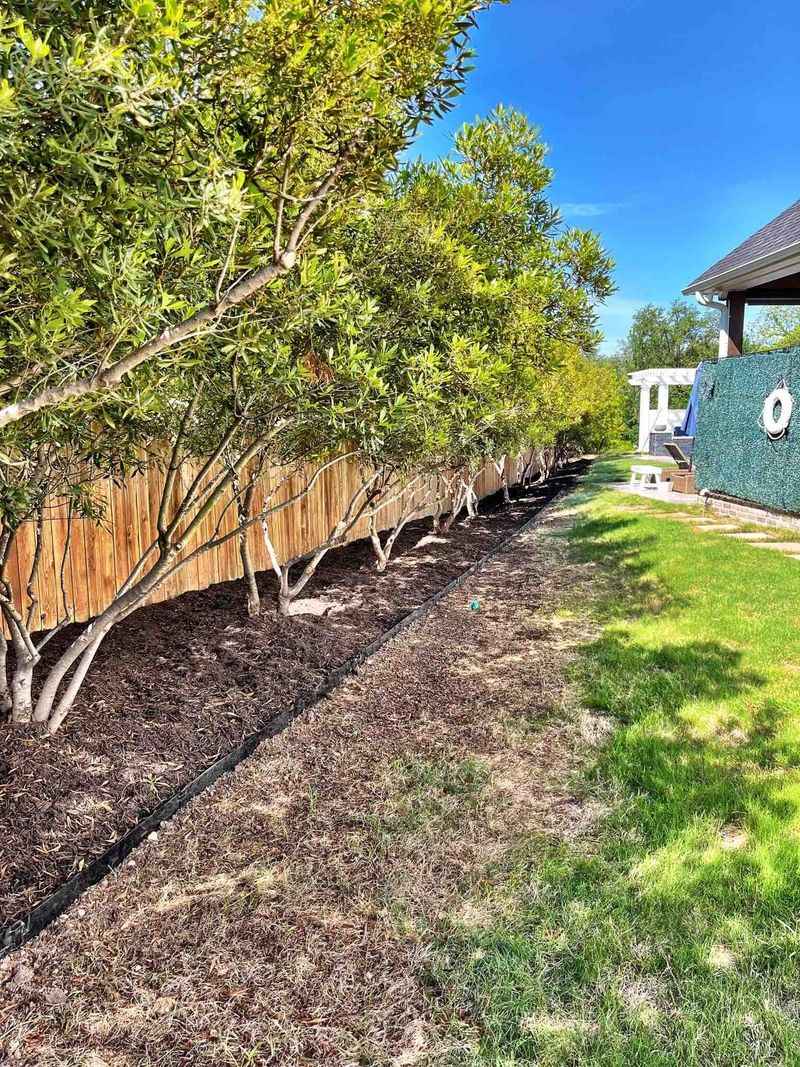
Getting the plant in the ground correctly matters more than almost any other decision after choosing the right site and size. ISA planting guidance recommends digging the hole two to three times wider than the root ball but no deeper than the root ball itself, so the root collar or trunk flare sits at or slightly above the surrounding soil grade.
Planting too deep is one of the most consistent causes of slow establishment and long-term decline in woody plants.
Before the plant goes in, check for circling or kinked roots and straighten or cut them. Circling roots left uncorrected will eventually girdle the trunk and limit the plant’s ability to take up water and nutrients.
UGA Extension’s ornamental planting guide recommends backfilling with the native soil that came out of the hole rather than amended fill, which encourages roots to grow outward into the surrounding ground rather than staying in a pocket of rich soil.
Water immediately after planting, and keep watering consistently through the first growing season. Texas A&M AgriLife Extension’s tree care guidance recommends frequent irrigation during the first several weeks after planting, then gradually tapering as roots spread and the plant shows signs of active new growth.
During hot, windy Texas summers, that may mean watering more than once a week rather than less.
Mulch is one of the most effective tools for keeping establishment water in the root zone. Apply a 3- to 4-inch layer of wood chips or shredded bark in a wide ring around the plant, but keep the mulch several inches away from the trunk itself.
Texas A&M AgriLife Extension’s June newsletter specifically warns against “volcano” mulching, where mulch piled against the trunk traps moisture and invites rot and pest problems. These planting and watering steps directly improve how quickly your wax myrtle settles in and starts putting on new growth, but no combination of good technique guarantees a solid privacy wall by the following summer.
Its loose form creates privacy, but it also creates upkeep

Wax myrtle’s naturally loose, multistemmed habit is what makes it fill a sightline quickly, but that same habit means it is not a plant you install and forget. Texas A&M notes that the plant may need pruning if a single-trunk tree form is desired, because left alone it will produce multiple stems from the base and develop an open, arching canopy rather than a tidy upright silhouette.
Root and basal suckers are part of the plant’s growth strategy, and they can actually help fill gaps in an informal screen. Over time, though, a row of wax myrtles can spread into a thicket that requires periodic cutting back to stay within its intended footprint.
UGA Extension’s native plant guide and the UF/IFAS southern waxmyrtle fact sheet both flag the tendency to sucker and spread as a tradeoff for an informal screen. If your yard calls for a crisp, clipped hedge line, wax myrtle will need regular attention to stay in that shape.
Wood strength is another consideration. UGA Extension documents that ice storms can break wax myrtle’s relatively weak wood, and UF/IFAS Charlotte County notes that irregular and drooping branches are a normal part of the plant’s character rather than a sign of disease.
Those sources reflect Georgia and Florida experience; the specific risk level at your Texas location will depend on storm exposure, ice frequency, and local wind patterns. Factor it in as a potential concern rather than a certainty.
Skip the heavy fertilizer. Texas A&M AgriLife Extension guidance emphasizes correct planting and water management over fertilizer loading as the path to healthy establishment.
Pushing rapid growth with heavy nitrogen also increases susceptibility to certain pathogens in related species, so the better approach is consistent water, proper mulch, and patience with the plant’s natural pace.
A wax-myrtle screen can serve wildlife as well as your yard
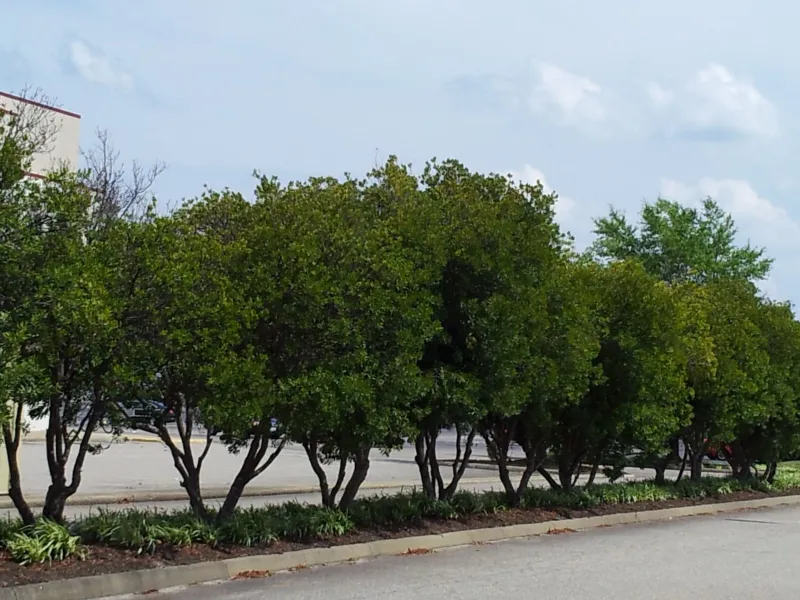
A row of wax myrtles along your property line does more than block a sightline. UF/IFAS Gardening Solutions and Texas Parks and Wildlife both document that the small, waxy blue-gray berries are eaten by a wide range of bird species.
The dense evergreen canopy also provides year-round cover and nesting habitat for birds that need sheltered spots close to the ground.
The plant also supports the red-banded hairstreak butterfly as a larval host. That is a specific, native insect relationship that adds ecological value beyond what most ornamental screening plants provide.
A looser, more natural screen allows more of that habitat function than a tightly clipped formal hedge, because birds and insects use the interior structure of the plant as much as its outer surface.
One practical detail matters if you want berry production. UF/IFAS coastal planting guidance explains that wax myrtle is dioecious, meaning male and female flowers occur on separate plants.
Only female plants produce berries, and they need a nearby male plant for pollination. National Park Service documentation on wax myrtle confirms this biology.
If you plant a row of several specimens, the odds are reasonable that you will end up with both sexes, but if berry production for birds is a priority, ask your nursery whether the plants are sexed or whether they can source female plants with a male nearby.
Choose wax myrtle when you want a fast, informal Texas screen

Southern wax myrtle earns a place on the short list for Texas homeowners who need a native, fast-growing evergreen screen and can give it a suitable site. Texas A&M’s Tree Selector and the City of Austin plant guide both support it as a rapid-growing native evergreen, which is a short list in a state with a challenging climate.
The honest decision rule is straightforward. Choose wax myrtle when you can provide adequate sun, soil that drains reasonably well without staying bone dry, room for each plant to reach its mature spread, and consistent water through at least the first full growing season.
Accept that its natural form is a multistemmed, informal shrub-tree rather than a tidy columnar specimen, and plan for occasional pruning and sucker management as part of the long-term picture.
Clemson Extension’s waxmyrtle factsheet puts typical annual growth at 12 to 18 inches, which is fast enough to show meaningful progress each season. A sizable, well-planted row can begin screening right away and may look noticeably fuller by next summer under favorable conditions.
No source supports a universal one-season privacy guarantee, but with the right plant size, correct spacing, and solid establishment care, wax myrtle gives you one of the better odds of getting there. Match your plant size, spacing, and site conditions to the specific view you need to block, and the screen tends to take care of itself.