
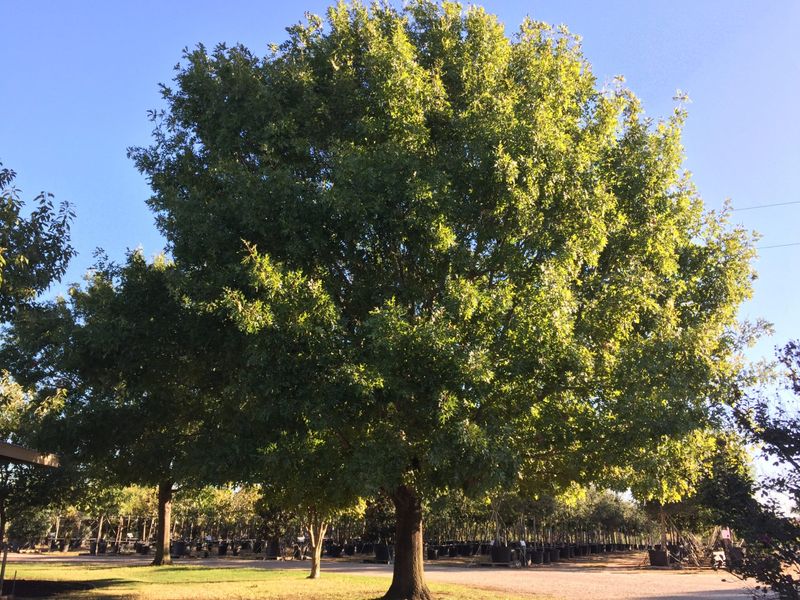
Texas summers punish yards, patios, and anyone sitting outside when afternoon heat turns concrete into a griddle and west-facing walls radiate like an oven. A well-placed shade tree can change that picture over time, and Shumard oak is one of the strongest native candidates for Texas homeowners with enough room to let it grow.
The catch is honest: a young nursery tree will not cool your entire yard by 20 degrees next summer, but a maturing Shumard oak can eventually shade the surfaces that matter most and make a real difference in how your outdoor space feels.
Shumard oak offers long-term shade for large Texas properties
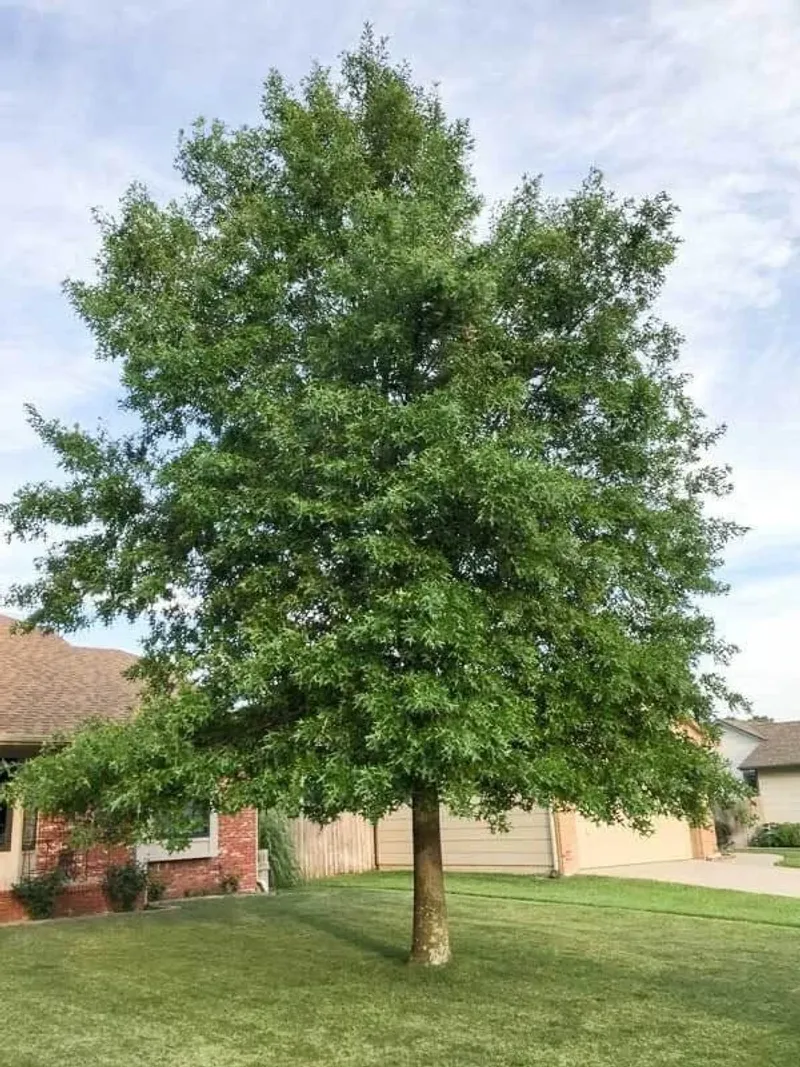
Shumard oak (Quercus shumardii) is a large, deciduous, Texas-native tree built for the open landscape. Texas A&M Forest Service’s Texas Tested, Texas Tough profile lists the tested selection at up to 100 feet tall and 60 feet wide at maturity, with a potential growth rate of up to 2.5 feet per year under suitable conditions.
That is not a guaranteed rate for every yard or nursery tree, but it signals how quickly this species can begin building a meaningful canopy when conditions cooperate.
The tree’s broad, spreading crown is what makes it valuable as a shade producer. Acorns appear annually and attract deer, squirrels, and other wildlife, adding an ecological layer beyond simple heat relief.
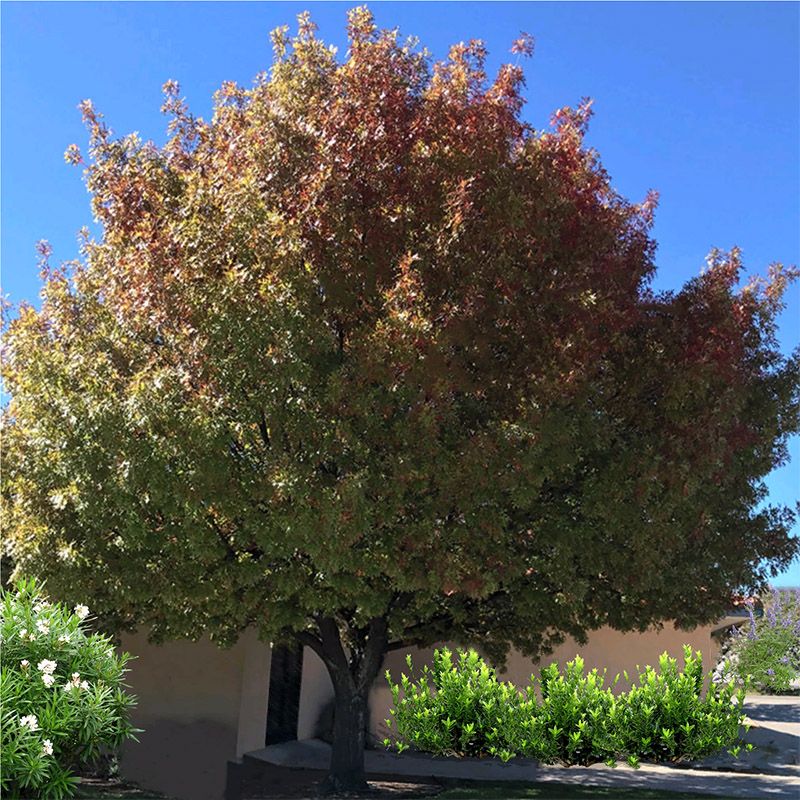
Come fall, the deeply lobed leaves turn orange to deep red, making the tree a landscape feature in its own right before it drops its leaves for winter.
Because Shumard oak is native to Texas, it is adapted to regional soils and climate pressures in ways that non-native species are not. The Texas Tree Planting database confirms it performs best in full sun, which also happens to be the exposure where summer heat is most intense and where shade trees can do the most good.
The most important thing to understand upfront is that this tree’s value is a long-term investment. A freshly planted Shumard oak has a small canopy and will not shade a roof, patio, or driveway meaningfully in its first summer.
The payoff comes as the canopy widens and reaches the specific surfaces a homeowner wants to protect, which is exactly why choosing the right site matters more than planting quickly.
The 20-degree figure applies more to surfaces than yard air
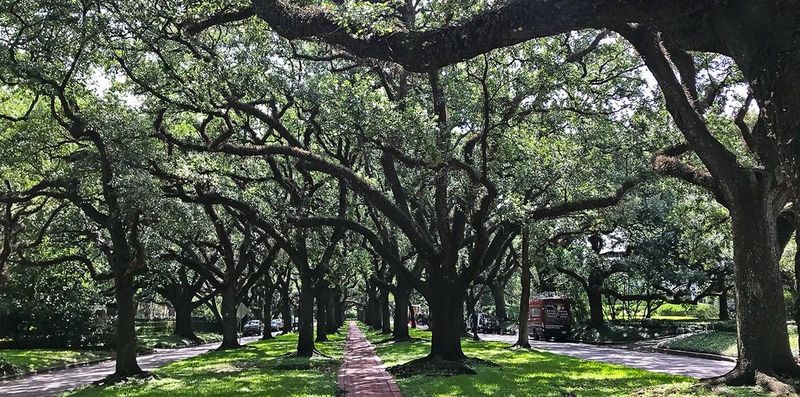
The headline premise deserves a straight answer before anything else. A single tree cannot reliably lower the air temperature across your entire yard by 20 degrees.
What shade can do, and does measurably, is dramatically reduce the temperature of surfaces that absorb solar energy directly.
Asphalt, concrete, roofing, and dark soil bake under direct sun and radiate that stored heat back into the surrounding air. When tree shade blocks that solar input, those surfaces can be roughly 20 to 45 degrees cooler than unshaded equivalents.
EPA’s analysis of tree and vegetation benefits documents this surface-level cooling effect as one of the primary mechanisms through which urban trees reduce heat. The air-temperature effect is real but smaller: EPA’s heat-island guidance puts peak air-temperature reductions from shading and evapotranspiration at roughly 2 to 9 degrees Fahrenheit in urban settings, not 20.
A 2025 Houston study measured the thermal-comfort benefit more directly. Researchers found tree-shaded bus-stop areas were about 5.8 degrees Fahrenheit cooler by wet-bulb globe temperature than unshaded spots nearby.
That is a meaningful human-comfort difference on a 100-degree Texas afternoon, but it is not the same as cooling an entire yard by 20 degrees.
Trees also cool through evapotranspiration, releasing water vapor that lowers surrounding air temperature. A BioScience review on tree transpiration and urban temperatures confirms this effect is real but varies with canopy density, wind, humidity, and soil moisture.
The practical takeaway is this: target your Shumard oak toward the specific patio, west-facing wall, driveway, or window you want to protect. That is where the most dramatic cooling will eventually occur as the canopy matures and reaches those surfaces.
Prepare in fall and plant after Texas weather cools
Fall planting works because roots keep growing after leaves drop, and cooler soil temperatures allow a newly planted tree to build its root system before the next summer’s heat and drought arrive. Skipping the fall window and planting in spring or early summer puts a tree under immediate stress with no establishment buffer.
Texas A&M Forest Service’s drought guidance specifically emphasizes fall or early winter planting as a strategy for helping trees develop stronger root systems before harsh conditions return. Texas A&M’s design standards treat October through March as the optimal Central Texas planting window.
For the broader state, Texas A&M Forest Service recommends November through early spring as the best general period. Local conditions, soil temperature, and whether your area is still in drought will determine the exact date that makes sense for your property.
If weather has not yet cooled in your part of Texas, use the waiting period productively. Start by identifying your target site, measuring available space, and confirming that the mature canopy of up to 60 feet wide will not eventually conflict with structures, utility lines, or neighboring properties.
Check soil drainage by digging a test hole about 12 inches deep, filling it with water, and watching how quickly it drains. Shumard oak prefers well-drained soil, and standing water after rain is a warning sign.
Call 811 before any digging to locate underground utilities, and contact your local utility provider or municipality about overhead lines. Locating a reputable nursery that carries a Shumard oak with a healthy root ball before the planting window opens means you will be ready to act when conditions become favorable rather than scrambling mid-season.
Choose a site that can accommodate the mature canopy
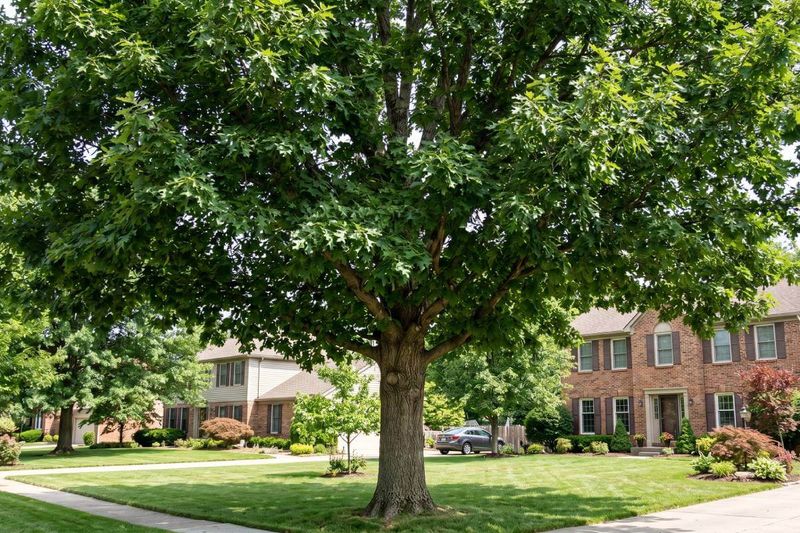
Fitting a tree that can reach 100 feet tall and 60 feet wide into a typical suburban lot requires honest math before you dig. Start by standing at the proposed planting spot and imagining a circle 30 feet in every direction.
That circle represents roughly half the eventual canopy spread. Any structure, overhead line, sidewalk, or neighboring fence inside that radius is a future conflict.
Full sun is non-negotiable for strong growth and a broad canopy. The Texas Tested, Texas Tough profile lists the selection specifically for full-sun exposure, and a shaded planting location will produce a narrower, weaker tree that never delivers the cooling canopy you planted it for.
Open, sunny areas away from buildings and utilities are the right target.
West- and south-facing exposures deserve priority when the goal is cooling. Texas A&M’s energy-efficiency planting guidance and U.S.
Department of Energy shading guidance both identify west and south exposures as the most important for blocking summer solar heat gain on homes. A Shumard oak positioned to eventually shade a west-facing wall, a south-facing patio, or a sun-baked driveway will deliver the biggest comfort return as its canopy matures.
Soil is another placement variable. The Texas Tree Planting profile notes that Shumard oak tolerates alkaline soils and some poorly drained conditions, but it prefers well-drained soil.
Tolerating a wet site is not the same as thriving in one. Areas where water pools for more than a day or two after rain are not ideal.
Texas A&M’s right-tree, right-place guidance also warns that a large canopy can eventually damage sidewalks, driveways, and sightlines if the tree is squeezed into an unsuitable space. Call 811 before digging, and confirm overhead utility clearances with your local provider.
The International Society of Arboriculture’s planting guidance recommends accounting for the full mature canopy and root spread, not just the nursery tree’s current size, when selecting a planting location.
Set the root collar correctly when you plant
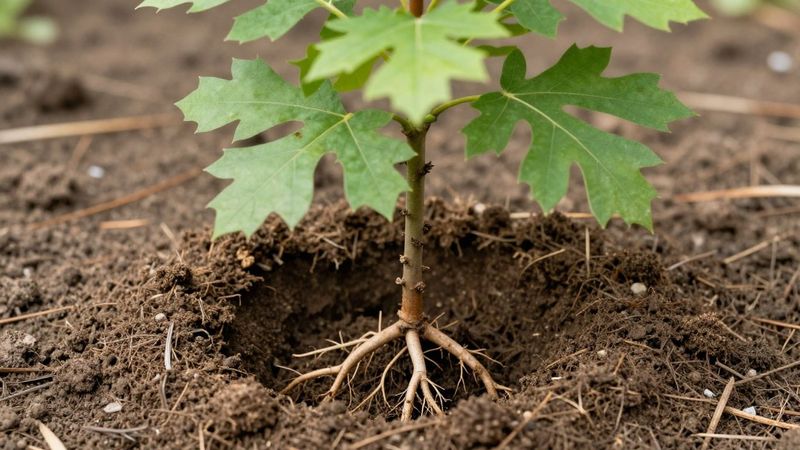
Planting depth is where many trees are quietly set up to fail. Burying a tree too deep cuts off oxygen to the roots and promotes decay at the trunk base, often killing a tree years after planting in ways that are difficult to trace back to the original mistake.
Texas A&M Forest Service’s planting instructions are specific: dig the hole at least twice as wide as the root ball, but no deeper than the root ball itself. Width matters more than depth because it loosens the surrounding soil and gives roots an easier path outward.
A wide, shallow hole is correct. A deep, narrow hole is not.
Before lowering the tree into position, locate the root collar, which is the point where the trunk flare begins just above the topmost roots. This point should sit flush with or slightly above the surrounding natural grade after planting and after any settling.
If the collar is buried, the tree is in the hole too deep. Adjust the bottom of the hole rather than piling soil around the trunk to compensate.
Once the tree is positioned correctly, backfill with the soil that came out of the hole. Heavily amending the planting hole with compost or other materials can create a soil-texture boundary that discourages roots from moving into the surrounding native soil.
Avoid fertilizer at planting and throughout the first growing season unless a local arborist or extension professional identifies a specific nutrient deficiency through soil testing. Fertilizing a stressed, newly planted tree can cause more harm than good.
Firm the soil gently as you backfill to eliminate large air pockets, then water thoroughly to help soil settle around the root ball.
Water and mulch while the canopy develops
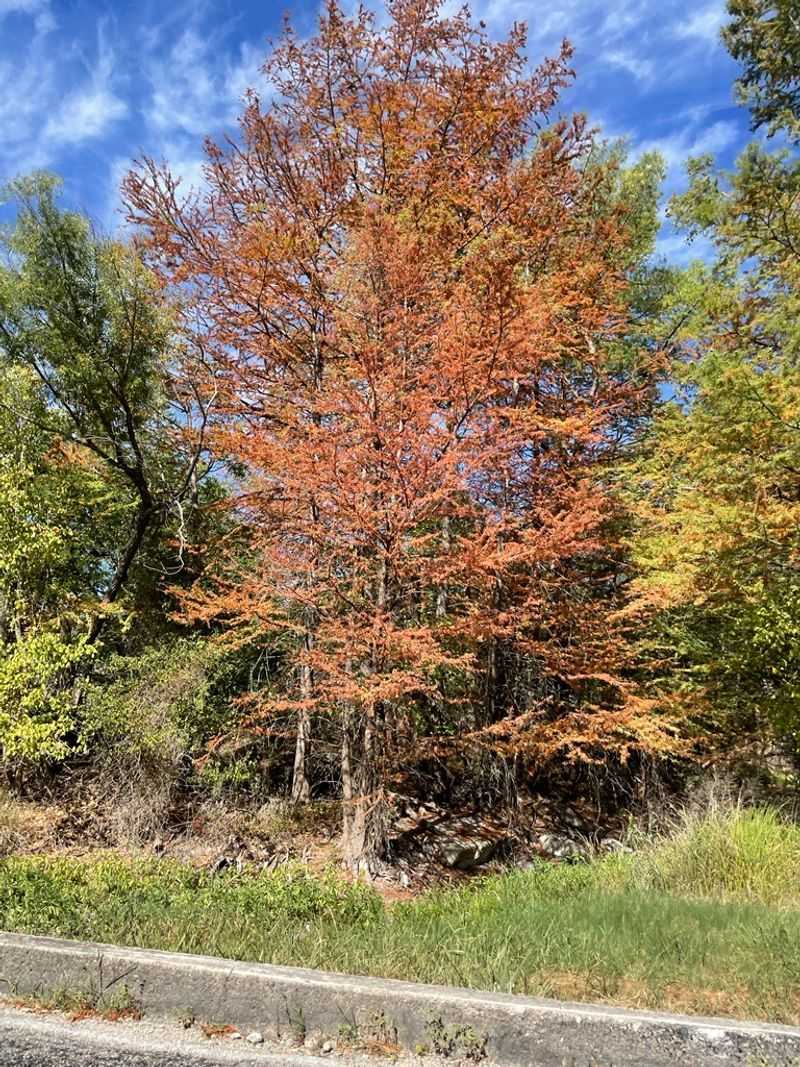
Consistent watering and a proper mulch ring are the two practices that most directly determine whether a newly planted Shumard oak establishes quickly or struggles through its first years. Neither is complicated, but both require follow-through across multiple seasons.
Texas A&M Forest Service recommends watering newly planted trees for at least the first two years, with a general guideline of approximately 6 to 8 gallons per inch of trunk diameter per week. A two-inch-caliper nursery tree needs roughly 12 to 16 gallons per watering, delivered slowly and deeply so water reaches the entire root zone rather than running off the surface.
Light daily sprinkling encourages shallow roots and leaves the tree more vulnerable to drought. Deep, thorough watering on a consistent schedule is better.
Adjust frequency based on recent rainfall, soil type, current heat, wind, and any local water restrictions in effect.
Mulch does several jobs at once: it slows moisture evaporation from the soil, moderates soil temperature, suppresses competing weeds, and gradually improves soil structure as it breaks down. The International Society of Arboriculture recommends 2 to 3 inches of mulch spread in a wide ring around the tree, kept several inches away from direct contact with the trunk.
Mulch piled against the bark traps moisture and promotes rot. A flat, wide mulch ring, sometimes called a mulch volcano in reverse, is the correct form.
The Texas Tested, Texas Tough selection is rated at up to 2.5 feet of annual growth under suitable conditions, but that figure describes a well-matched, well-watered tree on a good site, not a guarantee for every yard. U.S.
Department of Energy landscaping guidance confirms that a newly planted tree’s shade benefit grows gradually as the canopy expands, so realistic expectations about the timeline are part of good planning. The cooling payoff you are working toward builds year by year.
Oak wilt requires region-specific pruning caution
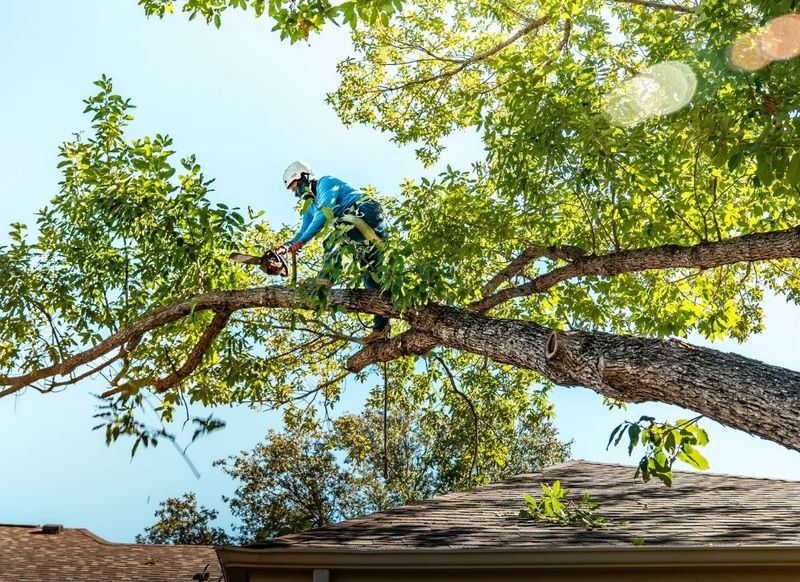
Oak wilt is one of the most destructive tree diseases in Texas, and Shumard oak sits in the group of red-oak species considered extremely susceptible. The disease is caused by a fungal pathogen that moves through root grafts between neighboring trees and through sap-feeding beetles that carry spores to fresh wounds.
Central Texas has the heaviest documented oak-wilt pressure in the state, but the disease is present in other regions as well.
Texas A&M AgriLife’s oak-wilt management guidance makes clear that susceptibility does not automatically disqualify Shumard oak as a planting choice. What it requires is local awareness and careful attention to pruning timing.
Fresh wounds on oak trees are the primary entry point for the fungal spores that beetles transport, so cutting at the wrong time of year significantly raises the risk of infection.
In oak-wilt areas, Texas A&M AgriLife’s oak disease guidance recommends limiting pruning to December through March, when fungal mats and the beetles that spread spores are least active. Routine structural pruning to train a young tree’s form should be scheduled within that window whenever possible.
Avoid cutting branches during spring and early summer, when risk is highest.
Storm damage is the exception that complicates the calendar. A broken or hanging limb cannot always wait for December.
When storm damage creates fresh wounds outside the safe pruning window, contact a qualified arborist promptly. A certified professional can assess whether immediate pruning is necessary, apply wound sealant where appropriate, and advise on whether nearby trees show signs of infection.
Do not attempt to remove large limbs without professional help, both for safety and to minimize additional wound exposure. Knowing the oak-wilt risk in your county before you plant helps you make a fully informed decision about whether Shumard oak is the right choice for your specific location.
Choose Shumard oak for future shade, not an instant cooling promise
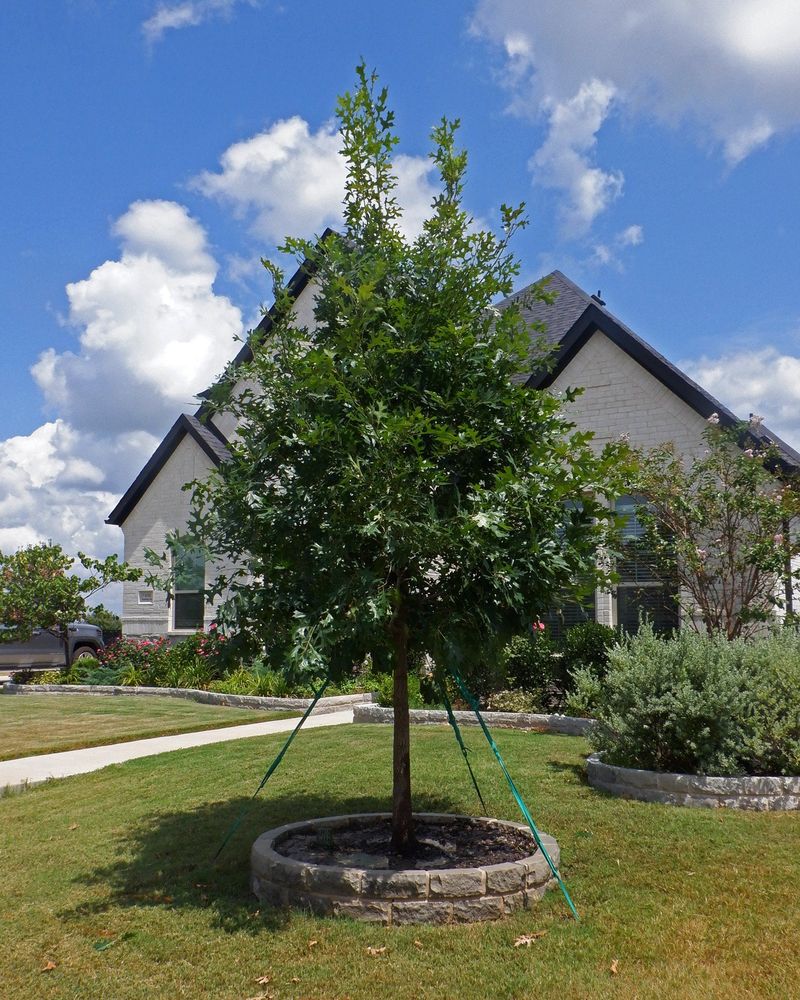
Shumard oak earns a place on the right Texas property, but that property needs to fit the tree rather than the other way around. A large, open, sunny yard with room for a 60-foot-wide canopy, well-drained soil, and a clear cooling target such as a west-facing wall, a sun-baked driveway, or a south-facing patio is exactly the setting where this tree can deliver real long-term value.
The honest payoff framework looks like this: Shumard oak is a strong, fast-growing Texas native that can build a substantial shade canopy over time. The 20-degree cooling figure applies most credibly to specific shaded surfaces such as pavement, soil, and walls, not to the ambient air temperature across an entire yard.
A newly planted tree will not deliver that result next summer. The canopy has to grow, spread, and reach the target area first, which is why planting now and supporting establishment through consistent watering matters.
Placing the tree thoughtfully relative to the surfaces you want to protect is what converts a future canopy into a future cooling benefit.
Adapt the timing to your region. October may suit parts of Central Texas; November through early spring is the broader Texas window.
Prepare the site now, select a healthy tree, and plant when your local conditions cool. A Shumard oak planted with the right expectations and proper care is not a quick fix – it is a Texas-sized investment that pays off in shade, wildlife, and fall color for decades.