
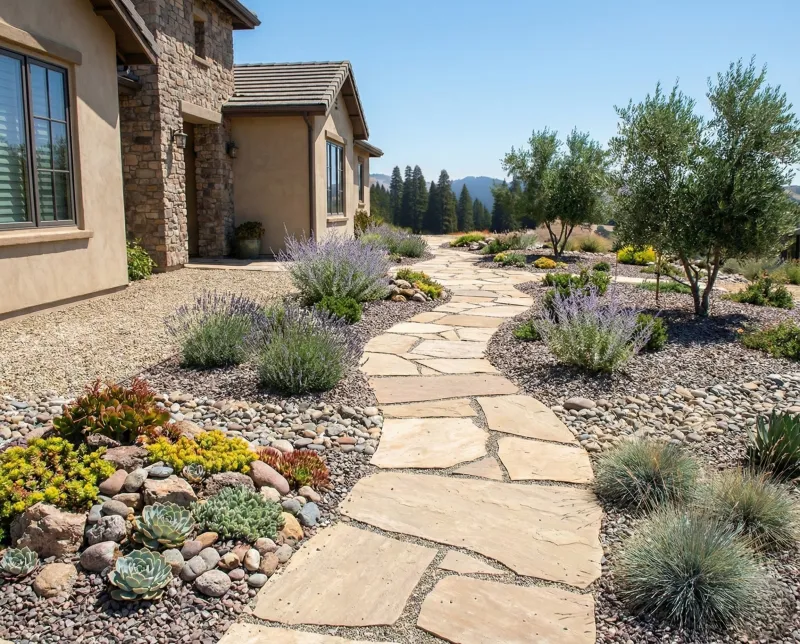
If you live on a California hillside or anywhere near open brush, you already know fire season is a real worry. The good news is that the right plants can slow flames near your home while still looking gorgeous every month of the year.
Fire-resistant plants hold lots of water in their leaves, stay low and tidy, and skip the oily resins that feed a fire. Here are ten California-friendly picks that guard your defensible space and keep your yard beautiful and water-wise.
1. California Lilac (Ceanothus)
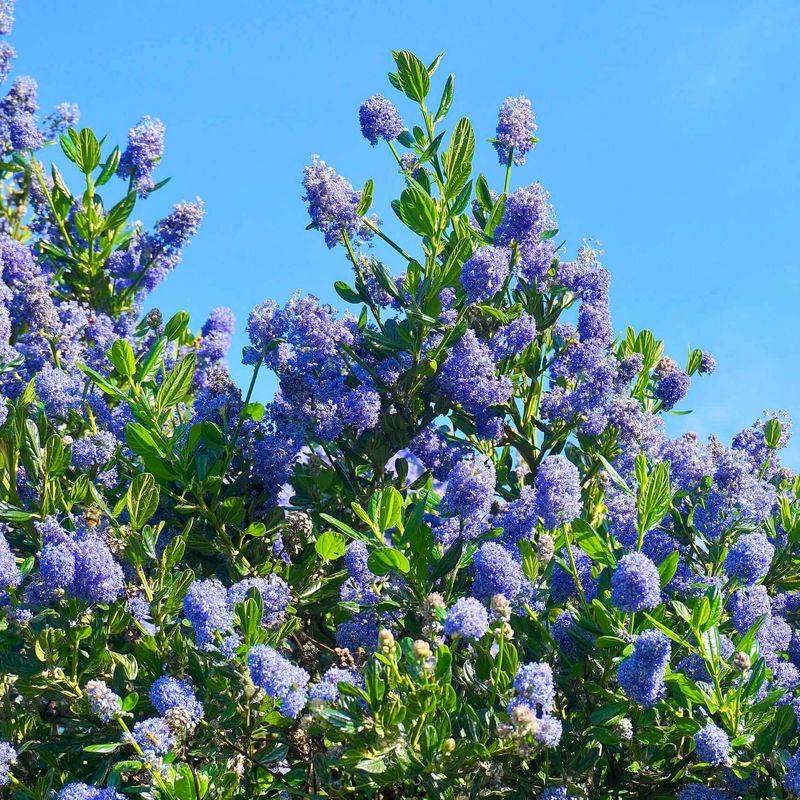
Few native shrubs put on a show like Ceanothus, which erupts in clouds of blue that make the whole yard hum with bees. That spring flush is a gift to native pollinators, and the plant asks for almost no water once it settles in.
For defensible space, choose the lower, ground-hugging varieties and keep them well spaced so they never form a continuous fuel bridge toward the house. Prune out dead wood each year and clear any dry litter underneath.
Fun fact: California lilac fixes nitrogen in the soil, quietly feeding the plants around it. Give it full sun and lean, fast-draining ground, and it rewards you with color and calm foliage that resists ignition better than resin-heavy shrubs.
2. Coral Aloe (Aloe striata)
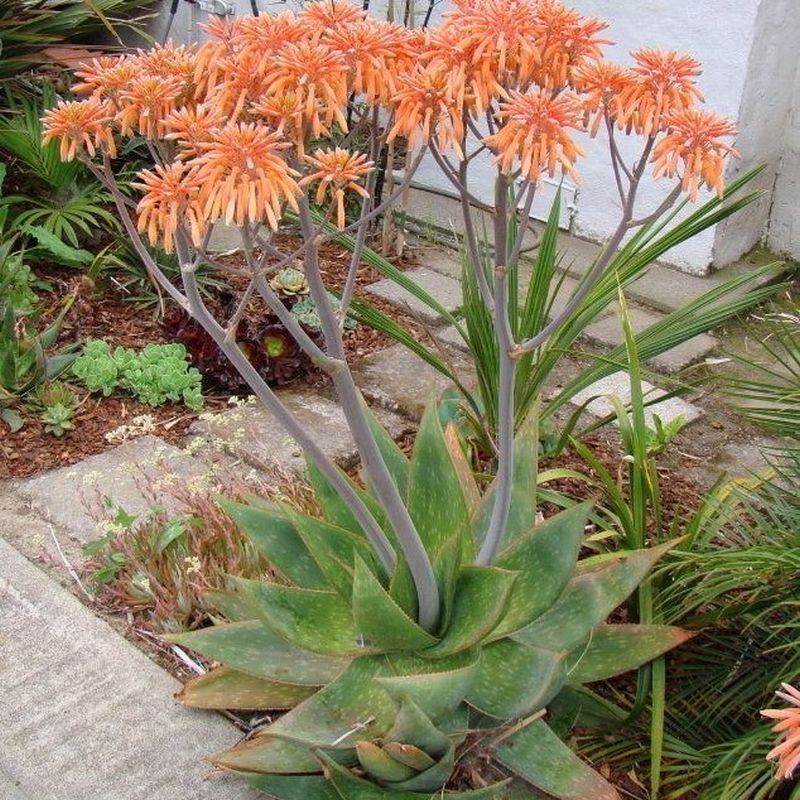
Water is the secret weapon of any fire-smart plant, and succulents like coral aloe are basically living reservoirs. Their thick, juicy leaves hold so much moisture that they resist catching fire even when the air turns bone-dry.
Coral aloe stays neat, forms a tidy rosette, and sends up coral-orange flower spikes in late winter that hummingbirds adore. It looks polished in a front bed or lining a walkway near the house.
Because it stays low and green year-round, it works beautifully in Zone 1, the critical five feet closest to your walls. Plant it in gravel or well-draining soil, water sparingly, and enjoy a plant that shrugs off both drought and flame.
3. California Fuchsia (Epilobium canum)
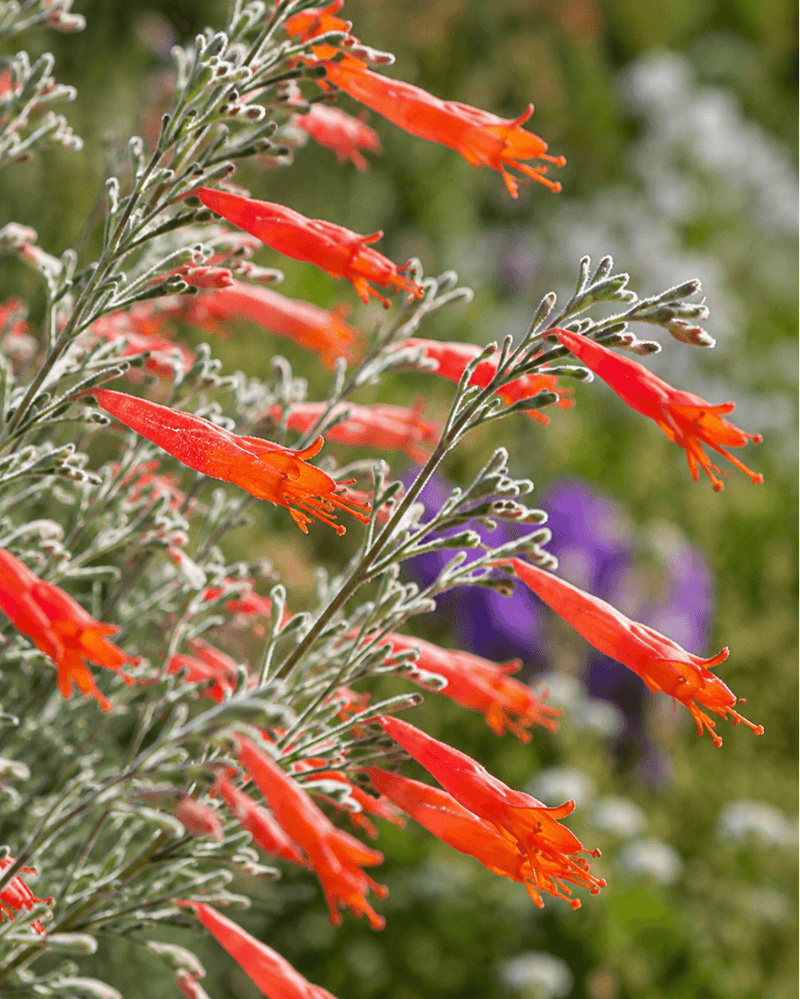
Just when the summer garden starts to fade, California fuchsia lights up with fiery red-orange tubes that hummingbirds chase all afternoon. That late-season bloom fills a gap when little else wants to flower in the dry heat.
Low and spreading, it makes a soft green groundcover that stays hydrated on very little water. Keep it trimmed back in late fall to remove old stems and reduce dry material near structures.
Its silvery-green leaves and manageable height suit the middle defensible-space zone, where you want color without bulky fuel. Native, tough, and generous to wildlife, it earns its spot on any hillside.
4. Rockrose (Cistus)
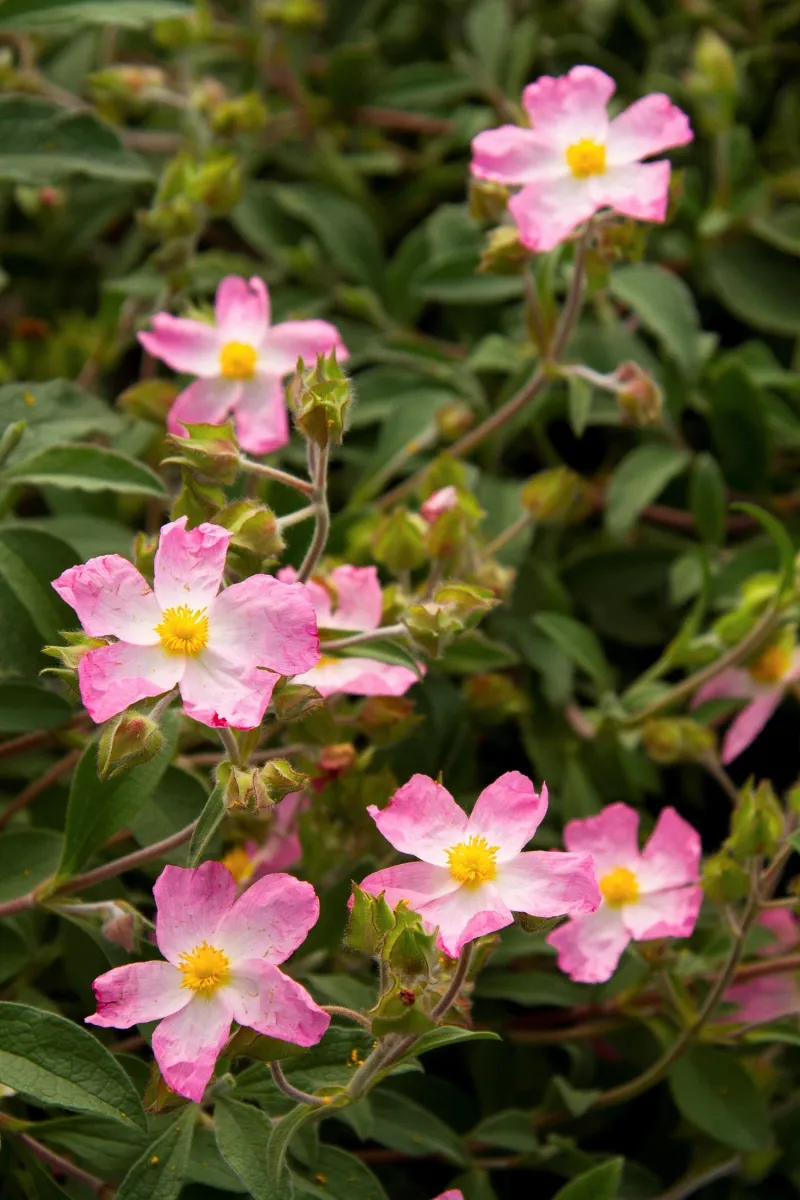
Mediterranean climates and rockrose go together like fog and the coast. Cistus thrives in the same hot, dry summers that stress other plants, opening papery pink or white flowers each morning that flutter like crepe paper.
Choose the more compact selections and give them room, since some rockrose can grow dense. A yearly light shearing keeps the plant open and clears out any woody buildup that could hold flame.
Once rooted, it drinks almost nothing and stays evergreen, offering reliable structure through every season. For a low-maintenance slope planting that stays green and blooms cheerfully, it is hard to beat.
5. Coffeeberry (Frangula californica)
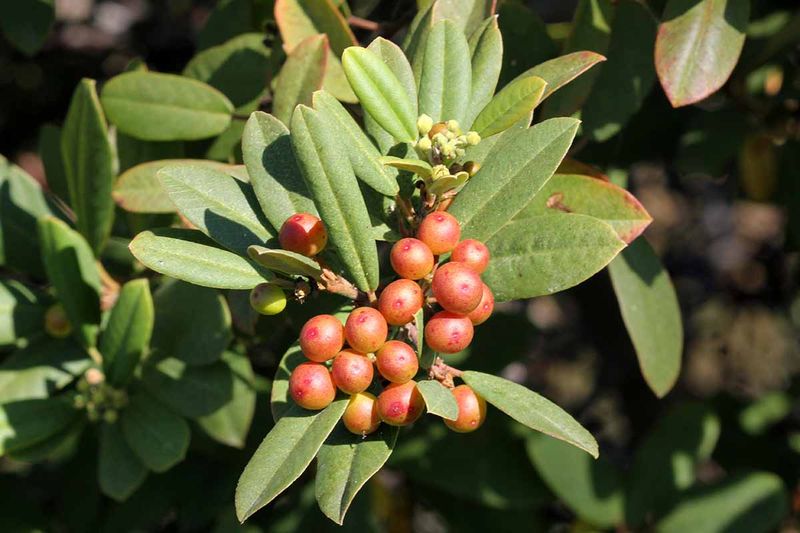
Birds throw a party when coffeeberry ripens its little dark fruits, and that alone makes it worth planting. Beyond the wildlife value, this California native holds moisture in its glossy leaves and stays remarkably tidy for a shrub of its size.
It tolerates shade or sun and handles both coastal and inland gardens, which gives you flexibility in tricky spots. Trim it to keep an open form and remove interior deadwood so it never becomes a dense fuel pocket.
The compact varieties fit nicely into the middle zone of your defensible space, providing screening and habitat without towering over the roofline. Steady, green, and generous, it quietly earns its keep.
6. Yarrow (Achillea millefolium)
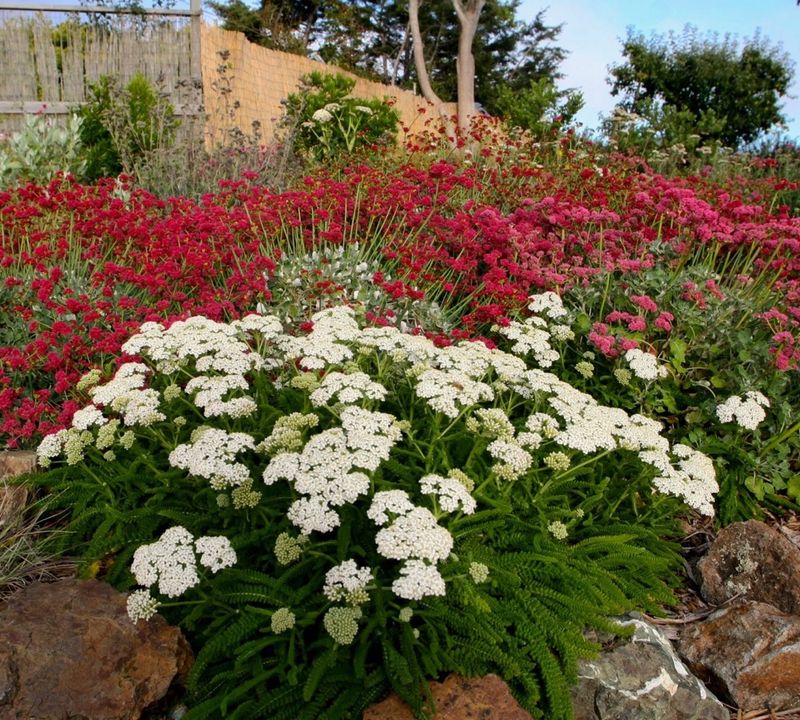
Soft, feathery, and endlessly useful, yarrow spreads into a low mat that suppresses weeds and drinks very little water. Its flat flower heads in white, gold, or dusty rose float above the leaves and pull in beneficial insects all season.
Because it stays short and can even take occasional mowing, yarrow makes a smart lawn alternative right up against the home. Keep spent blooms trimmed so dry stalks do not linger through fire season.
Native forms handle California heat with ease and green up again with the first rains. For a walkable, wildlife-friendly groundcover that keeps the closest zone low and green, yarrow delivers.
7. Agave (Agave species)
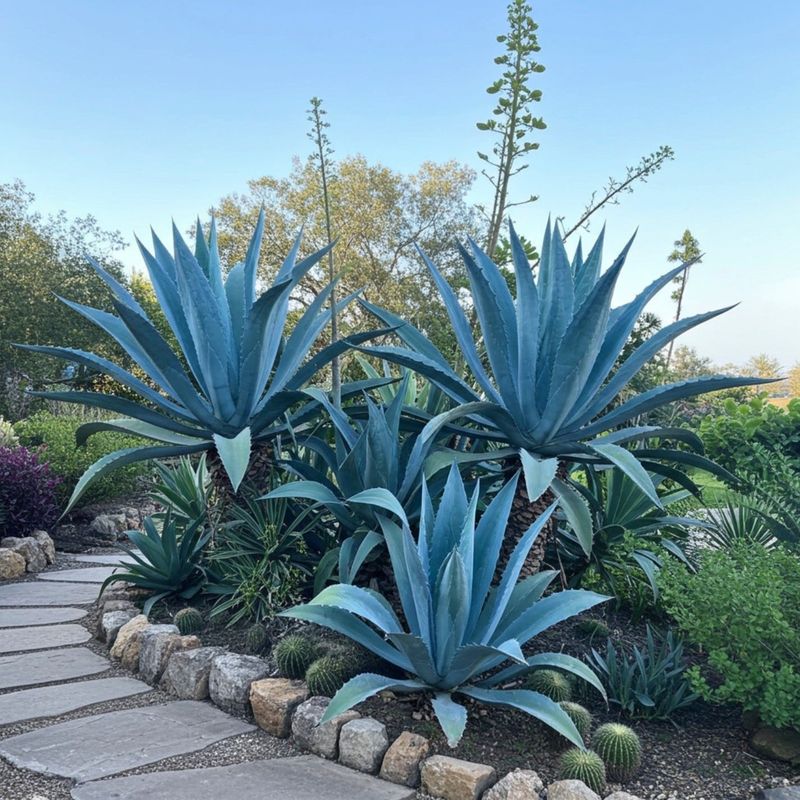
Sculptural enough to anchor an entire bed, agave brings bold, architectural drama that other plants can only dream of. Those thick, water-packed leaves make it one of the most fire-resistant choices you can grow.
A single specimen surrounded by gravel reads as intentional design while creating a natural firebreak near the house. Just plant it where the spiny tips will not surprise anyone walking by.
Agave laughs at drought and needs practically no summer irrigation once established. For a low-fuel, high-impact centerpiece in the zone closest to your walls, this succulent is both handsome and genuinely protective.
8. Sage (Salvia species)
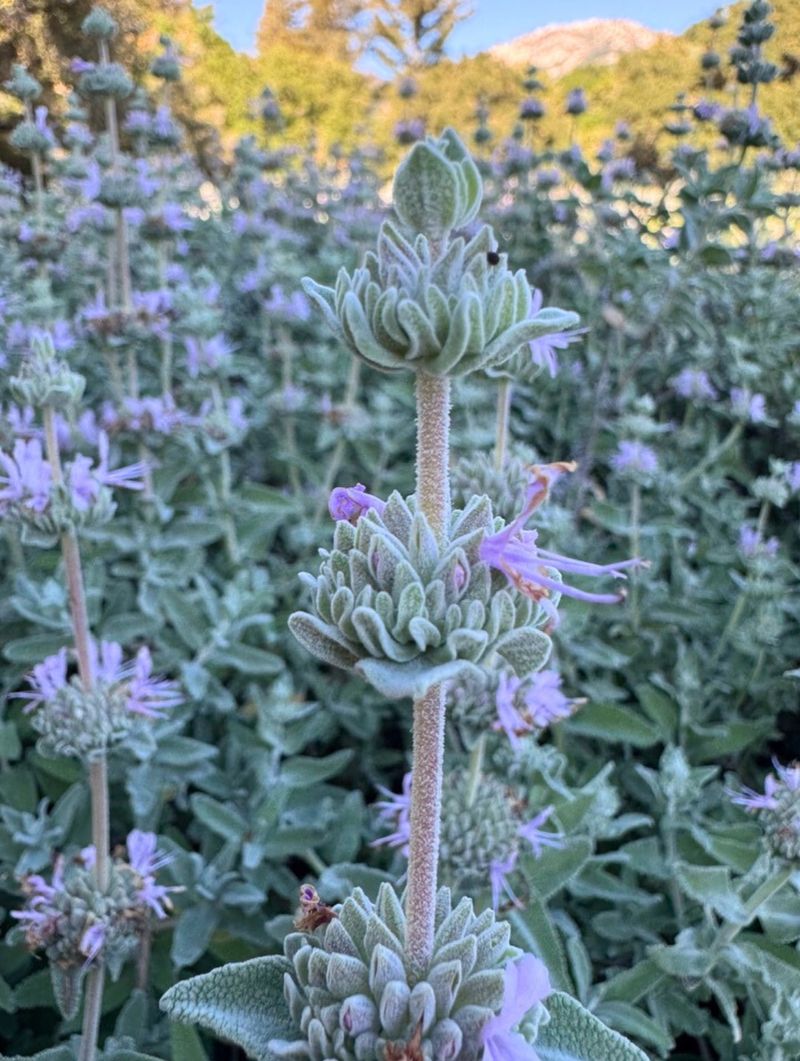
Rub a sage leaf and that clean, herby scent tells you a pollinator magnet is at work. California salvias bloom in blues, purples, and reds that keep bees and hummingbirds busy for months.
A quick note of caution here: some sages carry oils, so pick lower-growing, greener species for the closest zone and keep them well pruned. Regular deadheading and clearing of dry stems keeps them safe and shapely.
Placed thoughtfully with space between plants, sage adds fragrance, color, and habitat without becoming a fire liability. Water-wise and native, it belongs in almost every California yard.
9. Deer Grass (Muhlenbergia rigens)
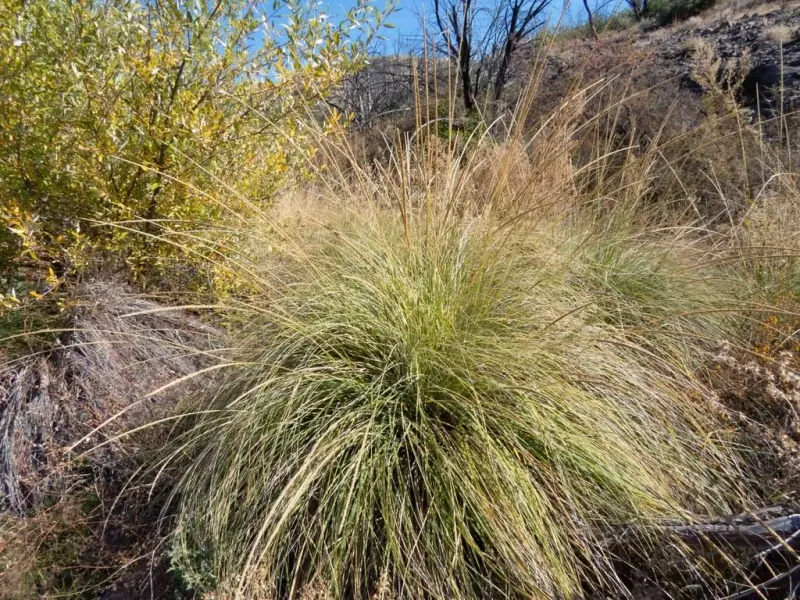
Not all ornamental grasses are fire-friendly, but deer grass stands apart as a native bunchgrass that stays green and full when cared for. Its fountain shape brings graceful movement to a slope while keeping a compact footprint.
The trick is upkeep: cut it back and comb out the dead thatch each year so it never dries into tinder. Well-tended clumps hold moisture and stay low enough to avoid carrying flames upward.
Space the clumps apart rather than planting a solid sweep, and you get texture without a continuous fuel bed. Tough, drought-tolerant, and habitat-friendly, it softens a fire-smart garden beautifully.
10. Ice Plant (Delosperma)
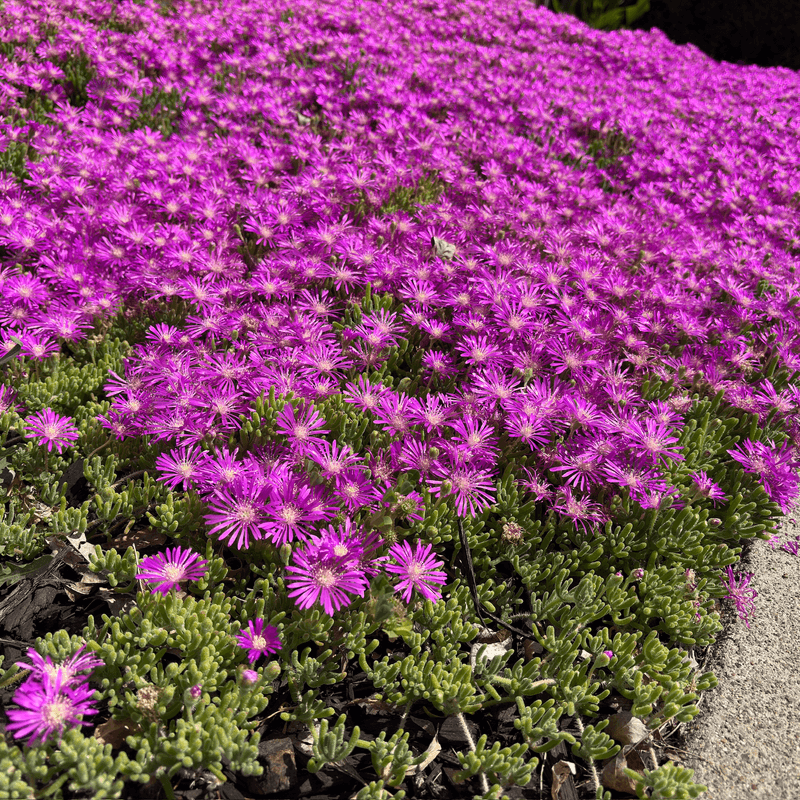
Talk about a hardworking carpet: ice plant blankets bare slopes with succulent foliage that stores water and blooms in electric magenta, orange, and yellow. Those glistening leaves make it one of the most flame-resistant groundcovers going.
Choose the well-behaved Delosperma types rather than the aggressive spreaders that can crowd out natives. Kept in bounds, it holds soil on erosion-prone hillsides and fills the closest zone with living, low-fuel color.
It thrives on neglect, needs barely any water, and stays green through the dry season. For a hot, sunny slope that needs both stabilizing and beautifying, ice plant does double duty with dazzle.