
St. Augustinegrass covers a huge share of Florida lawns, but it comes with real demands: regular watering, fertilizer, and a constant watch for chinch bugs and fungal problems. Some homeowners are starting to ask whether a tougher, lower-input plant could handle select spots in the yard just as well.
Frogfruit, a Florida native that spreads into a low mat of tiny flowers, has caught the attention of UF/IFAS extension specialists as one credible option worth a closer look. This guide examines what frogfruit actually offers, where it fits, and what tradeoffs you should weigh before pulling up any turf.
Why Some Florida Homeowners Reconsider St. Augustinegrass
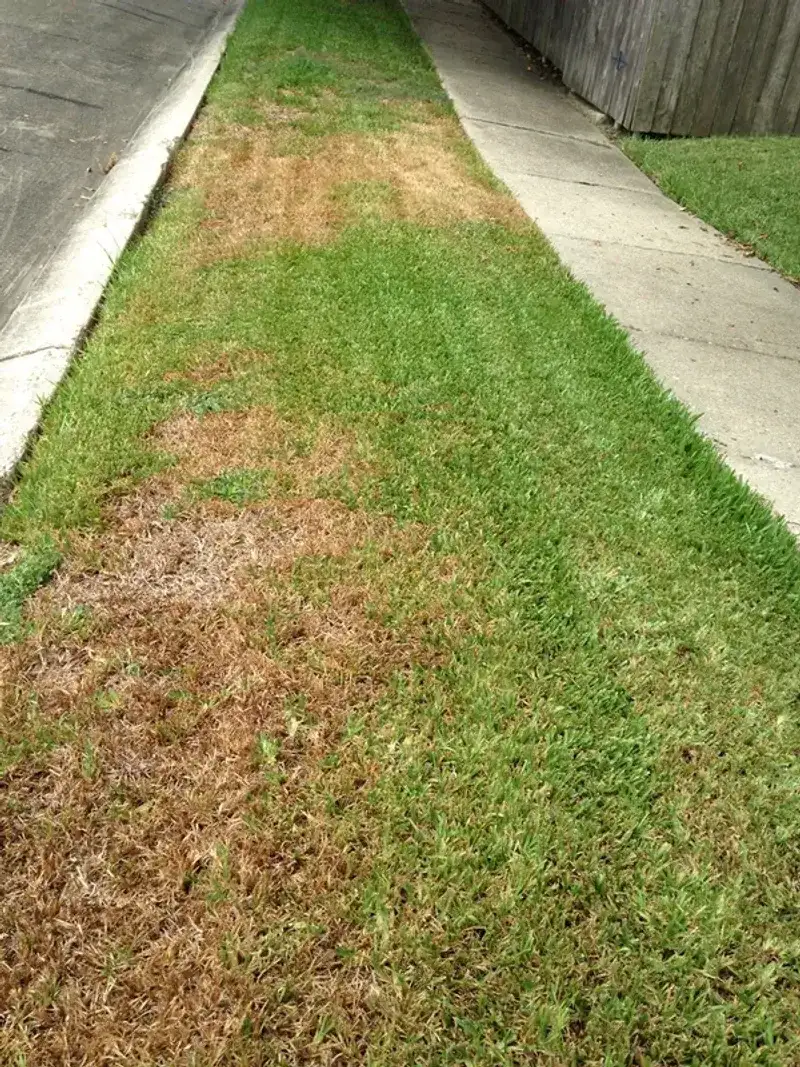
St. Augustinegrass earns its place on millions of Florida lawns for a reason: it handles heat, tolerates some shade, and forms a thick, appealing carpet when conditions are right. The trouble is that keeping it looking that way takes consistent effort, especially in yards with sandy soil, irrigation restrictions, or limited time for upkeep.
According to the UF/IFAS Hillsborough County groundcovers fact sheet, St. Augustinegrass carries relatively high water and fertilizer demands compared to several groundcover alternatives, and it is susceptible to chinch bugs and fungal diseases that can require repeated treatment. Those characteristics make it a reasonable candidate for replacement in areas where the maintenance burden outweighs the benefit.
That said, not every St. Augustine lawn is struggling or unsustainable. A yard with good irrigation, decent soil management, and low pest pressure may perform well for years with standard care.
The conversation around alternatives is most relevant for homeowners dealing with specific problem spots: shaded patches that thin out repeatedly, dry slopes that brown out between waterings, or low-traffic borders that need mowing every week for no real practical purpose.
UF/IFAS guidance on alternatives to turfgrass frames the conversation exactly that way, recommending groundcovers for selected areas rather than wholesale lawn removal. The updated Hillsborough County extension blog from September 2025 reinforces this point, presenting native groundcovers as practical companions to reduced-turf designs rather than evidence of a statewide movement away from St. Augustine.
Thinking about alternatives is not a declaration that conventional turf is always wrong. It is a practical question about whether every square foot of your lawn actually needs to function as a high-maintenance grass zone.
Frogfruit Offers a Florida-Native Alternative to Conventional Turf
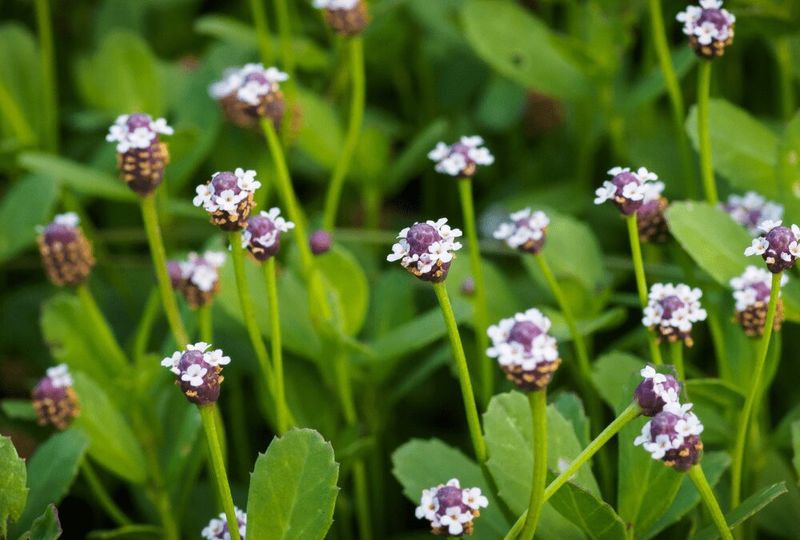
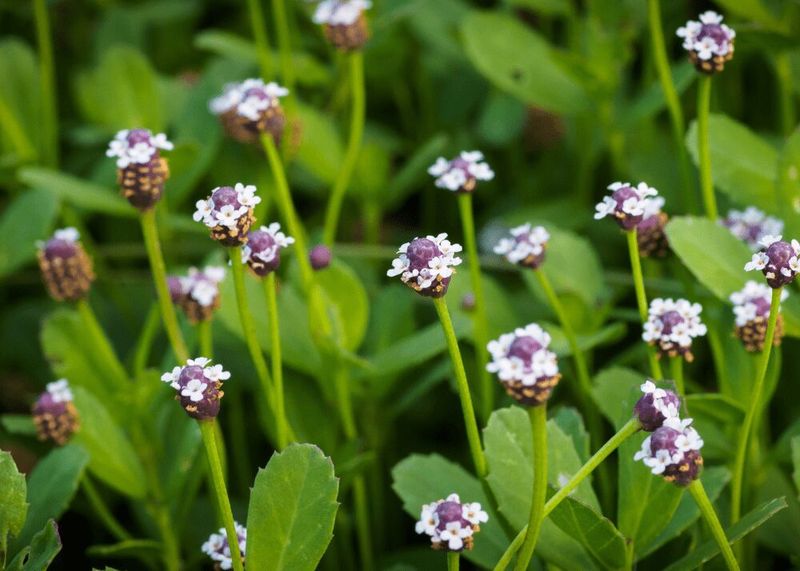
Frogfruit, known botanically as Phyla nodiflora and also called fogfruit or turkey tangle fogfruit, is a low-growing Florida native that spreads outward from a central root system, rooting at stem nodes as it goes. The result is a dense, ground-hugging mat that can cover soil quickly once it gets established in a suitable spot.
UF/IFAS Gardening Solutions describes frogfruit as adapted across USDA Zones 8a through 11, which covers the entire state of Florida. It grows in full sun or partial shade, handles different soil textures and pH levels without demanding amendments, and tolerates both dry and moist conditions once it has rooted in.
Those traits make it one of the more broadly adaptable native groundcovers available to Florida homeowners.
The comparison to St. Augustine is worth framing carefully. Frogfruit may offer a lower-input alternative in sites where it is well-matched, but that advantage is conditional.
Sandy, well-drained soil in a sunny front border is a very different situation from a compacted, shaded side yard with drainage issues. Performance depends heavily on site fit, and no groundcover works equally well everywhere.
UF/IFAS presents frogfruit as one of several appropriate lawn alternatives, alongside perennial peanut, sunshine mimosa, basketgrass, and mixed mowable plantings. Calling it a credible Florida-specific candidate is accurate.
Calling it the single strongest option for every homeowner is not supported by the available guidance. The real value of frogfruit is that it gives you a native, spreading, low-maintenance option that fits a wide range of Florida conditions, particularly in sunny, low-traffic zones where St. Augustine’s upkeep demands feel disproportionate to the area’s actual use.
Expect a Living Mat Rather Than a Perfect Turf Carpet
One of the most important things to understand before planting frogfruit is what it actually looks like when it is doing well. This is not a grass substitute that mimics the clean, uniform surface of an irrigated St. Augustine lawn.
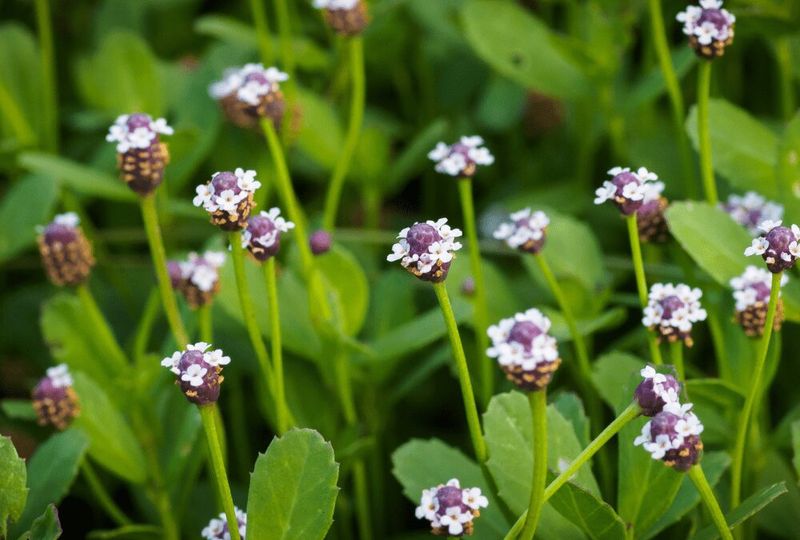
Frogfruit grows as a spreading mat of fine stems with small, clustered flowers that cycle through white and lavender-pink as they age. The texture is looser and more naturalistic, and that is a feature, not a flaw, if your expectations are calibrated correctly.
The wildlife value is genuine and well-documented. UF/IFAS notes that frogfruit flowers attract bees and other pollinators and serve as larval food for the phaon crescent, buckeye, and white peacock butterflies.
A patch of frogfruit in bloom can become a consistent stop for native bees and butterflies in a way that a conventional turfgrass lawn simply cannot match.
Seasonal variation is part of the picture too. During winter, extended drought, or a hard freeze, frogfruit may go partially or fully dormant, turning brown or patchy until conditions improve.
North Florida yards with regular freeze events will see this more often than South Florida yards. The UF/IFAS Hillsborough groundcovers fact sheet acknowledges this variability, which is worth reading before you commit to replacing a visible front-yard area.
For homeowners who want a permanently deep-green, uniform surface year-round, frogfruit is not the right fit. For those who can accept a more natural rhythm, including a flush of flowers, a burst of butterfly activity, and a quieter winter period, it offers something a conventional lawn rarely does.
Match Frogfruit to the Site and the Way You Use It
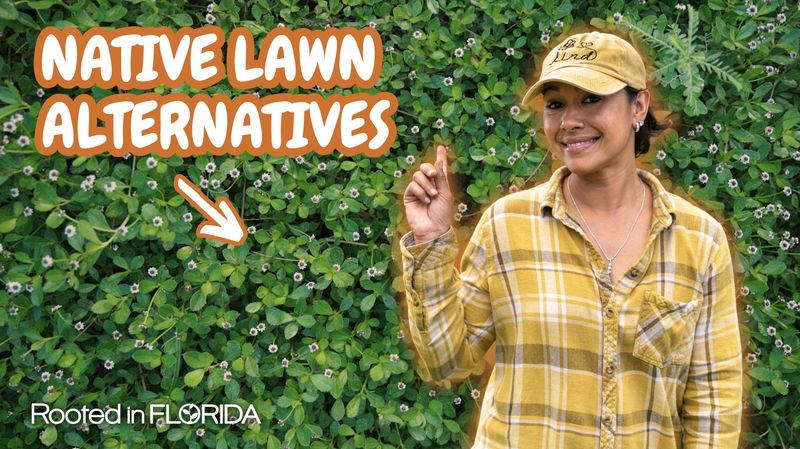
Before removing any turf, run a quick site assessment. Frogfruit performs best in full sun to partial shade with reasonable drainage, and it handles sandy Florida soils well.
Areas that stay waterlogged after rain for extended periods are less reliable candidates, as are heavily shaded spots under dense tree canopies where even shade-tolerant plants struggle to spread.
Florida’s geographic range matters more than many homeowners realize. Frogfruit is adapted statewide, but a yard in Gainesville or Tallahassee will see harder freezes than one in Tampa or Naples.
Freeze events can cause dormancy or dieback that a South Florida yard rarely experiences. The UF/IFAS Florida-Friendly Landscaping Plant Guide emphasizes matching plants to local conditions rather than assuming statewide uniformity, and that guidance applies directly here.
Foot traffic is the most critical use factor. The UF/IFAS alternative-lawn fact sheet clearly states that frogfruit cannot withstand heavy foot traffic.
Low- to moderate-use front yard borders, spaces between stepping stones, hard-to-mow slopes, and decorative areas near the street are reasonable targets. Play areas, dog runs, and well-worn pedestrian shortcuts are not.
Those high-use zones are better served by retained turf, gravel paths, stepping stones, or mulched beds.
Deer pressure, irrigation access, and neighbor proximity are also worth checking before you plant. Frogfruit spreads readily and can cross property lines or wander into adjacent beds if there is nothing stopping it at the boundary.
UF/IFAS’s turfgrass alternatives page recommends groundcovers for selected areas and reduced-lawn designs rather than full-yard replacement, and that framing is the most useful way to approach the decision. Finally, check your HOA landscaping requirements before removing any turf.
UF/IFAS guidance on Florida-Friendly landscaping legislation notes that being on the Florida-Friendly plant list does not automatically override private community restrictions, so verify your HOA rules first to avoid a costly reversal.
Prepare the Ground Before Planting Frogfruit Plugs
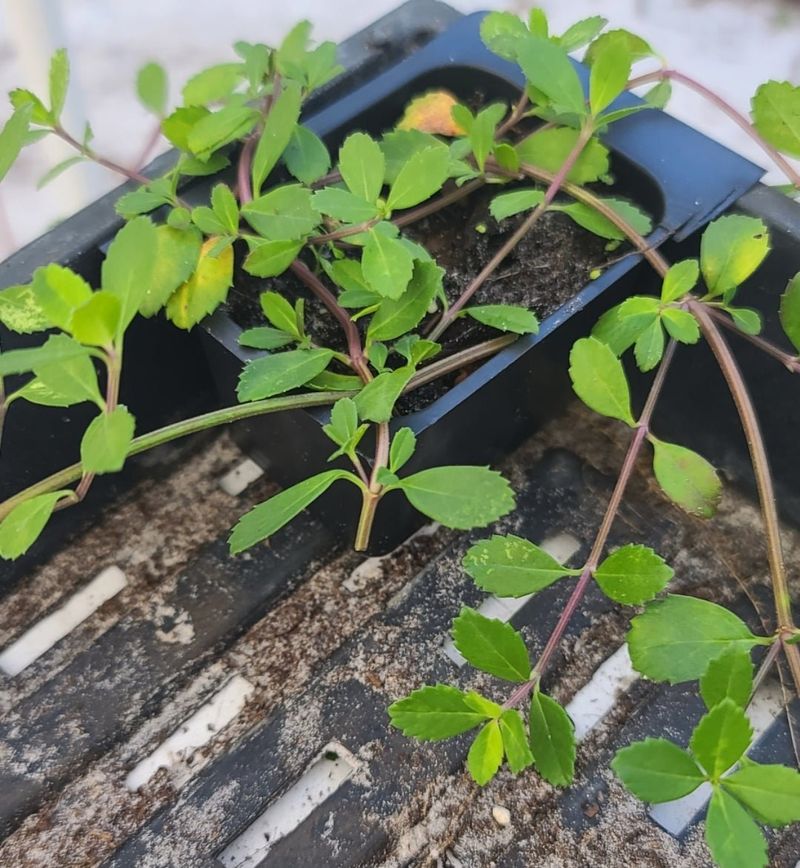
Ground preparation is the step that most determines how quickly frogfruit fills in and how much competition it faces during the vulnerable early weeks. Young plugs cannot win a fight against established St. Augustinegrass or dense weeds, so clearing the planting area thoroughly before putting anything in the ground is worth the extra effort.
Removal methods depend on the site. Solarization, smothering with cardboard and mulch, or careful manual removal all work without requiring chemical inputs.
If you choose to use an herbicide, follow the product label precisely, account for any nearby desirable plants or water bodies, and allow the full recommended waiting period before planting. Chemical removal is not necessary for every site, and it is never a shortcut that skips the need for follow-up weed monitoring.
UF/IFAS identifies plugs as the practical installation method for frogfruit. Plugs are small rooted sections of the plant, typically available from Florida native plant nurseries, and they can be spaced across the cleared area to allow the plant’s natural spreading habit to fill the gaps over time.
Frogfruit stems root at their nodes as they creep outward, so each plug becomes a launch point for lateral coverage.
Coverage speed is real but not instant. How quickly plugs fill in depends on spacing, soil preparation, weather during establishment, and how consistently you water in the first several weeks.
UF/IFAS guidance on establishing Florida landscapes makes clear that even low-maintenance plants need attentive care through the rooting period. Closer spacing means faster coverage but higher upfront plant cost.
Wider spacing saves money but requires more patience and more consistent weed management while the gaps remain open.
Plan for Water During Fall Establishment
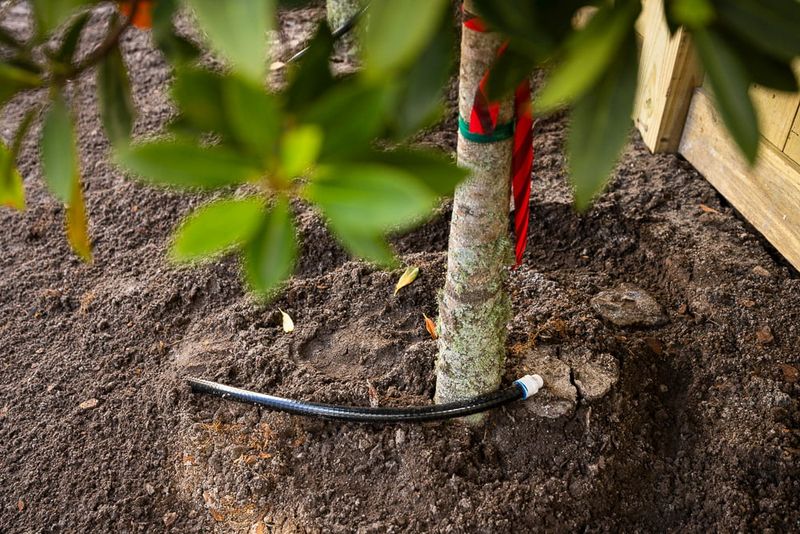
Fall has genuine appeal as a planting window in Florida: temperatures drop from peak summer heat, root systems have time to settle before the following summer, and the pressure from certain pests eases. What fall does not automatically deliver is easy establishment watering, and that distinction matters when you are putting new plugs in the ground.
Florida’s fall dry season typically runs from October through early December, and rainfall during that window is unreliable. UF/IFAS guidance on landscape irrigation is clear that newly planted material needs regular supplemental water until roots are firmly established, regardless of the plant’s eventual drought tolerance.
Frogfruit tolerates dry conditions once it has rooted in, but a plug that has been in the ground for two weeks has not rooted in. Plan to water consistently and monitor the soil rather than assuming the plant will fend for itself.
UF/IFAS Sarasota County’s dry-season landscaping guidance reinforces the point that fall and winter planting in Florida can require more supplemental irrigation than homeowners expect, particularly in years with below-average rainfall.
If your schedule is flexible, planting near the start of Florida’s rainy season, typically late May through June, can reduce how much supplemental water you need during establishment. That timing lets natural rainfall do more of the work.
Fall planting is a reasonable choice when you plan ahead for irrigation, but going in without a watering plan and assuming the season will cooperate is a common and avoidable mistake. Check local water restrictions before you plant, and set up a simple drip line or soaker hose if hand-watering every few days is not realistic for your schedule.
Use Mowing and Edging to Manage Its Spread
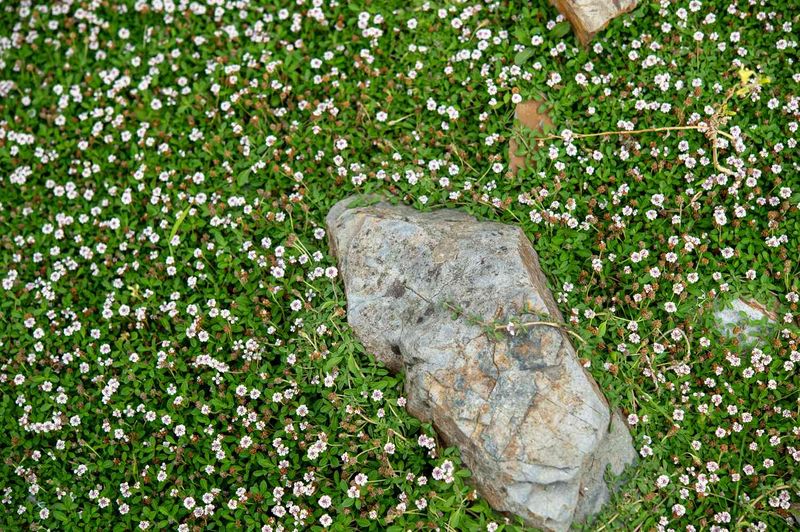
Frogfruit does not need the weekly mowing schedule that St. Augustinegrass demands, but calling it hands-off would be misleading. Managing its appearance and keeping it from spreading where it is not wanted requires a consistent, if lighter, maintenance routine.
UF/IFAS recommends occasional mowing at 4 inches or higher to tidy the mat and encourage denser growth. Cutting lower than that can stress the plant and reduce coverage.
Mowing frequency is largely a matter of how neat you want the planting to look. A once-monthly pass during the growing season is often enough to keep it presentable without disrupting its natural rhythm.
Timing the mow around bloom cycles is worth considering if pollinator support is part of your goal. Texas A&M AgriLife extension advises skipping or delaying mowing while frogfruit is actively blooming to preserve flowers and the wildlife activity they support.
Once a bloom flush fades, a light mow can clean things up before the next cycle begins.
Spread control is the maintenance task that surprises most new frogfruit growers. The plant’s rooting-at-nodes habit, which makes it such an effective groundcover, also means it will move into adjacent flower beds, across stepping stones, and potentially into neighboring lawn areas if there is nothing stopping it at the boundary.
Harris County Master Gardeners note that frogfruit’s spreading habit requires active boundary management to keep it within its intended planting zone. A metal or plastic lawn edging strip installed at the perimeter of the planting area is the simplest solution.
Plan to trim or pull runners that cross the edge every few weeks during the active growing season, particularly in spring and early summer when growth is fastest.
Choose Frogfruit When Its Tradeoffs Fit Your Yard
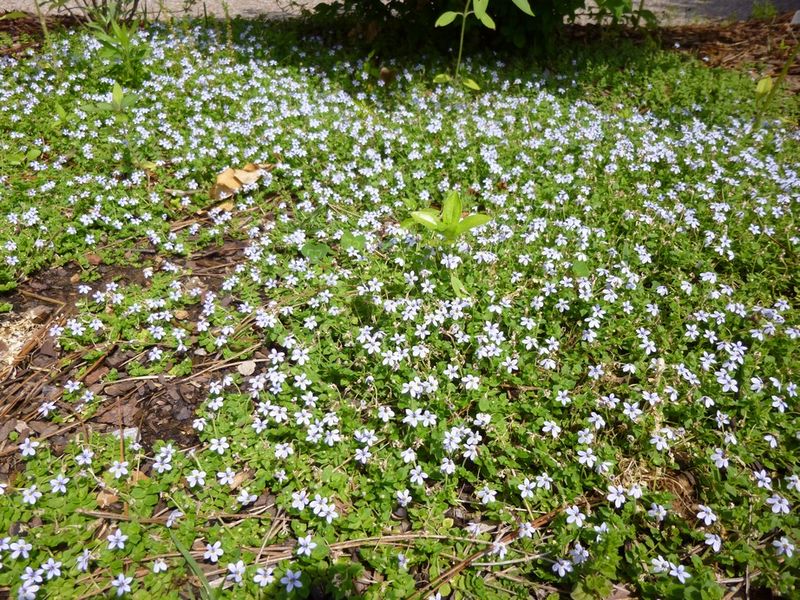
Frogfruit is a credible Florida-specific option for homeowners who want a lower-effort, wildlife-supporting groundcover in a well-matched site. The key phrase is well-matched.
Establishment watering, occasional mowing, spread management, and limited tolerance for heavy foot traffic are real tradeoffs, and the plant’s seasonal variability means the look will shift across the year rather than staying uniformly green.
UF/IFAS describes frogfruit as broadly adapted across Florida and suitable for low- to moderate-use areas, which is the most accurate framing for making a planting decision. If your target zone gets heavy foot traffic, sits in deep shade, drains poorly, or falls under an HOA rule that requires conventional turf, frogfruit is probably not the right fit for that spot.
Two other UF/IFAS-supported alternatives are worth knowing before you decide. Perennial peanut is drought-tolerant and low-maintenance once established, but it is not native to Florida and may go dormant in colder parts of the state.
Sunshine mimosa is a Florida native that fixes nitrogen and handles dry, sunny sites well, but it also spreads aggressively and benefits from a border to contain it. None of these options is interchangeable, and none is a guaranteed winner for every yard.
The most useful question to ask before planting is simple: does this area need to function as conventional turf, or does it just need to look tended and stay green most of the year? If the answer is the latter, frogfruit deserves a serious look.
The homeowners most likely to be satisfied with it are those who want a yard that supports life rather than one that simply resembles a golf course.