
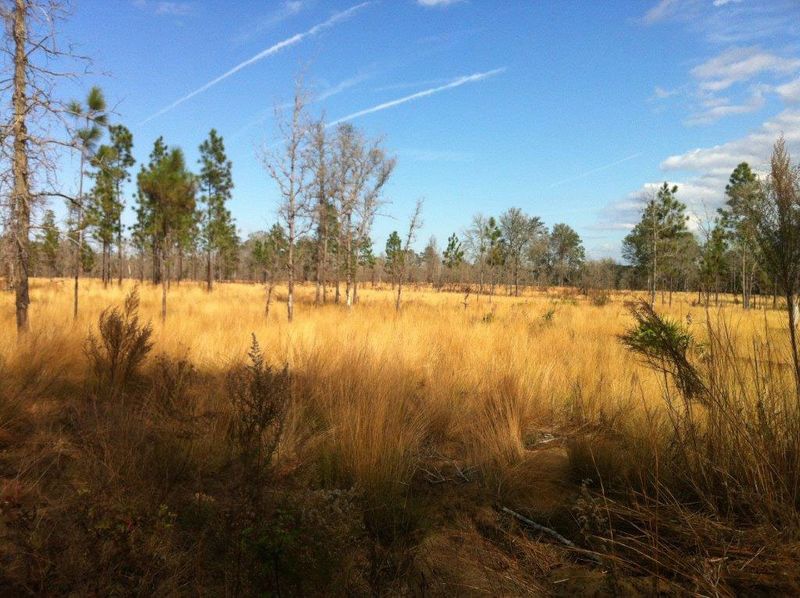
Florida wiregrass is a tough, fine-leaved native bunchgrass that once covered the open floors of longleaf-pine savannas, sandhills, and pine flatwoods across much of the state. For gardeners with sunny, sandy yards, it offers something most ornamental grasses cannot: a direct connection to one of Florida’s most distinctive and ecologically important landscapes.
Nursery-grown plants are available today, and with the right site and a little patience at planting time, wiregrass can anchor a naturalistic Florida garden that stands apart from the ordinary lawn.
Florida wiregrass belongs to open, dry pine-country habitats
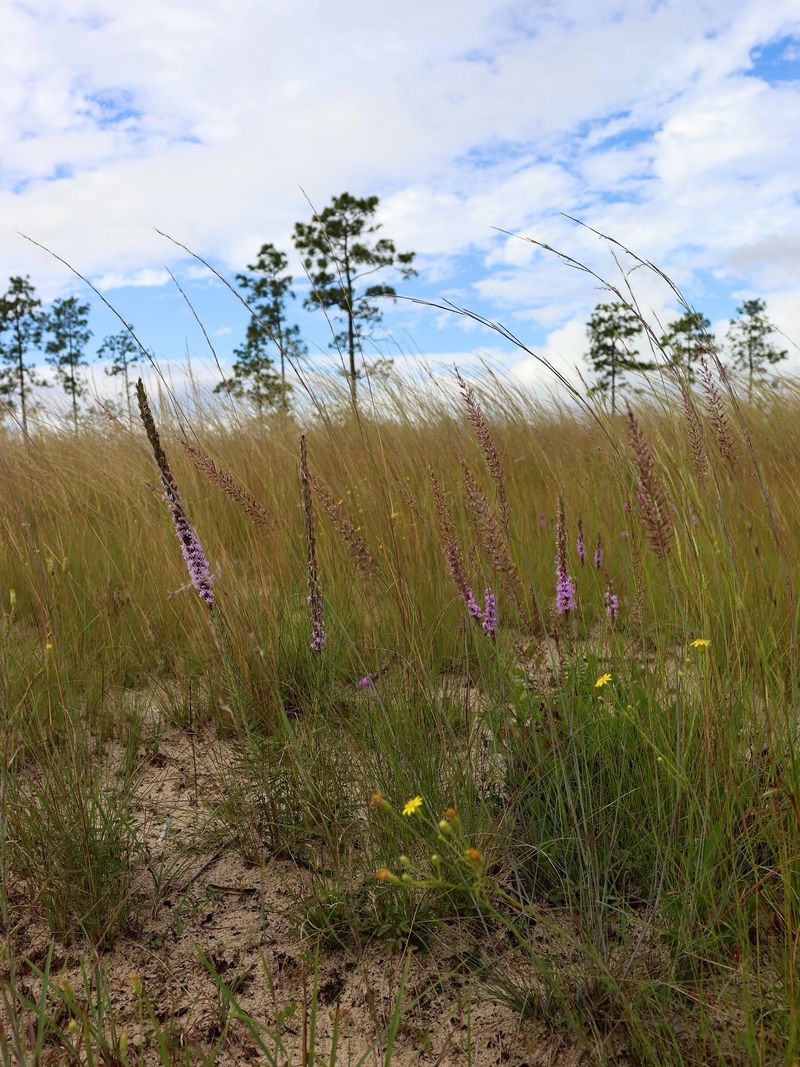
Florida wiregrass is a long-lived perennial bunchgrass with leaves so narrow and stiff they really do look like wire. Mature clumps typically reach one to four feet tall and one to three feet wide, forming distinct rounded tufts rather than spreading into a solid mat.
USDA Forest Service fire ecology research describes it as characteristic of sandy soils in longleaf-pine savannas, sandhills, and flatwoods across the southeastern United States.
In Florida specifically, the plant turns up in dry flatwoods, scrub, sandhills, and dry prairies, and UF/IFAS identifies it as native across nearly the entire state. Those habitats share a few key traits: open canopy, full sun, sandy or sandy-loam soil with good drainage, and a naturally low nutrient level.
Wiregrass did not fill every Florida pine forest uniformly, but in the particular communities where conditions matched, it was a dominant grass on the ground layer.
The scientific name varies depending on which reference you consult. UF/IFAS’s plant directory uses Aristida beyrichiana, the Florida-Friendly Landscaping plant guide lists it as Aristida stricta var. beyrichiana, and USDA’s fire-ecology literature uses Aristida stricta for the broader wiregrass group.
Kew’s Plants of the World Online recognizes Aristida beyrichiana as an accepted species name, while the Florida Native Plant Society uses the varietal designation. The naming is genuinely unsettled across institutions, so when you shop, ask for Florida wiregrass by common name and confirm the stock came from a reputable Florida native-plant nursery.
Different Aristida species grow across the Southeast, and common names can blur the lines between them.
Wiregrass was one part of a fire-maintained longleaf-pine system
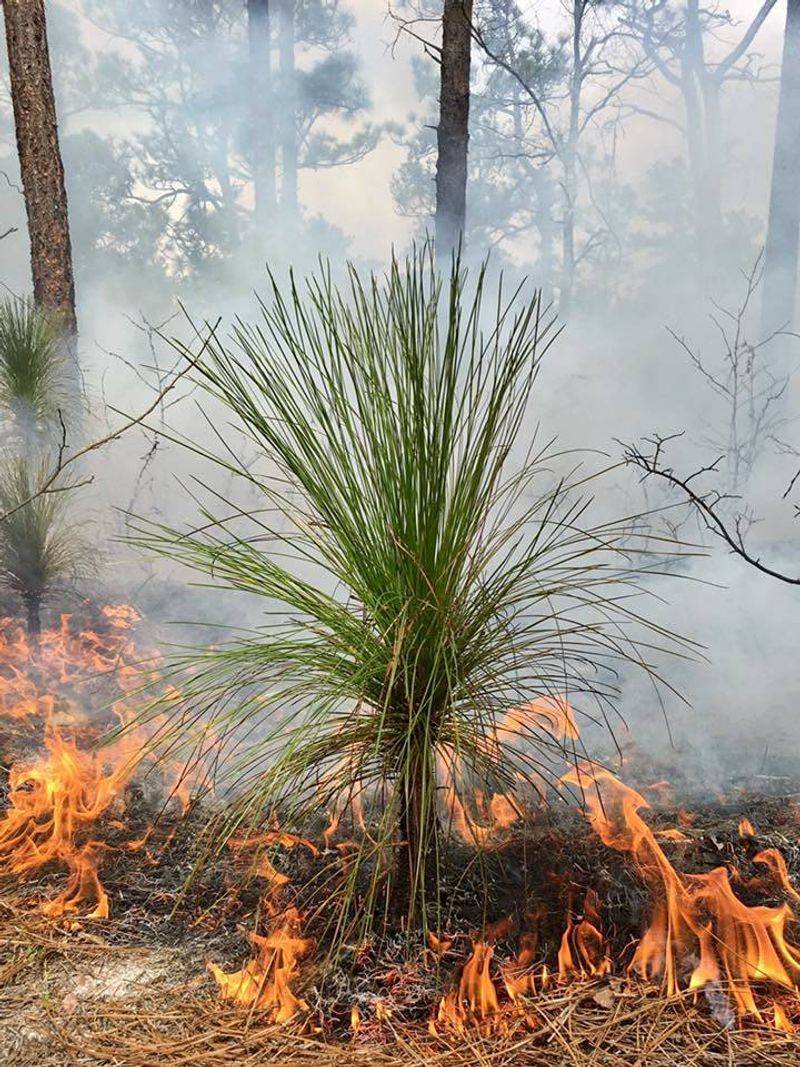
Longleaf-pine savannas and flatwoods were shaped by a combination of forces working together: widely spaced pines, a ground layer of grasses and herbs, accumulated pine-needle litter, and frequent low-intensity surface fires. Wiregrass was one important player in that system, not the single force that created or maintained it.
Its narrow dead leaves and accumulated foliage added fine fuel to the ground layer, mixing with pine needles to carry the frequent fires that kept these ecosystems open and species-rich.
USDA Forest Service research on restoring wiregrass to longleaf-pine ecosystems explains that the grass and the fire regime were tightly linked: wiregrass produced fine fuel that supported fire, and fire in turn encouraged wiregrass to flower and regenerate. Neither element worked in isolation.
The pines, the understory plant community, the soil, and the fire all interacted across centuries to produce the distinctive open savannas that once covered millions of acres across the Southeast.
The title’s phrase “blanketed pine forests” captures something real about wiregrass’s historical abundance in certain communities, but it overstates the picture if taken to mean every Florida pine stand. Florida FWC’s native seed reintroduction work highlights wiregrass as an especially important component of longleaf-pine restoration precisely because it is no longer as widespread as it once was in those specific habitats.
Understanding this ecology matters for home gardeners because it explains why wiregrass looks and behaves differently from foliage-only ornamental grasses: its seasonal appearance, its tendency to hold tan or brown dead foliage, and its flowering response are all tied to a fire-adapted life history that has no real parallel in a conventional garden setting.
Match wiregrass to a sunny, well-drained site
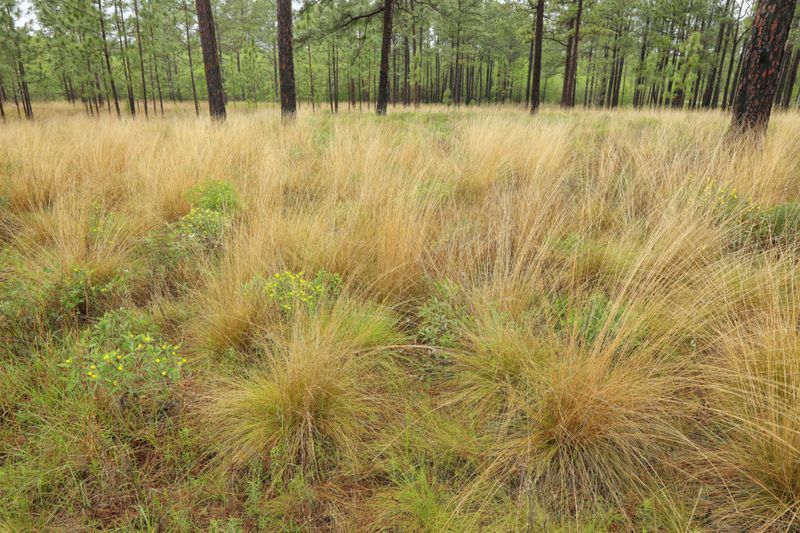
Before buying a single plug, walk your yard and be honest about the conditions. Wiregrass performs best in full sun or at least part sun, with sandy, acidic, infertile, well-drained soil.
USDA’s fire ecology review describes wiregrass as characteristic of sandy soils in open habitats, and that description doubles as a site-selection checklist for home gardeners. If your soil stays wet for extended periods after rain, or if a large tree or structure shades the area for most of the day, wiregrass is not the right plant for that spot.
Permanently waterlogged sites are a poor match. USDA notes that wiregrass can tolerate seasonal flooding, but that is different from a yard where the water table sits near the surface year-round.
A low-lying spot that collects standing water after summer thunderstorms will stress the plant and likely kill it over time. Sandy upland beds, open borders along driveways or fences, and dry slopes with fast drainage are all stronger candidates.
In a home landscape, wiregrass works best when you treat it as a naturalistic clumping grass rather than a substitute for a dense, uniform, mowable lawn. UF/IFAS includes wiregrass among Florida’s native ornamental grasses suited to borders and restoration-style beds, and the Florida Native Plant Society recommends it for restoration areas and naturalistic landscapes.
Grouped masses of three to seven clumps spaced two feet apart can fill a sunny bed with texture and movement. A single clump placed as an accent near a path edge works equally well.
What will not work is expecting the plant to spread and knit together into a carpet you can mow on a regular schedule; wiregrass simply does not grow that way.
Establish wiregrass with nursery-grown plants and early watering
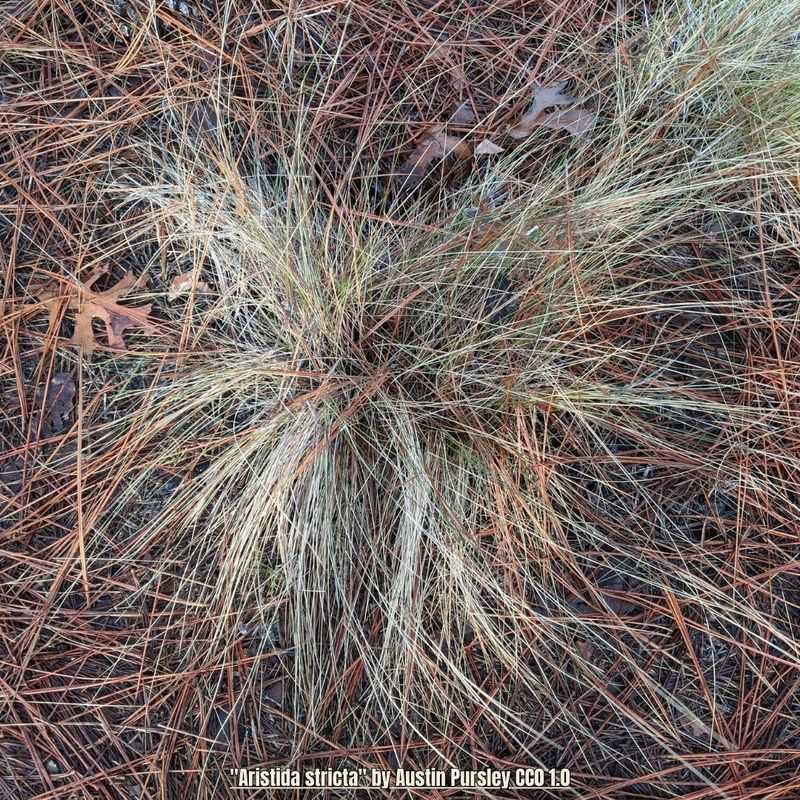
Finding wiregrass at a garden center is not as straightforward as picking up a flat of annuals. The Florida Native Plant Society notes that availability is very limited and that propagation is typically done by plugs.
Seed propagation is more difficult because viable seed production in wiregrass is closely tied to burning during the early growing season, a condition that is hard to replicate outside of managed restoration contexts. Your best path is to contact a reputable Florida native-plant nursery, check the FNPS nursery directory, or look for plant sales hosted by local native-plant chapters.
Once you have plugs or small container plants, the planting process is straightforward. Dig a hole just large enough to fit the root ball, set the plant at the same depth it was growing in the container, firm the soil around it, and water thoroughly at planting.
New plants need regular irrigation during the establishment period, which can run several weeks to a few months depending on weather and soil conditions. UF/IFAS cautions that native status alone does not guarantee lower water or fertilizer requirements in a residential landscape, and wiregrass is no exception to that rule during its first season in the ground.
After roots are established and the plant is actively growing in its new location, its adaptation to dry, sandy, infertile conditions becomes an asset. USDA research confirms wiregrass’s long association with infertile sandy soils, which means a well-sited, established plant can handle extended dry spells without supplemental irrigation.
The key phrase is “well-sited”: a plant in compacted clay or a shaded corner will not develop that same resilience, regardless of its native status. Match the site first, water through establishment, and the plant’s natural drought adaptation follows from there.
Keep care light without calling wiregrass maintenance-free
Established wiregrass in the right site is genuinely low-effort, but “low-effort” and “no-effort” are not the same thing. A Baker County UF/IFAS groundcover guide lists wiregrass as requiring no nitrogen fertilizer in its intended low-fertility setting, and that holds true as a general rule for plants growing in sandy, naturally infertile soil.
Applying a standard lawn fertilizer to wiregrass can push lush vegetative growth at the expense of the plant’s natural form and stress tolerance. If a soil test reveals a genuine deficiency, address it specifically; otherwise, skip the fertilizer entirely.
UF/IFAS guidance on ornamental grasses reinforces that plant performance in a residential yard depends on site conditions, not simply on whether a species is native. Wiregrass planted in the wrong spot may need more attention, not less.
And UF/IFAS’s irrigation guidance makes clear that native status does not automatically eliminate irrigation needs, particularly during dry spells in the first year or two after planting.
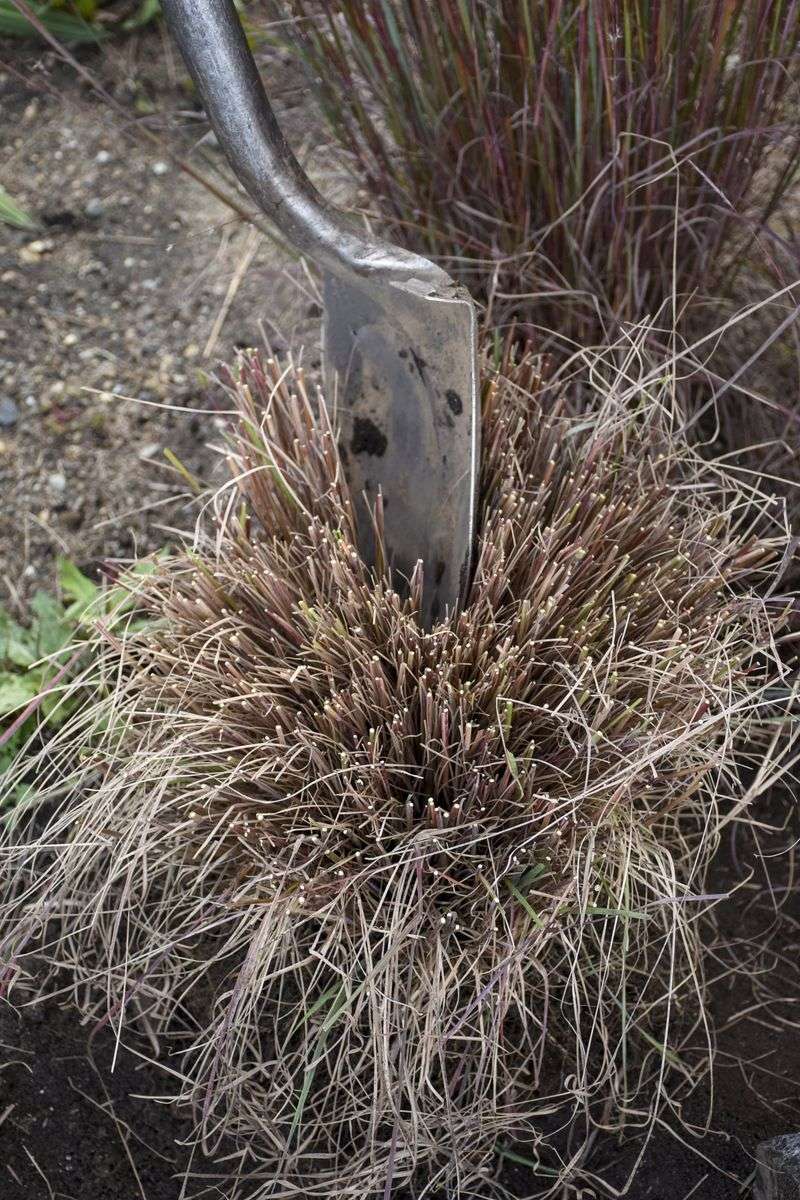
The plant’s clumping form means it retains dead or tan foliage through parts of the year, which is normal and ecologically functional but can look untidy to eyes trained on conventional lawns. Occasional trimming back of old foliage, particularly in late winter or early spring before new growth begins, freshens the clump’s appearance.
FNPS notes that defoliation by burning, grazing, or mowing within the previous nine months can stimulate flowering. For a home gardener, a careful trim with hand shears or a string trimmer is the practical equivalent, though no published source provides a standardized residential mowing schedule for wiregrass.
Weed control while the plants are young is worth the effort, because wiregrass clumps are slow to fill in and can be crowded out by aggressive weeds before they are fully established.
Respect the fire ecology and protect gopher tortoises
Wiregrass is fire-adapted in a specific and meaningful way: its growing points sit below the soil surface, which lets the plant survive and quickly resprout after an appropriately conducted fire passes through. USDA fire ecology research documents that fire promotes wiregrass flowering and seed production, which is why the plant’s most vigorous reproductive cycles happen in fire-maintained natural communities.
That ecological reality is worth understanding, but it does not translate into a recommendation to set your yard on fire.
Prescribed fire is a professional ecosystem-management practice with real safety requirements and legal obligations. Florida burn authorization requirements and Florida Forest Service guidance on using fire wisely both make clear that escaped burns are a leading cause of wildfires in the state.
Homeowners considering any kind of burning should consult the Florida Forest Service and qualified professionals before taking any action. For a residential wiregrass planting, careful trimming is the safer and more appropriate management tool.
On the wildlife side, wiregrass contributes documented habitat value in native plant communities. FWC identifies wiregrass as an especially important grass in longleaf-pine restoration because it helps create the fine-fuel layer that supports low-intensity ground fires.
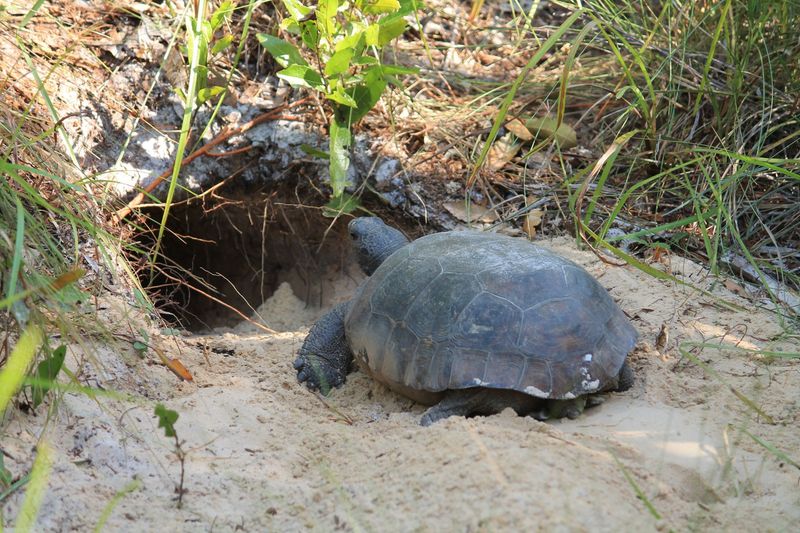
Gopher tortoises eat wiregrass as part of their diet in dry upland habitats. A few clumps in a home yard will not independently recreate a functioning fire-dependent ecosystem, but they can reflect the character of that habitat and potentially provide forage in areas where tortoises already live nearby.
If you are working in a sandy upland yard in Florida, check for gopher-tortoise burrows before digging or disturbing soil. The gopher tortoise and its burrow are both protected under Florida law, and FWC’s gopher-tortoise yard recognition program offers guidance on identifying burrows and following the rules that apply if one is present on your property.
Choose wiregrass for the right Florida landscape, not for the headline
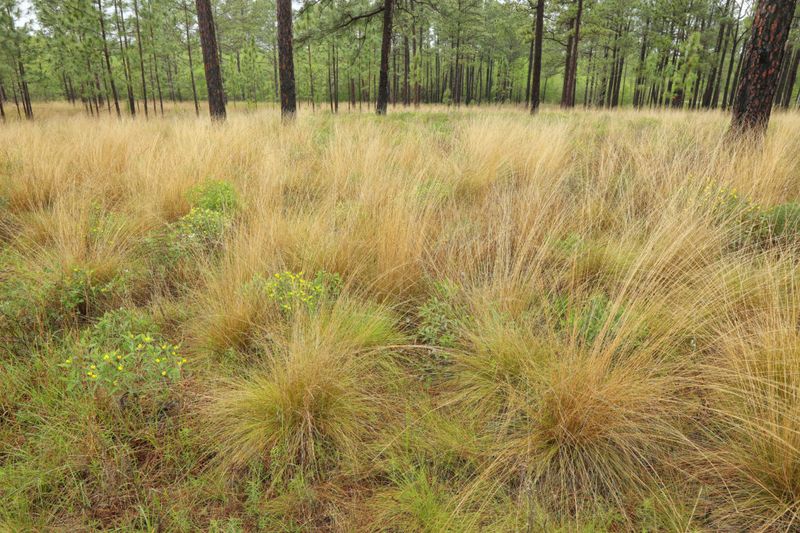
The decision to plant wiregrass comes down to an honest look at your site and your expectations. Open, sunny, well-drained, and sandy are the conditions that give this grass its best chance.
FNPS recommends it for restoration areas and naturalistic landscapes, and that framing is the right one: wiregrass belongs in a naturalistic planting where clumps, seasonal tan foliage, limited availability, and non-turf performance are accepted as features rather than flaws.
Wiregrass is not the only native plant worth growing, and its availability is genuinely limited compared to more commonly stocked natives. UF/IFAS is clear that site conditions determine plant performance, and no species is a guaranteed success across every Florida region or every residential yard.
What wiregrass does offer, on the right site, is a tangible connection to particular longleaf-pine savannas, flatwoods, and sandhills that were once among Florida’s most expansive landscapes. FWC’s restoration work underscores how much ground those communities have lost, which gives a well-placed home planting a quiet significance beyond its ornamental value.
Plant it because your site suits it and the naturalistic look appeals to you, not because a headline promises an easy revival. A clump of wiregrass rooted in sandy Florida soil, catching afternoon light through an open yard, is its own honest argument.