
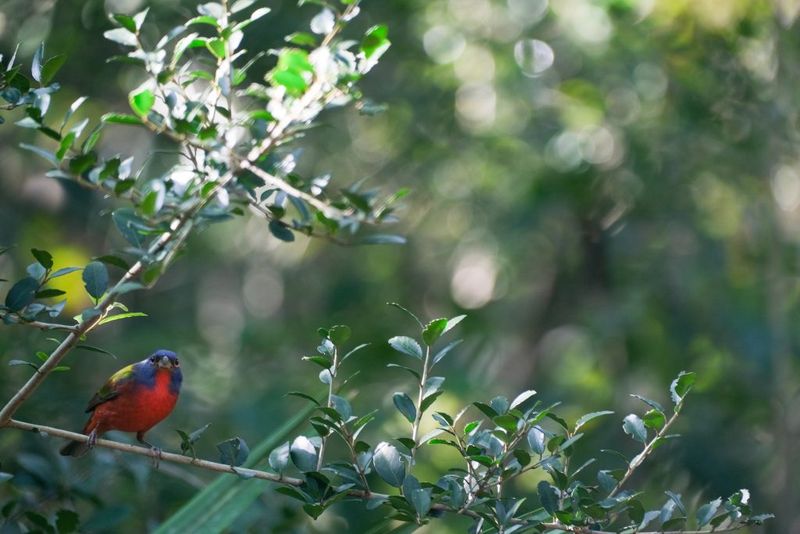
Painted buntings are among the most striking birds that visit Florida yards, but most homeowners never see one up close. The difference between a yard that gets occasional bunting activity and one that rarely does often comes down to habitat structure, not luck.
A small, intentional patch of low cover and seed-producing plants may make your outdoor space more suitable to these birds during fall and winter. This article explains how to make that adjustment, what to expect based on where you live in Florida, and how to keep the setup safe for birds once it is in place.
An open lawn edge offers less of the habitat painted buntings use
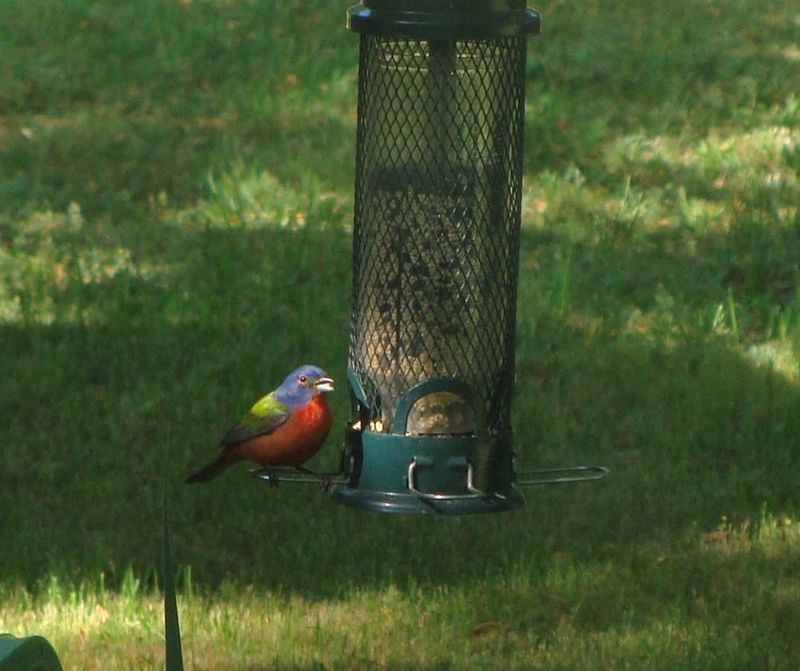
Painted buntings spend most of their time close to the ground, foraging for seeds in brushy, grassy, semi-open spaces rather than crossing wide stretches of open turf. Cornell Lab’s life history account documents their use of field edges, thickets, hedges, fallow fields, and yards with low, dense vegetation, noting that the birds are often hidden inside cover rather than perched conspicuously in the open.
A closely mowed, exposed lawn edge generally provides less of that low-cover structure and retains fewer seed sources, which means it supplies less of what this species typically uses when it moves through or settles into a yard.
That contrast matters because habitat suitability shapes where birds spend time. Painted buntings are not simply absent from Florida yards because owners keep a tidy lawn; the birds depend on range, migration, local population, and nearby habitat too.
But the yard’s physical structure is one factor a homeowner can actually change, and low, dense vegetation is the element Cornell’s backyard guidance specifically identifies as relevant to feeder use by this species.
Florida wildlife records confirm that painted buntings use brushy vegetation in open areas, and the Florida Fish and Wildlife Conservation Commission profile describes the species as a bird of shrubby, semi-open habitats. Creating a small patch that mimics those conditions may improve the chance that a bunting passing through or wintering nearby finds your yard usable.
It will not make birds appear where the species is absent, but it can shift a yard from one that offers little suitable cover to one that offers at least some.
Create a contained patch of low, dense cover
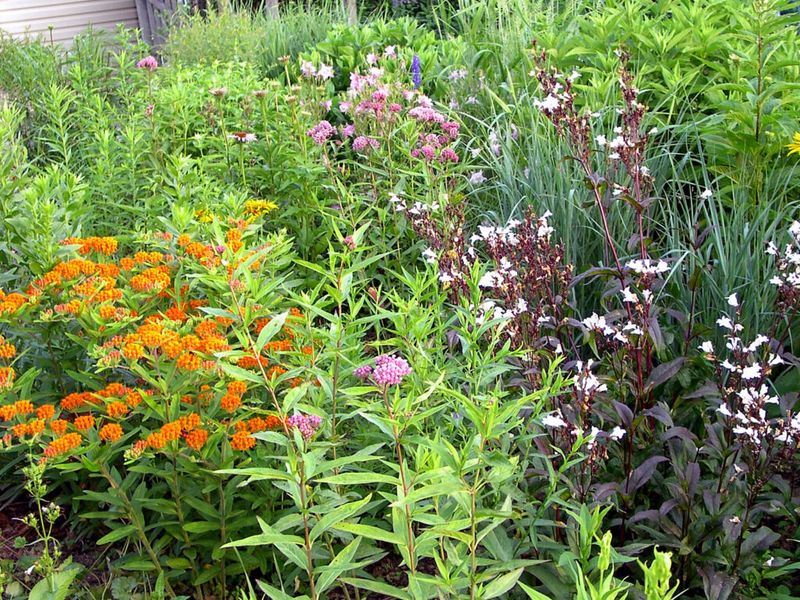
The practical adjustment is straightforward: choose a corner, narrow border, or small section of lawn margin and stop managing it like the rest of the yard. Let that defined area grow into a low, dense patch with seed-producing plants and enough structure to give a ground-foraging bird a reason to linger.
Cornell’s backyard guidance specifically notes that painted buntings are more likely to visit a feeder in a yard with low, dense vegetation, which frames this kind of cover as a companion to any seed offering rather than an optional extra.
The patch does not need to be large. A contained border or corner planted with clumping grasses, low shrubs, and a few seed-producing perennials can supply the structural variety a bunting uses without taking over the yard.
The goal is a defined area with layered, close-growing plants at or near ground level, not an unmaintained tangle spreading across the whole property. UF/IFAS bird-friendly planting guidance recommends combining native plants, food sources, water, and shelter rather than relying on feeders alone, and a small habitat patch addresses several of those elements at once.
Keeping the patch intentional also means edging it clearly so it reads as a garden feature rather than neglect. A low border of pavers, a defined mulched line, or simply a consistent mow edge around the perimeter tells visitors and neighbors that the area is planted on purpose.
Painted buntings forage primarily on seeds and use low cover for security while feeding, so a patch that combines both elements in one spot is more likely to be useful than a feeder placed in an otherwise open, exposed location.
Choose Florida grasses that provide structure and seed
Selecting the right plants for your habitat patch starts with matching species to your specific site conditions. Light levels, drainage, soil type, salt exposure, and your region of Florida all affect which grasses and low shrubs will actually establish and produce seed reliably.
UF/IFAS Extension’s native grasses overview identifies Florida-friendly clumping grasses as useful landscape plants whose seeds birds consume, and recommends choosing species suited to your local conditions rather than applying a single plant list statewide.
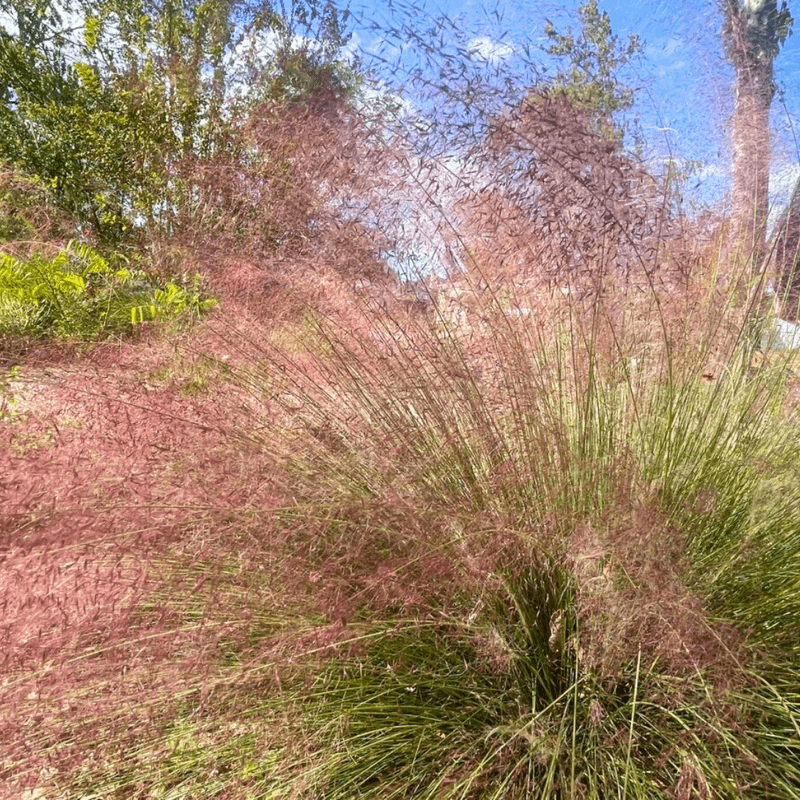
Muhly grass is a well-known example that tolerates a range of Florida soils, produces feathery seed heads in fall, and provides low, clumping structure that fits a contained patch. Purple lovegrass is another option that establishes readily in sandy, well-drained sites and sets seed in late summer and fall, which lines up with the period when wintering painted buntings begin arriving in parts of the state.
Wiregrass, native to Florida’s upland communities, can work in dry, open conditions where other grasses struggle. UF/IFAS ornamental native grasses guidance provides region-specific planting details for several of these species.
None of these grasses is a guaranteed painted-bunting magnet on its own. The benefit comes from the combination of seed production, low structure, and cover that a well-chosen planting provides.
The Florida-Friendly Landscaping Plant Guide recommends matching every plant to site conditions first, which protects against choosing a species that looks right on paper but fails in your yard’s actual light or drainage situation.
Consulting your county’s UF/IFAS Extension office or the right plant, right place publication can help you narrow the list to species that will establish, thrive, and produce seed through the fall season in your specific part of Florida.
Keep the patch productive through the seed season
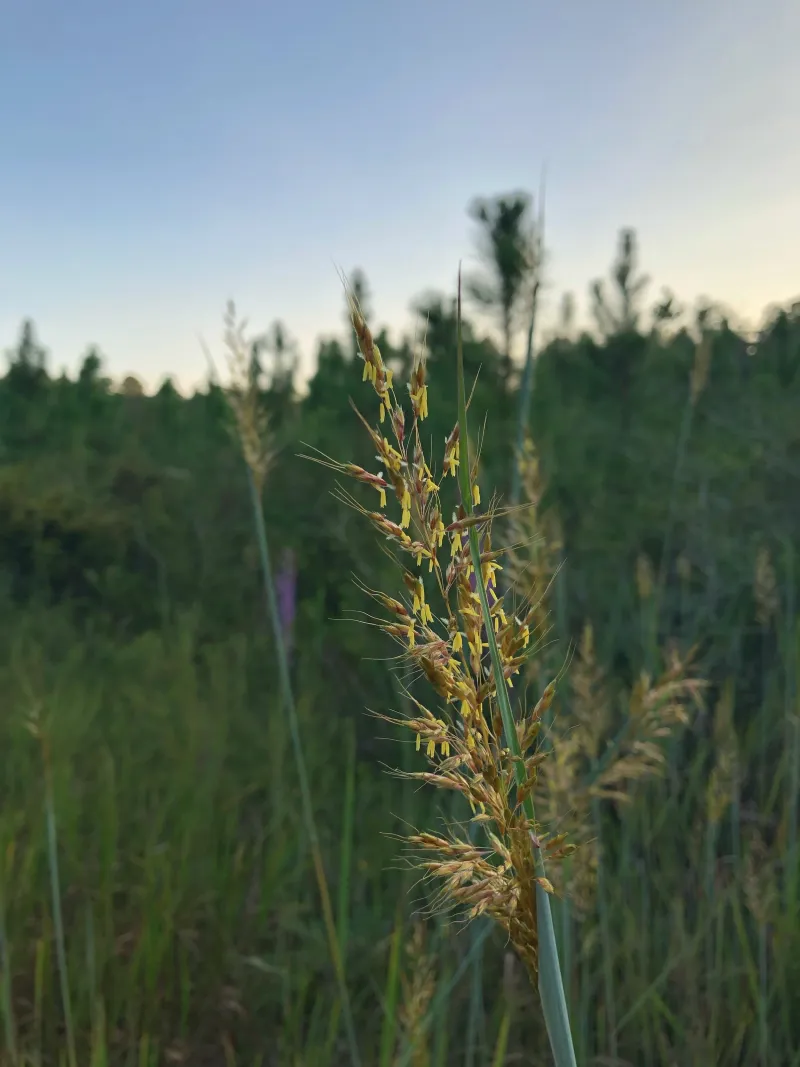
Planting the patch is only part of the work. The maintenance decision that can make it most useful to seed-eating birds in fall is simple: hold off on cutting until your grasses and seed-producing plants have actually set seed, and leave appropriate seed heads standing rather than removing every spent stem at the end of the season.
Painted buntings eat seeds for most of the year and forage heavily on the ground, so a patch that has been cut back before seed maturity offers far less than one that still carries ripe seed heads when birds move through or settle in for winter.
A practical schedule for most of Florida means watching your grasses through late summer and into October, noting when seed heads develop, and then delaying any major cutting until after that seed is available. UF/IFAS Extension’s lawn and garden guidance supports delaying cutting of native grasses to preserve their seasonal value, and ornamental native grasses guidance from UF/IFAS notes that many clumping species look best and provide the most habitat value when seed heads are left through the fall and winter months.
Keeping the patch manageable means staying deliberate about what grows there. Inspect the area regularly and trim or remove plants you cannot identify before they set seed and spread.
UF/IFAS guidance on managing landscape plants emphasizes selecting noninvasive species and controlling spread, which applies directly to a habitat patch where the goal is a defined, productive area rather than an expanding tangle.
Selective trimming around the edges and removal of any plants that are spreading beyond the intended border keeps the patch useful without letting it become a maintenance problem.
Use a feeder only as supplemental support
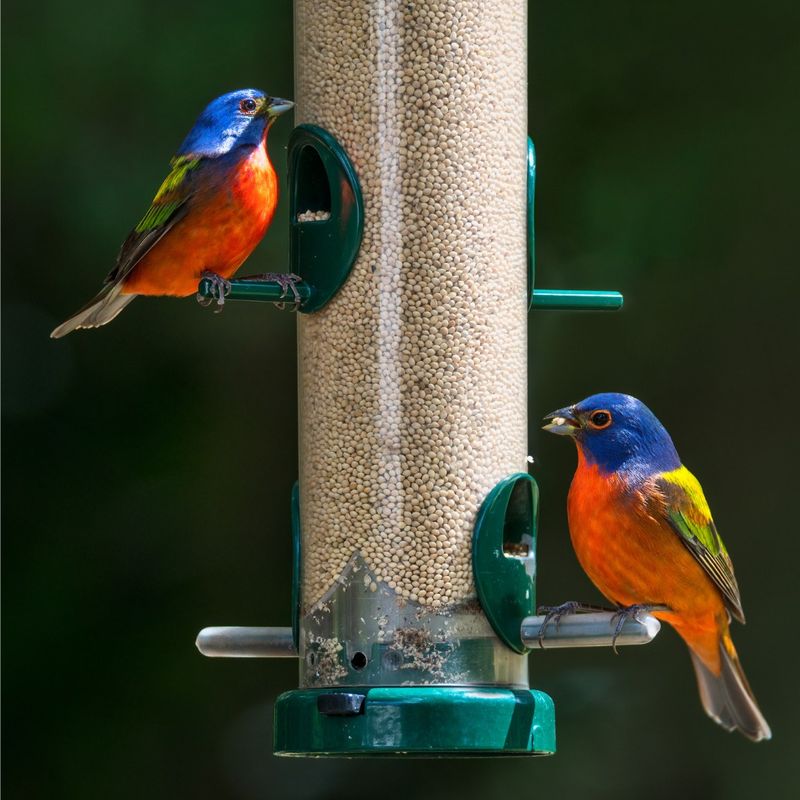
A feeder can complement your habitat patch, but it works best when there is already some low cover nearby. Cornell’s backyard guidance notes that painted buntings are more likely to visit a feeder in a yard with low, dense vegetation, which means placing a feeder in an otherwise open space may be less effective than pairing it with a planted border or corner patch.
White millet is a practical small-seed option for a feeder targeting painted buntings. Fairchild Tropical Botanic Garden’s guide to attracting wintering painted buntings mentions white millet as a seed these birds use, and UF/IFAS Manatee County Extension birding guidance also references it as a suitable feeder offering.
That said, painted buntings consume a wide range of grass, weed, and plant seeds in the wild, and white millet is a reasonable starting point rather than an exclusive or guaranteed choice.
Seed safety matters more than most people realize. Use only bird seed sold specifically for feeding birds, and check labels before buying.
UF/IFAS advises against red- or pink-dyed planting seed, which may contain the fungicide Captan, described as extremely toxic to birds.
The dyed seed is sometimes sold cheaply and can look similar to bird seed at a glance, so reading the label before purchase is a straightforward precaution that protects any bird visiting your feeder, not just painted buntings.
Expect different fall patterns across Florida
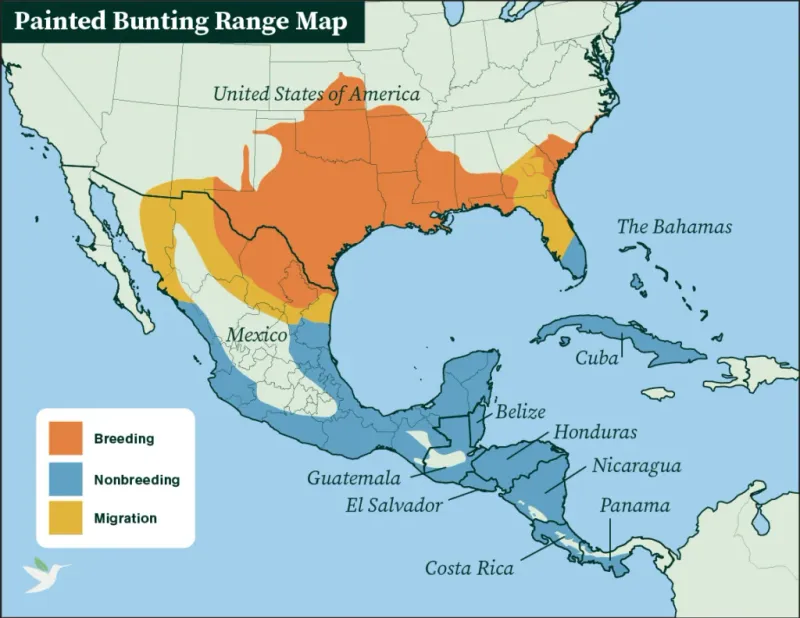
Florida’s geography creates real differences in when and where painted buntings appear, and those differences affect what any yard improvement can reasonably accomplish. The eastern population of painted buntings winters in Florida and the northern Caribbean, making Florida one of the most important nonbreeding destinations for this group.
Florida Fish and Wildlife Conservation Commission research notes that Florida is the only state with both breeding and wintering populations of the eastern painted bunting, with the breeding range concentrated along Atlantic coastal counties from roughly northern Brevard County northward toward Georgia.
Southern Florida generally receives the largest concentrations of wintering birds and is where a habitat improvement is most likely to overlap with regular bunting activity from late fall through early spring. Northern Florida, by contrast, is more relevant as breeding habitat and a migration corridor, so a yard there might see birds during fall passage without hosting them through the winter.
Cornell’s range maps and eBird’s modeled seasonal data place post-breeding migration roughly from mid-July through early November and the nonbreeding season roughly from mid-November through late March, but these are population-level estimates rather than arrival schedules for any individual yard or county.
Audubon’s painted bunting profile also distinguishes the eastern population’s Florida wintering pattern from the western population, which breeds in Texas and the south-central United States and generally migrates through Mexico and Central America. Florida’s fall timing and abundance patterns do not apply across the Gulf region, and readers outside Florida’s eastern bunting range should check local eBird data before expecting the same seasonal window to apply to their area.
Protect birds around feeders, water, and cover
Adding cover, a feeder, and water to a yard creates new responsibilities alongside new bird activity. Feeders accumulate hulls, moisture, and waste that can support mold and disease, so cleaning them on a regular schedule is not optional.
Cornell Lab’s feeder-cleaning guidance recommends cleaning seed feeders about every two weeks under normal conditions, and more often during wet weather or when use is heavy. Remove moldy seed and accumulated hulls at each cleaning rather than topping off a dirty feeder.
Feeder placement also determines collision risk. Cornell’s feeder placement guidance recommends mounting a feeder within 3 feet of a window or at least 30 feet away.
Intermediate distances, roughly 4 to 30 feet from glass, can be the most hazardous because birds leaving a feeder at speed may not register a window as a solid surface in time to avoid it. Placing the feeder very close to the glass limits the speed a bird can build before contact, reducing injury risk.
Free-ranging cats are a serious hazard around any feeder or dense cover patch. FWC’s feral cat guidance and FWC’s pet safety tips both advise keeping pets from free-ranging outdoors, noting that outdoor cats can kill birds at feeders.
Dense cover that benefits a foraging bunting can also provide an ambush point for a cat, so locating your patch away from spots where cats can approach unseen adds a meaningful layer of protection.
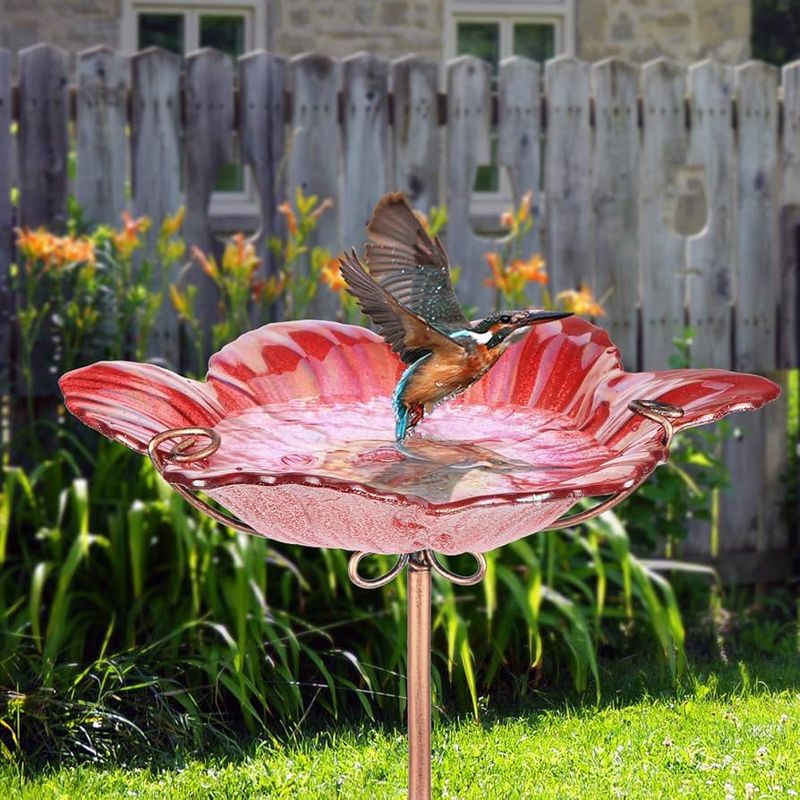
If you add a birdbath, keep it shallow, roughly 2 to 3 inches deep at the center, with a textured surface and nearby perches birds can use as escape routes. UF/IFAS water-for-wildlife guidance recommends changing or flushing the water frequently, especially in Florida’s heat, to prevent mosquito breeding and reduce disease risk.
Florida rules also prohibit feeding or attracting certain wildlife species, including bears, raccoons, alligators, and sandhill cranes, so review FWC’s wildlife feeding rules before setting up any outdoor food or water station to confirm your setup stays within the state’s guidelines.
Improve the habitat, then let local bird movement decide
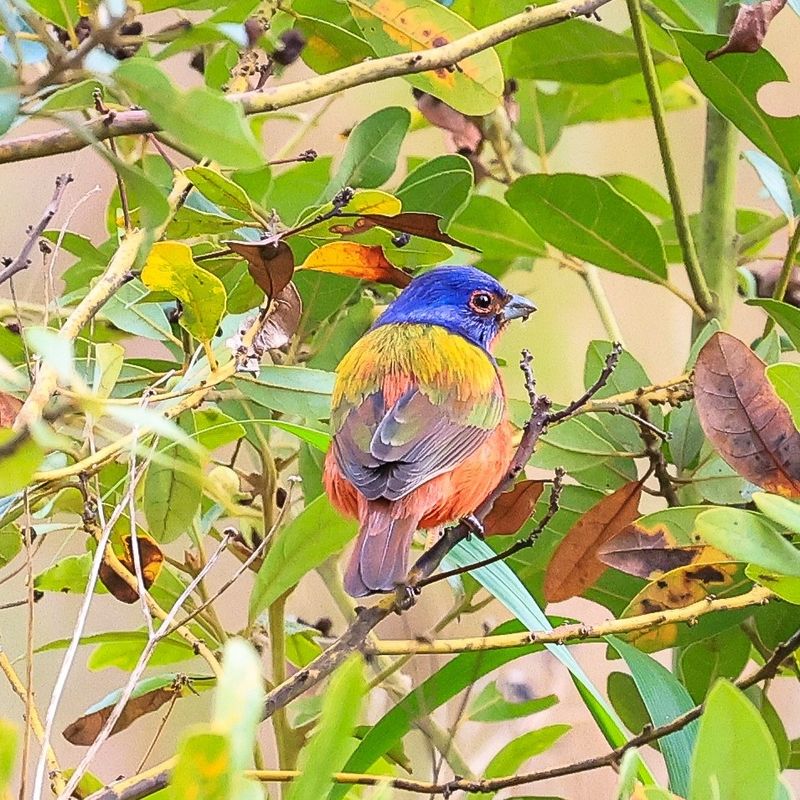
One managed patch of low cover and seed-producing plants, maintained through the fall and winter seed season, is the most practical yard adjustment supported by the available evidence. Pair it with a feeder placed near the cover if you choose, use clean bird seed, and keep the setup safe from cats and window hazards.
Cornell’s guidance points to low, dense vegetation as the key backyard factor for this species, and that structural change is what the habitat patch provides.
What the patch cannot do is override geography, migration, or local bird behavior. Whether painted buntings actually appear depends on your location within Florida, the season, weather patterns, what habitat surrounds your neighborhood, and the movements of individual birds.
FWC’s painted bunting profile makes clear that the species uses suitable habitat when it is present in an area, not that every improved yard will draw birds on a predictable schedule.
Make the adjustment, maintain it, and then observe what happens over one or two seasons. A yard that previously offered only open turf and a bare feeder post now offers something more aligned with how painted buntings actually use space.
That shift may improve your chances, and in Florida’s best wintering areas it sometimes produces results that feel almost immediate.
Patience and a well-placed patch tend to go further than any single product or shortcut ever will.