
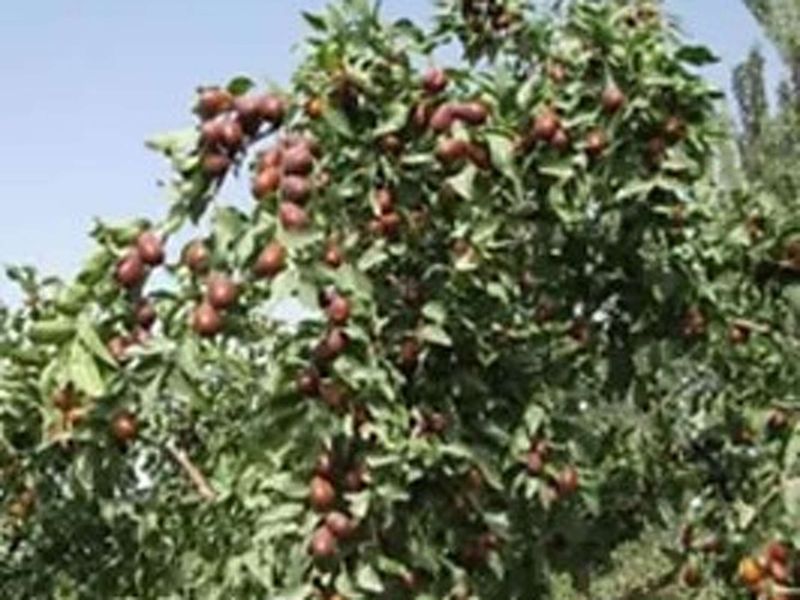
Somewhere between the cedar and limestone of the Texas Hill Country, a fruit tree most neighbors have never heard of is quietly earning a second look from home gardeners tired of babying plants through brutal summers. That tree is the jujube, also called Chinese date or red date, and Texas A&M horticultural research backs it as one of the most heat-tolerant, drought-resilient fruit trees a Texas yard can hold.
Whether you want crisp fruit in late summer or sweeter bites heading into fall, the right cultivar choice makes all the difference. Native Texas persimmon is another possibility worth knowing, especially for gardeners whose first priority is a tree that truly belongs to the Edwards Plateau.
Jujube is the strongest match—but the premise needs a correction
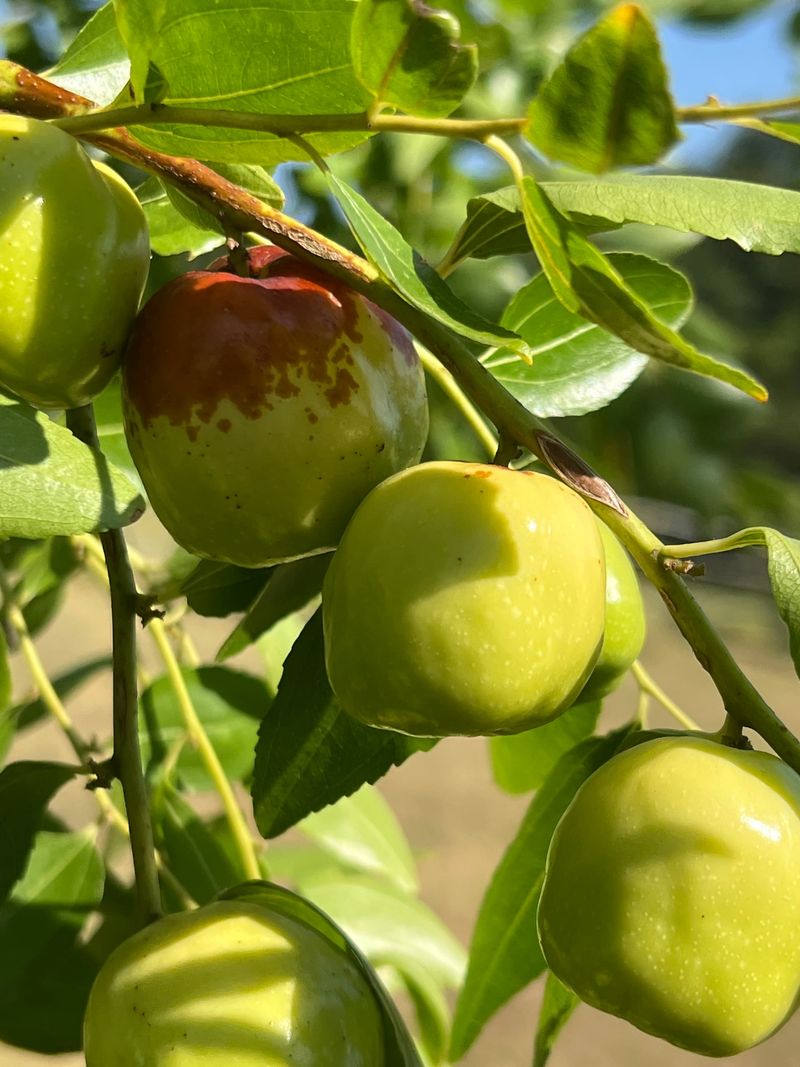
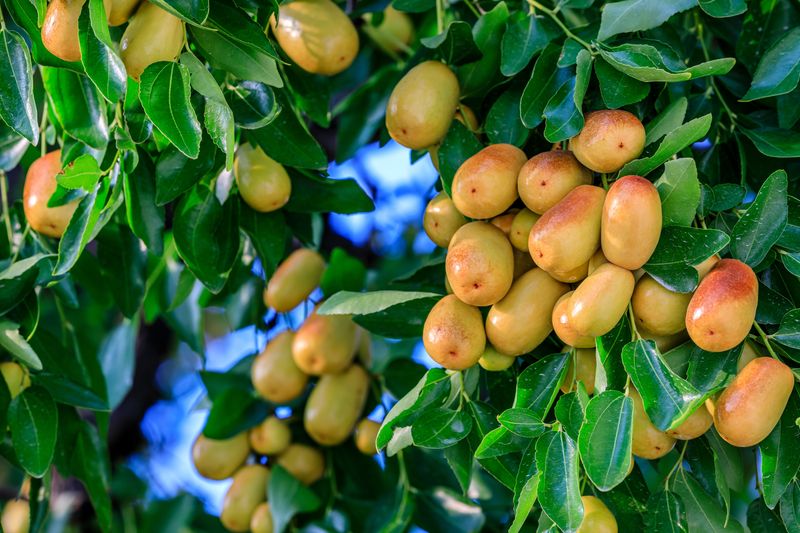
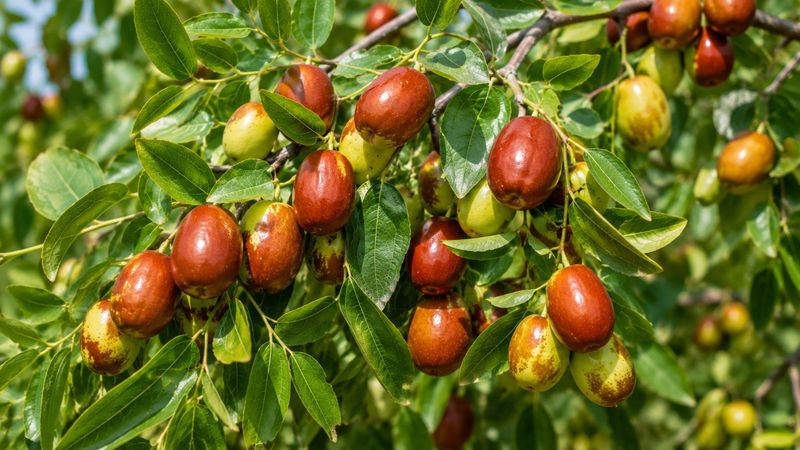
Horticultural research points clearly to jujube (Ziziphus jujuba) as the best evidence-backed match for a Texas fruit tree that combines heat tolerance, drought resilience, and useful fruit with comparatively modest care demands. Known also as Chinese date or red date, jujube produces fruit that starts out green and apple-crisp, then sweetens and turns reddish-maroon as it matures.
Texas A&M AgriLife guidance on jujubes describes the tree as unusually easy for home gardeners and capable of producing abundant fruit with limited care once established.
One important correction belongs up front: the available horticultural sources document how jujube performs, not whether Hill Country gardeners are currently planting it in large numbers or whether a statewide comeback is underway. No reliable survey, sales data, or trend report establishes that claim.
Calling jujube “overlooked” or “less commonly planted” is fair; calling it part of a documented planting movement is not supported by the research.
Jujube is also not native to Texas. The Texas A&M jujube fact sheet traces the tree’s origins to China and confirms its long cultivation history, but the species arrived in Texas through horticulture, not ecology.
If a native Hill Country tree with late-season fruit is the real subject, native Texas persimmon is the better fit. Texas A&M’s persimmon production guide describes Texas persimmon as native to the Edwards Plateau, small and easy to grow, and productive during a period when few other fruit crops are ripe.
Both trees deserve a place in this conversation, and the sections that follow treat them as distinct options rather than interchangeable names for the same plant.
Why jujube suits many Texas yards
Few fruit trees check as many boxes for Texas conditions as jujube does. The species grows across USDA Zones 6 through 9, which covers most of the state, and performs best with full sun and well-drained soil.
Alkaline soil, a common challenge on the Edwards Plateau and across much of central Texas, is not a dealbreaker for jujube the way it is for many other fruit trees.
Texas A&M AgriLife trial observations found that jujubes tolerated both drought stress and excess moisture better than other fruit plants tested at College Station. That kind of resilience matters in a state where summer can swing from weeks without rain to flash-flooding in the same season.
The tree’s ability to handle temperature extremes and still produce fruit gives it a practical edge over stone fruits and many other popular orchard trees.
Still, jujube is not a universal solution for every Texas address. The Texas A&M jujube fact sheet notes that the tree is better adapted to drier parts of Texas than to the Gulf Coast, where higher humidity and heavier rainfall can create drainage and disease challenges.
A gardener in the Hill Country or West Texas is working with conditions that suit jujube well. Someone in Southeast Texas or along the coast should research local drainage, humidity, and disease pressure before committing to a planting.
Site conditions, not just zip code, ultimately decide whether this tree thrives or struggles.
A September harvest requires the right jujube cultivar
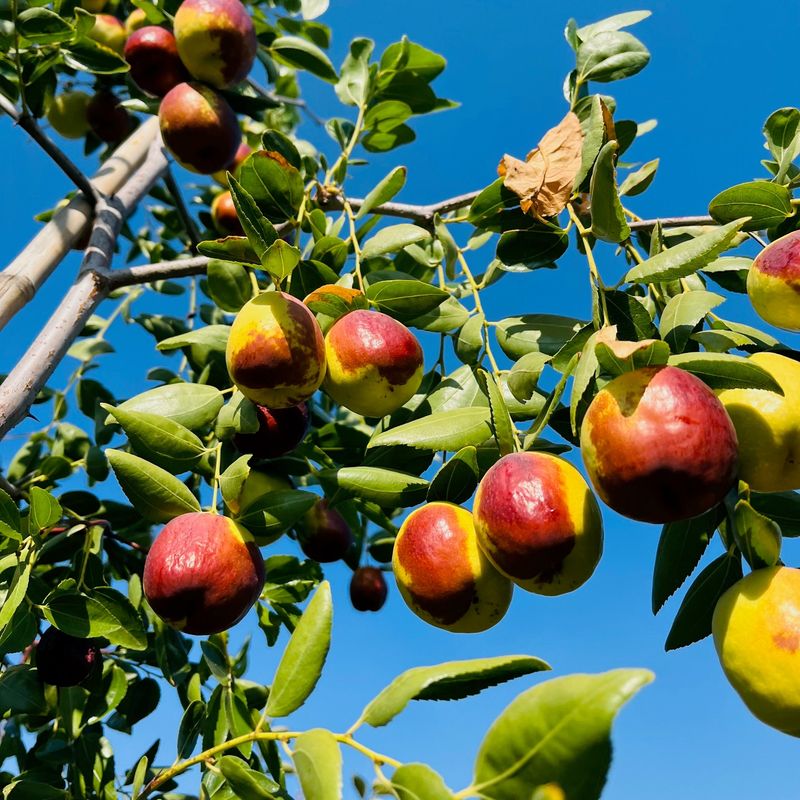
The promise of fall fruit from a jujube tree depends almost entirely on which cultivar you plant. Many jujube varieties ripen during summer, not fall, so gardeners hoping to harvest in September need to shop with cultivar names in mind rather than just picking the first jujube at the nursery.
Later-ripening selections give the best shot at a September harvest. ‘Dongzao’ is one variety that may begin producing in September depending on local conditions. Texas variety lists also associate ‘Lang’ and ‘Li’ with late-summer to fall harvest potential, making them reasonable starting points for gardeners who want fruit closer to the end of the season.
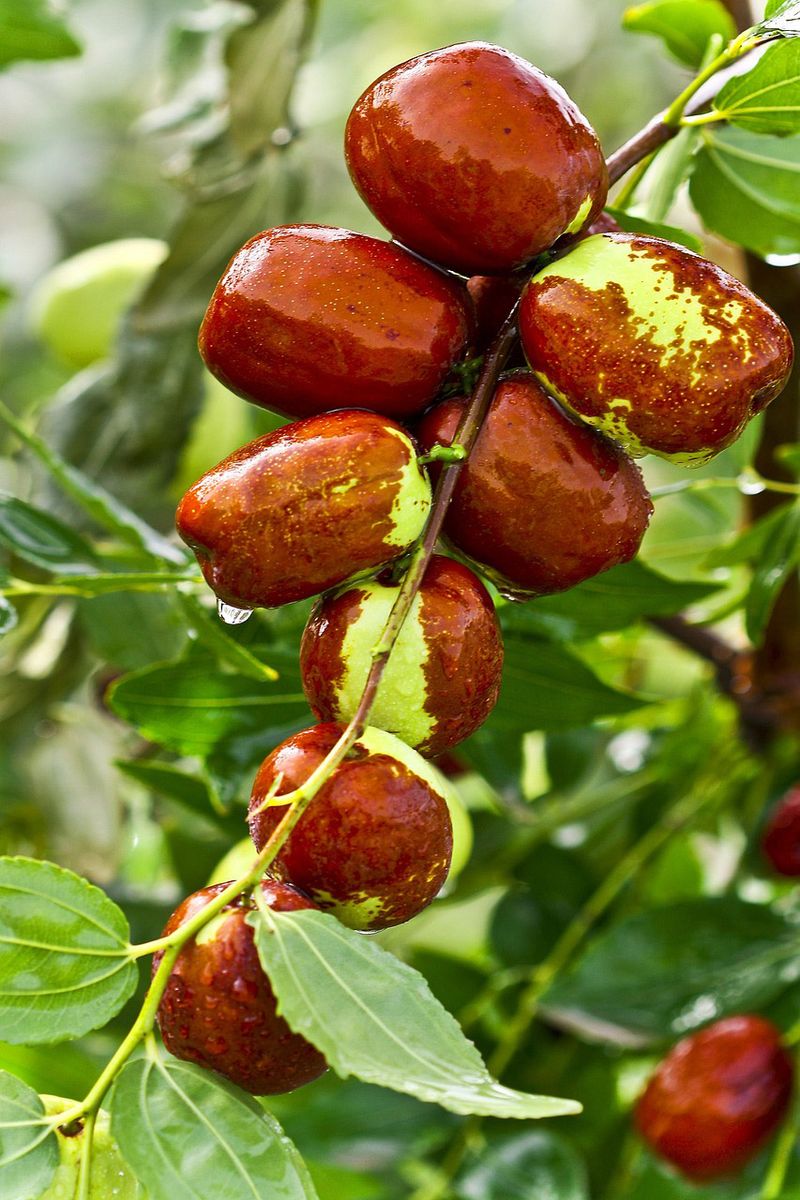
Texas A&M’s jujube guide explains that fruit can be eaten at the green, crisp stage, when it tastes somewhat like an apple, or left on the tree until it turns reddish-maroon and develops a sweeter, date-like flavor. Neither stage has a fixed calendar date; weather, tree age, and site conditions all shift the timing from year to year.
Oklahoma State University’s home fruit planting guide also lists jujube among fruit options with late-season ripening potential for the Southern Plains, reinforcing the idea that cultivar selection is the key variable. One practical note for anyone serving fresh jujube: the fruit contains a hard, pointed pit at its center.
Warn guests before they bite in, and keep that in mind when preparing the fruit for children or unfamiliar eaters. Picking the right cultivar and knowing the fruit’s full ripening range makes the fall-harvest goal realistic rather than a gamble.
Plan around thorns and root suckers
Jujube’s physical characteristics are worth knowing before you choose a planting spot, because they directly affect how safe and manageable the tree is over time. Branches on most jujube trees carry sharp thorns, and those thorns are not minor nuisances.
Texas A&M’s jujube publication specifically recommends keeping the tree away from sidewalks, children’s play areas, pet runs, and mowing paths. A thorny branch at face height along a walkway is a real hazard, and a jujube planted near a play structure is a poor design choice regardless of how productive it is.
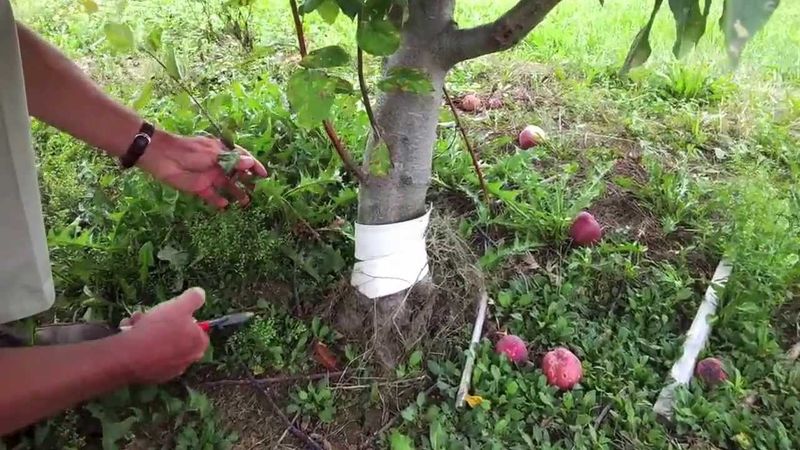
Root suckers add a second management consideration. The Texas A&M jujube fact sheet notes that suckers can emerge several feet from the trunk and, if left alone, can develop into a thicket over time.
The practical response is to remove suckers promptly when they appear and to avoid unnecessary disturbance of the root zone, since cutting or nicking roots during mowing or cultivation can trigger more sucker growth. This is not a reason to pass on the tree, but it is a reason to think carefully about placement.
Good site planning makes both issues manageable. Situate the tree in an open area of the yard where its canopy has room to develop without crowding foot traffic zones, and where the ground underneath can be checked easily each season for emerging suckers.
A jujube planted thoughtfully, with clear distance from high-traffic areas, delivers fruit without creating an obstacle course. Treat the thorns and suckers as design constraints to solve at the planning stage rather than problems to deal with after the tree is already in the ground.
Drought tolerance still requires establishment water
Drought tolerance is one of jujube’s most appealing credentials for Texas gardeners, but it describes a mature tree’s ability to survive dry stretches, not a newly planted tree’s ability to go without water. The distinction matters a great deal in the ground.
A tree that has been in the soil for a week cannot draw on the same established root system that allows an older jujube to ride out a dry Texas August.
Texas A&M’s jujube publication gives an approximate benchmark of 15 to 24 inches of water during the growing season from a combination of rainfall and irrigation. Even after establishment, consistent moisture supports stronger fruit production and larger fruit size.
Drought stress in a mature tree does not kill it, but it can shrink the harvest and reduce fruit quality, so gardeners who want a productive tree, not just a surviving one, need to keep irrigation in their seasonal routine.
Right after planting, water is the single most important input. Texas A&M’s Earth-Kind tree-planting guidance recommends watering immediately after planting and continuing frequent irrigation until the root system is established.
Adequate drainage is equally important, because waterlogged roots create problems that no amount of drought tolerance can fix. The Texas A&M jujube fact sheet confirms that well-drained soil is a key site requirement.
Monitoring the planting area through the first summer, adjusting irrigation during heat spikes, and making sure water moves through rather than pools around the root zone are all parts of getting a jujube off to a strong start in a Texas yard.
Choose a grafted jujube and compare it with Texas persimmon
At the nursery, one label detail separates a reliable investment from a gamble: whether the jujube is grafted. ‘Lang’ and ‘Li’ are two of the most established jujube varieties for Texas gardens. The Texas A&M jujube fact sheet describes ‘Lang’ as a heavy producer of large, pear-shaped fruit and ‘Li’ as the largest and best-flavored of the common Texas varieties.
Both must be purchased as grafted trees because they do not come true from seed. A seedling labeled ‘Lang’ or ‘Li’ will not reliably reproduce the parent tree’s fruit quality.
Pollination is another nursery conversation worth having. Texas A&M’s jujube guide notes that most cultivars, including ‘Lang’ and ‘Li,’ are self-pollinating, but some varieties perform better with cross-pollination nearby.
Check the pollination requirements for the specific cultivar you are buying rather than assuming all jujubes behave the same way.
Texas persimmon offers a genuinely different option for Hill Country gardeners, particularly those drawn to a tree with deep regional roots. Texas A&M’s Travis County backyard fruit guidance identifies Texas persimmon as native to the Edwards Plateau, producing small fruit that turns black when ripe.
Unlike jujube, native persimmons are commonly dioecious, meaning male and female trees are separate plants. A female tree may need a male tree nearby, or a male branch grafted onto it, before it produces fruit reliably.
Eating persimmons also requires patience with timing. University of Georgia Extension’s persimmon guide makes clear that frost is not universally required for persimmons to become edible, correcting a widely repeated misconception.
What does matter is that astringent varieties must soften fully before eating. Firm, unripe astringent fruit contains high levels of tannins and produces an intense puckering sensation that makes the fruit nearly inedible until it has softened completely on or off the tree.
Plant for establishment, not an instant harvest
Timing a jujube planting around the harvest you want this fall is the wrong frame. The right frame is timing a planting around the health of the tree you want three, five, and ten years from now.
Fruit production from any tree depends on cultivar, propagation method, tree size at planting, and site conditions, and no source supports promising a dependable first-year harvest from a newly planted jujube.
For most of Texas, Texas A&M AgriLife statewide fruit-tree planting guidance identifies December through February as the best window for planting most fruit trees. Planting during dormancy gives roots time to establish before spring growth and summer heat arrive.
Fall planting can work in some Texas regions, and East Texas extension guidance identifies October and November as a strong local planting window. Treating fall planting as a universal Hill Country rule, though, oversimplifies a state where regional conditions vary considerably.
Preparing the site before the tree arrives saves time and prevents problems. Choose a location with full sun and confirmed drainage, well away from walkways or areas where thorns and suckers would create conflicts.
Select a grafted cultivar matched to your harvest-timing goals, verify its pollination requirements, and have a watering plan ready for the first season. Texas A&M’s Earth-Kind planting guide recommends watering immediately after planting and maintaining consistent irrigation through establishment.
Texas A&M’s jujube publication reinforces that even a drought-tolerant tree needs steady moisture while its roots are finding their footing in new soil. Planting well and waiting patiently is what separates gardeners who eventually harvest from those who keep replanting.
Match the tree to the yard and the harvest season
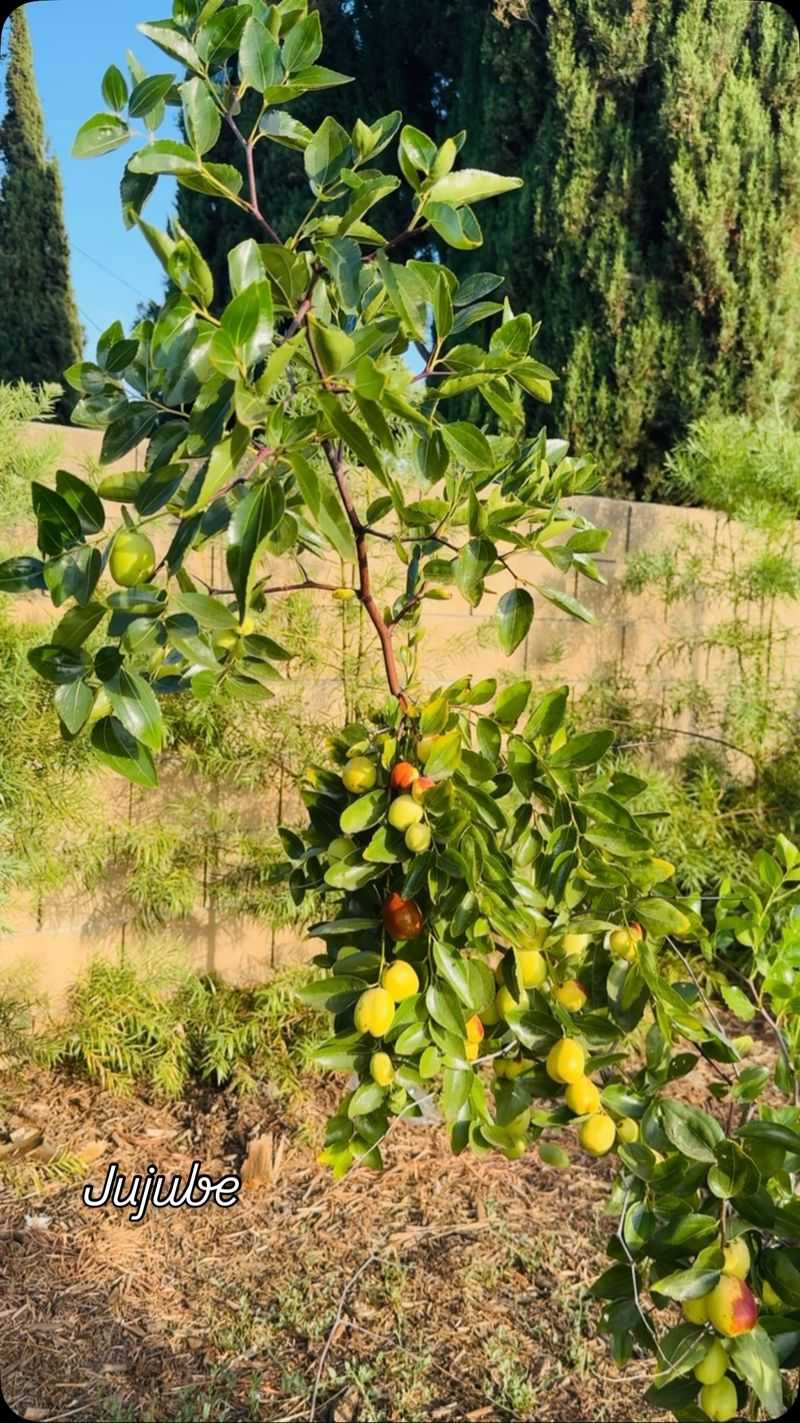
Jujube earns its place in a Texas yard when the site gives it what it needs: full sun, good drainage, and enough open space to keep its thorns and suckers away from foot traffic. Texas A&M’s jujube guidance supports its reputation as one of the more forgiving fruit trees for Texas conditions, but forgiving is not the same as maintenance-free.
Establishment watering, sucker removal, and thoughtful placement are all part of the deal.
If late-season fruit is the priority, choose a cultivar with documented fall harvest potential rather than assuming any jujube will deliver in September. For gardeners whose real goal is a native Hill Country tree with traditional late-season fruit, Texas persimmon remains a distinct and credible option, not a synonym for jujube but a separate species with its own requirements and rewards.
The two trees answer slightly different questions, and knowing which question you are actually asking is the most useful thing a gardener can do before heading to the nursery.