
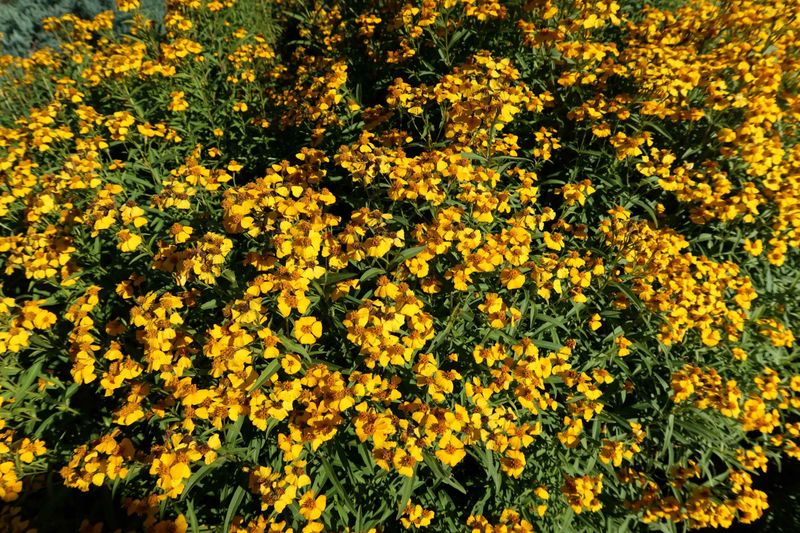
Most Texas gardeners have tried basil, watched it struggle through August, and wondered whether anything edible could actually hold up in a Central Texas summer. Mexican mint marigold, known botanically as Tagetes lucida, is a less familiar perennial herb that extension horticulturists in Texas and Florida consistently describe as heat- and drought-tolerant once it gets established.
Its leaves carry an anise-like scent close to tarragon, its small yellow flowers brighten late-summer beds, and it comes back year after year in many Southern gardens. If you have been replanting the same annual herbs every season, this one is worth a closer look.
Meet the Less-Familiar Herb Behind the Recommendation
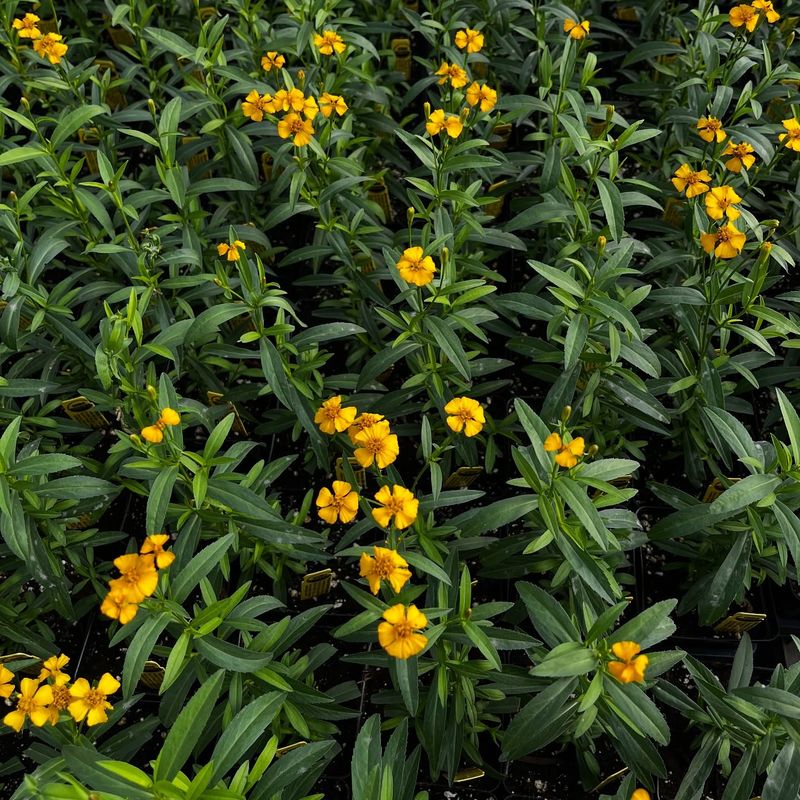
Tagetes lucida goes by several names at the nursery: Mexican mint marigold, Mexican tarragon, Texas tarragon, Spanish tarragon, and sweet mace. The variety of labels can be confusing, but the plant itself is straightforward.
It produces upright stems with narrow, glossy leaves that release a strong anise or licorice scent when you brush against them, along with small, cheerful yellow flowers that appear in late summer and fall.
One name worth clarifying right away is “mint marigold.” Despite that label, this plant has nothing to do with the mint family. UF/IFAS Gardening Solutions places Tagetes lucida firmly in the Asteraceae family, the same daisy and marigold group, not among the true mints.
The name is simply a nod to its fragrance, not its botanical identity.
Cooks who know French tarragon, Artemisia dracunculus, will find the flavor profile familiar but not identical. Mexican mint marigold shares that characteristic anise note, though it can taste noticeably stronger, so starting with a smaller amount in a recipe is a practical first move.
The North Carolina Extension Gardener Plant Toolbox confirms the culinary overlap while noting that the two plants are entirely different species.
Where French tarragon struggles in the South because it needs cooler winters to thrive, Mexican mint marigold is specifically suited to warm, humid, and dry Southern conditions. Texas A&M AgriLife Extension’s herb guide includes it among herbs evaluated for Texas garden performance, reflecting its regional relevance.
For gardeners who want a recurring, tarragon-flavored herb without fighting the climate, that regional fit is the core of the recommendation.
Its Advantage Is Perennial Resilience, Not Heat-Proof Magic
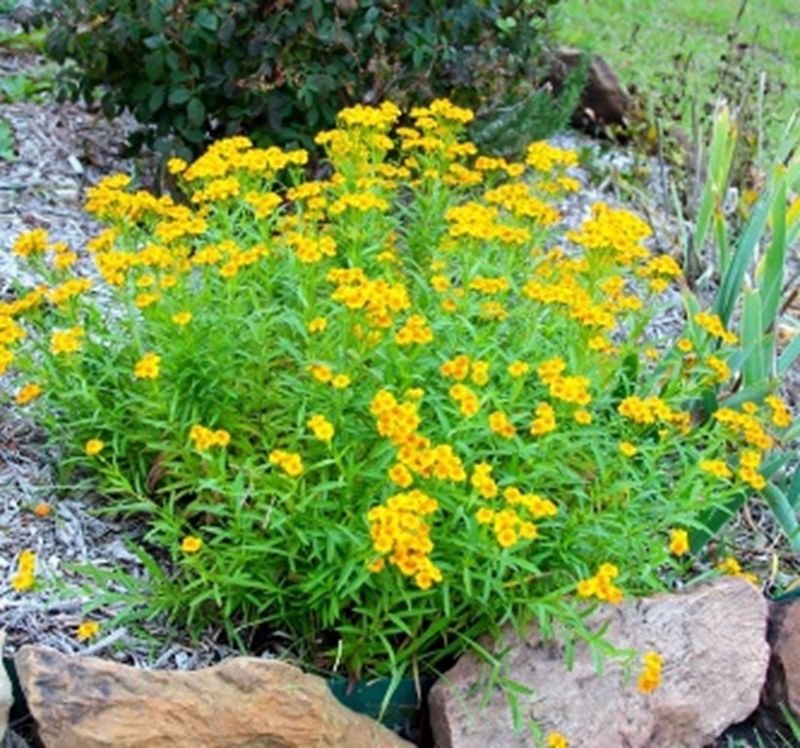
The practical case for Mexican mint marigold in Central Texas rests on a combination of traits that work together rather than on any single dramatic ability. Texas Master Gardener material from the Bell County program describes the plant as having excellent drought and heat tolerance, while also making clear that good drainage is a non-negotiable part of that performance.
Heat tolerance and waterlogged roots do not coexist well in this plant.
After establishment, Mexican mint marigold handles extended heat and reduced irrigation better than many common kitchen herbs. UF/IFAS describes it as tolerant of heat, humidity, and drought once roots are settled, which matters in Southern climates where summer conditions arrive fast and stay long.
The perennial growth habit adds a separate benefit: rather than replanting each spring, gardeners in suitable Southern climates often find the plant regrows from its base after winter.
What the evidence does not support is the idea that Mexican mint marigold will survive every Texas summer under every condition. No reliable head-to-head Central Texas trial comparing this plant directly against basil under triple-digit temperatures has been published.
Soil drainage, reflected heat from walls or pavement, available irrigation, exposure direction, and winter freeze severity all shift outcomes meaningfully from one yard to the next.
The City of Austin’s plant guide classifies it as a low-water perennial suited to sun or part shade, which aligns with the general extension consensus. Texas Superstar lists it as hardy in USDA Zones 8 through 13, though zone ratings describe average winter minimums and cannot account for unusual freezes, soil type, or microclimates in your specific yard.
The honest framing is that this plant is well-suited to Central Texas conditions and more reliably perennial than many culinary herbs, but it is not indestructible.
Give It Sun, Afternoon Relief, and Fast Drainage
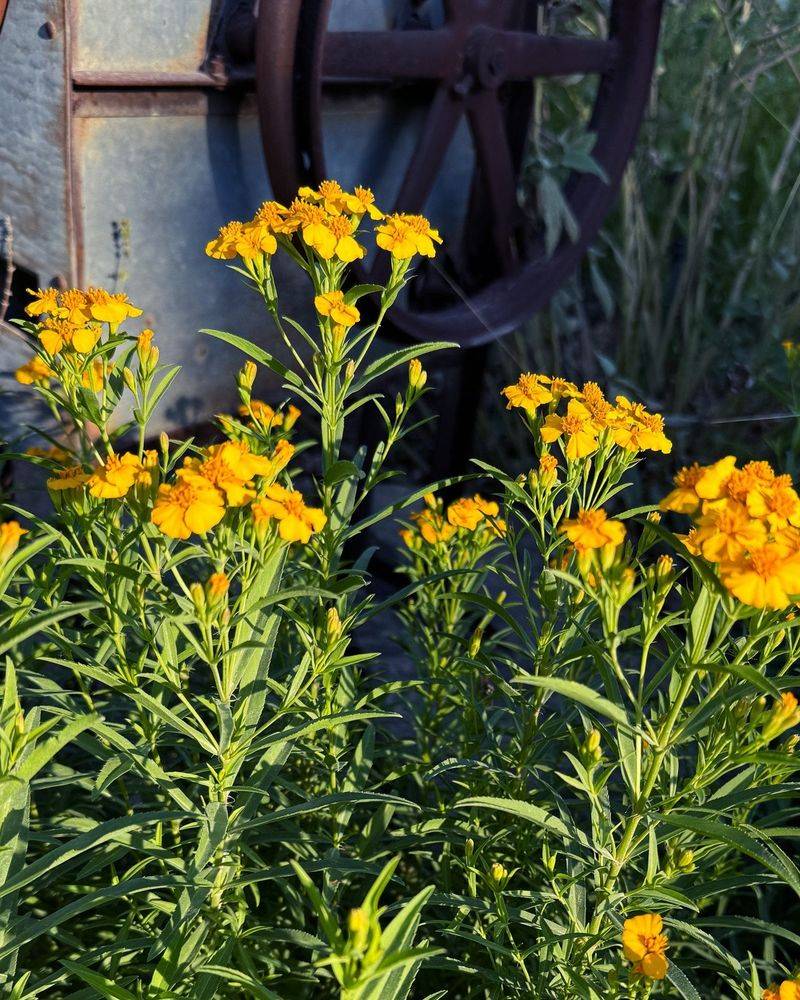
Choosing the right spot for Mexican mint marigold pays dividends through every hot month that follows. Full sun is the standard recommendation and produces the strongest, most flavorful growth.
In severely exposed Central Texas sites where afternoon sun reflects off concrete, stone walls, or a south-facing fence, some afternoon shade can reduce stress on the plant without sacrificing too much productivity. Austin’s official plant guide and Texas Master Gardener sources both allow for part shade, while UF/IFAS emphasizes full sun as the preferred exposure for maximum performance.
Soil drainage matters more than most gardeners expect for a plant described as drought-tolerant. Drought tolerance means the plant can handle dry periods, not that it can survive standing water around its roots.
North Carolina Extension notes that Tagetes lucida tolerates a range of soil types, including clay, but poorly drained clay is a real risk. If your yard holds water after rain, amending the bed with compost or building a slightly raised planting area improves drainage without major construction.
Plan for a plant that reaches roughly 2 to 3 feet tall and can spread over time. The UF/IFAS Santa Rosa County fact sheet suggests it works well in herb beds, mixed borders, and near walkways where passing gardeners can catch the fragrance.
Containers are a practical option if you want to control spread or move the plant to chase better light, but pots dry out faster than in-ground beds and need closer attention during heat waves. Any site with reflected heat from a south- or west-facing wall will also dry faster than a shaded ground-level bed, so check soil moisture there more frequently rather than relying on a fixed watering schedule.
Establish the Roots Before the Hardest Heat Arrives
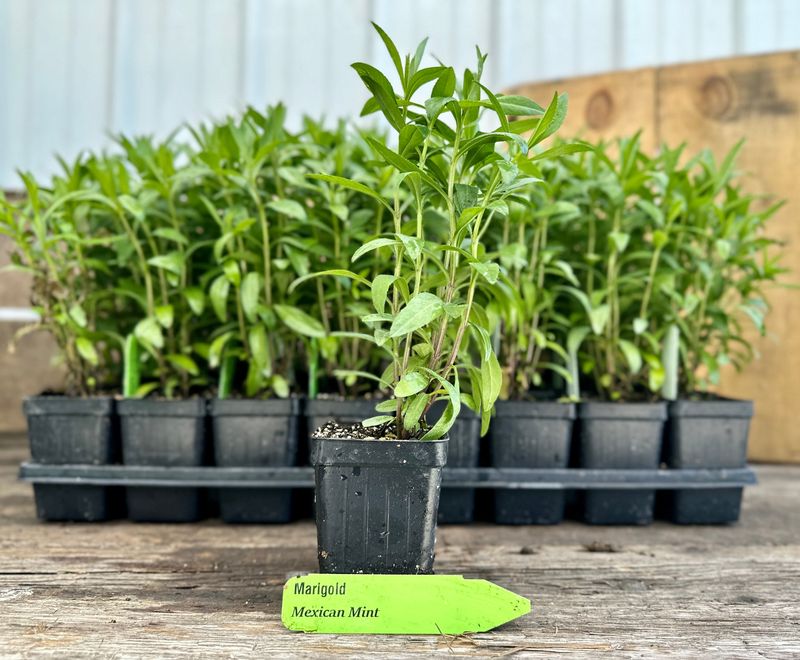
Getting Mexican mint marigold into the ground before summer peaks gives the roots time to anchor before the hardest weather arrives. Transplants from a local nursery are the simplest starting point for most home gardeners.
They skip the germination stage, establish faster, and are more forgiving of the inconsistent watering that comes with a busy spring schedule.
Starting from seed is possible but requires patience. UF/IFAS recommends sowing seeds very shallowly and notes that germination typically takes about two weeks under good conditions.
Press seeds lightly onto moist soil rather than burying them, keep the surface consistently damp until sprouts appear, and then transition to normal watering once seedlings are a few inches tall.
Regardless of whether you start with a transplant or a seedling, regular watering during the first several weeks is not optional. The plant’s drought tolerance develops as roots spread and deepen, not on day one in the ground.
Water consistently while the plant is getting established, checking soil moisture before each irrigation rather than watering on a fixed calendar. Once roots are settled, you can shift to occasional deep watering during prolonged dry stretches, letting the soil partially dry between sessions.
Early summer is a good time to shear the plant back by about a third. Austin’s plant guide recommends this shearing to encourage a more compact, bushy form rather than a lanky one.
Because the plant can spread over time, North Carolina Extension and the UF/IFAS Santa Rosa fact sheet both suggest giving it adequate room from the start or using a container if you prefer a tightly managed planting. A little planning at planting time saves a lot of editing later in the season.
Harvest as Needed and Add It Late in Cooking
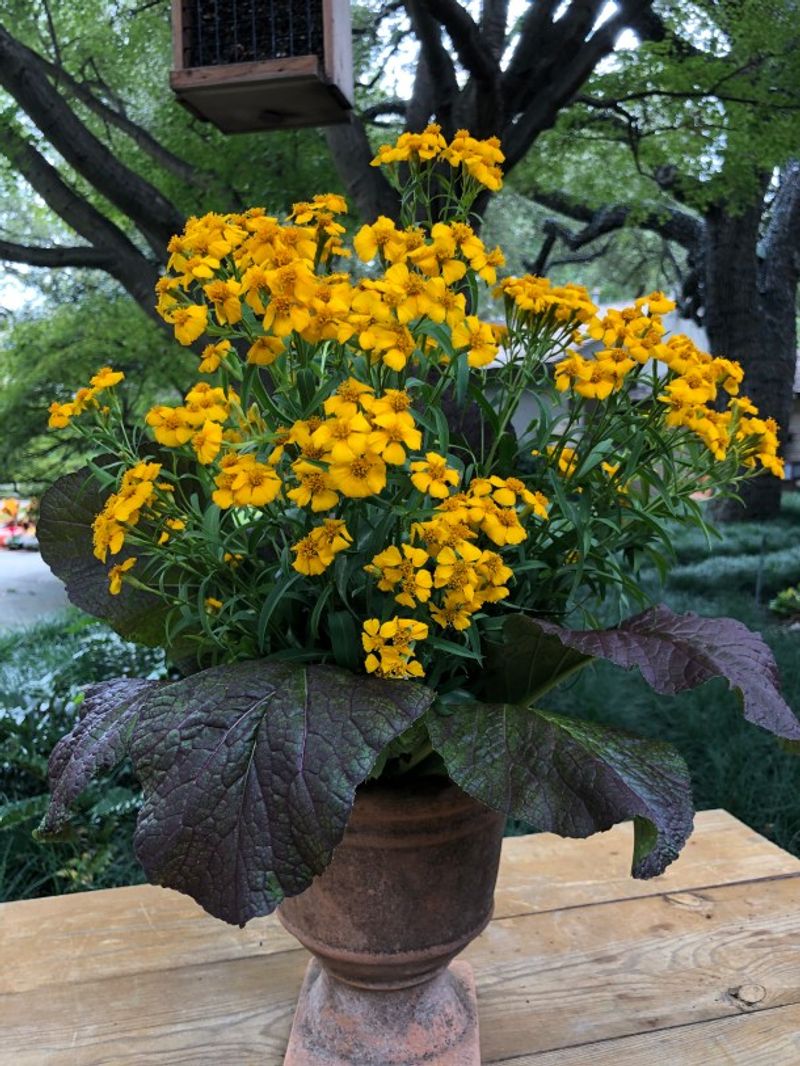
The flavor of Mexican mint marigold is one of its most compelling features for kitchen gardeners. Fresh leaves carry a clear anise and tarragon character, with UF/IFAS noting additional hints of mint, cinnamon, and sweetness that French tarragon typically does not deliver.
Because the taste can be stronger than true French tarragon, starting with a smaller quantity in any recipe and adjusting from there is the sensible approach.
Fresh leaves work well in sauces, soups, cooked vegetables, salad dressings, and any dish that calls for tarragon. They also go into flavored vinegars and cold drinks.
The small yellow flowers that appear in late summer are edible and make a colorful garnish for salads, according to UF/IFAS. Using both leaves and flowers gives you two ways to put the plant to work from a single stem.
Harvest leaves as you need them rather than stripping large amounts at once. Removing too much growth at one time stresses the plant and slows recovery, especially during the hottest part of summer.
Snipping a few stems or pinching individual leaves regularly is gentler and encourages the plant to keep producing.
For the best flavor from harvested leaves, add them toward the end of cooking rather than at the start. Prolonged heat fades the volatile oils that give the herb its characteristic scent.
North Carolina Extension confirms that fresh use delivers the most flavor, and UF/IFAS recommends freezing or storing the herb in vinegar for longer preservation. Drying works as a last resort but results in noticeably less aromatic leaves compared to frozen or vinegar-preserved ones.
Basil Still Works, but It Makes a Different Garden Tradeoff
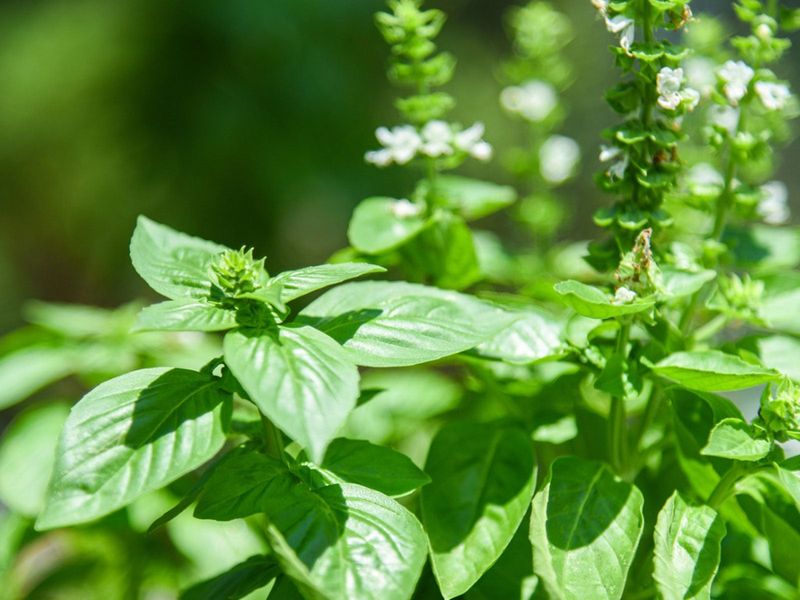
Basil deserves a fair assessment before anyone trades it in. Iowa State University Extension describes basil as a warm-season herb that grows rapidly during summer and can be relatively drought-tolerant once established.
Many Texas gardeners grow it successfully through June and into July with consistent watering, good airflow, and attentive harvesting. Basil is not inherently defeated by heat.
The practical differences emerge over a full season. Basil produces leaves quickly and abundantly, which makes it a strong choice for anyone who wants large harvests for pesto, fresh salads, or freezing.
It does, however, require more active management. Texas A&M AgriLife Extension notes that basil is frost-sensitive and typically grown as a seasonal annual in Central Texas, meaning gardeners replant it each year.
Bolting in heat, water stress from dry spells, and disease pressure all require attention through the growing season.
Temperature extremes can push basil past its productive range. One peer-reviewed study on basil heat stress documented severe wilting and near-death in plants held at 42 and 36 degrees Celsius for several consecutive days, conditions more extreme and controlled than a typical garden scenario but indicative of how the plant responds to sustained high temperatures.
A separate peer-reviewed heat-stress study confirmed measurable physiological effects on basil under elevated temperatures. Basil downy mildew adds another challenge in warm, wet conditions, spreading quickly when plants are crowded or irrigated overhead.
Mexican mint marigold brings a different set of tradeoffs. It produces fewer leaves per week than a mature basil plant, and its flavor profile suits different recipes.
What it offers instead is a perennial structure that returns each growing season in favorable climates, established-plant drought tolerance that reduces irrigation frequency, and a tarragon-like flavor that basil simply does not replicate. For many Central Texas gardeners, the answer is not choosing one over the other but growing both: basil for fast warm-season harvests and Mexican mint marigold as a lower-maintenance perennial anchor in the herb bed.
Know the Names and Follow the Culinary Safety Limits
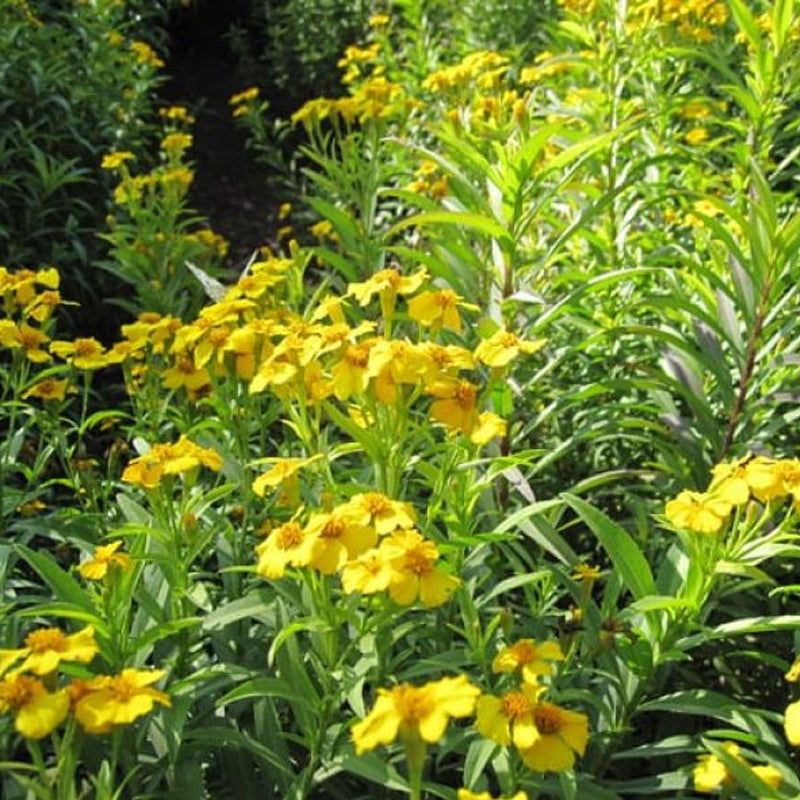
Buying the right plant starts with checking the botanical name on the tag. Common names like Texas tarragon, Mexican tarragon, and sweet mace all point to Tagetes lucida, but they are marketing labels, not botanical guarantees.
The name “Texas tarragon” does not mean the plant is native to Texas. Tagetes lucida is generally described as native to Mexico and parts of Central America.
Confirming the Latin name at purchase prevents mix-ups with unrelated marigold species or with true French tarragon.
Winter behavior is another thing to plan for. In Central Texas and similar climates, a hard freeze can kill the top growth to the ground.
North Carolina Extension notes that the plant may be grown as an annual in colder regions, while in warm Southern climates it commonly regrows from the base after a freeze. That regrowth is not guaranteed in every yard or every winter, so treating it as a likely outcome rather than a certainty keeps expectations realistic.
On the culinary side, normal food quantities used in everyday cooking are appropriate. UF/IFAS confirms its use in sauces, soups, and teas at reasonable amounts.
North Carolina Extension classifies the plant as having low-severity poisonous characteristics and cautions that large amounts can be harmful. That caution rules out concentrated teas, essential oils, tinctures, or any kind of medicinal dosing.
Use it as a culinary herb in normal cooking quantities and leave therapeutic claims aside.
Gardeners with sensitive skin should also note that plants in the Asteraceae family can cause contact dermatitis in some people. Wearing gloves when handling the plant is a reasonable precaution if you know you react to plants in this family.
Mexican mint marigold is a resilient, flavorful perennial option well suited to Central Texas gardens, but it works best when treated as a culinary herb rather than a cure-all or an indestructible fixture.
Add It for Reliability, Not as a Basil Ultimatum
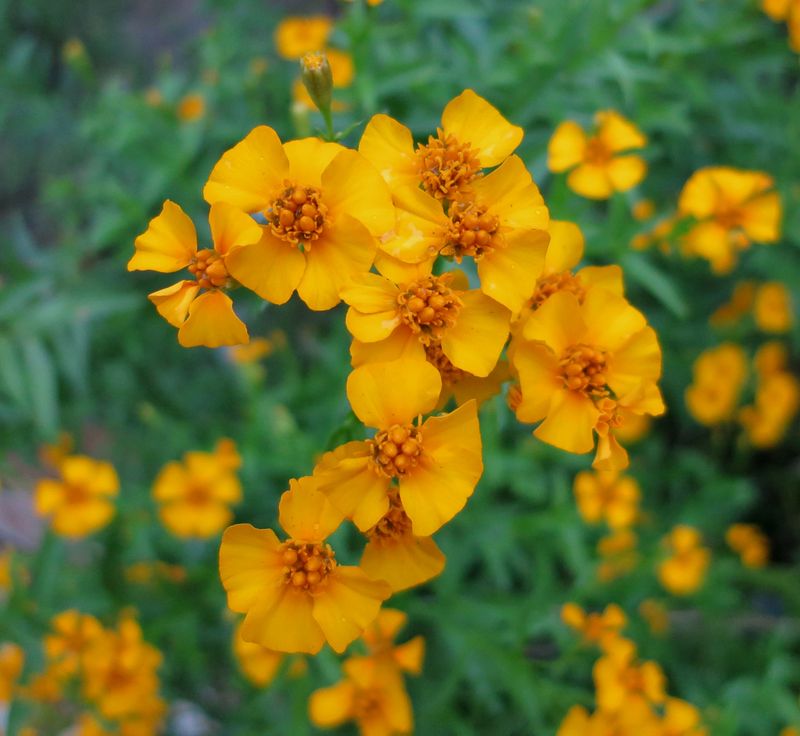
Adding Mexican mint marigold to your herb bed is a straightforward decision when you frame it correctly. Start with a healthy Tagetes lucida transplant from a local nursery, choose a spot with good drainage and at least several hours of direct sun, and water consistently through the first few weeks until the roots settle in.
After that, the plant asks for much less from you than most annual herbs.
Keep basil if you enjoy it. It produces fast, abundant harvests that Mexican mint marigold cannot match, and the two plants cover different flavor profiles.
Growing both gives you a seasonal herb for summer abundance and a perennial anchor that returns each year with minimal replanting effort.
Mexican mint marigold will not guarantee a harvest through every extreme Texas summer, but it brings a distinctive tarragon-like flavor, reliable perennial growth in suitable climates, and a low-water profile after establishment that earns it a permanent spot in a practical Central Texas herb garden. The best herb garden is usually the one that keeps producing with the least drama.