
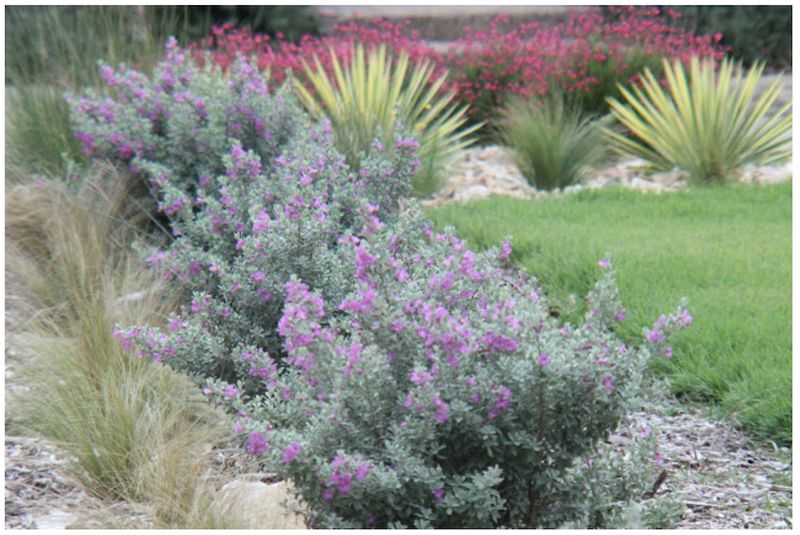
Most Texas patios in July feel more like a punishment than a retreat, but one native shrub quietly thrives through the worst of it while putting on a purple flower show that can stop you in your tracks. That plant is Texas sage, and if you have a sunny, well-drained spot outside, it deserves a serious look. Gardeners across the state have relied on it for decades because it asks for very little and delivers a lot, especially right after a good rain when its blooms open up and fill the air with a soft, sweet scent.
Meet Texas sage, the realistic patio candidate
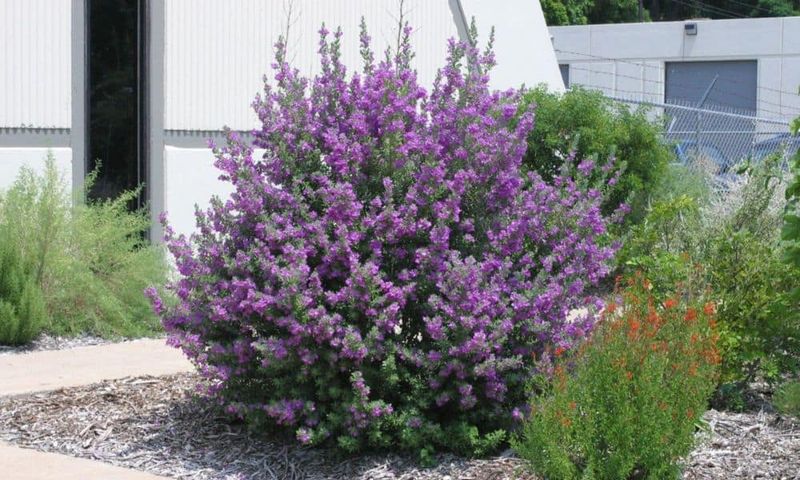
The plant this article has been building toward is Texas sage, a Texas-native shrub that goes by several names depending on where you grew up: cenizo, Texas ranger, silverleaf, and barometer bush are all common. Its botanical name is Leucophyllum frutescens, and that name is worth writing down when you shop, because it tells you exactly what you are buying. Texas A&M AgriLife’s rangeland plant database lists it as a native of Texas and neighboring regions, adapted to the dry, rocky, alkaline conditions that defeat most ornamental shrubs.
One important clarification before going further: Texas sage is not the culinary sage you dry for Thanksgiving stuffing. Culinary sage belongs to the genus Salvia, while Texas sage belongs to the figwort family. They share a common name and a vague aromatic quality, but they are entirely separate plants with different growth habits, care needs, and uses. Mixing them up at the nursery would be a costly mistake.
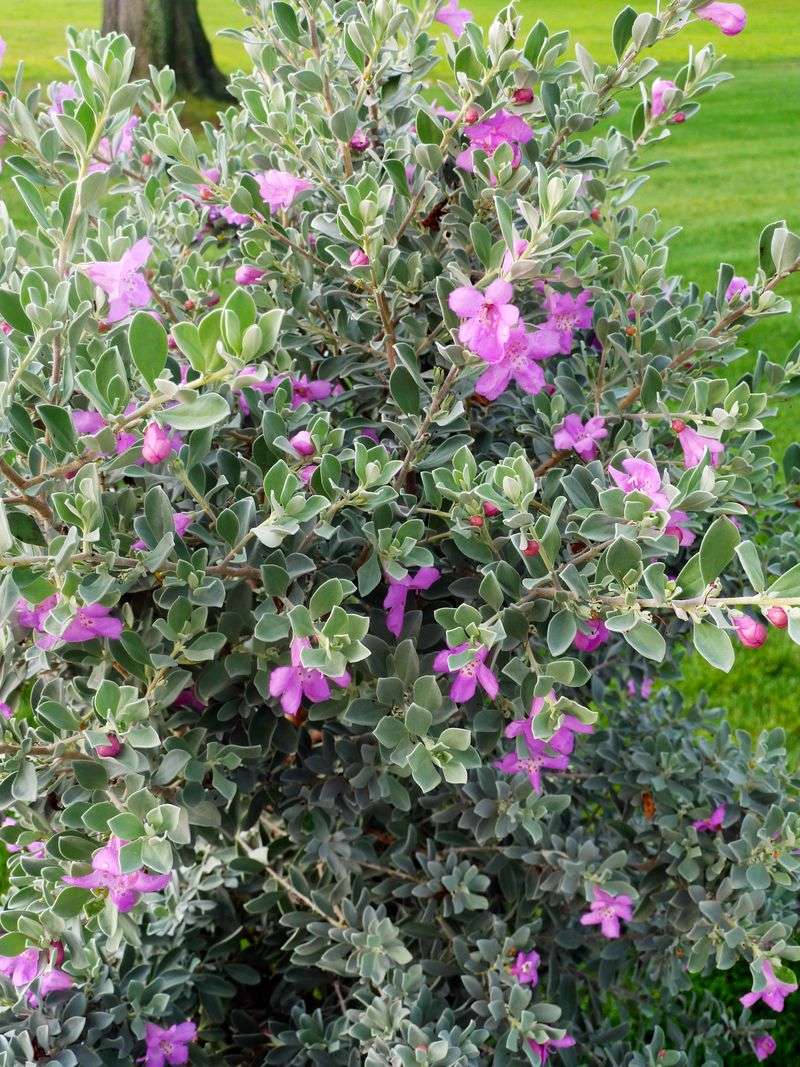
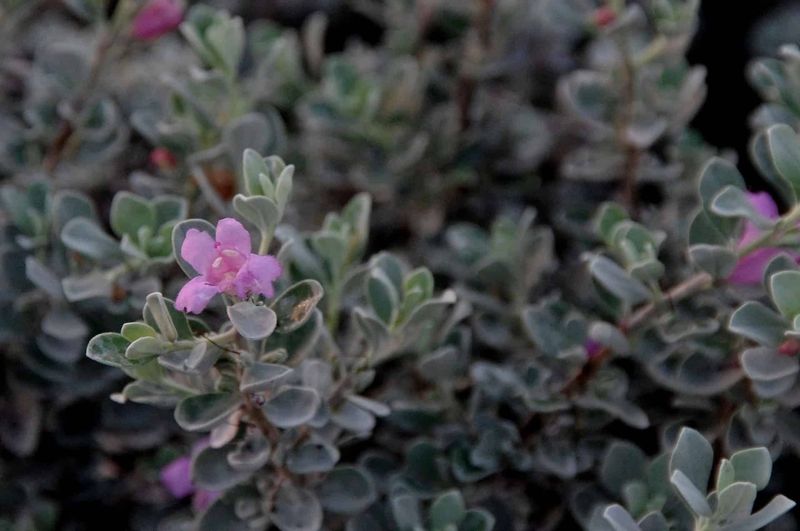
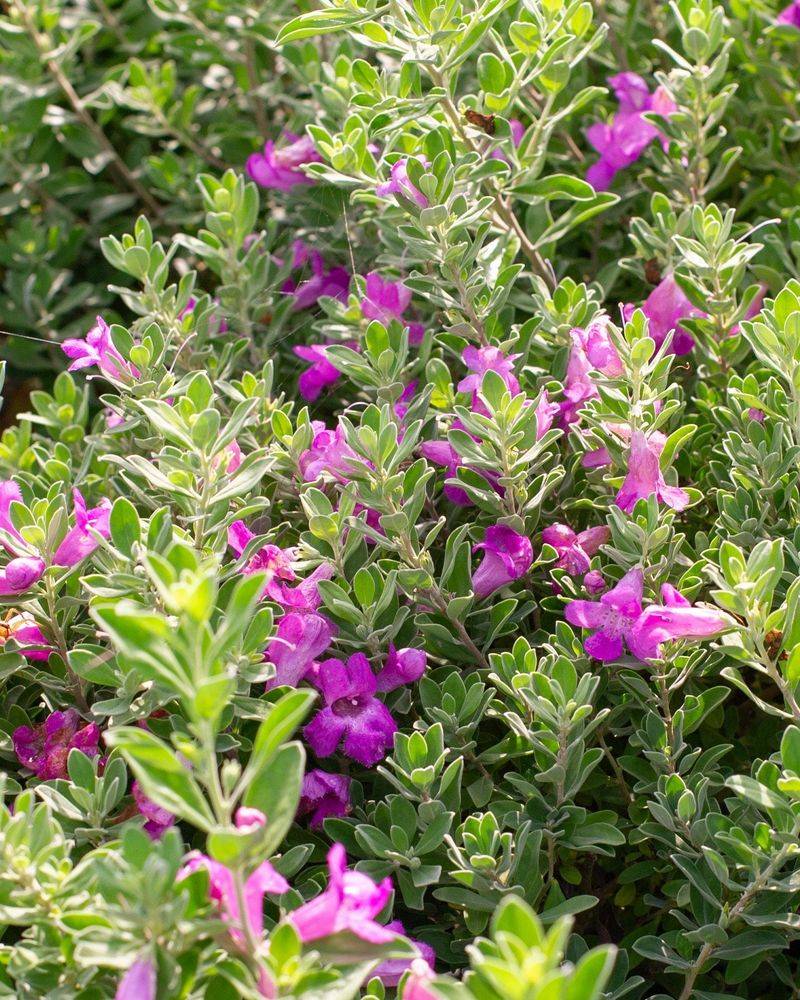
What Texas sage does offer is a combination of silver-gray foliage that looks good even when the plant is not in bloom, and seasonal bursts of tubular purple flowers that can carry a light, pleasant fragrance. The key word is “seasonal.” Texas Tech’s woody plant resource describes it as drought tolerant and well suited to low-irrigation landscapes, which is the real promise here: a shrub that fits a Texas summer without constant babying, while occasionally rewarding you with color and scent during its bloom episodes.
Why it handles hot Texas summers once established
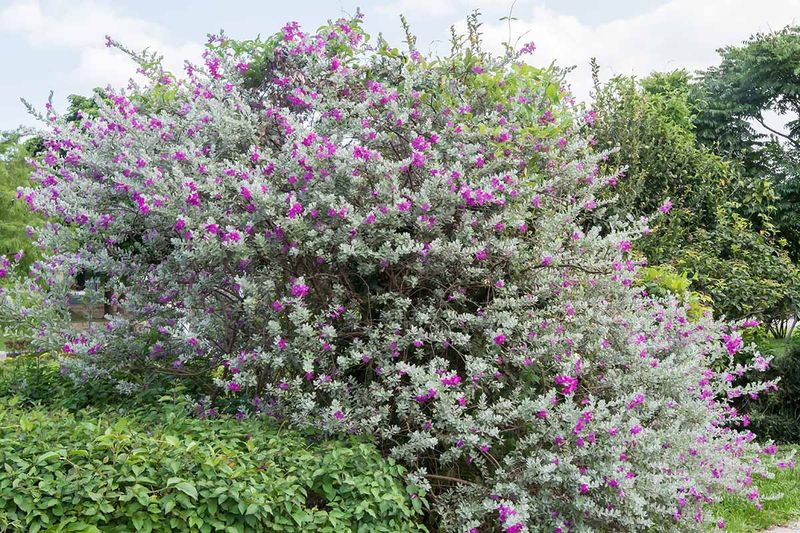
Texas sage is native to the Chihuahuan Desert region, which covers a large stretch of West Texas and extends into New Mexico. That origin tells you a great deal about what the plant expects from life: intense sun, alkaline or caliche-heavy soils, low rainfall, and wide temperature swings. Those are exactly the conditions that stress or kill many ornamental plants sold at big-box stores, but they are essentially the home environment for cenizo.
Texas Tech’s plant resources directory categorizes Texas sage as drought tolerant and appropriate for low-irrigation landscapes, which aligns with how it performs in established plantings across Central and West Texas. Once the root system has had a full growing season or two to spread into the surrounding soil, the plant can draw on moisture stored deeper than most annuals or shallow-rooted perennials can reach. That established root network is what gives it the staying power through a Texas summer that impresses so many gardeners.
The critical phrase there is “once established.” NC State Extension’s plant toolbox is clear that the plant needs full sun and sharply drained soil to perform well, and it still requires regular watering during its first season in the ground. A newly planted Texas sage sitting in a record heat wave without supplemental water is not a drought-tolerant plant yet; it is a stressed transplant that needs help. Even established plants benefit from a deep soak during prolonged extreme heat when rainfall has been absent for weeks.
Full sun is non-negotiable. Partial shade reduces flowering, weakens the plant’s compact form, and makes it more susceptible to problems. If your patio location gets fewer than six to eight hours of direct sun daily, Texas sage will struggle, and a different plant would serve you better.
Expect fragrance in rain-associated bloom bursts
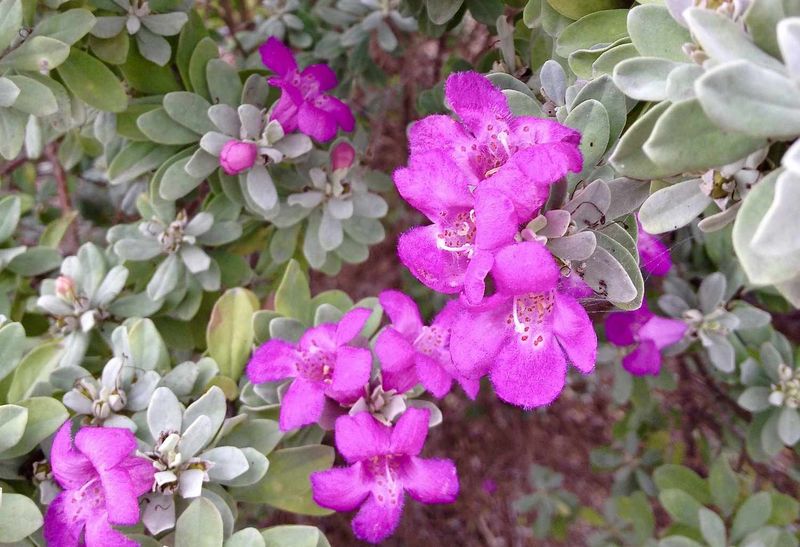
Gardeners who have grown Texas sage often notice the same thing: the plant seems to know when rain is coming. Clusters of small, tubular purple flowers open up after a good rainfall, sometimes within a day or two, and the blooms carry a soft, sweet scent that drifts across a patio or yard. That experience is real, and it is one of the most appealing things about the plant. Texas A&M AgriLife’s rangeland database documents the bloom period as running from May through October, which covers most of the Texas growing season.
That May-to-October window is a general range, not a promise that your specific plant will bloom continuously from spring through fall. Flowering is intermittent, and individual bloom events tend to be short, often lasting only a few days to a week or two before the flowers drop and the plant returns to its silver-foliage display. The association with rainfall is well established in horticultural literature: increased soil moisture commonly triggers a flowering response. The popular nickname “barometer bush” comes from this pattern, but it should not be taken to mean the plant has a built-in weather sensor.
What is actually happening is a physiological response to moisture, not a precise reading of atmospheric pressure.
Missouri Botanical Garden’s plant finder notes the flowers and their ornamental value, and Singapore’s National Parks flora database identifies a related cultivar, Leucophyllum pruinosum ‘Fragrant Sage,’ as producing extremely fragrant violet flowers, which suggests that fragrance intensity varies meaningfully by species and cultivar.
For the standard Leucophyllum frutescens, the honest expectation is this: when the plant blooms, which happens multiple times between May and October in a reasonably rainy year, the flowers can add a pleasant fragrance to your outdoor space. Dry years with infrequent rain may produce fewer bloom events. A plant in its first season may bloom less than a mature, well-established specimen. Climate, cultivar, site, and rainfall all shape what you actually experience.
Choose the right size for a patio
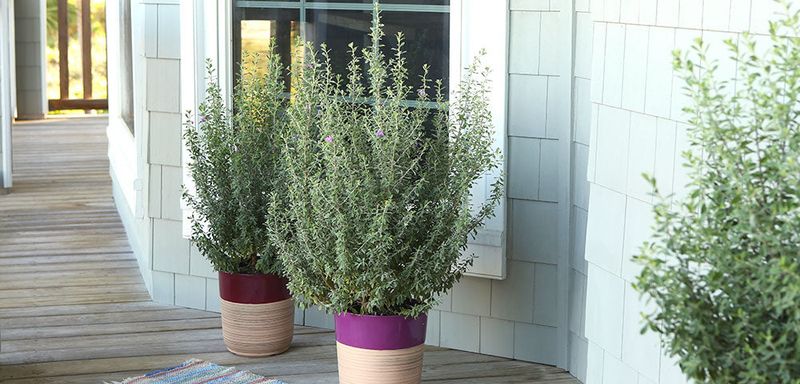
Standard Texas sage is not a small shrub. Missouri Botanical Garden’s plant finder describes the plant reaching significant landscape dimensions, and most established specimens in Texas yards grow to roughly 5 to 8 feet tall and nearly as wide. Putting a plant that size into a 12-inch decorative pot on your back porch is not a realistic plan. The roots will run out of room, the plant will stress, and you will spend the summer wondering why it looks terrible.
For a patio setting, the better approach is either to choose a compact cultivar bred for smaller dimensions or to commit to a genuinely large container, something in the 15- to 25-gallon range or bigger. Compact cultivars like ‘Green Cloud,’ ‘White Cloud,’ or ‘Compacta’ exist, and some nurseries carry dwarf selections that stay under 4 feet. NC State Extension’s plant toolbox covers several cultivar options, but mature sizes vary and are not always accurately labeled at retail nurseries. Ask specifically about the expected mature height and width before you buy, and look for the cultivar name on the tag rather than relying on a generic “Texas sage” label.
Growing Texas sage in a container does bring real benefits. You can position it right where you want the color and fragrance, move it to protect it during an unusual freeze, and control the soil mix more precisely than you can in a rocky yard. The tradeoff is that a container sitting on a reflective concrete or stone patio surface heats up faster and dries out faster than an in-ground planting. A large, light-colored container with excellent drainage will manage heat stress better than a dark or small one.
Build the sunny, sharply drained setup it needs
Getting Texas sage set up correctly from the start saves a lot of trouble later. The non-negotiables are full sun, sharply drained soil, and a container or planting site where water moves through quickly and does not pool around the roots. If you are planting in a container, use a mix that drains fast, something with perlite, coarse sand, or a cactus-blend component rather than a standard dense potting mix. Make sure every drainage hole is open and unobstructed before you plant.
NC State Extension’s plant toolbox notes that overwatering and poorly drained soil can cause root problems in Texas sage. That is a separate issue from cotton root rot, a soilborne fungal disease to which Texas sage may also be susceptible. Do not conflate the two: soggy soil causes general root stress and rot in many plants, while cotton root rot is caused by a specific pathogen, Phymatotrichopsis omnivora, that persists in alkaline Texas soils and can kill established plants regardless of watering habits. Both are worth knowing about, but they require different responses.
New plants need consistent moisture during establishment, which typically takes one full growing season. Water deeply and allow the soil to dry somewhat between waterings rather than keeping it constantly wet. Once the plant is established, shift to infrequent deep watering based on actual soil conditions, rainfall totals, and how the plant looks, not a fixed daily or weekly schedule. Texas Water Development Board guidance on water-efficient landscaping consistently recommends adjusting irrigation to actual plant and soil conditions rather than running a timer on autopilot.
Fertilizer is one area where less is genuinely more. Established Texas sage growing in typical Texas soil does not need routine fertilization. Several authoritative plant references advise against it, noting that excess fertility can encourage soft, weak growth. Skip the fertilizer unless a soil test reveals a specific deficiency, and let the plant do what it evolved to do in lean conditions.
Check humidity before you buy
Texas sage thrives where conditions mirror its native Chihuahuan Desert habitat: hot days, low humidity, infrequent rain, and soil that drains completely between wet periods. Move it into a humid Gulf Coast environment with warm nights, heavy summer rainfall, and soil that stays moist for days after a storm, and the plant faces a genuinely different challenge. NC State Extension’s plant toolbox qualifies its performance in wetter, more humid conditions, noting that drainage and site selection become especially critical in those regions.
Houston, Beaumont, Corpus Christi, and other Gulf Coast cities sit in a climate zone where summer humidity stays high, nighttime temperatures rarely drop enough to give plants a break, and heavy rainfall events can saturate soil for extended periods. Texas sage can survive in those areas with careful site selection, but it is working against its natural preferences rather than with them. A raised bed with amended, fast-draining soil or a large container where you control the moisture environment gives it a better chance than planting directly into a low-lying Gulf Coast yard.
Missouri Botanical Garden’s plant finder describes the plant’s preference for dry conditions and well-drained soils, reinforcing that excess moisture is the primary risk factor in humid climates. If you are in Central Texas or West Texas and your patio gets full sun with good air circulation, Texas sage is a natural fit. If you are on the coast and determined to try it, prioritize drainage above everything else and be prepared for the possibility that it performs less vigorously than it would in drier inland conditions.
One more humidity-related point for container growers everywhere: a pot sitting on a hot concrete patio in direct sun will heat and dry faster than an in-ground planting, which actually helps in humid regions by keeping the root zone drier. That same dynamic in a dry inland summer means the container may need water more often than you expect, so check the soil rather than guessing.
Water with local rules and plant conditions in mind
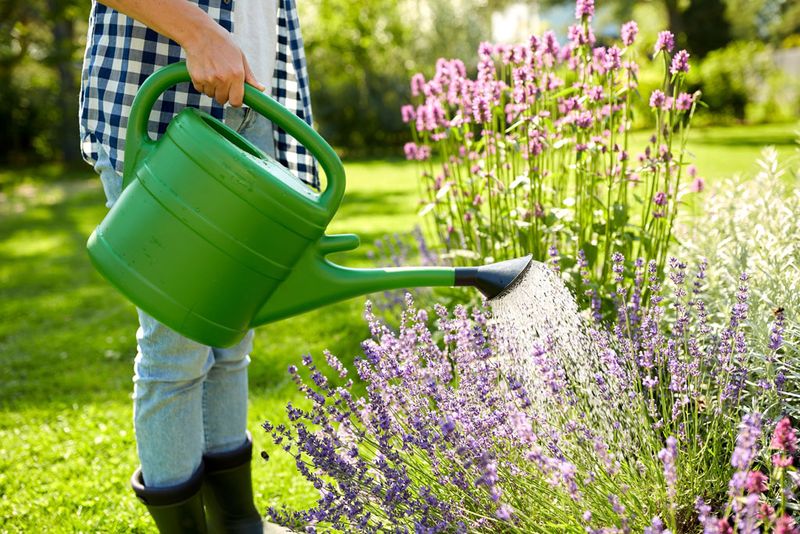
Drought tolerance is one of Texas sage’s genuine strengths, but it does not exempt you from thinking carefully about water. Every Texas city and utility district manages water restrictions differently, and those rules change based on reservoir levels, drought declarations, and seasonal demand. Before you set any irrigation schedule, check your local city or utility website for current watering-day restrictions and any seasonal guidelines that apply to your address. Texas Water Development Board water-wise irrigation guidance recommends native and adapted plants, efficient irrigation methods, and mulch as the foundation of an outdoor water-conservation plan, and it consistently emphasizes adjusting irrigation when rainfall has provided enough moisture.
For Texas sage specifically, that means pausing or skipping irrigation after a meaningful rain event rather than running a timer on schedule regardless of conditions. A plant that just received an inch of rain does not need supplemental water the next morning. Conversely, a container plant on a reflective patio that has not had rain in two weeks during a July heat stretch needs you to check the soil and water if it is dry several inches down.
Mulch helps in-ground plantings retain moisture between waterings and moderates soil temperature. A 2- to 3-inch layer around the base of the plant, kept back from the main stem, can meaningfully reduce how often you need to water during dry stretches. The Texas Water Development Board’s rainwater harvesting manual also highlights mulch and efficient irrigation as practical tools for reducing outdoor water use. Container plants cannot benefit from ground-level mulch in the same way, so they require more frequent hands-on monitoring, especially during the hottest weeks of the year.
Match the plant to the fragrance you actually want
Texas sage earns its place on a sunny Texas patio when you want a low-maintenance, heat-adapted native shrub that brings seasonal color and intermittent fragrance rather than a plant that perfumes the air every single day. Texas A&M AgriLife’s rangeland plant database confirms its May-through-October bloom window and its adaptation to dry Texas conditions, and NC State Extension’s plant toolbox rounds out the practical care picture. Choose a compact cultivar, use a large container or a well-drained in-ground site in full sun, water appropriately during establishment and extreme heat, and set realistic expectations about rain-triggered blooms rather than nonstop scent.
If your primary goal is strong, consistent foliage fragrance that you can enjoy any time you brush the leaves, a different plant may fit better. Lemon verbena (Aloysia citriodora) delivers an intensely lemony scent from its leaves and flowers and grows well in containers, making it a strong patio-fragrance option. It is native to South America rather than Texas, so it does not carry the native-plant identity that many Texas gardeners value. The two plants serve different goals, and knowing which goal matters more to you is the most useful thing you can take away from this article.
Texas sage is a genuinely tough, beautiful, Texas-rooted shrub; it just smells best when the rain comes.