
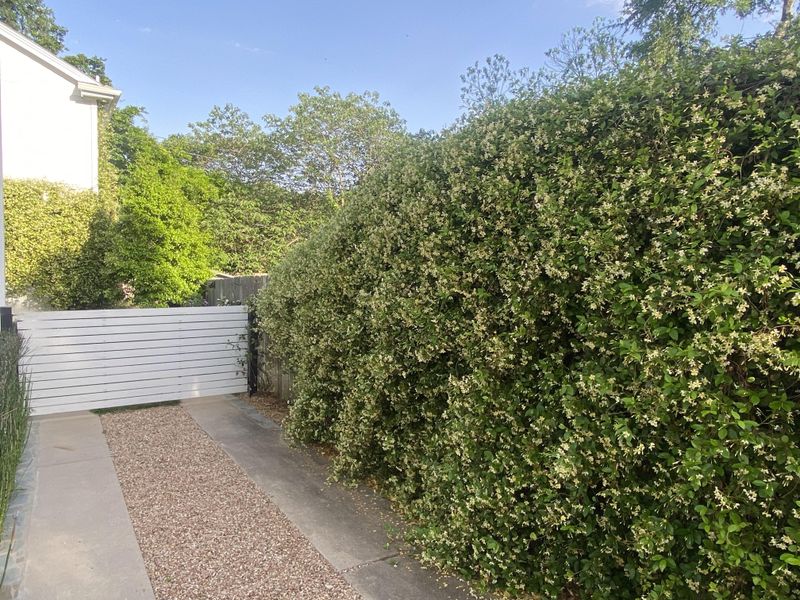
A plain wooden or chain-link fence can feel like a missed opportunity, especially when Central Texas summers bake everything into submission. Star jasmine, also called Confederate jasmine, is an introduced vine that Central Texas gardeners have leaned on for years to soften bare fences with glossy evergreen leaves and intensely fragrant white flowers each spring.
Getting that payoff takes the right setup, realistic patience, and a clear picture of what this plant can and cannot do in your yard.
Star jasmine is a strong Central Texas fence choice
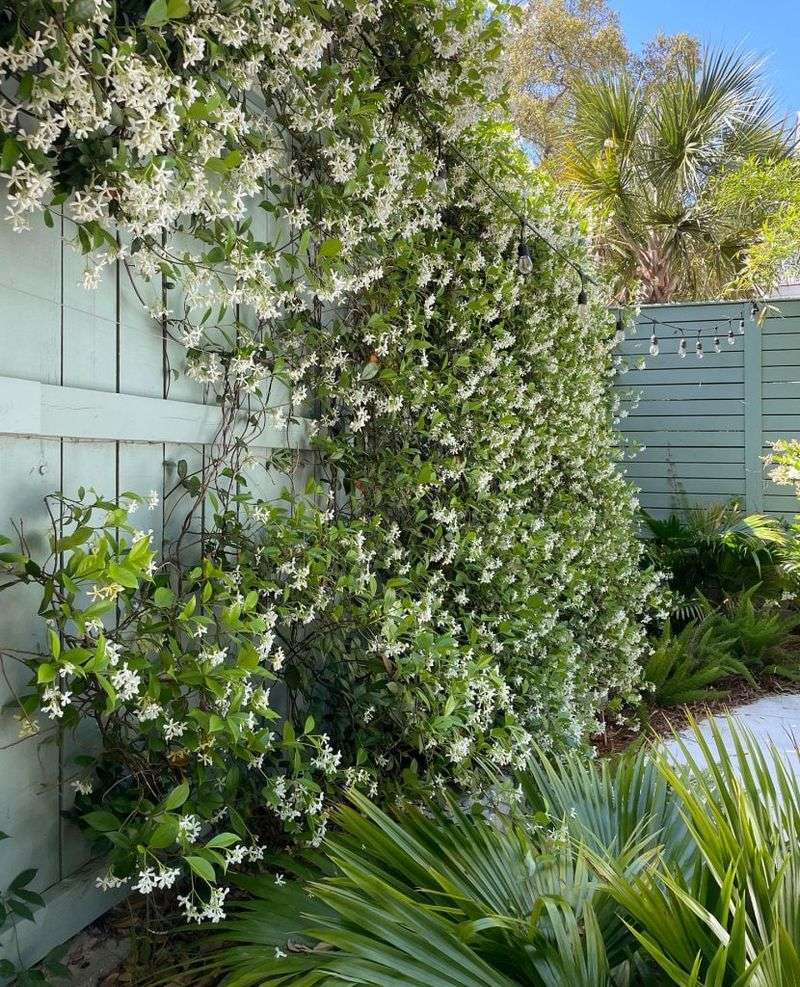
Most people first encounter star jasmine by smell before they even see the plant. That sweet, almost honeyed fragrance drifting from a neighbor’s fence is coming from Trachelospermum jasminoides, a twining vine commonly sold under the names star jasmine and Confederate jasmine.
Both names refer to the same plant, and neither name should be confused with true jasmines in the genus JasminumTrachelospermum. The Integrated Taxonomic Information System places it firmly in its own genus, , native to East Asia rather than Texas.
What makes it appealing for a Central Texas fence is a combination of traits that hold up in regional conditions. The foliage stays dark green and glossy through most of the year in suitable climates, giving you a leafy backdrop even when the vine is not flowering.
Growth is twining, meaning the stems wrap and wind through a support structure rather than clinging with adhesive pads, which makes it genuinely fence-friendly. Austin’s official plant guide lists it as a low-water vine reaching about 20 feet tall and 12 to 16 feet wide, and Texas A&M’s Earth-Kind plant list includes Confederate jasmine among vines adapted to North and Central Texas.
The flowers are small, white, and pinwheel-shaped, and they appear concentrated in spring or late spring. The fragrance during that window is the main event.
This article recommends star jasmine as a practical hero vine for a leafy, flowered fence, with the honest understanding that the visual payoff is a softened fence with seasonal blooms and garden-scale scent during flowering, not a year-round perfume machine.
When can the fragrance reach beyond the fence?
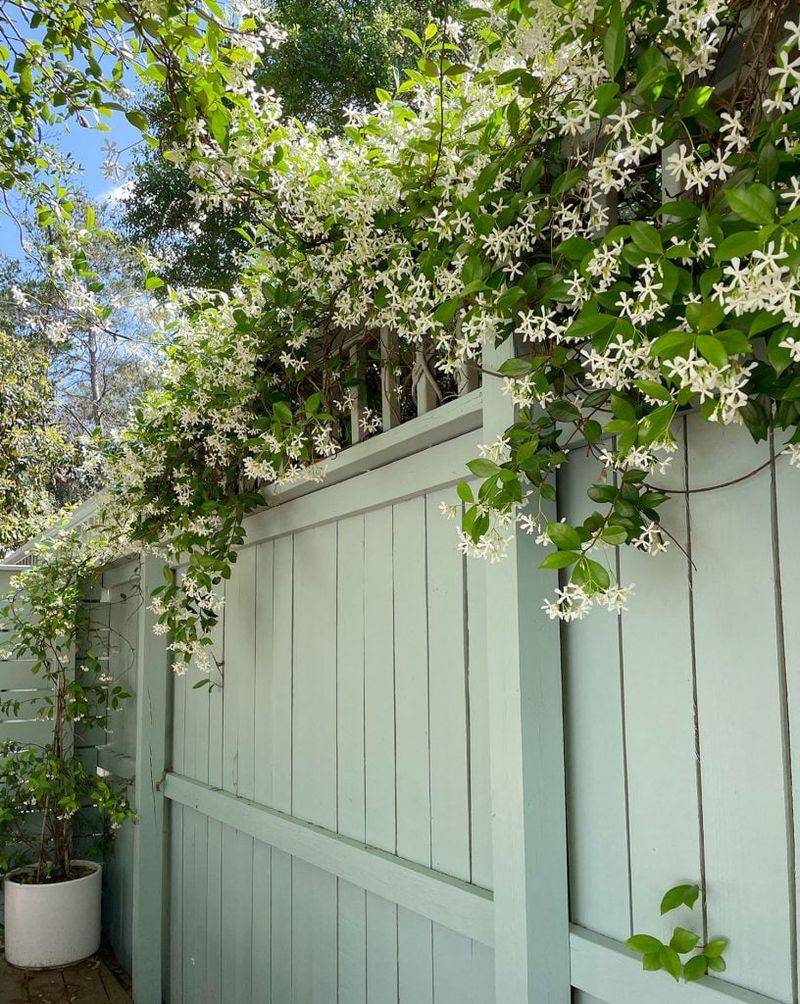
Spring is the season star jasmine gardeners wait for. The main flowering window falls in spring to late spring, and some sources note sporadic flowers can appear through parts of summer, though the main show is concentrated early.
University of Florida extension documentation confirms that flowering is primarily a spring event, and anyone expecting the scent to hang in the air from May through September will be disappointed when the bloom flush fades.
The fragrance itself is genuinely powerful when conditions cooperate. Clemson’s home and garden extension describes Confederate jasmine as highly fragrant, capable of perfuming the surrounding garden during bloom.
That wording is accurate but worth unpacking. “Perfuming the garden” means the scent is noticeable in the nearby outdoor space, not that a single plant will reliably blanket every corner of a large Central Texas yard from fence to back door.
Several factors shape how far and how strongly the fragrance travels. Bloom quantity matters most: a vine carrying hundreds of open flowers produces far more scent than one with sparse clusters.
Wind direction is the delivery system. On a still, humid morning, fragrance pools near the fence.
When a prevailing breeze moves toward your patio, seating area, or an open window, the scent carries with it. Temperature plays a role too, as warm air tends to volatilize floral compounds more readily than cool nights.
University of Florida’s gardening solutions resource notes that star jasmine is valued for its intense fragrance, and NC State’s plant database similarly highlights fragrance as a key ornamental feature. The practical takeaway is to plant where the scent will reach people.
Position the vine along a fence that borders a patio, a frequently used path, or a window you keep open in spring, and place it on the upwind side of those spaces if you can. Several mature vines trained along the full fence length will create a more expansive fragrant effect than a single plant tucked into one corner.
Give the twining vine a structure to climb
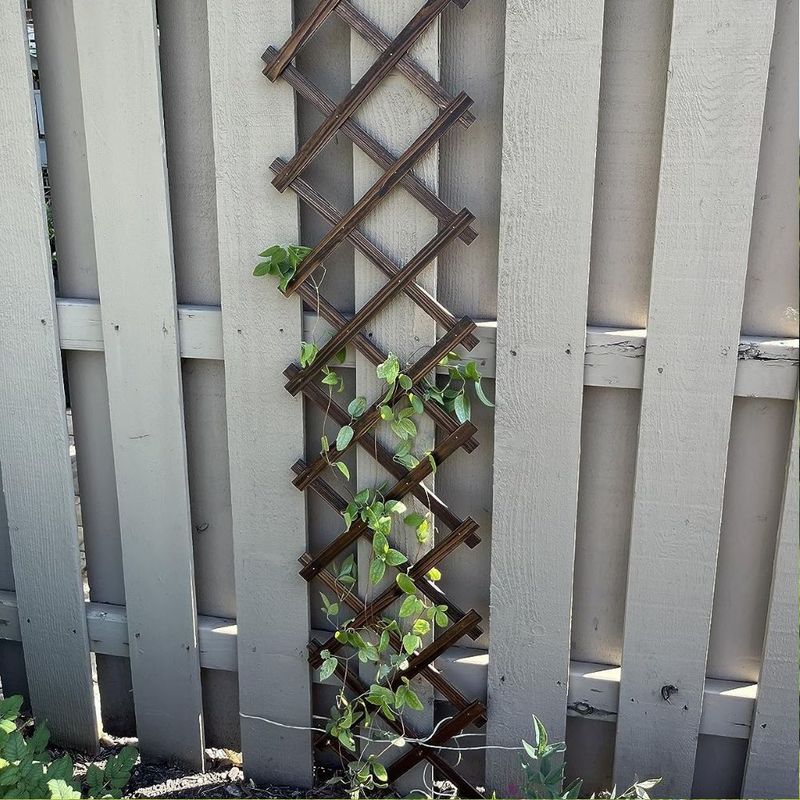
Star jasmine will not climb a bare brick or stone wall on its own. Unlike clinging vines that use adhesive holdfasts or suction-cup-like pads, this one twines, meaning its stems wrap around and through anything narrow enough to grip.
A fence with gaps, rails, horizontal wires, chain-link mesh, or a trellis panel attached to a masonry surface gives the vine exactly what it needs. University of Florida’s ornamental plant guide confirms that star jasmine works well on fences, trellises, arbors, and posts, and NC State’s plant profile lists similar support types as appropriate.
Chain-link fencing is one of the most forgiving options because the open mesh gives young stems constant contact points. Wood privacy fences with horizontal rails work well if you add wire, netting, or trellis panels between the rails to give stems something to thread through.
Without those additions, the vine may pile up at the base rather than spread across the fence face.
Young plants need your help getting started. After planting, weave the longest stems through the lowest fence openings or tie them loosely to horizontal wires with soft plant ties.
The goal is to spread stems horizontally across the fence rather than letting everything grow straight up and cluster in one spot. Austin’s plant guide describes star jasmine as appropriate for fences, trellises, and screens, which reflects how the plant performs best when given deliberate horizontal direction from the start.
Checking the stems every few weeks during the growing season and redirecting any that are heading the wrong way takes only a few minutes and pays off in more even coverage later.
Sun, drainage, and first-season water shape performance
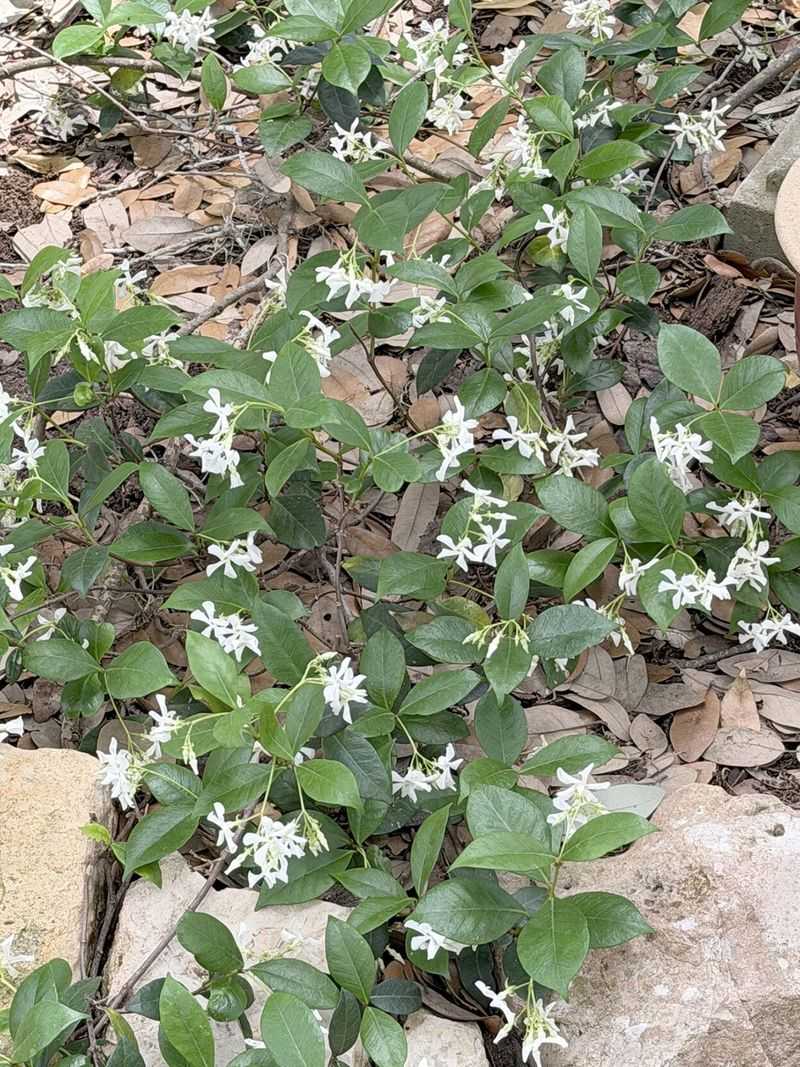
Placement decisions made at planting time determine how well star jasmine flowers and fills in over the years. The vine tolerates a range from full sun to partial shade, but more sun generally means more flowers.
Morning sun with some afternoon shade in the hottest Central Texas spots is a common and practical arrangement. Where the vine grows in heavy shade, it may stay green but produce fewer blooms, and Austin’s plant guide specifically warns that the plant can become aggressive in shady areas, sending vigorous growth into spaces where it is harder to manage.
Soil drainage is non-negotiable. Star jasmine wants fertile, well-drained soil, and standing water around the roots after rain or irrigation will cause problems faster than almost any other stress.
If your yard has heavy clay that holds water, amend the planting area with compost and consider raising the planting bed slightly to improve drainage before the vine goes in. NC State’s plant profile recommends fertile, well-drained soil and notes that the plant becomes drought-tolerant once established.
That phrase “once established” carries real weight in Central Texas. A newly planted vine sitting in July heat needs consistent moisture to push roots into surrounding soil.
Skipping irrigation during the first summer because the plant is labeled low-water or drought-tolerant can set growth back significantly or kill the plant outright. Texas A&M’s gardening guidance underscores the importance of adjusting irrigation to account for soil type, weather, and plant age rather than following a single rigid schedule.
Once the vine has rooted well and pushed substantial new growth, usually after its first full growing season, it can handle drier stretches much better. At that point, Austin classifies it as a low-water plant, which aligns with the water-restriction reality many Central Texas homeowners face.
Getting through that first season with enough consistent water is the bridge between a struggling transplant and a self-sufficient vine.
Build the screen with patience, spacing, and pruning

Bare fence to leafy screen is not a one-season project. A newly planted star jasmine will spend its first year putting energy into root development rather than dramatic top growth, and that is exactly what you want it to do.
Expecting a dense green wall by fall of the planting year sets up frustration. Patience in the first two seasons pays off once the roots are established and the vine starts pushing vigorous growth.
Spacing plants appropriately along the fence gives you a realistic path to eventual coverage. Texas landscape guidance has listed Confederate jasmine at roughly 4-foot spacing for fence coverage, while Austin’s plant guide gives a mature spread of 12 to 16 feet per plant.
Treat both figures as planning references, not promises. Actual spread depends on sun exposure, soil quality, watering, winter damage, and how consistently you manage the growth.
A plant in a shady corner with poor drainage will not match a well-watered specimen in full sun.
Pruning is the tool that turns a vigorous vine into an even screen rather than a tangled mass. Extension guidance on star jasmine maintenance supports pruning after the flowering period ends, which in Central Texas typically means late spring or early summer.
Cutting back after bloom rather than before it means you will not accidentally remove the buds that carry next year’s flowers. NC State’s profile describes the plant as vigorous and responsive to pruning, and University of Florida’s fact sheet confirms that regular trimming keeps growth in bounds.
When you prune, look for sections of fence that are still thin or bare. Instead of cutting those stems back, redirect them horizontally across the gap and weave them into the support structure.
Redirecting rather than removing is the fastest way to fill in uneven patches. Stems that have grown too far beyond the fence edge or are piling up in a dense clump at one end are the ones to trim back, which channels the plant’s energy into the areas that need it most.
Freezes and stress can interrupt an evergreen screen
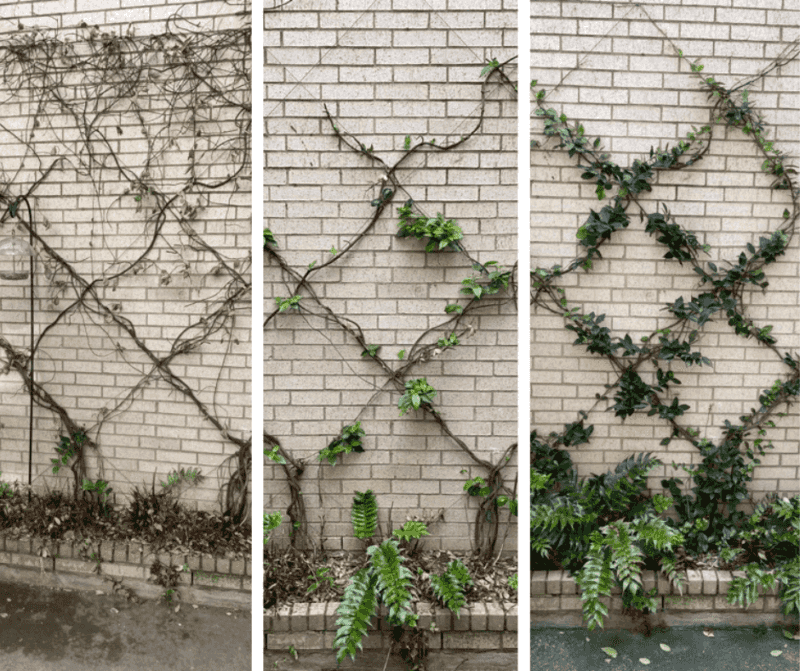
Calling star jasmine evergreen is accurate in suitable conditions, but Central Texas winters occasionally push past what the plant handles without complaint. Hard freezes can brown the foliage and damage young growth, particularly on vines that are newly planted, growing in exposed positions without wind protection, or already stressed from drought.
The vine often recovers as temperatures rise in spring, but recovery is not guaranteed, and the fence may look ragged for weeks or months after a damaging freeze. Extension Q&A on freeze recovery for star jasmine reflects exactly this pattern of damage followed by gradual regrowth rather than immediate rebound.
UC Davis plant information also notes cold sensitivity as a factor in how the plant performs in marginal climates, and Texas A&M’s plant selection guidance lists star jasmine among vines adapted to the region without suggesting it is fully freeze-proof. Winters like the 2021 freeze event remind Central Texas gardeners that even adapted plants can take a serious hit in extreme cold.
Freeze damage is not the only reason a screen develops gaps. Shade, drought stress, poor support, and slow establishment all contribute to bare areas.
A vine growing on a north-facing fence that gets little direct sun may stay thin even without any freeze damage. One that went through a dry summer without adequate establishment watering may have lost roots and show it in sparse coverage the following spring.
On the wildlife side, star jasmine flowers can attract bees and other pollinators during bloom, which is a genuine landscape benefit. That said, the plant is introduced from East Asia, as its taxonomic record confirms, and it should not be marketed as a native wildlife plant.
It does not provide the same ecological relationships that a Texas-native vine would offer to local insects, birds, and other wildlife. NC State’s plant database notes pollinator attraction as an ornamental benefit without overstating the ecological role.
Carolina jessamine is a different vine
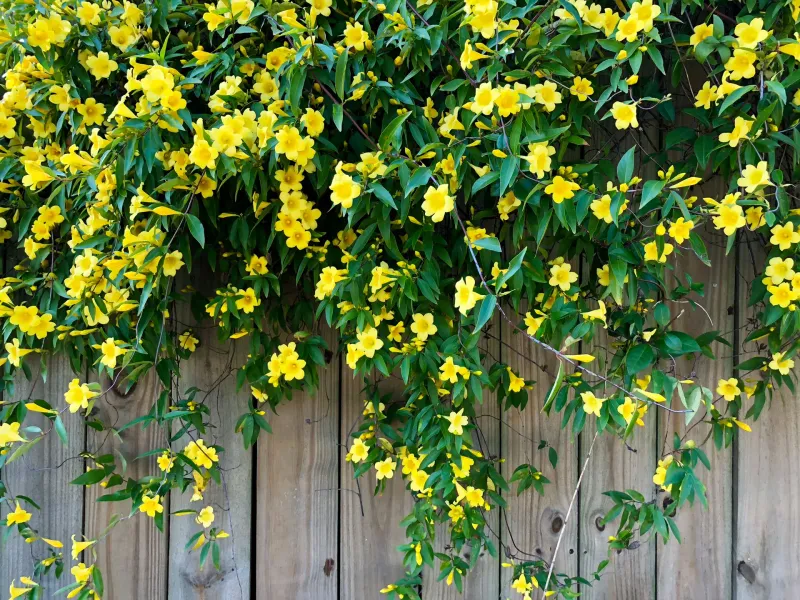
Garden centers in Central Texas sometimes shelve Carolina jessamine near star jasmine, and the names get mixed up in online searches and casual conversation. They are completely different plants.
Carolina jessamine is Gelsemium sempervirensTrachelospermum jasminoides, a Texas-native vine with yellow, tubular, fragrant spring flowers. Star jasmine is , introduced from East Asia, with white pinwheel-shaped flowers.
The two share a flowering season and a love of fence structures, but that is where the similarities end.
Austin’s plant guide for Carolina jessamine classifies it as a medium-water plant, which puts it in a different irrigation category than star jasmine. Texas SmartScape’s plant search entry confirms the medium-water classification and its status as a Texas native, which means it offers ecological relationships with local wildlife that an introduced ornamental cannot replicate.
The toxicity picture for Carolina jessamine is serious and well-documented. Austin’s toxic plant resource identifies it as poisonous, and a University of Florida guide to highly toxic landscape plants lists Carolina jessamine among plants that present serious ingestion risks.
NC State’s plant profile for Gelsemium sempervirens reinforces that all parts of the plant are poisonous if ingested. Anyone planting Carolina jessamine needs to handle that toxicity information as carefully as they would with any other landscape plant that poses an ingestion risk.
For the fence-screening goal this article addresses, star jasmine is the match: evergreen foliage in suitable conditions, white fragrant flowers, and a growth habit suited to the fence structures most Central Texas homeowners already have. Carolina jessamine is a worthwhile native plant in its own right, but it is not a substitute name or a swap-in option for what this article recommends.
Whichever vine you choose, handle plant material carefully and keep both out of reach of children and pets that might chew on leaves or stems.
Plant star jasmine where spring fragrance matters
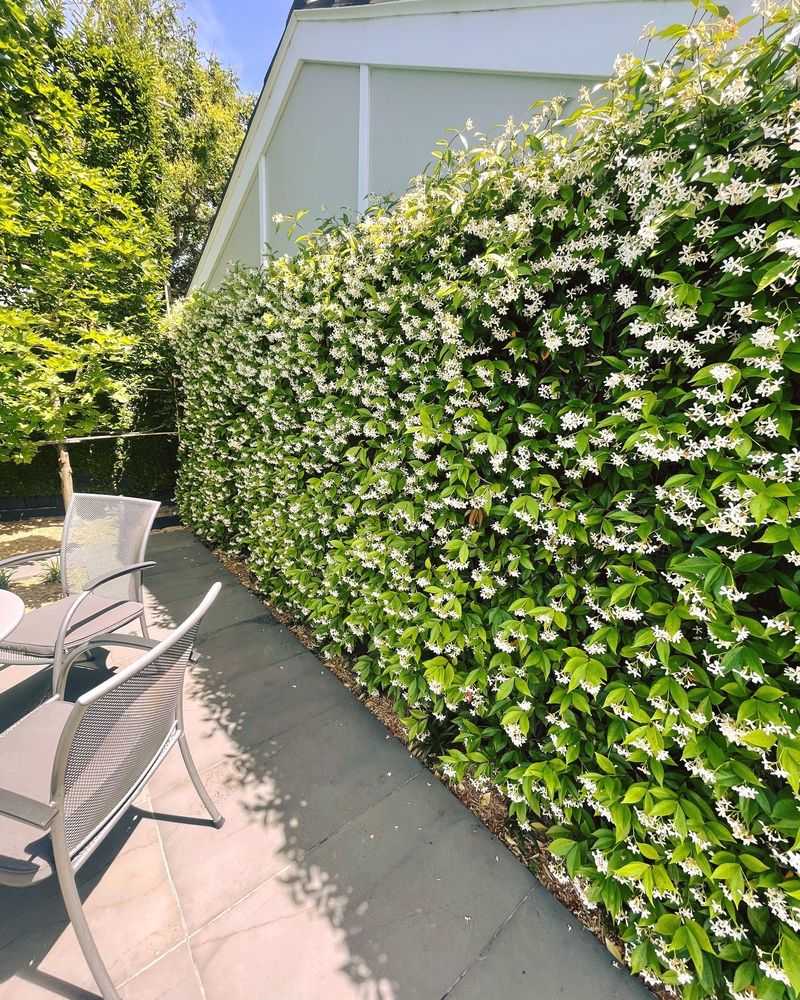
The clearest path to the fragrant fence experience this vine can deliver starts with placement. Put star jasmine where the spring bloom will actually reach people: along a fence bordering a patio, beside a frequently used side gate, or under a window you open on warm spring mornings.
Mature, well-placed plantings can scent nearby parts of a Central Texas yard during bloom while screening a plain fence with evergreen foliage in suitable conditions, and that is an honest and genuinely satisfying payoff.
Before planting, confirm you have a support structure the vine can twine through, well-drained soil, and a location that gets enough sun for good flowering. Commit to consistent irrigation through the first growing season, then ease back as the vine establishes.
University of Florida’s star jasmine guide and Austin’s plant profile both point to the same combination of good drainage, adequate light, and support as the foundation for a healthy planting. NC State’s plant database identifies ingestion as a safety concern, so keep the vine out of reach of children and pets that might chew on it, and wash your hands after handling stems that release milky sap when cut.
Prune after the flowers fade each year to keep the vine in bounds and redirect growth into thin spots. A fence planted with star jasmine is a multi-year project, but a mature planting in a well-chosen spot earns its place every spring when that first wave of white flowers opens and the scent drifts across your yard.