
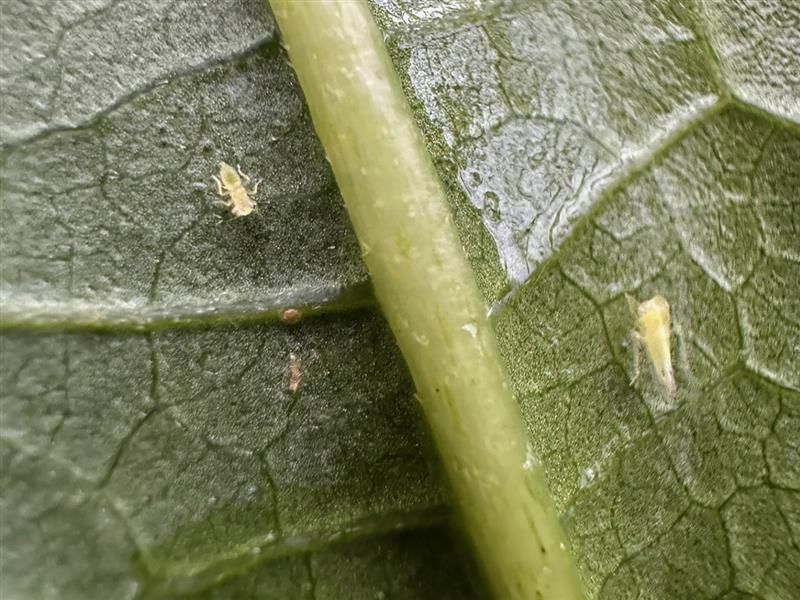
A tiny leafhopper called the two-spotted cotton leafhopper has been officially detected in Texas, and state agriculture officials are urging gardeners to pay close attention. This pest, also known as cotton jassid or okra leafhopper, feeds on many of the vegetables and ornamentals Texans grow during the long warm season, including okra, eggplant, tomatoes, peppers, and hibiscus.
Knowing what to look for, how to inspect your plants, and who to call if something looks wrong could make a real difference for your garden this season.
Texas has detected an emerging pest, not a statewide garden outbreak
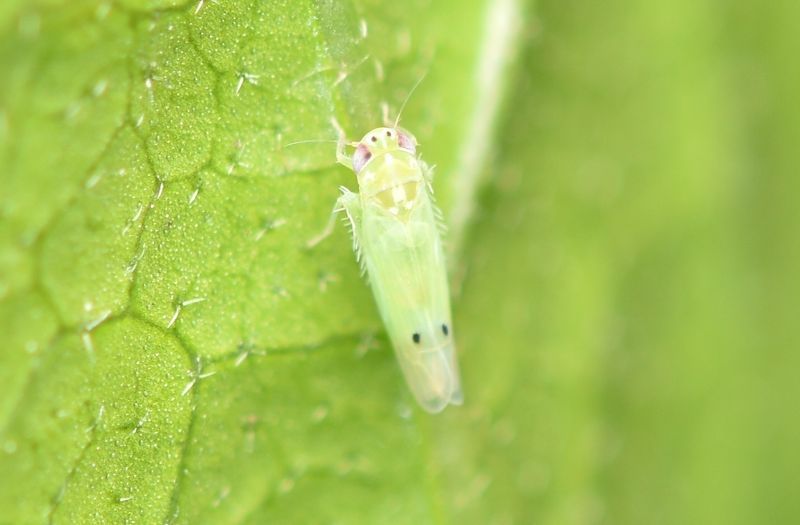
State agriculture officials and Texas A&M AgriLife researchers have confirmed the presence of a small but serious leafhopper called Amrasca biguttula, commonly known as the two-spotted cotton leafhopper, cotton jassid, or okra leafhopper. According to the Texas Department of Agriculture pest alert, confirmed detections in Texas have been linked primarily to imported ornamental hibiscus plants moving through retail nurseries, along with detections in cotton.
The quarantine currently covers Cameron, Grimes, Fort Bend, and Wharton counties, though that list can change and should be verified before you take any action involving plant movement.
That said, confirmed detections in specific counties are not the same as a statewide outbreak in backyard vegetable gardens. Texas officials and AgriLife are focused on surveillance, containment, and getting gardeners and nursery operators to recognize the pest early.
The goal right now is to limit artificial spread, which most often happens when infested plant material is purchased and moved without inspection.
The pest’s arrival in Texas fits a broader regional pattern. Texas A&M AgriLife’s cotton jassid update notes that the insect was detected in Puerto Rico in 2023 and Florida in 2024, then spread to several southeastern states before reaching Texas in 2025.
That movement history shows how quickly the pest can travel on nursery stock, which is exactly why early inspection, careful sourcing, and prompt reporting matter so much right now. Home gardeners in Texas don’t need to panic, but they do need to pay attention, especially if they grow any of the host plants this insect prefers.
What cotton jassid looks like
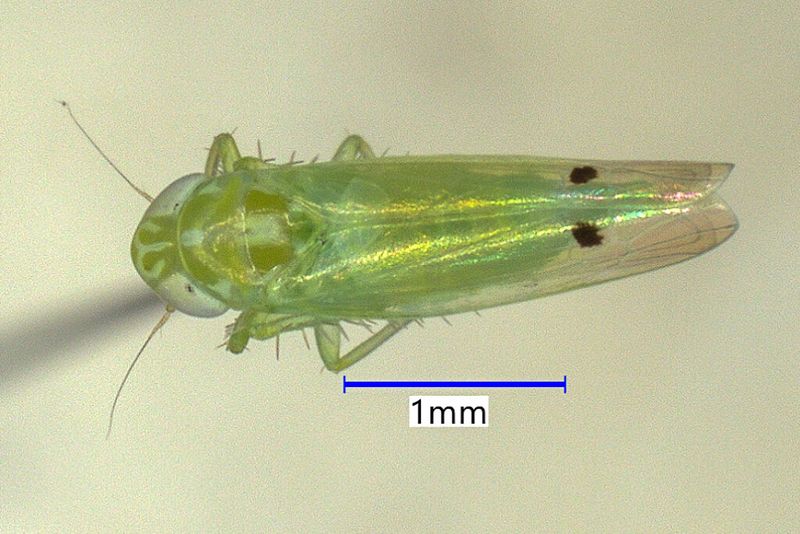
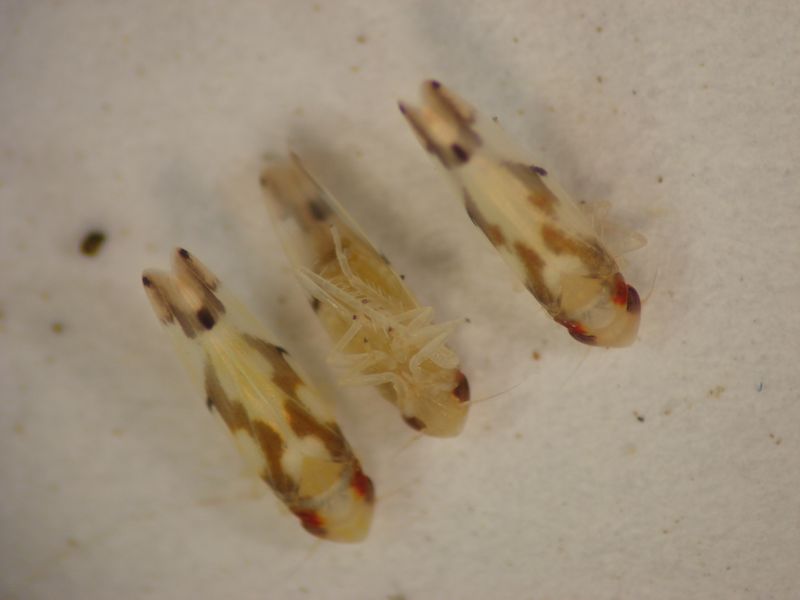
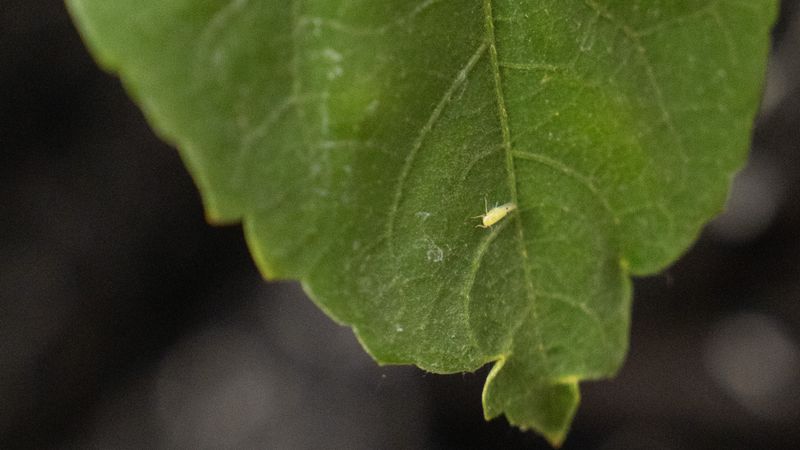
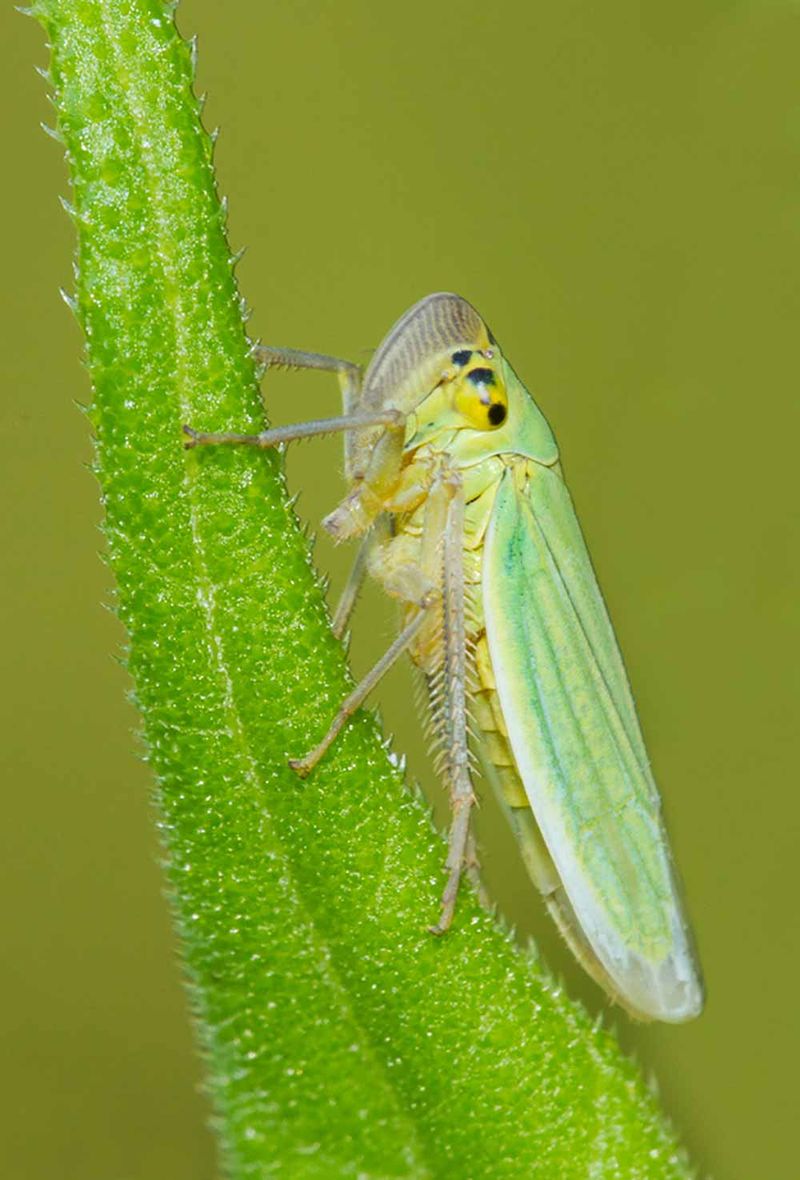
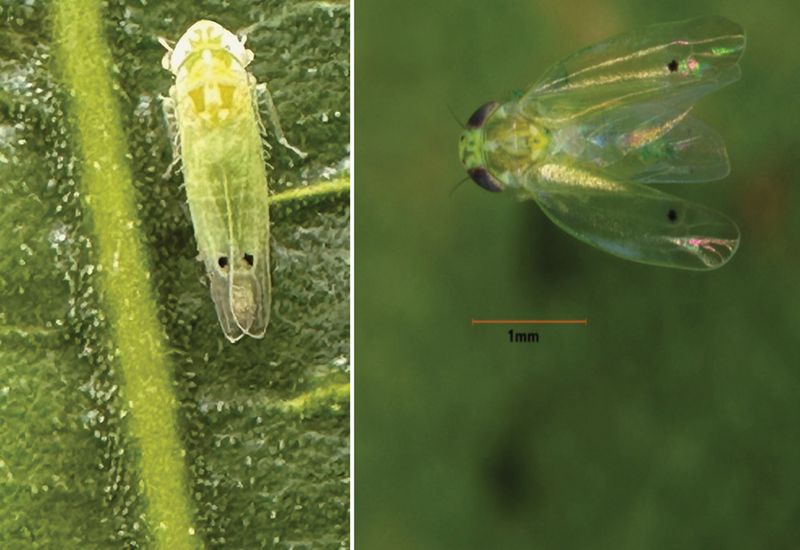
Spotting cotton jassid takes patience because these insects are genuinely small. Adults measure roughly 2 to 3 millimeters long and are pale green with a narrow, wedge-shaped body.
Some adults show dark spots on the forewings and head, which is where the “two-spotted” name comes from, but those markings can be faint or even absent altogether, making a quick glance unreliable as a screening method.
Nymphs are even harder to pin down. They are wingless, pale green, and tiny enough to be mistaken for debris or discoloration at first.
One behavioral clue is useful: nymphs often move sideways or drop off the leaf when disturbed rather than flying away. Texas A&M AgriLife’s nursery and landscape professional guide describes this lateral movement as a helpful field clue during hands-on inspections.
Here is where caution matters most: several native North American leafhoppers share the same general color and shape as cotton jassid. According to the USDA APHIS cotton jassid screening aid, authoritative identification of an adult male requires examination of the male genitalia by a specialist, and molecular testing is another option.
Nymphs simply cannot be confirmed by appearance alone. Photograph any insect you suspect, note the plant it was found on and the location, and then contact your county Extension office or the Texas Department of Agriculture before drawing conclusions.
Visual resemblance is a reason to investigate further, not a reason to begin treatment.
Hopperburn reveals the insect’s feeding damage
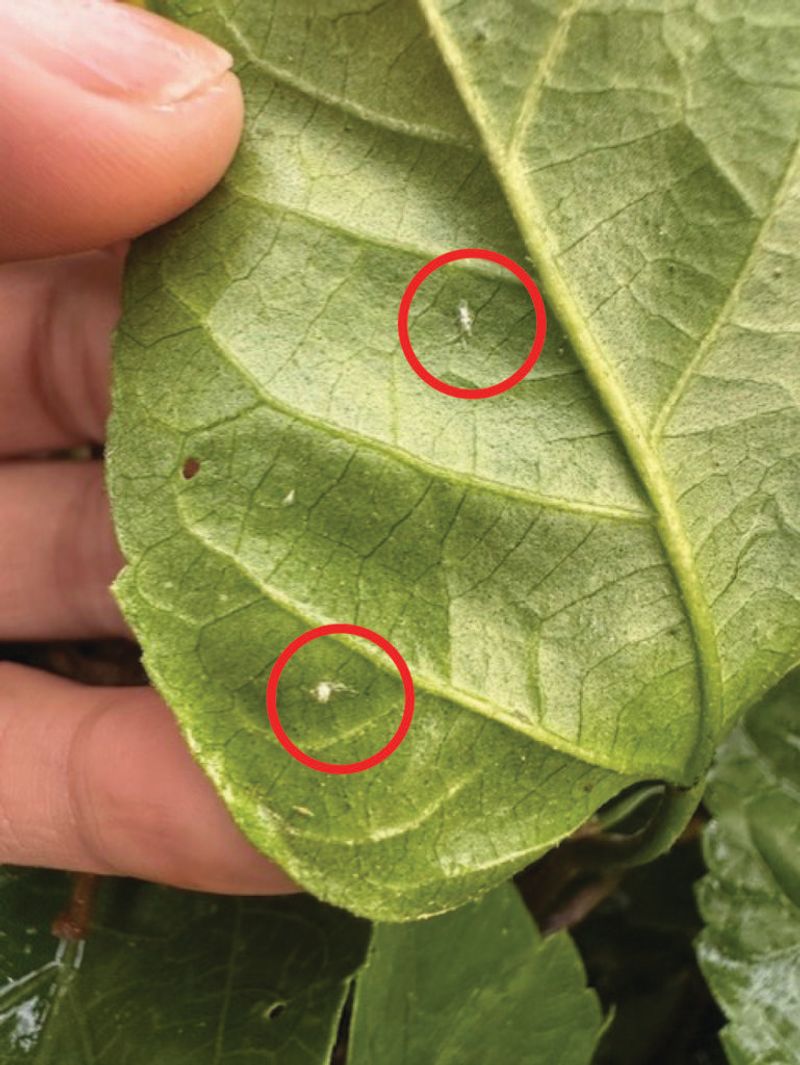
Before you ever spot an insect, the leaves on your plants may already be telling you something is wrong. Cotton jassid feeds by piercing leaf tissue and extracting cell contents, and the resulting damage pattern is called hopperburn.
The Texas Department of Agriculture’s pest alert page describes hopperburn symptoms that include yellowing, upward curling, reddening or bronzing, browning, necrosis, wilting, leaf drop, and stunting. Damage can appear before gardeners ever find the insects themselves, which means symptom recognition is a useful first trigger for a closer look at leaf undersides.
The tricky part is that hopperburn does not have a unique appearance. Upward-curling, yellowing, or bronzing leaves are also associated with drought stress, nutrient deficiencies, spider-mite feeding, and certain vascular diseases.
Texas A&M AgriLife’s emerging pest guide makes this distinction clear: leaf symptoms alone are not enough to confirm cotton jassid, because similar-looking damage can come from completely different causes.
A practical approach is to treat hopperburn as a prompt rather than a diagnosis. When you see leaves curling upward along the edges, developing yellowed or brown margins, or showing a reddish bronze tint that seems to spread from the leaf tips inward, flip those leaves over and look carefully at the undersides with a hand lens.
Check for tiny moving insects, cast skins, or small pale nymphs. If you find insects alongside the symptoms, photograph both and move to the reporting step rather than immediately reaching for a spray bottle.
Ruling out drought and nutrient issues first by checking soil moisture and recent fertilization can also prevent misidentification and unnecessary treatment.
Prioritize susceptible Texas garden plants

Not every plant in your garden carries equal risk. Cotton jassid has a broad host range, and some of the most susceptible plants are also among the most popular warm-season crops for Texas home gardeners.
Okra and eggplant are considered especially vulnerable, followed by tomato, pepper, cucumber, and potato. Texas A&M AgriLife’s guide for nursery and landscape professionals also lists hibiscus, roselle, sunflower, peanut, soybean, and cotton among confirmed or suspected hosts, which means ornamental plantings near the vegetable garden deserve attention too.
Growing any of these plants does not mean your garden is infested. A host plant’s presence is simply a reason to inspect more carefully and more often, not a reason to assume the worst.
The TDA alert reinforces that confirmed Texas detections have been associated with nursery plant movement rather than widespread garden-to-garden spread at this point.
Make a habit of checking the undersides of leaves and the newest growth on your highest-risk plants at least once a week during the warm season. Lower leaf surfaces are where cotton jassid tends to feed and where nymphs cluster, and new growth is often more tender and attractive to the insect.
If you grow hibiscus purchased from a retail nursery, inspect it carefully before placing it anywhere near your vegetable beds, and keep it separate until you are confident it is clean. A quick weekly sweep of your most susceptible plants is one of the lowest-cost, highest-value steps you can take right now.
Build a repeatable inspection routine
A reliable inspection routine does more than catch a problem early. It also gives you a baseline so you can tell when something has genuinely changed on a plant.
Start each inspection by focusing on the undersides of leaves, especially on the lower third of the plant and on any new or tender growth at the tips. Use a hand lens or a jeweler’s loupe if you have one, because insects at 2 to 3 millimeters are easy to overlook with the naked eye alone.
One practical technique is to hold a white tray, a sheet of white paper, or a light-colored cloth beneath a branch and then tap the foliage sharply. Small leafhoppers and other insects will fall onto the surface and become much easier to see and photograph.
Texas A&M AgriLife’s guide also suggests yellow sticky traps as a supplemental tool for monitoring adult leafhoppers, though sticky traps catch many insect species and should not be used as a way to confirm identity. The USDA APHIS screening aid reinforces that visual clues support screening but do not establish a confirmed identification.
Keep a simple log or use your phone to record what you find, where the plant is located, what symptoms are present, and when you inspected. Photographs taken from multiple angles, including the leaf underside where insects are resting, give Extension specialists and TDA reviewers much more to work with than a description alone.
One rule applies regardless of what you find during an inspection: do not move or transport a suspected plant. TDA’s pest alert makes clear that moving host plant material without proper documentation can spread the pest and potentially violate quarantine rules.
Contact TDA or your county AgriLife Extension office for instructions about whether and how to collect or submit an insect specimen before you do anything else.
Contain a suspected infestation without moving the plant
Finding a suspected infestation is stressful, but the most important first move is also the simplest: keep the plant where it is. Transporting a suspected host plant, even to a neighbor’s yard, an Extension office, or a compost bin across town, can move the pest to a new location and may violate Texas quarantine rules.
Texas A&M AgriLife’s guide recommends keeping suspect plants in place and isolating them on-site when practical, while you wait for official guidance on next steps.
Several sanitation practices can help reduce local populations and limit the chance that the pest moves from plant to plant within your own garden. Control weeds near your vegetable beds, because some weed species can serve as alternate hosts and give leafhoppers a place to survive between crops.
Before buying and placing any new host plant near an established garden, inspect it thoroughly at the point of purchase and keep it separated from your existing plants for a period of observation. The TDA Emergency Rule FAQ covers movement restrictions and disposal requirements that apply under the current quarantine, and those rules should be checked before you remove or discard any heavily infested plant material.
When a plant is so heavily infested that removal appears necessary, do not act on that decision alone. Contact TDA or your county Extension office first to confirm that removal and disposal are appropriate under the current rules and to get specific instructions on how to do it safely.
These containment steps are designed to reduce the chance that the pest spreads further, but they are not a guarantee of eradication. Treating them as part of a broader response, alongside inspection, documentation, and reporting, gives them the best chance of making a real difference in your garden.
Use gentle controls first and make pesticides a label decision
Before reaching for any spray, start with the least disruptive options. A forceful stream of water directed at leaf undersides can dislodge exposed adult leafhoppers and some nymphs.
Careful vacuuming with a handheld device is another mechanical option. Texas A&M AgriLife’s guide is direct about the limits of these methods: water and vacuuming may not reach eggs or every life stage, and a water spray can also move leafhoppers to adjacent host plants.
Monitor treated plants closely afterward and repeat as needed, but do not treat water sprays as a finished solution.
Protecting the insects already working in your garden is one of the most cost-effective strategies available. Lacewings, lady beetles, minute pirate bugs, spiders, and predatory mites all prey on or parasitize small, soft-bodied insects like leafhoppers.
Broad-spectrum insecticide applications can remove these natural enemies, leaving leafhopper populations with less biological pressure and potentially making the problem harder to manage over time. Avoid calendar-based or indiscriminate spraying, especially on plants that are actively flowering, where pollinators are foraging.
If you decide that a pesticide is warranted after inspection and consultation, the label is the only legal and reliable guide to how that product can be used. The Texas A&M AgriLife vegetable garden IPM guide states plainly that a pesticide cannot legally be applied to a crop unless that crop appears on the label.
Check the label for the specific vegetable or ornamental you are treating, confirm that the target pest is listed, follow the application rate and method exactly, and observe the preharvest interval before eating anything from treated plants.
Systemic insecticides applied to flowering hibiscus or other blooming ornamentals present a particular concern for bees and other pollinators. Texas A&M notes that many chemical options have not been fully evaluated for ornamental settings, and TDA does not recommend a specific product.
No single pesticide, organic or synthetic, has been validated as a reliable eradication treatment for cotton jassid in a home garden context. Use chemical controls as one tool within a broader management approach, not as the first or only response.
Report a credible sighting and check current quarantine rules
If your inspection turns up something that looks like it could be cotton jassid, the next step is documentation and contact, not treatment. Photograph the insect from multiple angles, capture the leaf surface it was resting on, and photograph any visible symptoms on the plant.
Write down the plant species, its location in your yard, and the date you found it. Clear, detailed photos give specialists a much better starting point than a verbal description alone.
Reach out to the Texas Department of Agriculture Plant Quality program directly at PlantQuality@TexasAgriculture.gov or by phone at (512) 463-7660. Your county AgriLife Extension office is also a strong first contact for diagnosis help and management guidance specific to your area.
TDA’s pest alert page is the authoritative source for current quarantine county status, and that list can change as new detections are confirmed, so verify it at the time you are making decisions about plant disposal or movement.
Before disposing of any infested material or transporting anything off your property, review the TDA Emergency Rule FAQ for current movement and disposal requirements. The safest sequence for any Texas gardener who suspects this pest is straightforward: inspect regularly, document what you find, keep the plant in place, contact officials for confirmation, and follow their guidance from that point forward.
Reporting a credible sighting is not an overreaction. Every confirmed detection helps officials map where this pest is and where resources need to go next.