
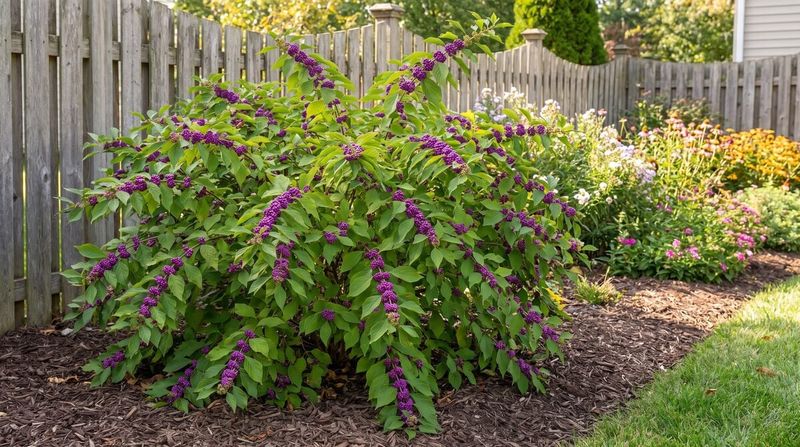
Somewhere between the end of summer and the first cold snap, a native shrub quietly puts on one of the most striking shows in the North Carolina yard – clusters of vivid purple berries packed so tightly around its stems that the whole plant looks almost unreal. That shrub is American beautyberry, Callicarpa americana, and it has been feeding local wildlife long before anyone thought to plant it on purpose.
For homeowners who want to do something genuinely useful for backyard birds without taking on a complicated new gardening project, it deserves a much closer look.
What American beautyberry actually offers North Carolina yards
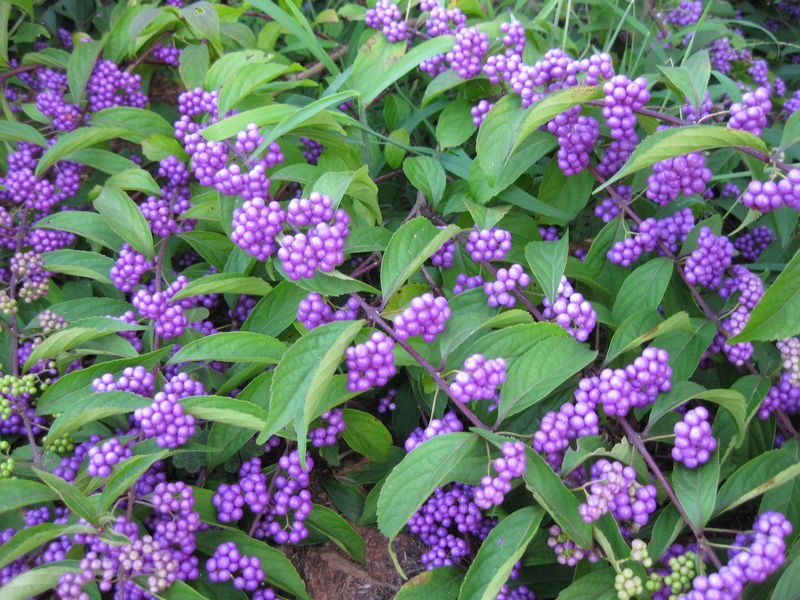
American beautyberry, known botanically as Callicarpa americana, is a deciduous native shrub with deep roots in North Carolina’s landscape. North Carolina Extension’s plant database lists it as native to the Coastal Plain, Piedmont, and Mountains, meaning it is genuinely at home across the state rather than simply tolerant of it.
That regional fit matters because a plant growing within its native range typically needs less coaxing to establish and tends to support local wildlife more reliably than an imported substitute.
What makes this shrub stand out in the yard is a combination of ornamental appeal and practical wildlife value. From late summer into fall, the stems become ringed with tight clusters of small, bright purple berries that catch the eye long after the surrounding garden has started to wind down.
The display is striking enough that many gardeners initially mistake the plant for something exotic, not realizing it has grown wild in Carolina woodlands and forest edges for centuries.
The care picture is genuinely straightforward after the plant is established. Beautyberry tolerates a range of soil types and moisture conditions, does not require a complicated fertilizing routine, and can go years without significant intervention.
That said, “low-maintenance” is not the same as “no maintenance,” and young plants do need attention while they develop roots. Establishment watering and adequate spacing matter, and optional late-winter pruning can keep the plant’s naturally open, arching form from overtaking its neighbors.
One clarification worth making from the start: no single shrub can keep backyard birds continuously fed or outperform every other native option. American beautyberry is a well-supported, useful choice for adding a seasonal natural food source to a North Carolina yard, and that is exactly what this article will help you use it for.
Expect berries from late summer into fall—not all summer
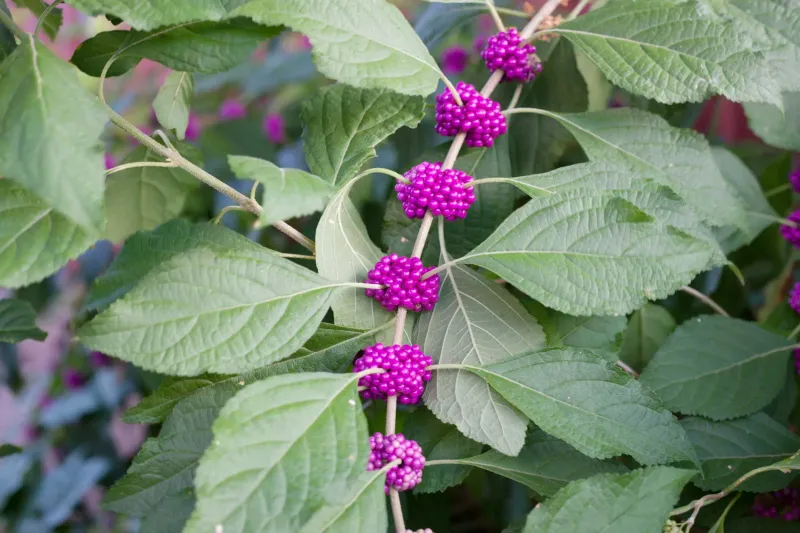
The seasonal sequence of American beautyberry follows a clear pattern, but it starts earlier in the year than most people expect. Small, pale pink flowers typically appear in late spring through early summer, often around June and into July.
These blooms are modest compared to the berry display that follows, and they tend to go unnoticed unless you are looking for them. Pollinators appreciate them regardless.
Fruit development begins in late summer, with berries generally ripening and reaching their peak color around September and into October. Mississippi State Extension’s coverage of American beautyberry confirms this late-summer-to-fall window as the core fruiting period, which aligns with what North Carolina gardeners typically observe.
One pleasant surprise is that the berry clusters often remain visible and accessible even after the leaves drop, and in some years the fruit persists into early winter before birds or other wildlife finish it off.
That persistence is real but variable. Weather conditions, how much sun the plant receives, the age and size of the shrub, and how quickly local wildlife discovers the berries all affect how long the fruit lasts.
A plant in its first or second year may produce far fewer berries than a mature, well-sited specimen. A flock of hungry robins can strip a shrub in a matter of days.
The practical takeaway is to treat the fruiting window as a general expectation rather than a fixed schedule. Plan for late summer through fall as the reliable period, and consider any early-winter persistence a bonus.
Describing beautyberry as a plant that feeds birds throughout the entire summer overstates what the evidence supports; the honest and still genuinely useful framing is a strong seasonal food source during the season when many other berry-producing plants have already peaked.
The berries can support several kinds of backyard birds
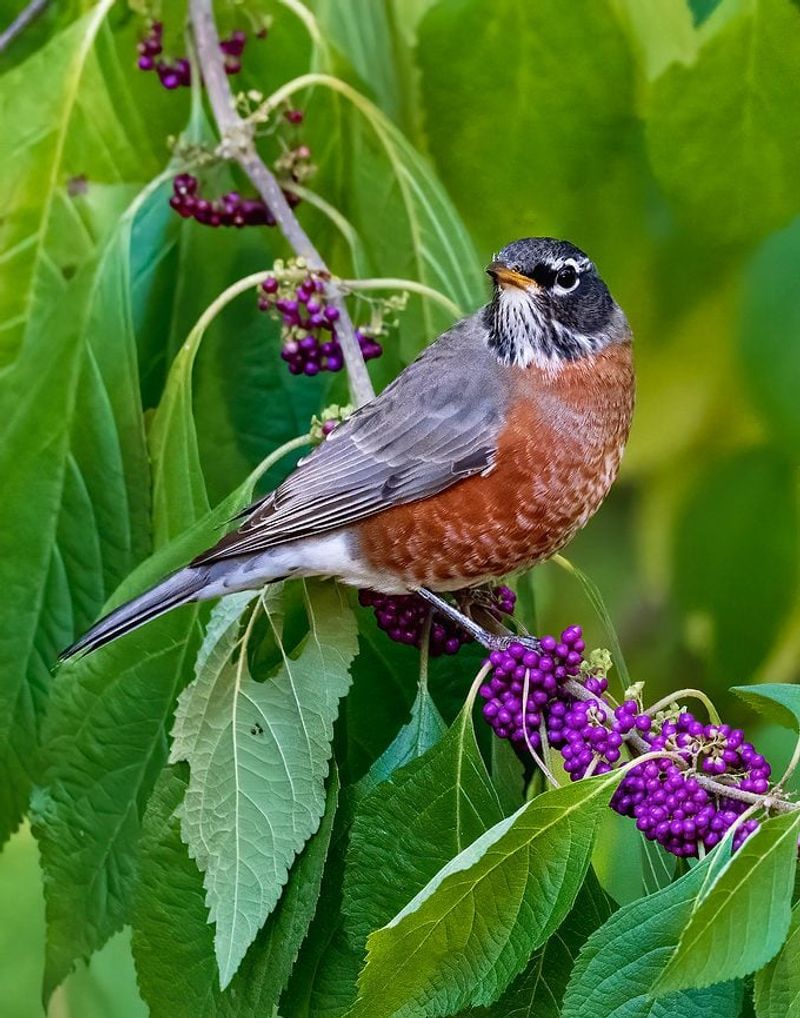
Several bird species that North Carolina homeowners already recognize may visit a beautyberry once the fruit ripens. North Carolina Extension specifically names American robins, brown thrashers, purple finches, and eastern towhees as documented users of the berries.
These are not rare or hard-to-attract birds; they are regulars in yards across the Piedmont, Coastal Plain, and Mountains, which makes a fruiting beautyberry a practical addition rather than a long shot.
Audubon’s native plant resources expand the picture further, listing cardinals, grosbeaks, mockingbirds, thrushes, blackbirds, orioles, and sparrows among the bird groups that may feed on beautyberry fruit. The key word is “may.” Which species actually show up depends on what birds live in or migrate through your area, what other food and habitat resources are nearby, and whether the fruit is still available when those birds are actively foraging.
No shrub can guarantee a specific species will visit, and a single beautyberry planted in an otherwise bare yard is unlikely to transform into a busy bird feeding station.
That context points to a broader truth about attracting birds to a yard. University of Georgia Extension’s guide to attracting birds makes clear that birds need more than a food source: they also look for reliable water, dense cover for shelter and nesting, and native plants that support the insects many species depend on, especially during breeding season.
Beautyberry contributes one meaningful piece of that picture, specifically a seasonal fruit source during late summer and fall when natural food can become harder to find.
Adding a birdbath nearby, leaving some brush or shrub cover in a corner of the yard, and planting a mix of natives that flower and fruit at different times will do more for bird activity than any single plant alone. Think of beautyberry as a useful component in a broader yard, not the whole solution by itself.
Give the shrub space, sunlight, and suitable drainage
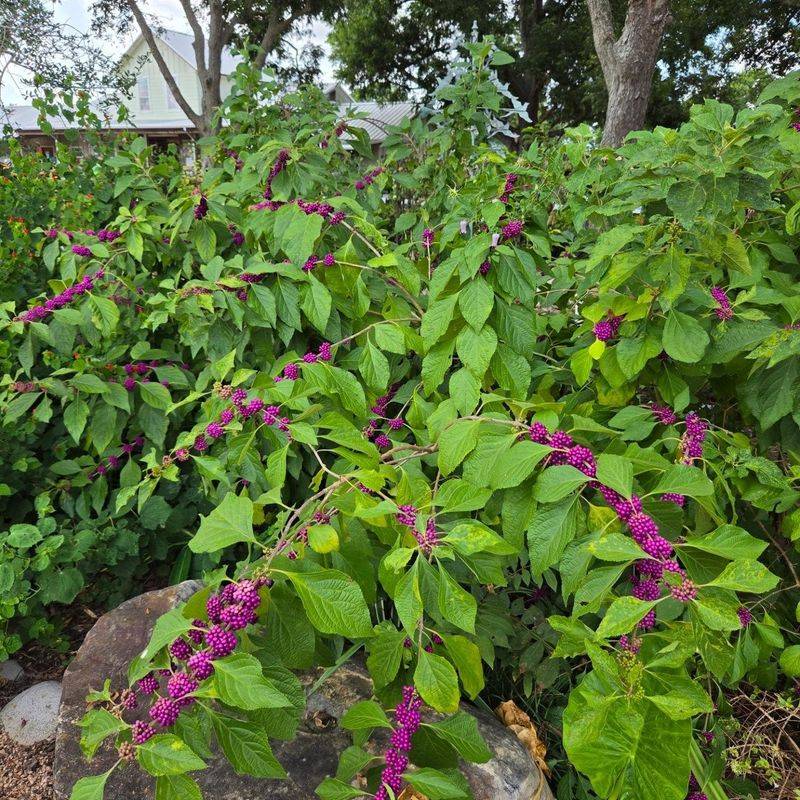
Mature American beautyberry has a naturally open, arching habit that can reach roughly 3 to 8 feet tall and 3 to 6 feet wide, with some plants growing larger under favorable conditions. North Carolina Extension’s plant profile describes this loose, spreading form as characteristic of the species, and it is worth planning for before you dig the hole.
A shrub planted too close to a walkway, a porch railing, or another plant will eventually crowd its neighbors and may look unkempt rather than naturalistic.
The settings where beautyberry tends to look most at home are informal ones: a mixed border with other native shrubs, a woodland edge where it can arc outward without obstruction, a naturalized area at the back of the property, or a loose screen along a fence line. It is not well suited to a tightly clipped formal hedge or a foundation planting that needs to stay compact and tidy year-round.
The plant is deciduous, so it will drop its leaves in late fall and offer little visual structure through winter. Homeowners who need an evergreen privacy screen or a formal architectural element should look at other options.
Sunlight has a direct effect on fruit production. Full sun generally produces the most abundant berry clusters, while part shade is still workable and may even be preferable in spots with intense afternoon heat.
Mississippi State Extension notes that some afternoon shade can be useful in very hot exposures, which is worth considering for south- or west-facing spots during a North Carolina summer. If maximizing berry production for wildlife is the goal, a location with morning sun and good air circulation is a reasonable target.
Soil drainage matters more than soil type. Beautyberry tolerates dry to moist conditions across a fairly wide range of soils, but it does not thrive in spots that stay waterlogged.
If your yard has a low area that holds standing water after rain, choose a different location or amend the drainage before planting.
Keep care simple, but do not skip establishment watering
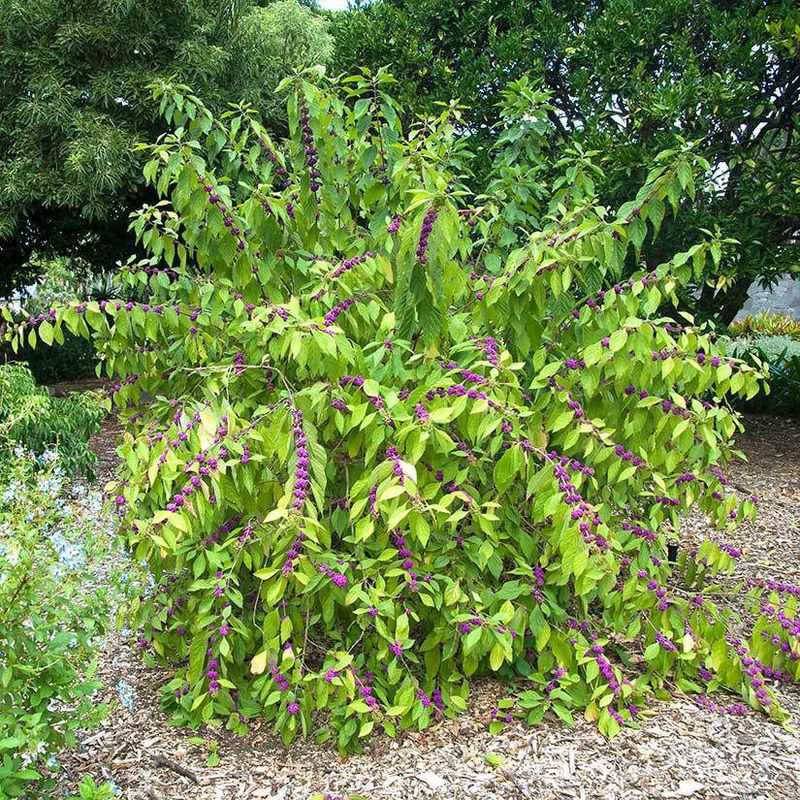
“Low-maintenance” is an accurate description of American beautyberry once it has settled in, but that phrase only applies after the plant has had time to develop a healthy root system. Young shrubs need consistent moisture during their first growing season, and possibly into the second, while roots extend into surrounding soil.
During dry spells or drought, even established plants benefit from supplemental watering, particularly in the hottest months. Skipping that early attention is one of the most common reasons a new planting struggles or fails to produce well.
Once established, the plant’s tolerance for varied soil and moisture conditions is genuinely useful. It handles dry periods better than many flowering shrubs, adapts to clay or sandy soils as long as drainage is adequate, and does not require regular fertilizing under normal conditions.
That combination of traits is part of why beautyberry works well for homeowners who want a productive native plant without a demanding maintenance schedule.
Planting more than one shrub near each other is a practical option worth considering if berry production is a priority. North Carolina Extension and other sources suggest that multiple plants in proximity may increase fruit yield, likely because cross-pollination improves berry set.
This is not a guaranteed requirement for fruiting, and a single well-sited plant can still produce a meaningful berry crop. But if you have the space and want to maximize what the planting offers to wildlife, grouping two or three shrubs a few feet apart is a reasonable approach.
The NC Extension plant profile supports this as a practical suggestion rather than a hard rule.
Beyond watering during establishment and drought, the routine care list is short: mulch the root zone to retain moisture and moderate soil temperature, give the plant room to grow, and check occasionally that drainage remains adequate around the base. That is about all most established beautyberries ask for in a North Carolina yard.
Prune in late winter only if the shape or size needs attention
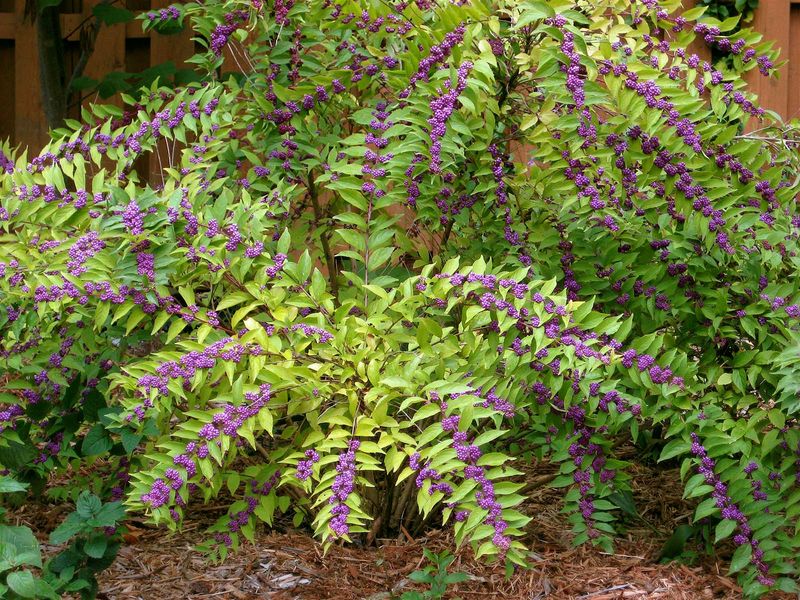
Pruning American beautyberry is optional, not required, and the timing matters more than the technique. Because the plant flowers and fruits on new growth produced each spring, any pruning that removes those new stems before they flower will reduce the berry crop.
The correct window is late winter or very early spring, before new growth begins. Pruning at that point gives the plant a full season to push out fresh stems, develop flowers, and set fruit before fall.
NC State Extension’s Woody Ornamentals handbook describes the option of cutting beautyberry back severely, to approximately 6 to 12 inches above the ground, in late winter. This kind of hard cutback encourages the plant to send up many vigorous new stems, which can produce a fuller, more compact shape and an abundant flush of flowering branches.
The result is often a tidier-looking plant with a strong berry display that season. Gardeners who prefer the plant’s natural arching habit can skip pruning entirely or limit themselves to removing dead, crossing, or damaged stems.
The one pruning mistake to avoid is cutting after the plant has flowered and berries have begun to develop. Pruning at that stage removes the fruit before birds have a chance to use it, which defeats the purpose of growing the shrub for wildlife.
If the plant needs shaping and the berry crop matters, do the work in late winter and leave it alone once flowering starts.
Light thinning to open up the interior of the plant or remove old woody stems can also be done in late winter without harming the season’s berry production. NC State Extension’s general pruning guidance recommends making cuts just above a healthy bud or side branch to encourage clean regrowth.
For most homeowners, a simple late-winter tidy-up every year or two is all this shrub needs to stay productive and presentable.
Verify the species and treat it as one part of a wildlife plan
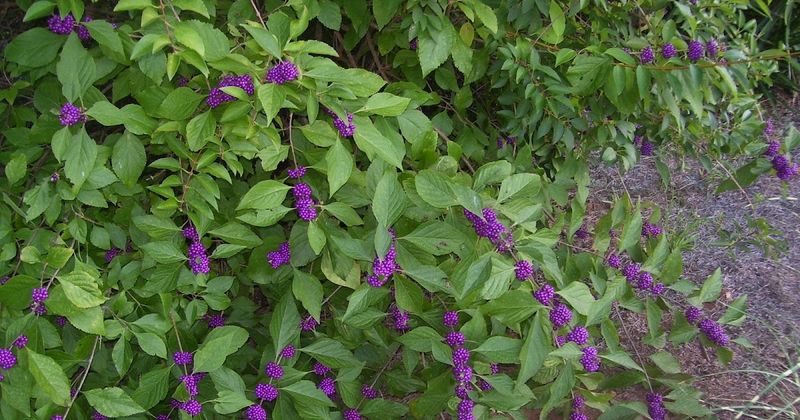
At many nurseries, plants are sold simply as “beautyberry” without specifying whether the tag refers to the North Carolina native or to Japanese beautyberry, Callicarpa japonica, an introduced East Asian species. The two plants look similar and both produce purple berries, but North Carolina Extension’s profile on Callicarpa japonica makes clear it is not the native species described in this article.
When you are shopping for a plant specifically to support local wildlife and add a genuinely native shrub to your yard, check the label for the Latin name Callicarpa americana before you buy. A reputable native plant nursery or a North Carolina Extension Master Gardener program can help you confirm the correct species if you are unsure.
Once you have the right plant in the ground, it helps to keep its role in perspective. A single beautyberry shrub offers a seasonal berry source and some physical structure, but it cannot create a complete bird habitat on its own.
University of Georgia Extension’s backyard bird guide outlines what birds actually need: reliable water, dense cover for shelter, native plants that support insects, and food sources spread across multiple seasons. Beautyberry covers one of those needs well during late summer and fall, and that is a meaningful contribution.
Pairing it with a birdbath, a brush pile or dense evergreen shrub for cover, and other native plants that produce seeds or fruit earlier in the year gives birds a reason to stay rather than just pass through.
One more boundary worth drawing clearly: planting beautyberry will not protect you or your family from mosquitoes or ticks in the yard. Laboratory research has identified compounds in crushed beautyberry leaves with repellent properties, but that finding does not translate into yard-level protection from a growing shrub.
EPA guidance on insect repellents is clear that personal protection against mosquitoes and ticks requires EPA-registered repellents, protective clothing, and tick checks, not landscape plants. Grow beautyberry for the birds and the beauty; manage biting insects through proven, separate means.
A yard that includes native plants, a water source, and layered cover is genuinely better for wildlife, and American beautyberry is one of the more rewarding native shrubs to start with.