
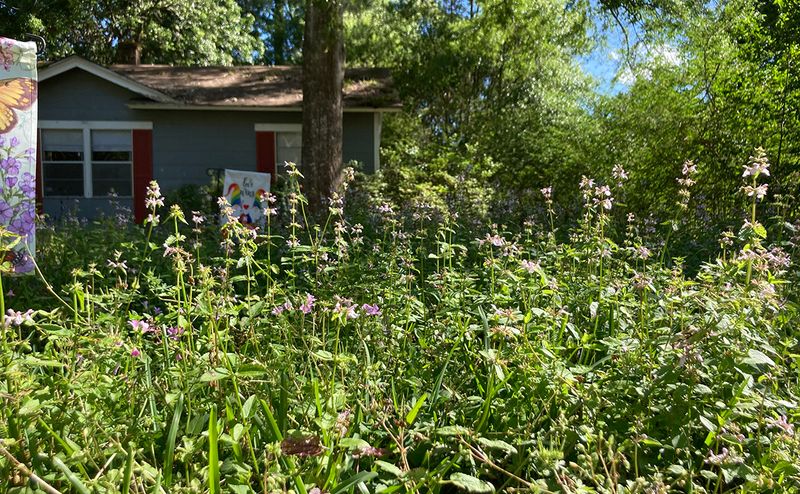
Weeding around zinnias all summer is one of those chores that never seems to end, and plenty of gardeners are looking for a smarter fix. A headline circulating online promises that a low-growing native herb can choke out weeds all summer when tucked around zinnia beds, but that claim needs some unpacking before you head to the nursery.
The plant most likely described is not native to North Carolina, and no groundcover can guarantee a weed-free bed. What follows is a clearer look at what the evidence actually supports, and which plants give North Carolina gardeners the best shot at a tidier, lower-maintenance flower bed.
The headline needs a North Carolina correction
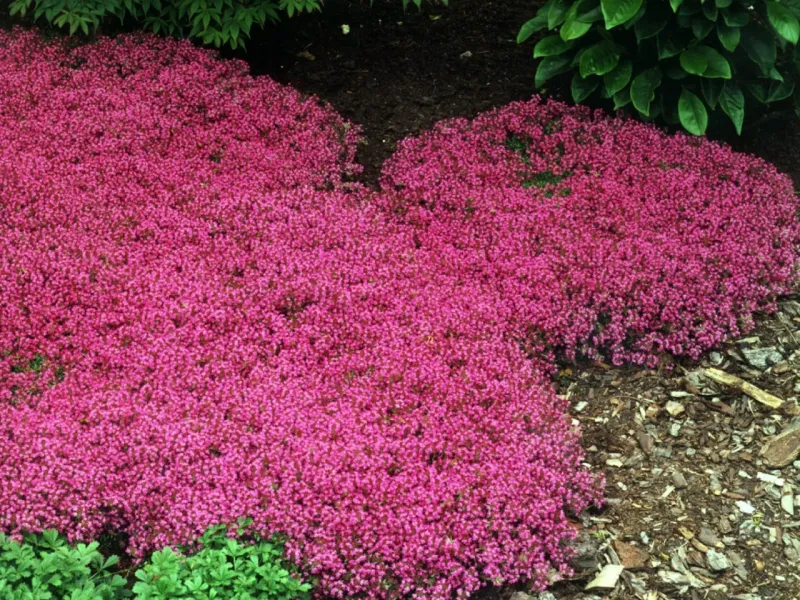
Headlines about “native herbs that choke out weeds” spread fast online, but this one overpromises on three counts: plant identity, native status, and what any groundcover can realistically do for weed control. The most plausible match for the description is creeping thyme (Thymus serpyllum), a 2-to-3-inch-tall, spreading groundcover that blooms from roughly June through September and is commonly used along borders, paths, and stepping stones.
However, NC State Extension’s plant profile for wild thyme places its native range in Northern Europe, Western Asia, and Northern Africa, not North Carolina or anywhere in North America.
No authoritative extension publication or research trial has been located that documents a widespread practice of tucking creeping thyme around zinnias across North Carolina. Lifestyle articles repeat the idea, but repetition is not the same as verification.
Treating an unconfirmed practice as an established regional tradition sets readers up for disappointment when results fall short.
The broader concept behind the headline, that a dense low-growing plant can reduce open soil and slow weed establishment, is sound. University of Maryland Extension guidance on groundcovers explains that living covers occupy space and compete with weeds, but only after they become established, and only when existing weeds are cleared first.
That is a meaningful difference from “choke out weeds all summer.” The rest of this article focuses on plants that are better supported by evidence, starting with the strongest statewide NC-native candidate available.
Lyreleaf sage offers the strongest native fit
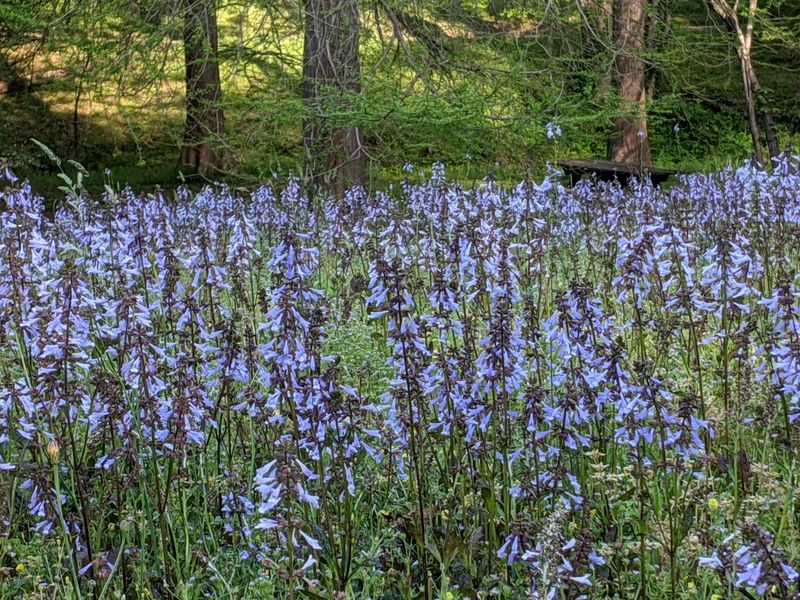
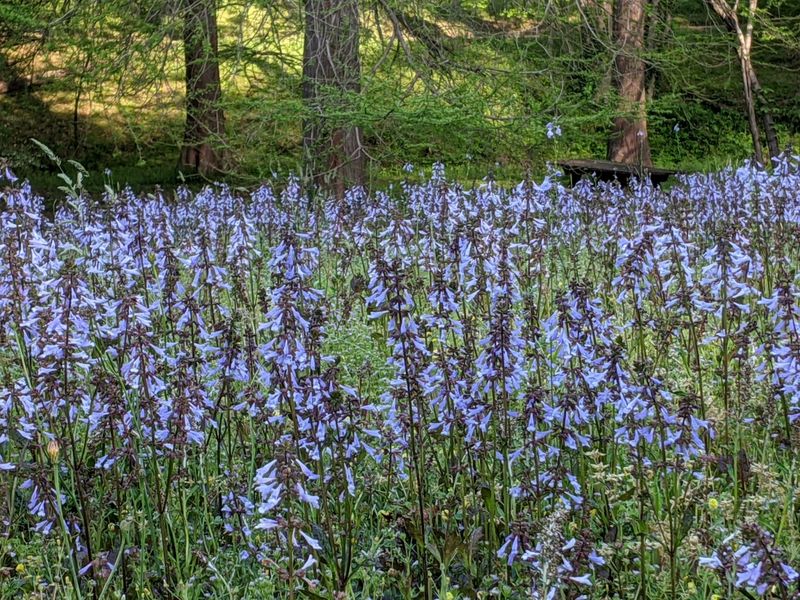
For gardeners who specifically want a plant native to North Carolina, lyreleaf sage (Salvia lyrata) is the strongest statewide candidate among the options reviewed here. NC State Extension’s lyreleaf sage profile confirms that it is native across the Coastal Plain, Piedmont, and Mountains of North Carolina, tolerates full sun to partial shade, handles heat and humidity well, and becomes drought tolerant once established.
Those traits cover a wide range of North Carolina garden conditions, from a hot Piedmont border to a coastal yard that dries out fast in July.
Lyreleaf sage grows from a basal rosette of lobed, often purple-tinged leaves that hug the ground. It spreads by self-seeding over time and can be mowed, which makes it useful as a low groundcover in naturalistic settings.
Pollinators, particularly native bees, visit its lavender-blue flower spikes readily, so it adds ecological value alongside its weed-suppressing potential.
One important clarification: lyreleaf sage’s showy flowering period runs mainly from mid-spring to early summer, not continuously through the entire summer. After flowering, the plant returns to its rosette form.
It does not produce a flat, evergreen carpet across every site, and it will not maintain a uniform summer bloom the way the original headline implies. Self-seeded plants can gradually fill gaps, but that process takes more than one season.
Think of lyreleaf sage as a long-term investment in reducing bare soil rather than an instant fix, and pair it with realistic expectations about what the first year will look like.
Because it is genuinely native statewide, drought tolerant, and pollinator-friendly, lyreleaf sage fits the protective-steward identity that many North Carolina homeowners are after: a plant that belongs in the landscape and gives something back to local wildlife at the same time.
How a living groundcover can lower weed pressure

A living groundcover works against weeds in a few connected ways. Once established, it occupies the open soil where weed seeds would otherwise germinate, shades the surface so light-dependent seeds struggle to sprout, and competes for the water and nutrients that annual weeds need to get started.
Research on weed control in living mulch systems confirms that suppression is strongest when the cover is vigorous and fills gaps early in the season, before weeds get a foothold.
That suppression is real, but it has limits. Windblown seeds land on top of any groundcover.
Perennial weeds with deep roots push through from below. Aggressive grasses creep in from the edges.
NC State Extension’s cover crop weed-suppression guidance is clear that dense plant canopies reduce weed emergence, not eliminate it. The realistic goal is fewer exposed patches and less routine hand-weeding, not a bed that takes care of itself entirely.
There is also a trade-off worth naming directly: the same competition that slows weeds can slow your zinnias. A groundcover that fills in aggressively will pull water, nutrients, and light away from the annual flowers it surrounds.
University of Maryland Extension notes that groundcovers need time to establish and can compete with desired plants, especially if planted too densely or too close to young transplants. Managing that competition is the real skill in this approach, and it requires more active attention than the headline suggests.
How to share space with zinnias
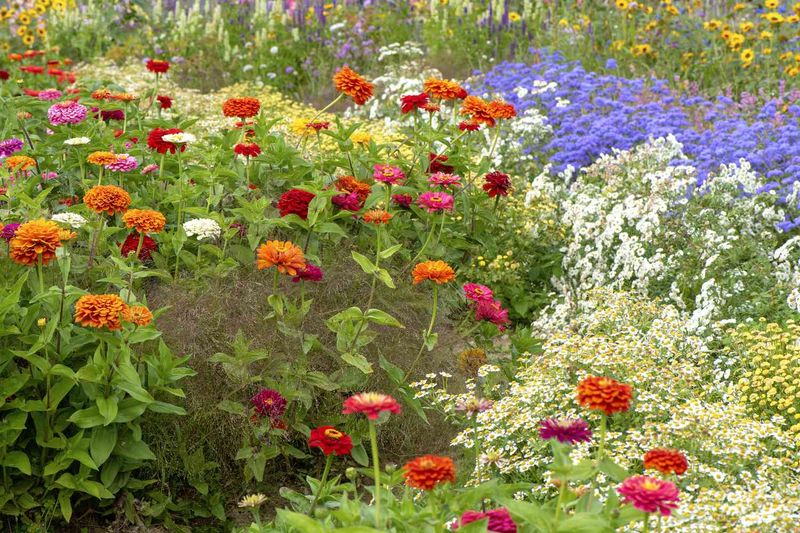
Zinnias are not fussy about companions, but they do have firm requirements that a dense groundcover can threaten. NC State Extension’s zinnia profile lists full sun, well-drained soil, and good air circulation as the key conditions for healthy plants.
Powdery mildew is a common problem with zinnias, and anything that traps moisture around the stems or blocks airflow between plants makes that problem worse.
A low groundcover tucked between zinnia rows needs to stay low and open enough that stems can breathe. Leave a clear ring of several inches around each zinnia stem rather than letting the groundcover press right up against it.
Young transplants are especially vulnerable: a newly planted zinnia competing with a fast-establishing groundcover for water and nutrients during its first few weeks in the ground can stall out before it has a chance to establish its own root system.
The living-mulch research mentioned earlier reinforces this point. Studies on living mulch systems consistently show that a vigorous cover can compete with the desired crop, not just the weeds.
Monitoring the bed through the first month after planting tells you whether the groundcover is staying in its lane or crowding the flowers.
Lyreleaf sage’s basal-rosette habit gives it a slight advantage here. Its growth pattern keeps the main foliage relatively low and spread out rather than producing tall, dense stems that would press against zinnia foliage.
That does not make it risk-free, but it is a better structural fit than a groundcover that mounds or sprawls aggressively upward.
Prepare the bed before planting
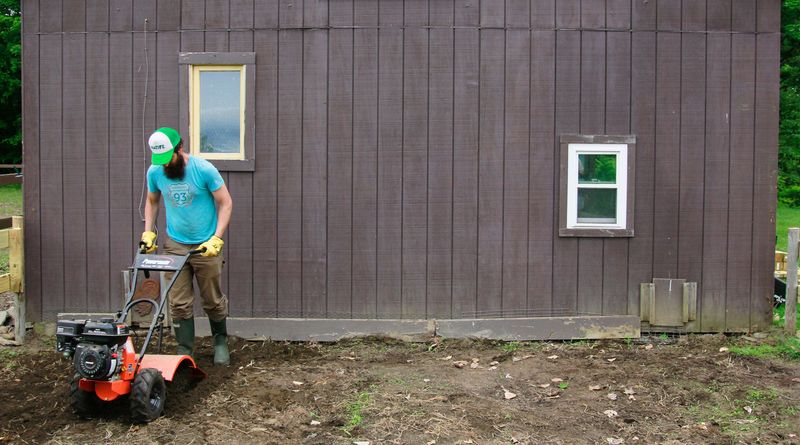
Bed preparation is where this strategy either succeeds or fails before a single plant goes in the ground. Installing a groundcover over existing weeds does not smother them; it gives them a head start while the new plants are still trying to establish.
University of Maryland Extension’s groundcover guidance is direct on this point: remove weeds and persistent grasses before planting, because weeding becomes significantly harder once the groundcover fills in and because weed competition can slow or prevent establishment altogether.
Perennial weeds with established root systems are the toughest problem. Pulling or digging them out before planting day saves hours of frustrating work later.
Annual weeds are easier to manage but should still be cleared so they do not shade out newly planted groundcover starts during the first few weeks.
Drainage is the other preparation step that matters as much for zinnias as it does for any groundcover. NC State’s zinnia profile specifies well-drained conditions as a baseline requirement.
A bed that holds water after rain will undermine zinnia health, promote root problems, and keep foliage persistently damp in ways that invite disease. If the soil drains slowly, amend it with compost or coarse material before planting rather than hoping the groundcover will compensate.
A well-prepared, well-drained bed gives both the zinnias and the groundcover the foundation they need to fill in successfully through the summer.
Establishment determines the payoff
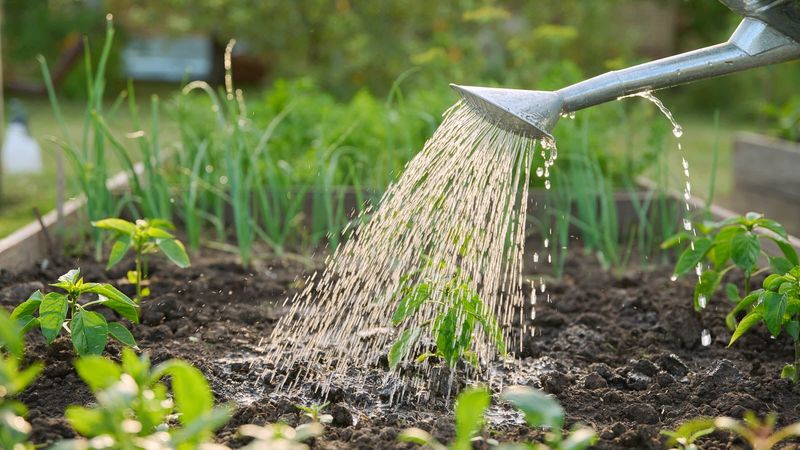
After planting, the weeks before a groundcover fills its gaps are the most demanding period of the whole strategy. New plants need consistent moisture to get roots established, and open soil between young starts is exactly where weeds will try to move in.
Watering during this window is not optional; skipping it during a dry stretch can set the groundcover back enough that weeds outcompete it before it ever closes the gaps.
University of Maryland Extension recommends continuing to hand-weed open areas while the groundcover establishes, rather than waiting for it to fill in on its own. That spot-weeding keeps pressure off the new plants and prevents weeds from going to seed in the bed.
It is extra work in the short term, but it is what determines whether the groundcover can eventually reduce that workload over time.
Even after the cover becomes dense, some weeds will still appear. NC State Extension’s weed-suppression research makes clear that canopy coverage reduces weed emergence rather than stopping it entirely.
Windblown seeds, creeping grasses from neighboring turf, and perennial weeds with deep root systems can all push through an established groundcover. Lyreleaf sage, once it self-seeds and spreads across a bed, will reduce the amount of bare soil available for annual weed germination, but its establishment timeline is measured in seasons, not weeks.
Setting that expectation before planting makes the process feel like progress rather than failure.
Choose regional alternatives carefully
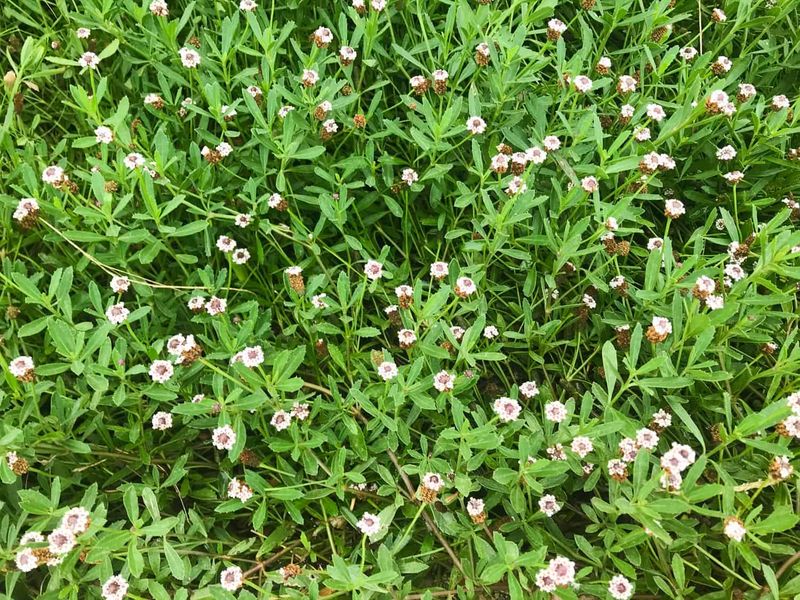
Frogfruit (Phyla nodiflora) comes up regularly in groundcover discussions, and its appeal is easy to understand. It forms dense mats from long stolons that root at the nodes, covers soil quickly, and provides real pollinator value from its small white flowers.
UF/IFAS Gardening Solutions reports that frogfruit flowers from May through October and adapts to full sun or partial shade in Florida and warm coastal conditions. That flowering window and growth habit make it attractive on paper.
The regional qualification matters, though. Frogfruit is native to Florida and present in parts of North Carolina, but its distribution in the state is not uniform.
The North Carolina Natural Heritage Program’s species account places it primarily along the coast and in the southern Coastal Plain. A specimen from McDowell County in the western part of the state was identified as non-native there, which signals that frogfruit’s regional fit becomes less straightforward as you move inland and into the Piedmont or Mountains.
The May-through-October flowering window cited above comes from Florida and warm-coastal guidance, not from statewide North Carolina phenology data. Gardeners in the NC Piedmont or Mountains should not assume that performance will translate directly to their conditions.
Frogfruit can be a strong choice for coastal and southern Coastal Plain gardens where it is well established in the regional flora, but it should not be treated as a universal NC-native substitute. Always include the botanical name when sourcing it, since “frogfruit” and “fogfruit” are both used in references and several Phyla species share the common name.
Use mulch when you need faster control
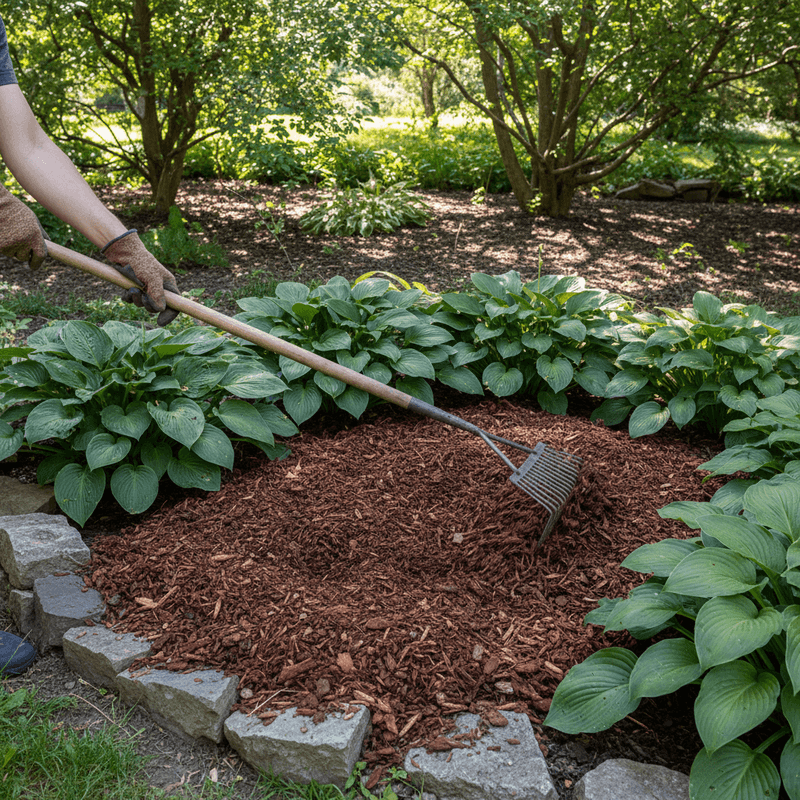
A living groundcover is a long-term investment, and there are situations where it is simply not the right tool for the moment. A brand-new zinnia bed in its first summer needs bare-soil coverage fast, and a freshly planted groundcover cannot provide that while it is still getting established.
Organic mulch closes that gap without any of the competition risk.
University of Minnesota Extension’s mulching guidance recommends removing existing weeds first, then applying roughly 2 to 4 inches of organic mulch to suppress weed germination and retain soil moisture. Keep the mulch pulled back from plant stems to avoid trapping moisture against the base of the zinnias, where it can promote rot and disease.
Mulch works immediately because it does not need to establish a root system or fill gaps over time. It simply covers the soil.
University of Maryland Extension notes that mulch is a practical complement to groundcovers rather than a competing strategy. Using shredded bark or wood chips while a young lyreleaf sage planting fills in gives you weed suppression now and transitions toward a living cover over the next season or two.
That combination is more predictable than either approach alone, and it keeps the zinnias in the healthy, well-ventilated conditions they need to thrive.
The realistic summer takeaway
Putting this all together gives a practical action plan rather than a seasonal guarantee. Start by clearing the bed of existing weeds and checking drainage before anything goes in the ground.
If statewide NC-native status matters to you, lyreleaf sage is the strongest supported choice reviewed here: heat tolerant, drought tolerant once established, and genuinely native across the Coastal Plain, Piedmont, and Mountains.
Leave open space around zinnia stems to protect airflow, water the groundcover consistently through establishment, and keep spot-weeding until the plants close gaps. Creeping thyme may be the plant the original headline had in mind, but it is not a native NC herb, and no documented NC practice of pairing it with zinnias has been verified.
When the first summer calls for faster coverage, mulch is the more predictable short-term tool, and it works well alongside a developing groundcover rather than against it.
Success here looks like reduced bare soil, fewer spots where annual weeds can germinate freely, and a bed that demands a little less routine weeding as the groundcover matures. That is a worthwhile goal, and it is an honest one.
A yard that supports native plants and takes less work to maintain is worth building carefully, one well-prepared bed at a time.