
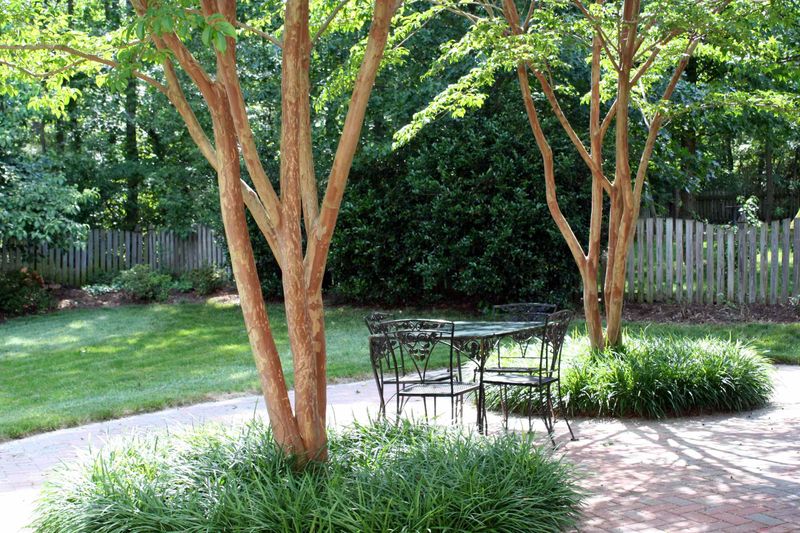
Shade is a gift in California, but some trees make you pay for it with endless raking, hauling, and sweeping. If your yard is small, the wrong tree can bury your patio in leaves, pods, and sticky berries every fall.
The good news is that plenty of trees give real, cooling shade while dropping very little mess. Here are the tidy, water-wise picks that work well in California yards without stealing your weekends.
1. Arbutus ‘Marina’ (Strawberry Tree)
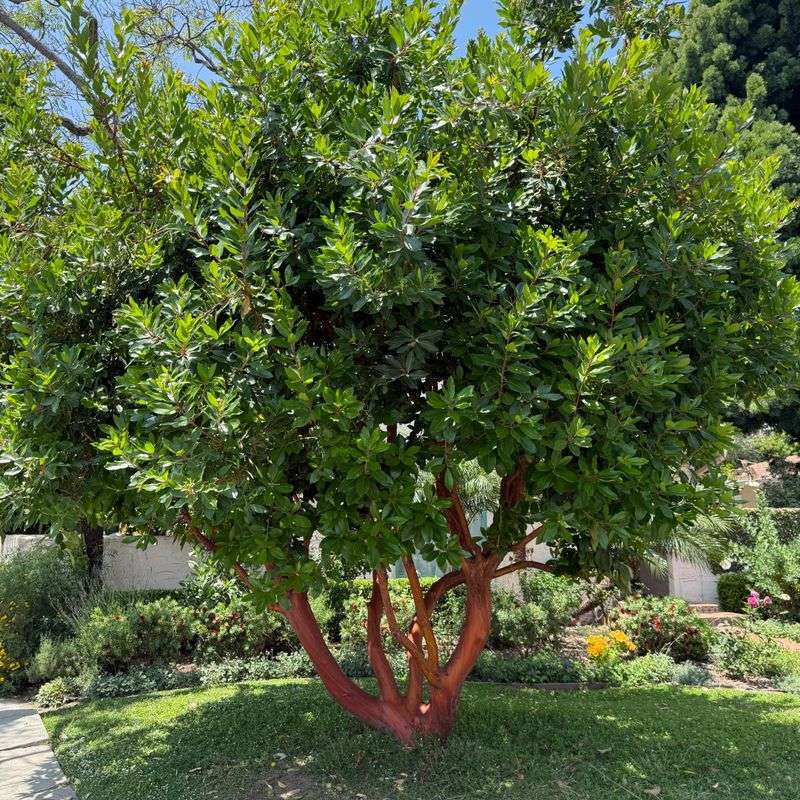
Homeowners who want year-round cover without a leaf-drop season tend to fall hard for the ‘Marina’ strawberry tree. Because it stays evergreen, you never face that one big autumn cleanup that buries a small patio.
The bark is a showpiece, peeling in warm cinnamon tones, and the pinkish flowers give way to little round fruit that pollinators and birds appreciate. Any fruit that drops is small and infrequent, so it rarely becomes a raking chore.
Drought-tolerant once established, it fits California’s long dry summers beautifully and asks for very little water. A modest 25-foot canopy makes it a smart match for a courtyard or side yard where a giant tree would feel crowded.
2. Western Redbud
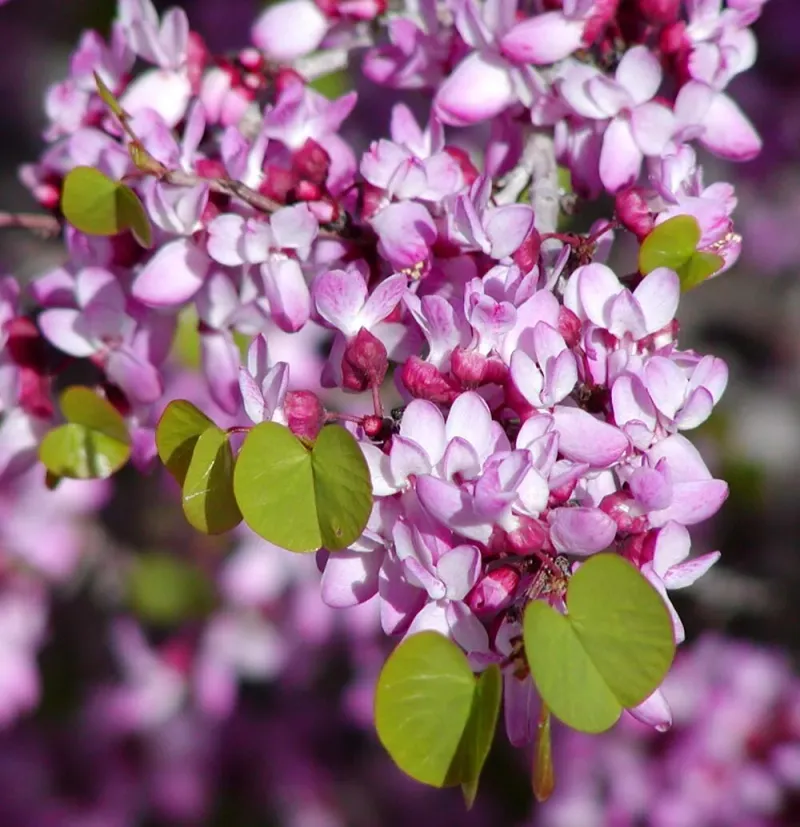
Few native trees put on a spring show like the Western Redbud, which lights up with magenta blooms before the leaves even arrive. Bees and early pollinators flock to it, making it a quiet win for wildlife-minded gardeners.
Its small size, often topping out around 15 to 20 feet, keeps it in scale with tight urban lots. The heart-shaped leaves are light and thin, so the little that falls breaks down fast instead of piling into heavy drifts.
Being a California native, it thrives on almost no summer water once settled in. Seed pods do form, but they are sparse and easy to ignore, which keeps this tree firmly in low-maintenance territory.
3. Chinese Pistache
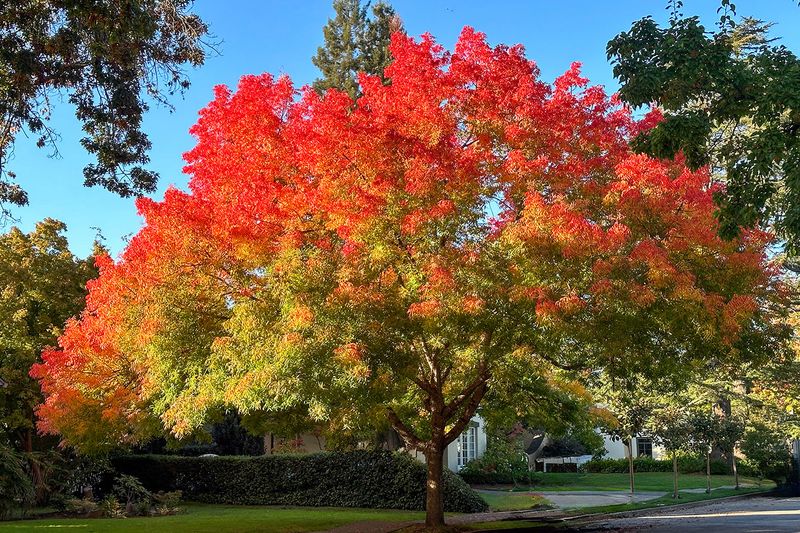
Ask any California arborist for a tough, tidy shade tree and Chinese Pistache comes up fast. It delivers a rounded, umbrella-like canopy that cools a patio through the hottest inland afternoons.
Come autumn, the foliage turns fiery orange and red, one of the best fall shows the state offers. The leaves are small and drop over a short window, so cleanup is quick rather than a season-long grind.
Choose a male, fruitless variety and you skip the messy berries entirely. Drought-hardy and rarely bothered by pests, it handles heat, poor soil, and neglect while still looking sharp.
4. Crape Myrtle
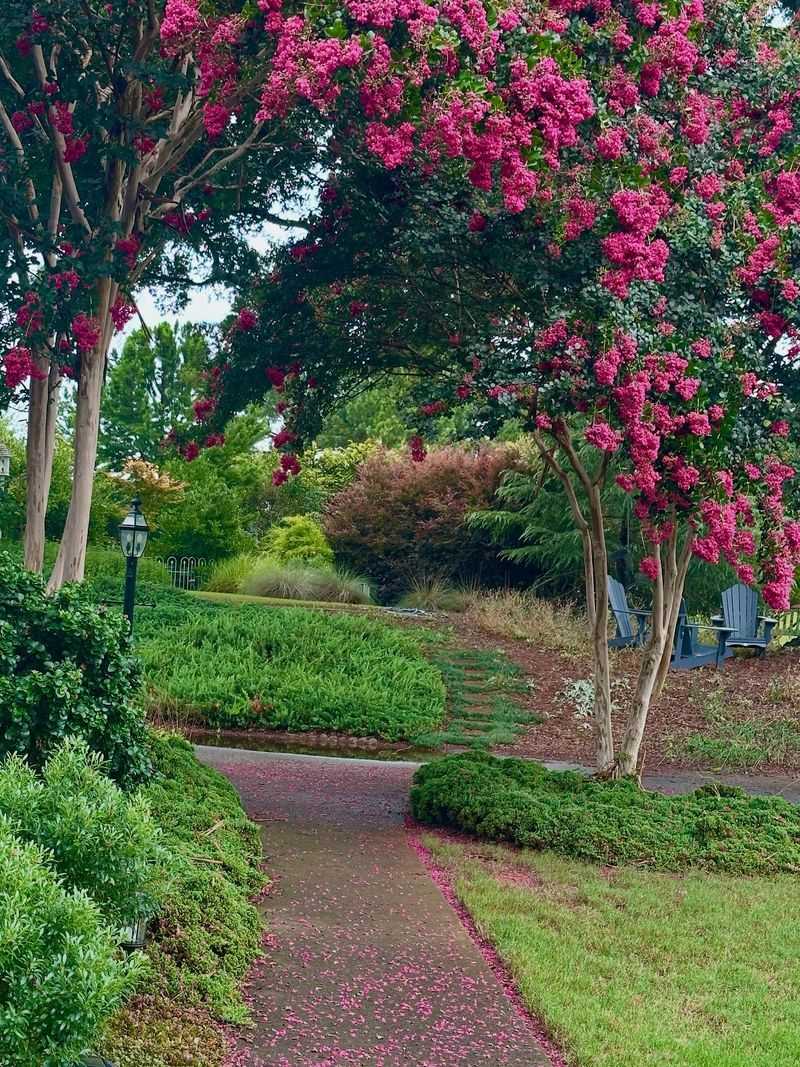
Long, hot summers are exactly when Crape Myrtle shines, blooming for weeks when most trees have gone quiet. That extended color makes it a favorite for small yards that need both shade and curb appeal.
Modern varieties come in compact sizes, so you can find one that fits a narrow bed or entry corner without outgrowing the space. The smooth, mottled bark stays attractive even in winter after the leaves fall.
Leaf litter is minimal and the small leaves rake up in minutes. Spent flowers do drop, but a quick sweep handles them, and the tree sips water once its roots take hold.
5. Desert Museum Palo Verde
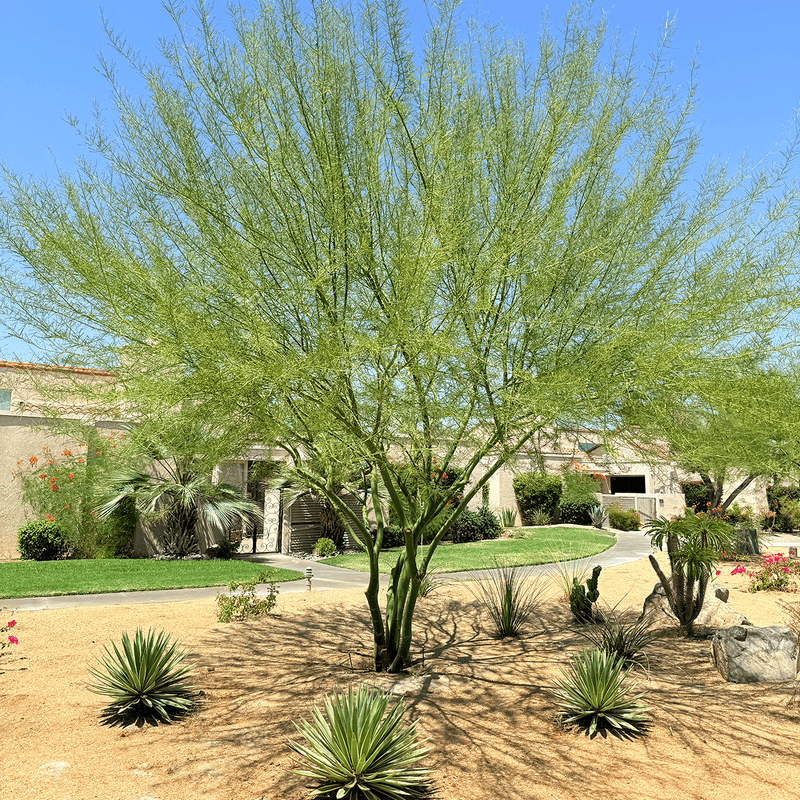
Green from trunk to tip, the Desert Museum Palo Verde is practically built for California’s driest yards. It photosynthesizes through its bark, which means it stays cool and colorful even in brutal heat.
Thornless and fast-growing, this hybrid throws bright yellow blooms in spring that pollinators can’t resist. The airy, filtered shade is gentle enough to grow plants underneath while still softening a hot patio.
Its tiny leaves and seedless nature keep mess close to zero, a rare trait among flowering trees. For inland valley and low-desert homeowners fighting water restrictions, few shade trees are this forgiving.
6. Fruitless Olive
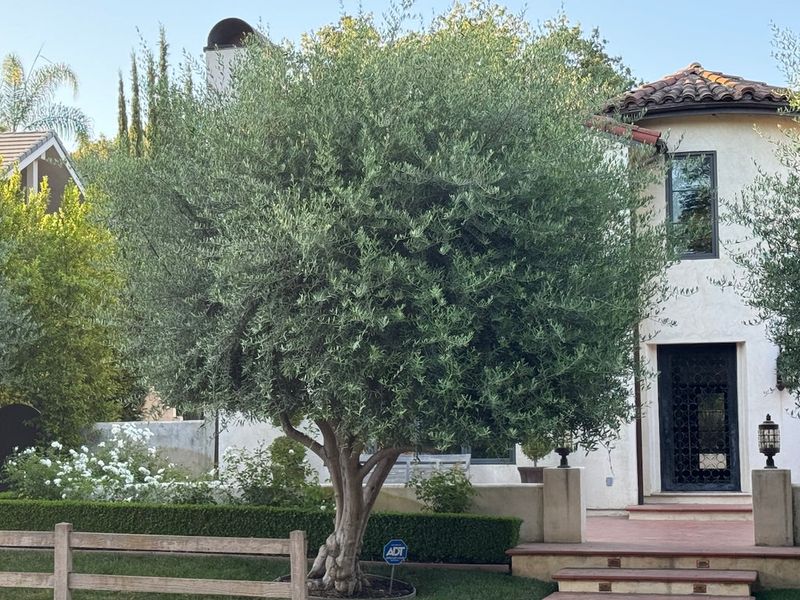
That silvery, Mediterranean look everyone wants comes standard with the fruitless olive, minus the stained pavers. Cultivars like ‘Swan Hill’ and ‘Wilsonii’ skip the fruit and the allergy-triggering pollen altogether.
Evergreen and effortlessly drought-tough, it thrives in the exact conditions California throws at it: baking sun, dry soil, and long rainless stretches. The gray-green canopy provides steady, dappled shade all year long.
Without olives raining down, you avoid the slippery, oily mess a fruiting olive leaves behind. Occasional small leaf drop is all you’ll notice, making this a genuinely clean choice for courtyards and driveways.
7. Toyon (California Holly)
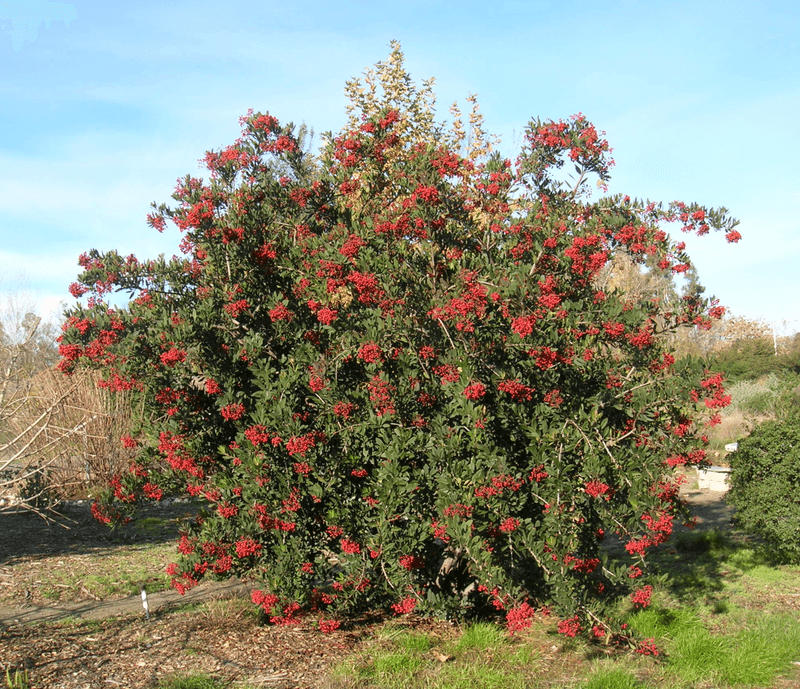
Legend says Hollywood took its name from this very plant, and Toyon earns its fame in modern yards too. Trained as a small tree, it offers evergreen structure and a wildlife payoff most shade trees can’t match.
Bright red berries light up the winter and feed native birds when little else is fruiting, a real win for stewardship-minded gardeners. The dark, leathery leaves stay put year-round, so there’s no seasonal leaf avalanche.
As a true California native, Toyon shrugs off drought and pairs well with fire-wise landscaping when kept clear of structures. Its compact size and steady, low-litter habit make it ideal for tucking shade into a corner of a small lot.