
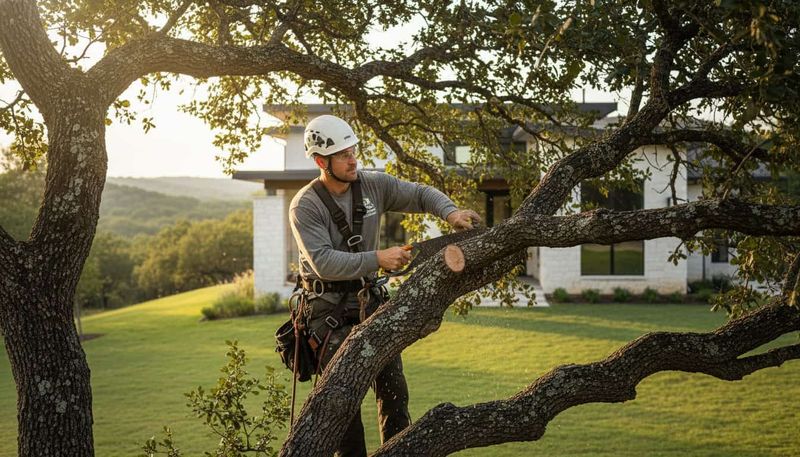
Oak wilt has killed millions of trees across Texas, and the way you time your pruning can make a real difference in whether your oaks stay healthy. As fall approaches, Central Texas homeowners have a genuine lower-risk window opening up for routine tree work, but not every September day qualifies as safe.
Knowing exactly when to schedule cuts, what to paint, and which species need the closest attention could save your trees from one of the most destructive diseases in the state.
Plan now, but wait for the lower-risk window
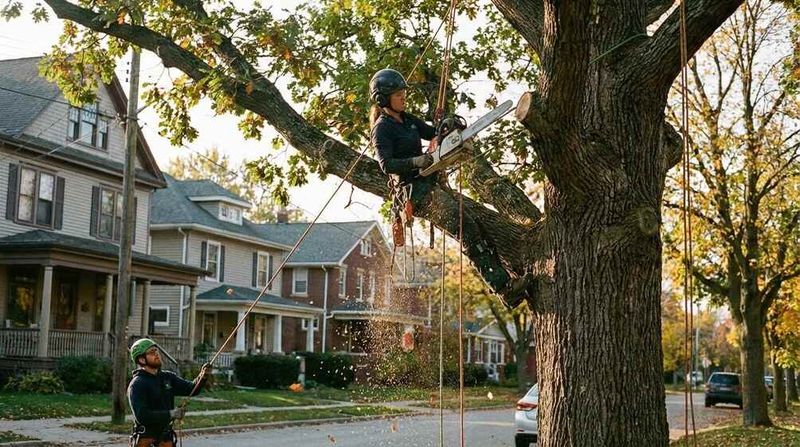
Right now is a smart time to call your arborist, gather your supplies, and map out which branches need attention. Scheduling ahead is the move.
Actually making routine cuts is a different matter, because early September in Central Texas can still bring triple-digit heat that stresses trees and leaves fresh wounds more vulnerable than they would be later in the season.
The Texas Oak Wilt Partnership pruning calendar identifies October as a good month to prune and points to November through January as the preferred practical window for routine structural, clearance, and aesthetic work. Those cooler months are when beetle activity tends to drop and conditions generally favor lower transmission risk above ground.
The period to protect most carefully runs from approximately February 1 through June 30. That stretch covers the warmest beetle-active months and the time when fungal mats on infected red oaks are most likely to be releasing spores.
Avoiding intentional oak wounds during that window, when possible, is the core of the prevention strategy.
None of this works like a biological on/off switch. The calendar gives you a practical risk-reduction framework, not a guarantee.
Weather, geography, and local beetle populations can shift the actual risk up or down on any given day, which is exactly why Texas oak-wilt pruning guidance emphasizes painting every fresh wound immediately regardless of season rather than relying on timing alone.
The practical takeaway: use September to plan and prepare, prune in October if conditions have cooled and the work cannot wait, and save most routine jobs for November through January. Treat the calendar as a tool for stacking the odds in your favor, not as a promise that fall pruning is risk-free.
How oak wilt reaches a fresh wound
Oak wilt is caused by the fungus Bretziella fagacearum, and understanding how it travels helps explain why timing and wound coverage matter so much. The disease moves in two distinct ways, and pruning choices directly affect only one of them.
Above ground, sap-feeding nitidulid beetles are the primary carrier. When an infected red oak forms a fungal mat under its bark, those mats produce spores with a fruity odor that attracts beetles.
A beetle picks up spores while feeding, then carries them to the next fresh wound it finds, including a pruning cut made on a healthy oak nearby. Texas oak-wilt pruning guidance explains that beetles are most active during the warm months of February through June, which is why that period carries the highest above-ground transmission risk.
Beetle activity does not stop completely outside that window, so fresh wounds remain a concern year-round, just at generally lower risk in fall and winter.
Below ground, the story is different. Live oaks in Central Texas frequently share root connections with neighboring trees of the same species.
Once a fungus establishes an infection center in one tree, it can move through those grafted roots to adjacent trees regardless of what season it is and regardless of whether anyone prunes a single branch. Seasonal pruning choices have no effect on this pathway.
That distinction matters for homeowners who suspect they already have an infected tree in the yard. An integrated oak-wilt management approach may involve root-zone barriers or professional fungicide injection to address an existing infection center, not just a change in pruning timing.
Red-oak-group species are especially significant here because, as Texas A&M AgriLife Extension oak-wilt guidance explains, they are the trees most likely to form the fungal mats that feed beetle-based spread.
Which oaks need the most caution?
Not every oak in your yard carries the same level of risk, and knowing the difference helps you prioritize your wound-protection efforts. Species identity is one of the most useful pieces of information a Central Texas homeowner can have when planning fall pruning.
Live oaks are the trees most Central Texas yards are built around, and they matter enormously in the oak-wilt picture. Their root systems frequently graft together underground, which means one infected tree can silently pass the fungus to every connected neighbor.
A live oak that looks healthy today may already be receiving the pathogen through a shared root with a declining tree two lots away. Every fresh wound on a live oak, pruning cut or otherwise, deserves immediate paint.
Red-oak-group species, including Spanish oak, Shumard oak, and blackjack oak, face a different but equally serious threat. Texas A&M AgriLife Extension’s oak-wilt identification and management resource explains that red-oak-group trees are highly susceptible, often die within weeks of showing symptoms, and are the species most likely to form the spore-producing fungal mats that beetles use to spread the disease to other oaks.
A freshly killed red oak with an active fungal mat is, in effect, a spore source for the whole neighborhood.
White-oak-group species, such as post oak and bur oak, are generally more resistant to oak wilt than live oaks or red oaks. “More resistant” is not the same as immune, though, and oak-wilt management guidance does not suggest skipping wound protection for white oaks. A yard with multiple species still requires careful wound coverage across the board, because any fresh oak tissue can serve as a potential entry point if the right beetle arrives at the wrong time.
Paint every fresh oak wound immediately
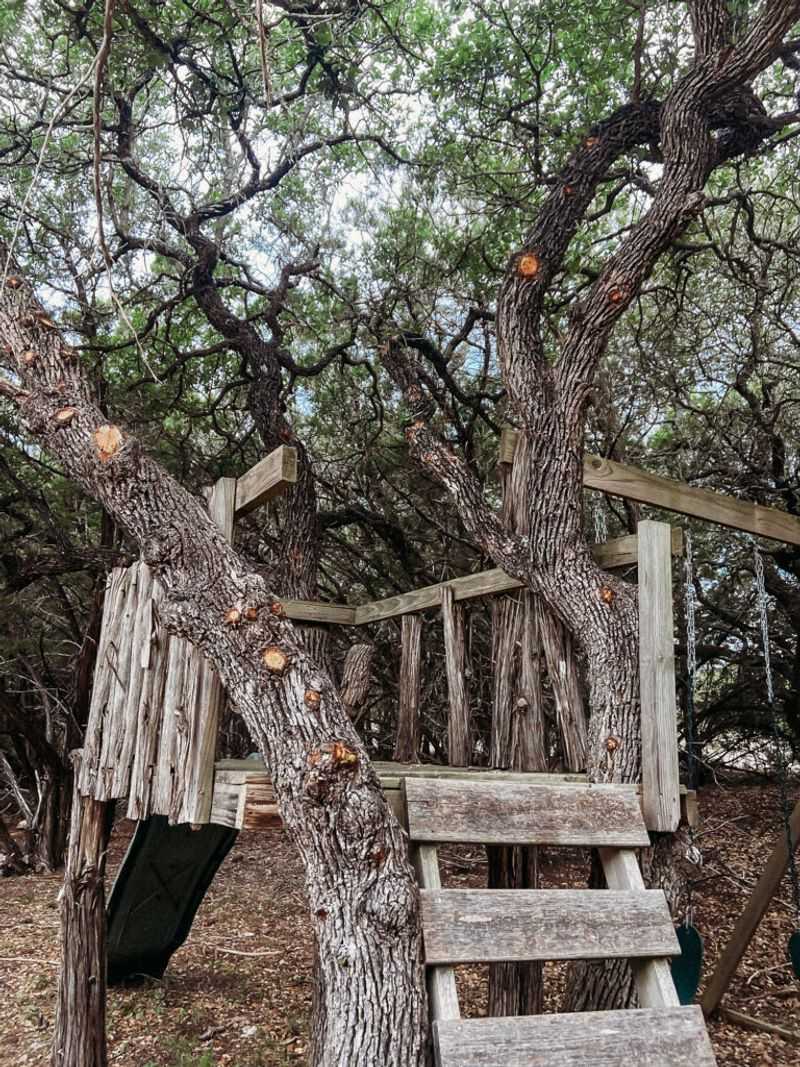
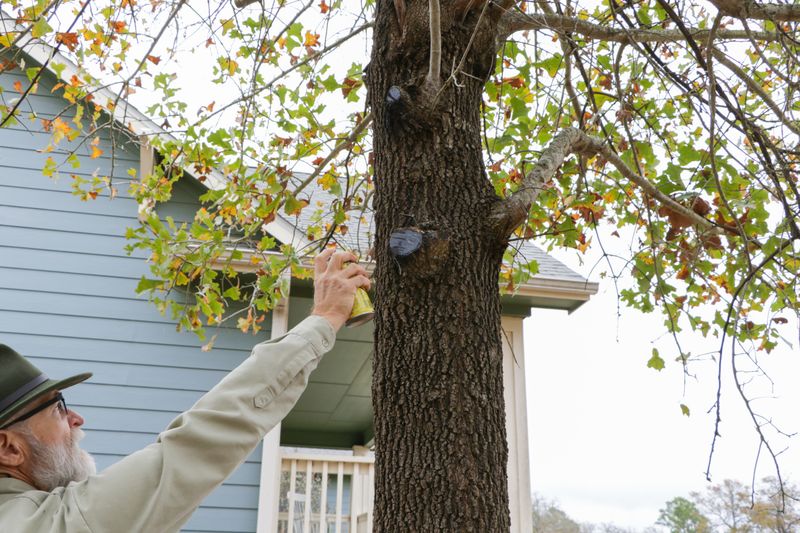
Every fresh cut on an oak tree is an open invitation to sap-feeding beetles, and the window between making a cut and covering it should be measured in minutes, not hours. Texas oak-wilt pruning guidelines recommend painting all fresh pruning cuts, fresh stumps, and any other accessible wounds immediately with latex paint, pruning paint, or another suitable wound dressing.
The goal is to seal off the fresh tissue before a beetle can reach it.
Brand and color matter less than speed. A can of white latex paint from the garage works.
Pruning paint from the nursery works. What does not work is waiting until the next morning or finishing the whole tree before you pick up the brush.
Texas A&M Forest Service oak-wilt prevention guidance makes clear that wound paint should go on immediately, and that applies in every season, not just during the high-risk spring period.
Pruning cuts are not the only wounds that need coverage. Lawn-mower strikes at the base of a trunk, string-trimmer scrapes around surface roots, storm-broken limbs, construction damage near roots, and any other fresh injury to oak bark or wood should be painted as soon as you notice them.
These accidental wounds are easy to overlook, but they carry the same exposure risk as an intentional cut.
One important distinction: wound paint goes on the tree, not on tools. City of Austin pruning guidelines for oak-wilt prevention are clear that disinfectants belong on equipment, not on tree tissue.
Bleach is corrosive to tools and has no place on a tree wound. Cleaning blades between trees with an appropriate disinfectant or alcohol-based product is a reasonable practice for reducing the spread of other tree diseases, but tool cleaning alone does not stop oak wilt, which spreads primarily through beetles and root connections rather than contaminated saw blades.
Use careful cuts and avoid unnecessary stress
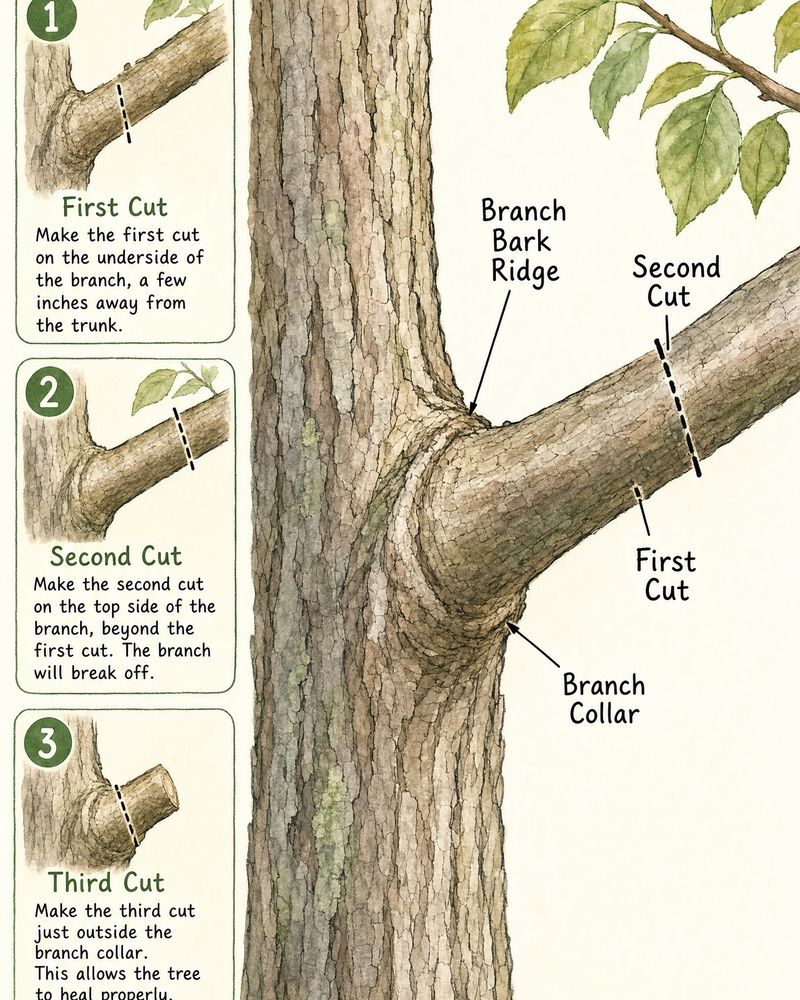
How you cut matters as much as when you cut. Sloppy pruning technique can create larger wounds, slower closure, and more stressed trees, all of which work against you in oak-wilt country.
A few straightforward principles make routine pruning significantly safer for the tree.
Every cut should be made just outside the branch collar, the slightly swollen ring of tissue where a branch meets the trunk or a larger limb. Cutting through that collar removes the tree’s own wound-response tissue and creates a larger, slower-healing wound.
Austin’s oak-wilt pruning guidelines specifically emphasize branch-collar cuts and caution against topping, which is the practice of cutting back main stems to stubs. Topping creates large, poorly closing wounds and puts severe stress on the tree without producing any structural benefit.
Removing more than necessary from the live canopy at one time is another mistake to avoid. A heavily thinned tree loses the photosynthetic capacity it needs to recover from pruning stress, and a stressed tree is a more vulnerable tree.
Keep canopy removal to what is genuinely needed for clearance, structure, or health.
Tool hygiene deserves a clear-eyed explanation. Texas Oak Wilt Partnership pruning FAQ guidance notes that tool transmission of oak wilt itself is considered unlikely because the disease spreads primarily through beetles and root connections rather than contaminated blades.
Cleaning tools between trees or properties is still a reasonable practice for reducing the risk of spreading other fungal and bacterial diseases. Use an appropriate disinfectant; avoid applying bleach to hot or running chainsaw chains, where it can cause corrosion and safety hazards.
Texas A&M Forest Service guidance also advises against unnecessary pruning on trees already stressed by drought, recent hard freezes, or other significant damage. If the goal is appearance or growth control and the tree is struggling, the kinder choice is to wait.
Work at height, near utility lines, or involving large limbs should go to a qualified arborist with the equipment and training to do it safely.
Handle urgent hazards even during the high-risk period
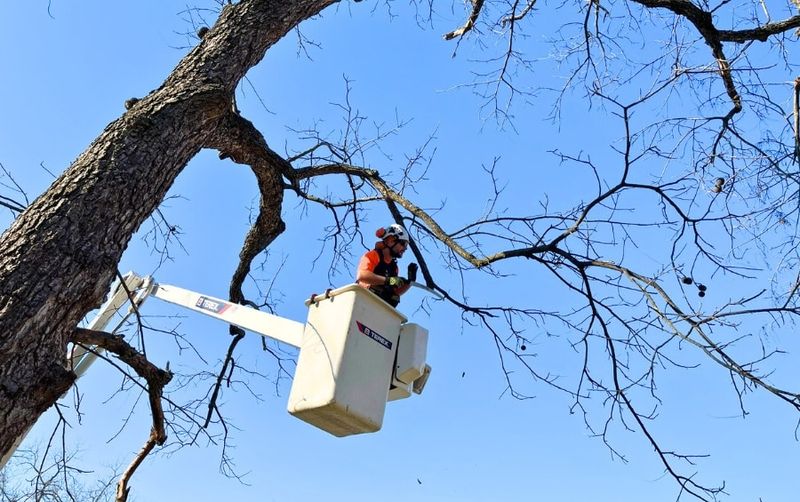
The February-through-June risk calendar is built around routine, optional pruning. Safety is a different category entirely, and a limb threatening to fall on a roof, a car, or a person cannot wait for November.
Hazardous situations override the seasonal schedule, full stop.
When a storm breaks a major limb, when a branch grows into a utility line, or when structural conflict creates an immediate risk, the right response is to act. Texas oak-wilt pruning guidelines acknowledge that emergency work sometimes falls during the high-risk period and provide a clear framework for handling it: make only the cuts that are genuinely necessary, and paint each fresh wound immediately after making it.
Limit the work to what the situation actually requires rather than using a safety call as an opportunity to do aesthetic or growth-control pruning at the same time.
Hiring a qualified professional for dangerous or substantial emergency work is both a safety decision and a tree-health decision. An experienced arborist can identify which cuts are truly necessary, make them cleanly at the branch collar, and ensure that wound paint goes on before the job is finished.
Texas A&M Forest Service prevention guidance reinforces that limiting the number and size of wounds during higher-risk periods reduces exposure even when some work is unavoidable.
Trees already showing signs of drought stress, freeze damage, or other health problems deserve extra restraint during emergency situations. Remove only what is genuinely hazardous, paint it immediately, and hold everything else until the lower-risk fall and winter window arrives.
Routine aesthetic work, growth control, and non-urgent clearance should always wait when the risk calendar and tree stress are both working against you.
Investigate decline before you cut or remove trees
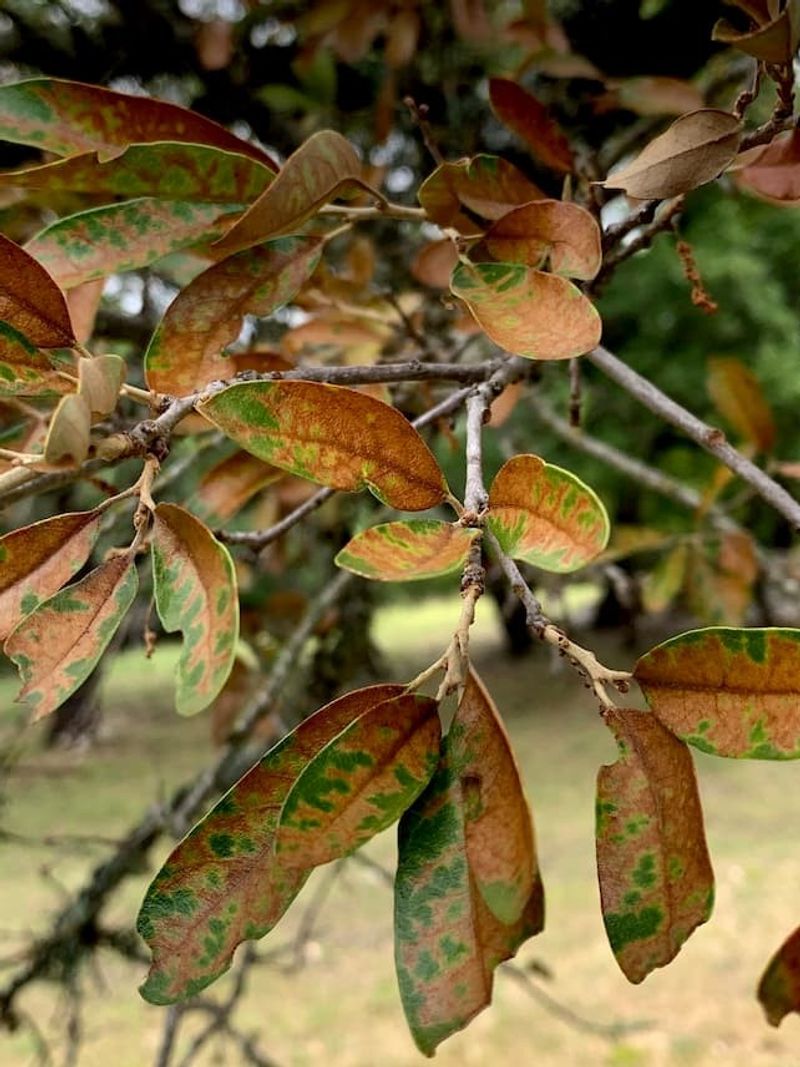
A browning oak is not automatically a dying oak, and a dying oak does not automatically have oak wilt. Reaching for a chainsaw before you know what you are dealing with is one of the costliest mistakes a Central Texas homeowner can make.
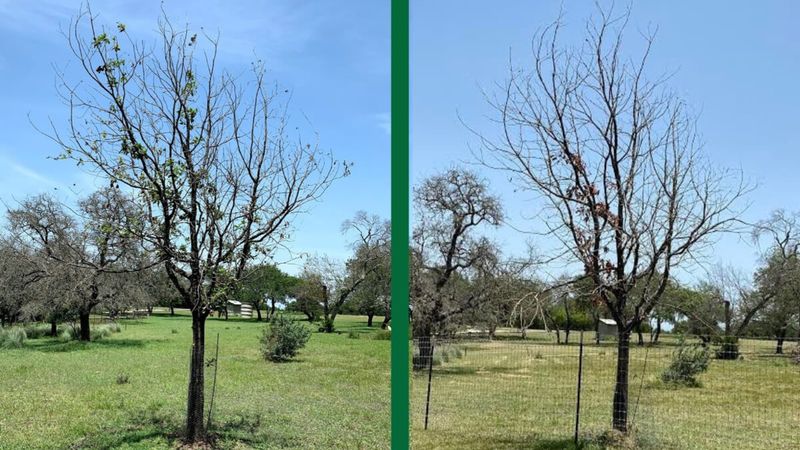
Live oaks with oak wilt may show veinal necrosis, a yellowing or browning pattern that follows the leaf veins, along with rapid defoliation or a branch-by-branch decline that moves through the canopy over weeks. Red oaks often wilt quickly and develop premature coloration that resembles early fall color in the wrong season.
Texas Oak Wilt Partnership identification guidance describes these patterns in detail, but it also makes clear that no single symptom confirms the disease. Drought, hard freezes, root damage from construction or soil compaction, insect activity, and general oak decline can all produce symptoms that look strikingly similar to oak wilt.
Before removing trees or taking any major action, get a professional assessment. A trained forester, a Texas A&M Extension specialist, or a qualified arborist can evaluate the tree in person and determine whether laboratory confirmation is warranted.
Sending a sample to a diagnostic lab is often the only way to know for certain what you are dealing with.
Integrated oak-wilt management may involve root-zone trenching, professional fungicide injection, or coordinated removal of specific trees, but those steps should follow a confirmed diagnosis, not a visual guess. Removing healthy surrounding trees or digging trenches based on a hunch can cause unnecessary harm and expense without stopping the actual problem.
Oak-wilt management resources consistently recommend professional involvement when confirmed disease is suspected in a yard or neighborhood.
The practical plan remains straightforward: schedule routine pruning for cooler fall or winter weather, paint every fresh wound the moment you make it, and call a qualified professional before drawing conclusions about a tree that is declining. Healthy oaks and informed homeowners are the best defense Central Texas has against this disease.