
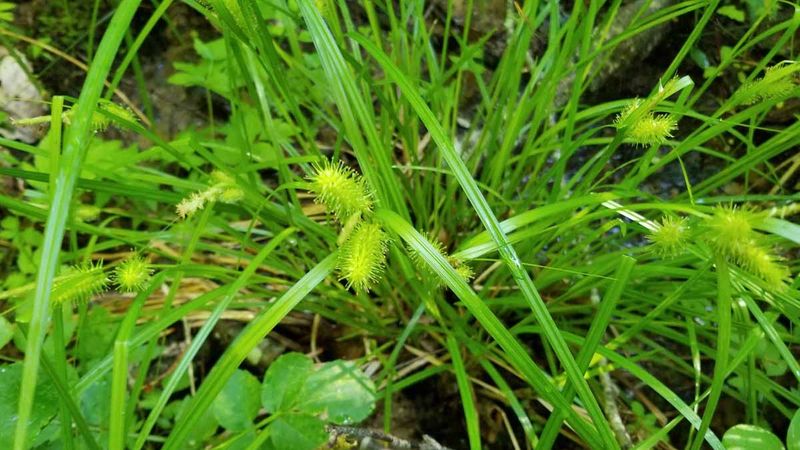
That soggy corner where your downspout empties never seems to dry out, and most plants rot there within a season. Sallow sedge, a North Carolina native, actually handles those wet conditions better than almost anything else you could try.
Before you plant it, though, you need to know whether that corner is a good candidate for a rain garden or a drainage problem that needs fixing first. Getting that distinction right protects your foundation and gives the sedge a real chance to settle in and thrive.
Sallow sedge fits a wet site when you manage the water first
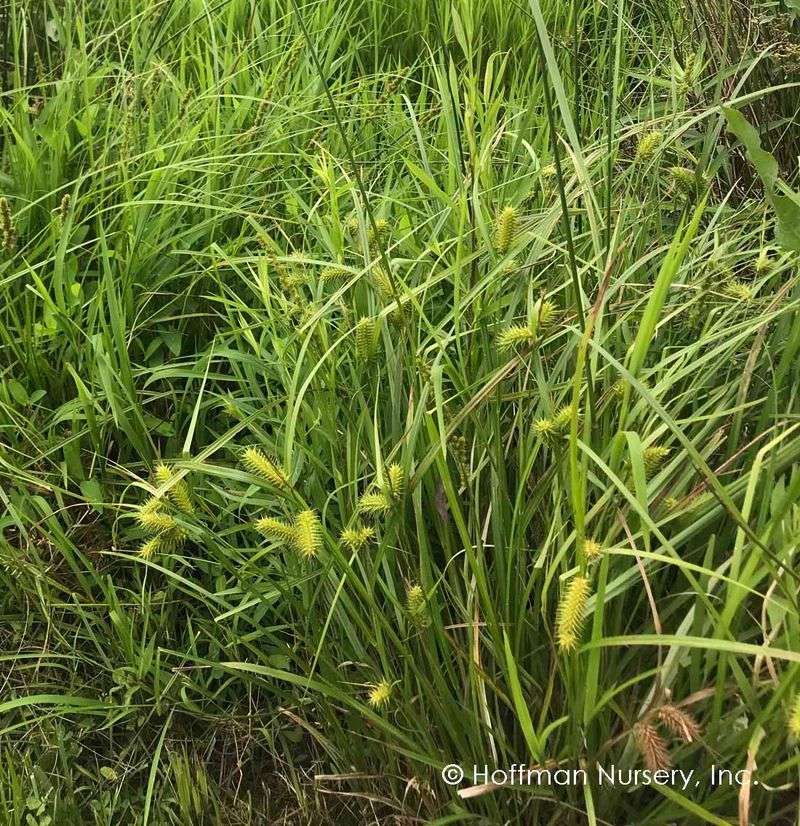
Sallow sedge, known botanically as Carex lurida, is a native herbaceous perennial that grows across North Carolina’s Coastal Plain, Piedmont, and Mountains. Unlike the ornamental grasses many homeowners reach for first, this plant belongs to the sedge family, which means its stems are triangular in cross-section and its seed structures look distinctly different from true grass seed heads.
NC State Extension describes sallow sedge as a clump-forming plant suited to wet soils, occasional flooding, pond margins, riparian areas, and rain gardens, with a mature size of roughly 1 to 3 feet tall and wide.
The foliage is bright green and linear, giving the plant a tidy, fountain-like shape that works well at a garden edge or transition zone. Its yellowish fruiting spikelets are conspicuous enough to add texture but subtle enough that they won’t overwhelm a mixed planting.
The plant tolerates full sun or partial shade, which gives homeowners flexibility when the wet corner sits under a canopy or gets afternoon shadow from the house.
Where the title says this sedge “thrives wherever a downspout never dries out,” the honest version is narrower. Sallow sedge is an underused candidate for a safely designed wet planting area, not a guaranteed fix for every soggy corner regardless of what’s causing the water to sit there.
The distinction matters because a plant that suits a well-managed rain garden edge may struggle or fail in a site with contaminated runoff, severe erosion, or a drainage defect that keeps water pooled indefinitely.
Diagnose the wet corner before you call it a rain garden
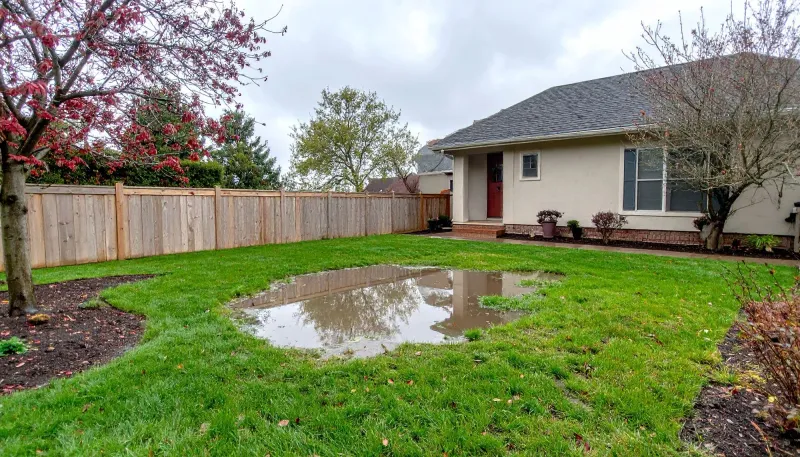
Not every wet corner qualifies as a rain garden, and treating one as the other can lead to failed plants, persistent mosquito habitat, and even foundation trouble. A properly designed rain garden is an engineered shallow depression that captures roof runoff and allows it to infiltrate into the soil, typically within about three days.
NC State’s rainscaping guidance is clear that a site where water ponds for longer than that may not be appropriate for a conventional rain garden at all.
Before you order plants, spend time watching the corner after a heavy rain. Note how long water sits, whether the soil surface stays soggy even days later, and whether the water has a clear path to drain away from the house.
If water disappears within a day or two, you likely have a workable rain garden candidate. If it lingers for four or five days or more, you need to understand why before you do anything else.
Several conditions can cause persistent ponding: heavy clay soil with poor permeability, a high seasonal water table, low spots created by poor grading, a blocked or undersized outlet, or roof runoff volume that simply exceeds what the area can absorb. Any of these may require drainage correction, regrading, or a professional assessment rather than a planting solution alone.
Sallow sedge does tolerate shallow standing water and suits the wetter edge of a pocket wetland planting, so it remains relevant even when a site is too wet for a standard rain garden. But the sedge cannot substitute for overflow planning or correcting a grading problem.
Knowing which situation you actually have determines whether you need a plant, a drainage fix, or both.
Route roof runoff away from the foundation
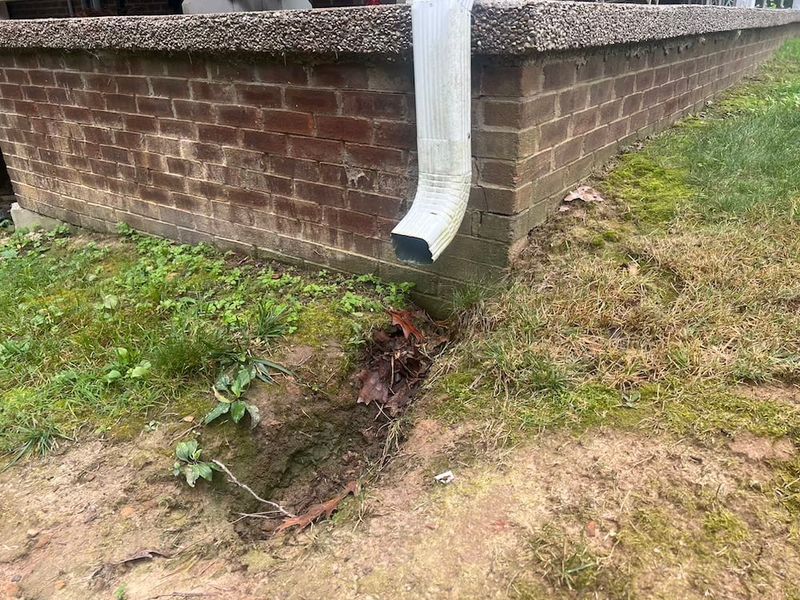
Before any plant goes in the ground near a downspout, the water itself needs a safe path. Concentrated roof runoff discharged directly beside the foundation is one of the most common causes of basement moisture intrusion and foundation soil erosion, and no sedge, however well adapted, can change that.
The first step is checking that the gutter and downspout connection is intact, clean, and free of leaks where water could be seeping toward the house before it even reaches the ground.
Once you confirm the downspout is functioning, the planting area should be located well away from the home, with the ground sloped so water moves away from the foundation rather than pooling against it. EPA’s rain garden how-to guide recommends keeping rain gardens at least 10 feet from the foundation and verifying that the surrounding grade directs overflow safely away from the structure.
NC State’s rainscaping guidance reinforces the same principle: the inlet, the garden, and any overflow outlet all need to be part of a planned sequence, not an afterthought.
Dispersing the flow before it reaches the planting area protects both the soil and the plants. A downspout extension, an angled elbow, a splash block, or a short swale can spread the energy of concentrated discharge over a wider area, reducing the erosion risk that comes with a single hard stream hitting bare or mulched soil.
Without that step, even a well-planted sedge bed can be undercut by channeling water that carves a path around or through the root zone.
Plan the overflow route at the same time you plan the planting. If the rain garden or wet pocket fills during a large storm, excess water needs somewhere to go that does not direct it back toward the house or onto a neighbor’s property.
Safe overflow routing is part of the planting plan, not a problem to solve later.
Establish the sedge with moisture, space, and routine care
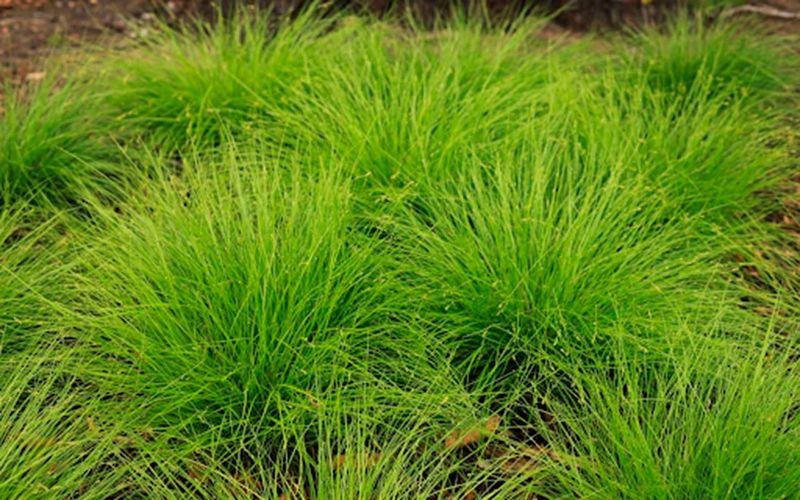
Nursery-grown plants are the right starting point for any homeowner installing sallow sedge. Collecting plants from wild wetlands disrupts natural populations and is discouraged by native plant conservationists; reputable native-plant nurseries in North Carolina carry Carex lurida and can confirm the plant’s provenance.
When you buy from a quality source, you also get a plant that has been propagated under controlled conditions, which tends to mean a stronger root system at the time of installation.
Spacing matters more than many homeowners expect. NC State Extension lists the mature spread at roughly 1 to 3 feet, so plants set closer than that will crowd each other within a season or two.
Give each plant its full allotment of space and resist the urge to fill gaps immediately with extra divisions. The sedge forms dense clumps over time, and a little patience at installation saves a lot of thinning later.
Newly installed plants need consistent moisture until their roots have spread into the surrounding soil, which typically takes one full growing season. Even though sallow sedge is adapted to wet conditions, a newly planted specimen sitting in disturbed soil during a dry summer stretch can fail without supplemental watering.
During extended drought, check the planting regularly and water if the soil dries out more than an inch or two below the surface.
Once established, the sedge is genuinely low-maintenance, but that does not mean maintenance-free. Expect to pull weeds that establish in the mulched area around new plants, replenish mulch as it breaks down, and cut back or clean up old foliage in late winter before new growth emerges.
Routine attention during the first two years pays off in a planting that largely takes care of itself afterward.
Monitor water, erosion, and mosquitoes after planting
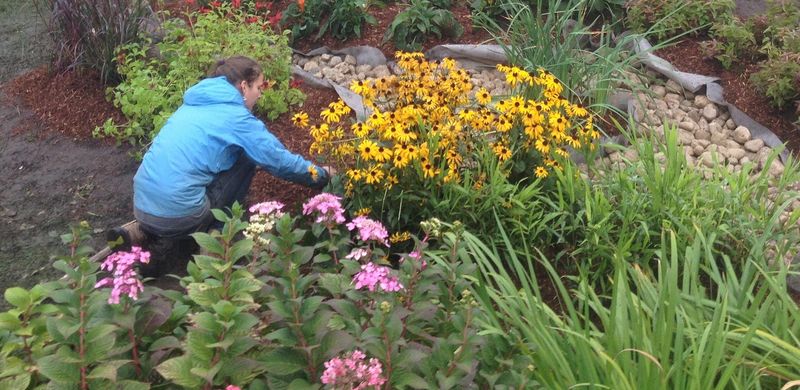
A planting that looks healthy on installation day can develop problems within the first few storm cycles if the inlet, outlet, or overflow route gets blocked. Make a habit of walking the area after significant rain events, especially during the first year.
Look for signs that water is backing up and not moving, soil that is washing away at the inlet where flow enters the planting, and debris or sediment accumulating over the outlet or overflow channel.
Clogged inlets and outlets are among the most common maintenance failures in residential rain gardens and wet plantings. Leaves, mulch, and sediment can plug a narrow outlet within a season, turning a functional rain garden into a stagnant pool.
Clearing those pathways is straightforward but easy to overlook if you are not checking regularly. If erosion is carving a channel through the bed, a layer of gravel or river rock at the inlet point can slow the flow and protect the soil.
Mosquito risk is worth addressing directly, because wet plantings near homes raise reasonable concerns. EPA guidance on stormwater structures and mosquitoes explains that properly designed rain gardens generally do not sustain mosquito populations because standing water typically does not remain long enough to support the aquatic stages of mosquito development, which commonly require roughly 7 to 10 days in calm water.
The sedge itself is not a mosquito deterrent, and the plant cannot compensate for a site where water sits stagnant for extended periods.
If water remains after the expected infiltration window, the problem is drainage, not the plant choice. Correct the underlying cause, whether that is a clogged outlet, a soil permeability issue, or a grading problem, rather than hoping the sedge will absorb the excess.
A well-functioning site and routine monitoring together are what keep the wet planting from becoming a mosquito concern.
Expect specific wildlife benefits, not a blanket pollinator promise
Sallow sedge earns its place in a native planting for ecological reasons that are real but specific. NC State Extension documents that the plant supports larvae of certain satyrine butterflies, a group that includes species such as the little wood satyr and the common wood nymph.
Those larvae feed on sedge foliage, so a healthy clump provides genuine caterpillar habitat rather than just adult nectaring opportunity. The flowers of sallow sedge are described as insignificant, meaning it is not a meaningful nectar source and should not be marketed as a universal pollinator magnet.
Beyond butterfly larvae, the plant produces small dry fruits called achenes that birds and small mammals consume. It also provides low cover that ground-feeding birds and small animals use for shelter and foraging.
These are documented, useful ecological functions, but they are not a promise that any particular bird species will move into your yard or that pest populations will drop as a result of the planting.
Two related native sedges are sometimes compared to sallow sedge for wet-site use. Gray’s sedge (Carex grayi) is another North Carolina native with showy, star-shaped seed heads and documented wildlife value, but it needs consistent moisture at all times and performs poorly if the soil dries out between rain events.
That makes it a better fit for a reliably wet site than for one that fluctuates.
Southern waxy sedge (Carex glaucescens) is native to the Southeast and suited to wet conditions, but NC State lists its documented North Carolina distribution as the Coastal Plain and Piedmont rather than all three regions of the state. If you are gardening in the Mountains, sallow sedge has broader documented regional support across North Carolina’s full range of elevations and conditions.
Choose sallow sedge only after the site passes the safety test
Sallow sedge earns a place in the right yard, but the right yard has to meet a few clear conditions first. The downspout runoff needs a safe dispersal path, the planting area must sit away from the foundation with the grade sloped away from the house, and the site should match the plant’s documented preferences for moist soil, sun or partial shade, and enough room for its 1-to-3-foot mature spread.
When those conditions are met, sallow sedge is a genuinely capable native option for a wet pocket or rain garden edge that most homeowners have not considered.
What the sedge cannot do is equally important to state plainly. It will not repair a leaking gutter, correct a grading problem, fix a failed downspout connection, manage mosquitoes, or substitute for overflow planning.
NC State’s rainscaping guidance and EPA’s rain garden how-to both make clear that the plant is one component of a system, not a replacement for the system itself. Persistent ponding that lasts beyond three days still needs diagnosis before any plant goes in the ground.
When the site genuinely qualifies, sallow sedge transforms a corner that has defeated every previous plant into a low-maintenance, ecologically useful feature. That is a real payoff, and it is worth pursuing, once the water is handled right.
A corner that used to be a muddy liability becomes, with the right preparation, the one spot in the yard where a native plant actually looks like it belongs.