
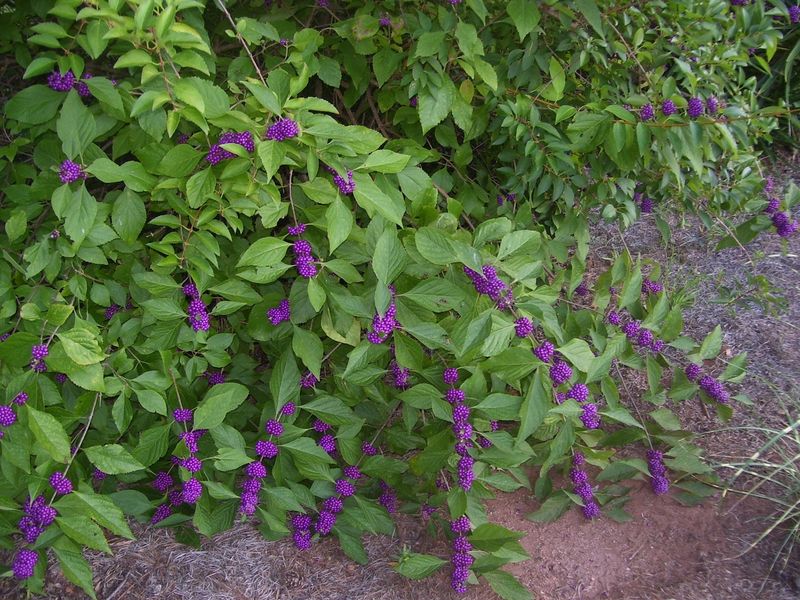
A story has been circulating among gardeners that a North Carolina native shrub can actually block mosquitoes along a backyard edge, and it sounds almost too good to be true. That shrub is American beautyberry, and the buzz around it starts with real science, just not the kind that protects your porch.
Understanding what the research actually found, and what it did not, helps you make smarter choices about both your plantings and your mosquito plan.
The beautyberry claim starts with chemistry, not a mosquito barrier
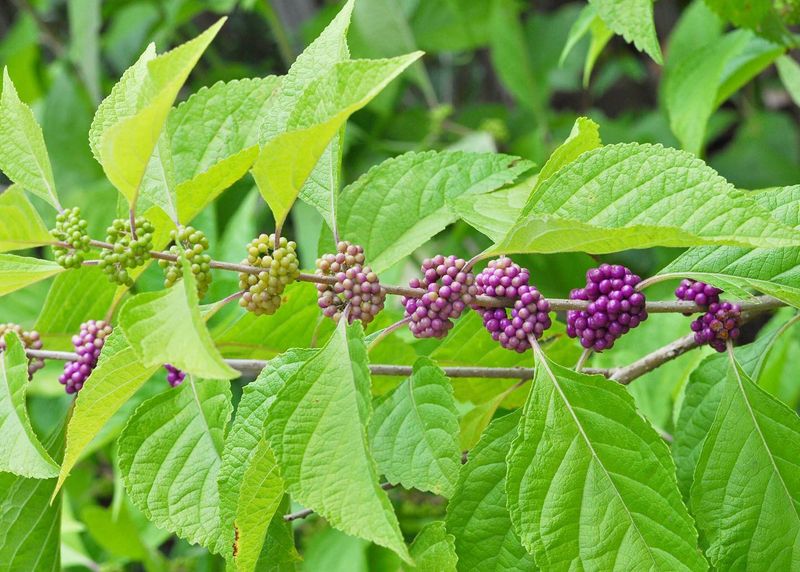
American beautyberry earns its name the moment its berries ripen. Callicarpa americana is a deciduous shrub native to North Carolina that typically grows between 3 and 8 feet tall, with arching stems that become studded in late summer with tight clusters of vivid magenta-purple fruit.
NC State Extension’s plant profile notes that those berries feed songbirds, wild turkeys, foxes, and small mammals, making beautyberry a genuinely useful addition to a wildlife-friendly yard.
The mosquito story attached to this plant does not start with a barrier or a repellent zone. It starts in a laboratory, where researchers studying compounds extracted from beautyberry leaves found chemicals that showed bite-deterrent activity against specific mosquito species.
That discovery gave beautyberry a reputation that has since grown well beyond what the science actually demonstrated.
Beautyberry remains a worthwhile native landscape plant on its own terms, regardless of how the mosquito angle holds up. It offers wildlife value, seasonal interest, and a low-maintenance presence in the right location.
The mosquito-repellent story is interesting chemistry, not a yard-scale defense strategy, and sorting out that difference is exactly where a homeowner’s planning should begin.
Mosquitoes breed in standing water, not in shrubs
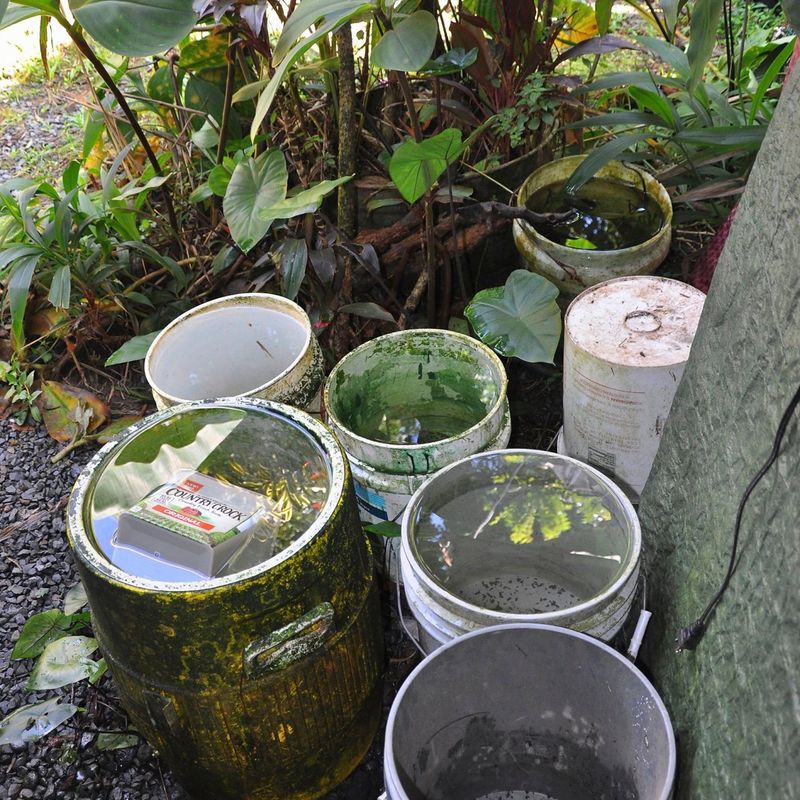
Mosquito larvae and pupae cannot develop in soil, in leaf litter, or on shrub stems. Every mosquito that eventually bites you spent its early life in standing water, and CDC guidance on where mosquitoes live makes clear that any container, depression, or drainage problem holding water is a potential nursery.
Planting or removing a shrub does nothing to that equation.
The confusion often comes from the fact that damp ground near a shrub border looks like the kind of place mosquitoes would love. Moist soil under a beautyberry or sweetspire is genuinely different from a clogged gutter, a bucket left in the yard, a tire, a cracked tree stump, or a saucer under a flowerpot.
The soil stays damp but drains. The containers hold still water long enough for a full larval cycle to complete.
Small pockets matter more than most homeowners expect. NC State Extension’s mosquito prevention guidance points out that even a bottle cap holds enough water to support mosquito larvae, and recommends draining or filling ruts, tree holes, stumps, and any low spots that collect water after rain.
A shady edge with dense shrubs can hide those pockets from view, which is one reason the edge feels like a mosquito factory when the real problem is a forgotten saucer or a plugged downspout extension nearby.
Correcting that misread matters because it redirects effort. Swapping one shrub for another will not reduce the mosquito population if water-holding containers are still sitting within 100 feet of the patio.
Source reduction comes first, always, before any discussion of what to plant.
A shady border can provide adult resting cover
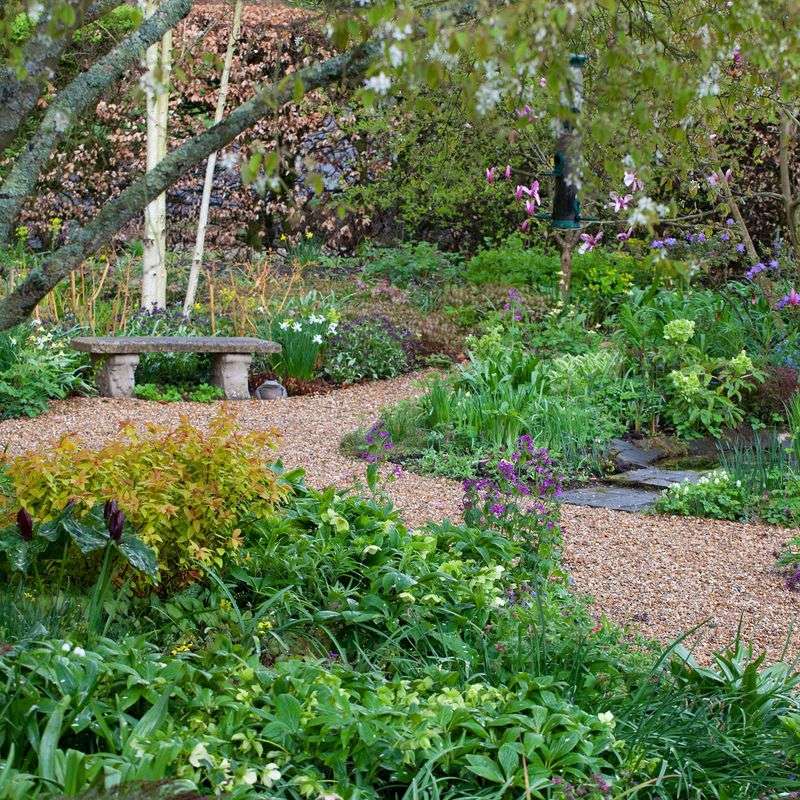
Adult mosquitoes need somewhere to wait between meals. Dark, humid spots close to the ground are exactly what they seek, and a dense shrub border along a shady edge can offer both.
This is why mosquitoes often seem to pour out of a planted edge the moment someone walks near it, even when there is no standing water visible anywhere close by.
CDC’s mosquito control at home guidance specifically identifies dense vegetation, thickets, and sheltered areas beneath decks as adult resting sites and recommends keeping grass cut short and trimming shrubs to reduce harborage near living areas. That is a meaningful step, but it comes with an honest limit: trimming your own border will not stop mosquitoes from resting in a neighbor’s overgrown hedge or arriving from a drainage ditch two lots away.
Resting habitat and breeding habitat are two separate problems that call for two separate responses. Breeding happens in water and gets addressed by removing water.
Resting happens in vegetation and gets reduced by managing that vegetation, particularly near doors, windows, patios, and outdoor seating. A shrub border that has grown into a solid wall of foliage touching the ground is providing more resting cover than a border that is maintained with some airflow and clearance beneath it.
NC State Extension’s community mosquito control resource echoes this point by recommending that homeowners trim vegetation and reduce harborage near the spaces where people spend time. The recommendation is practical and realistic: reduce the resting spots closest to where your family sits, and accept that the effect covers your immediate area, not the whole neighborhood.
What beautyberry’s laboratory evidence actually shows

The peer-reviewed research behind beautyberry’s reputation is worth reading carefully, because the gap between what it found and what the plant-as-repellent story claims is significant. A 2005 study published in the Journal of Agricultural and Food Chemistry identified compounds including callicarpenal and intermedeol in beautyberry leaves and documented bite-deterrent activity against Aedes aegypti and Anopheles stephensi mosquitoes under controlled laboratory conditions.
Those are two specific species tested in a contained setting, not a representative sample of the many mosquito species active in North Carolina.
Three separate claims often get merged into one when this research gets summarized online, and keeping them apart matters. First, an extract or isolated compound from beautyberry leaves can show bite-deterrent activity in a lab test.
Second, crushed leaves rubbed on a surface or cloth may deter bites briefly in a limited experiment. Third, a living beautyberry shrub planted in a yard protects people nearby from mosquitoes.
The laboratory evidence supports the first claim and offers limited support for the second. There is no evidence for the third.
A living shrub does not release a continuous cloud of callicarpenal into the surrounding air at concentrations that deter mosquitoes. The compounds are inside the leaf tissue, and they become accessible only when the leaf is crushed or processed.
That distinction is not a technicality; it is the reason the plant cannot function as a passive barrier in a yard.
Registered skin repellents have been through safety and effectiveness evaluation that no home preparation matches. EPA’s repellent regulation overview explains that the agency evaluates both efficacy and safety data before a skin-applied repellent can be sold with protection claims.
Beautyberry chemistry is genuinely interesting, but it has not completed that path, and homemade preparations from the plant have no standardized concentration, no safety data, and no established application guidance.
Match the shrub to the site, not to the pest claim
Choosing a native shrub should start with honest site conditions, not with mosquito claims that the plant cannot deliver. American beautyberry is a full-sun to part-shade plant, and NC State’s beautyberry profile is direct about the fact that it does not tolerate deep shade well.
Better fruit production and denser, more attractive growth happen with more light. A woodland edge with a few hours of direct sun, an open understory, a fence line with afternoon exposure, or a partly shaded border near a tree line are all good fits.
A deeply shaded wall of mature tree canopy is not.
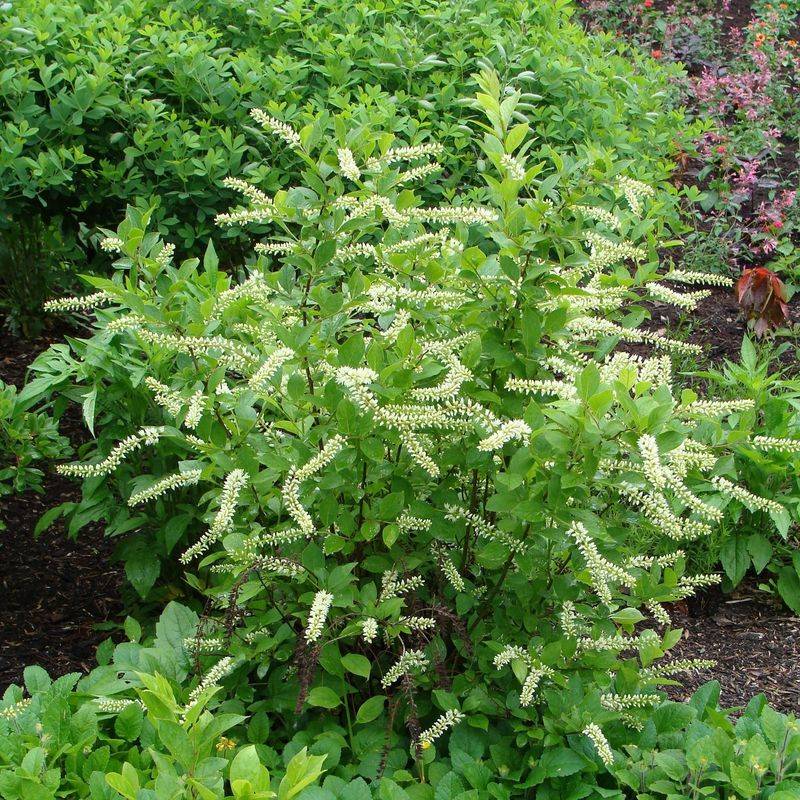
For a genuinely wet, shady, or periodically flooded North Carolina edge, Virginia sweetspire (Itea virginica) is the stronger match. NC State’s sweetspire profile describes a native shrub suited to moist woods, stream margins, swamp edges, rain gardens, and sites that flood periodically.
It tolerates dappled shade and partial shade, spreads gradually by root suckering to form a useful border, and puts on a reliable fall color display even in low-light conditions.
Sweetspire brings genuine site-matching value to a damp, shaded edge where beautyberry would struggle and decline. That is the reason to choose it, and the only reason supported by evidence.
No reliable research establishes that sweetspire repels or reduces mosquitoes in any way, and presenting it as a mosquito fix would repeat the same mistake made with beautyberry.
Both plants earn a place in a North Carolina yard on their own merits: beautyberry for wildlife value and seasonal berry color in a sunnier spot, sweetspire for structural planting in the wetter, shadier locations where few native shrubs perform consistently. Matching the plant to the site rather than to a pest claim is how both plants actually succeed.
Pair native planting with a weekly source-reduction routine
Planting a native shrub border is a weekend project. Controlling mosquitoes around that border is a weekly habit.
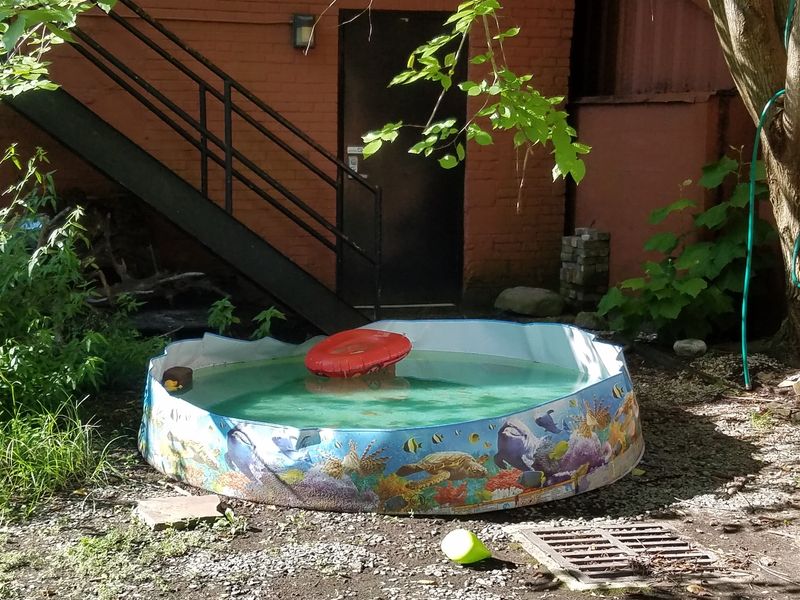
The two work together only when the habit comes first, and CDC’s mosquito control at home page recommends emptying, scrubbing, turning over, covering, or discarding any water-holding item at least once a week. That weekly reset interrupts the larval cycle before it completes.
Walk the edge and the surrounding yard with that goal in mind. Check flowerpot saucers, birdbaths, buckets, toys, recycling bins, and the trays under outdoor furniture.
Check gutters after rain, because a clogged downspout section can hold water for weeks without being visible from the ground. Tires, tarps with low spots, and old wheelbarrows are common overlooked sites.
NC State Extension’s post-storm mosquito guidance adds tree holes, ruts, stumps, and low depressions in the lawn to the inspection list, especially after heavy rain events that are common in North Carolina summers. Any depression that holds water for more than a few days is a potential breeding site, and filling or grading those spots removes the problem permanently rather than requiring weekly attention.
Trim the shrub border itself to maintain some airflow and clearance near the ground, particularly within 10 to 15 feet of doors, patios, and seating areas. That reduces adult resting cover close to people without requiring the border to disappear entirely.
Switching from beautyberry to sweetspire, or adding sweetspire where the site demands it, will not reduce mosquitoes unless the water sources are addressed.
For water that genuinely cannot be dumped or covered, a labeled Bti product such as mosquito dunks is a targeted option. NC State Extension’s neighborhood mosquito management resource presents Bti as compatible with people, pets, fish, and beneficial insects when used according to the product label.
The label is not optional reading; it specifies the correct application rate, frequency, and approved water types. Follow it exactly, and use Bti only after source reduction has already addressed every container that can be emptied.
Use personal protection when mosquitoes keep arriving
Mosquitoes are not contained by property lines. A well-managed yard with no standing water and trimmed vegetation will still receive adults flying in from a neighbor’s untreated birdbath, a drainage ditch nearby, or a low area down the street.
NC State Extension’s community mosquito control guidance acknowledges this directly, noting that mosquitoes can move in from surrounding untreated areas and that isolated treatments on a single property are unlikely to end persistent pressure.
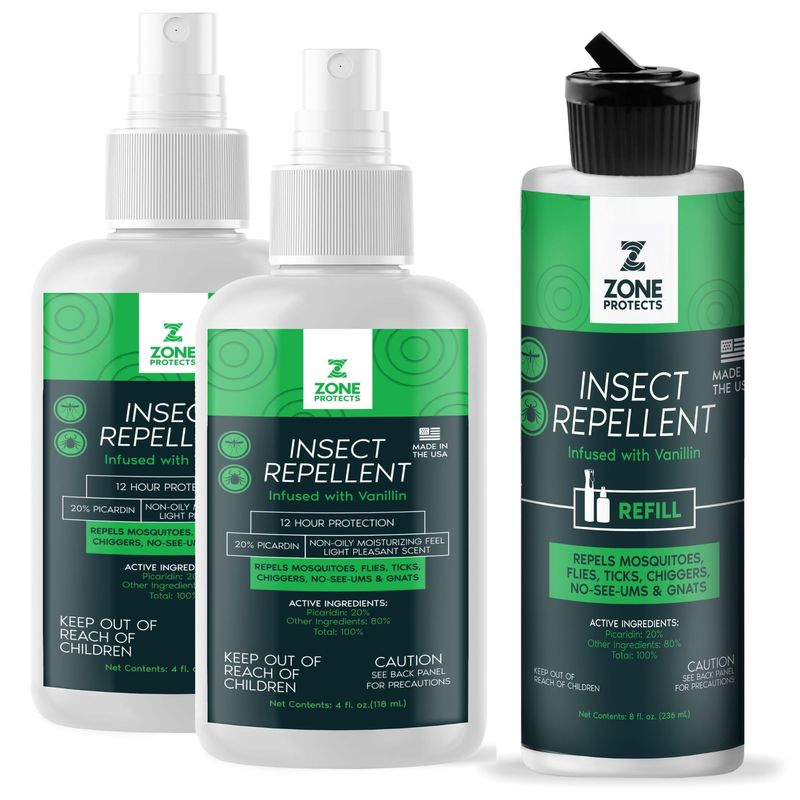
When mosquitoes keep arriving despite a solid source-reduction routine, personal protection is the practical next layer. EPA-registered repellents applied according to their labels are the evidence-based choice.
EPA’s repellent regulation page explains the safety and efficacy review that registered products complete before reaching store shelves, and EPA’s ingredient list identifies DEET, picaridin, IR3535, oil of lemon eucalyptus formulations (PMD), and 2-undecanone among supported active ingredients. Pure essential oil of lemon eucalyptus sold as an aromatherapy product is not the same thing as a registered formulation containing PMD, and the two should not be treated as interchangeable.
Homemade beautyberry preparations are not a substitute here. The laboratory chemistry is real, but no standardized concentration, delivery method, or safety profile exists for a home preparation.
Registered repellents have that documentation; a jar of crushed leaves does not.
Grow beautyberry where the site gives it enough light to thrive and produce the berry crop that birds rely on. Choose sweetspire where the edge stays genuinely wet and shaded.
Manage mosquito exposure through weekly water removal, vegetation upkeep near living areas, and a labeled repellent when pressure stays high. The shrub earns its place in the yard through wildlife value and its fascinating chemistry story, and that turns out to be more than enough.