
If your backyard bumps up against woods or a brushy fence line, ticks are likely closer than you think. North Carolina homeowners face real pressure from several tick species that can carry serious diseases, and the lawn-to-woods edge is one of the riskiest spots on your property.
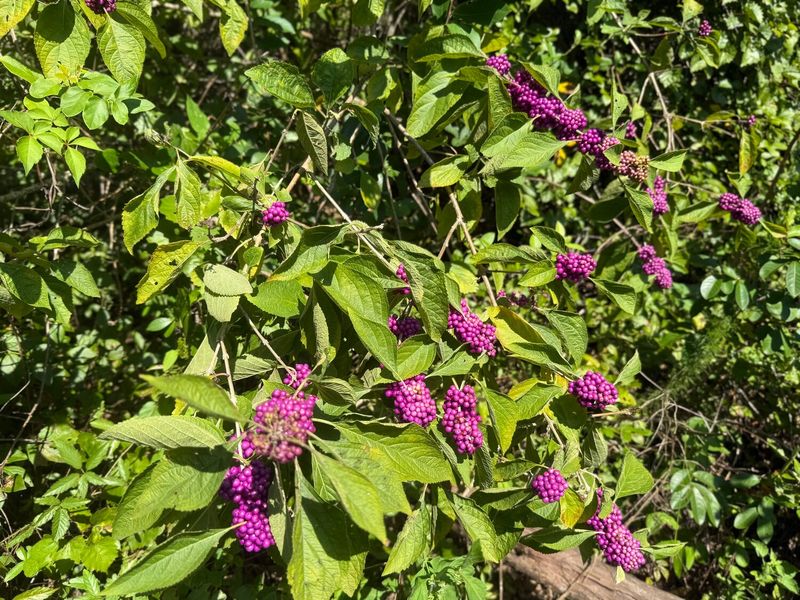
American beautyberry is a native shrub worth knowing about for that edge, not because it creates a pest-proof wall, but because it fits the habitat and its leaves contain compounds that caught the attention of tick researchers.
Several conditions at a wooded edge can increase tick exposure
Walking from a mowed lawn into a shaded, brushy tree line feels like crossing an invisible line, and for ticks, that border is exactly where activity concentrates. Leaf litter holds moisture and shelters tick nymphs through their most active feeding stages.
Tall grass, low shrubs, and accumulated brush give questing ticks a perch at the height where they can latch onto a passing person, pet, or deer.
North Carolina is home to several tick species that matter medically. The NC Department of Health and Human Services 2024 tickborne disease surveillance summary tracks blacklegged ticks, lone star ticks, and American dog ticks as the primary human-biting species in the state, each with its own seasonal peak and disease associations.
Blacklegged ticks are linked to Lyme disease and anaplasmosis; lone star ticks are tied to ehrlichiosis and STARI; American dog ticks can carry Rocky Mountain spotted fever.
Animal movement adds another layer. Deer, raccoons, opossums, and rodents all travel along wooded edges and can carry ticks into areas closer to your home.
The combination of habitat features and animal activity at the lawn-to-woods transition makes that strip genuinely higher risk than the middle of a sunny, mowed yard.
Managing that edge well requires more than choosing the right plant. CDC guidance on preventing tick bites emphasizes habitat modification, landscape barriers, personal repellents, and daily tick checks as the strongest tools available.
Any native shrub recommendation, including American beautyberry, should be understood as one piece of a managed yard plan rather than a substitute for those measures.
American beautyberry suits a bright North Carolina woodland margin
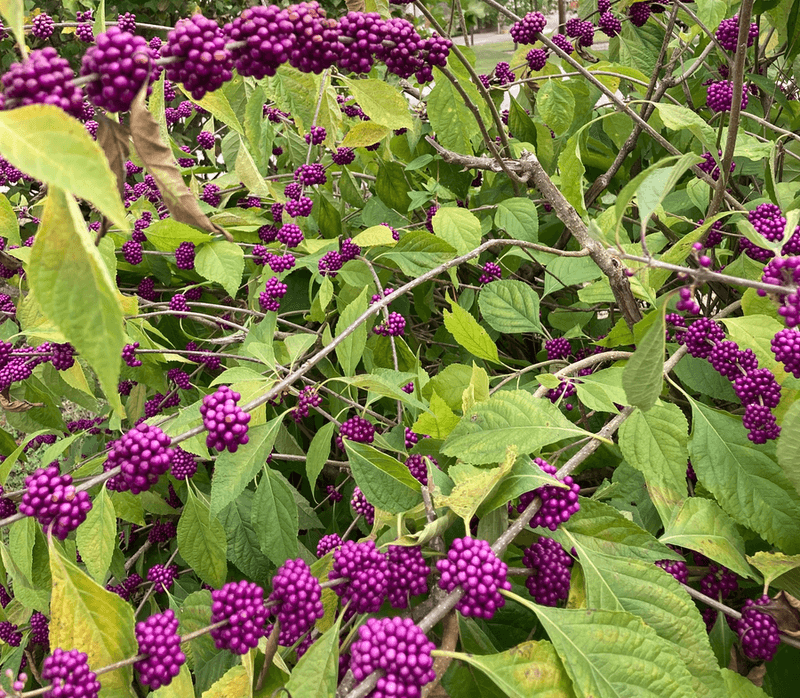
Callicarpa americana, commonly called American beautyberry, is native to North Carolina and the broader southeastern United States, growing naturally in open woods, thickets, and woodland margins from the coastal plain to the Piedmont. The NC State Extension Gardener Plant Toolbox lists it for native gardens, wildlife gardens, pollinator gardens, naturalized areas, and woodland-edge settings, which lines up well with the kind of yard-edge planting most NC homeowners are considering.
At maturity, the shrub typically reaches about 3 to 8 feet tall and 3 to 6 feet wide, with long arching branches that give it a loose, open form. That size makes it manageable in a transition planting without overwhelming a smaller yard.
Because it is deciduous, it drops its leaves in winter and can look quite open and bare from roughly November through early spring, so homeowners expecting a year-round screen will need to adjust their expectations.
Sunlight strongly influences how well the plant performs. Beautyberry tolerates part shade and can grow in dappled light, but full sun generally produces heavier berry crops and a more vigorous plant.
The University of Georgia Cooperative Extension notes in its native plants publication that the shrub does best at a bright woodland margin rather than in the darkest interior of a wooded area. That guidance matches the NC State profile and points to the same practical placement: the sunlit outer edge of the tree line, not the shaded understory farther back.
Local conditions still shape results. Soil drainage, available moisture, and regional heat all affect how the plant establishes and fruits.
A beautyberry planted in heavy clay with poor drainage or in dense shade will underperform compared to one sited at a well-drained, sunny edge. Matching the plant to a site that fits its actual needs is the starting point for getting value from it.
Laboratory compounds do not prove that a living shrub blocks ticks
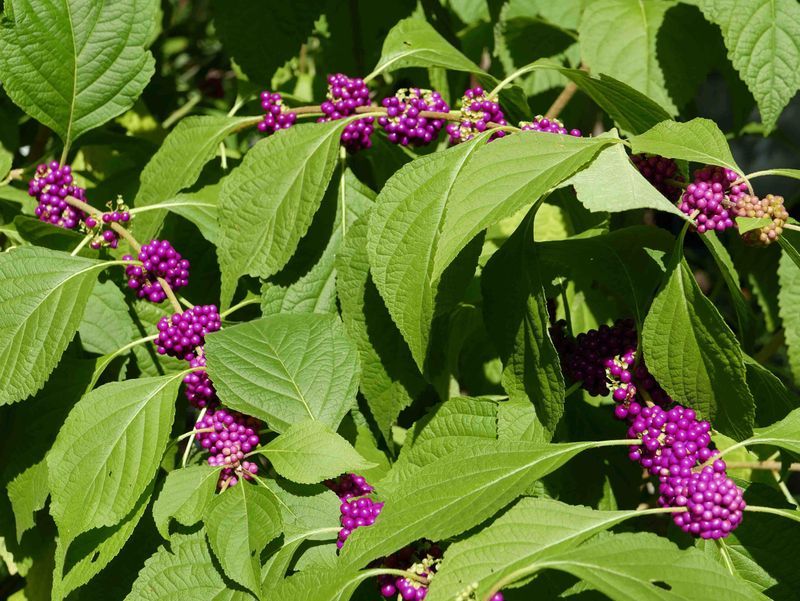
The tick-repellency story around American beautyberry starts with a specific laboratory study, and understanding what that study actually tested matters before drawing any conclusions about planting the shrub in your yard. USDA Agricultural Research Service scientists identified two terpenoid compounds in beautyberry leaves, callicarpenal and intermedeol, and tested their isolated, purified forms on cloth in a controlled laboratory assay.
The 2007 Carroll et al. study published in the Journal of Medical Entomology reported that at one tested concentration, callicarpenal and intermedeol repelled 96 to 98 percent of blacklegged tick nymphs on treated cloth. Those numbers sound impressive, and for blacklegged ticks specifically, they represent a genuinely interesting laboratory result.
However, the same compounds performed far less effectively against lone star tick nymphs: at a higher tested concentration, callicarpenal repelled about 20 percent and intermedeol about 40 percent. North Carolina homeowners deal with both species, so the difference matters.
Repellency also faded over time under test conditions. Callicarpenal repelled 100 percent of blacklegged tick nymphs at three hours but dropped to about 53 percent at four hours.
That time-dependent decline reinforces the idea that these are promising laboratory chemicals, not a persistent field defense. The experiment used treated cloth wrapped around a finger in a controlled setting, not a residential yard, not crushed leaves scattered around a shrub, and not a living plant growing at a wooded edge.
The leap from isolated compounds on treated cloth to a planted shrub functioning as a tick barrier in a residential landscape is a large one, and no published research in the available record supports making it. The study did not measure tick populations around living beautyberry shrubs, test the effect of the plant on yard-level tick abundance, or evaluate any life stage other than nymphs.
Those gaps are not a criticism of the research; they simply define what the evidence shows and what it does not. A homeowner who plants beautyberry expecting it to reduce ticks in the yard is relying on a promise the science has not made.
Create a managed transition zone before adding shrubs
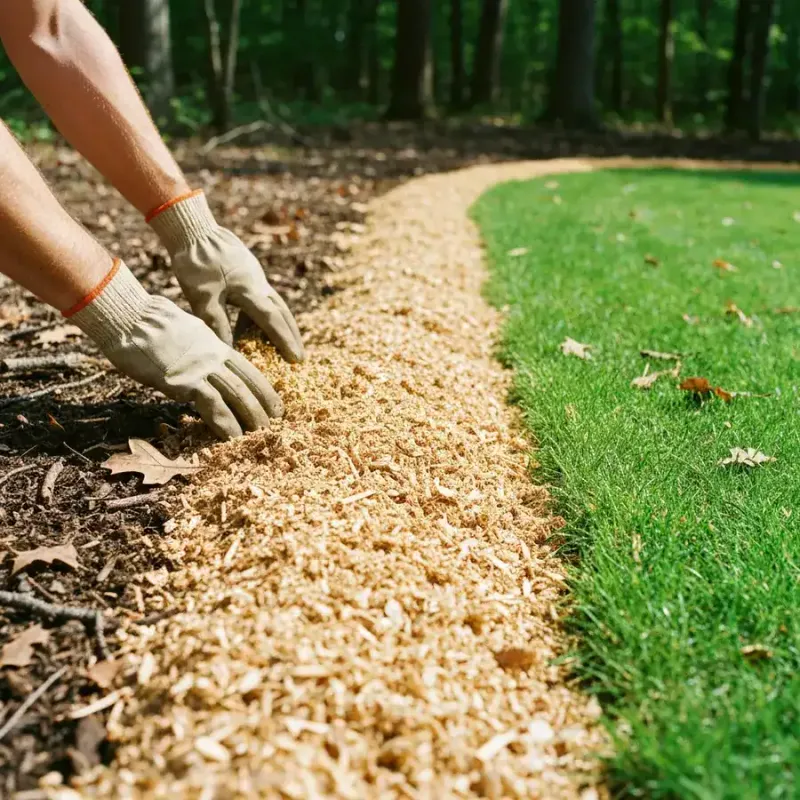
Before any shrub goes in the ground at your yard’s edge, the physical conditions of that transition strip deserve attention. Leaf litter, tall grass, and accumulated brush are the features that make the lawn-to-woods border hospitable to ticks, and removing or reducing them has stronger evidence behind it than any planting choice.
CDC Lyme disease prevention guidance and broader tick-bite prevention recommendations both point to the same practical steps: remove leaf litter regularly, clear tall grass and brush near the lawn edge, mow on a consistent schedule, and trim overhanging branches and low shrubs to let more sunlight reach the ground. Ticks prefer cool, moist, shaded environments, and improving sunlight penetration at the edge makes the habitat less suitable for them.
Installing a 3-foot-wide wood-chip or gravel strip between the lawn and the wooded area is one of the most concrete steps a homeowner can take. That barrier creates a dry, open zone that ticks are reluctant to cross, and it also gives you a visible boundary that helps keep foot traffic, children, and pets from wandering into the brushier habitat without thinking about it.
Keeping recreational areas, play sets, and seating away from the wooded edge itself compounds the benefit.
NC Wildlife’s suburban backyard guidance recommends transitioning from lawn to progressively taller native vegetation and shrubs as you move toward wooded areas, which supports habitat for birds and other wildlife. Beautyberry can fit naturally into the outer or habitat-oriented portion of that graduated planting, positioned toward the wooded side of the transition rather than adjacent to the deck or play area.
The shrub belongs in the habitat zone, not in the clear recreation zone you are actively maintaining.
Getting the maintenance habits in place first, and then adding native shrubs in appropriate locations, gives you a yard edge that works on multiple levels: lower tick habitat quality in the transition zone, clearer separation between recreation space and brushy cover, and native plants filling the right ecological roles farther back.
Use beautyberry for seasonal habitat, not as a recreation-zone shield
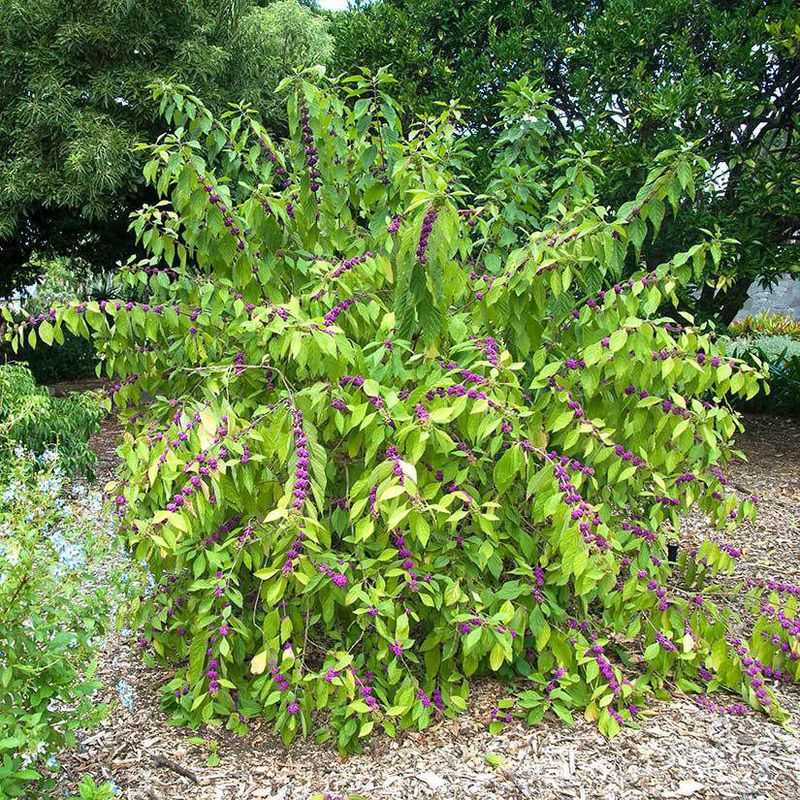
American beautyberry earns a place in a North Carolina yard edge for reasons that have nothing to do with ticks. From late spring into early summer, the shrub produces small pinkish-white flowers along its branches.
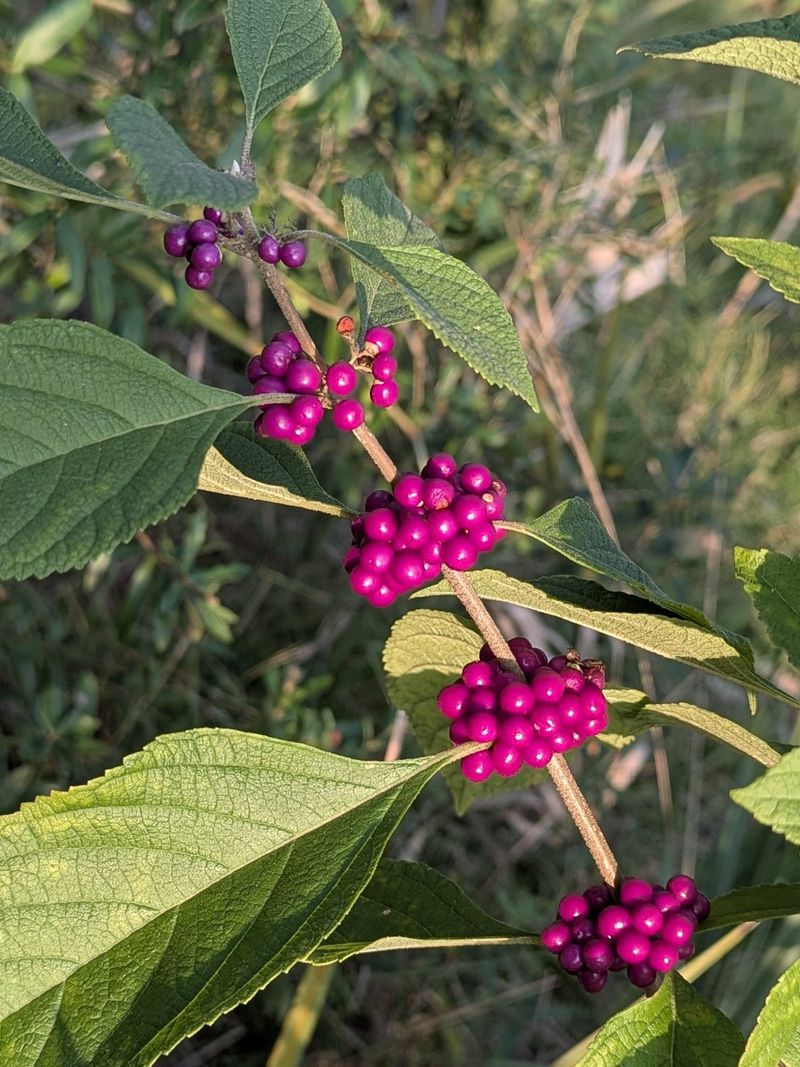
By August, those give way to the feature that makes the plant genuinely striking: tight clusters of bright purple berries that run along the stems and can persist into early winter depending on how quickly birds find them.
USDA Forest Service species review material on American beautyberry and NC State Extension records both document the shrub’s value to wildlife. Robins, brown thrashers, towhees, mockingbirds, and other songbirds feed on the berries, as do squirrels, raccoons, opossums, and foxes.
For a homeowner trying to support native wildlife at the yard edge, that list of visitors is a genuine draw.
NC Wildlife’s suburban backyard habitat concept favors a graduated planting from lawn to native groundcovers to shrubs to taller canopy at the wooded edge. Beautyberry fits the shrub layer of that transition naturally, especially when positioned toward the wooded side away from high-traffic areas.
Dense shrubs placed immediately beside a patio, play set, or frequently used path create brushy cover that can actually increase tick exposure at the spots where people spend the most time, so placement matters.
Two practical limits deserve honest mention. Beautyberry is deciduous, which means the shrub goes bare in winter and offers no visual screening from roughly November through March or April.
Homeowners who want year-round cover or a dense privacy hedge will not get that from this plant. Deer browsing is also site-dependent: NC State Extension describes beautyberry as deer- and rabbit-resistant, while USDA Forest Service material identifies it as desirable deer browse.
Deer pressure varies by local population density and food availability, so treating any deer-resistance label as a guarantee is risky. Choose the plant for its habitat fit and seasonal beauty, and plan around its actual growth habits rather than an idealized version of them.
Do not turn beautyberry leaves into a homemade tick repellent

The laboratory finding about callicarpenal and intermedeol is genuinely interesting chemistry, but it does not translate into a safe or reliable home remedy. The Carroll et al. study tested purified, isolated compounds at controlled concentrations in a laboratory assay.
It was not a human-safety trial, a consumer-product study, or a test of what happens when someone rubs fresh leaves on their skin or clothing. Rubbing crushed beautyberry leaves on yourself, your children, or your pets as a substitute for a registered repellent is not something the research supports, and no safe dose, reliable duration, or approved formulation has been established from these sources.
Homemade tinctures, dried-leaf preparations, or essential-oil concentrates from beautyberry fall into the same category. The isolation process used in the study is not something that happens when you crush a leaf in your hand or steep leaves in oil at home, and the concentration of active compounds in casual preparations is unknown.
Applying an unknown concentration of plant-derived chemicals to skin, especially on children, carries risks that outweigh any speculative benefit.
The EPA’s current list of registered skin-applied repellent ingredients does not include beautyberry, callicarpenal, or intermedeol as consumer products. For personal protection against ticks, CDC recommends EPA-registered repellents such as DEET, picaridin, IR3535, oil of lemon eucalyptus or PMD, or 2-undecanone, all used according to label directions.
Permethrin-treated clothing and gear add another layer of protection for people spending time in brushy or wooded areas.
Daily tick checks for everyone in the household, including pets, remain essential regardless of what repellent is used. Prompt removal of any attached tick within 24 to 36 hours significantly reduces the risk of disease transmission from blacklegged ticks.
American beautyberry is a habitat plant and an ornamental shrub. The personal-protection job belongs to products that have been tested, registered, and labeled for that purpose.
Treat American beautyberry as one layer of a managed yard edge
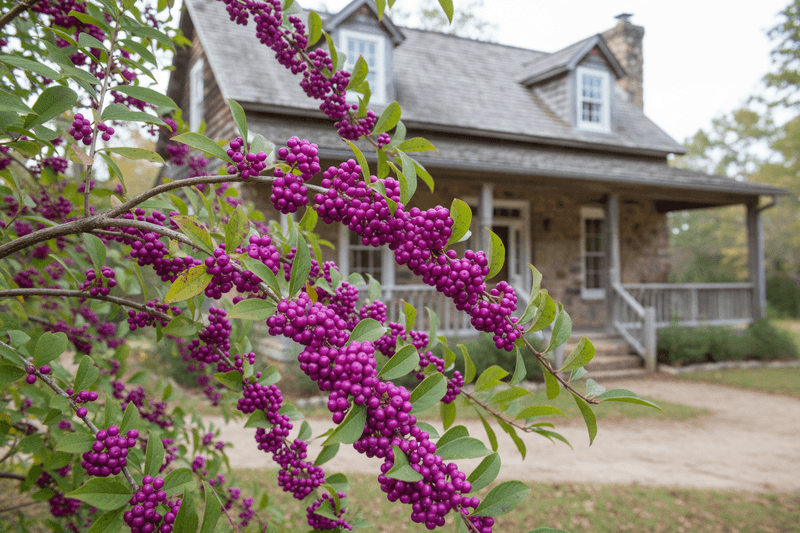
American beautyberry earns consideration for a North Carolina woodland-edge planting based on its native status, its seasonal display, and its value to songbirds and small mammals. NC State Extension confirms it as a suitable native shrub for woodland edges, naturalized areas, and wildlife gardens, which covers the exact setting most homeowners are trying to manage.
The leaf chemistry is a genuinely interesting footnote in the research record, but it does not change what the plant does in a yard.
Place it in the sunny, habitat-oriented outer portion of your transition planting, away from patios, play areas, and paths where people spend regular time. Maintain the 3-foot wood-chip or gravel strip, keep leaf litter raked back, mow the lawn edge consistently, and preserve sunlight in the recreation zone.
Those steps, supported by CDC tick prevention guidance, carry the strongest evidence for reducing yard-level tick exposure. Beautyberry supports the habitat layer of that plan; it does not replace the maintenance layer.
The 2007 laboratory study on beautyberry leaf compounds is worth knowing about because it may eventually lead to a registered product, but that step has not happened yet. For now, a yard with well-managed edges, EPA-registered repellents on hand, and beautyberry growing where it belongs is a sensible, evidence-grounded approach.
A shrub that feeds thrashers and towhees all fall while fitting naturally into a managed Carolina edge is worth planting on its own terms.