
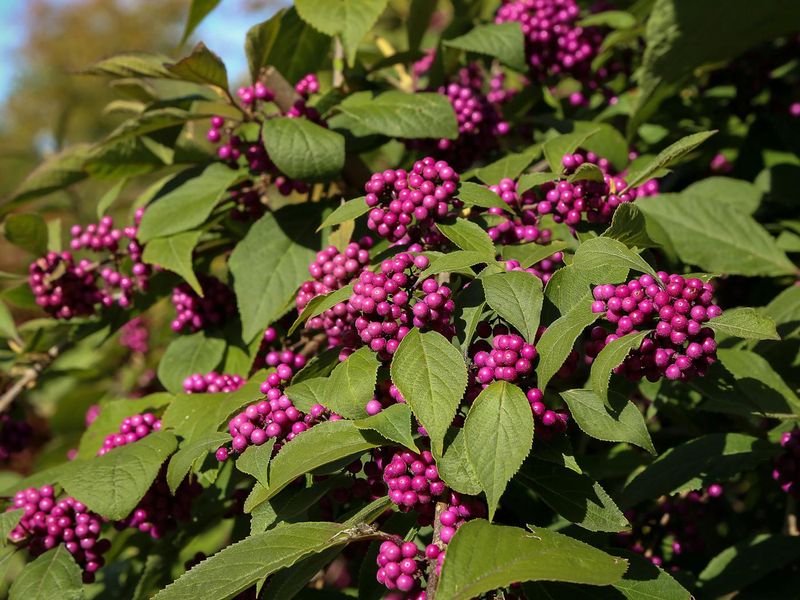
If you have a wooded property line in North Carolina, you have probably wondered what you can plant there that actually helps keep your outdoor spaces safer and more wildlife-friendly. American beautyberry, known by its botanical name Callicarpa americana, keeps coming up in that conversation because researchers found that compounds from its leaves showed real tick-repelling results in a laboratory.
Before you plant a row of beautyberry and call it done, though, there is an important gap between what the science actually tested and what many gardeners assume it means for their yards.
The wooded edge deserves attention, but it is not a guaranteed tick doorway
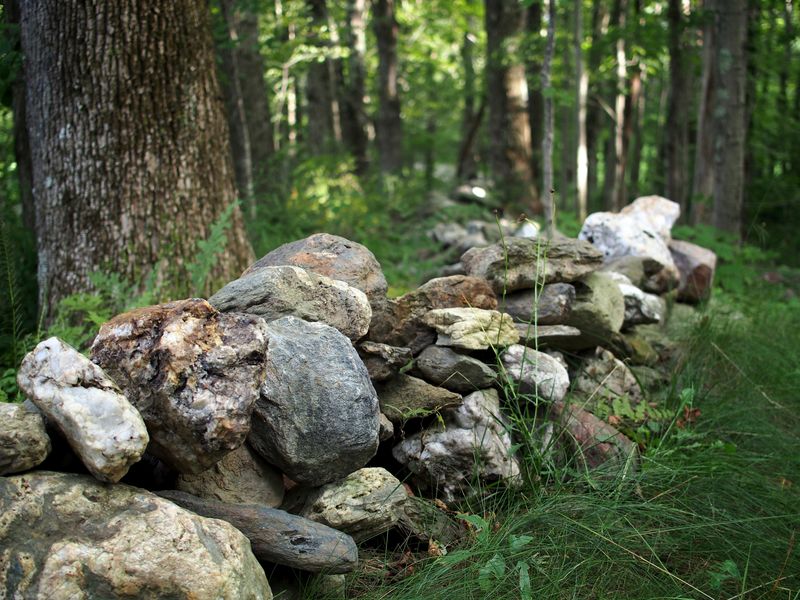
Wooded and brushy transitions along a property line can raise the chance of contact with ticks. Leaf litter, tall grass, shade, moisture, and nearby wildlife activity all create conditions that certain tick species favor, and that combination tends to concentrate along the yard-to-woods boundary more than in the middle of a sunny lawn.
That said, calling the wooded edge the guaranteed place ticks first invade your yard overstates the case.
Ticks also arrive on deer, rodents, birds, pets, and people moving through the landscape. Risk varies with vegetation type, local moisture levels, shade density, wildlife traffic, and which tick species are active in your area.
The wooded edge is a meaningful place to pay attention, but it is one part of a bigger picture rather than the single door ticks walk through.
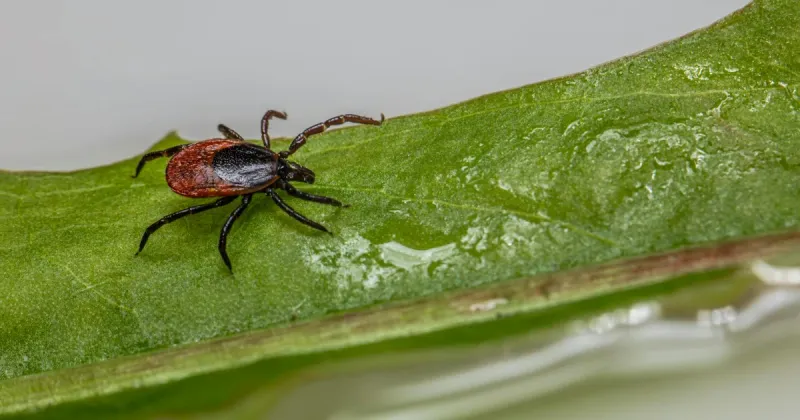
North Carolina has several human-biting tick species worth knowing. NC Cooperative Extension tick guidance identifies the lone star tick, the blacklegged tick (sometimes called the deer tick), the American dog tick, and the brown dog tick as species that bite people in the state.
Each differs in behavior, preferred habitat, seasonal activity, and disease associations, so no single yard measure addresses all of them equally.
The CDC Tick Management Handbook describes edge management as a way to reduce likely contact, particularly with blacklegged ticks, rather than a universal barrier or guaranteed prevention strategy. Removing leaf litter, trimming vegetation, and maintaining a clear transition can lower the odds of picking up a tick in your own yard, but results vary with site conditions, shade, initial tick pressure, and how consistently you keep up the work.
This article looks at where American beautyberry fits into that picture as a landscape plant, not as a replacement for the maintenance work that actually moves the needle.
American beautyberry gives the yard a native focal point
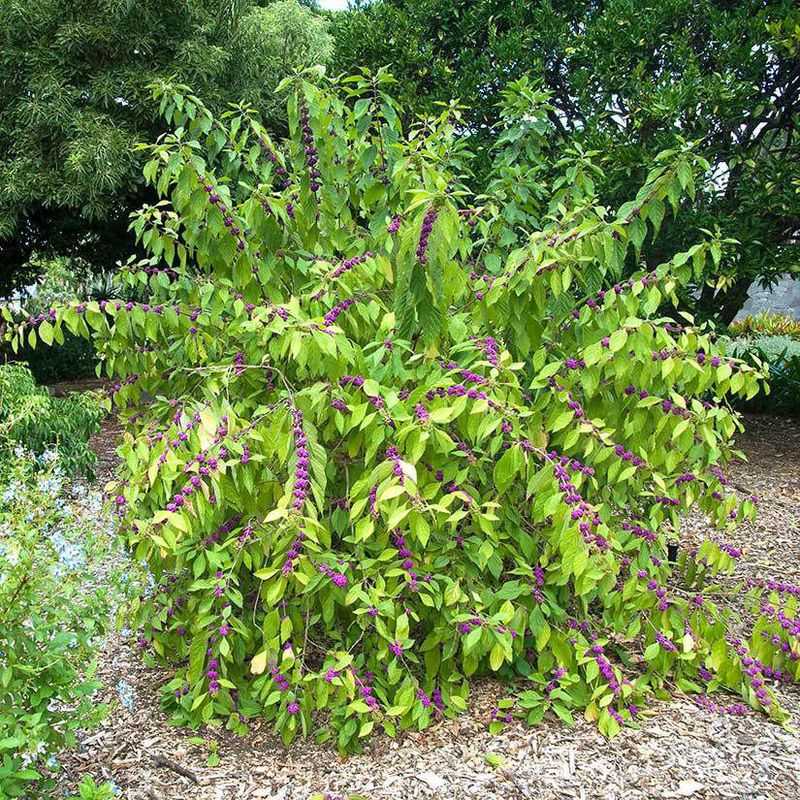
Callicarpa americana is native across all three of North Carolina’s major regions: the Coastal Plain, the Piedmont, and the Mountains. The NC State Extension Plant Toolbox lists it as adaptable across those regions and notes that it generally reaches three to eight feet tall and three to six feet wide at maturity.
That size range makes it a mid-layer shrub that fits naturally along a yard edge without overwhelming smaller garden beds.
Beautyberry performs best in full sun to partial shade with good drainage. It is not suited to deep shade, so planting it directly under a heavy tree canopy where little light reaches the ground will produce a weak, sparse plant.
Give it a spot where it gets at least a few hours of direct sun, and it will reward you with the feature it is best known for: dense clusters of vivid purple-magenta berries that appear in late summer and persist well into fall.
Those berry clusters are genuinely useful to wildlife. Songbirds including mockingbirds, robins, and catbirds feed on the fruit.
Small mammals also eat the berries, and the flowers attract native bees and other pollinators during the growing season. These benefits are real and stand on their own, completely separate from any question about tick behavior.
One practical note for buyers: not every plant sold as beautyberry in a nursery or garden center is Callicarpa americana. Several Asian beautyberry species are also in commercial trade and look broadly similar.
Asian species are not North Carolina natives and have not been the subject of the same research. Always confirm the botanical name before purchasing, and buy from a reputable native-plant nursery when possible to be certain you are getting the actual native species.
What the beautyberry study actually tested
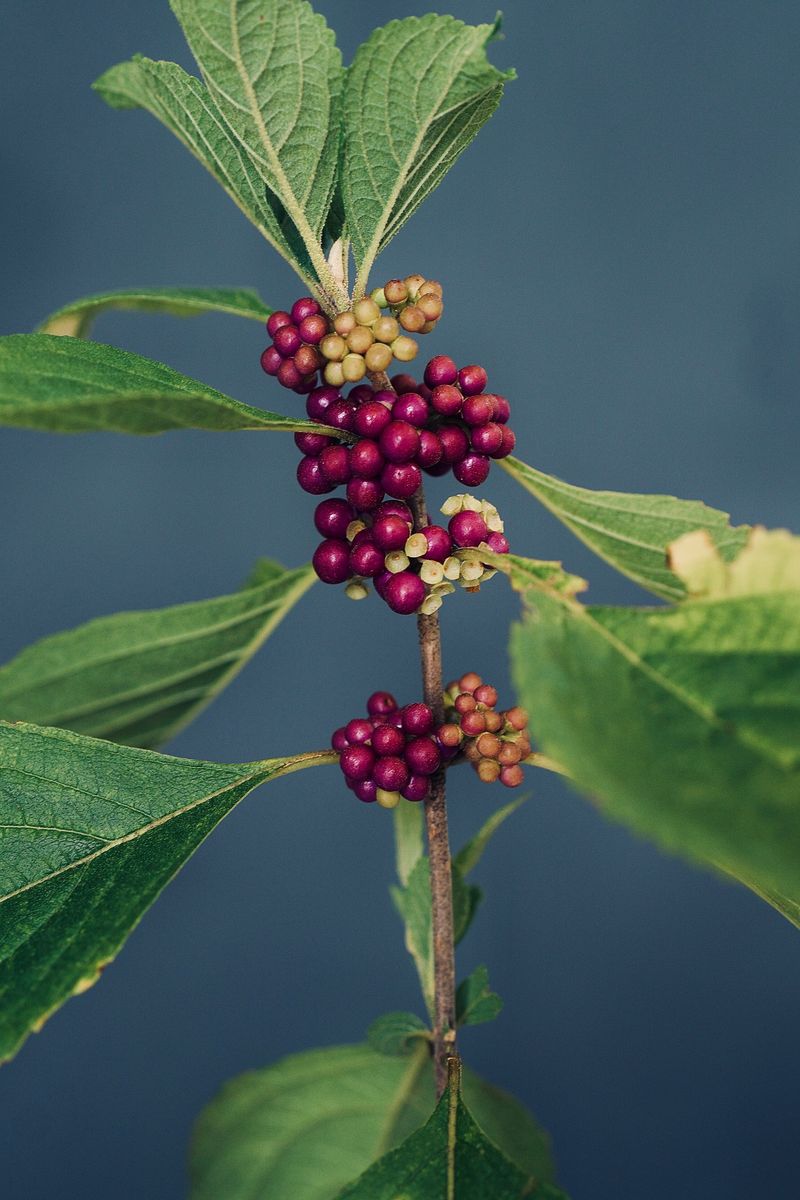
The research behind beautyberry’s tick reputation comes from a peer-reviewed study published in 2006 by USDA Agricultural Research Service scientists. The team isolated two terpenoid compounds from American beautyberry leaves: callicarpenal and intermedeol.
They then applied those isolated compounds to treated cloth and tested the cloth against tick nymphs in controlled laboratory assays. That is the full scope of what was tested.
The strongest result came from callicarpenal tested against blacklegged tick (Ixodes scapularis) nymphs. The published study found that callicarpenal repelled 98% of blacklegged tick nymphs at the tested dose in that laboratory setting.
That is a striking number, and it is why the finding generated attention both in the scientific community and in popular gardening coverage.
The results against lone star ticks (Amblyomma americanum), however, were considerably weaker. At the higher tested dose, callicarpenal repelled only 20% of lone star tick nymphs, and intermedeol repelled 40%.
Lone star ticks are common and aggressive in North Carolina, so the contrast matters for any homeowner hoping one plant covers all local species.
The USDA ARS research summary explains that the study grew out of folk knowledge about beautyberry’s use as a mosquito repellent, and the laboratory findings confirmed that the isolated compounds had measurable repellent activity in controlled conditions. What the study does not address is whether an intact, undisturbed shrub growing in a yard releases those compounds at concentrations that affect tick behavior in a residential landscape.
That question was never part of the experiment.
Why laboratory repellency does not make a residential tick barrier
The USDA study tested isolated chemical compounds applied to cloth in a controlled laboratory environment. It did not test a living shrub, compounds naturally diffusing from an undisturbed plant into surrounding air, tick movement across a yard, tick abundance in a residential setting, or household exposure to ticks or tick-borne illness.
Taking the 98% laboratory figure and treating it as a 98% reduction in family or pet tick exposure skips over everything that happens between a lab bench and a real yard.
A University Extension response on the question of plants that repel ticks noted that it was unaware of scientific studies demonstrating that particular plant species repel ticks merely by being present in a landscape. That assessment aligns with what the beautyberry research itself shows: a promising compound, tested under specific conditions, with results that do not translate automatically to a planted shrub broadcasting protection across your property.
There is also a practical concern about planting habits. A shrub placed directly in a humid, unmanaged, leaf-littered edge could add cover and moisture retention rather than reduce them.
Dense, unmanaged vegetation at a wooded edge is exactly the kind of habitat that supports tick populations, regardless of which species of shrub is growing there. Extension guidance on plants and tick repellency reinforces that native status alone does not make a plant a pest-control measure.
The defensible conclusion from the available research is straightforward: Callicarpa americana is an attractive, research-linked native shrub with real laboratory evidence behind compounds in its leaves. It is not a proven barrier, not a spray substitute, and not a tick-control program on its own.
Treating it as any of those things means relying on protection that has not been tested or demonstrated in a residential yard.
Place beautyberry on the yard side of a defined transition
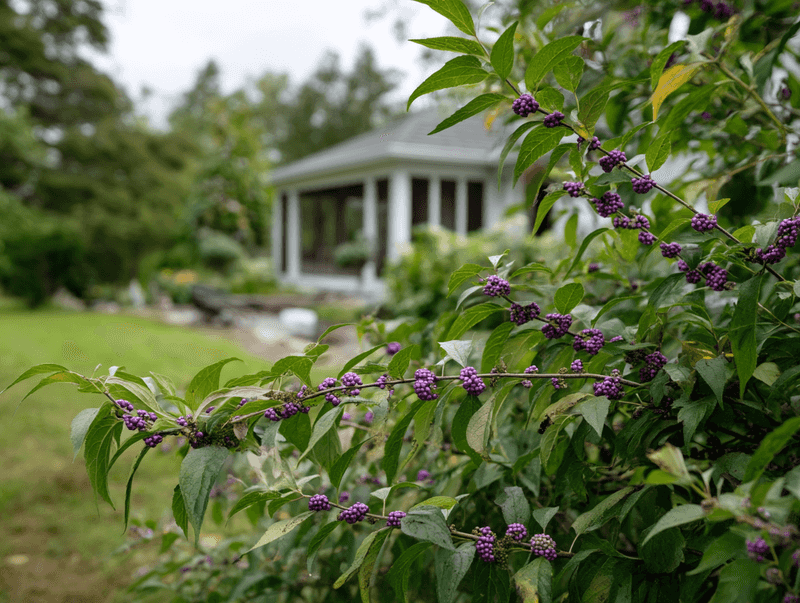
Knowing that beautyberry is not a tick barrier does not mean it has no place near a wooded edge. Planted thoughtfully, it can serve as an attractive native shrub layer that supports wildlife and gives a defined, maintained look to what would otherwise be a ragged transition zone.
The key word is thoughtfully, and the key phrase is yard side.
Place beautyberry on the lawn side of a clearly visible, maintained transition rather than directly in the brushy, leaf-littered margin where the yard meets the trees. CDC Lyme disease prevention guidance recommends keeping play areas, patios, decks, and frequently used paths away from brushy or wooded edges where possible, and that same principle applies to where you position any ornamental planting near the woods line.
Beautyberry’s typical mature size of three to eight feet tall and three to six feet wide, as noted by the NC State Extension Plant Toolbox, means individual plants need room to develop without crowding each other into a dense, unmanaged wall. Space them so air can move between plants and so you can walk through and see the ground around them.
A planting that stays open and visible is less likely to create the shaded, humid, leaf-accumulating conditions that favor ticks.
The sunlight and drainage requirements matter here too. Beautyberry needs full sun to partial shade and well-drained soil.
Spots that stay wet or sit under a heavy canopy are not suitable, and a struggling plant in poor conditions will not give you the wildlife benefits or the visual payoff you are planting it for. The CDC Tick Management Handbook describes the yard-to-woods transition as a meaningful management zone, and placing a maintained ornamental planting there with proper spacing fits within that framework.
The placement advice here is a practical inference from plant form and tick-habitat guidance, not a result from a beautyberry yard trial.
Maintenance, not the shrub, defines the practical edge
Leaf litter is one of the most consistent tick-habitat features in residential yards, and removing it from the lawn edge and around the house foundation is one of the most direct steps a homeowner can take. Mowing regularly, trimming low-hanging branches, and cutting back overgrown shrubs that crowd the yard boundary reduce the shaded, moist cover that ticks rest in between host encounters.
These actions are not glamorous, but they address the actual conditions that support ticks rather than hoping a plant does the work.
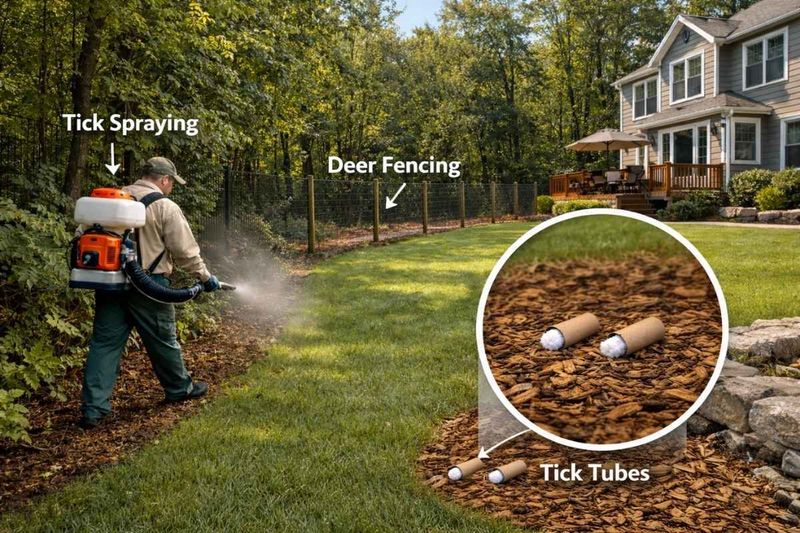
A three-foot-wide strip of wood chips or gravel installed between the lawn and the woods is a frequently recommended structural measure. CDC tick prevention guidance describes this type of buffer as a way to reduce likely contact with blacklegged ticks.
That qualifier is important: the measure is particularly relevant to blacklegged ticks and the guidance around them, and it is not a guaranteed control measure for every tick species in North Carolina or a proven barrier against disease.
Site-specific factors affect how well a buffer performs. Shade from nearby trees, the density of the woods, the initial tick pressure in your area, and how consistently you maintain the strip all influence results.
A wood-chip buffer that accumulates fallen leaves and decaying organic matter over time starts to resemble the leaf litter it was meant to replace. The CDC Tick Management Handbook notes that wood chips containing leaves can break down into leaf-litter-like material, so keeping the buffer clean, dry-looking, and distinct from the surrounding vegetation requires regular upkeep rather than a one-time installation.
Beautyberry fits alongside this maintenance work as a native, wildlife-supporting planting that adds visual interest and ecological value to the managed edge. It is not the measure doing the tick-management work.
The shrub earns its place through what it genuinely offers: native habitat, bird and pollinator support, and late-season color. The edge management work earns its place by actually addressing tick habitat conditions.
Personal and pet protection still closes the gaps
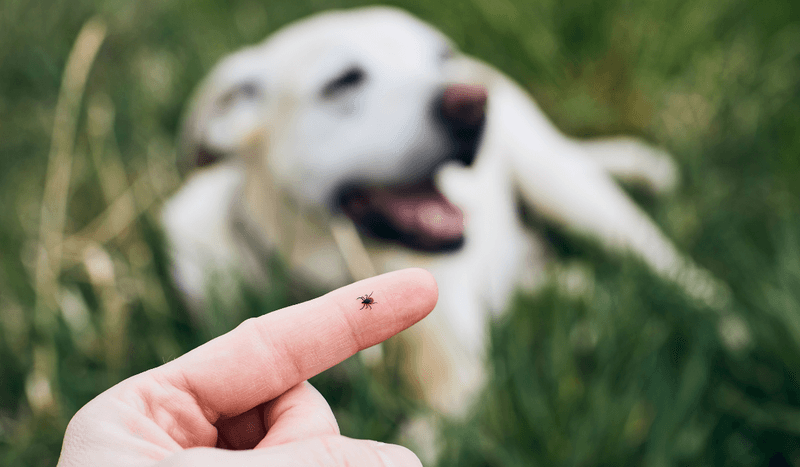
Yard management reduces the odds of picking up ticks on your property, but it cannot account for every route ticks travel into your life. People and pets move through parks, trails, neighbors’ properties, and other landscapes where no one has installed a wood-chip buffer.
Ticks carried in on clothing, gear, or a dog’s coat can end up anywhere in the home, well beyond the wooded edge you have carefully maintained.
EPA-registered repellents remain the most reliable personal protection available when you are spending time outdoors. EPA guidance on using insect repellents safely covers how to apply labeled products correctly for adults and children.
Following the label is not optional fine print: it is how you get the protection the product was tested and registered to provide. Products containing DEET, picaridin, IR3535, or oil of lemon eucalyptus are among the options registered for tick repellency.
After outdoor activity, check yourself, your children, and any gear for ticks before coming inside. Showering within two hours of outdoor exposure can help remove ticks that have not yet attached.
CDC tick prevention guidance recommends checking all body areas, including the scalp, behind the ears, around the waist, and between the legs, where ticks often move before attaching.
Pets need their own protection plan. EPA guidance on controlling ticks on pets outlines registered product options, and a veterinarian can recommend the most appropriate prevention for your animal’s size, age, and health.
Do not apply beautyberry leaves, homemade leaf extracts, or essential oils to people, children, or pets as a repellent. The USDA research did not establish a consumer formulation, safe dosage, or safety profile for homemade preparations, and applying unregistered materials to skin or animals bypasses the testing process that registered repellents go through.
A layered approach, combining yard management, labeled personal repellents, post-outing tick checks, and veterinarian-guided pet prevention, covers the gaps that no single measure can close alone.
Beautyberry belongs beside the managed edge
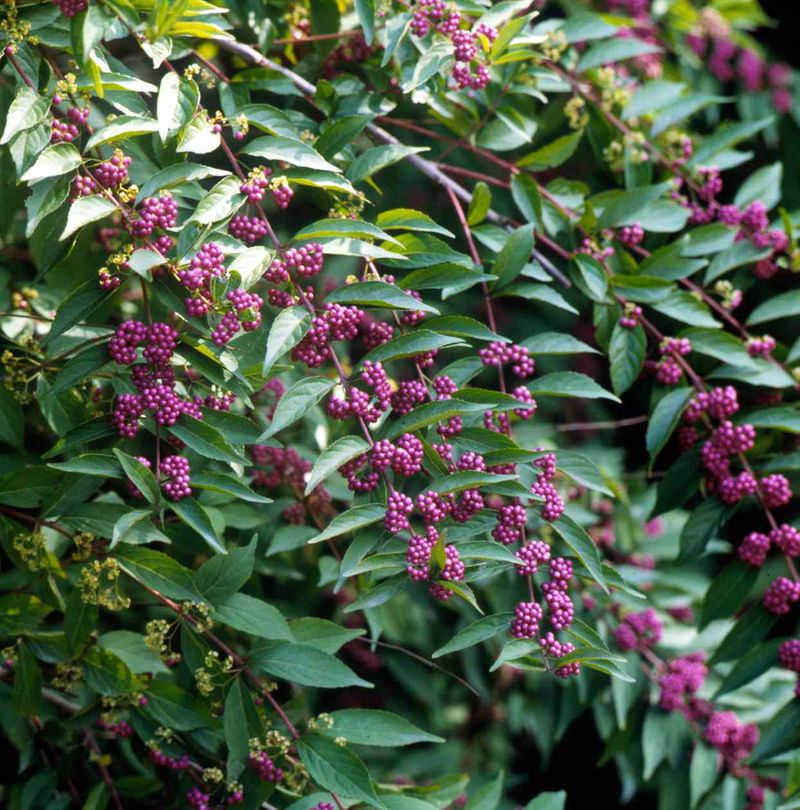
Callicarpa americana is a genuinely worthwhile native shrub for North Carolina homeowners. Its leaf-derived compounds, callicarpenal and intermedeol, showed real repellent activity against blacklegged tick nymphs in a peer-reviewed laboratory study.
That finding is interesting and worth knowing. What it does not show is that a living shrub planted along a wooded yard edge blocks ticks, reduces tick populations, or lowers the risk of any tick-borne illness in a residential landscape.
The correct order of operations is: define and maintain the yard-to-woods transition first, then plant beautyberry where its site requirements and mature size fit within that managed space. Keep personal and pet protection in place regardless of what grows along the edge.
The NC State Extension Plant Toolbox gives you the sunlight, drainage, and spacing information you need to grow it well. The CDC tick prevention framework gives you the maintenance and personal-protection steps that actually address tick contact.
Beautyberry earns a spot in a North Carolina yard on its own honest merits: vivid late-season color, bird and pollinator habitat, native ecological value, and a research footnote that is more promising than proven. That combination makes it a good plant.
It just does not make it a spray can.