
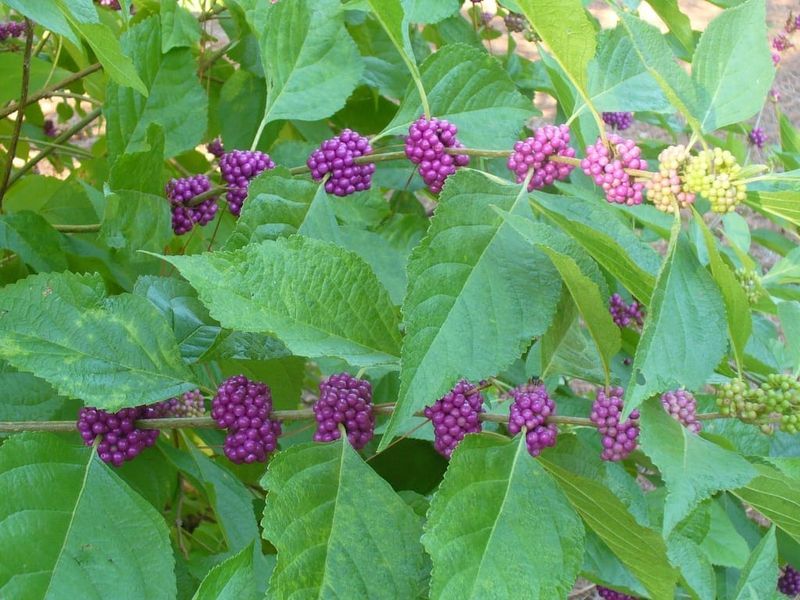
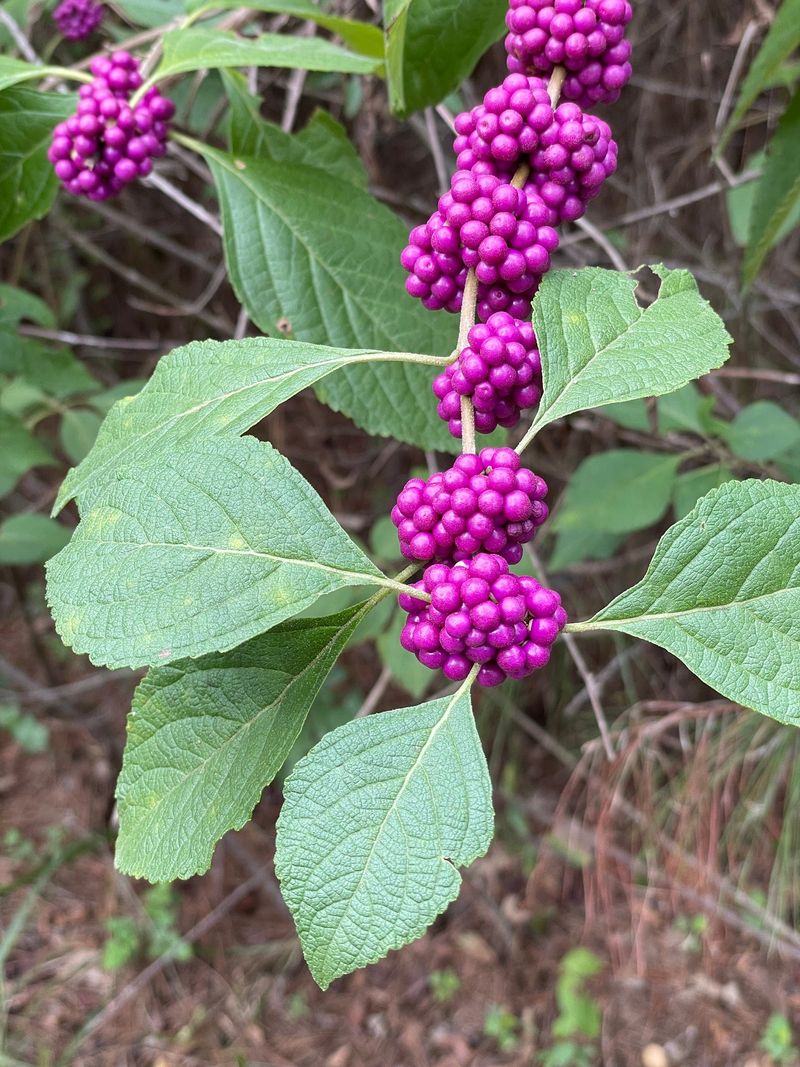
Most North Carolina property lines and fence rows look pretty forgettable by October, once summer color has faded and the trees are just starting to turn. American beautyberry changes that picture with clusters of vivid purple fruit that practically glow against yellowing leaves and bare stems.
This native shrub earns a place at a light-shaded woodland edge for a specific reason: it delivers late-season color right when gardeners need it most. If you have a wooded border, a fence row, or an open-canopy margin that needs something interesting in fall, this plant is worth a close look.
A native shrub for a light-shaded woodland edge
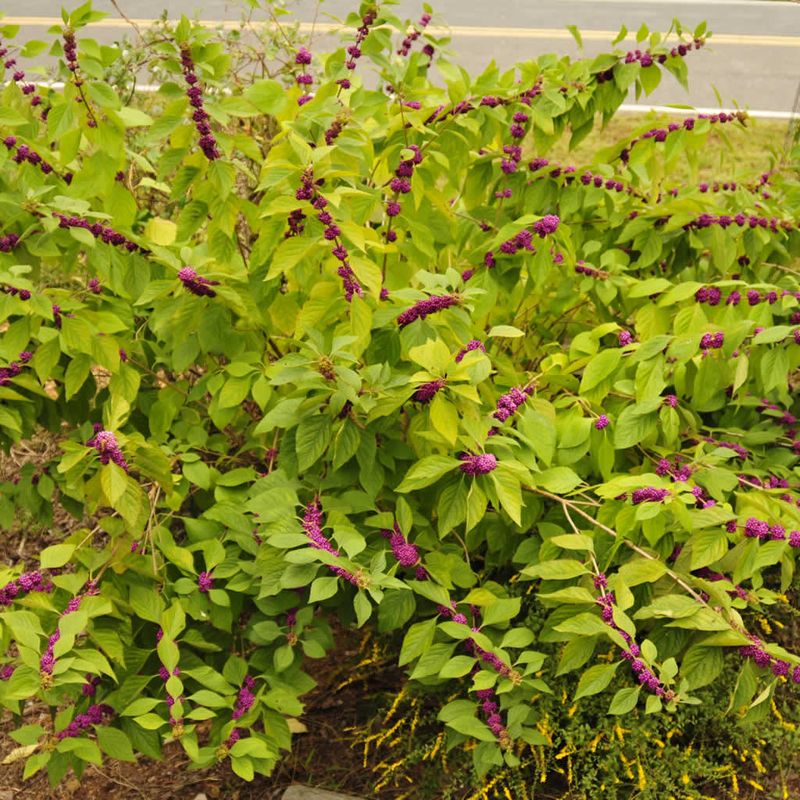
Finding a shrub that actually looks good in October along a North Carolina property line is harder than it sounds. Most plants that tolerate partial shade are done performing by the time summer ends, leaving the wooded edge looking bare and forgettable.
American beautyberry, Callicarpa americana, fills that gap with a display that gets more striking as the season cools rather than less.
The shrub’s main late-season feature is its fruit, not its foliage. Berry clusters develop along the stems from late summer through October, and as the leaves shift to pale chartreuse or yellow and begin to drop, those purple clusters become even easier to see.
NC State Extension documents the shrub as native across the state’s Coastal Plain, Piedmont, and Mountains, and notes low pest and disease problems, which makes it a practical choice for homeowners who want late-season color without high maintenance.
The plant’s natural territory is the woodland edge, thicket margin, fence row, and open woods, exactly the transitional spaces where North Carolina gardeners struggle to establish anything with seasonal interest. USDA plant fact sheet data confirms its native distribution extends across the southeastern United States, giving it documented relevance in comparable conditions in parts of Florida and Texas as well.
One thing worth stating plainly at the start: this article is not arguing that American beautyberry is the single best or most underrated shrub statewide. What it is arguing is that for a specific site, a light-shaded border or open woodland margin that needs late-season fruit color, it is a strong and well-suited choice.
Mississippi State Extension describes it as a shrub that genuinely lives up to its name in the landscape, and for the right edge planting, that assessment holds in North Carolina too.
Match the shrub to filtered light, not deep shade
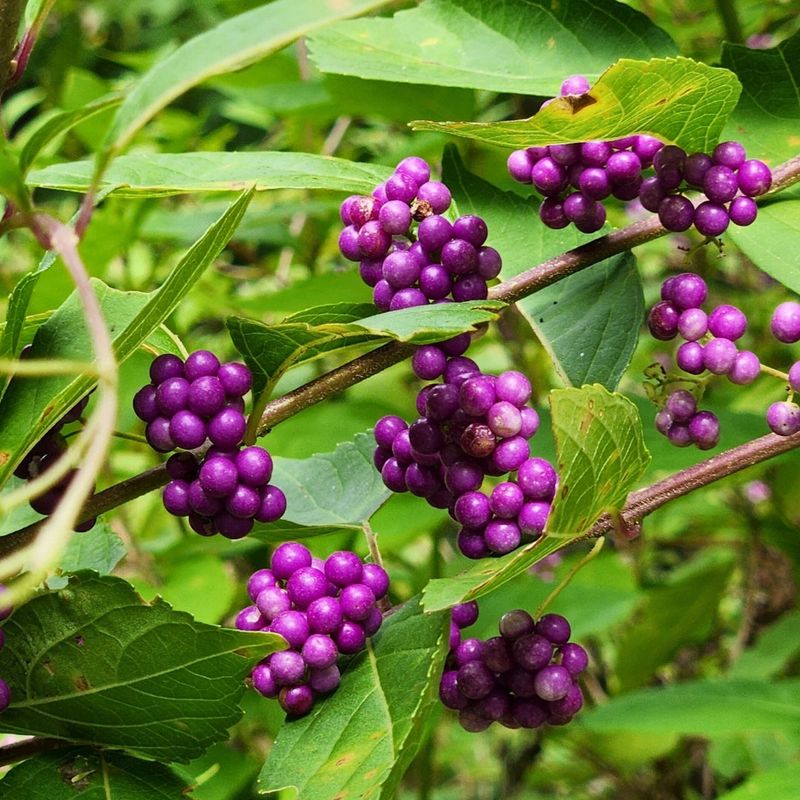
Light is the single most important variable to check before choosing a spot for American beautyberry. The plant handles partial shade and filtered light well, but it is intolerant of deep, dense shade.
That distinction matters because a lot of North Carolina property lines run under or near mature hardwood canopies, and not every shaded spot is the same kind of shaded.
NC State Extension lists American beautyberry’s preference as full sun to part shade and specifically flags intolerance of deep shade. Missouri Botanical Garden reinforces that point, noting that fruiting is best in full sun, though the plant tolerates light shade reasonably well.
Push it into a darker spot and the result tends to be a leggy, open shrub with noticeably fewer flowers and a thinner berry display.
For practical placement, look for the outer edge of a tree canopy rather than the area directly beneath it. A fence row that receives morning sun and afternoon filtered light, a border between lawn and woods, or a thicket margin where the canopy opens up periodically are all good candidates.
Mississippi State Extension’s 2021 guide describes the best sites similarly: open woodland edges and transitional zones where light reaches the shrub for a meaningful part of the day.
A truly dark site, like the shaded ground under a solid canopy of mature oaks or pines with little sky visible, is better served by a different shrub. Forcing American beautyberry into that spot will not produce the fall fruit display the plant is known for.
Matching the plant to the right light level is the first and most decisive step.
Plan for an open shrub, not an evergreen hedge
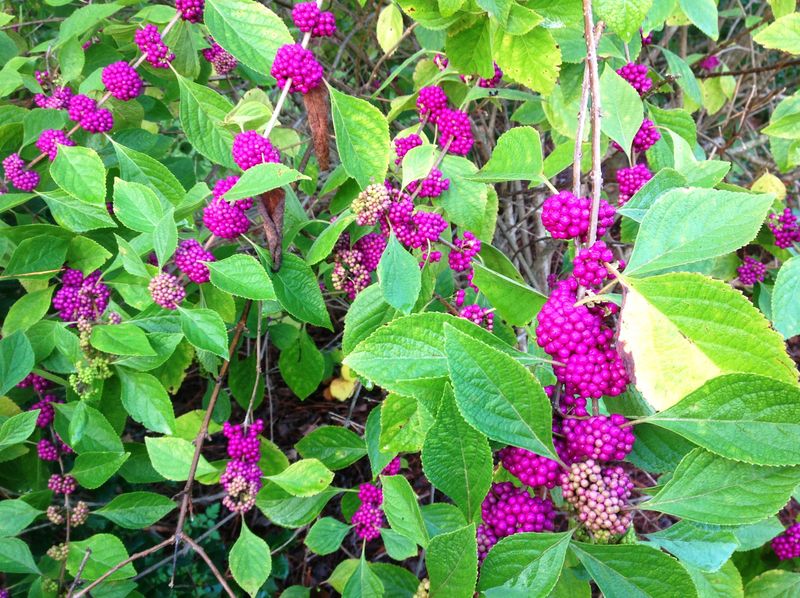
American beautyberry does not grow in a tidy, upright column or fill a fence line the way a boxwood hedge would. Its natural shape is loose, arching, and spreading, with long canes that bend outward as they mature.
Planning for that form from the beginning saves a lot of frustration later.
Expect a mature plant to reach roughly 3 to 8 feet tall and 3 to 6 feet wide, though vigorous plants in good conditions can grow larger. NC State Extension’s beautyberry profile and Mississippi State Extension both describe the habit as open and somewhat loose rather than dense or compact.
Give it enough room to spread without crowding neighboring plants, and resist the urge to shear it into a formal shape, since that works against both its natural character and its fruit production.
The loose, arching habit actually suits an informal property edge or wildlife border well. The canes arch outward and carry berry clusters along their length, which means the fruit is visible at multiple heights and from different angles.
That quality is part of what makes the fall display effective rather than a liability to manage.
American beautyberry is deciduous, and that is worth stating directly for anyone hoping it will screen a view year-round. After the leaves drop in late fall, the plant becomes a framework of bare stems, still holding some fruit clusters in early winter when conditions allow.
Its seasonal value comes from the fruit, the yellowing foliage in October, and the open stem structure after leaf drop, not from permanent coverage or evergreen structure. If screening is the primary goal, a different shrub serves that need better.
Use drainage, moisture, and spacing to improve fruiting
American beautyberry has a reputation for tolerating poor soils, and that reputation is largely earned. It adapts to a wide range of soil types, from sandy coastal soils to heavier Piedmont clay, without demanding amendments or special preparation.
The one condition it does not handle well is standing water or consistently poor drainage, so avoid low spots that stay wet after rain.
NC State Extension describes the plant as tolerant of dry-to-moist conditions, and Mississippi State Extension notes that consistent moisture combined with stronger light generally supports a heavier fruit display. That means a site with decent soil moisture and some direct sun will tend to produce more berries than a dry, shaded spot.
The plant survives the drier end of the range, but it may not put on the same show.
Mulching around the root zone helps retain moisture during summer dry spells, which is when the fruit is developing. A 2 to 3 inch layer of shredded wood mulch kept back from the base of the stems is enough to make a difference without creating moisture problems at the crown.
NC State Extension also notes that planting several shrubs of the same type nearby may increase fruit production. That is practical advice for creating a fuller, more productive edge planting, not an absolute rule about pollination requirements.
A single plant will fruit, but a grouping of two or three spaced appropriately for their mature spread tends to give the border more visual weight and may support a denser berry display. Space plants far enough apart that they can each develop their full open form without one crowding out another, roughly 4 to 6 feet apart as a starting guide depending on the site.
Prune in late winter for the upcoming berry display
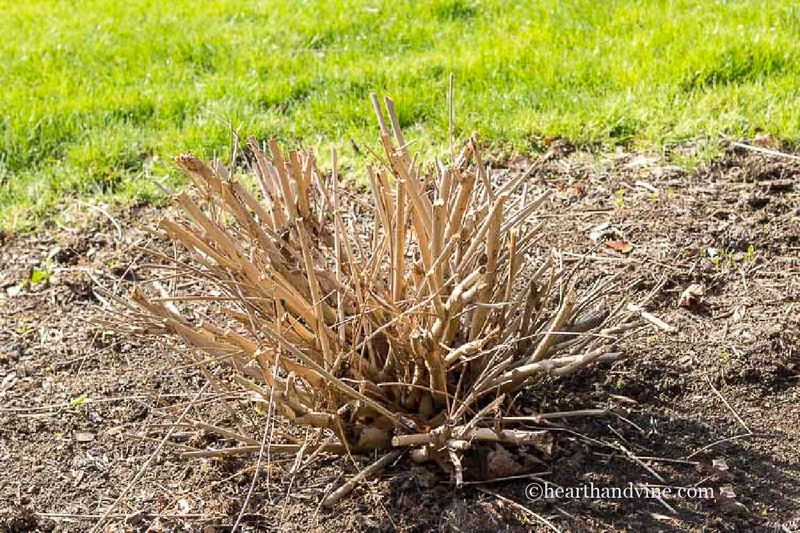
Pruning beautyberry at the wrong time is one of the easiest ways to lose the fall berry display. The flowers and fruit form on new growth produced each season, which means cutting the plant back during the growing season or after spring growth has started removes the stems that would have carried that year’s berries.
The right window is late winter or early spring, before new growth begins. NC State Extension specifically recommends this timing and lists cutting the plant back heavily, even to about 1 foot from the ground, as a documented option for size control or rejuvenation.
That kind of hard pruning is not something every plant needs every year, but it is a useful tool when a shrub has grown too large for its space or when older canes have become unproductive.
For most homeowners managing a shrub at an informal edge, a lighter late-winter cleanup, removing crossing canes, cutting back the longest stems, and shaping for the space available, is enough to keep the plant productive and in bounds. The goal is to finish before the plant breaks dormancy so that all the new growth coming in spring can develop into flowering and fruiting stems by late summer.
Pruning later in spring or during summer is not catastrophic for the plant’s health, but it does reduce that year’s berry crop, sometimes significantly. If the main reason for growing American beautyberry is the fall fruit display, late-winter pruning is the timing that protects that investment.
Think of it as a brief annual task, a few cuts in February or early March, that sets up the entire season’s performance at the wooded edge.
Support wildlife without treating beautyberry as pest control
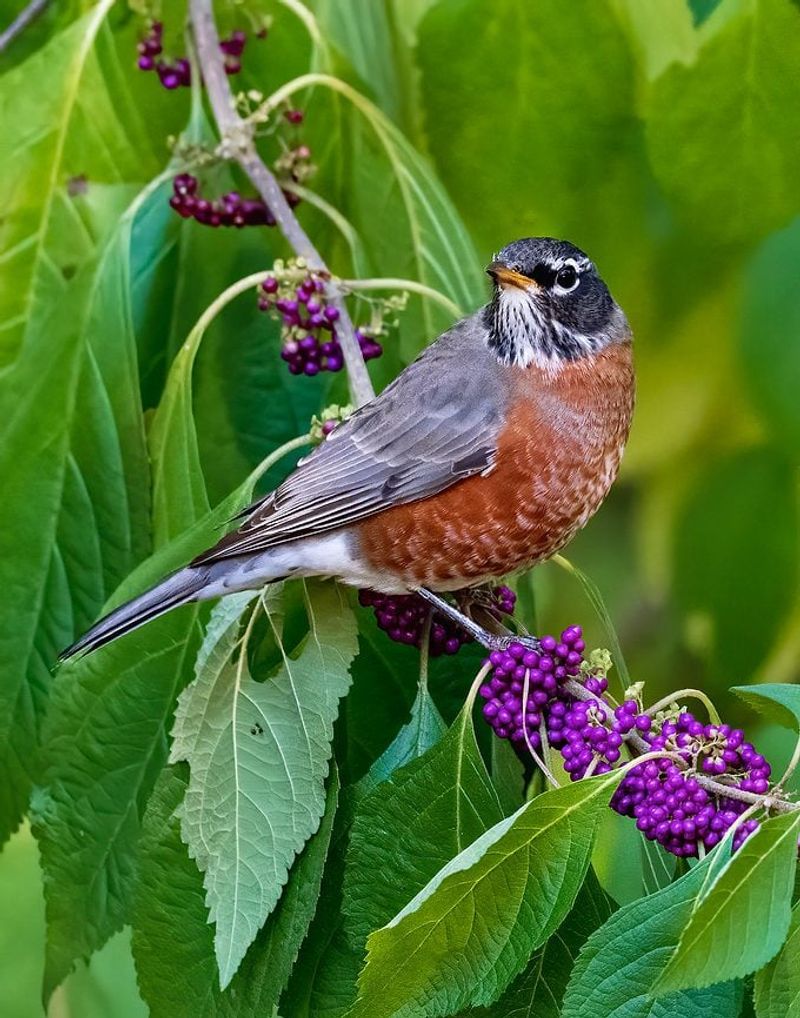
The purple fruit clusters are genuinely useful to wildlife. Many species eat them, including robins, brown thrashers, purple finches, eastern towhees, and other songbirds.
Small mammals, including squirrels, raccoons, opossums, foxes, and armadillos, also consume the berries. Audubon’s native plant profile documents American beautyberry as a food source for multiple bird species, which is one reason it earns a place in wildlife-friendly plantings across the Southeast.
Deer present a different dynamic. They may browse the foliage during the growing season and will eat fallen or exposed fruit as it becomes available.
In yards with heavy deer pressure, browsing can affect the plant’s shape and reduce the berry display. That is worth knowing before planting, especially in suburban North Carolina areas where deer populations are high.
Wildlife use also affects how long the berries persist. USDA documentation and extension sources note that fruit persistence is variable, and in some landscape conditions, birds and mammals can clean the berries off the stems faster than expected.
Do not count on a guaranteed display through early winter. Some yards will see fruit persist well past Thanksgiving; others will find the stems stripped by mid-November.
Now for an important clarification about a claim that circulates frequently online. Research has identified chemical compounds in beautyberry leaves and extracts that showed repellent activity against mosquitoes and ticks under laboratory conditions.
A peer-reviewed study published in 2005 identified callicarpenal and intermedeol as active compounds, and USDA Agricultural Research Service findings extended that work to tick species. That research is real.
What it does not establish is that growing the shrub in your yard will reduce mosquito or tick populations in any dependable, measurable way. The living plant does not function as a yard-wide repellent, and USDA’s own published research on isolated compounds does not support advising people to rub fresh crushed leaves on their skin as a substitute for registered personal repellents.
Plant beautyberry for its fruit, its form, and its wildlife value. Use a registered product for personal insect protection.
Verify the species and know when another shrub fits better
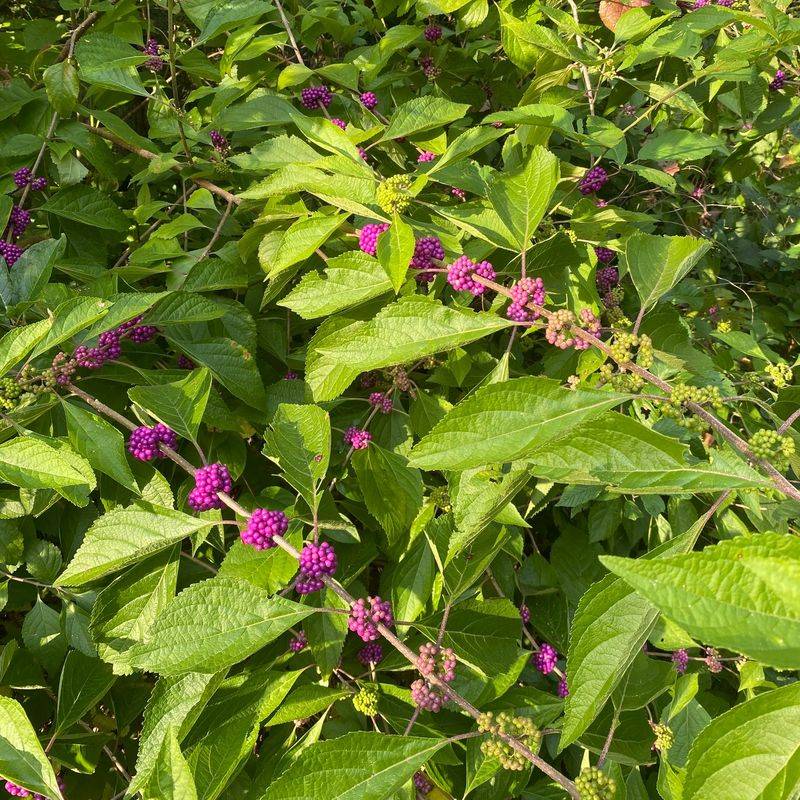
Before buying a beautyberry, check the label for the botanical name Callicarpa americana. The common name beautyberry applies to multiple species, including several Asian ornamentals that garden centers stock regularly.
NC State Extension’s profile of Callicarpa dichotoma, known as purple beautyberry, notes that it is native to China, Japan, Korea, and Vietnam, not North Carolina. Japanese beautyberry, Callicarpa japonica, is similarly Asian in origin.
Both can be attractive plants, but neither carries the ecological relationships with native North Carolina wildlife that Callicarpa americana brings. If supporting local wildlife and using a regionally native species matters to you, the botanical name on the tag is the only reliable way to confirm what you are buying.
American beautyberry is a strong fit for light shade, partial shade, and open woodland edges with decent drainage. For sites that do not match that description, two other natives deserve consideration.
Spicebush, Lindera benzoin, is better suited to moist partial shade than beautyberry. NC State Extension’s spicebush profile describes it as adapted to moist, well-drained woodland conditions.
Female spicebush plants produce small red fruits in fall, but they require a male plant nearby for fruiting, and the berries are less visually conspicuous than beautyberry’s clusters before leaf drop.
Winterberry, Ilex verticillata, is the more relevant comparison for genuinely shaded or wet sites. NC State Extension documents winterberry as tolerant of partial to full shade and consistently moist to wet, acidic soils.
Its red berries are long-lasting and visually striking. The practical catch is that winterberry also requires both male and female plants for fruit production, and it performs best in the wetter, more acidic soil conditions that American beautyberry does not prefer.
NC State Extension’s beautyberry page remains the clearest guide to whether the site fits the species.
Choose it for the site, then let fall fruit do the work
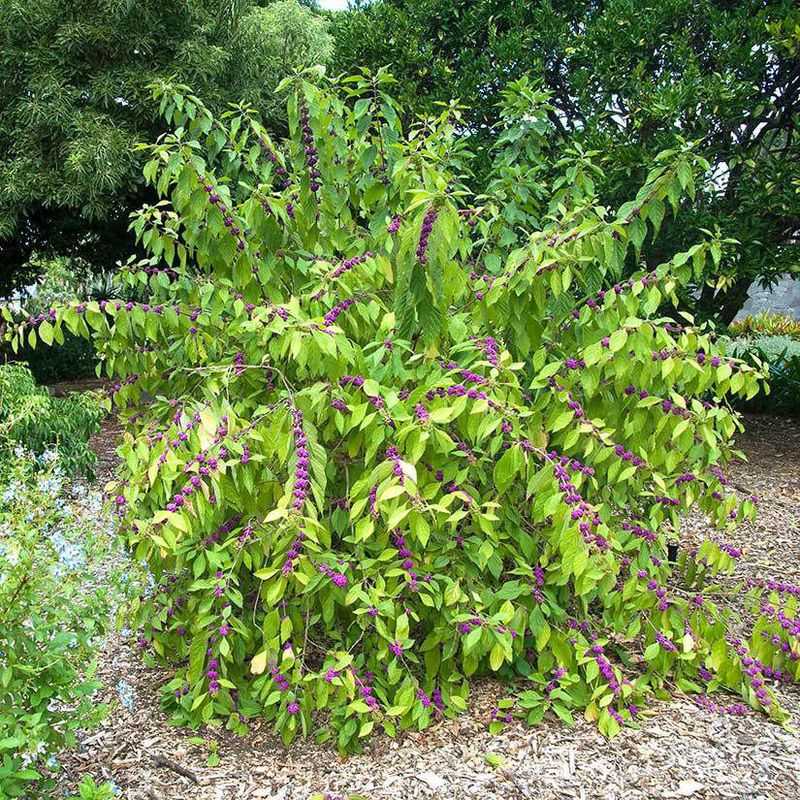
American beautyberry earns its place at a light-shaded or partially shaded North Carolina woodland edge when the site has adequate drainage and enough room for a loosely arching shrub to spread. Those two conditions, light and drainage, are the practical checklist before buying.
NC State Extension’s beautyberry profile and USDA range documentation both support its use across North Carolina’s regions, and the same native range extends into parts of Florida and Texas where light and soil conditions are comparable.
The reward is seasonal rather than permanent: vivid purple fruit clusters in late summer and fall, yellowing foliage as the season shifts, and bare stems that hold some fruit into early winter when wildlife allows. Evergreen screening and year-round structure are not part of what this shrub offers.
Confirm the botanical name Callicarpa americana at the nursery, check that the planting spot gets filtered light rather than dense shade, and plant it where its open form has space to develop.
A property line that looks tired every October is a solvable problem. American beautyberry does not fix every shaded site, but for the right one, the fall fruit display tends to speak for itself.