
Most North Carolina gardens hit a wall in late summer, when the heat cranks up and the flowers that looked great in June give out entirely. Finding something that actually holds color into September, without demanding constant attention, feels harder than it should.
One overlooked native perennial manages to do exactly that, flowering right through the humidity that shuts down so many other plants. Once you know its name, you may wonder why it took this long to find it.
A strong September candidate: wrinkleleaf goldenrod
Walk through a North Carolina garden in early September and you will notice something: the bold summer bloomers have largely checked out, leaving behind a lot of green filler and tired stems. That gap is exactly where wrinkleleaf goldenrod, Solidago rugosa, earns attention as a genuinely overlooked candidate for late-summer color.
NC State Extension’s plant profile for wrinkleleaf goldenrod confirms it as a native perennial found across North Carolina’s Coastal Plain, Piedmont, and Mountains, with flowering documented in late summer and fall. September sits comfortably inside that window, though how a specific plant performs still depends on site conditions, establishment care, and the weather that particular year.
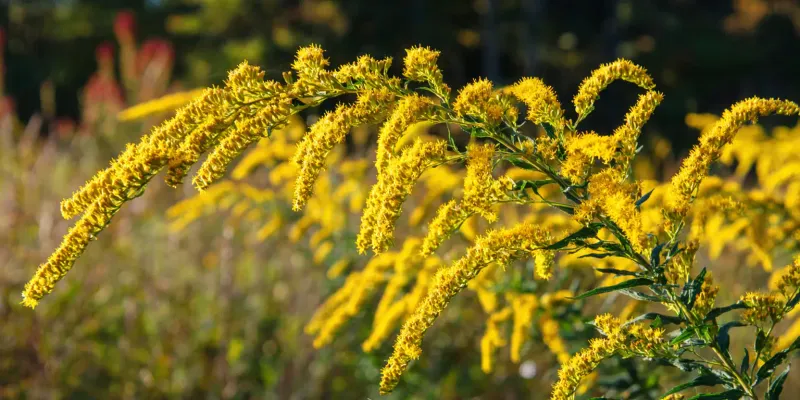
Identification is straightforward once you know what to look for. The leaves are noticeably toothed and carry a distinct wrinkled or puckered texture that sets this species apart from smoother-leaved goldenrods.
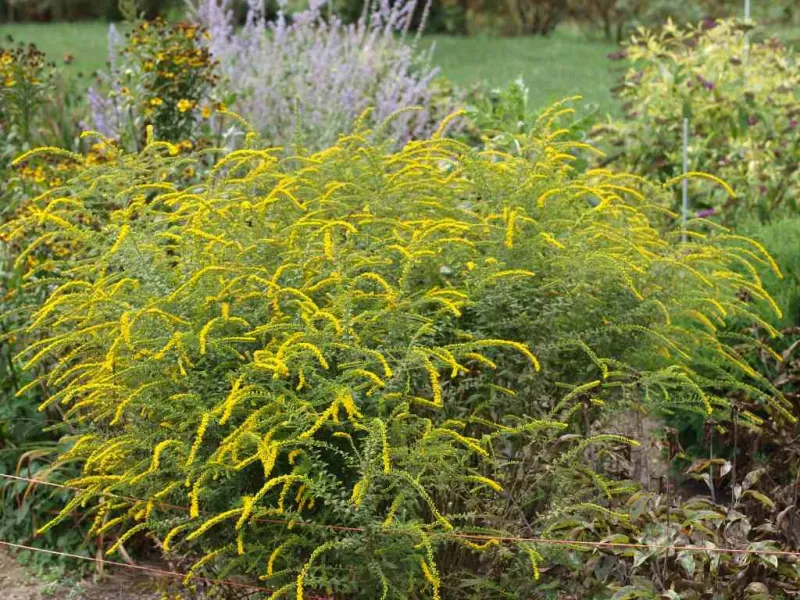
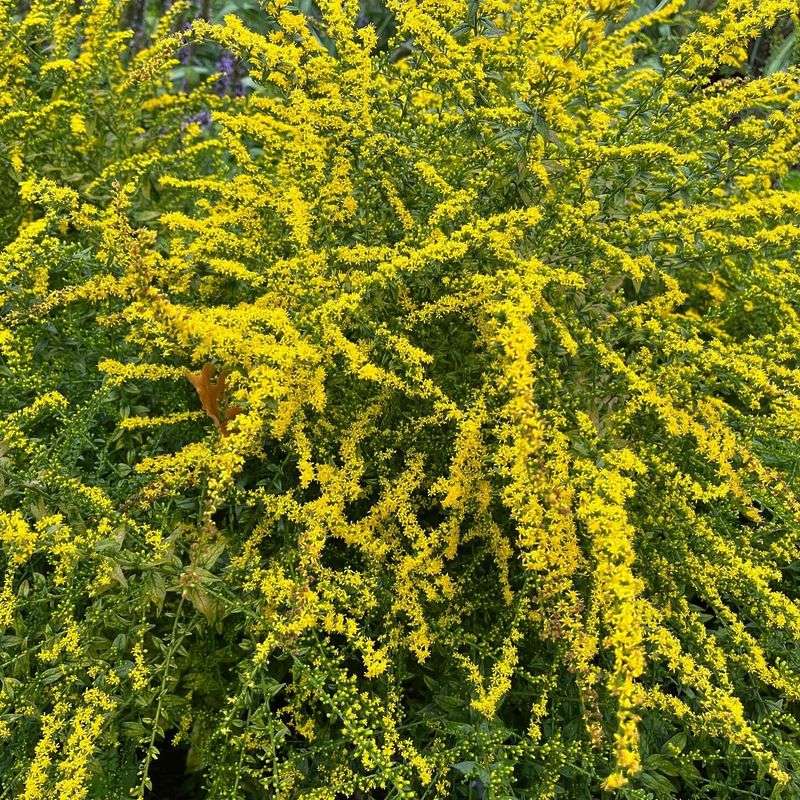
The flowers appear as arching sprays of small, bright yellow blooms that radiate from the upper stems in a way that catches afternoon light well.
The cultivar ‘Fireworks’ takes those qualities and packages them into a more garden-friendly form. NC State’s ‘Fireworks’ profile describes a 2-to-3-foot clump with arching yellow flower sprays and documented resistance to heat and humidity, which makes it a practical choice for the late-summer conditions North Carolina gardeners know well.
The title’s claim of “most underrated” is editorial opinion rather than a statewide ranking, and NC State’s native plants handbook lists several other fall-blooming North Carolina natives worth knowing. Even so, wrinkleleaf goldenrod is a strong candidate that many gardeners walk right past at the nursery without a second look.
September falls inside its flowering window
Calling a plant a “September bloomer” can mean a lot of things, so it helps to be specific about what the evidence actually shows. NC State’s wrinkleleaf goldenrod profile documents the species as a late-summer and early-fall bloomer, and the broader NC State goldenrod genus page lists the flowering window as July through October for goldenrods generally.
For the ‘Fireworks’ cultivar specifically, NC State’s cultivar profile describes blooming in late summer to fall, with seed displays that can extend from September through November. That means September is a reasonable expectation for color, not a guarantee of uninterrupted flowers from the first of the month to the last.
Weather is the biggest variable. A dry August with limited rainfall can delay flowering or reduce the number of open blooms at any given moment.
Plants at higher elevations in the North Carolina mountains may peak earlier or later than those in the Piedmont or Coastal Plain. A newly planted specimen, still putting energy into root development, may show fewer blooms in its first season than an established clump entering its third or fourth year.
The honest framing is that September falls within the expected flowering window, and a well-sited, established plant has a good chance of showing color during that month. NC State’s native plants guidance reinforces that site conditions and establishment care shape how any native plant actually performs, regardless of what the species profile lists as typical.
Plan for September color as a likely outcome in the right conditions, not a fixed calendar event.
Choose ‘Fireworks’ for a more contained garden form
Goldenrod has a reputation problem, and part of it comes from lumping every species together as if they all behave the same way. The genus Solidago includes many species with notably different growth habits, and NC State’s goldenrod genus overview makes clear that size, spread, and habitat preference vary considerably across the group.
Buying a plant labeled simply “goldenrod” without checking the species or cultivar name is a reasonable way to end up with something that outgrows its spot.
The straight species, Solidago rugosa, can reach 2 to 5 feet tall and is associated with moist to wet habitats in the wild. NC State’s species profile notes that it occurs in wet woods, stream banks, and similar moisture-rich sites.
That habitat preference matters when you are deciding where to plant it in a typical residential yard.
The ‘Fireworks’ cultivar was selected specifically for garden use, and the difference in behavior is meaningful. NC State’s ‘Fireworks’ profile describes a plant that generally reaches 2 to 3 feet tall and wide, spreads slowly by rhizomes, and is classified as non-aggressive.
That compact, clumping habit makes it a practical fit for a mixed border or pollinator planting where you want late-summer color without managing an expanding colony.
Gardeners who want the contained form should verify the cultivar name at purchase rather than assuming any goldenrod with attractive flowers will stay put. Nursery tags can be incomplete, and plants grown from seed rather than division may not hold the named cultivar’s characteristics reliably.
Checking the label for ‘Fireworks’ specifically, and understanding that its manageable behavior does not extend to every goldenrod on the shelf, is a straightforward way to avoid a mismatch between expectation and reality.
Match the plant to sun, soil, and drainage
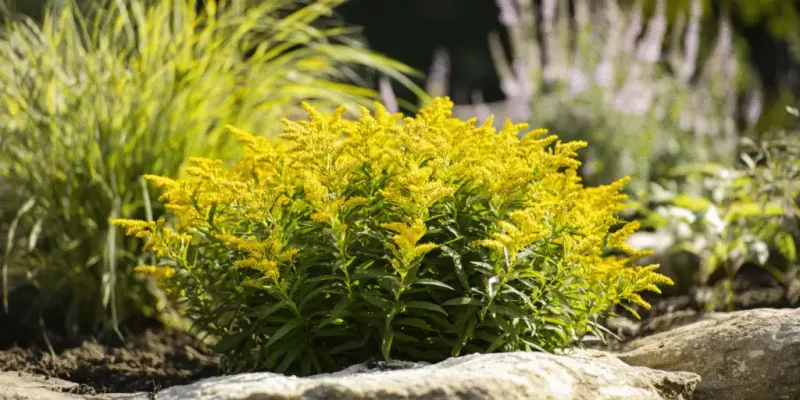
Before buying a plant, it pays to look at the spot where it is going rather than the other way around. ‘Fireworks’ performs best in full sun with moist, well-drained soil, and that combination should be the starting point when evaluating a planting location. Partial shade is tolerable, but reduced light typically means fewer blooms and a looser, more open plant habit.
NC State’s ‘Fireworks’ profile lists tolerance for clay, sandy soil, occasionally dry conditions, and occasionally wet conditions, which covers a wide range of North Carolina residential sites. Tolerance is not the same as a preference, though.
Consistently waterlogged soil or hardpan clay with no drainage can create root problems over time, just as it would for many other landscape plants. Matching the plant to a site with reasonable drainage is a more reliable path than counting on tolerance to compensate for a genuinely poor location.
For placement in the garden, ‘Fireworks’ fits well in the middle or back of a mixed border, given its 2-to-3-foot mature size. It also works in pollinator gardens, rain gardens, meadow plantings, and naturalized areas along property edges.
NC State specifically recommends pairing it with asters or Joe-Pye weed, and that combination makes practical sense: purple or blue flowers from asters create a visual contrast with the golden-yellow sprays that makes both plants look better than they would alone.
One placement consideration worth noting: NC State assigns ‘Fireworks’ a medium flammability rating. That does not make it an unusually dangerous plant, but it is relevant when deciding how close to place it near a deck, wooden fence, fire pit, outdoor grill, or the foundation of a structure.
Keeping a reasonable buffer between ‘Fireworks’ and any fire-exposure risk is a sensible precaution rather than a reason to avoid the plant entirely.
Its pollinator value does not make it the ragweed villain
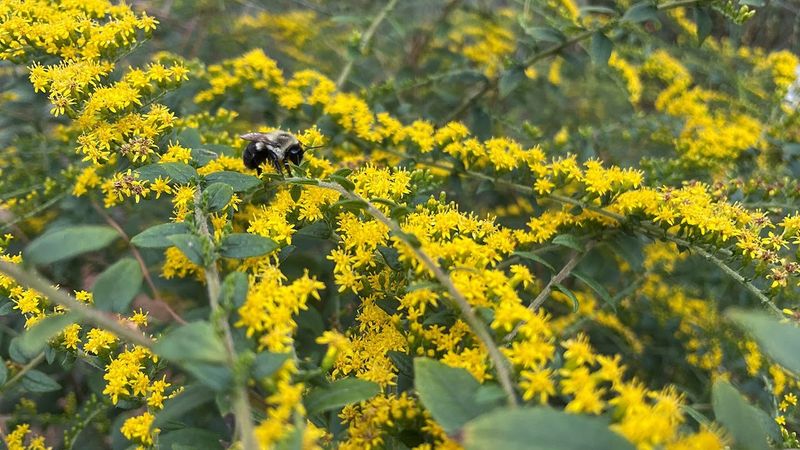
Goldenrod blooms in late summer, hay fever season arrives in late summer, and for decades many people blamed one for the other. The connection is understandable but largely incorrect.
University of Florida IFAS guidance on pollen and allergies explains that wind-pollinated plants are the primary drivers of airborne pollen problems, while insect-pollinated plants like goldenrod produce heavier, stickier pollen that tends to stay on flowers rather than drifting through the air.
Ragweed, which blooms at the same time as goldenrod, is wind-pollinated and produces enormous quantities of lightweight pollen that travels easily on late-summer breezes. University of Illinois Extension’s breakdown of autumn allergies makes the same point clearly: goldenrod is a highly visible plant that gets blamed for symptoms actually caused by the less conspicuous ragweed growing nearby.
That said, individuals who handle goldenrod closely or have specific sensitivities may still react to contact with the plant, so the case against goldenrod as a universal allergy villain is not the same as saying no one can ever respond to it.
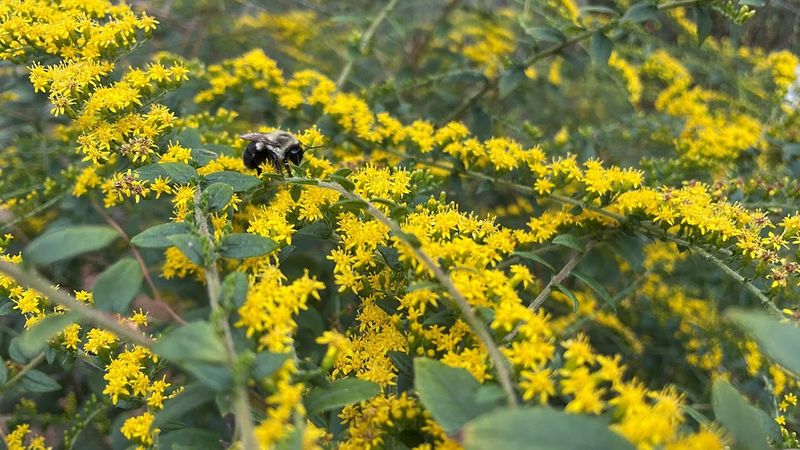
On the wildlife side, the documented value is real and specific. Penn State Extension’s goldenrod pollinator research highlights goldenrod’s role as a late-season resource for a wide range of insects, and NC State’s goldenrod genus page notes that goldenrod flowers provide nectar and pollen for bees, butterflies, flies, beetles, and wasps.
The ‘Fireworks’ cultivar profile confirms that the plant supports specialized native bees as well, a group that depends on particular pollen sources and benefits from late-season availability when many summer flowers have finished.
Wildlife response varies by location, surrounding habitat, and what else is blooming nearby, so the value is real but not uniform across every yard. The practical takeaway is that ‘Fireworks’ offers a genuine contribution to late-season pollinator support, not a cure-all, but a meaningful addition to a yard that already has some habitat value.
Give new plants routine establishment care
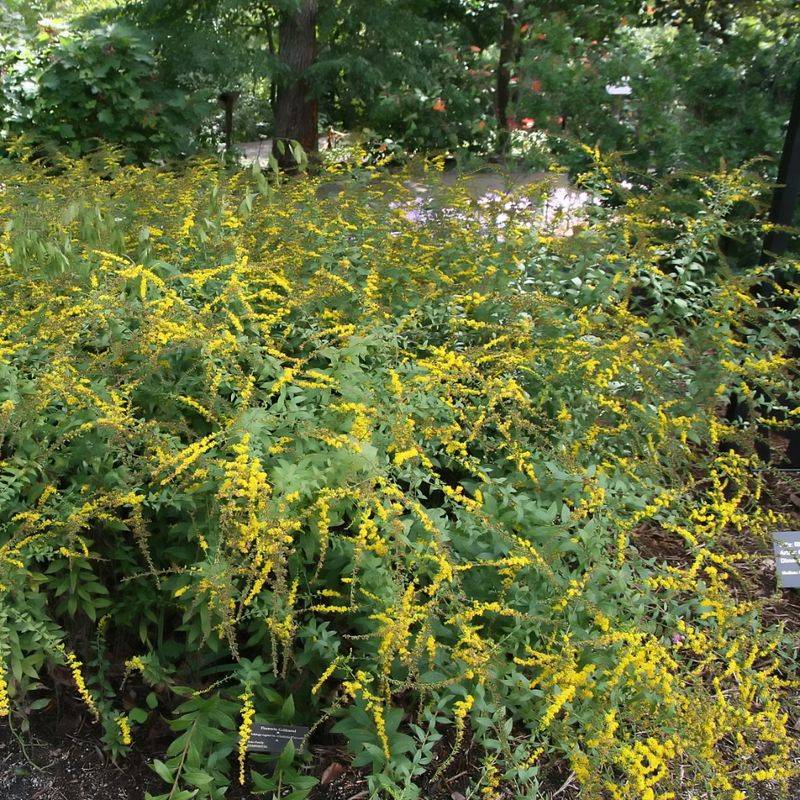
Native status is not a substitute for establishment care. A plant that evolved in North Carolina’s soils and climate still needs time to develop a root system capable of handling the heat, drought, and occasional waterlogging that residential landscapes dish out.
Expecting a newly planted ‘Fireworks’ to perform like a three-year-old clump in its first summer is the fastest way to be disappointed.
NC State’s native plants handbook recommends keeping new native plantings well-watered during the first few weeks after installation. Plants placed near pavement, buildings, or other heat-reflective hard surfaces need extra attention because those locations dry out faster and expose roots to higher soil temperatures than open garden beds.
Regular irrigation during the establishment window, typically the first growing season, gives the plant the best chance to build the root depth that supports drought tolerance later.
Mulch is a practical tool during establishment and beyond. A 2-to-3-inch layer conserves soil moisture, moderates soil temperature, and reduces weed competition without much ongoing effort.
The one rule worth repeating: keep mulch pulled back from the plant crown. Piling it against the base of the stems can hold moisture against the crown and invite rot or disease problems that have nothing to do with the plant’s natural toughness.
Timing the planting itself also affects how much supplemental water you will need to provide. NC State’s landscape management calendar supports spring or fall as generally easier planting windows for perennials, since cooler temperatures reduce water demand while roots get established.
Summer installation is possible but requires timely, consistent irrigation to prevent stress during the hottest weeks.
Once ‘Fireworks’ is established, the care routine simplifies considerably. NC State’s cultivar profile recommends cutting stems back in early spring, and notes that leaving 12 to 24 inches of dead stems temporarily through late winter can provide nesting material for native bees that use hollow or pithy stems.
Division every three to four years, or whenever the clump starts to look crowded or less vigorous, keeps the plant performing well without requiring much more effort than a shovel and an hour on a mild afternoon.
Why ‘Fireworks’ earns a place on the shortlist
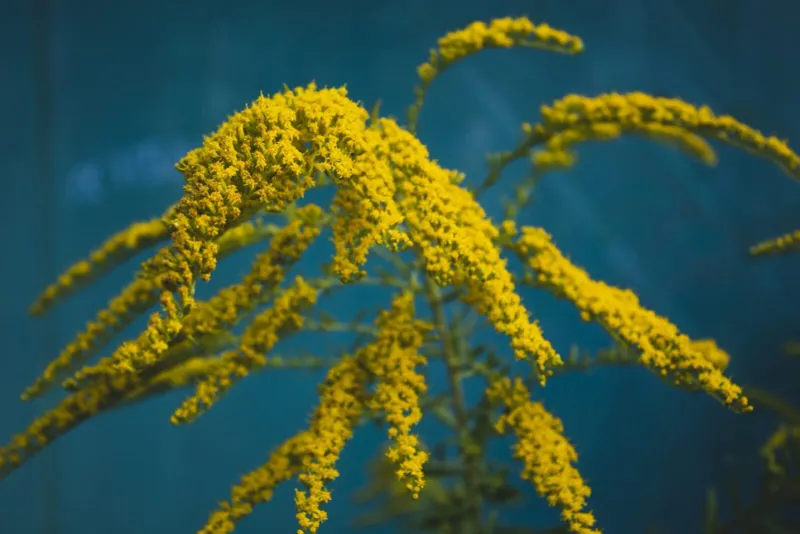
The case for wrinkleleaf goldenrod comes down to a set of qualities that line up well for North Carolina gardeners looking for late-summer and September color in a manageable native plant. It is documented as native across the Coastal Plain, Piedmont, and Mountains.
Its flowering window covers late summer to fall, with September a reasonable expectation in a well-sited, established planting. The ‘Fireworks’ cultivar offers a compact 2-to-3-foot clump with arching yellow flower sprays, documented resistance to heat and humidity per NC State, and a slow-spreading habit that fits a border without constant management.
The limits that make the recommendation trustworthy are equally clear. Choose ‘Fireworks’ specifically when containment matters, rather than relying on a generic goldenrod label.
Match the plant to a site with full sun and reasonable drainage. Water new plants consistently through their first growing season.
Expect a seasonal bloom window shaped by weather, soil moisture, plant age, and elevation, not a guaranteed month-long display on every property.
Wrinkleleaf goldenrod is one strong option, not the only one. NC State’s native plants handbook lists calico aster, New York ironweed, Joe-Pye weed, cardinal flower, and narrowleaf sunflower among the fall-blooming North Carolina natives worth considering alongside it. ‘Fireworks’ is a compelling option for a compact border or wildlife planting, particularly for gardeners who want something proven, locally native, and genuinely useful to pollinators when the September heat is still thick.
A yard that includes it will have color and activity at a time when most gardens have already gone quiet.