
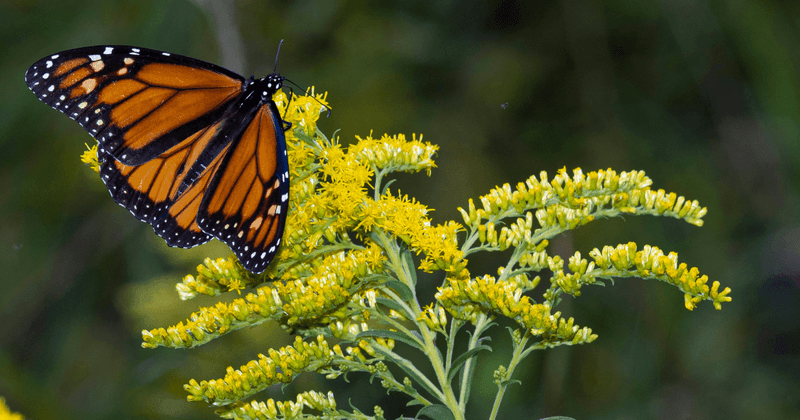
Every fall, North Carolina homeowners start sneezing and immediately point a finger at the bright yellow wildflower blooming along roadsides and fence lines. That flower is almost always goldenrod, and it almost never deserves the blame.
The real culprit is ragweed, a much less noticeable plant that releases enormous amounts of lightweight pollen into the air at the same time goldenrod is quietly feeding bees and butterflies. Understanding the difference between these two plants can change how you manage your yard and support local wildlife through the late-summer and fall season.
Goldenrod gets blamed for the pollen released by ragweed
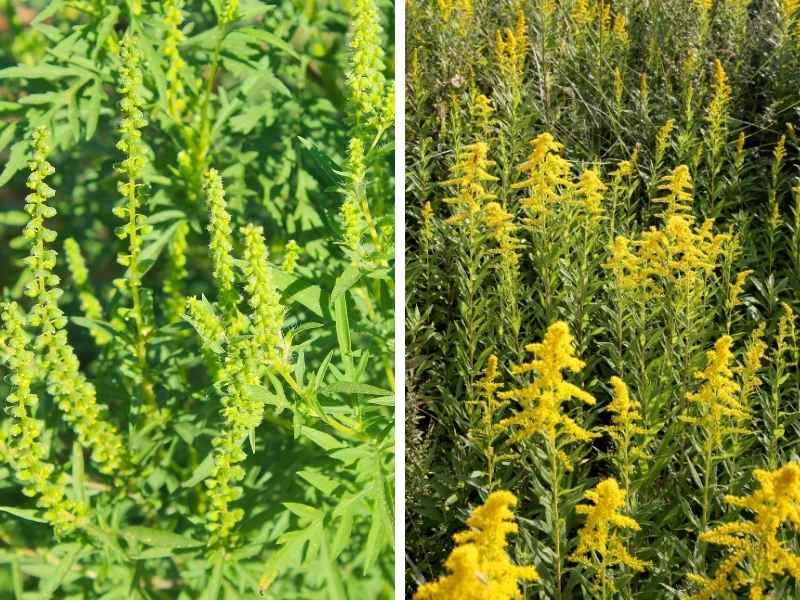
Walk past a patch of goldenrod in August or September and you might assume your watery eyes and scratchy throat are its fault. That assumption is so common that many North Carolina homeowners yank goldenrod from their yards every fall without realizing they are removing a valuable native plant while the actual allergen keeps growing nearby.
Goldenrod and ragweed bloom at roughly the same time, which is the root of the confusion. But University of Georgia Extension’s comparison of goldenrod and ragweed makes the difference clear: goldenrod produces relatively heavy, sticky pollen that insects carry from flower to flower, while ragweed releases abundant, lightweight pollen grains that drift freely on the wind and enter human airways with very little effort.
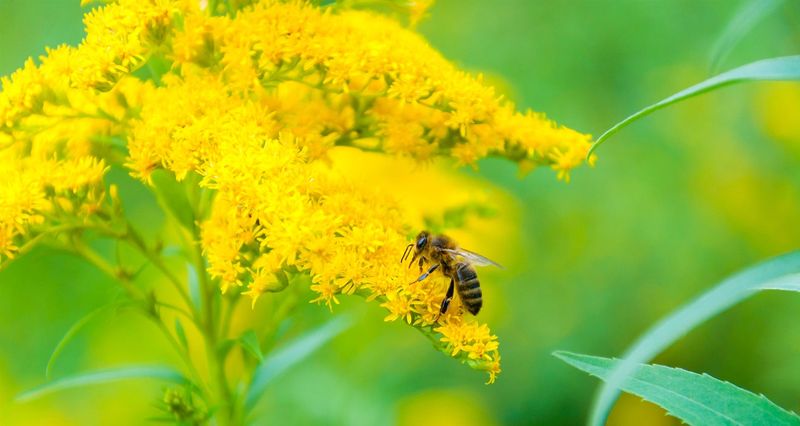
The two plants also look quite different once you know what to check. Goldenrod has showy, arching clusters of tiny yellow flowers arranged along branching or plume-like stems, making it hard to miss in any field or garden border.
Common ragweed, by contrast, carries small greenish-yellow flower heads that blend easily into the background, with deeply divided leaves that give the plant a feathery, almost fern-like appearance.
Because goldenrod’s pollen is moved mainly by bees, wasps, beetles, and other visiting insects, it rarely becomes airborne in quantities large enough to trigger ordinary hay-fever symptoms for most people. NC State Extension’s profile of common ragweed confirms that ragweed is the plant producing copious pollen in late summer, not goldenrod.
That distinction matters enormously if you are trying to decide which plant to remove from your property and which one to encourage.
Goldenrod is much less likely than ragweed to cause ordinary airborne hay-fever symptoms, but that does not mean it can never bother anyone. Direct contact with goldenrod or other plants in the Asteraceae family can irritate the skin or cause contact dermatitis in sensitive individuals, so handling it bare-handed is worth approaching with awareness.
Goldenrod helps carry late-season pollinator activity into fall
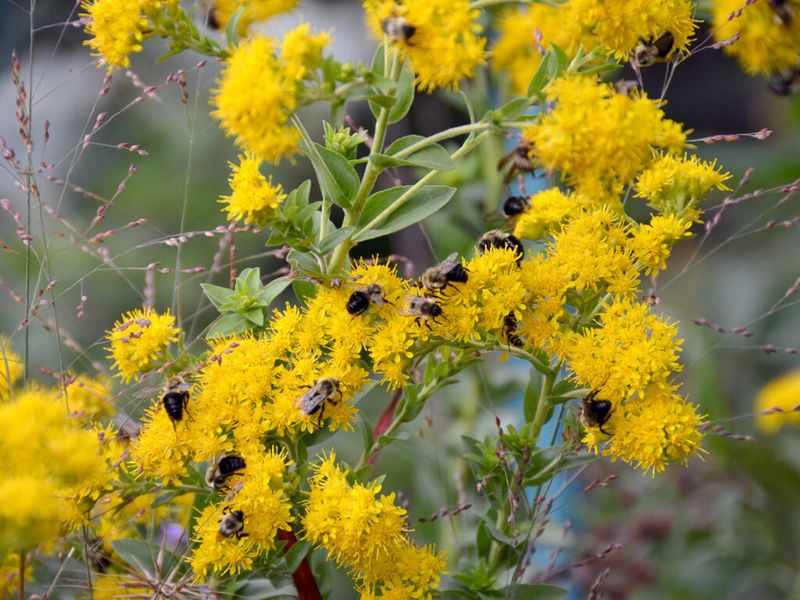
By the time late August arrives, a number of the warm-season flowering plants that carried pollinators through spring and early summer have already finished blooming or are winding down. Goldenrod steps into that gap as a reliable nectar and pollen source, offering food at a point in the season when foraging options can thin out in many yards and gardens.
Native goldenrods as a group are recognized by NC State Extension as fall pollinator plants, with bees, butterflies, moths, and other wildlife listed as regular visitors. The NC State Plant Toolbox entry for the Solidago genus documents these wildlife associations across multiple species, reflecting the broad appeal goldenrod holds for late-season foragers.
Timing varies considerably depending on the species, your location within North Carolina, the weather in a given year, and the specific conditions of your site. Some goldenrod species begin blooming in late July or August, while others extend well into October or even November along the coast.
That range of bloom windows means that a thoughtfully chosen goldenrod can provide resources across a longer stretch of the fall season than any single species alone.
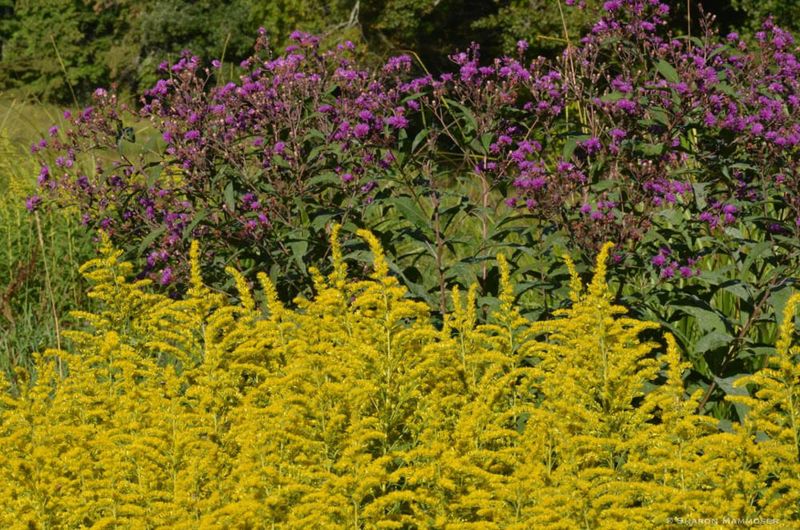
Goldenrod is genuinely useful, but calling it the only plant keeping pollinators going in September would give it more credit than the evidence supports. NC State Extension’s pollinator habitat guidance lists native asters, Joe-Pye weed, ironweed, boneset, and blazing star as fall resources alongside goldenrod, making the point that a diverse planting serves pollinators far better than any single species can on its own.
What goldenrod does reliably and well is fill part of the late-summer and early-fall forage window. Pairing it with other native fall bloomers creates a more complete habitat, and the NC State Extension Gardener Handbook chapter on native plants emphasizes selecting plants that work together across the seasons rather than relying on one standout performer.
Choose the goldenrod that fits your region and growing conditions
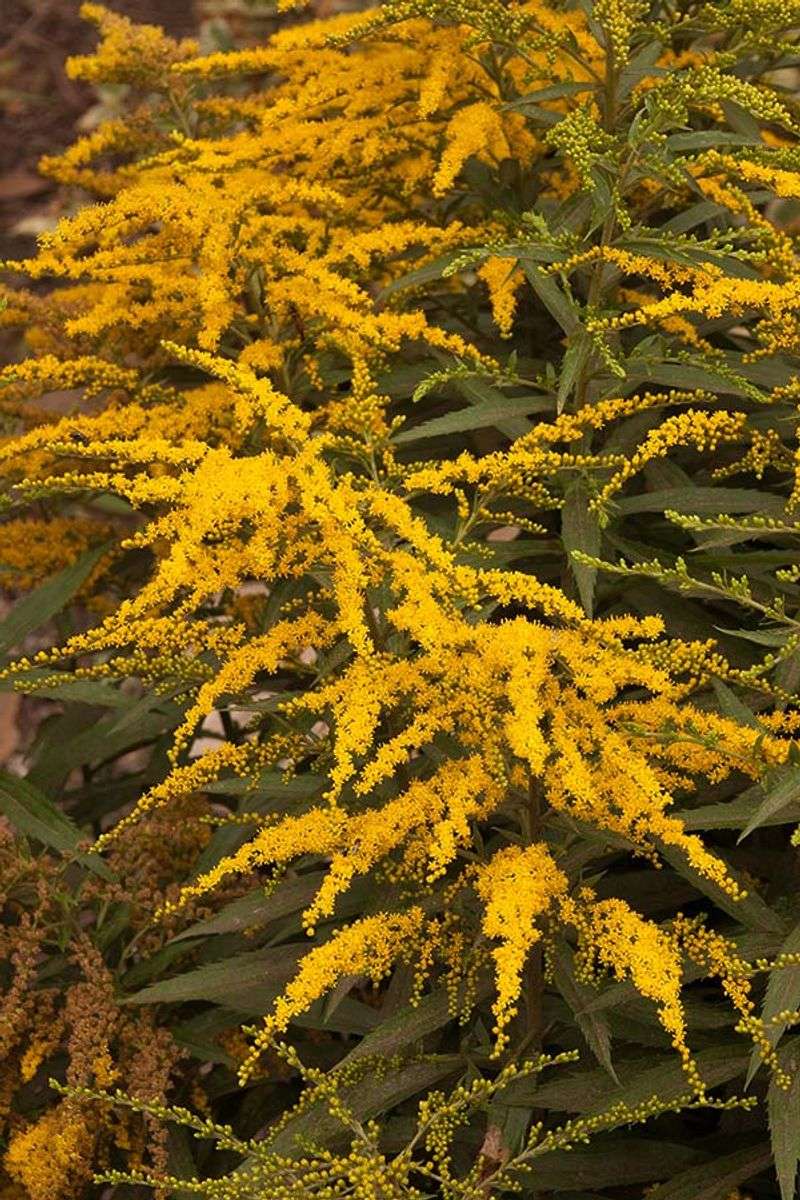
“Goldenrod” is not one plant. The Solidago genus includes dozens of species native to North America, and several grow naturally across different regions of North Carolina.
Choosing the right one for your yard means going beyond the label at the nursery and checking whether a species actually fits your region, soil, moisture level, and available space.
A practical starting point is the NC State Plant Toolbox genus page for Solidago, which lists individual species with their native range, bloom period, mature size, and site requirements. Spending a few minutes there before you buy can save you from planting a species that becomes invasive in a small bed or struggles in your soil type.
For gardeners on the coast, seaside goldenrod (Solidago sempervirens) is worth a close look. It tolerates salt spray, sandy well-drained soils, and the particular stresses of coastal habitats, and it can bloom from late summer well into November in favorable conditions, extending the foraging window significantly.
Piedmont and mountain gardeners dealing with clay soil or dry conditions might find sweet goldenrod (Solidago odora) a better fit. NC State describes it as drought-tolerant and adaptable to clay, which makes it a practical choice where heavier soils drain slowly or summer dry spells are common.
It typically blooms in August and September.
Another option that appears across all three major NC regions is golden fleece or autumn goldenrod, identified by NC State as Solidago sphacelata. Being listed statewide does not mean it will thrive anywhere without thought, so verify its mature size, growth habit, soil preference, and moisture needs before planting.
The NC State Extension native plants handbook reinforces that geographic range and residential site suitability are two different things, and treating them as the same is a common planting mistake.
Match the planting site before you worry about low maintenance
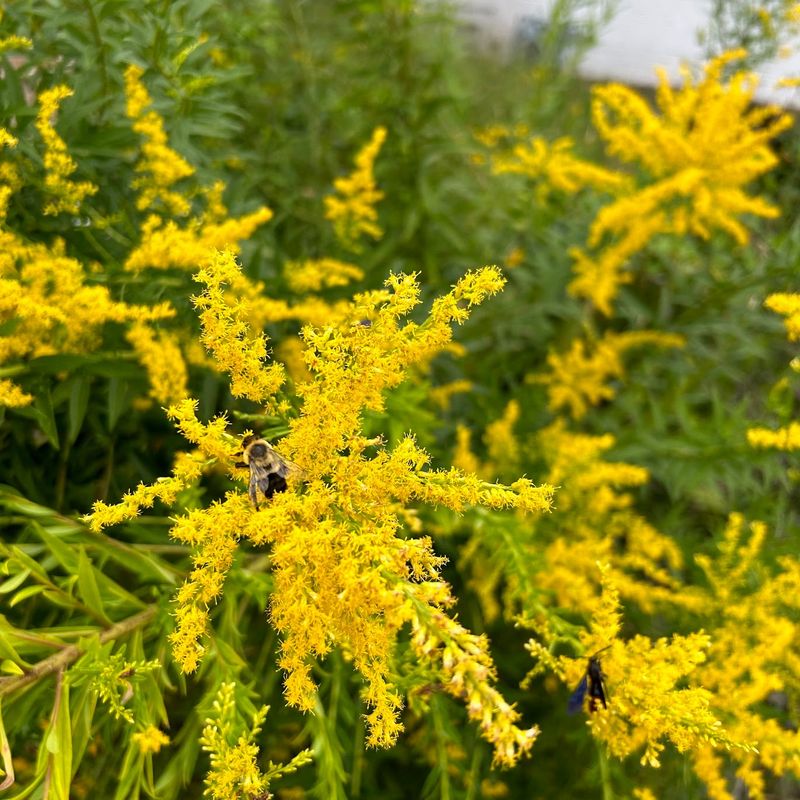
Native plants have a reputation for being low-maintenance, and many goldenrods live up to that once they are established. The key phrase there is “once established,” because the first season after planting requires consistent attention to moisture, and the site itself has to be right from the start or no amount of care will compensate.
Most goldenrods perform best in full sun, generally at least six hours of direct light per day. Beyond light, the more important variables are soil moisture and drainage.
Seaside goldenrod is adapted to sandy, well-drained coastal soils and would likely struggle in a poorly drained inland bed. Matching the species to the actual drainage and moisture pattern of your site matters more than any other single factor.
Fall planting works well for many North Carolina native plants because soil temperatures remain warm enough to encourage root development while cooler air slows the stress on above-ground growth. The NC State Extension native plants handbook advises keeping newly planted natives watered until their root systems are established, regardless of the season.
Skipping that step in the first year is the most common reason a well-chosen native underperforms.
One practical concern worth knowing before you plant: not all goldenrods stay where you put them. Some species, including tall goldenrod (Solidago altissima), spread through rhizomes and can move aggressively through a small garden bed, crowding out other plants within a few seasons.
NC State specifically cautions that some native plants are too vigorous for small borders, and tall goldenrod appears among those examples.
Check the mature spread of any goldenrod species you are considering, not just its height. The NC State Solidago genus page lists spread alongside height for individual species, giving you the information needed to decide whether a clumping or rhizome-spreading type fits your space.
A species that works beautifully in a large naturalized area may completely overwhelm a four-foot border bed.
Manage ragweed separately when allergy exposure is the concern
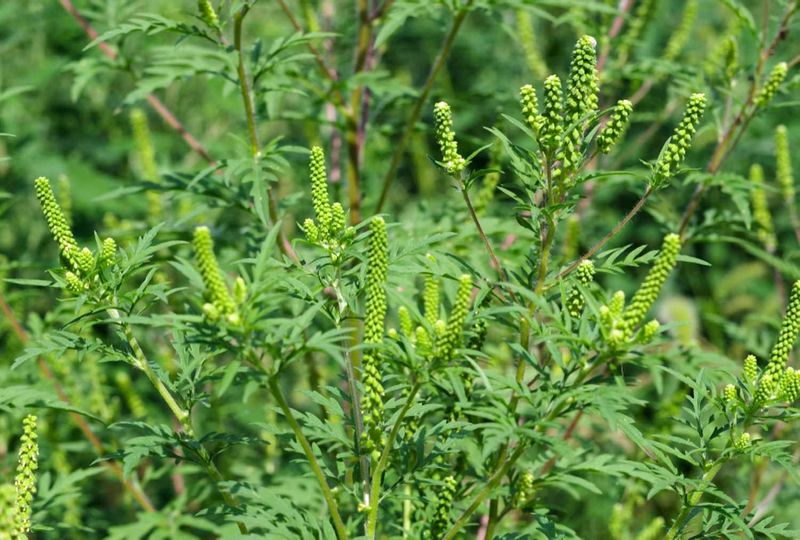
Ragweed deserves a fair assessment rather than a simple villain label. Common ragweed (Ambrosia artemisiifolia) is a native summer annual with its own role in the ecosystem, but it is also a significant source of airborne pollen that triggers hay fever and can worsen asthma symptoms for a substantial number of people.
For homeowners who are sensitive to ragweed pollen, its presence near the house is a practical problem worth addressing directly.
NC State Extension’s ragweed profile explains that common ragweed is a summer annual, which means it completes its life cycle in one growing season and dies after producing seed. That biology creates a useful management window: young plants in late spring or early summer are far easier to control than mature plants releasing pollen in August and September.
Pulling or mowing ragweed before it sets pollen reduces your exposure significantly and limits seed production for future seasons.
Dense, healthy turf is one of the most practical long-term tools for keeping ragweed from establishing. Ragweed favors disturbed, bare, or thin soil, so a well-maintained lawn with good ground cover leaves fewer open spots for it to germinate.
Filling gaps in garden beds with mulch or ground cover plantings reduces the same opportunity.
When ragweed has grown large or covers a significant area, mechanical removal by hand is harder and more likely to expose you to pollen directly. If a chemical control is appropriate for your situation, the right choice depends on several factors specific to your yard.
The NC State Extension weed management handbook makes clear that herbicide decisions should account for the weed species, its growth stage, nearby desirable plants, the application site, environmental conditions, and the specific product label. No single recommendation fits every yard.
The University of Georgia Extension comparison of goldenrod and ragweed is a useful identification reference to keep on hand, because controlling ragweed effectively starts with being certain you are looking at ragweed and not at the goldenrod growing beside it.
Goldenrod is not allergy-free, so use sensible precautions
Correcting the goldenrod-ragweed confusion is important, but going too far in the other direction creates its own problem. Saying that goldenrod is completely allergy-free is not accurate, and anyone managing their yard around pollen exposure deserves the full picture rather than a reassuring half-truth.
Goldenrod pollen is relatively heavy and sticky, which means it clings to visiting insects rather than drifting into the air in large quantities. That characteristic makes it far less likely than ragweed to cause the kind of inhaled hay-fever symptoms that affect millions of people each fall.
However, direct contact with goldenrod or other members of the Asteraceae family can cause skin irritation or allergic contact dermatitis in some individuals. A CDC-hosted clinical guide on landscape plant selection for allergic patients notes that many Asteraceae plants have been associated with contact dermatitis, so wearing gloves when handling goldenrod is a reasonable precaution rather than an overreaction.
For people with ragweed allergy or pollen-triggered asthma, the fall season requires broader management. CDC guidance on pollen and health recommends checking pollen forecasts before spending time outdoors, limiting exposure during high-pollen periods, keeping windows closed when pollen counts are elevated, and showering or changing clothes after working in the yard.
These habits reduce cumulative exposure regardless of whether goldenrod or ragweed is the primary trigger.
Two specific practices carry real risk and are worth avoiding outright. Pulling flowering ragweed bare-handed brings your face and skin into close proximity with actively releasing pollen, which is the opposite of what a sensitive person needs.
Burning ragweed or other yard debris exposes your airways to smoke and plant particles in concentrated form. The CDC and NIOSH guidance on outdoor plant exposures identifies smoke from plant material as an avoidable inhalation risk.
The American College of Allergy, Asthma and Immunology gardening guidance reinforces that ragweed is one of several fall allergens, alongside mold, grass pollen, and other triggers, and that people with persistent symptoms benefit most from working with a medical provider rather than managing exposure through yard changes alone.
Use goldenrod as one dependable piece of a diverse fall garden
A well-chosen goldenrod belongs in most North Carolina home landscapes that have room and reasonable sun. The practical decision process is straightforward: select a named native species verified for your region through the NC State Plant Toolbox, confirm its mature size and spread before purchasing, match it to your soil moisture and drainage, and water it consistently through the first growing season until roots establish.
What goldenrod cannot do is replace a diverse, season-long planting or guarantee a measurable increase in pollinator populations on its own. NC State Extension’s pollinator habitat guidance frames the goal as building a range of native plants that bloom across spring, summer, and fall, giving pollinators consistent resources rather than a single late-season surge.
Goldenrod paired with native asters, ironweed, boneset, and blazing star delivers that kind of layered support far more effectively than goldenrod alone.
Managing ragweed is a separate task from planting goldenrod, and treating them as the same job leads to removing the wrong plant. Address ragweed early in the season, before pollen production begins, and use the NC State Extension native plants handbook to guide both your plant selection and your weed management approach.
Plant goldenrod for its genuine late-season value, identify it correctly so it stays in the ground, and let the two plants have their separate conversations with your yard.