
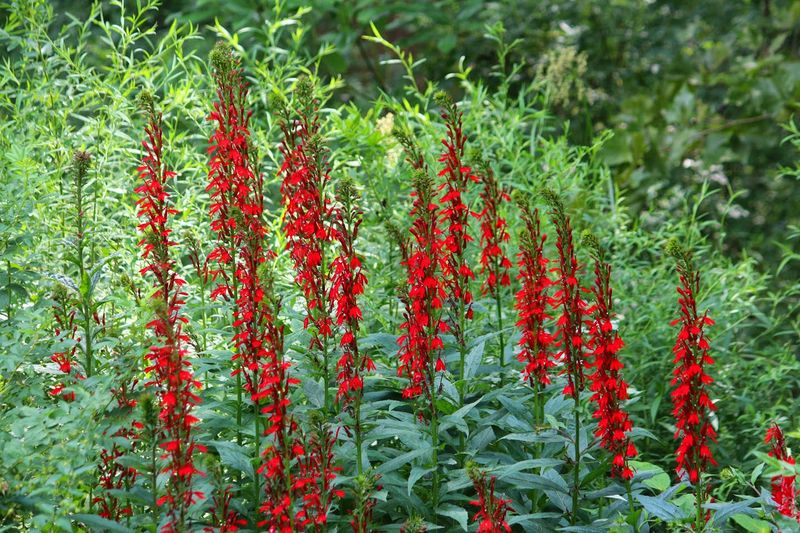
Late August has a way of draining the color out of most garden beds, leaving North Carolina homeowners staring at tired foliage and spent blooms. Cardinal flower, known botanically as Lobelia cardinalis, is one native perennial that keeps going strong through that stretch, sending up vivid scarlet spikes that stop hummingbirds mid-flight.
It grows throughout the state, from the mountains to the coastal plain, but it has a firm requirement that every gardener should understand before planting it. Get the site right, and this overlooked native can transform a moist corner of your yard into one of the most active wildlife spots of the summer.
An overlooked candidate for late-summer color
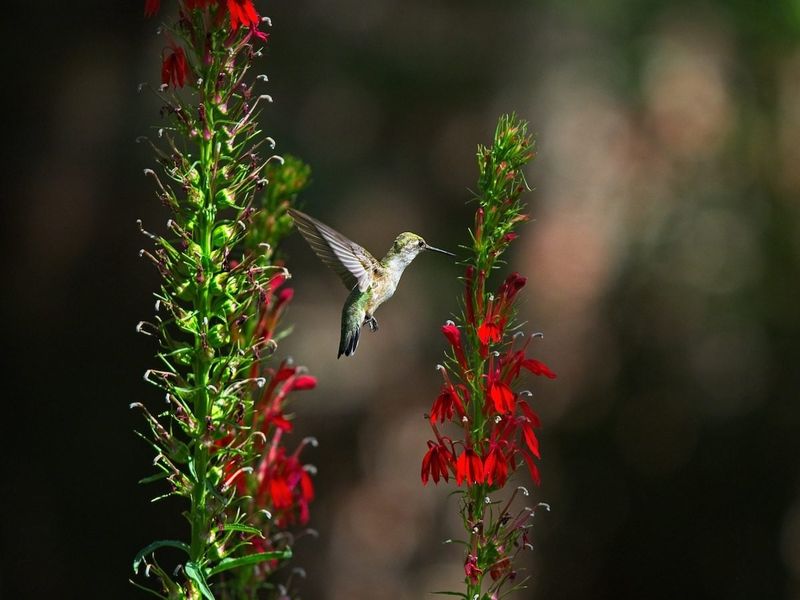
Cardinal flower earns its place in the late-summer garden through sheer visual presence. Its erect terminal spikes carry tubular, cardinal-red flowers on stems that commonly reach 2 to 3 feet, with some plants pushing 4 feet or more when conditions are favorable.
That upright habit and saturated color make it one of the more striking herbaceous perennials you can grow in a North Carolina bed during the months when heat has knocked back many showier plants.
According to NC State Extension’s plant profile for Lobelia cardinalis, the bloom period runs from July through October, which means August is a useful focal month without being a universal, measurable peak date for every garden. Timing shifts depending on elevation, soil moisture, light, and weather in any given year.
Mountain gardens may see slightly earlier bloom; coastal plain plantings may run later into fall.
Framing it as the only late-summer native blooming in North Carolina would not be accurate. Summer phlox, coneflowers, Joe-Pye weed, goldenrod, asters, ironweed, and blazing star can all deliver color and wildlife value in late summer and fall, as the NC State Extension Gardener Handbook chapter on native plants makes clear.
Cardinal flower is better described as an overlooked candidate, one that fills a vivid niche in moist sites where many of those other options would also struggle. Its case rests on a combination of color intensity, height, and habitat flexibility in wet conditions rather than on any claim that it alone carries August.
What visits the red flowers
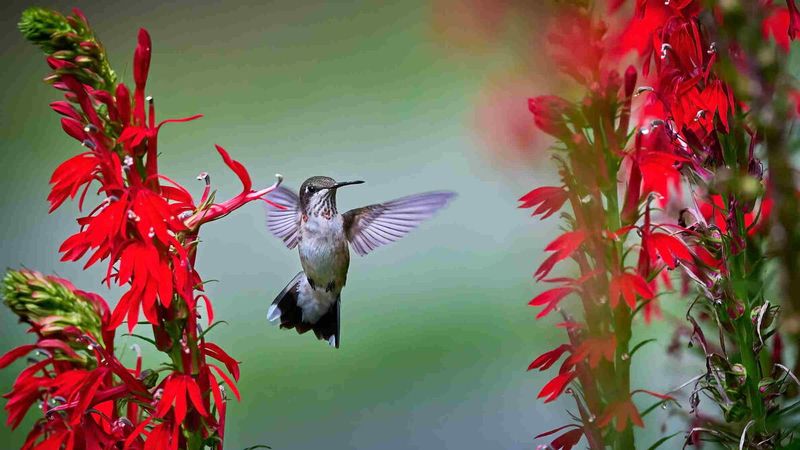
The tubular shape and cardinal-red color of Lobelia cardinalis are not accidental. That flower architecture is closely matched to the feeding style of hummingbirds, particularly the ruby-throated hummingbird, which is the primary hummingbird species across most of North Carolina.
Ruby-throated hummingbirds are documented visitors and pollinators of cardinal flower, drawn by the nectar tucked deep inside those narrow red tubes.
Butterflies also visit the flowers, though their shorter tongues make them less efficient pollinators than hummingbirds. The NC State Extension common-name page for cardinal flower specifically identifies hummingbirds and butterflies as wildlife attracted to the plant.
A garden with a cardinal flower clump in reliable bloom through August and September can become a reliable refueling stop for ruby-throated hummingbirds before their fall migration begins.
One important clarification: the common name has nothing to do with cardinal birds. It refers to the deep red color of Roman Catholic cardinal robes.
As Illinois Wildflowers notes in its cardinal flower profile, the flowers attract hummingbirds and butterflies rather than the red-crested birds many gardeners assume. Cardinal birds may pass through a yard that has the plant, but they are not drawn to it the way hummingbirds are.
Keeping that distinction clear helps set realistic expectations and lets the plant’s actual wildlife contribution stand on its own merits.
Avoid overstating the plant’s pollinator reach. It does not feed every type of native bee or short-tongued insect efficiently.
Its documented value centers on hummingbirds and butterflies, which is a genuine and meaningful contribution to a late-summer yard without needing embellishment.
Moisture determines whether it thrives
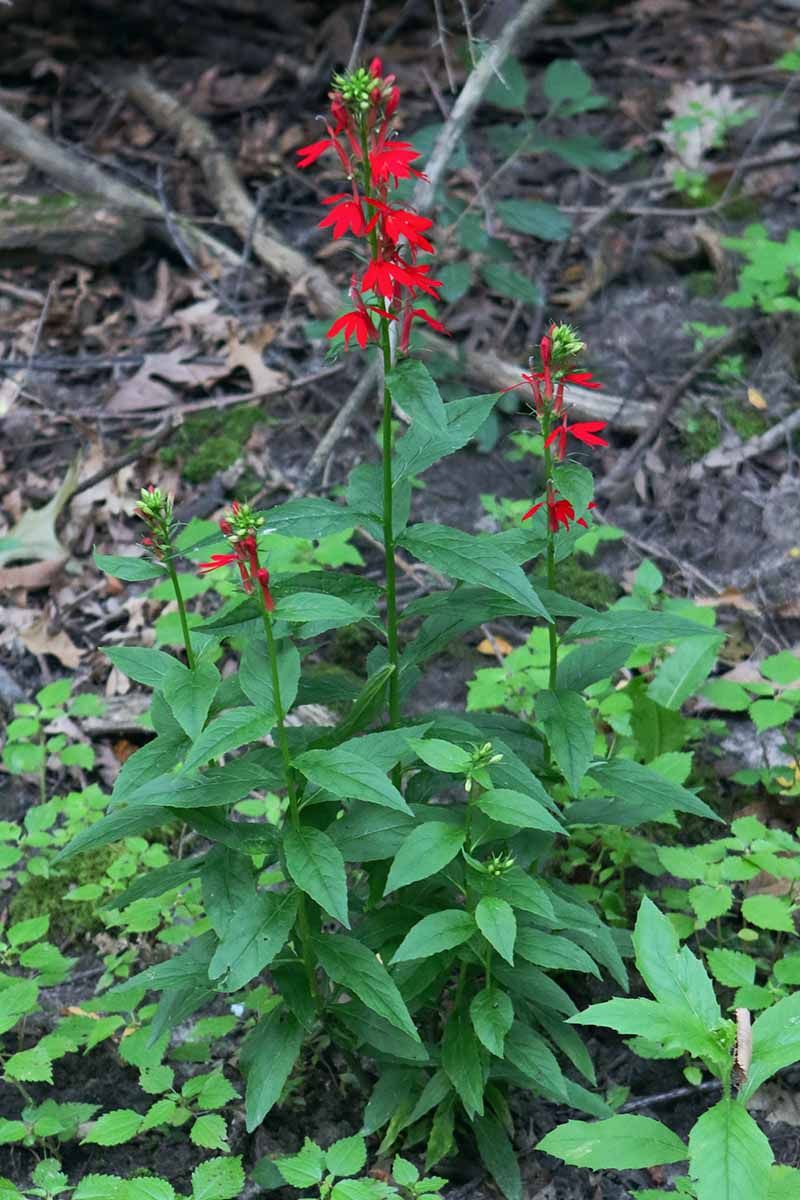
Before choosing a spot for cardinal flower, run a simple check: does that area stay consistently moist, or does it dry out for stretches of a week or more during summer? The answer to that question matters more than any other factor.
Cardinal flower prefers consistently moist to occasionally wet soil, and the NC State Extension cardinal flower page specifically recommends it for pond edges, stream banks, rain gardens, and moist woodland borders.
Sites that fit naturally include downspout-fed beds that stay reliably damp after rain, drainage swales where water moves through slowly, wet meadow edges, and low spots that hold moisture longer than surrounding ground. A pond or stream margin where the soil stays saturated through summer is close to the plant’s native habitat.
In those conditions, it can establish and spread without demanding much extra attention beyond occasional mulching.
Hot, dry foundation beds along a south- or west-facing wall are a poor match. So are raised beds with fast-draining sandy or gravelly soil, and sloped borders in full afternoon sun where water runs off quickly.
The Missouri Botanical Garden’s Lobelia cardinalis profile is direct on this point: the soil should not be allowed to dry out. Placing it in a marginal spot and hoping for rain is not a reliable strategy.
A practical field test before planting: after a normal summer rain, go back to the spot 48 to 72 hours later and push a finger two inches into the soil. If it still feels clearly damp, that site can likely support cardinal flower with moderate supplemental watering during dry spells.
If it has dried out and cracked, look for a wetter location or plan for dedicated drip irrigation before committing to the plant.
Use light and height to place it well

Cardinal flower handles a wider range of light than many gardeners expect. It tolerates full sun, partial shade, and dappled shade, which gives it real flexibility in a North Carolina yard.
That said, full afternoon exposure during the hottest weeks of a Piedmont or coastal plain summer can stress the plant if the soil is not consistently moist. For most home gardeners in North Carolina, morning sun with afternoon shade, or a spot under a high canopy that filters midday light, tends to be a safer starting point than a fully open, south-facing bed.
Mountain gardens at higher elevations may handle full sun more comfortably because temperatures stay cooler and humidity stays higher through summer. In those settings, a sunny pond margin or open wet meadow edge can work well.
Coastal plain gardens often have intense afternoon heat and reflected light from nearby structures, so erring toward partial shade there protects both the foliage and the flowers during peak bloom.
Height is one of the plant’s design advantages. At 2 to 3 feet, and sometimes taller, those upright red spikes work naturally at the back or middle of a moist border, where they add vertical structure without blocking shorter plants in front.
Positioning the clump near the rear of a rain garden, behind a mass of shorter moisture-tolerant natives like swamp milkweed or blue flag iris, lets the scarlet spikes read clearly against lower green foliage.
One placement rule to keep in mind: light adjustments cannot substitute for moisture. A partly shaded spot that dries out quickly will still fail the plant.
The light decision should always come after the moisture question is answered, not instead of it.
Establish the plant before summer stress
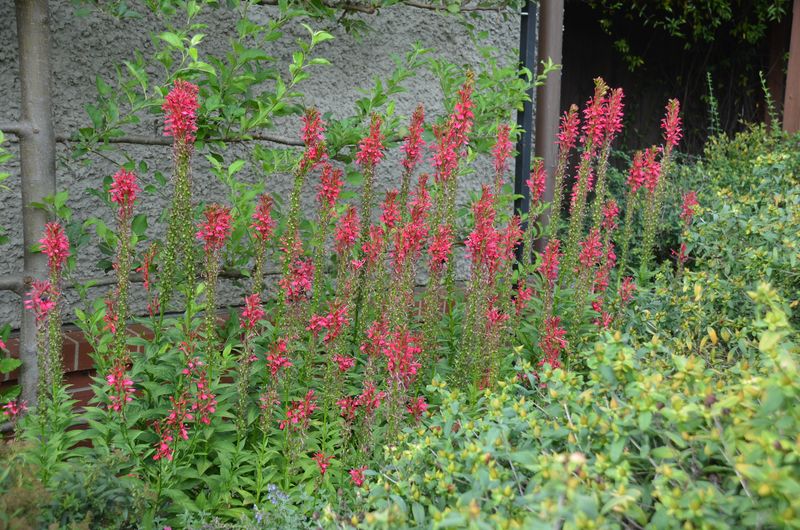
Timing the installation well is one of the most practical things a gardener can do for cardinal flower. Spring planting gives container-grown plants several months to develop roots before they face the demands of flowering and the heat of a North Carolina summer.
The NC State Extension Handbook chapter on herbaceous ornamentals recommends spring establishment for late-summer- and fall-blooming perennials for exactly this reason: the plant needs time to anchor itself before putting energy into flower production.
Buying a plant in August when you see it blooming at a nursery is tempting, but transplanting during peak summer heat adds real stress. A newly installed plant has a limited root system and cannot pull moisture from the soil as efficiently as an established one.
If August is the only option, acclimate the plant gradually, keep it shaded for the first week, water at the base every day until you see new growth, and avoid letting the root ball dry out even briefly during that first month.
Mulch plays a direct role in keeping the root zone moist between waterings. A 2- to 3-inch layer of shredded bark or leaf mulch around the base, kept a few inches away from the stem, slows evaporation and moderates soil temperature.
Water at the base rather than overhead; frequent overhead watering can promote foliar problems and does less to build the deep soil moisture the plant depends on.
After establishment in a genuinely moist site, Missouri Botanical Garden describes cardinal flower as relatively low-maintenance, with few serious pest or disease problems. Slugs and snails may damage young foliage, especially in shaded, wet spots.
The low-maintenance label applies mainly to well-sited plants; keeping a poorly sited plant alive through supplemental irrigation is considerably more work.
Renew the clump with seed and offsets
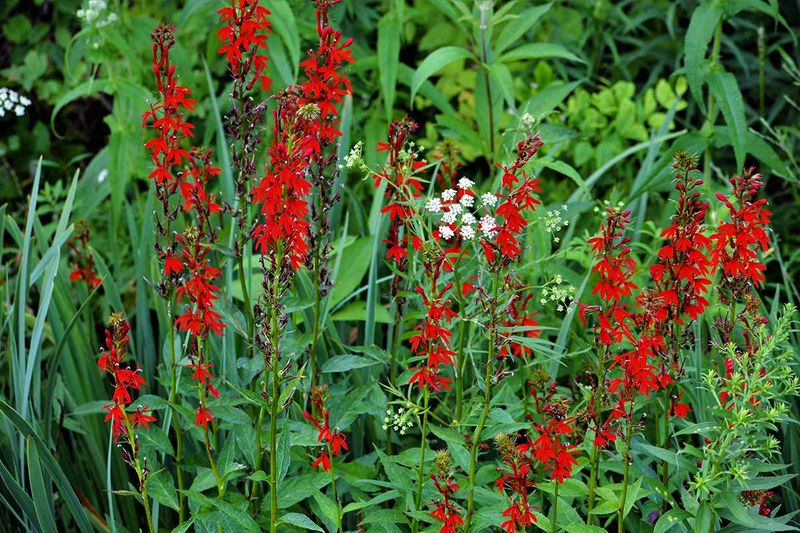
Cardinal flower can be somewhat short-lived as an individual perennial, sometimes persisting only two or three years before declining. That tendency surprises gardeners who expect every perennial to come back reliably for a decade.
The practical response is to treat the planting as something to actively renew rather than a fixture that maintains itself indefinitely.
Two methods help keep a colony going. The first is seed.
Cardinal flower produces seed that, given the right conditions, can germinate and fill gaps left by older plants. The critical detail is that the seed needs light to germinate.
According to the NC State Extension cardinal flower page, seed should be sown directly on the soil surface or covered only very lightly, then kept consistently moist until germination. Burying it under even a thin layer of dense mulch can prevent it from sprouting.
If you want natural reseeding to occur, leave a small area of bare, moist soil near the parent plant after bloom fades.
The second method is dividing basal rosettes in spring. Cardinal flower often produces small rosette clusters at the base of the main stem during the growing season.
These can be carefully separated and replanted in prepared, moist soil. Spring division gives the new divisions the full growing season to establish before their first winter, which improves survival rates compared to late-summer separation.
Neither method is a guarantee. Missouri Botanical Garden notes that reseeding and basal offsets can help maintain a planting, but spread is not automatic or uniform.
A clump may reseed generously in one moist spot and produce almost nothing in a slightly drier adjacent area. Treating renewal as an active part of the gardening practice, rather than a passive expectation, keeps the colony healthy over time.
Know the plant’s limits and safety risks
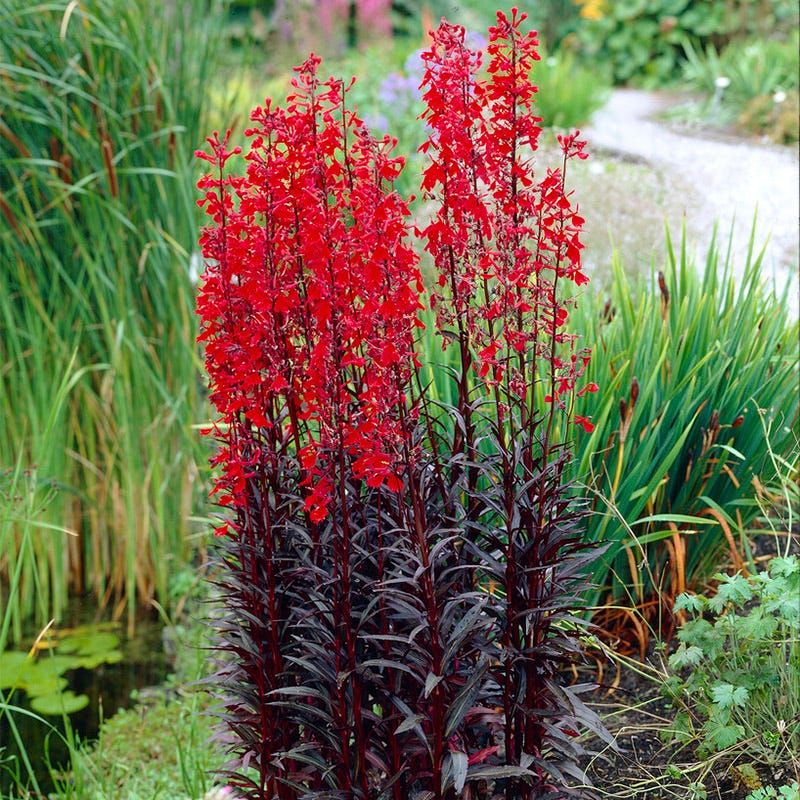
Cardinal flower belongs in the right site, and it carries real safety considerations that every household should know before planting. On the habitat side, the plant is native throughout North Carolina across the Mountains, Piedmont, and Coastal Plain, but that broad native range does not mean it suits every yard.
Its defining requirement is reliable soil moisture. Placing it in a drought-prone border without dedicated irrigation sets it up to fail, and no amount of care elsewhere compensates for a dry root zone.
The safety concern is more serious. Major plant parts of Lobelia cardinalis are poisonous to humans, and the NC State Extension cardinal flower profile flags toxic alkaloids that can cause gastrointestinal, neurologic, and cardiac symptoms if consumed in significant quantities.
The plant can also harm cats, dogs, and horses. Keep children from chewing any part of the plant, and do not let pets graze on the foliage or stems.
Never add clippings to livestock feed. Do not treat the plant as edible or attempt herbal use based on historical accounts; the risk of serious harm is real.
A naming clarification is worth making here. The common name cardinal flower refers to the deep red color associated with Roman Catholic cardinal robes, not to any special relationship with cardinal birds.
The Missouri Botanical Garden plant profile notes explicitly that the flowers attract hummingbirds and butterflies, not cardinals. Expecting the plant to draw red-crested songbirds to your yard will lead to disappointment.
Cardinal flower is also a distinct species from great blue lobelia, Lobelia cardinalis being the red-flowered species and Lobelia siphilitica the blue-flowered one. Both are North Carolina natives, but they create different visual effects and attract somewhat different visitors.
Knowing which species you are buying prevents confusion at the nursery and in the garden.
Match the plant to the right corner
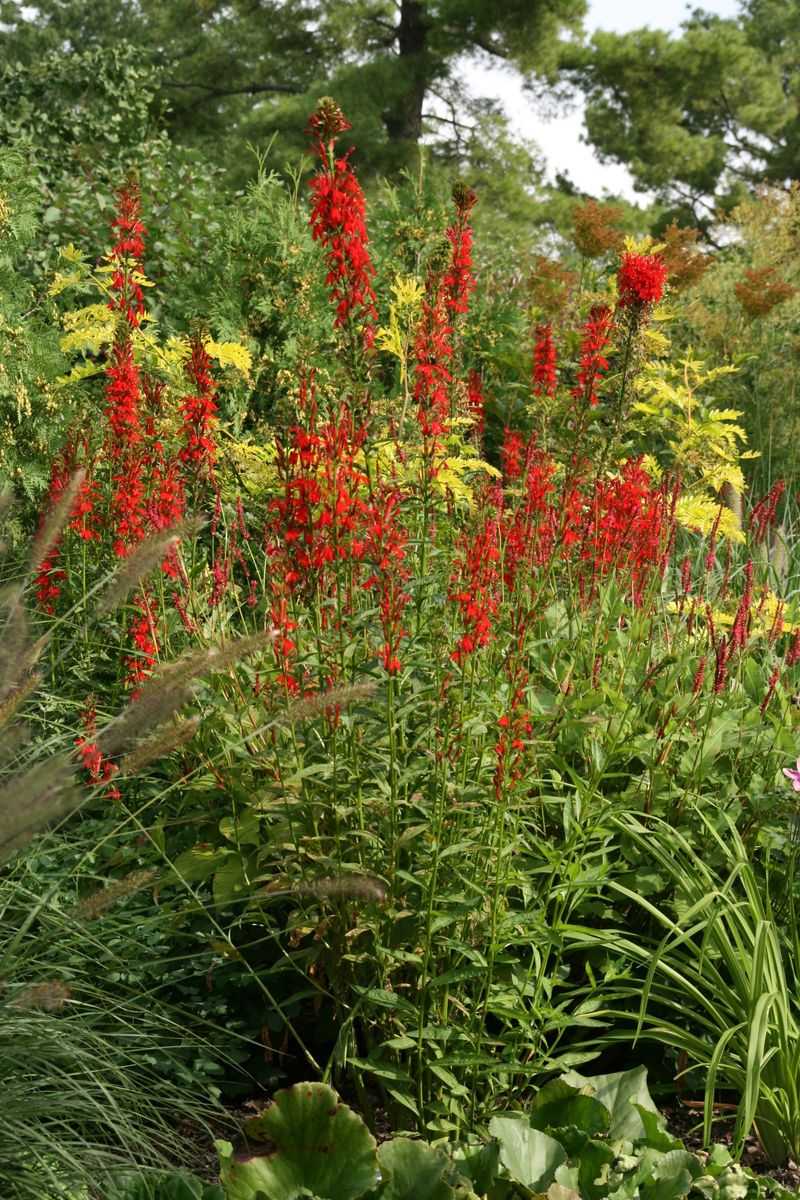
Cardinal flower earns a spot in your yard when three things line up: dependable soil moisture, suitable light, and a need for vivid color with hummingbird and butterfly activity from July through October. When those conditions exist, the plant delivers in a way that few other overlooked natives can match in that same wet, partly shaded niche.
The decision rule is straightforward. Identify a moist border, rain-garden edge, pond margin, or low spot that holds water after rain.
Confirm that the light there is full morning sun, partial shade, or dappled canopy light rather than punishing afternoon exposure. If those two boxes are checked, NC State Extension lists cardinal flower as a strong native candidate for that site, with documented hummingbird and butterfly attraction through the late-summer and fall bloom period.
Plan the installation for spring rather than midsummer, mulch well, and treat moisture management as the central ongoing task. A well-placed cardinal flower clump does not need to be the only plant blooming in August to be worth growing.
It just needs to be in the right corner of your yard, where its scarlet spikes can do exactly what they were built to do.