
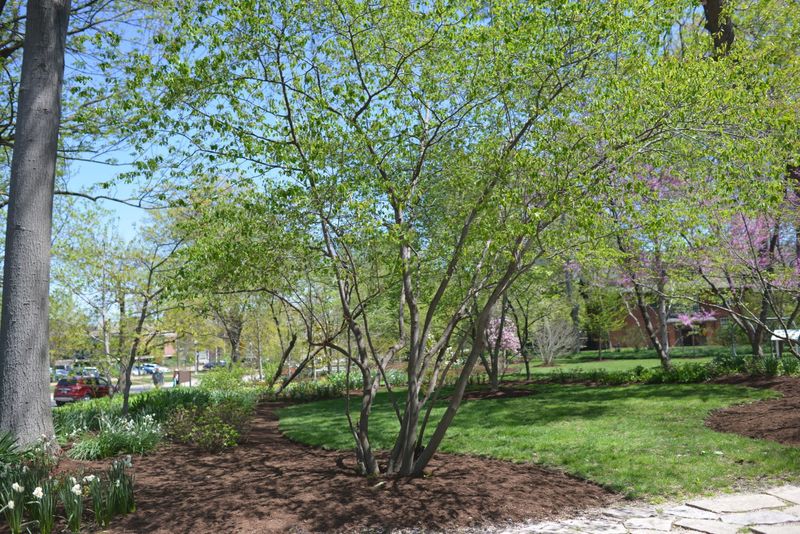
Most ornamental trees in a North Carolina yard give you one spectacular week and then blend into the background for the rest of the year. Downy serviceberry is different.
This native small tree layers fragrant spring flowers, leafy summer structure, developing fruit, and possible fall color into a sequence that keeps the yard interesting long after that first flush of bloom fades. If you have been searching for a native tree that does more than one thing well, this one deserves a serious look.
An Underrated Option for More Than One Season
Walk through almost any North Carolina neighborhood in spring and you will spot the same pattern: cherry trees erupt in pink, Bradford pears go white for ten days, and then everything just becomes a green backdrop until autumn. That single-week payoff is the small-yard problem nobody talks about when they are standing in a nursery parking lot, excited about a new tree.
Downy serviceberry (Amelanchier arborea) is this article’s editorial recommendation for North Carolina homeowners who want more than one memorable moment from a single tree. Calling it the most underrated native tree in the state is an opinion, not a measurable ranking.
What the evidence does support is that this tree is genuinely overlooked and genuinely useful across multiple seasons, which is a harder combination to find than it sounds.
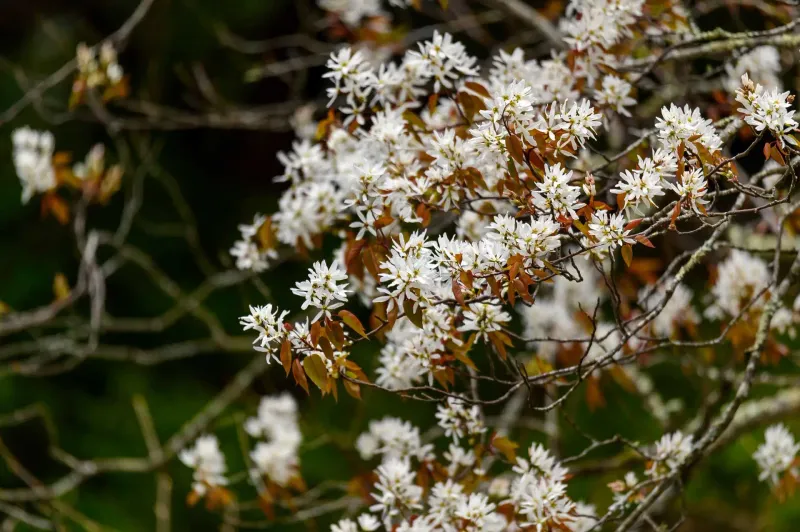
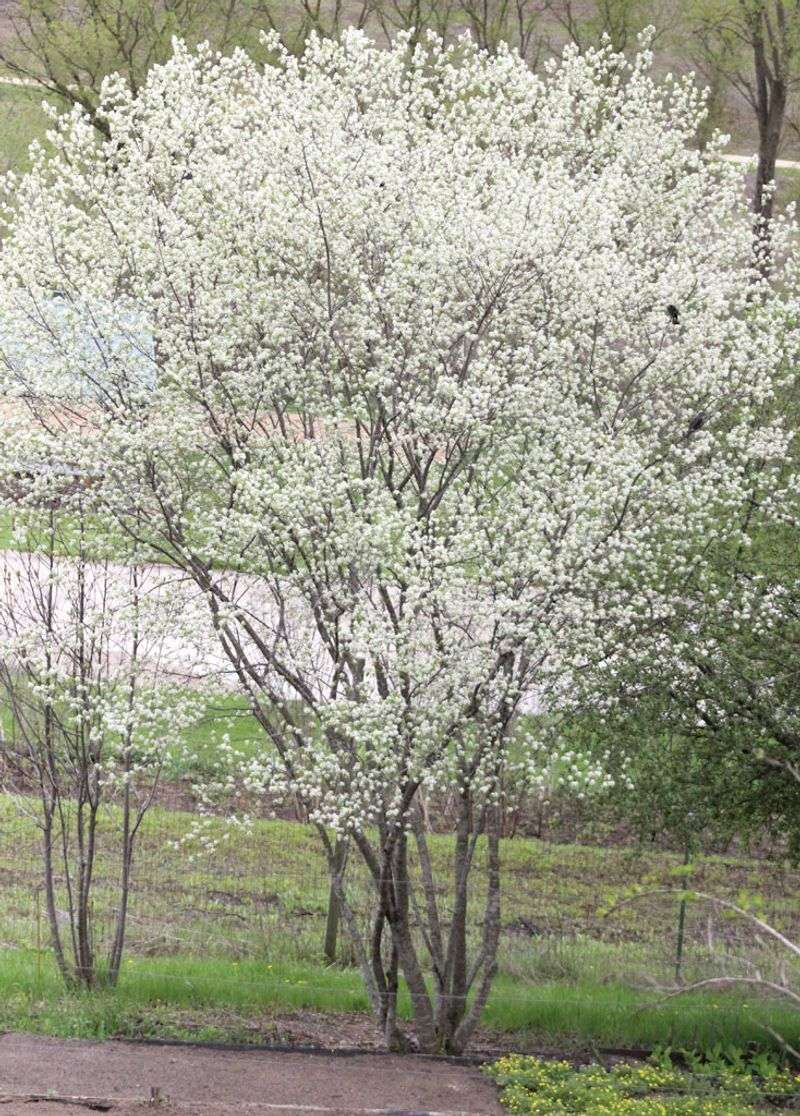
The case for serviceberry rests on a sequence rather than a single event. NC State Extension’s plant profile for Amelanchier arborea describes fragrant white flowers appearing before or with the leaves in early spring, followed by developing blue-purple to red-purple fruit through summer, then possible fall foliage interest as the season closes.
That is three distinct contributions, not three seasons of continuous bloom.
The tree also fits a realistic small-yard footprint, typically reaching 15 to 25 feet tall and 10 to 15 feet wide at maturity. It supports pollinators, feeds birds, and grows from local genetic stock across much of the state.
The sections that follow will test those claims against practical questions: How much room does it really need? Which serviceberry should you actually buy?
What does establishment look like? And what are the honest tradeoffs?
The Seasonal Sequence Is the Real Selling Point
Serviceberry’s spring show arrives early, often before most other trees have leafed out. The flowers are small, white, and fragrant, appearing in loose clusters that cover the branches before or just as the new leaves emerge.
Because the surrounding landscape is still mostly bare or just turning green, those white blossoms stand out more than they would later in the season. The display typically lasts one to two weeks, depending on weather.
Summer looks different, and that distinction matters. Penn State Extension’s native plant spotlight notes that serviceberry’s summer contribution is primarily leafy canopy structure and the developing fruit crop rather than any continued flowering.
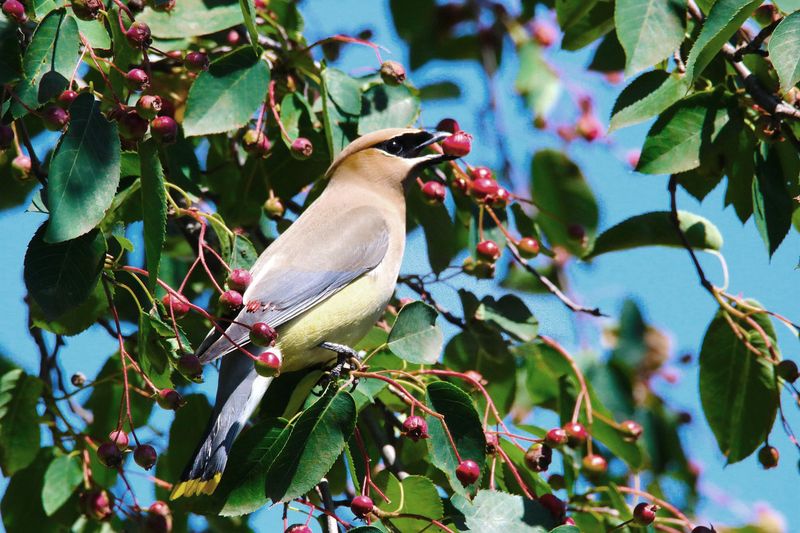
The berries start out red to purple and ripen to a deeper blue-purple by early summer in most of North Carolina. Birds often find the fruit before it fully ripens, so the berry display can be brief depending on how active the local bird population is.
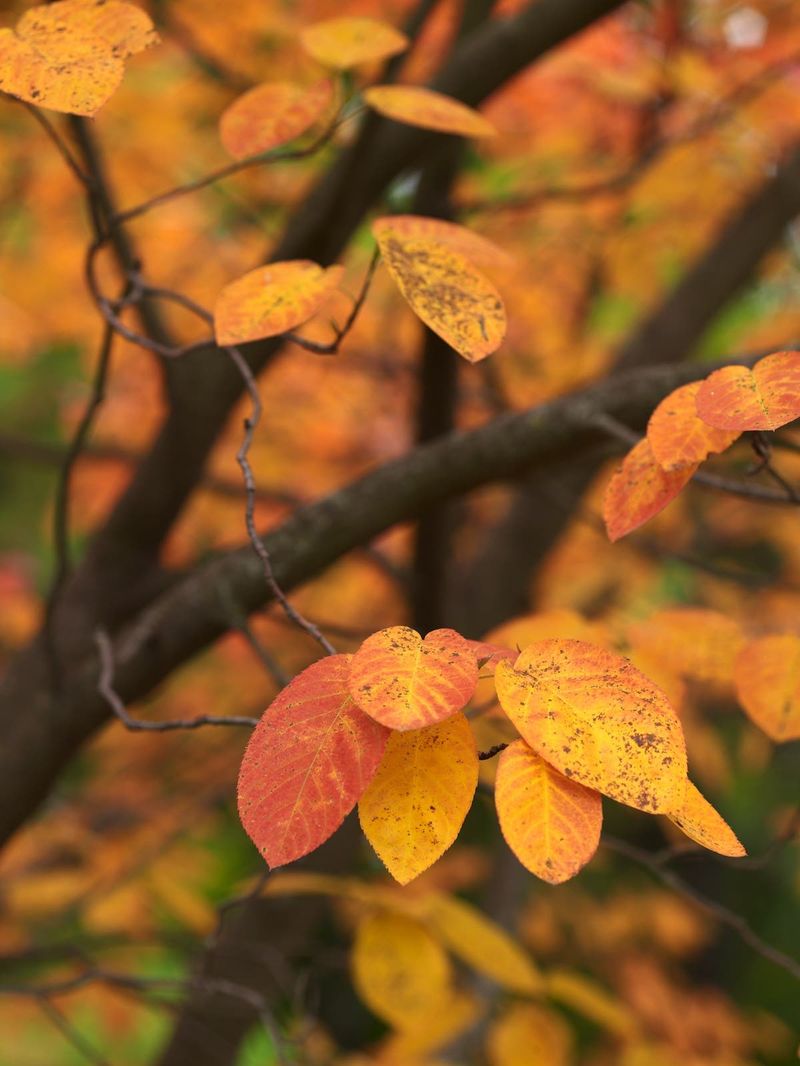
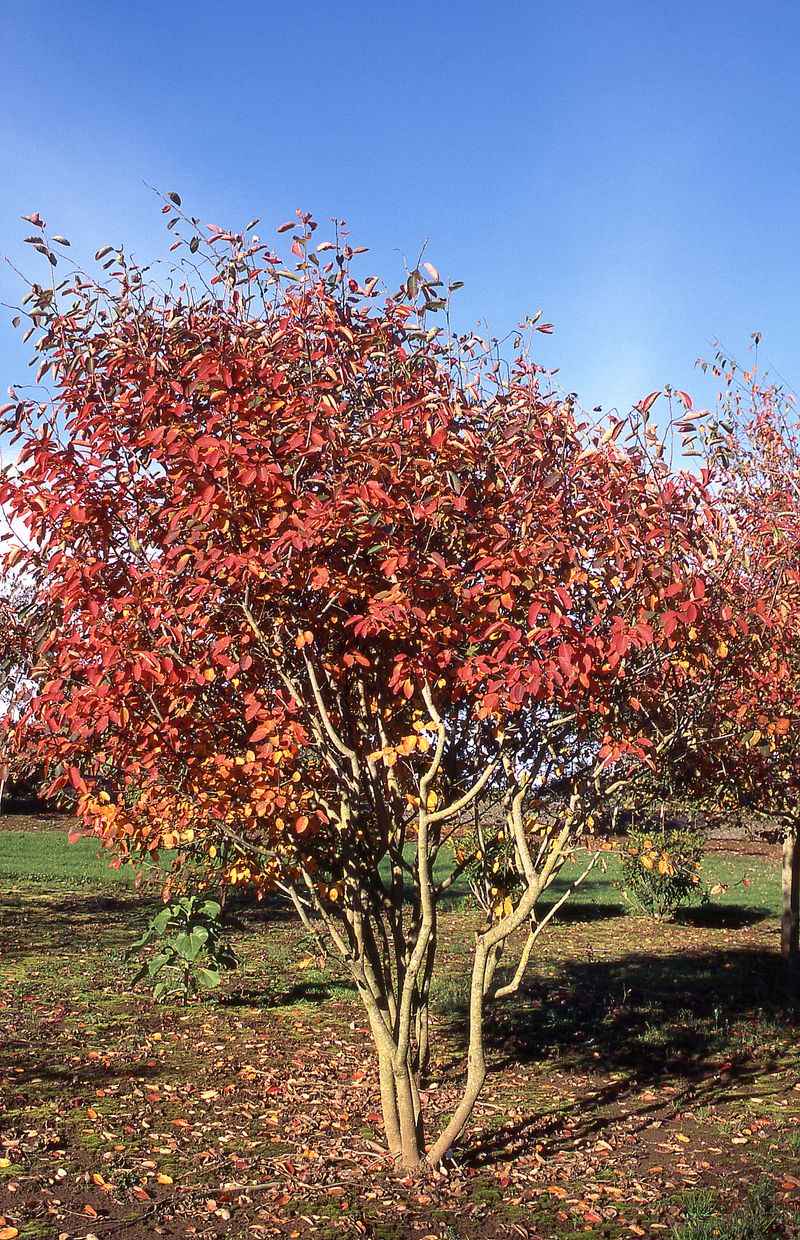
Fall interest is real but not guaranteed to impress every year. Serviceberry foliage can turn shades of yellow, orange, or red as temperatures drop, but the intensity varies with genetics, sunlight exposure, soil moisture, drought stress, and the specific cultivar or seedling you planted.
Some years the color is striking; other years it is modest. Avoid planting this tree with the expectation of a reliable fire-engine-red display every autumn.
What the seasonal sequence adds up to is a tree that contributes something worth noticing in spring, something structurally useful in summer, and something potentially attractive in fall. That is a stronger case than most ornamental trees can make, as long as you understand that “three-season interest” means a succession of different contributions rather than three seasons of peak color.
Timing also shifts somewhat between the Piedmont, coastal plain, and mountain regions of North Carolina, so local observation will always be more reliable than a calendar date.
A Small-Yard Tree Still Needs Real Room
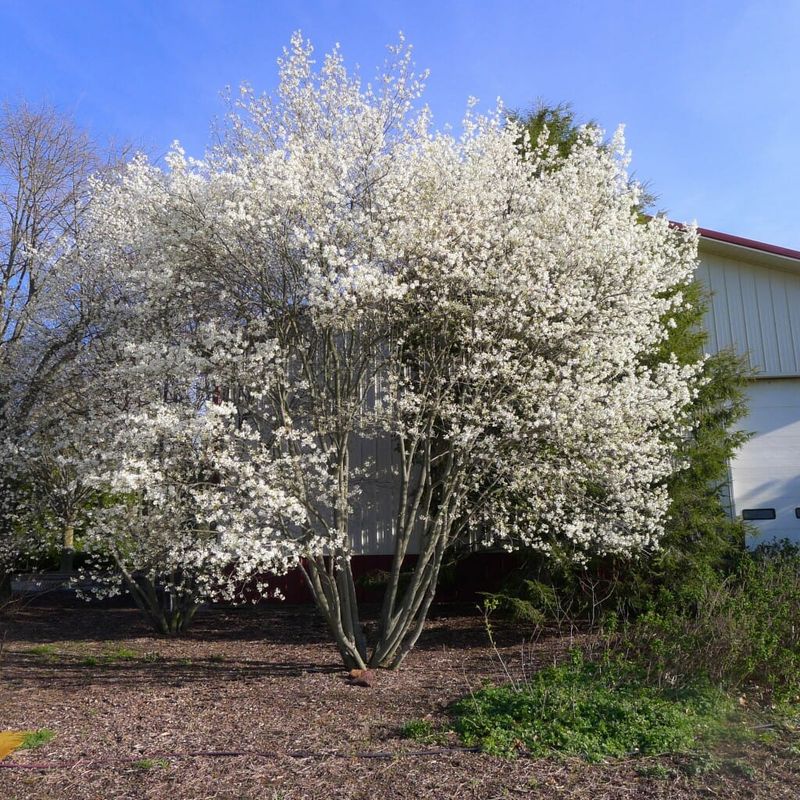
Compact is a relative word in horticulture. Downy serviceberry typically reaches 15 to 25 feet tall and 10 to 15 feet wide at maturity in a cultivated yard setting, and it can grow larger in the wild.
That footprint makes it genuinely smaller than a red maple or a willow oak, but it is not a shrub and it is not a narrow accent plant. A mature tree in that size range needs roughly 12 to 15 feet of clearance on all sides to develop properly without crowding a structure, a fence, or a neighboring plant.
NC State Extension’s Amelanchier arborea profile confirms the typical mature dimensions and notes the tree’s naturally multistemmed habit, which spreads the canopy outward rather than concentrating it on a single trunk. That multistemmed form is part of what makes it visually interesting, but it also means the effective width at ground level can be wider than the canopy spread alone suggests.
Planting too close to a foundation, a driveway edge, a narrow walkway, or a utility line corridor is likely to create problems within ten to fifteen years.
Utility lines are a firm no. Even at the lower end of its mature height range, serviceberry can grow tall enough to conflict with overhead lines and require repeated cutting that damages the tree’s form and creates long-term structural problems.
Light exposure matters for what you get out of the tree. Full sun generally produces the strongest flowering and the heaviest fruit crop, which in turn means more wildlife activity.
Partial shade works well for a woodland-edge or understory placement, but flowering and fruiting will typically be lighter. A spot that gets at least four to six hours of direct sun daily is a good target if spring flowers and summer berries are the primary reasons you are planting it.
Buy the Right Serviceberry, Not Just a Familiar Label
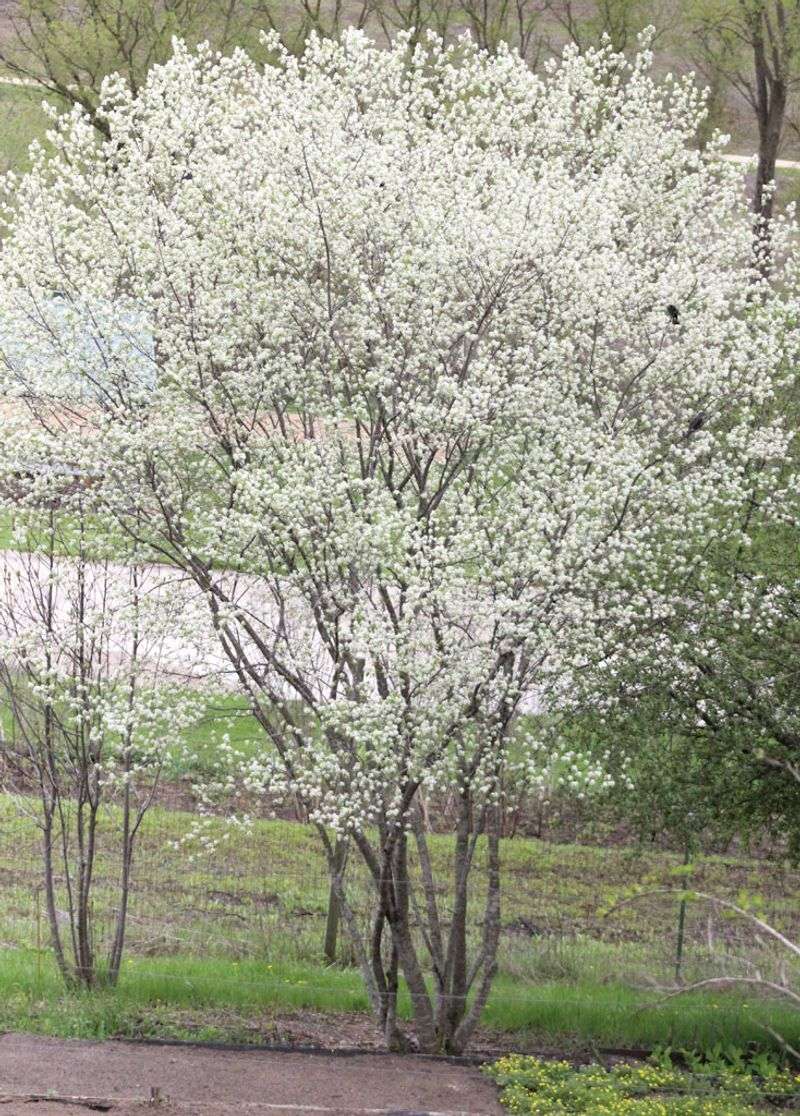
The word serviceberry covers a lot of ground at a nursery. Several distinct species and hybrids share the common name, and they differ enough in mature size, growth habit, site tolerance, and regional performance that buying by label alone can lead to a mismatch between what you plant and what you expected to grow.
NC State Extension’s genus-level Amelanchier overview lists multiple native species found in North Carolina, each with its own characteristics. Downy serviceberry (Amelanchier arborea) is found across the state and is the species most commonly associated with the small-tree habit described in this article.
Allegheny serviceberry (Amelanchier laevis) is more closely associated with the mountains and tends to overlap with downy serviceberry in some areas. Shadblow serviceberry (Amelanchier canadensis) is more commonly found in the coastal plain and Piedmont and often grows in wetter conditions than downy serviceberry prefers.
Cultivars add another layer of variation. A named cultivar may have a different mature size, growth rate, fall color, or fruiting habit compared to the straight species description.
Do not assume that a cultivar described as compact will stay within the typical 15-to-25-foot range without checking the specific cultivar’s documented dimensions.
The practical step is straightforward: ask the nursery for the botanical name, not just the common name. If the tag says only “serviceberry,” ask which species or cultivar it is and what the documented mature height and width are for that specific plant.
If the nursery cannot answer those questions, look for a source that can. Buying a locally grown or locally sourced plant from a North Carolina native plant nursery increases the likelihood that the species matches what grows well in your specific region of the state.
Match the Site Before You Plant
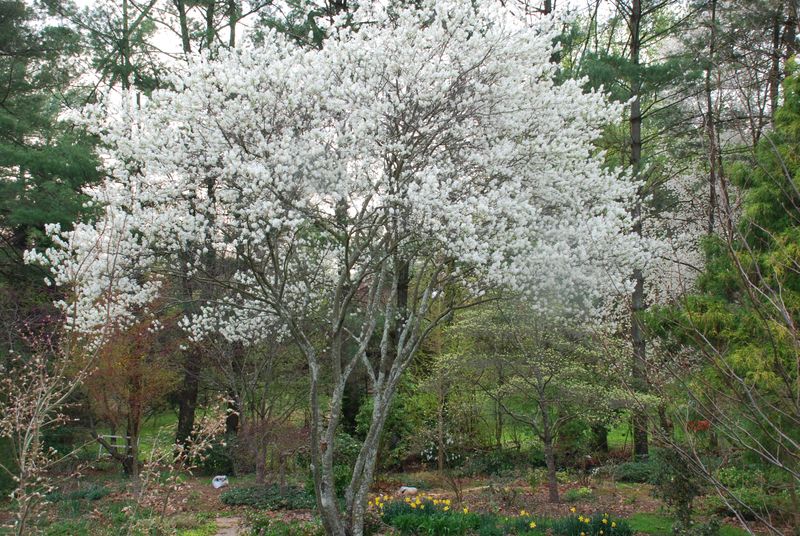
Native plants have a reputation for being easygoing, and downy serviceberry is more adaptable than many trees. But adaptable does not mean indifferent to site conditions, and planting without evaluating the actual spot is one of the most common reasons a promising tree underperforms or fails during its first few years.
Serviceberry prefers moist, well-drained soil and performs best when roots can spread without sitting in standing water after heavy rain. NC State Extension’s native plants handbook chapter emphasizes matching plants to actual soil, drainage, light, and microclimate conditions rather than assuming that native origin guarantees adaptability to every corner of a yard.
The tree tolerates clay, sandy soil, occasional brief wetness, and occasional dryness, but it will not thrive long-term in a spot that stays waterlogged or bakes dry all summer without supplemental water.
Before you dig, check drainage by filling a hole about 12 inches deep with water and watching how quickly it drains. If water is still sitting after several hours, that location may need amendment or a different plant choice.
Also assess sunlight honestly by observing the spot at different times of day rather than guessing from memory.
NC State Extension’s tree planting guidance identifies late fall or early winter as the preferred planting window for trees in North Carolina. Cooler temperatures and winter rainfall reduce stress on newly planted roots and give the tree time to establish before summer heat arrives.
Spring is a workable secondary option, but a tree planted in spring needs closer attention to watering as temperatures climb. Planting in summer without a reliable watering plan is a setup for establishment failure, regardless of how well-adapted the species is to North Carolina conditions.
Early Care Is Simple, but It Is Not Optional
Getting a serviceberry through its first two years is mostly about water and mulch, neither of which is complicated, but both of which require consistency. Roots need time to spread beyond the original root ball before the tree can pull enough moisture from the surrounding soil on its own, and that window of vulnerability is when most establishment failures happen.
Water deeply rather than frequently. NC State Extension’s woody ornamentals handbook recommends wetting the entire root zone thoroughly and then allowing the soil to dry somewhat before watering again.
Frequent shallow sprinkling encourages roots to stay near the surface, which makes the tree less drought-tolerant over time. A slow, deep soak once or twice a week during dry stretches in the first growing season is a reasonable starting point, adjusted based on rainfall and how quickly your soil dries.
Mulch does several jobs at once: it holds soil moisture, moderates temperature swings, reduces weed competition, and gradually improves soil structure as it breaks down. Apply 2 to 3 inches of organic mulch over the root zone, extending it out to the drip line if possible, and keep it pulled back a few inches from the trunk.
Piling mulch against the bark, sometimes called a mulch volcano, traps moisture against the trunk, encourages shallow rooting, and can cause long-term damage.
Fertilizer is not a routine step at planting. NC State Extension’s fertilizing guide for trees and shrubs advises against adding fertilizer to the planting hole and recommends a soil test before deciding whether any supplemental nutrition is needed.
Most North Carolina soils do not require fertilizer at planting, and adding it indiscriminately can damage young roots.
Pruning in the early years is about choosing a form, not about heavy cutting. Serviceberry naturally grows as a multistemmed clump, which looks attractive in a naturalistic or woodland-edge setting.
If you prefer a more conventional tree shape, select one central leader or two to three well-spaced trunks while the plant is young and remove competing stems gradually over the first few seasons. Root suckers may appear at the base; remove them promptly if you want to maintain a cleaner tree form rather than letting the plant spread into a thicket.
Wildlife Value Comes With Practical Tradeoffs
Few small native trees pack as much wildlife activity into one season as a fruiting serviceberry. The spring flowers open early enough to catch pollinators that are active before many other nectar sources are available.
USDA Forest Service pollinator guidance for the Chesapeake Bay region identifies serviceberry as a valuable early-season resource for native bees and other pollinators. The flowers provide both pollen and nectar, which makes them more useful to a broader range of insects than single-resource flowers.
The berry crop draws birds quickly. Robins, cedar waxwings, bluebirds, catbirds, and other species move through serviceberries with enthusiasm, often stripping the fruit within days of ripening.
The USDA Fire Effects Information System profile for Amelanchier arborea documents the tree’s fruit as a food source for numerous bird species and small mammals. Native serviceberries also support the caterpillars of red-spotted purple butterflies and, in some parts of North Carolina, viceroy butterflies, adding another layer of ecological value beyond the obvious flower-and-fruit cycle.
The fruit-drop tradeoff is real and worth thinking through before you choose a planting location. Berries that birds do not eat will fall, and fallen serviceberries can stain a concrete patio, a wooden deck, a stone path, or a parked car with purple-red juice that is not easy to remove.
Planting the tree over a lawn, a mulched bed, or a gravel area reduces the staining problem considerably compared to placing it directly over a hardscape surface.
Pest and disease possibilities are worth knowing about without treating them as dealbreakers. University of Minnesota Extension’s serviceberry diagnostic guide lists leaf miners, aphids, scale insects, borers, fire blight, rusts, leaf spots, powdery mildew, and witches’-broom-type problems as potential issues.
Most of these are manageable with good site selection, proper spacing for air circulation, and routine monitoring. A well-sited, well-established serviceberry is not unusually prone to serious problems, but no native tree is completely free of pest and disease pressure.
Serviceberry Earns Its Space When the Site Fits
Downy serviceberry is a strong choice for a North Carolina small yard when the conditions are right. The short version of the decision rule: you need a spot with enough room for a tree that will eventually reach 15 to 25 feet tall and 10 to 15 feet wide, adequate light for the flowering and fruiting you want, soil that drains reasonably well, and a willingness to water consistently through the first couple of growing seasons.
NC State Extension’s downy serviceberry profile and the native plants handbook both reinforce that native origin does not eliminate the need for site matching, mulching, pruning, and monitoring. Serviceberry is adaptable, but it is not a plant-and-forget tree, especially in a compacted or heavily altered urban yard.
What you get in return is a tree that contributes fragrant spring flowers, leafy summer structure with developing fruit, and possible fall color – three distinct seasonal contributions from a single manageable plant. That is the honest case for serviceberry, not a promise of uninterrupted peak color or a guarantee of zero maintenance.
For a homeowner who can give it the right spot and a little early attention, this tree tends to return the investment season after season in ways that a one-week ornamental simply cannot.