
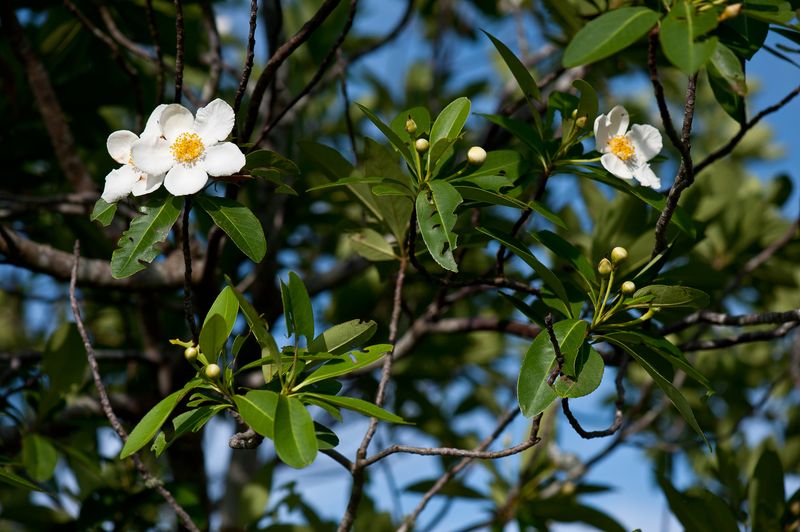
Somewhere in a pocosin thicket along the North Carolina Coastal Plain, a tree you have probably never heard of opens fragrant white flowers that bees and hummingbirds cannot resist. That tree is loblolly bay, and its bloom stretches through the warmest months of the year in a way few native trees can match.
Before you rush out to plant one, though, the seasonal promise attached to this tree deserves a closer look, because the full story is more specific, and more useful, than the headline suggests.
The headline needs a more accurate promise
Calling any single tree a season-long pollinator machine is a bold claim, and with loblolly bay it turns out to be a bit of an overreach. The original promise, that one native tree feeds pollinators continuously from spring right through fall, is more appealing than accurate.
What the documented record actually supports is an extended summer flowering period that, in favorable sites and warm years, may continue into fall or carry on until the first hard frost.
That is still genuinely impressive. Most flowering trees in North Carolina put on a short spring show and then go quiet for the rest of the growing season.
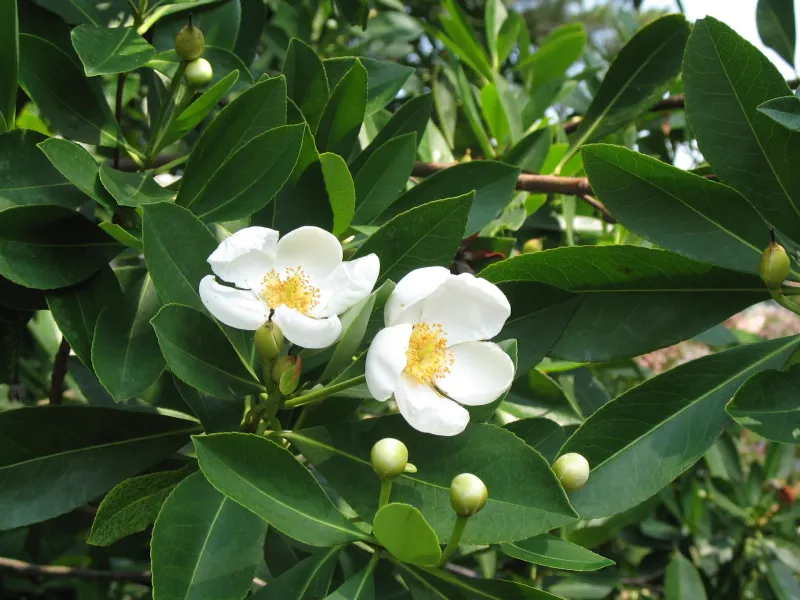
Loblolly bay, known to botanists as Gordonia lasianthus, keeps producing fragrant white blossoms across weeks when nectar sources are scarce and pollinators are still actively foraging. NC State Extension’s plant profile notes that flowering can persist through frost under the right conditions, which sets this tree apart from most of its competitors in the summer-to-fall window.
The correction matters for a practical reason. A homeowner who plants loblolly bay expecting spring flowers will be disappointed, and a gardener who treats it as a complete pollinator plan will have gaps in their yard’s floral calendar.
Loblolly bay earns its place as an editorially overlooked native, but that place is a specialized one. It suits Coastal Plain and southern Tidewater sites in North Carolina, not the mountains or the Piedmont in most cases, and it works best as part of a layered native planting rather than as a stand-alone solution.
With that correction on the table, the tree still deserves attention. Few natives offer such a sustained midsummer bloom with documented nectar and pollen value, and for the right yard it can quietly fill a gap that nothing else quite covers.
Loblolly bay offers an extended summer flower resource
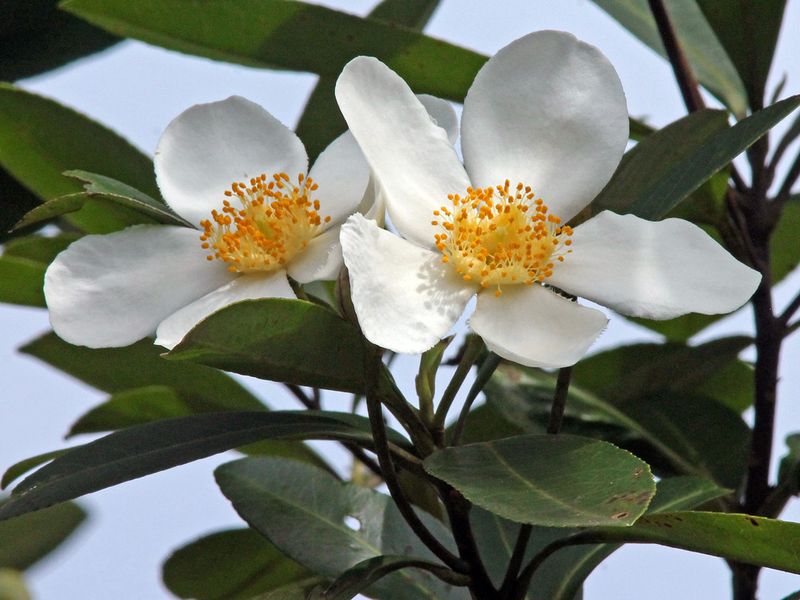
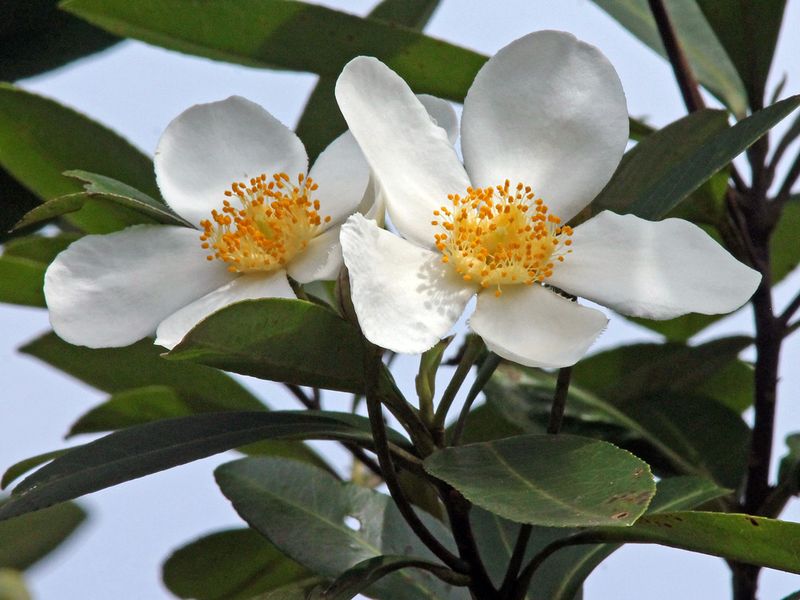
Few native trees look quite like loblolly bay in bloom. The flowers are white, fragrant, and shaped like a camellia, with a ring of golden stamens at the center.
They open a few at a time across an extended period rather than all at once, which means the tree keeps presenting fresh blossoms over many weeks instead of staging one brief, spectacular flush.
According to NC State Extension, those flowers supply both nectar and pollen, and the documented visitors include bees, hummingbirds, and other pollinating insects. That list matters because it tells you something specific about who shows up.
Bees collect the pollen and drink the nectar. Hummingbirds probe the flower for the nectar reward.
Other pollinating insects, including various flies and wasps, also work the blooms. The flowers are genuinely useful to multiple groups, not just incidentally attractive.
What the tree does not do is supply resources in every season. Spring arrives and loblolly bay is still building toward its summer display.
Fall fruit and foliage, while they may have some wildlife value, are not the same as an active nectar-and-pollen source. The summer flowering window is where loblolly bay earns its reputation, and that window is worth protecting by not overselling what comes before or after it.
For Coastal Plain gardeners who struggle to find a native tree that does anything useful for pollinators between the spring bloom rush and the arrival of goldenrod and native asters in late summer, loblolly bay fills exactly that gap. A yard that already has spring-blooming natives can use this tree to carry the pollinator calendar through July and August, and sometimes well beyond.
Bloom dates vary, so use the seasonal claim carefully
Pinning down exactly when loblolly bay blooms is harder than it sounds, and the disagreement between published sources is worth understanding before you plan your planting calendar. NC State Extension describes flowering that may continue through frost, which implies a potentially long window stretching from summer into late fall in mild years.
A USDA Forest Service account based on South Carolina field observations places the main flowering display from late June or early July through mid-August, a narrower but still substantial summer period.
Neither source is wrong. Both are reporting from real observations, but the differences reflect something important about how plants behave in the field.
The USDA Southern Research Station account describes loblolly bay’s peak bloom based on conditions in one part of its range, while NC State’s note about frost reflects what can happen at the favorable end of the spectrum. Latitude, local weather patterns, soil moisture, and site exposure all push the start and end of flowering in different directions.
What you should take away from this is not a precise calendar date but a qualified expectation. In a typical North Carolina Coastal Plain summer, expect loblolly bay to flower prominently through July and into August.
In a warm year or a sheltered site, you may see blooms stretch into September or October. Counting on spring flowers is not supported by either source, and assuming the display will run continuously from March through November overstates what the tree reliably delivers.
Using words like “may,” “often,” and “in favorable conditions” is not hedging for its own sake. It reflects the honest variability that any gardener will notice once the tree is in the ground.
Setting realistic expectations now prevents frustration later and helps you plan companion plantings that cover the months when loblolly bay is not in flower.
The Coastal Plain is the tree’s natural advantage
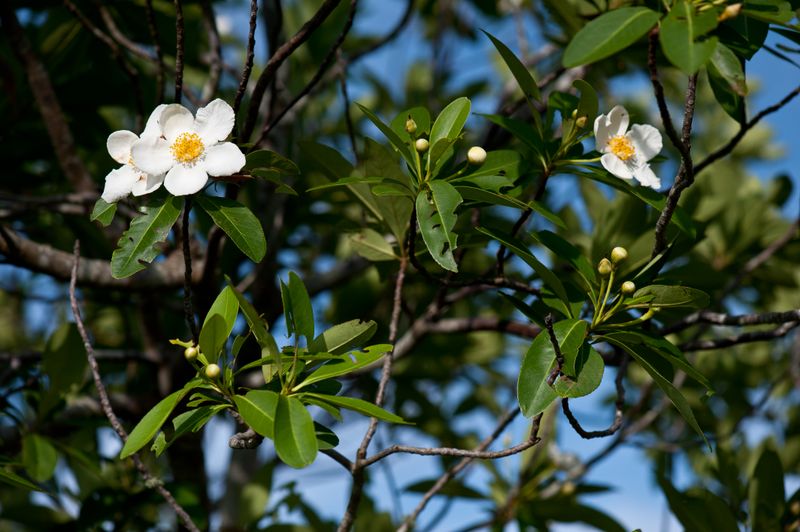
Loblolly bay did not evolve to grow everywhere in North Carolina, and understanding where it naturally thrives is the single most important piece of information a homeowner can have before buying one. Its native range in the state is concentrated in the Coastal Plain and southern Tidewater, where it grows in pocosins, bayheads, and wet pine savannas.
These are landscapes built on acidic, organic-rich soils that stay consistently moist while still allowing roots to breathe.
NC State Extension’s profile for loblolly bay specifies full sun to partial shade and moist but well-drained acidic soil as the key requirements. That phrase, moist but well-drained, is doing a lot of work.
It does not mean the tree thrives in standing water or in heavy clay that stays saturated after rain. Compacted or poorly aerated soil, even if it stays wet, can cause establishment failure or root problems over time.
The tree wants consistent soil moisture with adequate drainage, a combination that is common in Coastal Plain sandy loams and organic soils but harder to find elsewhere.
Trying to grow loblolly bay in the North Carolina mountains is a different proposition entirely. The species is simply not native there, and the cooler temperatures, different soil chemistry, and different moisture patterns make it an unreliable choice at higher elevations.
Even in the Piedmont, where conditions occasionally approach what the Coastal Plain offers, loblolly bay is a stretch rather than a confident recommendation.
For gardeners who do live in the right zone, this regional specificity is actually reassuring. A plant that belongs in your landscape will be more resilient, more productive, and less likely to struggle than one that is being pushed beyond its natural range.
Knowing that loblolly bay is a Coastal Plain tree is not a limitation so much as a confirmation that it belongs where the conditions already exist to support it.
Plan for a substantial evergreen tree
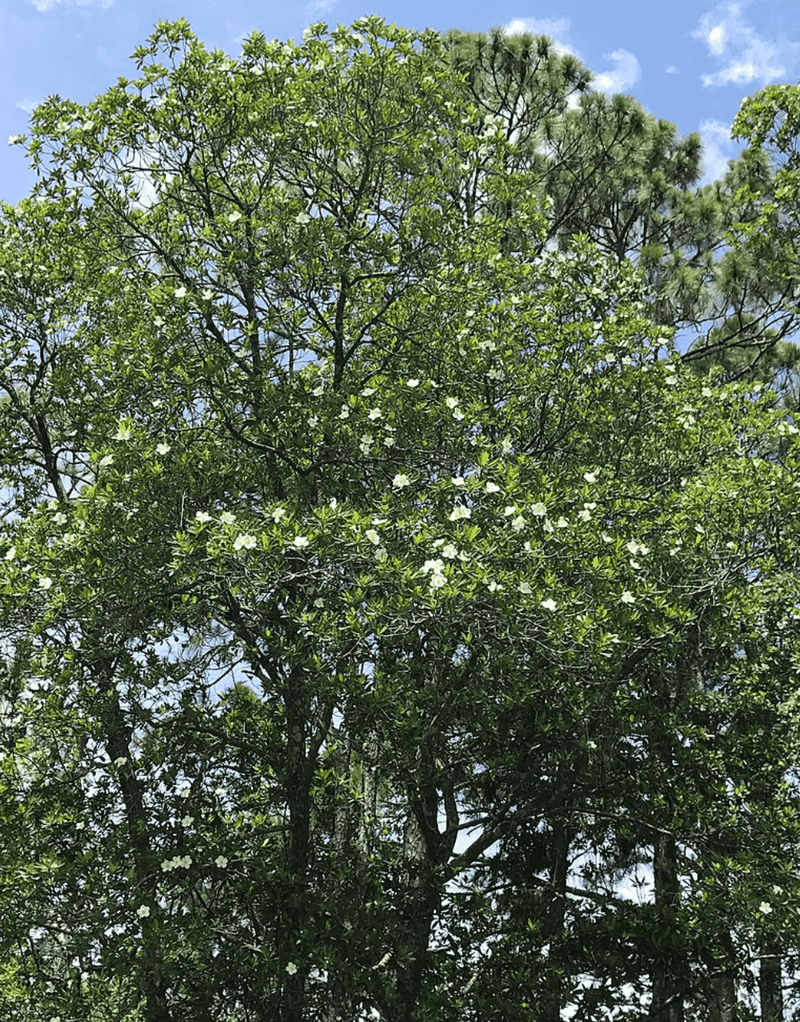
Loblolly bay is not a shrub or a small ornamental tree you can tuck into a tight corner. Mature specimens commonly reach 30 to 70 feet in height, and the form is evergreen, columnar to pyramidal, and year-round in its visual presence.
That profile makes it genuinely useful as a screening tree, a canopy anchor, or a specimen planting in a large yard, but it also means placement decisions need to happen before the tree goes in the ground rather than after it outgrows its spot.
NC State Extension notes that loblolly bay prefers full sun to partial shade and acidic soil, and the evergreen canopy means those light and soil conditions need to stay stable year-round. Avoid planting it where overhead utility lines, structures, or competing tree roots will eventually conflict with a tree that could top 50 feet.
The columnar shape helps in narrower spaces compared to a broadly spreading tree, but root space and canopy clearance still matter at this scale.
Sourcing the tree requires some planning as well. Loblolly bay can be difficult to establish from bare-root stock, and it is not always easy to find at mainstream garden centers.
Buy a container-grown plant from a reputable native plant nursery whenever possible. Container-grown stock gives roots a more stable start and reduces transplant stress in a species that is already finicky about soil and drainage.
Never dig loblolly bay from the wild. Beyond the ethical and legal concerns, wild-collected specimens transplant poorly and removing them from their native habitat depletes populations that pollinators and other wildlife depend on.
Give the tree time. Establishment can be slow, and expecting rapid growth in the first season or two will lead to disappointment.
Consistent soil moisture during the first two growing seasons is especially important, and mulching around the base without piling mulch against the trunk helps maintain the moisture the roots need.
Pair the tree with plants that fill the other seasons
One tree, no matter how productive its summer bloom, cannot run a pollinator garden by itself. NC State Extension’s native plants handbook recommends using at least three regionally native species in bloom during each growing season, from early spring through late fall, rather than depending on a single plant to carry the whole calendar.
Loblolly bay fills the midsummer window well, but spring and late fall need coverage from other species.
Downy serviceberry, Amelanchier arborea, is a useful companion for exactly that reason, with one important clarification. NC State’s butterfly gardening guide places serviceberry’s primary nectar period in March and April, and Clemson Extension notes that the bloom itself lasts roughly a week.
Serviceberry is a strong spring pollinator resource and its red-to-purple fruit later in the season benefits songbirds and small mammals, but its nectar window closes long before loblolly bay opens. Treating serviceberry as a spring anchor and loblolly bay as the summer anchor, then adding late-season natives like native asters or goldenrod, creates a layered calendar that no single tree can replicate.
NC State’s Lee County pollinator garden guidance also makes clear that flowers alone are not enough. Nesting sites, shelter, fruit, seeds, and reduced pesticide exposure all contribute to a yard that pollinators can actually use across the full season.
A bee that finds nectar in your loblolly bay still needs somewhere to nest and something to forage when the flowers are gone.
On the pesticide point, Penn State Extension’s guidance on wild bees and orchard pollination reinforces a principle that applies to any home planting: do not apply insecticides to blooming plants or near active pollinator habitat unless the product, timing, and label specifically permit it. Even a well-planted native garden can undermine its own value if chemical applications hit foraging insects during peak bloom.
Use a site checklist before you buy
Before ordering a loblolly bay, run through a short checklist that will tell you whether your yard can actually support it. The first question is location.
Are you in the North Carolina Coastal Plain or southern Tidewater? If your address puts you in the mountains or in a Piedmont county without Coastal Plain-like sandy, acidic soils, loblolly bay is the wrong tree for your site regardless of how attractive the bloom sounds.
Second, test your soil. NC State Extension’s plant profile specifies acidic, moist, and well-drained soil.
A soil pH test, available through your county Cooperative Extension office for a small fee, will tell you whether your ground is acidic enough without guessing. If your pH is neutral or alkaline, loblolly bay will struggle from the start.
Third, evaluate drainage. Stand in the planting area after a heavy rain and watch what happens over the next 24 hours.
If water pools and stays, the drainage is inadequate for loblolly bay even if the soil stays consistently moist the rest of the time. The tree wants sustained moisture, not waterlogged roots.
Fourth, measure your sunlight. Full sun to partial shade covers a range, but a spot that gets fewer than four hours of direct sun daily may not support the flowering you are hoping for.
Choose a location where the tree will receive at least half a day of good light.
Fifth, think about space. A tree that may reach 50 feet or more needs clearance from structures, utility lines, and neighboring trees.
The NC State Plant Toolbox is a reliable reference for double-checking mature size before you commit. Finally, call a few native plant nurseries before driving anywhere.
Loblolly bay is not always stocked, and knowing availability in advance saves a wasted trip.
The useful lesson is right tree, right place
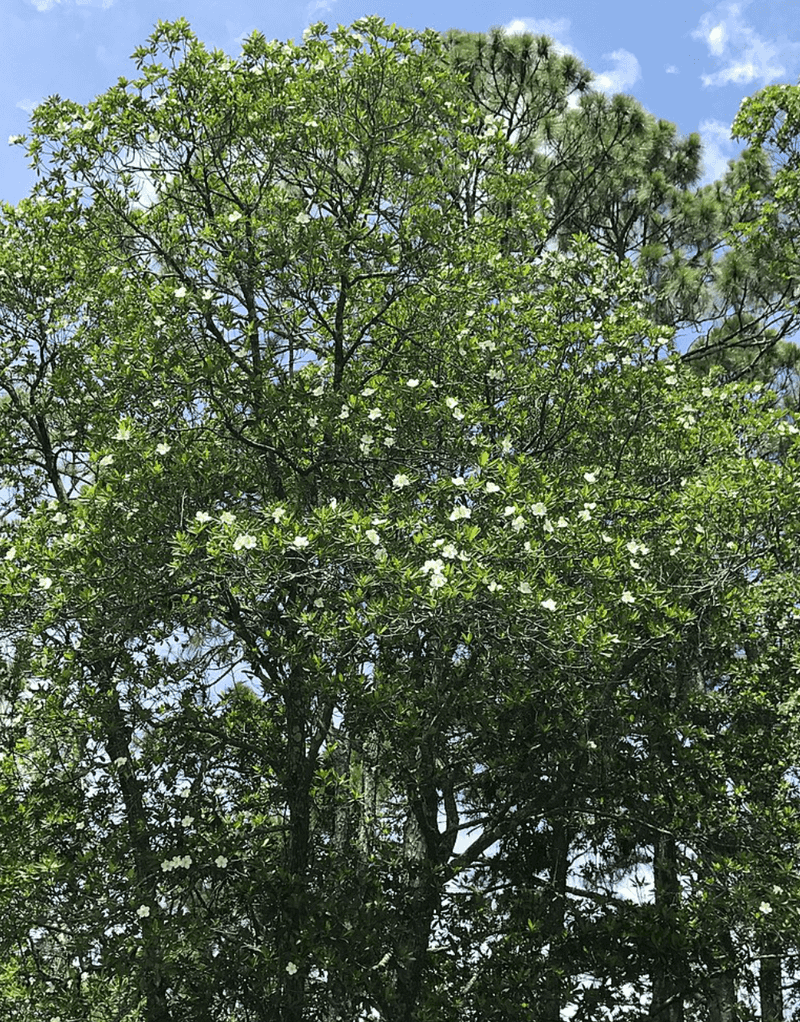
Loblolly bay is genuinely overlooked. Gardeners who live in the right part of North Carolina and who can provide the soil, drainage, and space it needs will find a native tree with a summer bloom that few competitors can match for duration or pollinator value.
That is a real and specific benefit, and it belongs in more Coastal Plain yards than it currently occupies.
What loblolly bay is not is a magic fix for a bare pollinator calendar. NC State Extension’s native plants guidance is consistent on this point: a strong pollinator landscape runs on multiple species with overlapping bloom periods, not on one tree doing all the work across every month.
Loblolly bay earns its place in that layered system as the midsummer anchor, paired with spring-blooming species before it and late-season natives after it.
The headline’s spring-through-fall promise was always a shorthand, and shorthand tends to oversimplify. The corrected version is less tidy but more useful: loblolly bay offers an extended summer bloom that may continue into fall in favorable sites, serves bees, hummingbirds, and other pollinating insects with both nectar and pollen, and fits a specific regional profile rather than every North Carolina backyard.
Match the tree to the right conditions, pair it with complementary natives, and you will get something more reliable than any single seasonal claim can deliver. A plant that belongs where you put it will always outperform one that is simply working against its own nature.