
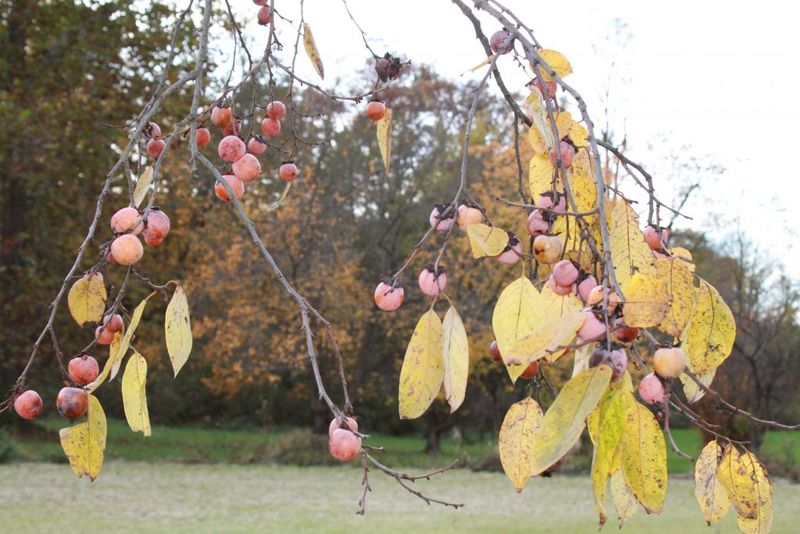
Most North Carolina homeowners walk right past American persimmon without giving it a second thought, and that is a real missed opportunity. This native tree quietly feeds birds, bees, and mammals across three seasons while fitting comfortably into a managed yard.
Choosing the right tree is only half the job, though, because keeping ticks at bay requires smart yard habits alongside any planting decision.
Why American persimmon deserves consideration
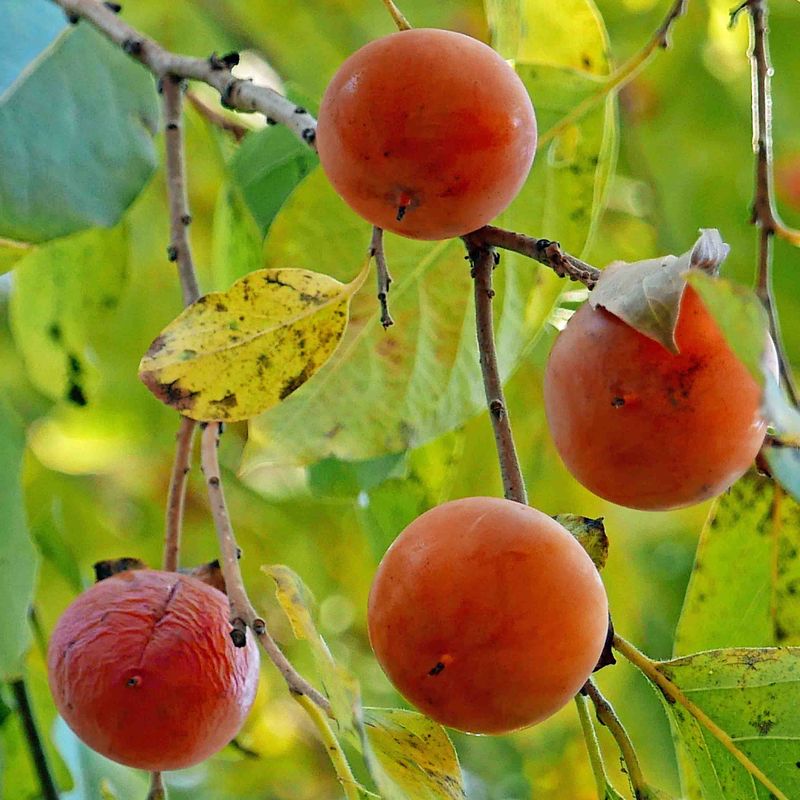
American persimmon (Diospyros virginiana) has a lot going for it as a native tree choice for North Carolina homeowners. The N.C.
Forest Service identifies it as a native, medium-sized tree that produces nectar-rich flowers for bees, butterflies, and moths, and whose ripe fruit is eaten by squirrels, skunks, deer, raccoons, opossums, wild turkeys, and a range of songbirds. That is a broad, documented list of wildlife users, and it comes from a species that belongs here naturally.
Persimmon grows to roughly 20 to 40 feet tall and carries a crown spread of 20 to 30 feet at maturity. It handles North Carolina’s variable soils reasonably well, tolerating sandy loam and clay as long as drainage is adequate.
Full sun brings out its best performance, though it manages in partial shade too.
One thing worth saying plainly up front: none of those wildlife benefits have anything to do with tick control. Persimmon’s value is in its habitat contributions, its flowers, its fruit, and its role in the native food web.
Choosing it for those reasons is well supported. Choosing it because you expect it to push ticks off your property is not, and no credible source backs that claim.
The tick picture is more complicated, and it depends far more on how you manage the yard around any tree than on which species you plant.
Its documented wildlife benefits span three seasons
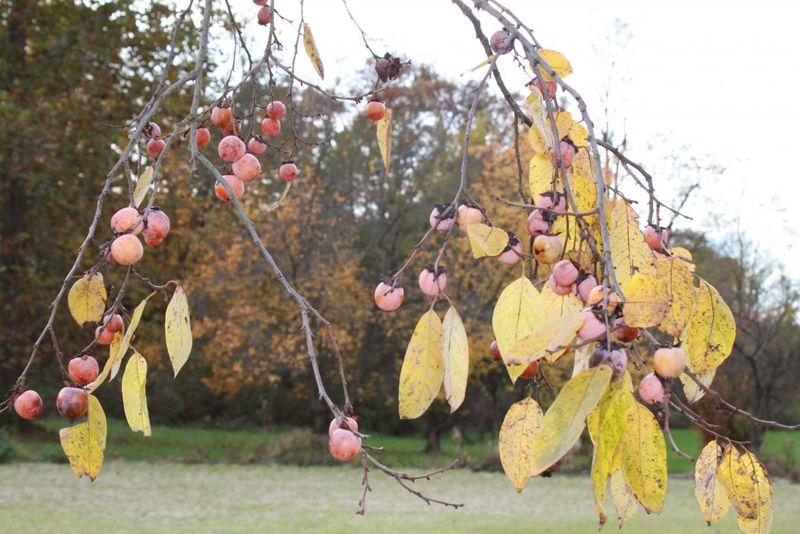
Persimmon does not offer something for wildlife every single month of the year, but it does cover three seasons in a meaningful way. NC State Extension’s seasonal guidance lists American persimmon as providing winter bird food, spring flowers for bees, and fall fruit and color.
That is a genuinely useful spread for a single native planting, and it reflects real, documented value rather than marketing language.
Spring is when the flowers earn their keep. Bees, butterflies, and moths visit the blooms for nectar, making persimmon a quiet but productive pollinator plant during a season when many yards offer little else.
Summer is the one gap in the seasonal record: the available sources do not document a specific summer food resource for persimmon, so calling it an all-season tree overstates what the evidence actually shows.
Fall is where persimmon becomes most visible to wildlife. The ripe fruit draws a wide cast of animals, including squirrels, raccoons, opossums, skunks, deer, wild turkeys, and songbirds, as the N.C.
Forest Service documents. Fruit that stays on the tree or drops to the ground in late fall and early winter continues to feed birds through the colder months, extending the value of a single harvest into the season that follows.
That winter carryover is part of what makes persimmon a practical choice for homeowners who want their yard to support wildlife without requiring constant attention or replanting.
Plan for the mature tree before planting
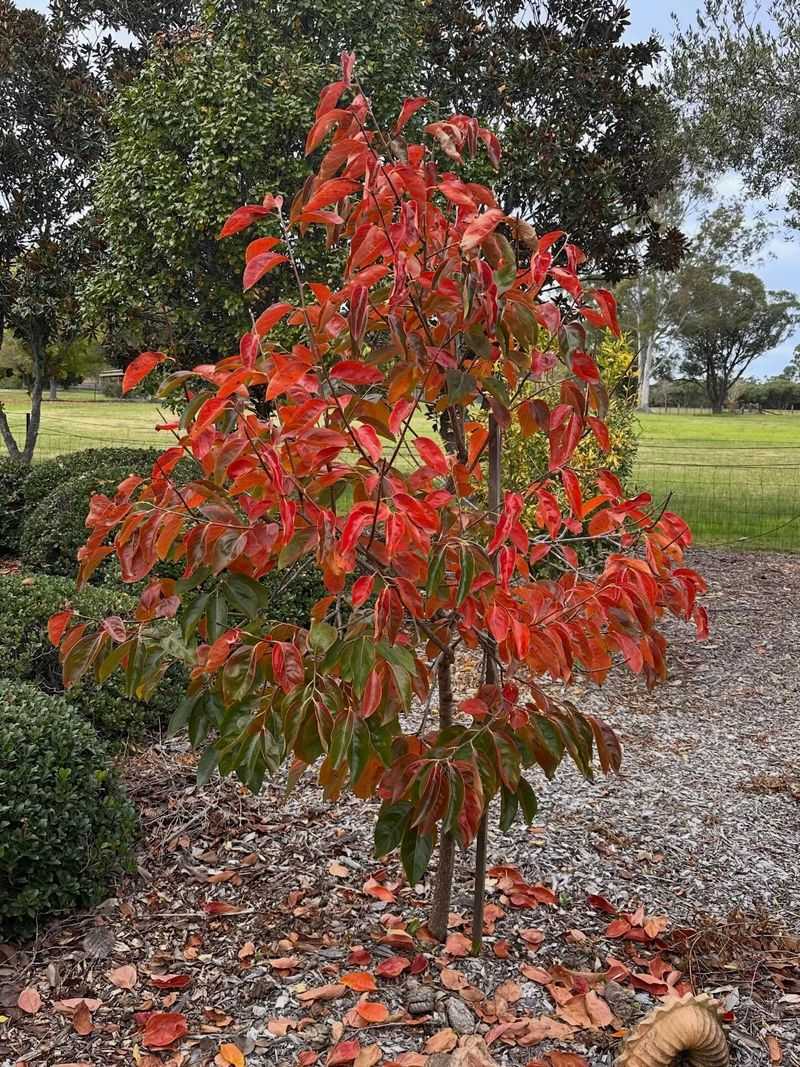
Getting the placement right before you put a persimmon in the ground saves a lot of trouble later. At maturity, the tree typically reaches 20 to 40 feet tall with a crown spread of 20 to 30 feet.
The N.C. Forest Service recommends allowing at least 25 feet of open space around the tree and keeping it at least 10 feet away from sidewalks and hardscapes.
That is more room than many homeowners expect from a tree described as medium-sized, so measuring before you dig is worth the few minutes it takes.
Persimmon performs best in full sun, which means at least six hours of direct light per day. It tolerates partial shade but tends to fruit less reliably without adequate sunlight.
For soil, it handles both sandy loam and clay, provided the site drains reasonably well and does not stay waterlogged after rain. Those are forgiving conditions by North Carolina standards, where soils vary widely across the Piedmont, coastal plain, and foothills.
Placement matters for more than just the tree’s health. Where you put a persimmon also affects how the area around it functions from a tick-habitat standpoint.
University of Maine Extension tick guidance consistently points to shade, moisture, and wooded-edge connections as conditions that make tick habitat more favorable. Siting your persimmon in an open, sunny part of the yard, away from dense brush or a wooded property edge, lets the tree do its wildlife job while keeping the surrounding ground drier and more exposed.
A persimmon planted right up against a shaded, brushy tree line creates a very different situation than one planted in a well-lit, managed yard.
Give the tree room to grow into its full canopy without crowding structures or shading areas you want to keep open and dry. That single siting decision pays dividends in both tree health and yard management for years to come.
Persimmon does not repel ticks
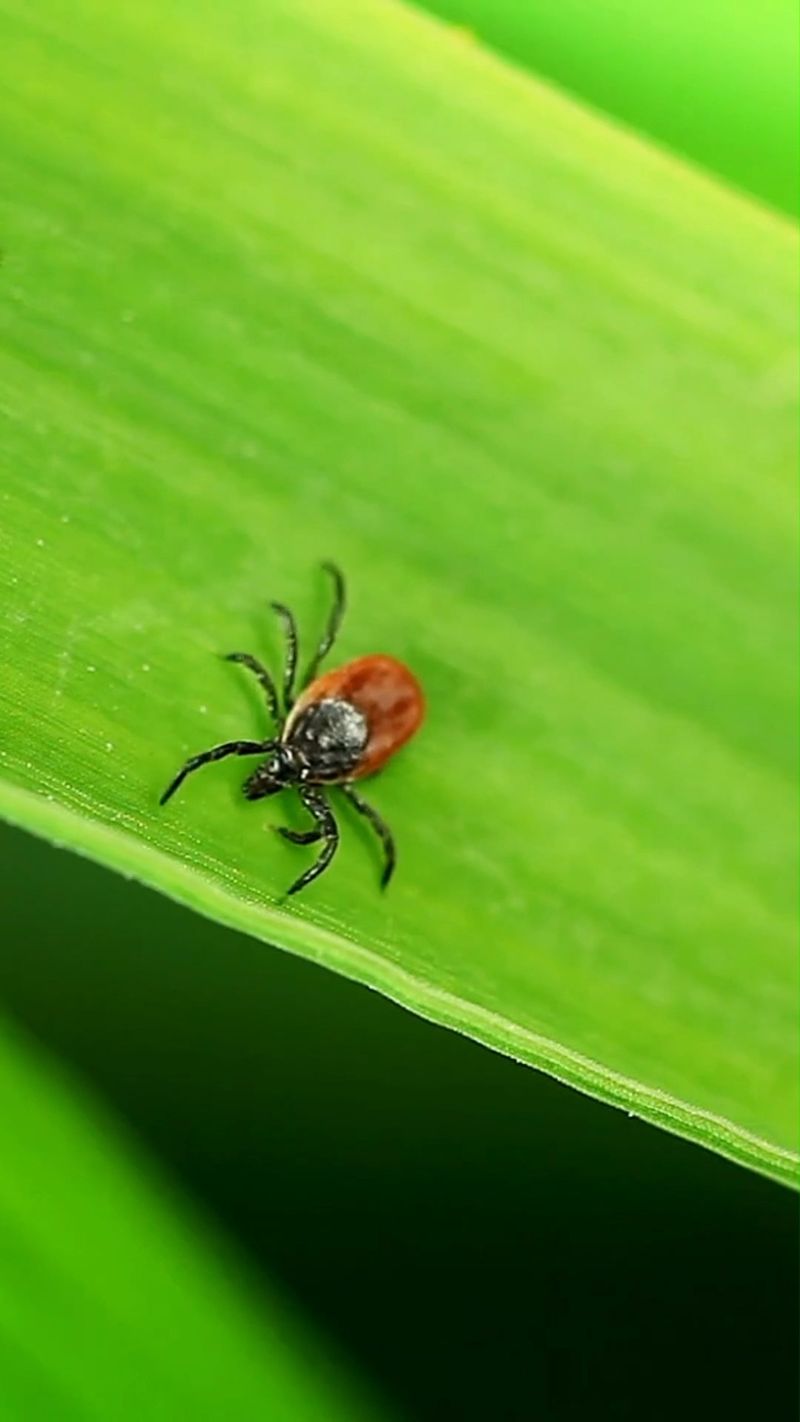
A 2026 University of Maryland Extension response put it plainly: there are no scientific studies showing that particular plant species, simply by growing in a landscape, effectively repel ticks. That applies to American persimmon, and it applies to native plants generally.
Being native does not make a plant tick-repellent, and no amount of wildlife value changes that.
You may have come across claims about cedar oil or other plant-derived compounds keeping ticks away. Those claims are based on extracted, concentrated substances tested under controlled conditions, not on intact trees growing in a yard.
A living persimmon does not produce those compounds at the concentration or in the delivery form needed to affect ticks in the surrounding soil and leaf litter. Generalizing lab results on botanical extracts to a landscape planting is a stretch the evidence does not support.
What actually shapes tick habitat around any tree is the physical environment beneath and around it. Shade keeps the ground cooler and more humid.
Leaf litter holds moisture and gives ticks a place to shelter. Tall grass, dense brush, and a direct connection to a wooded edge all create conditions where ticks thrive.
CDC guidance on Lyme disease prevention and University of Maine Extension landscape management recommendations both point to these physical conditions as the drivers of tick-friendly habitat, not the species of tree overhead.
Persimmon is a well-supported native tree for wildlife. Plant it for that reason.
The surrounding habitat management is what influences tick conditions, and that work falls on the homeowner, not on the tree.
Use yard maintenance to reduce tick-friendly conditions

Pairing a wildlife tree with smart yard habits is the practical combination that actually reduces tick-friendly conditions around your home. The goal is not to eliminate every tick on the property, which is not realistic, but to make the areas where your family spends time less hospitable to them.
Start with the basics that CDC recommends for reducing tick habitat: keep grass mowed short, remove leaf litter regularly, clear tall grass and brush, and trim tree branches and shrubs to let more sunlight reach the ground. Ticks need moisture and shade to survive, so opening up the yard reduces both.
These are not complicated tasks, but they need to happen consistently through the active season, not just once in spring.
One of the most useful structural steps is placing a 3-foot-wide barrier of wood chips, mulch, or gravel between your lawn and any wooded area at the property edge. University of Maine Extension recommends this as a way to create a drier, less sheltered zone that ticks are less likely to cross.
It is a low-effort installation that pays off season after season.
Reducing rodent habitat matters too. Mice and chipmunks are significant tick hosts, and anything that gives them cover near the house, including brush piles, dense ground cover, and cluttered wood stacks, creates a staging area for ticks close to where people are.
Stack firewood away from the house and away from play areas, and keep the ground under and around any bird feeders clean.
Keep children’s play equipment, patios, and seating areas positioned away from wooded edges and out of shaded, damp spots. These are risk-reduction measures, not a guarantee that no tick will ever cross your yard.
Combined with a well-sited persimmon and consistent upkeep, they give you a yard that supports wildlife without handing ticks an easy foothold.
Wildlife habitat can also bring tick hosts
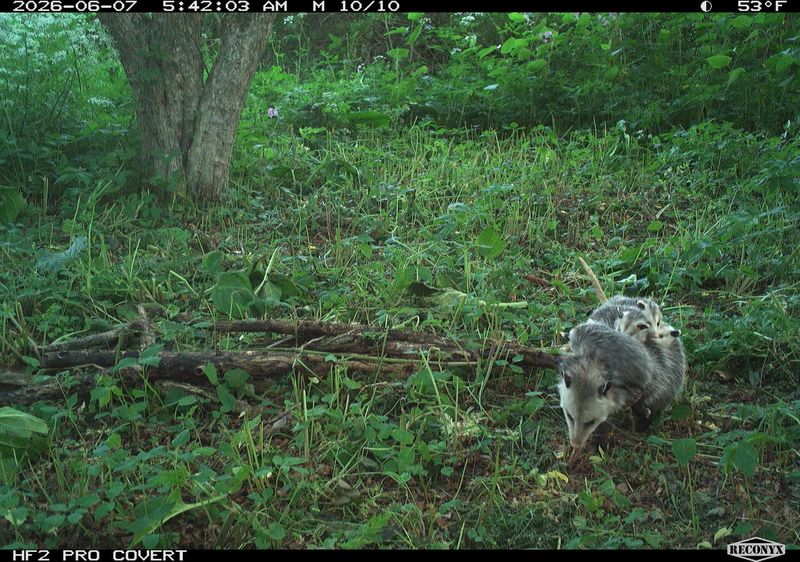
Attracting wildlife to your yard is genuinely worthwhile, and American persimmon does that well. However, the same animals that eat persimmon fruit are also animals that can carry ticks onto your property.
Deer, raccoons, opossums, and squirrels all consume the fruit, as the N.C. Forest Service documents.
That is a feature of the tree, not a flaw, but it is worth understanding the full picture before assuming that more wildlife automatically means fewer ticks.
Cornell Integrated Pest Management identifies mice, chipmunks, birds, and deer as hosts that move ticks around a property. Deer are particularly significant because they can carry large numbers of adult ticks and cover a lot of ground.
A persimmon that pulls deer repeatedly into a corner of the yard near the house is a different situation from one planted farther out with some separation from living areas.
The practical response is not to avoid planting persimmon, but to be thoughtful about where wildlife activity concentrates. Keep bird feeders, garbage containers, and compost bins away from the house and from spaces where children play.
Position firewood storage away from the yard’s main activity areas. If persimmon fruit drops heavily near a seating area or entry path, consider whether the placement makes sense or whether a spot farther from the house would serve both the wildlife and your family better.
The broader point is that wildlife support and tick pressure are not opposites. They can coexist on the same property, and managing that relationship requires attention to where animals spend time, not just which tree you planted.
A wildlife-friendly yard is a worthwhile goal, and it works best when the habitat is designed with some separation between the wild edges and the spaces your family uses most.
Keep using personal tick protection
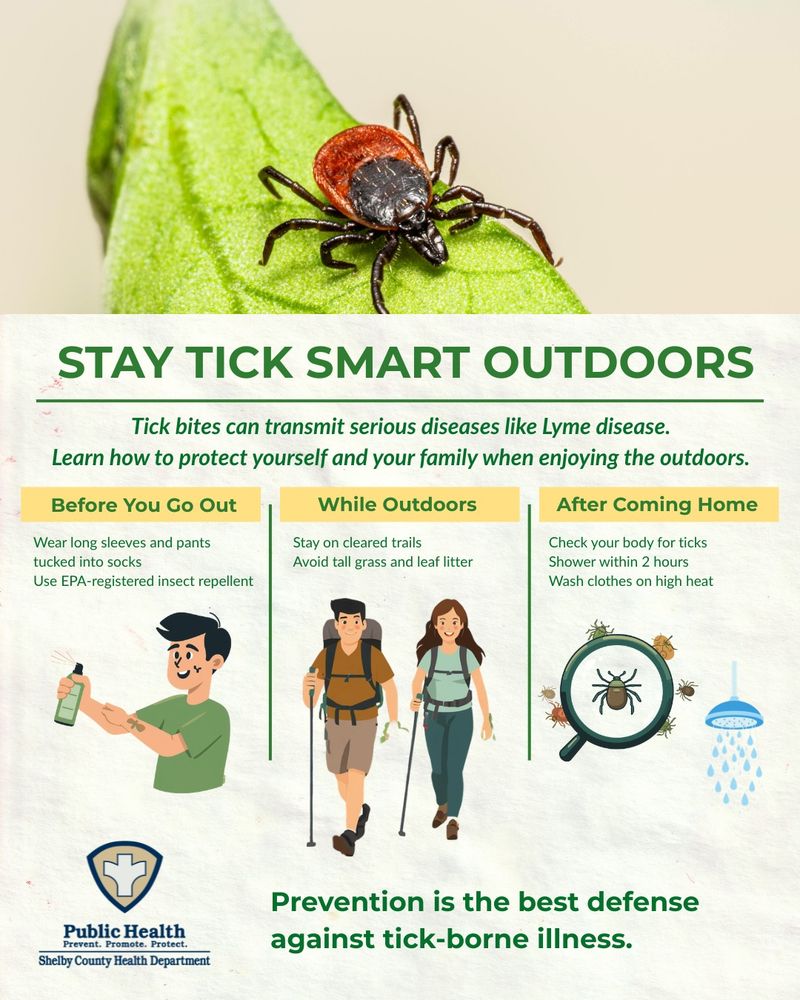
No tree, no mulch border, and no landscaping plan replaces the personal protection steps that actually prevent tick bites. Yard management reduces the conditions ticks prefer, but it does not create a tick-free zone, and the gap between fewer ticks in the yard and zero tick encounters on your body is significant.
CDC guidance on Lyme disease prevention recommends using EPA-registered repellents on exposed skin, wearing permethrin-treated clothing or gear when appropriate, checking your body and your pets thoroughly after time outdoors, showering within two hours of coming inside, and removing any attached tick promptly using fine-tipped tweezers. Those steps work.
Landscaping alone does not substitute for them.
Tick checks are especially important for children and dogs, who spend the most time at ground level in areas where ticks quest. Make it a habit after any outdoor activity during the warm months, not just after obvious time in tall grass or woods.
Ticks can move through a mowed suburban yard too, particularly if wildlife traffic is regular.
Plant American persimmon for its documented value to North Carolina’s native birds, pollinators, and mammals. Manage your yard edges, keep grass short, clear brush, and use that mulch barrier.
Then protect yourself and your family with repellents, checks, and prompt removal every time it matters. The tree earns its place in a wildlife-friendly yard, but the tick protection piece is always yours to carry.