
Somewhere between the flashy ornamentals at the garden center and the towering oaks that take decades to mature, downy serviceberry quietly earns its place in North Carolina yards. This small native tree offers real, documented wildlife value, but some of what you may have read about it and ticks deserves a closer look before you plant.
The tick-related research that often gets attached to serviceberry actually involves a completely different plant, and understanding that distinction will help you make smarter decisions for your yard and your family.
Why downy serviceberry deserves a closer look
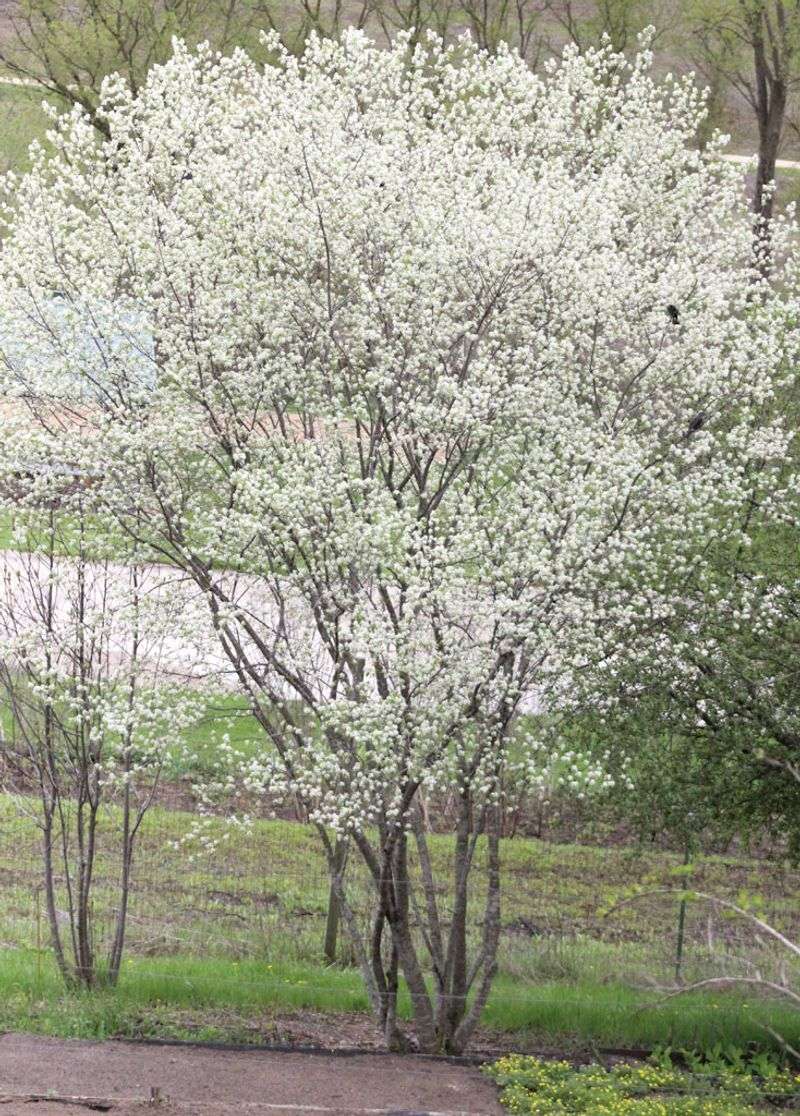
Downy serviceberry, known botanically as Amelanchier arborea, is a native North Carolina small tree that grows across the Mountains, Piedmont, and Coastal Plain. In cultivation it typically reaches about 15 to 25 feet, and it can develop either as a single-trunked tree or as a large multistemmed shrub depending on how it is managed.
That flexibility makes it an honest fit for yards of many sizes, from tight suburban lots to broader woodland-edge properties.
Calling it the most underrated native tree in the state is editorial enthusiasm, not a verified ranking. What the plant does earn, fairly, is the label of underused.
Many North Carolina homeowners overlook it entirely in favor of more familiar ornamentals, even though NC State Extension’s plant profile documents its value for pollinators, songbirds, and butterfly larvae across spring and early summer.
One thing needs to be said plainly before going further: no reliable evidence shows that a living serviceberry tree repels or reduces tick populations near a home. University of Maryland Extension specifically notes that no scientific studies demonstrate that particular landscape plants repel ticks, and that botanical compounds may only work after extraction at specific concentrations.
The tick angle you may have seen linked to this tree involves a completely different native plant, and that mix-up will be addressed directly in a later section. Plant serviceberry for what it genuinely delivers, and you will not be disappointed.
What serviceberry provides through the growing season
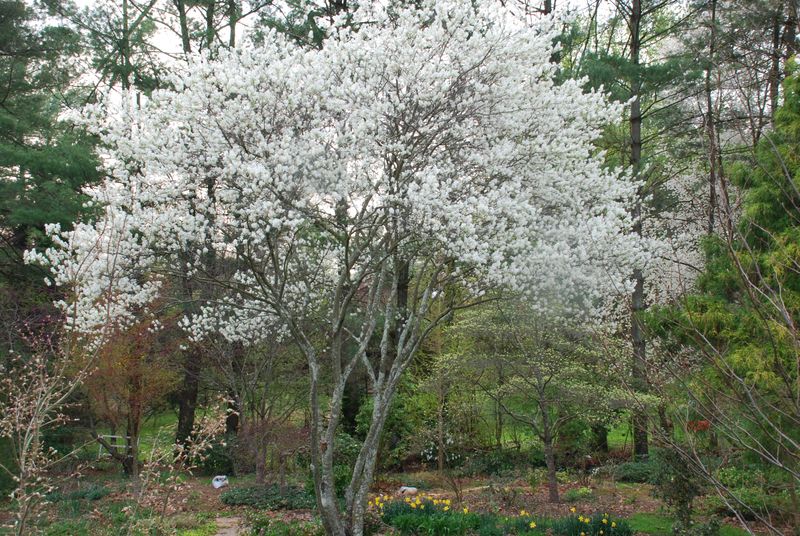
Serviceberry earns its place in the yard earliest of almost any flowering native tree in North Carolina. The white blooms open in early spring, often before the leaves are fully out, giving native bees and early-season pollinators a reliable nectar and pollen source at a time when few other plants are offering much.
That timing alone makes the tree worth considering for yards where supporting pollinators is a priority.
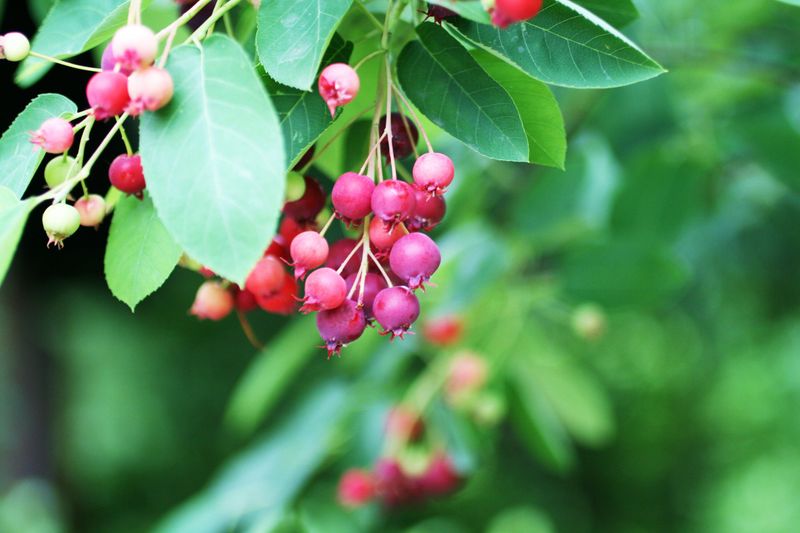
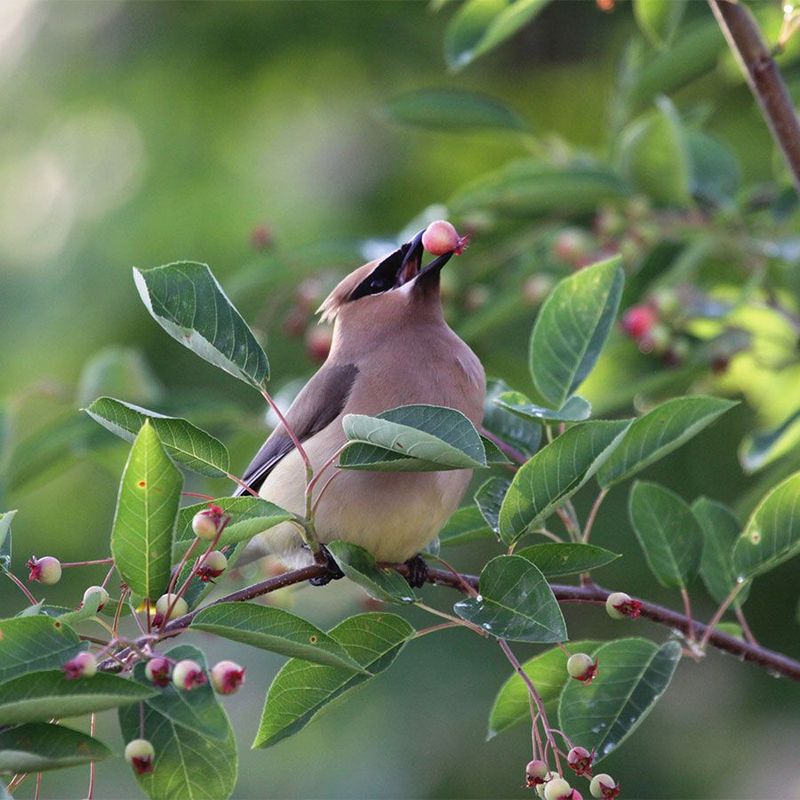
Fruit follows in May and June, and birds move in fast. Bluebirds, catbirds, cedar waxwings, robins, and various thrushes are among the songbirds that consume the soft, blueberry-like mast, as are small mammals.
According to NC State Extension’s serviceberry profile, the fruit is also attractive to humans, and some homeowners harvest it for jams before the birds clean the tree out. The window is short, which means you need to be watching if you want any for yourself.
Serviceberry foliage can support the larvae of red-spotted purple butterflies, a genuinely striking native species. Viceroy butterfly larvae are also sometimes listed as beneficiaries, but NC State notes that viceroys rarely use serviceberry as a host plant in North Carolina specifically, so that benefit should not be treated as a reliable draw for local populations.
What serviceberry does not do is feed wildlife continuously through every season. Its fruit window closes by midsummer, and NC State’s guide to managing backyards for birds makes clear that year-round support depends on a diverse planting with staggered bloom, fruit, seed, and insect resources.
Serviceberry is a strong opening act, not a one-tree solution.
Choose a site that supports flowers and fruit
Getting serviceberry to perform well starts with picking the right spot. The tree tolerates full sun to partial shade, and it adapts to a range of acidic to neutral soils, including sandy, loamy, and clay types, as long as drainage is reasonably adequate.
Waterlogged sites are a poor fit, but serviceberry is far less finicky about soil texture than many ornamental trees homeowners consider.
Fuller sun generally produces more flowers and heavier fruit set. A location that gets at least six hours of direct light per day will reward you with a better spring display and a more productive May-June fruiting period.
Partial shade is workable, particularly in the hotter parts of the Piedmont and Coastal Plain where afternoon shade can reduce stress, but expect somewhat lighter flowering in shadier spots.
Think about where fruit drop will land before you plant. Serviceberry fruit stains, and a tree positioned directly over a patio, driveway, or light-colored hardscape will create cleanup work during the June fruiting window.
UC IPM’s serviceberry guidance recommends siting the tree where fruit drop is acceptable, which in practice usually means lawn areas, planting beds, or naturalized zones where birds can clean things up quickly.
Serviceberry naturally tends toward a multistemmed shrub habit. If you want a cleaner tree form, remove unwanted root suckers as they appear at the base.
Left alone, the plant spreads and thickens over time, which is fine for a wildlife planting but less tidy for a formal yard setting. NC State Extension also flags potential disease issues including cedar apple rust, powdery mildew, leaf spot, and fire blight.
None of these is inevitable, but planting in a well-ventilated spot with good air circulation around the canopy reduces the risk.
Build year-round habitat with a sequence of plants
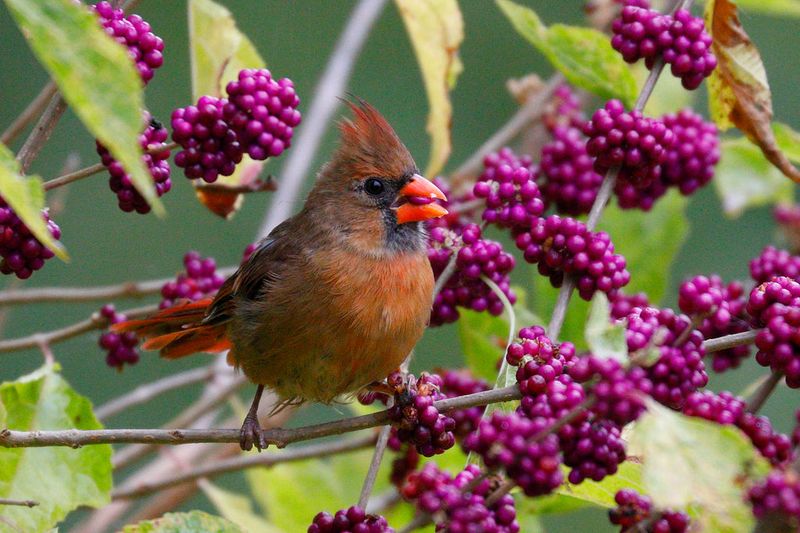
Serviceberry handles spring beautifully, but the yard goes quiet for wildlife by midsummer if it is the only fruiting plant on the property. NC State’s backyard bird habitat guide lays out a practical calendar of native plants with staggered fruit and seed periods, and serviceberry fits at the front of that sequence rather than covering it alone.
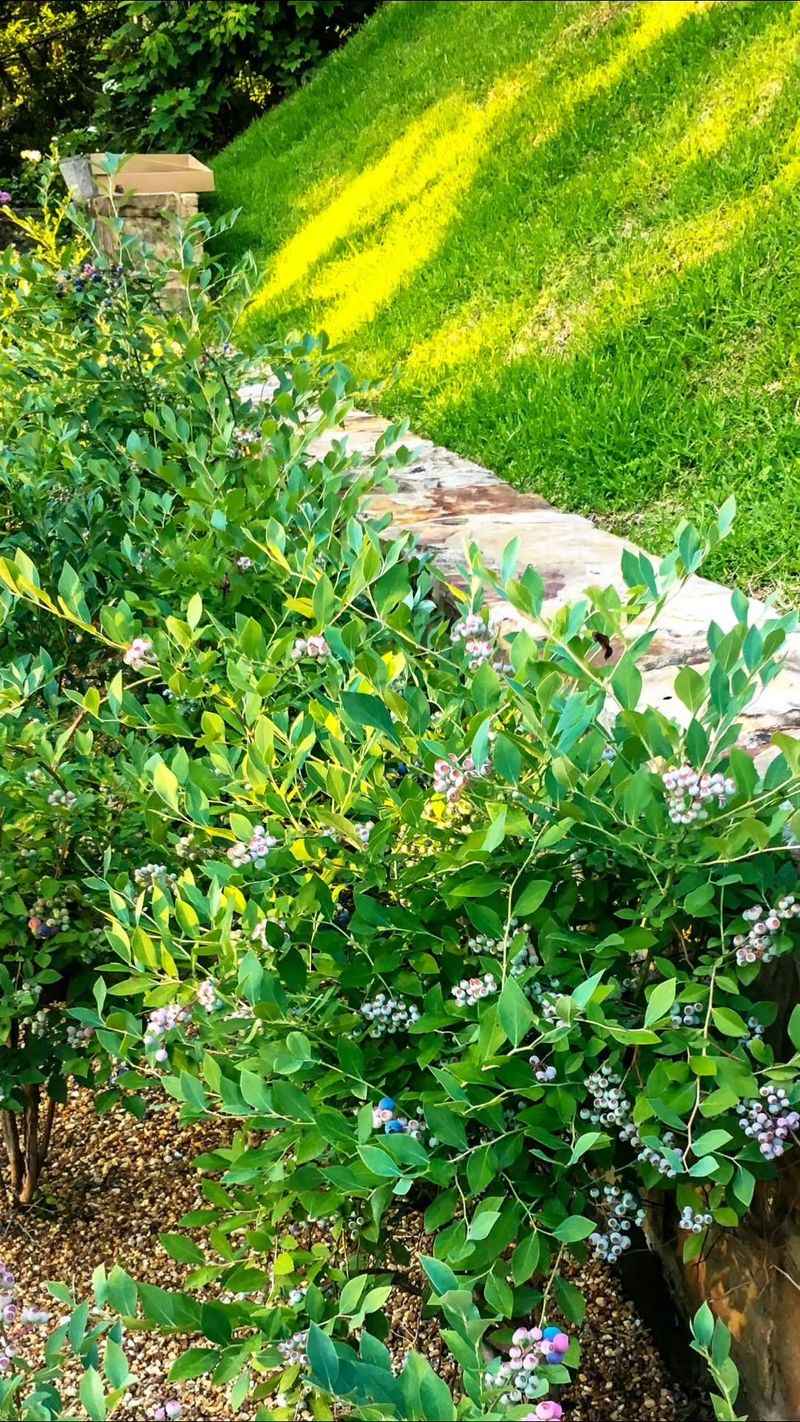
After the serviceberry fruit is gone in June, blueberries and huckleberries carry production through May into October depending on the species. Blackgum, a striking native tree with excellent fall color, produces fruit from August through October that thrushes and other migrants rely on heavily.
American beautyberry, a native shrub with vivid purple fruit clusters, extends the season into November. American holly and eastern redcedar both hold fruit into winter, giving overwintering birds something to work with when most other sources are exhausted.
Stringing these plants together along a yard edge or naturalized area creates a food sequence that genuinely supports birds across the year. No single species does that job alone, and a homeowner who plants only serviceberry will see a burst of activity in spring and early summer followed by a long quiet stretch.
One design note matters for both wildlife value and personal safety. Dense shrubs, ground cover, and brush piles are ecologically useful, but placing them immediately adjacent to patios, decks, playgrounds, and heavily trafficked paths increases the chance that people and pets brush against vegetation where ticks may be questing.
CDC guidance on tick-safe yards recommends keeping play equipment, decks, and patios away from yard edges and trees. Locating denser native plantings at a deliberate distance from high-use areas lets you support wildlife without putting the people who use the yard in closer contact with tick-prone vegetation.
The tick research concerns beautyberry, not serviceberry
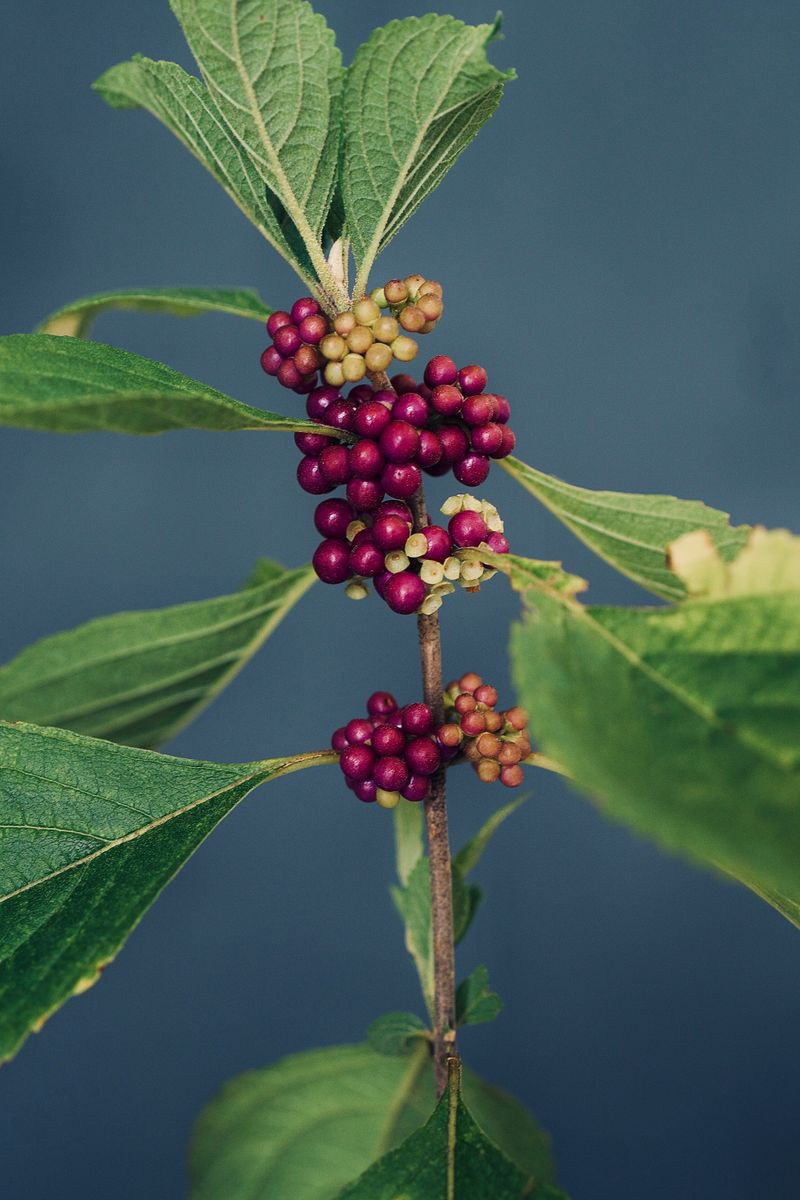
American beautyberry (Callicarpa americana) is a native shrub, not a tree, and it is the plant at the center of the tick-related research that sometimes gets attached to serviceberry in online gardening content. The two plants are unrelated and serve different roles in the landscape.
Mixing them up leads to a claim that serviceberry deters ticks, and that claim has no supporting evidence.
The actual research involved USDA scientists who extracted two compounds from beautyberry leaves and tested them against tick nymphs in laboratory conditions. Treated cloth was exposed to blacklegged tick nymphs and lone star tick nymphs, and the results showed a meaningful repellent effect against blacklegged tick nymphs.
The USDA Agricultural Research Service publication documenting this work is real and peer-reviewed, but what it tested is very specific: extracted chemical compounds applied to cloth in a controlled laboratory setting.
The results against lone star tick nymphs were substantially weaker, which matters considerably for North Carolina. The state has multiple medically important tick species, and lone star ticks are common across much of the Piedmont and Coastal Plain.
A compound that works well against blacklegged tick nymphs in a lab but less well against lone star tick nymphs is not a reliable yard-wide solution even if it were eventually developed into a consumer product.
Researchers did not test a living beautyberry shrub as a yard barrier. They did not measure tick abundance in a yard with beautyberry planted in it.
The study was a laboratory assay, not a landscape trial, and the scientists called for further evaluation before any consumer application could be recommended. Rubbing crushed beautyberry leaves on skin, clothing, children, or pets is not an established or safe practice based on this research.
As for serviceberry, University of Maryland Extension confirms that no scientific studies show that landscape plants, including serviceberry, repel ticks simply by growing in a yard. The tree’s value is real, but tick deterrence is not part of it.
Manage the yard edge and protect people and pets
Ticks do not need a particular tree species to find their way into a yard. They arrive on deer, rodents, birds, and pets, and they wait for a host in the moist, shaded leaf litter and tall grass along yard edges.
Managing that edge is where practical tick reduction actually happens, and it is a separate task from choosing which trees or shrubs to plant.
Several yard-maintenance steps make the lawn-woodland boundary less favorable for ticks or limit how easily they move into recreational areas. Removing accumulated leaf litter, cutting back tall grass and brush near the house, and mowing regularly all reduce the cool, humid conditions ticks prefer.
Keeping woodpiles neatly stacked and dry, off the ground if possible, eliminates a common harborage spot. CDC’s tick prevention guidance also recommends placing a roughly 3-foot-wide strip of wood chips or gravel between lawn and wooded areas to restrict tick movement into the yard.
These are habitat and movement-management measures. None of them makes a yard tick-free, and CDC is clear that pesticide applications should not be treated as the only line of defense against tick-borne illness.
Personal protection remains the most reliable layer. Use EPA-registered repellents as directed on the label; products containing DEET, picaridin, IR3535, or oil of lemon eucalyptus are among the options.
Wear long sleeves, long pants, and closed shoes when working in brushy or wooded areas, and tuck pants into socks if you are spending extended time in tick habitat. After any outdoor exposure, check yourself, your children, and your pets carefully, paying attention to the hairline, behind the ears, underarms, and behind the knees.
Remove any attached ticks promptly using fine-tipped tweezers.
Wildlife habitat and tick awareness can coexist in the same yard. The practical approach is to keep denser native plantings at a deliberate distance from the spaces where people and pets spend the most time, while maintaining the high-use areas as open, mowed, and tidy as possible.
Make the honest planting decision
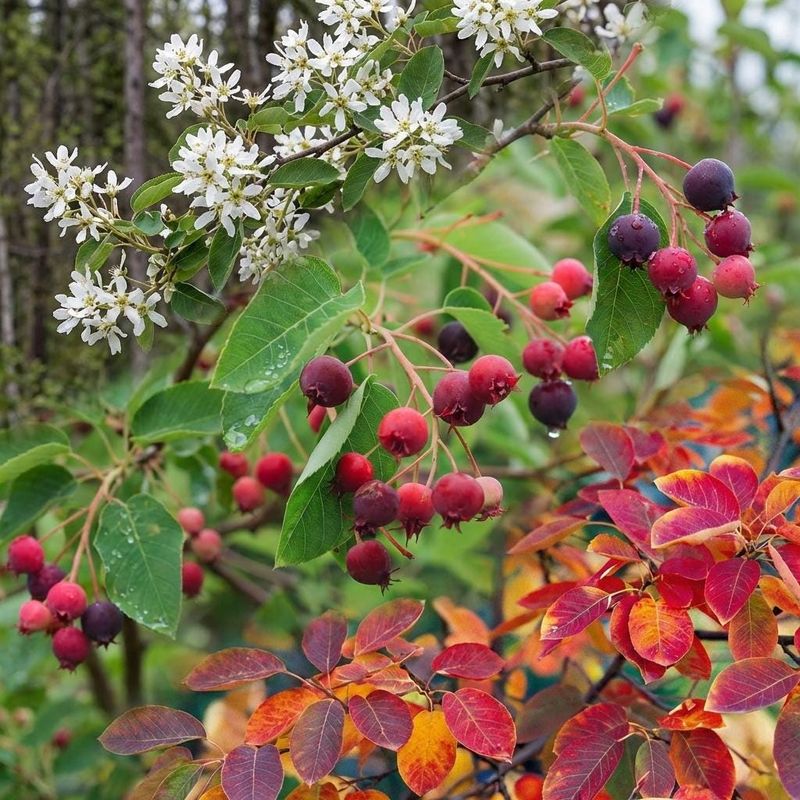
Downy serviceberry is worth planting in most North Carolina yards that have a suitable spot. Match it to a location with adequate light and drainage, decide early whether you want a tree form or are comfortable with a multistemmed shrub habit, and plan to manage root suckers accordingly.
NC State Extension’s serviceberry profile covers the species’ range across the Mountains, Piedmont, and Coastal Plain, and it is a reasonable starting point for confirming that the tree suits your specific site conditions.
Plant it for what it reliably delivers: early-spring flowers that support pollinators when little else is blooming, soft fruit in May and June that songbirds and mammals consume quickly, and foliage that can host red-spotted purple butterfly larvae. Then add complementary native plants with later fruiting and seed periods so that wildlife resources continue past midsummer.
NC State’s backyard bird habitat guide provides a useful calendar of natives to layer in after serviceberry’s peak.
Treat tick protection as a yard-management and personal-protection task, not a property of any particular tree. Keep frequently used outdoor areas open, mowed, and clear of dense brush and leaf litter.
Follow CDC guidance on repellents, protective clothing, and tick checks after outdoor time. A yard that supports native wildlife and keeps your family comfortable is achievable, but it takes a planting plan and a maintenance habit working together – no single tree handles both sides of that equation on its own.