
English ivy looked like a smart fence solution until it started crawling into the woods, up the trees, and across every bed you wanted to keep tidy. North Carolina homeowners who planted it a decade ago are still pulling it out.
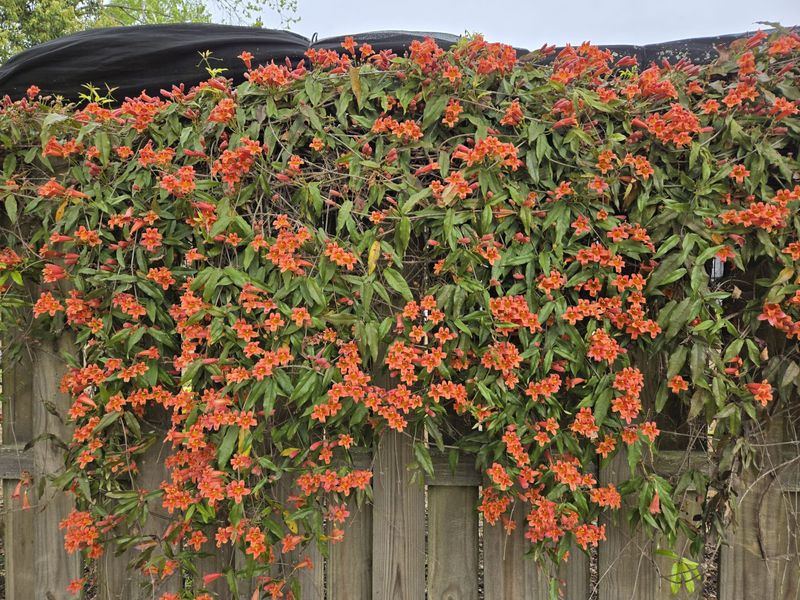
Crossvine (Bignonia capreolata) is a native alternative worth knowing: it climbs quickly, covers a fence well, and does not carry English ivy’s invasive track record in North Carolina natural areas.
Crossvine offers a suitable native way to cover many North Carolina fences
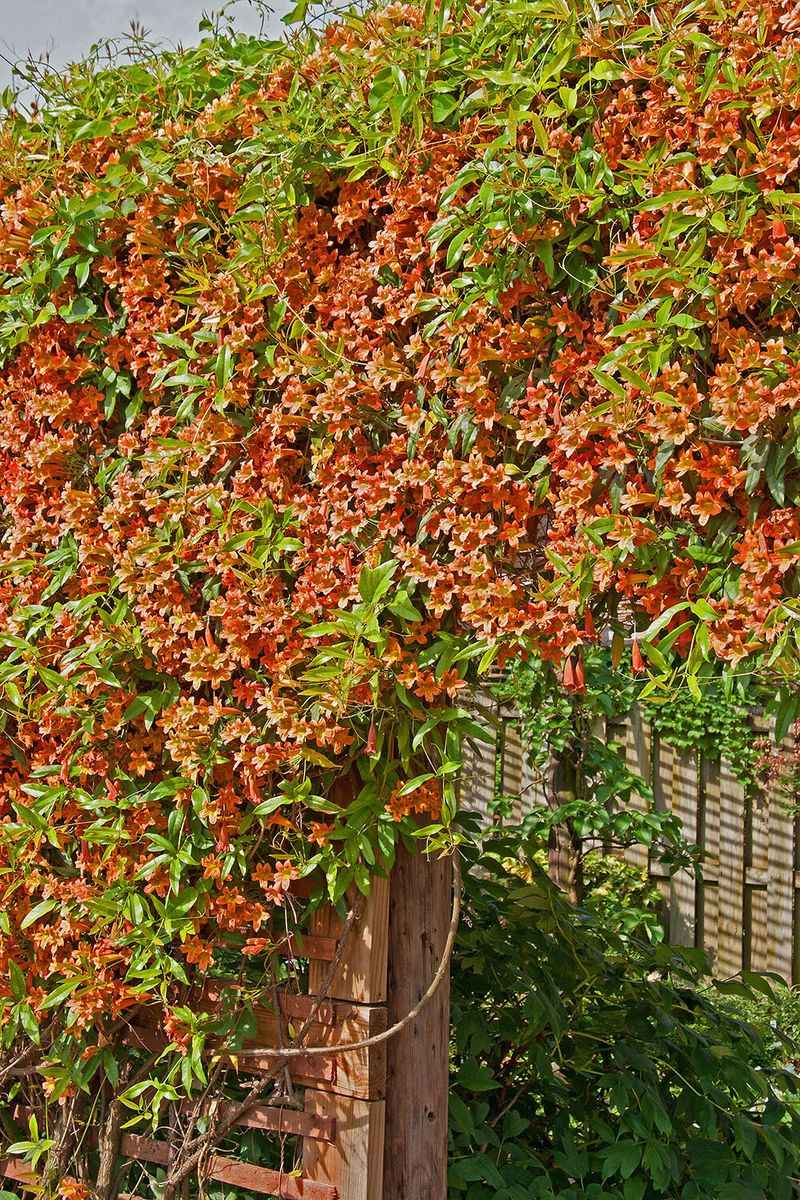
Crossvine (Bignonia capreolata) is a perennial, woody vine native to all three regions of North Carolina – the Coastal Plain, Piedmont, and Mountain areas. NC State’s plant profile describes it as rapid-growing, climbing with branched tendrils, and tolerant of everything from full sun to shade, which makes it practical for fence lines that shift between open and shaded stretches.
Mature size matters before you plant. Crossvine can reach roughly 30 to 50 feet high and 6 to 9 feet wide, so this is not a compact border plant you tuck in and forget.
It is a substantial screening vine that needs a sturdy fence, trellis, or other vertical structure with real room to run.
The NC Sea Grant coastal landscaping guide specifically recommends crossvine as a fast-growing, semi-evergreen cover for fences and trellises, and NC State’s woody ornamentals handbook identifies it as well suited to chain-link and wire structures. That combination of regional nativity, verified fence-covering performance, and statewide adaptability is what earns crossvine a serious look as a fence plant for North Carolina homeowners – not a superlative ranking, but a well-supported, practical recommendation.
English ivy spreads beyond the fence and increases the maintenance burden
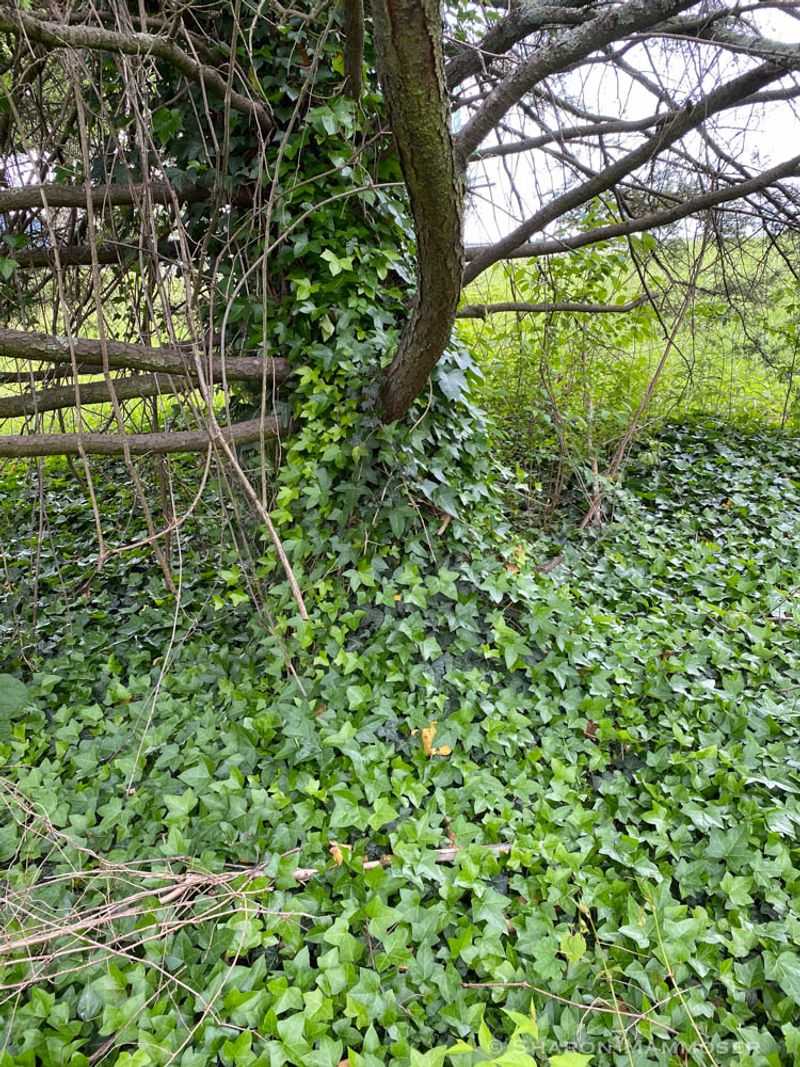
English ivy (Hedera helix) is not native to North Carolina, and planting it outdoors here has real ecological consequences. NC State’s plant profile for English ivy documents its ability to form dense ground cover, spread into natural areas, and climb into tree canopies, where it adds weight, competes for light, and increases vulnerability to storm damage.
It also suppresses native seedlings, reducing the diversity of plants that should be coming up in the understory.
The plant’s impact does not stay in the forest. Outdoor plantings in residential yards can creep into gutters, crawl across building surfaces, and move into neighboring properties or nearby natural areas well before a homeowner realizes it is happening.
Federal invasive species documentation notes English ivy’s capacity to dominate large areas of ground cover and displace native vegetation across much of the eastern United States.
Removal once English ivy is established is neither quick nor easy. NC State’s urban landscape control guidance recommends cutting vines at the base of trees, removing reachable sections by hand, and following up with persistent mowing or carefully timed herbicide treatments for ground infestations.
The National Park Service’s English ivy management page confirms that control is workable but requires repeated effort over time. To be clear: English ivy does not always kill trees outright, but the combination of canopy invasion, added weight, and competition can contribute to serious decline, especially in dense, long-established infestations.
Tendrils make crossvine well suited to chain-link and wire
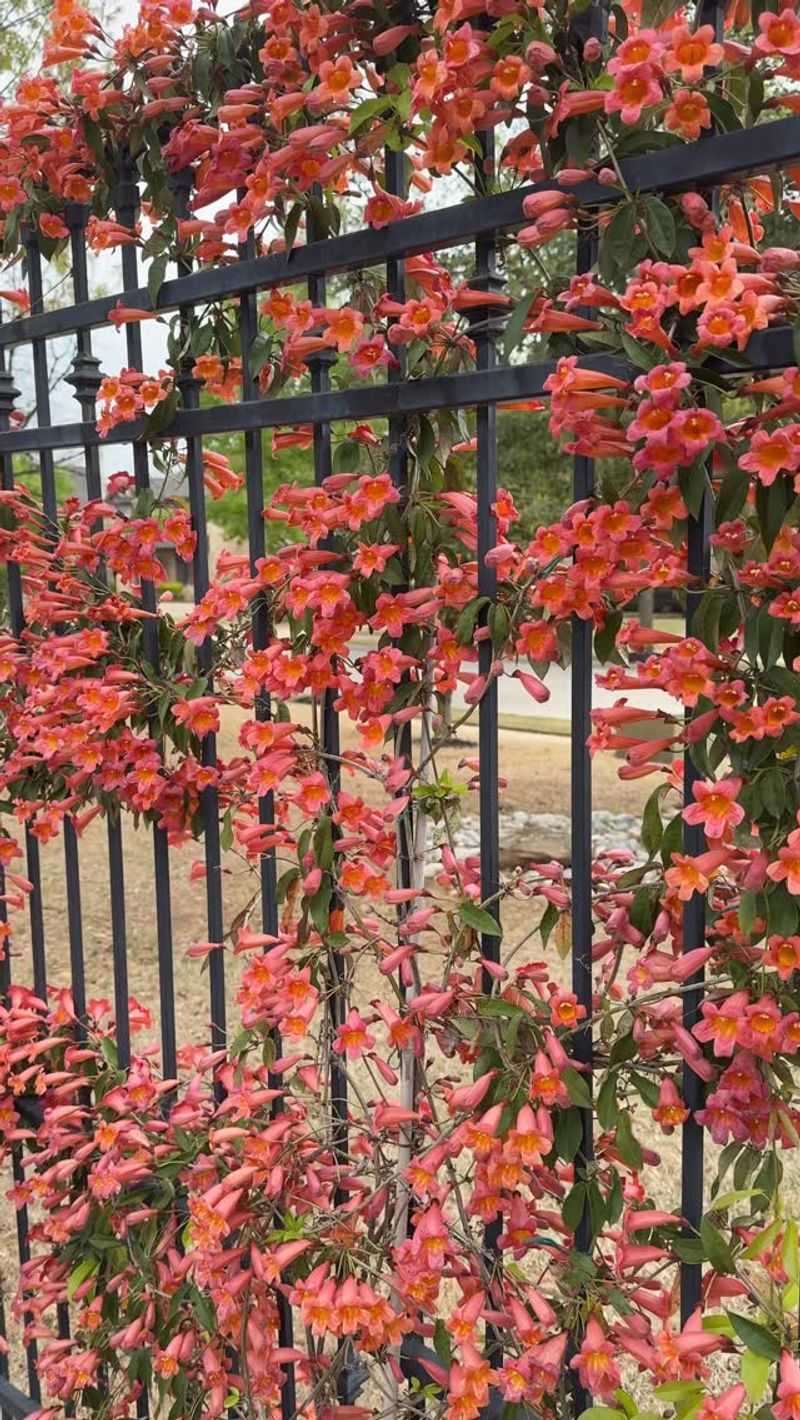
How a vine attaches itself to a surface determines where it will actually perform well, and crossvine’s attachment method is one of its most practical qualities for fence lines. Rather than using adhesive aerial roots the way English ivy does, crossvine climbs with branched tendrils that grip narrow supports securely.
NC State’s woody ornamentals handbook specifically notes that tendril climbers perform especially well on narrow supports such as wire, bamboo, and chain-link fencing – exactly the kind of structure many homeowners already have along property lines.
English ivy’s adhesive roots, by contrast, bond directly to masonry, wood, and bark, which is part of why it can damage surfaces and become so difficult to remove from tree trunks and building walls. Crossvine avoids that particular problem because it wraps around rather than bonding to surfaces.
That said, crossvine is not a plug-in-and-walk-away plant. NC State’s crossvine profile indicates that young stems may need initial training onto the support structure before the tendrils take hold on their own.
Plan to guide new growth toward the fence in the first season, weaving stems through chain-link openings or tying them loosely to wire until the vine finds its footing. Crossvine is also not a universal wall-covering substitute for every application where English ivy was used – on smooth masonry or solid wood surfaces without attachment points, tendrils have less to grip and the vine will need supplemental support to climb effectively.
A dense canopy may shade some weeds but cannot replace weed control
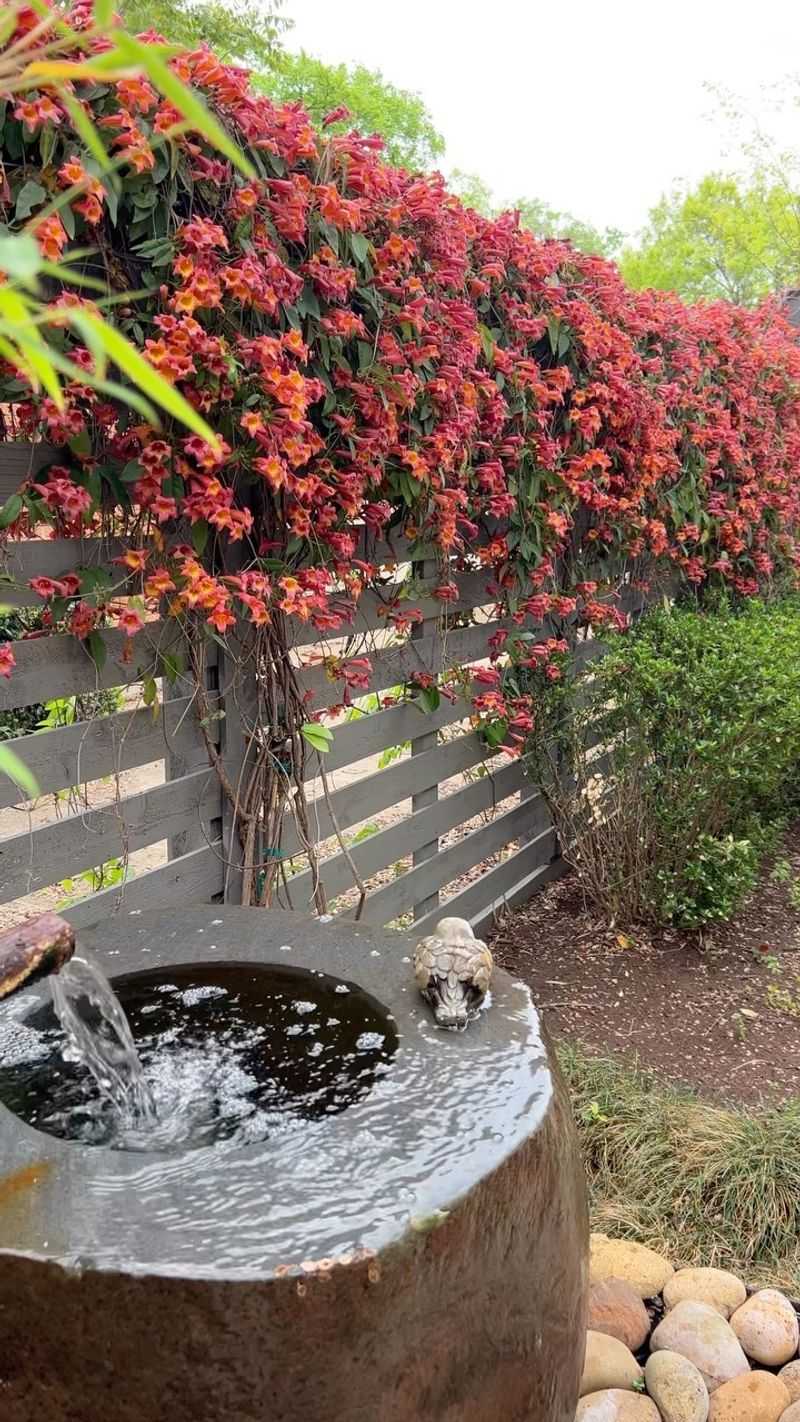
One of the more appealing ideas attached to crossvine is that it will crowd out weeds the way English ivy does – blanketing the ground and smothering whatever was growing there before. The reality is more conditional.
A mature, dense crossvine canopy can reduce the amount of sunlight reaching the soil beneath it, which may limit some weed growth over time. No cited study or authoritative extension source, however, has directly compared crossvine’s weed-suppression performance against English ivy’s in a controlled setting, so the claim should not be taken as a guarantee.
What the evidence does support clearly is the value of preparation before the vine goes in the ground. University of Maryland Extension’s groundcover guidance and Clemson’s groundcover factsheet both recommend removing established perennial weeds before planting, applying a modest mulch layer during establishment, and continuing hand-weeding while the planting fills in.
University of Illinois Extension reinforces the same principle: new plantings do not eliminate weeds on their own during the establishment window.
Mulch is your main tool during the first one to two seasons. Apply two to three inches around the base of new crossvine plants, keeping it pulled back from the crown so you do not promote rot.
Hand-pull any perennial weeds that push through, because established tap-rooted weeds will outcompete a young vine every time. Once the canopy fills in and begins to shade the fence line consistently, some annual weed pressure may ease – but that outcome depends on how dense the coverage becomes and what weed species are present, not simply on the fact that crossvine is growing there.
Prepare the planting strip and train young stems onto the support
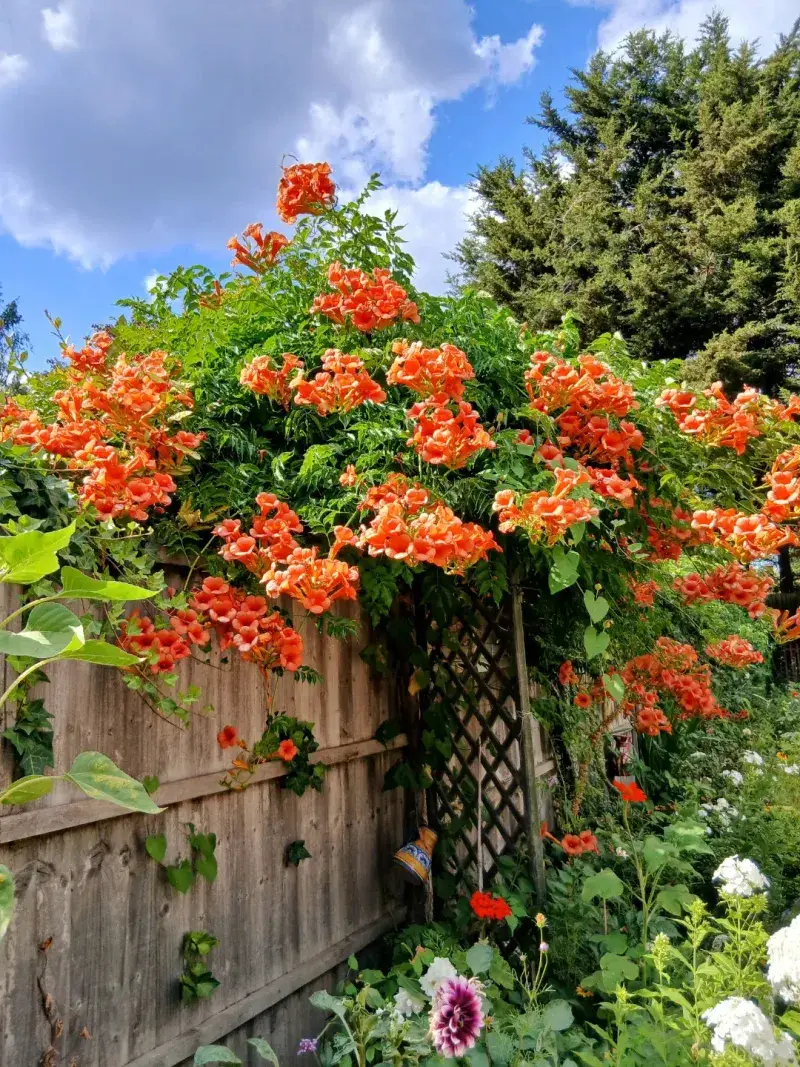
Getting crossvine established well starts before the plant goes in the ground. Clear the fence line thoroughly, removing existing grass, perennial weeds, and any roots you can reach.
Perennial weeds left in place will compete directly with a new vine during its most vulnerable period, and surface removal alone is not enough for tap-rooted species like thistle or bindweed. University of Maryland Extension’s groundcover guidance is direct on this point: thorough weed removal before planting is one of the most consequential steps in getting any groundcover or climbing plant off to a reliable start.
Confirm that your fence or trellis is in good shape before planting. NC State’s woody ornamentals handbook identifies wire and chain-link as strong supports for tendril climbers, but the structure needs to be stable enough to carry a vine that can eventually reach 30 to 50 feet.
A fence post that is already leaning will not improve under the added weight and wind load of a mature crossvine.
After planting, apply a two-to-three-inch mulch layer along the fence strip, keeping it clear of the crown. Then guide young stems toward the fence manually, threading them through chain-link openings or loosely tying them to wire so the tendrils have something to grip early on.
The NC Sea Grant coastal landscaping guide describes crossvine as fast-growing once established, but that establishment phase still takes time and attention. Spacing between plants depends on your fence length, the size of your nursery stock, and how quickly you want coverage – no single universal spacing figure applies to every situation, so use the plant’s mature six-to-nine-foot width as a starting reference and adjust based on your support and goals.
Manage crossvine’s vigorous spread before it reaches unwanted areas
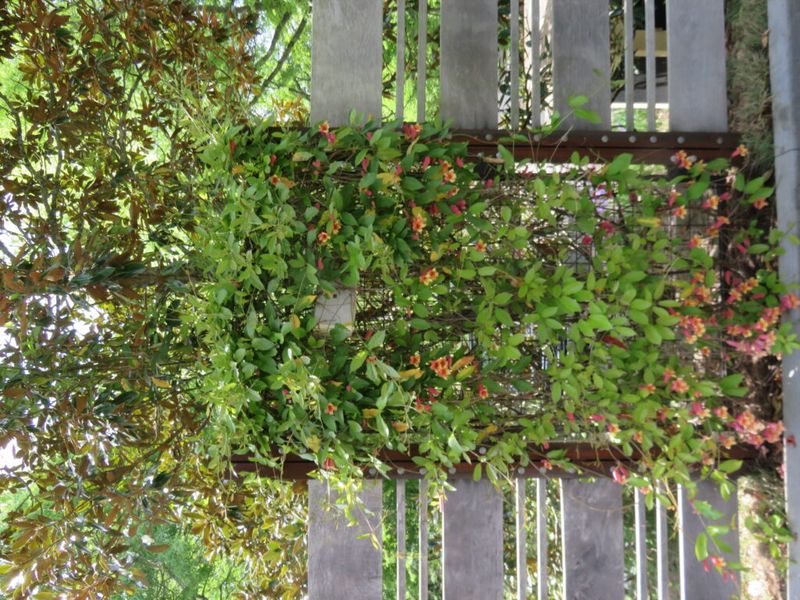
Crossvine being native to North Carolina does not mean it will politely stay where you planted it. NC State’s crossvine profile notes that the vine spreads by both seed and root suckers, and recommends removing suckers as they appear.
A Wake County native plant list labels crossvine an aggressive spreader – a designation that should set realistic expectations before you plant rather than surprise you two seasons in.
Root suckers are the main management task after establishment. They emerge from the root system at some distance from the original plant and will colonize neighboring beds, lawn edges, or open ground if not caught early.
Walk the planting every few weeks during the growing season, pull or cut suckers at or just below the soil surface, and check again after rain when new growth flushes. Stems that reach a nearby tree should be redirected or removed before they climb, because a large vine moving into a tree canopy creates the same kind of shading and weight problem that makes English ivy so damaging.
A USDA planting guide for the southeastern region reinforces that crossvine’s vigor is an asset on a fence but requires active management at the boundaries. Think of it as a stewardship commitment rather than a one-time planting job.
The ecological value is real – wildlife benefit, native provenance, no invasive spread profile like English ivy – but that value comes with the expectation that you are paying attention to where the vine is going each season.
Match the vine to sunlight, winter conditions, wildlife goals, and fire safety
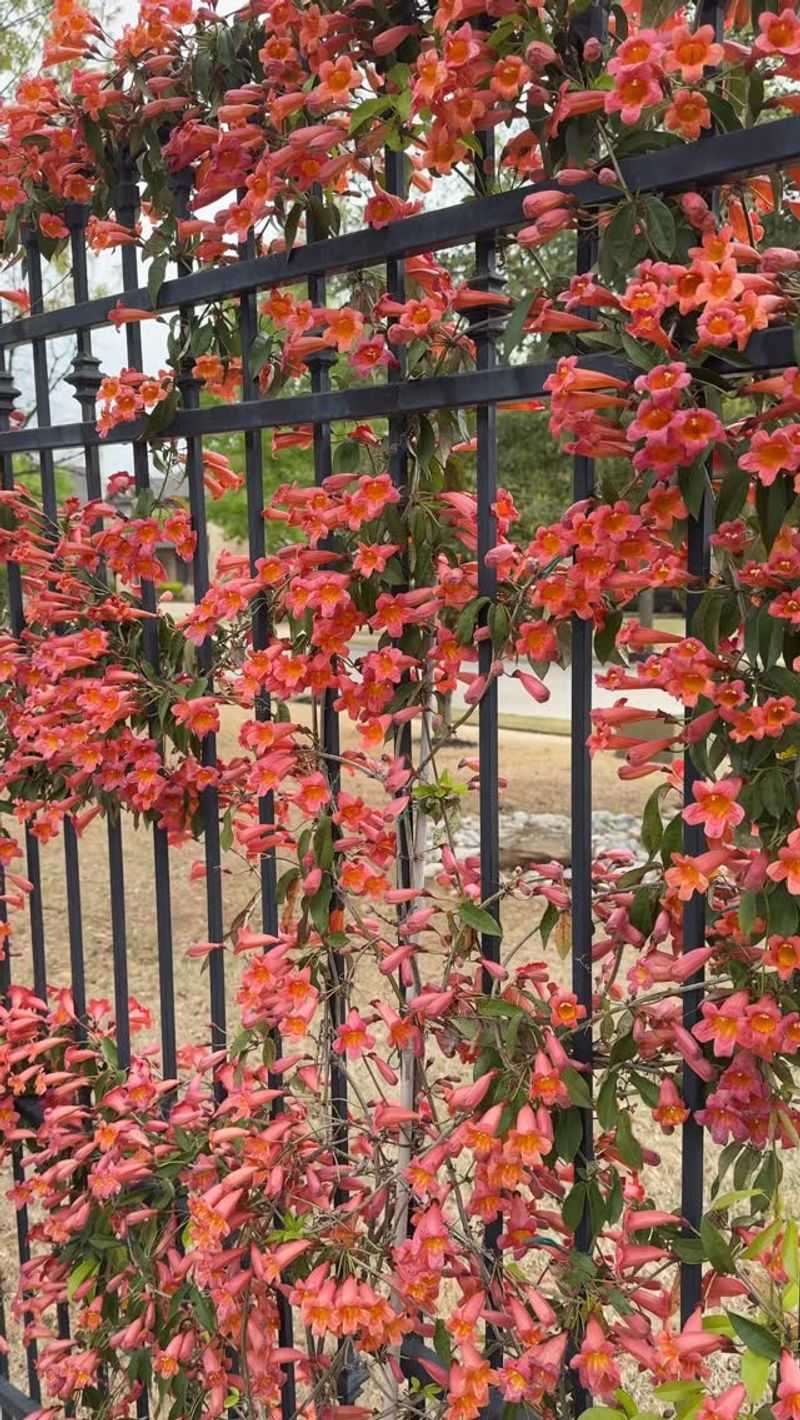
Sunlight affects how well crossvine performs in a specific yard. The vine tolerates shade, but more direct sun generally means better flowering.
Crossvine blooms in late winter to early spring, and those tubular orange-red flowers are timed almost perfectly for hummingbird migration. NC State’s wildlife planting guide lists crossvine among plants that benefit hummingbirds, making it a genuinely useful addition if early-season pollinators and wildlife value matter to you alongside fence coverage.
Winter appearance varies by location. Crossvine is described as evergreen to semi-evergreen across much of its range, but a severe cold snap can kill foliage back to the ground even when the roots survive.
Mountain-region gardens should expect more dieback in hard winters than coastal or Piedmont sites. The NC Sea Grant coastal guide uses the semi-evergreen description, which is accurate for much of the state but not a guarantee of full winter coverage everywhere.
Fire safety is a non-negotiable consideration. NC State’s Plant Toolbox gives crossvine a high flammability rating, which means it should not be planted in the defensible space immediately surrounding a home, particularly in areas with any wildfire risk.
Use it along a boundary or back fence with adequate separation from the house structure.
Outside North Carolina, the evidence for crossvine is strongest in North and Central Florida, where USDA southeastern planting documentation and UF/IFAS native vine guidance both support its use. South Florida and every Texas climate present different conditions, and the evidence does not extend equally to those areas without additional regional verification.
Choose crossvine for dependable native coverage, not a weed-free promise
Crossvine can give North Carolina homeowners vigorous native fence coverage without introducing English ivy’s documented pattern of invasive spread into natural areas, tree canopies, and neighboring properties. That is a meaningful benefit on its own, and it comes with the added wildlife value of early-season hummingbird flowers and a plant that genuinely belongs in the North Carolina landscape.
What crossvine cannot do is replace site preparation, mulch, or follow-up weeding. Extension groundcover guidance is consistent: weed control during establishment depends on what you do before and after planting, not on the vine itself.
A mature canopy may shade some soil and reduce certain weed pressure over time, but that outcome is conditional on how dense the coverage becomes and what species are competing below.
The vine also requires real maintenance – sucker removal, boundary monitoring, initial stem training, and attention to fire safety near structures. NC State’s full crossvine profile makes clear that this is an investment in a living, spreading plant, not a permanent installation.
Choose crossvine because you want a fast-growing, native fence screen with wildlife value and none of English ivy’s invasive baggage – and go in knowing that the fence coverage is the reliable payoff, while any reduction in weeds beneath it is a welcome possibility rather than a promise.