
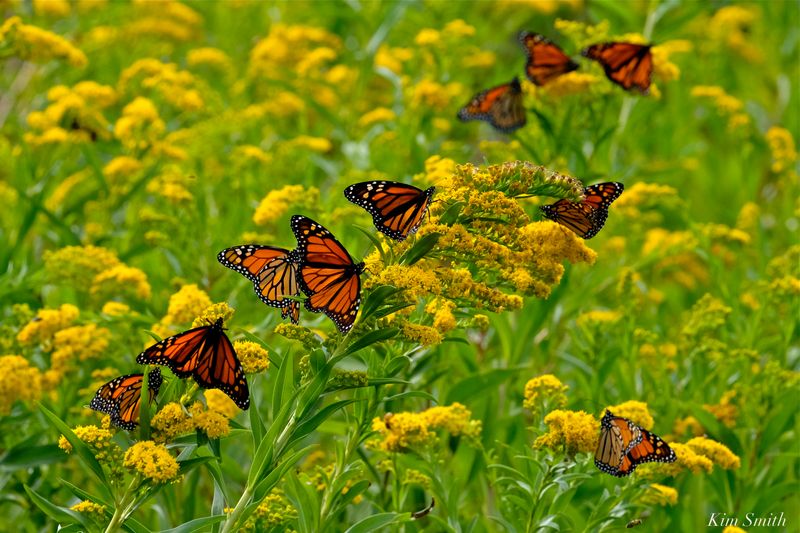
Every fall, monarch butterflies pass through North Carolina on their long journey south, and they need every calorie they can find along the way. Most summer flowers have already faded by the time migration picks up, leaving a real gap in the nectar supply.
Native goldenrod steps in right when it matters most, offering fuel for butterflies at a season when most gardens have little left to give.
Goldenrod offers North Carolina monarchs a strong late-season nectar source
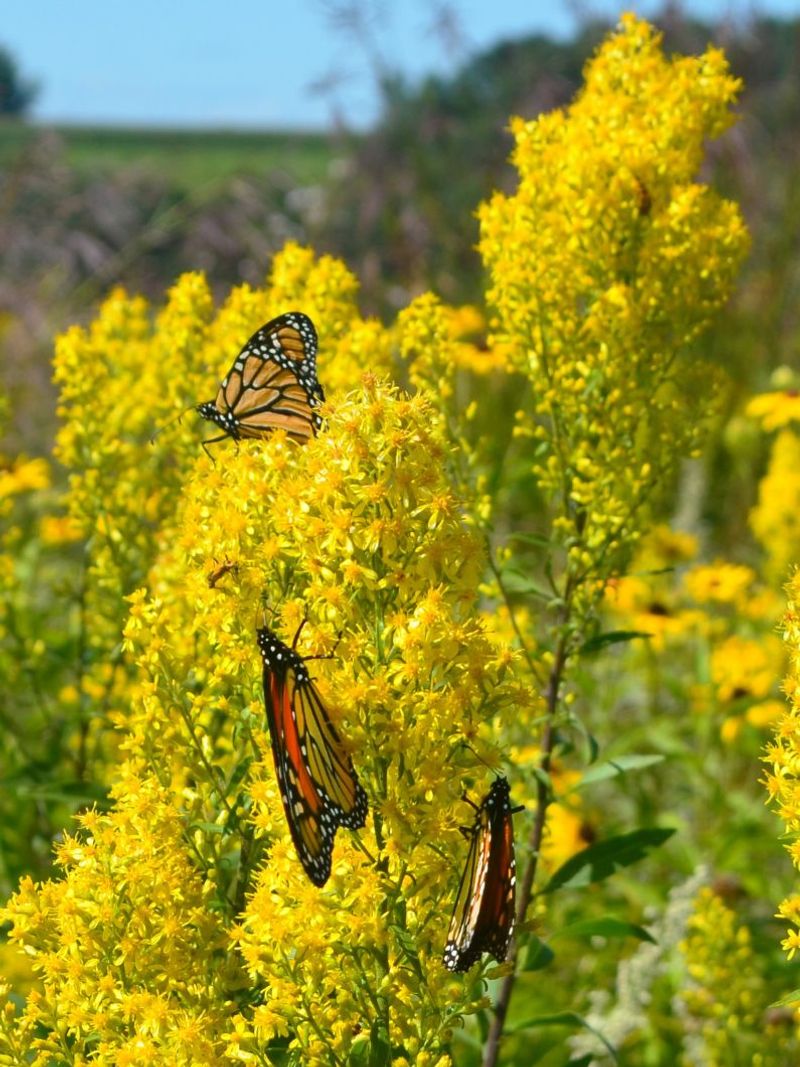
Native goldenrod is one of the most reliable late-season nectar plants a North Carolina homeowner can grow for migrating monarchs. Among the many goldenrod species native to the state, autumn goldenrod (Solidago sphacelata) stands out as a particularly well-suited option.
NC State’s Plant Toolbox profile for autumn goldenrod documents it blooming from July through October in the Coastal Plain, Piedmont, and Mountains, which lines up directly with the fall monarch migration window.
What makes goldenrod practical for most home yards is its tolerance for tough conditions. NC State’s genus-level goldenrod profile describes these native perennials as well-adapted to full sun and tolerant of average, dry, poor, clay, and drought-prone soils.
That means goldenrod can succeed in spots where more demanding plants struggle, making it a low-effort addition to a sunny border or naturalized area.
Both the Monarch Joint Venture’s monarch habitat guidance and the National Wildlife Federation’s nectar plant resources identify goldenrod as an important fall nectar source for adult monarchs. That said, bloom timing depends on the specific species, cultivar, site conditions, and weather in a given year.
Goldenrod can extend late-season nectar availability into October in suitable North Carolina settings, but no single species can be guaranteed to flower through every frost. Think of it as a strong contributor to a late-season planting rather than a standalone solution.
Fall nectar helps monarchs build energy for migration

Monarch butterflies do not coast through fall migration running on empty. Adult monarchs need a steady supply of nectar to build the fat reserves that carry them all the way to their overwintering sites in central Mexico, a journey that can stretch more than a thousand miles.
The Monarch Joint Venture defines the fall nectar period as roughly August 16 through October 30, and monarchs passing through North Carolina during that window are actively refueling.
Research backs up the importance of that refueling opportunity. A peer-reviewed study on monarch migration and landscape conditions found a connection between nectar availability during fall migration and the size of overwintering colonies in Mexico.
A separate analysis published in PMC linked landscape greenness along migratory corridors with monarch population outcomes, suggesting that what happens in home gardens and rural landscapes along the route genuinely matters at the population level.
That connection is meaningful, but it also needs honest framing. One yard’s goldenrod planting contributes a piece of habitat, not a guaranteed population boost.
Monarch numbers are shaped by conditions across breeding grounds, migration corridors, and overwintering sites over many years. What a North Carolina homeowner can do is make their yard part of a connected network of late-season nectar sources, so that monarchs passing through have more opportunities to refuel at a time when food is genuinely hard to find.
Choose a goldenrod that matches your North Carolina site

Goldenrod is a genus with many faces. Some species top six feet and spread aggressively through rhizomes; others stay compact and well-behaved in a small bed.
Buying any plant labeled “goldenrod” without checking the species is a common mistake that can leave you with a plant that outgrows its space or blooms too early to help fall monarchs. Matching the species to your actual site conditions is the step most gardeners skip.
Autumn goldenrod (Solidago sphacelata) is a strong starting point for many North Carolina homeowners. According to NC State’s profile for this species, it is native to the Coastal Plain, Piedmont, and Mountains, reaches roughly one to three feet tall, tolerates dry or rocky soils, and blooms from July through October.
That compact size and wide regional nativity make it a practical choice for beds that cannot accommodate a taller, more spreading species.
Before purchasing, check whether a specific goldenrod is native to your part of North Carolina. The NC State Plant Toolbox lets you filter by region, soil type, and sun exposure, which takes the guesswork out of selection.
Prioritize full sun, confirm that drainage fits the species you choose, and account for mature spread. A goldenrod that fits the site will establish faster, need less intervention, and bloom more reliably than one planted in the wrong conditions.
Also note that the same logic does not automatically transfer to Florida or Texas, where locally native goldenrod and aster species, growing seasons, and frost timing differ substantially from North Carolina.
Plant goldenrod in a sunny cluster
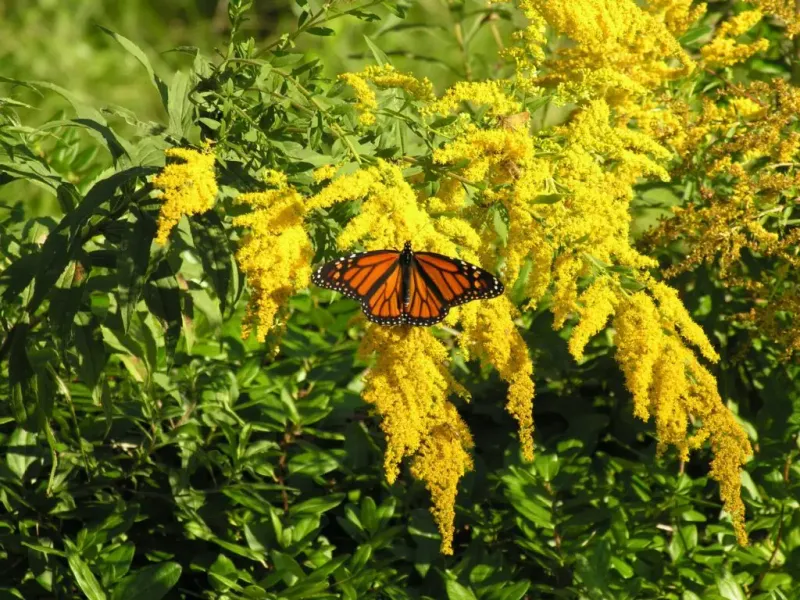
Placement and grouping matter more than most gardeners expect. A single goldenrod plant tucked into a shady corner will underperform, and an isolated specimen in full sun is harder for pollinators to locate than a cluster.
NC Cooperative Extension specifically recommends grouping pollinator plants together so that foraging insects, including monarchs, can find and use them efficiently. Aim for at least three plants in a visible cluster rather than spreading individual specimens around the yard.
Full sun is the non-negotiable factor. The NC State goldenrod genus profile lists full sun as the standard requirement, and goldenrod planted in partial shade will typically produce fewer flowers and less nectar.
When picking a spot, six or more hours of direct sun per day is a reasonable target. Good air circulation helps too, reducing the risk of powdery mildew on older foliage late in the season.
Fall planting is worth doing, but set realistic expectations about timing. University of Georgia Extension notes that fall-planted perennials focus their energy on root establishment rather than top growth.
A goldenrod planted in September or October is making an investment in next year’s performance, not a guarantee of heavy bloom that same October. For immediate monarch benefit this season, look for nursery stock that is already in bud or bloom at the time of purchase, and give it consistent water through its first fall and winter.
Pair goldenrod with milkweed for a fuller monarch habitat
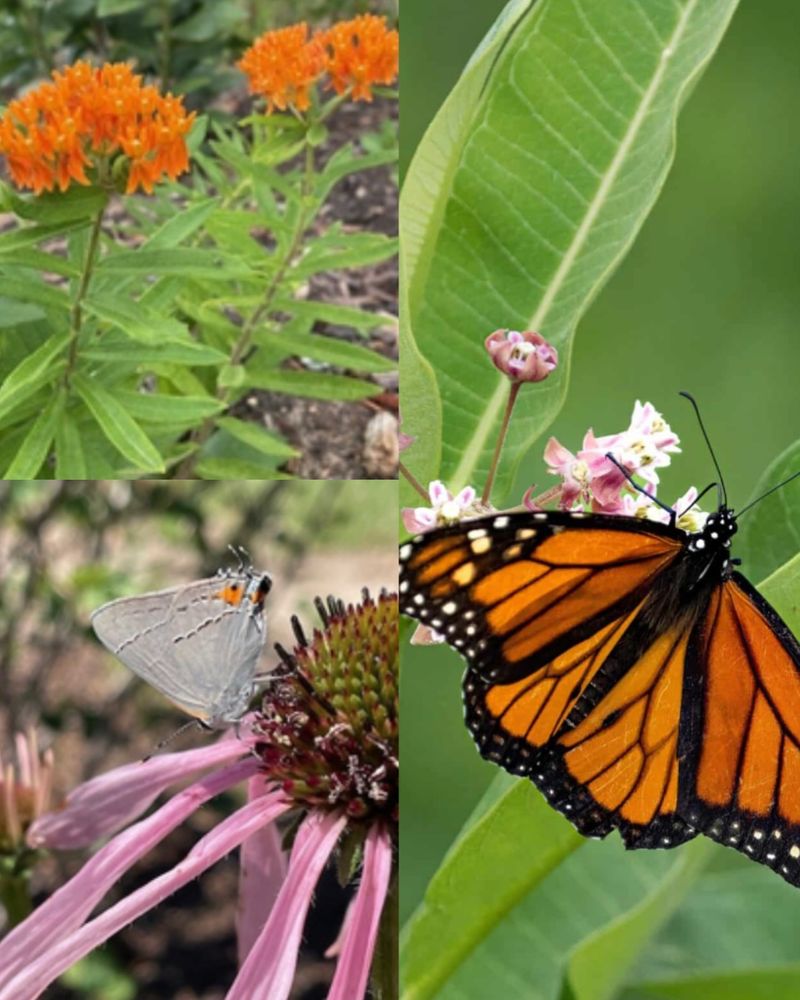
Goldenrod feeds adult monarchs, but it cannot do everything a complete monarch garden needs. Monarch caterpillars require milkweed as their larval host plant.
Without milkweed, monarchs can visit a yard for nectar but cannot reproduce there. Monarch Joint Venture’s habitat guidance makes this distinction clearly: nectar plants support adult butterflies, while milkweed provides the food and egg-laying site that caterpillars depend on entirely.
For North Carolina gardeners, combining goldenrod with a regionally appropriate milkweed species creates a yard that supports monarchs through more of their life cycle. Butterflyweed (Asclepias tuberosa) and swamp milkweed (Asclepias incarnata) are two natives with documented North Carolina presence.
Pair these with goldenrod and other late-season nectar plants to cover both the breeding season and the fall migration window. The National Wildlife Federation’s nectar plant guidance reinforces the value of offering both host plants and nectar sources across multiple seasons.
Scale matters here too. Research on monarch population dynamics points to habitat quality and connectivity across entire landscapes, not individual gardens, as the key driver of population outcomes.
One well-planted yard contributes something real to that network, especially when neighbors do the same. The honest framing is that your goldenrod and milkweed combination is one piece of a much larger habitat puzzle, and every piece helps without any single planting carrying the full load.
Use asters to extend the late-season bloom sequence

Goldenrod is not the only native perennial working for monarchs in October. Native asters bloom alongside and sometimes after goldenrod, giving migrating butterflies a longer window of late-season nectar.
The idea that every other flower has quit by the time monarchs pass through is an overstatement, and correcting it leads to better planting decisions.
Several aster species native to North Carolina are well worth including. Aromatic aster (Symphyotrichum oblongifolium) is documented blooming into November in some North Carolina locations, which makes it one of the latest reliable native nectar sources in the state.
Eastern silvery aster (Symphyotrichum concolor) is native statewide, tolerates drought and poor soils, and blooms from fall into late fall, making it a strong companion for goldenrod in the Piedmont and Coastal Plain. New England aster (Symphyotrichum novae-angliae) adds bold purple color and reliable late-summer to fall bloom that bridges the gap between summer perennials and the October goldenrod peak.
The NC State aster genus overview notes that bloom periods vary by species and site, so mixing two or three aster species with goldenrod creates a more resilient succession than relying on any single plant. Beaufort County Extension’s pollinator planting guide echoes this approach, recommending a variety of native bloomers timed across the season.
A garden that moves from goldenrod to aromatic aster to silvery aster keeps the nectar bar open longer than goldenrod alone ever could.
Manage cold weather, spread, and post-bloom cleanup
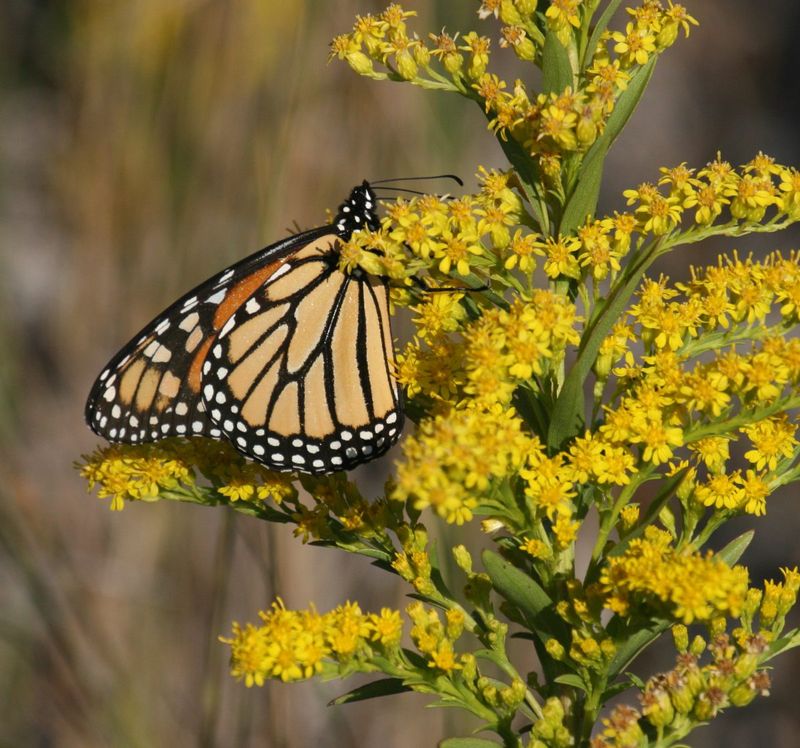
One of the most common misunderstandings about fall monarch gardening is that flowers blooming through a cold snap automatically means monarchs are feeding. Monarch Joint Venture’s migration FAQ notes that adult monarchs generally need temperatures above about 55 degrees Fahrenheit to fly.
A night that drops to 38 degrees may leave some goldenrod flowers intact by morning, but monarchs will not be actively foraging during the coldest hours. Flowers that survive a light frost are ready to support butterflies again once temperatures climb, which is genuinely useful, but it is different from the plant continuously fueling flight through a cold snap.
Spread is the other management reality to plan for. Goldenrod spreads through both rhizomes and wind-dispersed seed, and some species expand more aggressively than others.
NC State’s autumn goldenrod profile acknowledges this spreading habit, so gardeners should give the plant enough room to move and be prepared to divide or deadhead if it starts crowding neighbors. Choosing a compact, well-behaved species or cultivar from the start is easier than managing an overly vigorous one later.
Pesticides deserve a direct mention. Monarch Joint Venture’s pesticide threat page identifies insecticide exposure as a significant risk to monarch populations.
Avoid routine spraying on or near blooming goldenrod and asters, and if treatment is truly necessary for a pest problem, use the most targeted, least-toxic option available and apply it when flowers are not open and pollinators are not active. Finally, resist the urge to cut everything to the ground after bloom.
Richmond County Extension’s aster post points out that leaving stems and seedheads standing through winter provides food and shelter for birds and other wildlife, adding another layer of habitat value to a planting that has already done good work for monarchs.
Build a diverse fall monarch garden around goldenrod
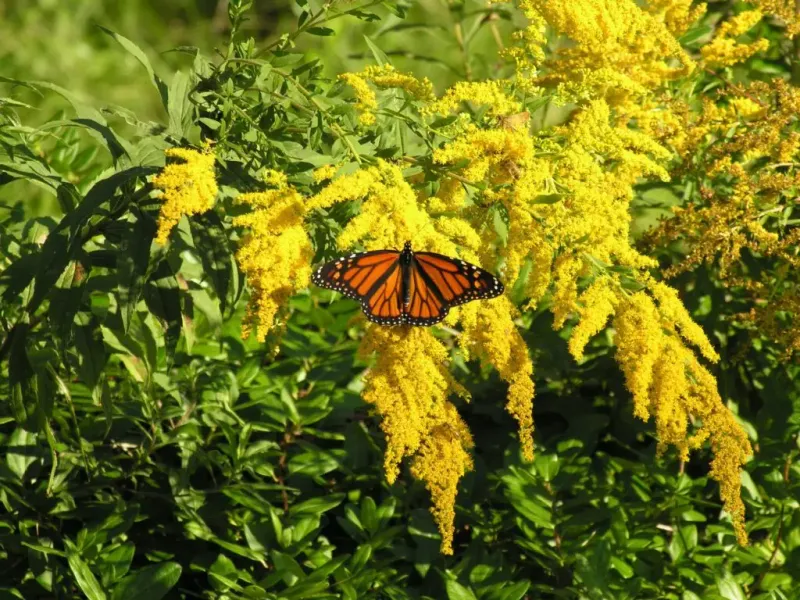
Putting it all together comes down to a short list of connected decisions. Start with a locally appropriate goldenrod species confirmed native to your part of North Carolina, plant it in a full-sun cluster with room to spread, and check the NC State Plant Toolbox entry for autumn goldenrod or the broader genus page to match the plant to your soil and drainage before buying.
Add milkweed for monarch reproduction, then layer in one or two native asters to carry the nectar supply past goldenrod’s peak. Skip routine insecticide spraying on open blooms, and leave some stems and seedheads standing after frost for winter wildlife.
Monarch Joint Venture’s habitat guidance consistently frames the goal as connected, seasonally diverse habitat rather than any single plant carrying the full responsibility.
Goldenrod can extend late-season nectar into October in suitable North Carolina settings, and that is a real contribution worth making. But cold weather still controls when monarchs can fly, and diverse habitat always outperforms a single perennial.
A yard with goldenrod, asters, and milkweed working together gives passing monarchs something worth stopping for, and that is exactly the kind of small, connected patch that adds up across a landscape.