
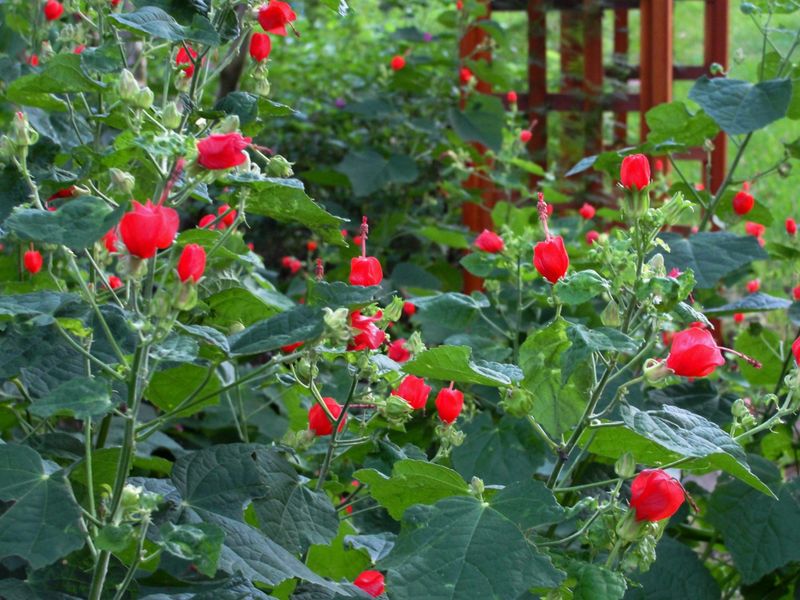
When most flowering plants give up in the Texas heat, a tough native shrub keeps producing the red blooms that hummingbirds are looking for. Turk’s cap, known to botanists as Malvaviscus arboreus var. drummondii, often flowers during the hottest stretch of summer and can carry those blooms into early fall.
That timing lines up with a period when hummingbirds need reliable energy before and during migration. One plant alone cannot feed every bird that passes through, but Turk’s cap is a well-supported choice for Texas gardeners who want a heat-tolerant native that does real work in the yard.
Turk’s cap offers late-summer nectar with a variable fall encore
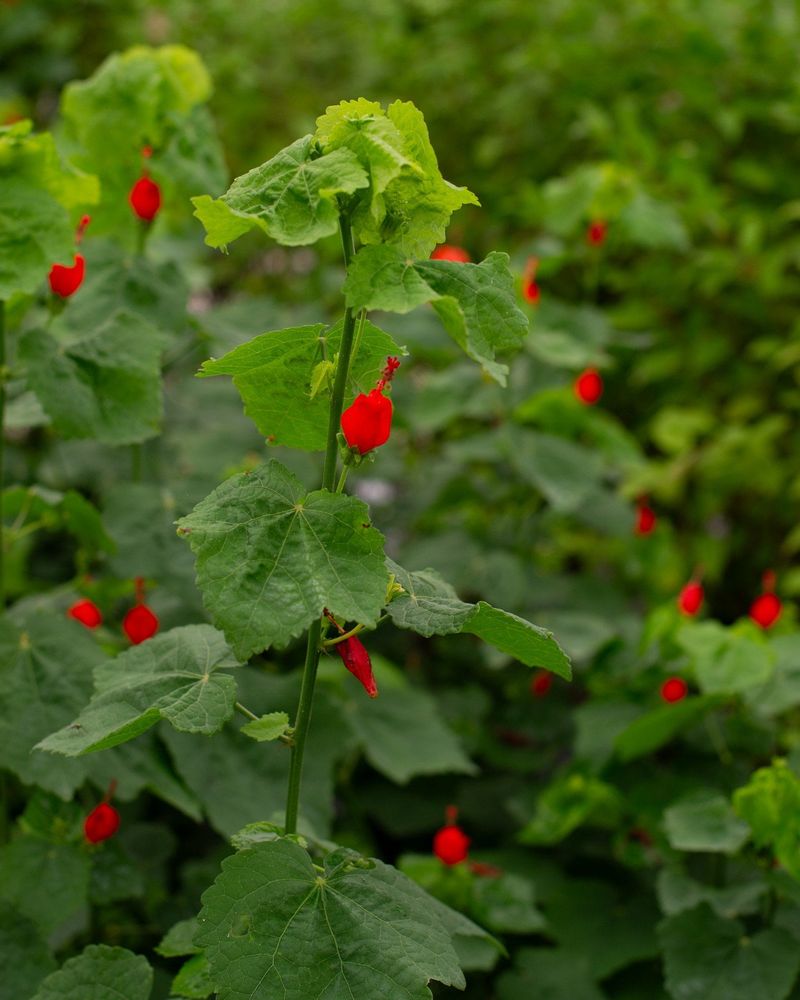
Red, twisted flowers that never fully open are the signature of Turk’s cap, the Texas-native flowering shrub known scientifically as Malvaviscus arboreus var. drummondii. Common names for the plant include Texas mallow and Drummond’s wax-mallow, and its distinctive blooms look like a hibiscus blossom caught mid-spiral.
Oklahoma State University’s plant profile describes its flowers as appearing in showy profusion during hot weather at the end of summer and early fall, making it one of the few natives that keeps producing color when other plants have stalled out.
The University of Texas records the plant as capable of flowering through much of the year in some Texas settings, including the driest, hottest summer conditions. That broader window is real, but readers should treat it as a possibility rather than a promise.
Bloom timing shifts based on region, rainfall, cultivar, and how well the plant is established, so “often” and “typically” are the right words to carry into any planting plan.
The University of Texas Wildflowers of Texas database and Audubon Texas’s hummingbird feeding guide both list Turk’s cap as a native nectar plant with value for hummingbirds. That recognition matters, but it comes with an honest boundary: Turk’s cap is one useful source of nectar, not a complete or guaranteed food supply.
Hummingbirds that visit a yard with Turk’s cap still need insects, water, perches, and other flowering plants to meet their full range of needs.
Why late-season blooms help hummingbirds
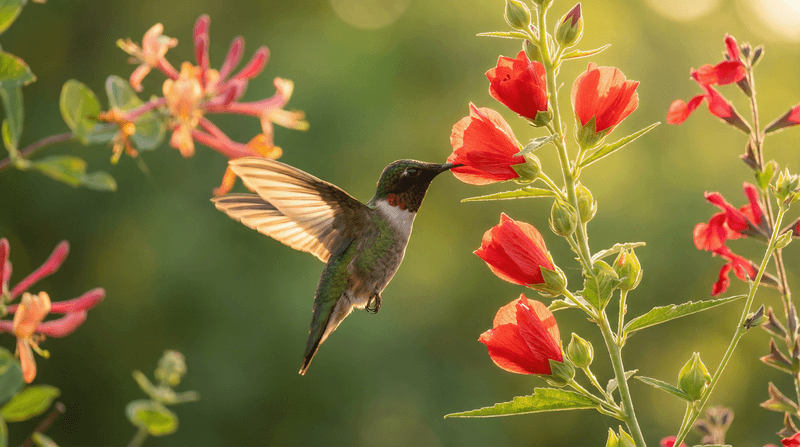
Hummingbirds have some of the highest metabolic rates of any warm-blooded animal, and their energy demands rise sharply before and during migration. Cornell Lab experts explain that hummingbirds build fat reserves in late summer to fuel long migratory flights, which means a reliable nectar source during that window can add genuinely useful energy at exactly the right moment.
A yard that offers consistent blooms in August and September is doing something that most yards simply cannot do.
That said, nectar covers only part of what a hummingbird needs. Sugar-rich flower nectar provides fast fuel for flight and daily activity, but it does not supply the protein, fat, and micronutrients that birds require for muscle maintenance, feather condition, and raising young.
Hummingbirds fill those gaps by hunting small insects and spiders, sometimes catching dozens in a single day. Audubon notes that a hummingbird-friendly yard supports insects as well as flowers, because a yard with blooms but no bugs is only doing half the job.
Late-summer heat can also stress plants across a landscape and reduce the number of flowering species in bloom at any given time. Turk’s cap’s ability to keep producing flowers under those conditions makes it a practical complement to other yard plants that may have slowed or finished.
Framing it as a seasonal bridge rather than a complete solution gives gardeners an accurate picture: the plant can help, it often helps during a critical window, and it works best as part of a yard designed with multiple layers of habitat support.
Match Turk’s cap to the right Texas site
Turk’s cap does not grow everywhere in Texas, and knowing its documented range helps gardeners make a smarter planting decision. The University of Texas places Turk’s cap in the Coastal Prairie, East Texas, North-Central Texas, and South Texas regions, where it naturally grows along open woods, woodland edges, and streambanks.
Gardeners in far-western Texas or the High Plains should verify local adaptation before purchasing, since those areas fall outside the plant’s primary documented range.
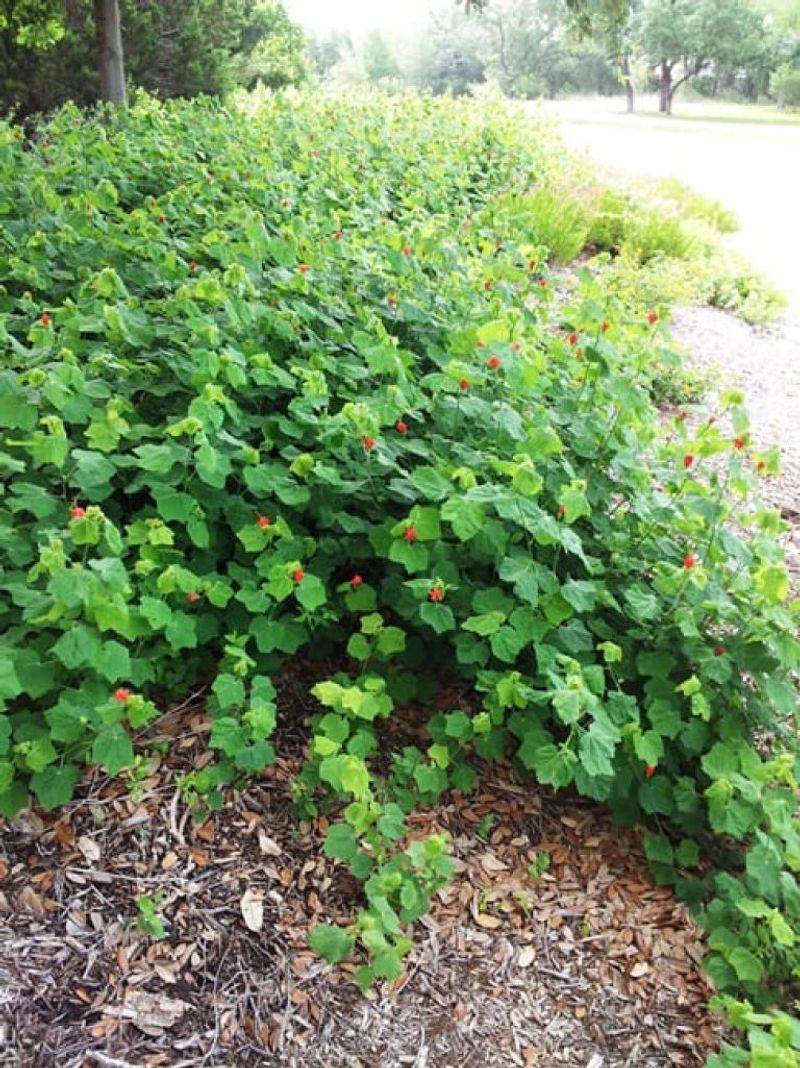
Size varies more than many nursery tags suggest. Cultivated plants often reach roughly 2 to 3 feet tall and 3 to 5 feet wide, while wild plants in favorable Texas conditions can grow 3 to 6 feet tall or taller.
Oklahoma State University’s profile confirms that mature spread can be substantial, so gardeners planning a small bed should leave more room than a young nursery specimen implies. Spacing plants at least 4 to 5 feet apart from the start avoids crowding and sets realistic expectations for the colony that will develop over time.
Light flexibility is one of Turk’s cap’s most useful traits. The plant performs well from part shade to full sun, which makes it a practical answer for yards with a mix of tree canopy and open areas.
Lightly shaded or woodland-edge spots are particularly well suited because the plant’s natural habitat mirrors those conditions. Established plants can handle full sun, though afternoon shade during the most intense Texas heat may reduce foliage stress.
Soil adaptability is equally broad. Austin’s plant guide confirms that Turk’s cap tolerates sand, loam, clay, limestone, and caliche as long as drainage is adequate.
Poorly drained spots where water pools after rain are the clearest sites to avoid. Borders and naturalistic beds are strong design choices; the plant’s spreading habit suits informal plantings better than tightly edged formal beds where containment would require constant attention.
Water it through establishment, then manage its spread
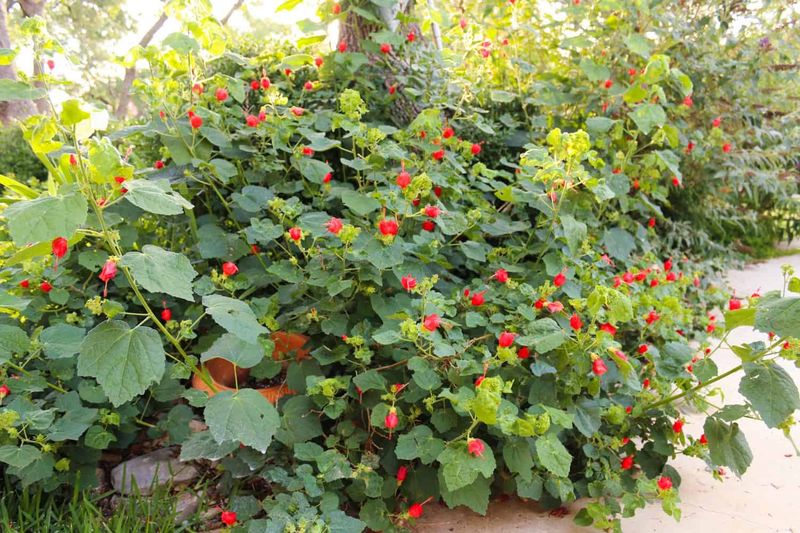
Getting Turk’s cap through its first growing season takes consistent watering. Newly planted specimens need regular moisture while their root systems expand into surrounding soil, and skipping that establishment phase often results in a plant that struggles rather than thrives.
Plan to water every few days during dry stretches in the first season, then gradually reduce frequency as the plant shows healthy new growth and begins to anchor itself in the bed.
Oklahoma State University notes that mature Turk’s cap is drought tolerant, but drought tolerant does not mean drought-proof or maintenance-free. During extreme heat, foliage may wilt noticeably even when the plant is still producing flowers.
That wilting is a stress response rather than a sign of immediate failure, but it does signal that supplemental watering will help the plant maintain both its appearance and its nectar output. The University of Texas confirms that the plant can tolerate dry conditions once established while noting that extreme drought may cause visible stress.
Spreading behavior is the other practical reality to plan for early. Turk’s cap forms colonies by sending out root runners, and a single plant purchased from a nursery can gradually expand into a multi-stemmed patch several feet across.
Austin’s plant guide recommends cutting the plant back when it becomes leggy or spreads beyond its intended space. For gardeners who want a contained planting, checking the bed edges once or twice a year and removing unwanted runners keeps the colony from overtaking neighboring plants.
For those who want a naturalistic patch under a live oak or along a fence line, that same spreading habit becomes an asset rather than a problem.
Pruning and winter dieback vary by location
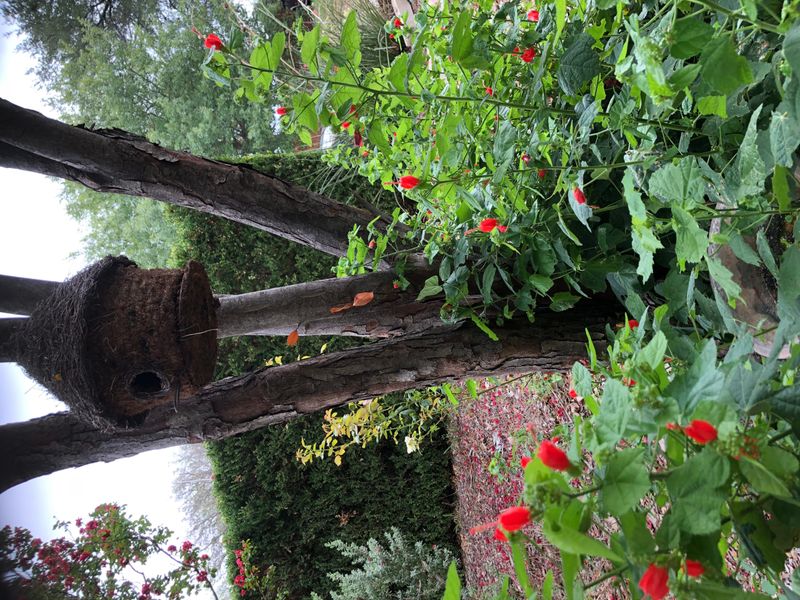
Pruning Turk’s cap is straightforward once you understand what the plant is doing at different times of year. Stems that grow long and floppy, especially in shadier spots, can be cut back to a more compact height without harming the plant.
Austin’s plant guide recommends cutting it back after freezes or when stems become leggy, and that guidance applies whether you are tidying up a bed in fall or removing freeze-damaged growth in late winter. Pruning controls shape and helps redirect the plant’s energy into new, productive stems.
Winter behavior depends heavily on where in Texas the plant is growing. In colder inland areas, hard freezes can kill the top growth entirely, leaving the plant looking dead down to the soil line.
Native American Seed confirms that Turk’s cap typically returns from its roots after a freeze, pushing up fresh growth once soil temperatures warm in spring. Gardeners in those areas should resist pulling the plant out after a cold winter and instead wait for new shoots to emerge before making any decisions about removal.
Along the Texas coast, where hard freezes are less frequent and less severe, Turk’s cap may stay evergreen through winter and continue producing occasional flowers during mild stretches. That difference in winter behavior is worth knowing before planting, because a gardener in Houston and one in Dallas will have different experiences with the same plant.
Pruning does not set a specific bloom date or guarantee flowering intensity the following season; it simply keeps the plant healthy, shapely, and positioned to respond well to the next growing season’s conditions.
Build a hummingbird habitat around the plant
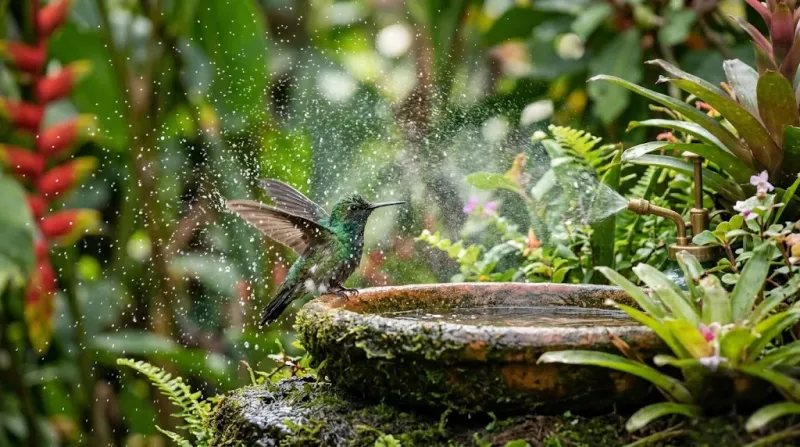
Turk’s cap earns its place in a hummingbird-friendly yard, but a single plant cannot carry that habitat by itself. Oklahoma State University recommends a diverse supply of flowers from late spring through fall, with plants chosen for different bloom periods so nectar is available across the whole season rather than concentrated in one short window.
Pairing Turk’s cap with earlier-blooming natives fills the gaps before its late-summer peak, and adding fall-blooming species extends the habitat value into October and beyond.
Flowers are only one layer of what hummingbirds need. Audubon’s hummingbird yard guidance makes clear that insects and spiders are essential protein sources, particularly when adults are feeding young.
Reducing or eliminating pesticide use across the yard protects those invertebrate populations and keeps the food web intact. Perches, such as thin exposed branches or wire, give hummingbirds resting spots between feeding bouts.
A shallow water source, moved gently with a dripper or mister, adds another feature that makes a yard worth returning to.
Feeders are an optional but useful supplement, especially during migration when natural nectar can be scarce. The documented formula is simple: one part white granulated sugar dissolved in four parts water, with no honey, artificial sweeteners, or red dye added.
In Texas summer heat, that solution can spoil quickly. Clean feeders every two to three days at minimum, or daily during the hottest stretches, and discard any nectar that looks cloudy or smells off.
One concern that sometimes stops gardeners from leaving feeders up in fall is the idea that feeders might delay migration. Cornell Lab of Ornithology explains that feeders do not prevent hummingbirds from migrating, because birds respond to day length and other environmental cues that no feeder can override.
Keeping feeders clean and stocked through the fall migration window supports birds without interfering with their natural schedule.
Verify the regional fit before planting
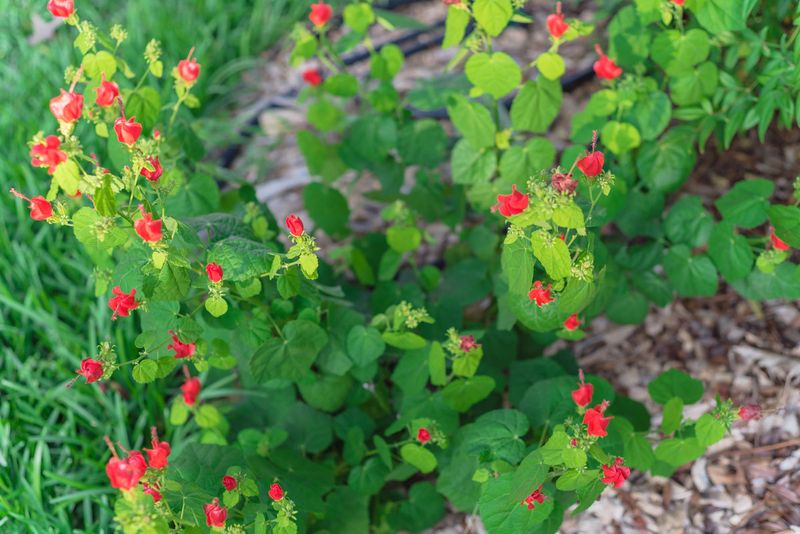
Turk’s cap is a strong choice for gardeners in its documented Texas range, and that range is more specific than “all of Texas.” The University of Texas places the plant in Coastal Prairie, East Texas, North-Central Texas, and South Texas, with natural associations in open woods, woodland edges, and streambanks. Gardeners in those regions have the strongest evidence base for planting it and can expect the best results when site conditions align with the plant’s documented preferences.
Outside those regions, the picture gets less clear. Turk’s cap is not equally appropriate across every Southern state, and treating it as a universal answer can lead to disappointing results.
The University of Florida’s hummingbird plant guide emphasizes choosing species adapted to a specific Florida region and lists alternatives such as cardinal flower, firebush, red star hibiscus, and butterfly milkweed as regionally appropriate options. Florida gardeners should work from Florida-specific guidance rather than assuming a Texas-native plant will perform equally well across state lines.
Cultivar selection adds another layer of variability. Oklahoma State University notes that white, pink, and variegated forms of Turk’s cap are available, but the evidence gathered here does not confirm that every cultivar delivers the same nectar value as the straight red species.
Hummingbirds are strongly attracted to red tubular flowers, so gardeners focused on wildlife value should prioritize the red-flowering form and verify cultivar performance with a local nursery or extension office before purchasing. Regional fit, site conditions, and cultivar choice all shape whether this plant delivers on its seasonal promise.
Use Turk’s cap as a seasonal habitat upgrade
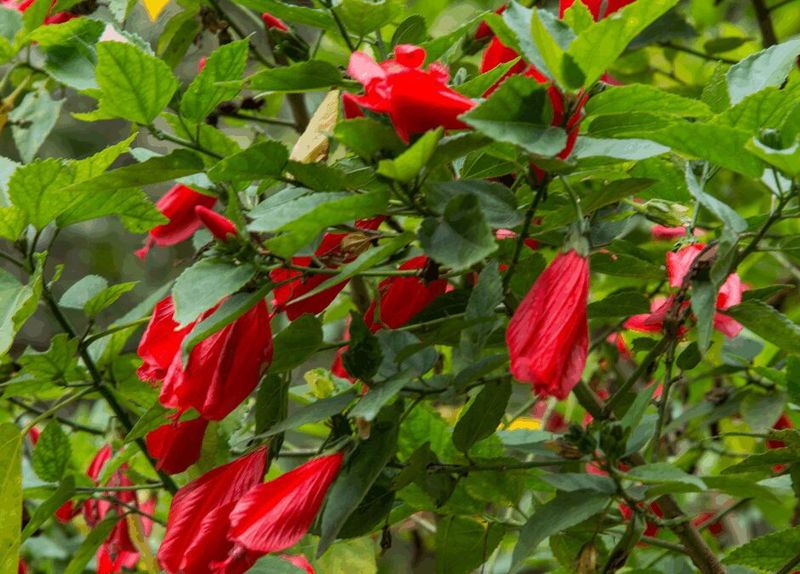
Turk’s cap earns a spot in a Texas yard when the gardener has a site in the Coastal Prairie, East Texas, North-Central Texas, or South Texas region and wants a red-flowering native that can keep producing blooms from late summer into early fall. Part shade to full sun, reasonably drained soil, and a willingness to manage the plant’s spreading habit are the practical requirements.
Oklahoma State University’s plant profile confirms it performs well in those conditions and offers real nectar value during a period when other plants often fall quiet.
Establishment care, bloom variability, and the surrounding habitat all determine how much work the plant actually does for local hummingbirds. A mature, well-sited specimen in a yard that also includes diverse flowering plants, reduced pesticide use, water, and insect habitat will contribute far more than a struggling plant in a bare bed.
Audubon’s hummingbird yard guidance frames this clearly: no single plant feeds every bird, but the right plant in the right place strengthens the whole system. Turk’s cap is not a guarantee, but in the right Texas yard, it is a well-supported seasonal upgrade that keeps working when the summer heat gives most other plants a reason to quit.