
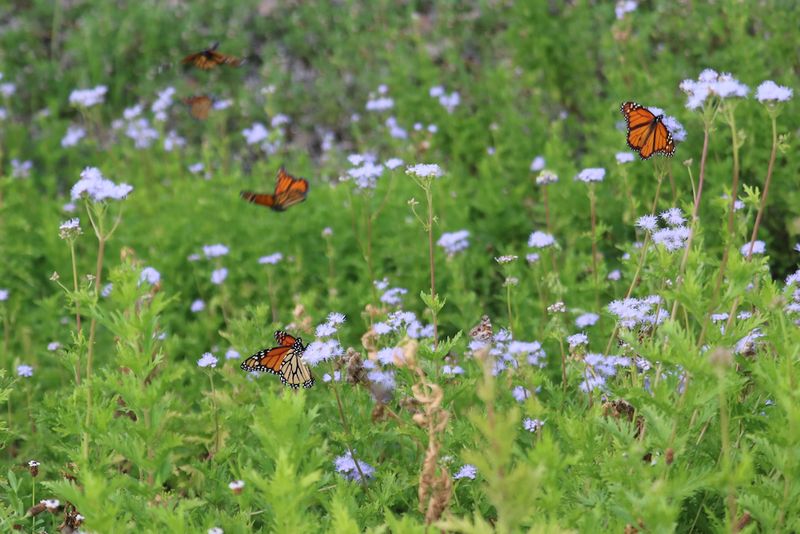
Every fall, millions of monarch butterflies funnel through Texas on their way to wintering grounds in central Mexico, and the flowers blooming in your yard can make a real difference to tired, hungry travelers. Gregg’s mistflower, a compact native perennial with clusters of blue-purple blooms, is one of the best late-season nectar sources you can offer adult monarchs passing through your region.
Knowing when to expect them, how to grow the plant, and what else to pair it with gives you a practical, realistic way to support one of North America’s most celebrated migrations.
Gregg’s Mistflower Can Support Monarchs Passing Through Texas
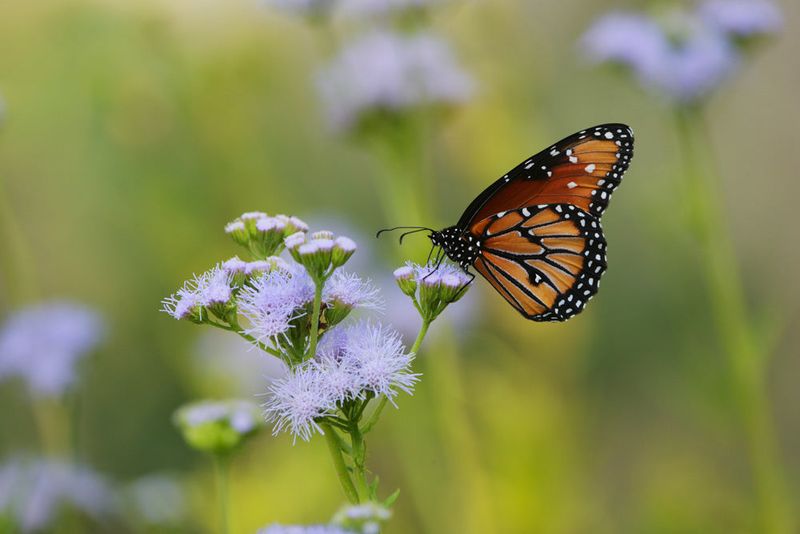
Gregg’s mistflower earns its place in a fall migration garden not because it lures monarchs from afar, but because it offers something adult butterflies genuinely need: late-season nectar at exactly the time they are moving through Texas. Monarchs traveling south burn through energy reserves quickly, and a reliable nectar source along the route can help them complete the journey.
Monarch Joint Venture notes that insufficient nectar along the migration route can leave migrants undernourished or cause starvation, which makes fall-blooming plants more than a nice addition to the yard.
The timing of that migration varies considerably depending on where you live in Texas. North and Central Texas can begin seeing the principal southbound passage in the last days of September, while Central Texas often experiences stronger activity around early October.
The Texas coast generally runs later, with the main flight window falling roughly from the third week of October into mid-November. Texas Parks and Wildlife describes the broader Texas passage as typically occurring from the end of September into late October, though cold fronts, wind patterns, drought, and year-to-year variation in migration density can all shift that window.
What Gregg’s mistflower provides is a concentrated patch of accessible nectar during a period when many summer flowers have faded and few other plants are reliably blooming. Texas A&M AgriLife specifically lists Gregg’s mistflower among native Texas perennials that supply fall nectar for migrating monarchs, alongside frostweed, fall aster, Maximilian sunflower, blazing star, and goldenrod.
That context matters: the plant is a valuable piece of a larger habitat puzzle, and monarchs already moving through the region may stop to feed on it when it is blooming and locally suited to your conditions.
Identify the Plant and Find the Right Name
Shopping for this plant can be confusing because authoritative references use two different scientific names. Many Texas nurseries and horticulture guides list it as Conoclinium greggiiConoclinium dissectumC. greggii, while other current botanical references treat it as , with listed as a former name or synonym.
The Native Plant Society of Texas uses Conoclinium greggii, and the NC Extension Gardener Plant Toolbox also cross-references both names. Searching for either name, or simply asking for Gregg’s mistflower by its common name, should help you locate the right plant at a reputable native plant nursery.
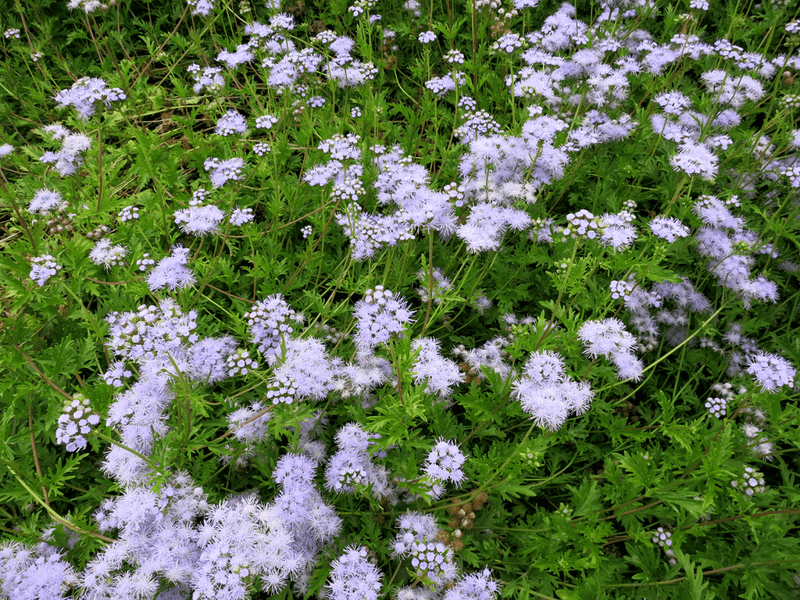
Visually, the plant is easy to recognize once you know what to look for. It produces dense, flat-topped clusters of small blue to blue-purple flowers that have a soft, fuzzy texture.
The leaves are deeply lobed or cut, which distinguishes it from the more common blue mistflower (Conoclinium coelestinum) found in wetter garden settings. Austin’s plant guide describes the plant as reaching about 1 to 2 feet tall with a spread of 2 feet or more, making it a compact but spreading perennial suited to borders and pollinator beds.
Gregg’s mistflower is native to Texas, Arizona, New Mexico, and northern Mexico, but being a Texas native does not automatically make it the right fit for every corner of the state. Soil type, drainage, humidity, winter temperatures, and the provenance of the nursery stock all affect how well the plant establishes and blooms.
Gardeners in East Texas, where soils are heavier and humidity is higher, may find it less reliable than those in Central or West Texas, where the plant’s native range better matches local conditions. Always ask the nursery where their stock originated and whether it has been grown for your specific region.
Separate Nectar Support From Milkweed’s Host-Plant Role
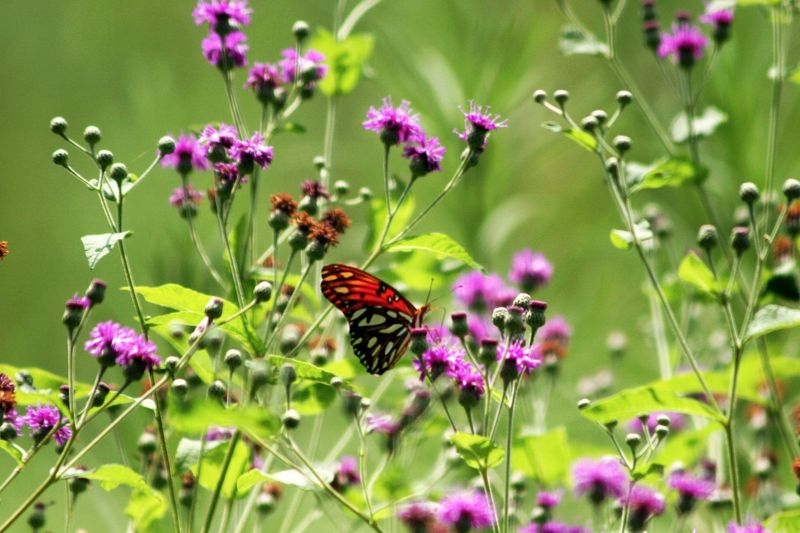
Adult monarchs are generalist nectar feeders. During migration, they visit a wide range of flowering plants to refuel, and no single species serves as their exclusive food source.
What matters most is having blooms available when the butterflies are moving through your area, and Gregg’s mistflower fits that window well in parts of Central and North Texas. Monarch Joint Venture explains that monarchs rely on nectar to fuel their long flight and build fat reserves that sustain them through the winter at their Mexican overwintering sites.
Milkweed plays an entirely different role in the monarch life cycle. Female monarchs lay their eggs exclusively on milkweed plants, and the caterpillars that hatch feed only on milkweed foliage.
Without milkweed, monarchs cannot reproduce. Texas A&M AgriLife identifies native milkweed primarily as a spring host plant in Texas, while late-season flowers like Gregg’s mistflower serve the southbound migration by providing nectar for adult butterflies already on the wing.
Planting Gregg’s mistflower improves one critical piece of monarch habitat, but it does not replace milkweed. A garden that offers only nectar plants can support passing adults, yet it cannot sustain monarch reproduction.
Texas Parks and Wildlife’s pollinator management guide and Texas A&M AgriLife Extension’s butterfly plant list for Austin both treat milkweed and diverse nectar plants as complementary components of complete monarch habitat, not interchangeable options. Growing both gives your yard a more complete role in the monarch’s annual cycle.
Match Gregg’s Mistflower to the Garden Site
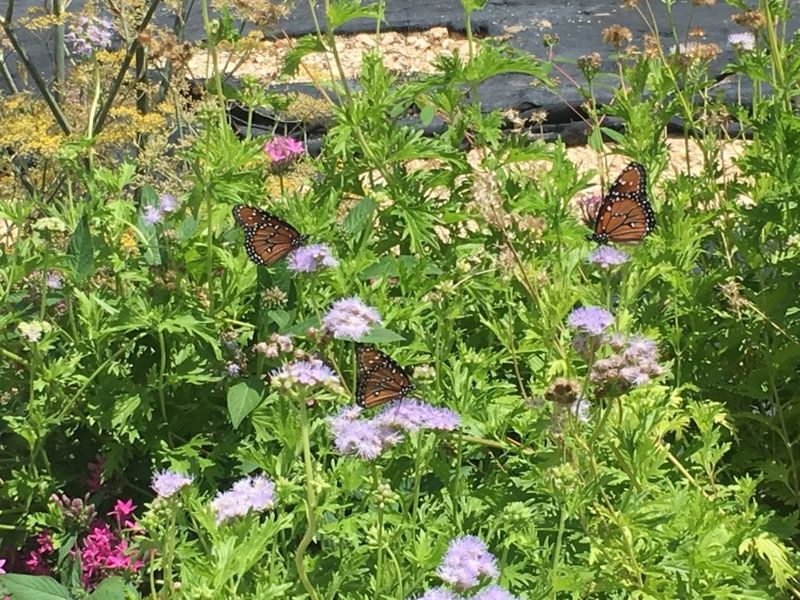
Before buying a flat of Gregg’s mistflower, take stock of your site conditions. Austin’s watershed protection plant guide gives it sun to part shade and medium water needs, placing it in a practical middle ground that suits many Texas garden spots without requiring irrigation beyond establishment.
The plant reaches roughly 1 to 2 feet tall and spreads to 2 feet or more, so it fills in nicely along a border edge, anchors a pollinator bed, or works as an informal mass planting where you want late-season color and wildlife value at once.
That spreading habit is actually an asset in a migration garden. A larger patch of blooms is more visible to passing monarchs and other pollinators than a single small plant tucked into a tight corner.
The City of Austin’s fall nectar plant guide lists the bloom period as June through November, which means a well-established plant can be flowering well before the first monarchs arrive and continue into the later coastal migration window.
Austin’s specifications are a useful starting point, not a statewide prescription. Gardeners in the Hill Country, South Texas, or the Trans-Pecos may find the plant thrives with even less supplemental water, while those in the Piney Woods of East Texas should verify that their soil drainage and humidity levels match the plant’s native habitat before committing to a large planting.
When in doubt, try a few established plants in a test spot before scaling up, and observe how they respond to your soil and summer heat before the migration window arrives.
Plan Establishment Around Heat and Bloom Timing
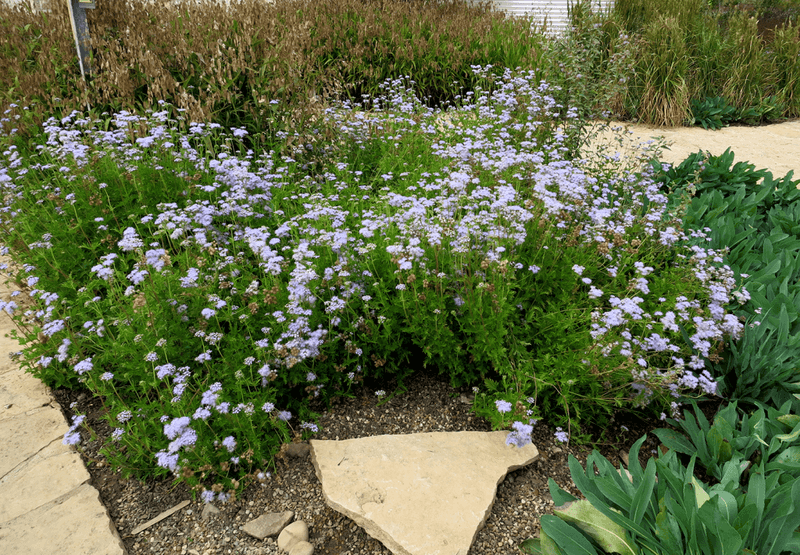
Getting Gregg’s mistflower into the ground at the right time is what determines whether it blooms when monarchs actually need it. Texas A&M AgriLife recommends establishing fall-blooming perennials before the stressful heat of summer so the root system has time to anchor and the plant can bloom on schedule in autumn.
For most of Central and North Texas, that means getting transplants in the ground in early spring, giving them several months to settle before triple-digit temperatures arrive.
Seed is a different story. Texas A&M’s guidance specifically notes that gardeners targeting fall migration timing with seed should sow in mid-to-late summer, which allows seedlings to develop and flower during the fall window.
Even then, seed germination is less predictable than transplanting established plants, and first-year seedlings may produce limited blooms. Local rainfall, soil temperature, and the specific conditions of your site all influence how quickly a seed-started plant reaches flowering size.
The practical takeaway for most home gardeners is to start with nursery-grown transplants rather than seed if the goal is reliable fall blooms this season. The City of Austin fall nectar guide and Austin’s plant profile for Gregg’s mistflower both confirm the June-through-November bloom window, but that assumes a plant that is already established and growing vigorously.
A transplant set out in August during a drought year may struggle to bloom at all, so water young plants consistently through their first season and adjust your expectations based on actual growing conditions rather than a calendar alone.
Build a Diverse Migration Garden Around It
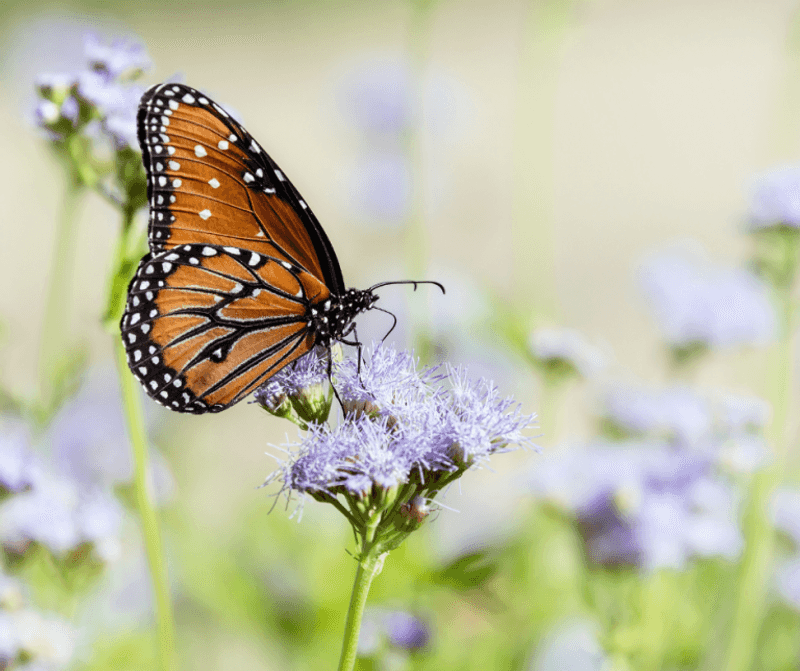
Gregg’s mistflower is a strong late-season choice, but monarchs traveling hundreds of miles need more than one flower to fuel the journey. Texas A&M AgriLife emphasizes a diversity of nectar plants rather than any single species, specifically because monarchs encounter changing floral resources across a large migration corridor and benefit from a succession of blooms that extends the available feeding window.
Pairing Gregg’s mistflower with complementary species means your garden stays productive even if one plant peaks early or fades in an unusually warm or dry fall.
Several Texas-recommended late-season options pair well with it. Frostweed (Verbesina virginica) blooms into late fall and is particularly valued for its cold tolerance.
Fall aster (Symphyotrichum oblongifoliumHelianthus maximiliani) produces masses of small purple flowers that attract multiple pollinator species. Maximilian sunflower () offers tall, bold yellow blooms that extend the nectar menu for larger butterflies.
Blazing star (LiatrisSolidagoAnisacanthus quadrifidus var. wrightii species), goldenrod ( species), and flame acanthus () round out a Texas-adapted fall palette that supports monarchs and a wide range of other beneficial insects. Texas Parks and Wildlife’s pollinator management guide supports this mixed-planting approach as more evidence-based than relying on a single species.
Native milkweed belongs in the mix too, though its timing role is different. In Texas, native milkweed species such as antelope horns (Asclepias asperulaAsclepias viridis) and green milkweed () serve primarily as spring host plants for egg-laying and caterpillar development.
Texas A&M AgriLife Extension’s Austin butterfly plant list treats milkweed and fall nectar plants as separate but equally important habitat layers. A garden that includes both gives monarchs a reason to visit in spring and again in fall, while supporting the full life cycle rather than just one stage of it.
Protect Monarch Habitat From Pesticide Risks
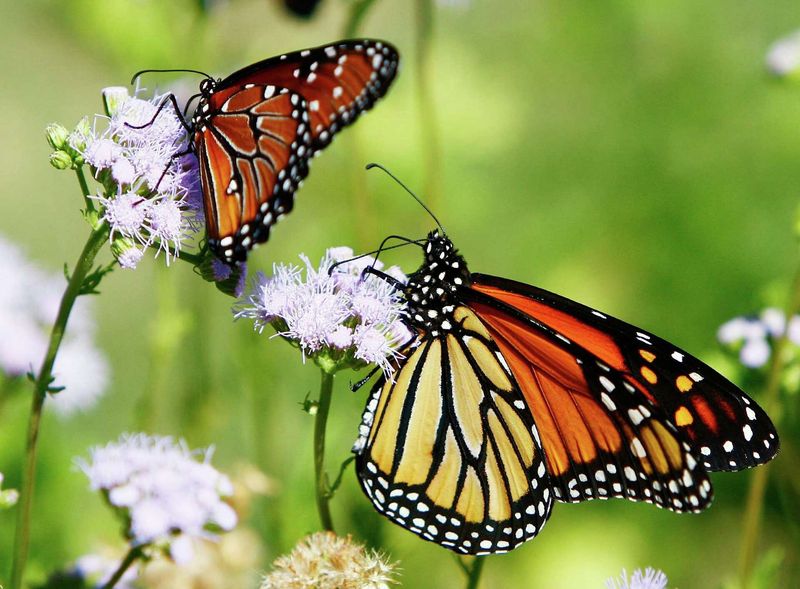
A garden full of the right plants can still harm monarchs if pesticides are applied carelessly. Insecticides, including systemic products, can kill adult butterflies feeding on treated flowers, harm caterpillars on host plants, and reduce populations of the insects monarchs depend on for a healthy ecosystem.
The Xerces Society recommends avoiding pesticide applications directly on flowering plants or within monarch habitat, favoring nonchemical controls wherever practical, and reserving targeted treatments for genuine pest problems rather than cosmetic concerns.
The risk starts before a plant even reaches your yard. A Xerces Society study found pesticide residues in all sampled retail milkweed plants from garden centers, a finding specific to the milkweed plants tested in that research rather than a blanket finding about every nursery plant.
The practical lesson is to ask your nursery directly whether their stock has been treated with systemic insecticides, and not to assume that a “pollinator-friendly” label on the tag guarantees a pesticide-free plant. Sourcing from reputable native plant nurseries that grow for local conditions and avoid systemic treatments is the safest approach.
Tropical milkweed (Asclepias curassavica) deserves a specific caution. In warm Southern gardens where it does not die back in winter, tropical milkweed can remain green and leafy through the fall migration period, which may encourage monarchs to stop and breed out of season rather than continuing south.
Xerces Society advises cutting existing tropical milkweed back to the ground in early fall if it is already growing in a warm-region garden, and Monarch Joint Venture recommends transitioning to locally native milkweed species as the more conservation-sound long-term choice. Native milkweed naturally dies back in fall, which aligns with the monarchs’ seasonal cues to keep moving south rather than settling in for an ill-timed breeding cycle.
Set a Realistic Expectation for Butterfly Visits
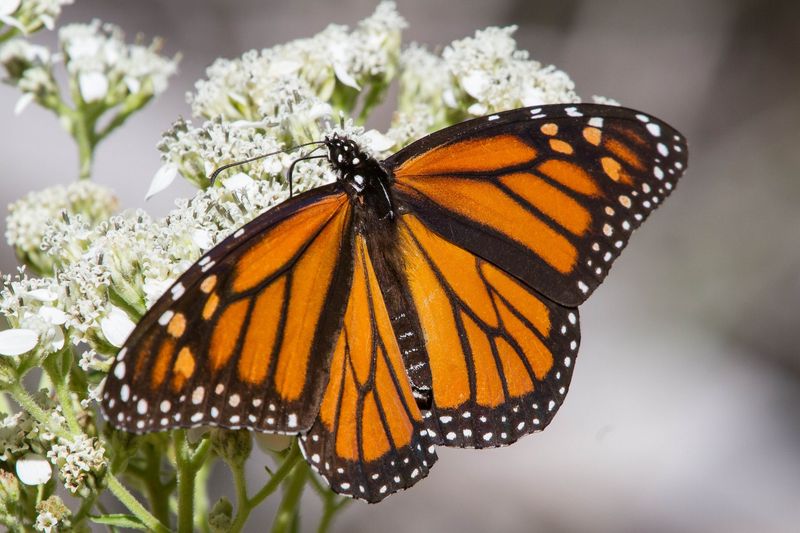
Gregg’s mistflower is a genuinely useful late-season nectar plant for monarchs passing through Texas, particularly in Central and North Texas where the plant is locally adapted and the migration window aligns with its fall bloom. Combine it with diverse nectar plants like frostweed, fall aster, and Maximilian sunflower, add appropriate native milkweed for spring host-plant support, and manage the whole garden without systemic pesticides, and you have created real habitat value.
Texas A&M AgriLife frames this kind of planting as creating a migratory oasis, a place that supports monarchs already moving through rather than guaranteeing their arrival.
What the garden cannot control is the migration itself. Texas Parks and Wildlife notes that weather, cold fronts, wind direction, drought, and year-to-year variation in migration density all shape which corridors monarchs travel and how many pass through any given area.
A yard planted with excellent nectar sources may see dozens of monarchs in a strong migration year and only a handful in a lean one. Plant size also matters: a small, newly established plant offers far less foraging area than a mature, well-rooted patch in full bloom.
Monarch Joint Venture’s migration resources reinforce that the best thing a gardener can do is reduce barriers along the route, and that is exactly what a well-planned fall nectar garden accomplishes. The monarchs decide where to stop; your job is simply to make sure something worth stopping for is blooming when they arrive.