
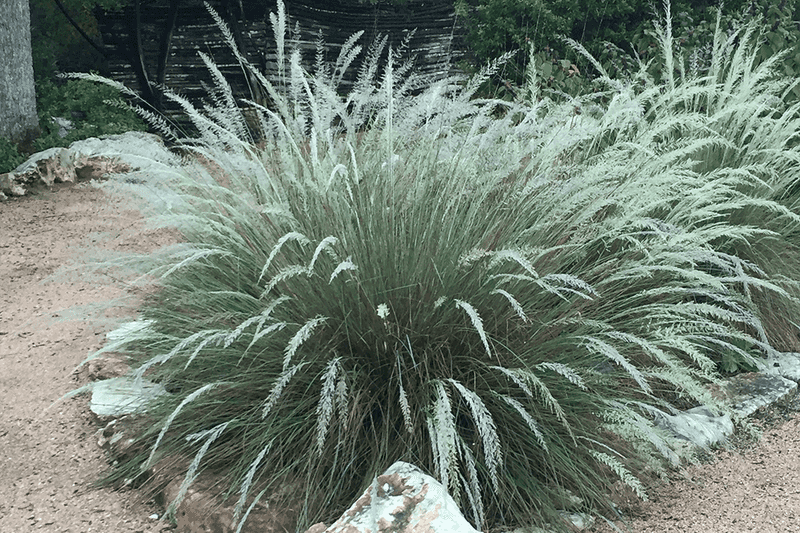
Tall, feathery grass along a fence line can make a yard look soft and full of motion. Pampas grass is a common pick for that look, but some gardeners want a native choice instead.
Lindheimer’s muhly is a Texas native grass that puts up silvery blooms in fall. Here is what it offers, where it falls short of pampas, and why no single grass can make a yard fire-safe.
Lindheimer’s Muhly Is a Texas Option
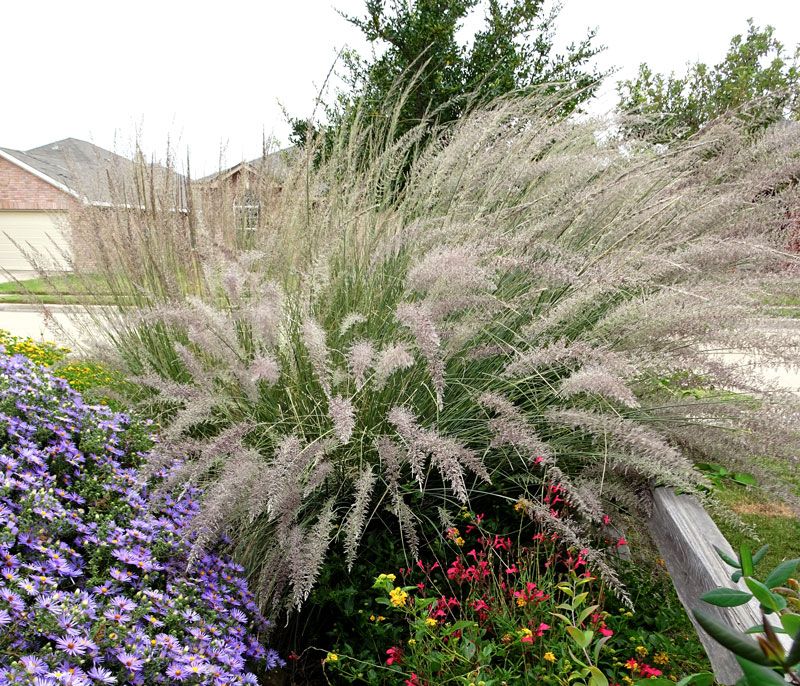
Gardeners in Texas who want feathery plumes along a fence can consider Lindheimer’s muhly (Muhlenbergia lindheimeri), also called big muhly. It is a perennial, warm-season bunchgrass.
Kew’s Plants of the World Online places its native range in Central and Southwest Texas and on into northeastern Mexico.
The plant grows as a clump rather than a sprawling mat. In fall, it sends up silvery, featherlike blooms that catch low afternoon light.
Texas SmartScape describes this clumping form and the plumes, and a USDA plant fact sheet lists it at roughly 3 to 6 feet tall.
Think of it as an ornamental option, not a cure-all. It is native to parts of Texas, so it is not a one-size swap for every Southern yard.
It also does not remove fire risk, a point covered in detail later in this article.
No source reviewed shows that homeowners are rushing to plant it, so treat it as a grass worth considering rather than a trend. If you like the soft, plume-topped look of pampas but want a plant tied to the Texas landscape, this is a sensible place to start your research.
A visit to a local native plant nursery can show you how big the clumps get in your area.
A Related Plume Effect, Not a Pampas Match
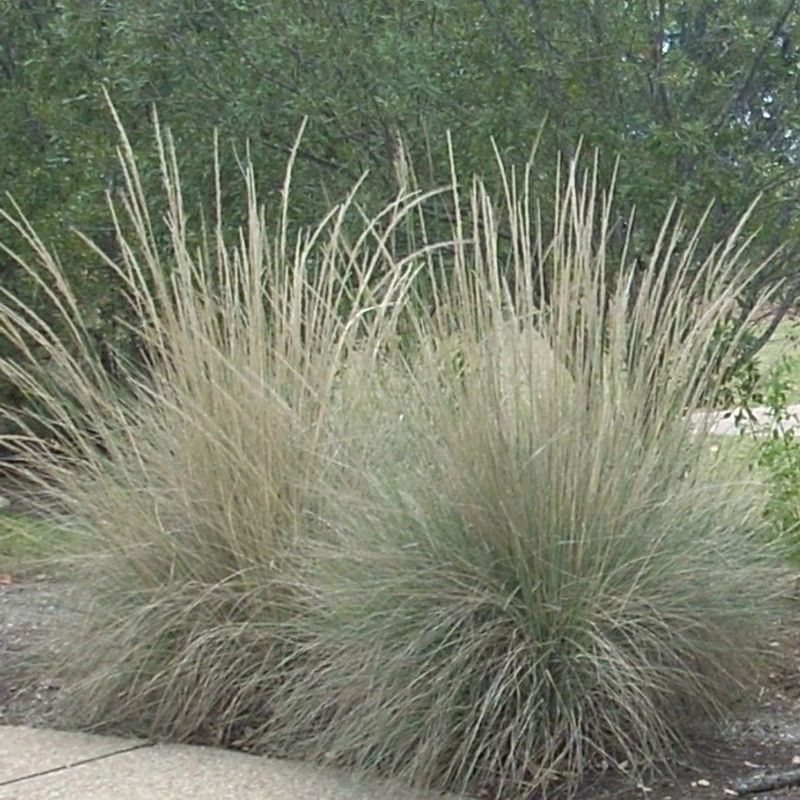
Picture a fall border where thin stems carry hazy, silvery blooms above a fountain of narrow leaves. That is the picture Texas references paint of Lindheimer’s muhly.
Austin’s plant guide describes the blooms as featherlike and calls the grass a smaller native alternative to pampas grass.
That wording comes from Austin’s guide, so treat it as one city’s description, not a rule for every plant. Size can vary a lot.
Texas SmartScape lists a mature range of 2 to 6 feet for both height and spread. A plant at the top of that range could stand quite tall, so do not assume yours will stay small.
The effect is related to pampas, not identical. Plume size, color, and the overall silhouette of the clump can differ.
Pampas is known for big, bold plumes, and Lindheimer’s muhly may look lighter and airier by comparison.
If you are shopping for a fence line, look at mature plants in person when you can. Notice how wide the clump spreads at the base and how the blooms sit above the leaves.
That will tell you more than any comparison to pampas will.
Clumping Does Not Guarantee No Spread
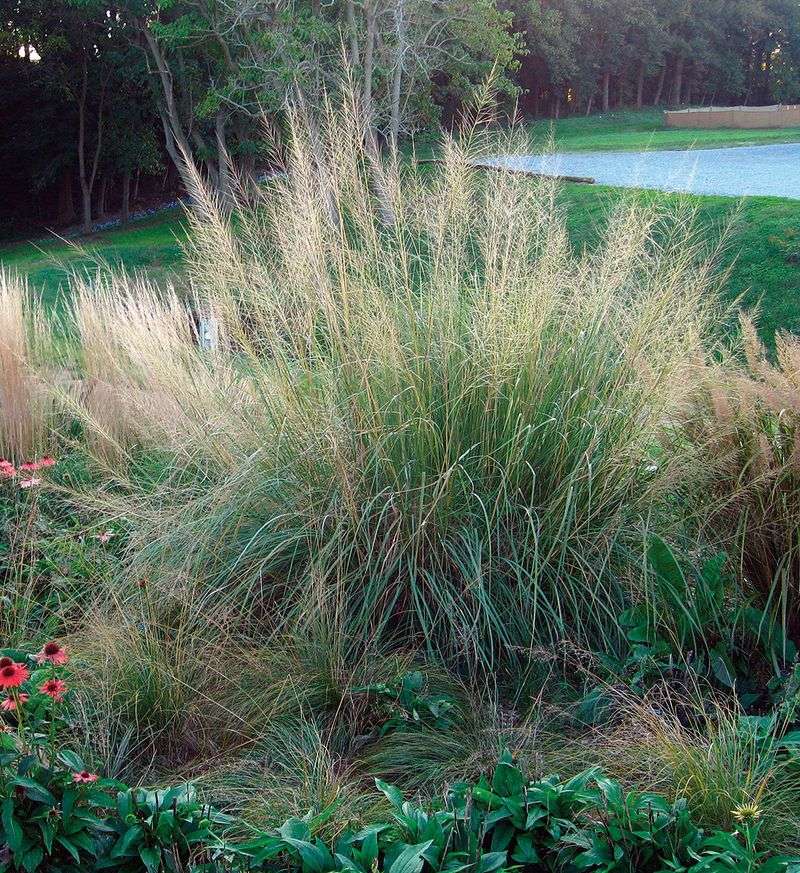
A clumping habit describes how a grass grows. It is a useful clue, but it is not proof that a plant will never expand or self-seed.
Texas SmartScape supports calling Lindheimer’s muhly a clumping bunchgrass, and that is as far as the claim should go.
A practical habit helps here. Each year, look around the base of your clump and along the fence for new seedlings or a wider footprint.
Pull up any you do not want while they are small.
Why would a gardener look for a pampas alternative at all? One reason is that USDA APHIS describes pampas grass (Cortaderia selloana), a South American native, as invasive in some U.S. areas.
That does not mean it is invasive everywhere in Texas, or that every planting spreads.
Ecological concerns are also separate from legal status. Texas has its own process for listing plants, which you can read about through the Texas Department of Agriculture.
Before you buy any ornamental grass, check current local and state information instead of relying on a blanket rule.
Where It Fits in a Texas Yard
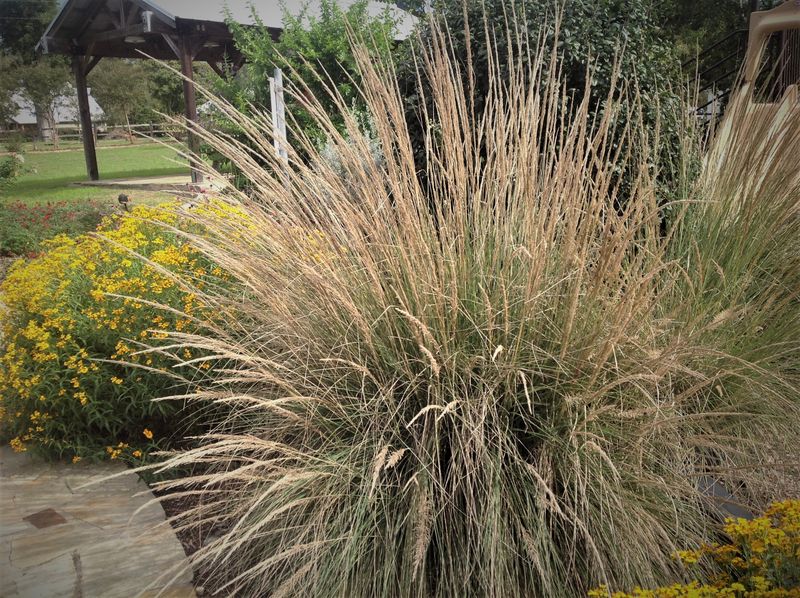
Sunny fence lines are the obvious home for this grass. Texas SmartScape lists Lindheimer’s muhly for full sun to partial shade and gives it a medium water demand.
That means it is not a plant to ignore completely once summer heat arrives.
Notice what the listing does not say. It makes no promise about drought survival, and there is no exact spacing rule in the sources reviewed.
Because mature size is listed as 2 to 6 feet, leave yourself room to adjust rather than packing plants tightly.
Wildlife is a bonus. Austin’s plant guide notes its value to wildlife, so a clump can add life to a border as well as plumes.
Upkeep is simple in concept. Austin’s guide suggests raking or cutting the grass back in winter.
That clears out old, dry growth and sets up fresh leaves for the next season.
That winter cleanup also ties into fire care, since dead material is something to remove around a home. Skip any planting calendar you see that is not tied to a local source.
Ask your county extension office or a native plant nursery about timing for your part of Texas.
A Grass Choice Cannot Make a Yard Fire-Safe
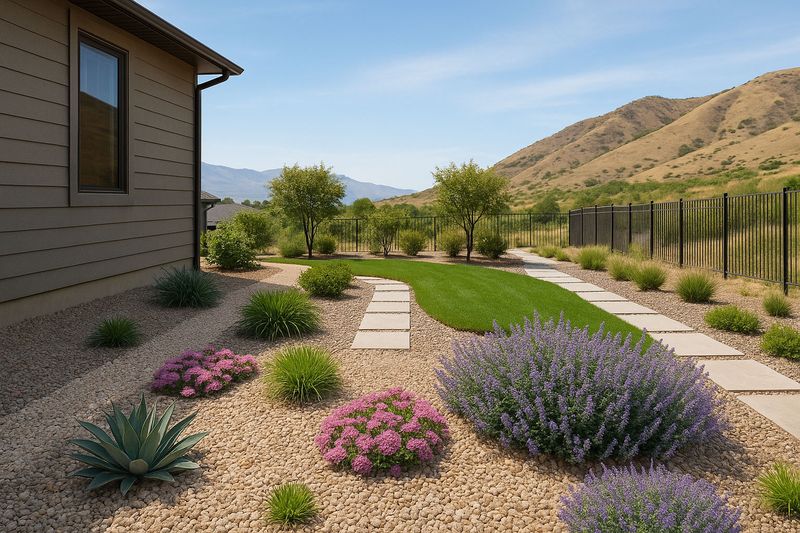
Some headlines suggest the right grass can take fire risk off the table. It cannot.
UF/IFAS guidance on landscaping with fire in mind says bunchgrasses can ignite and burn intensely.
That includes native ones. Lindheimer’s muhly is a bunchgrass, so it is not fireproof or fire-safe.
No source reviewed compares how readily it burns against pampas, so do not assume it burns less.
The better question is how the whole site is set up. The same guidance points to a few habits.
Separate fuel sources from each other, avoid continuous dense plantings, and remove dead vegetation.
For a fence line, that could mean breaking a long run of grass into groups with gaps between them. It could also mean clearing dry leaves and old stalks from the base of each clump.
Keep tall grasses and other fuel from lining up in one unbroken strip toward the house.
Even a well-planned landscape cannot eliminate fire spread through vegetation. Plant choice is one small piece.
If you live in an area with wildfire concerns, ask your local fire department or extension office about guidance for your property.
Florida Gardeners Need a Different Native Muhly
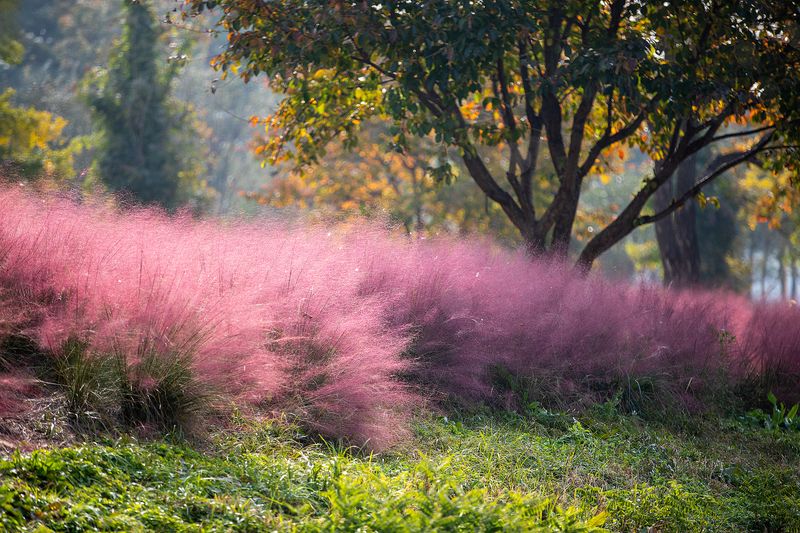
Gardeners in Florida should not copy a Texas recommendation. Lindheimer’s muhly is native to parts of Texas, and Kew’s range information does not place it in Florida.
The Florida-native muhly is pink or purple muhly (Muhlenbergia capillaris). UF/IFAS Gardening Solutions identifies it as Florida-native, with fall plumes and a clumping habit.
It is a different species with its own look, so do not assume the two grasses are interchangeable. For species details, UF/IFAS also keeps a fact sheet on Muhlenbergia capillaris.
Fire rules do not change across the border either. The warning about bunchgrasses burning applies in Florida too, so the same attention to spacing and dead material applies there.
The takeaway for Southern readers is to match the plant to where you live. In Texas, Lindheimer’s muhly is the one to research.
In Florida, start with pink muhly and a local source.
Choose for the Look and Manage the Whole Border
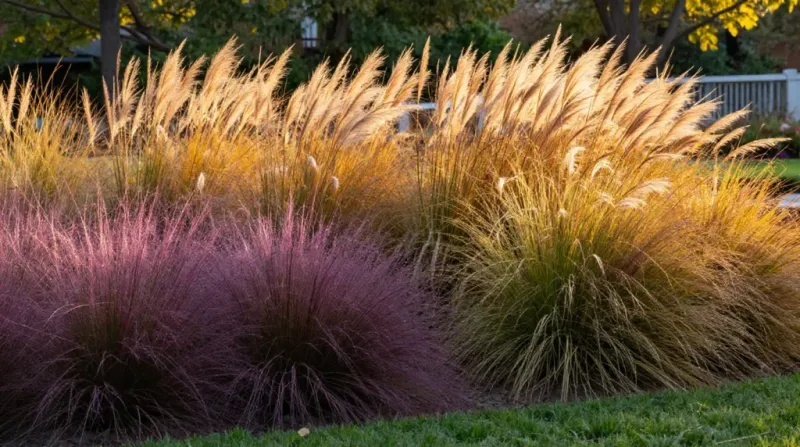
If you want feathery fall plumes along a Texas fence, Lindheimer’s muhly is worth a look. Austin’s guide calls it a smaller native alternative to pampas, but it is not an exact match.
Check Texas SmartScape for its wide size range.
It also does not remove spread or fire concerns. Follow UF/IFAS fire guidance by thinning dense runs and clearing dead growth.
Pick the grass for its looks, then manage the whole border.