
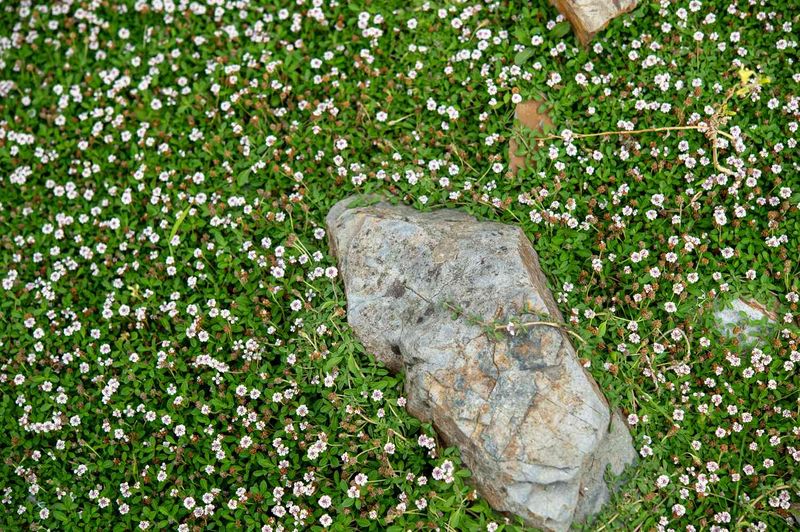
Most Texas yards have at least one sunny patch where grass struggles and weeds keep winning. Texas frogfruit, known scientifically as Phyla nodiflora, is a low-growing native perennial that can carpet that kind of spot with small flowers and creeping stems while feeding bees and butterflies through much of the warm season.
Once it is established, it gets by on far less water than conventional turf, though it does need consistent irrigation while it roots in. This guide explains what frogfruit can realistically do for your yard, where it fits best, and how to manage it so it earns its place.
Texas Frogfruit Offers a Realistic Low-Water Groundcover Option
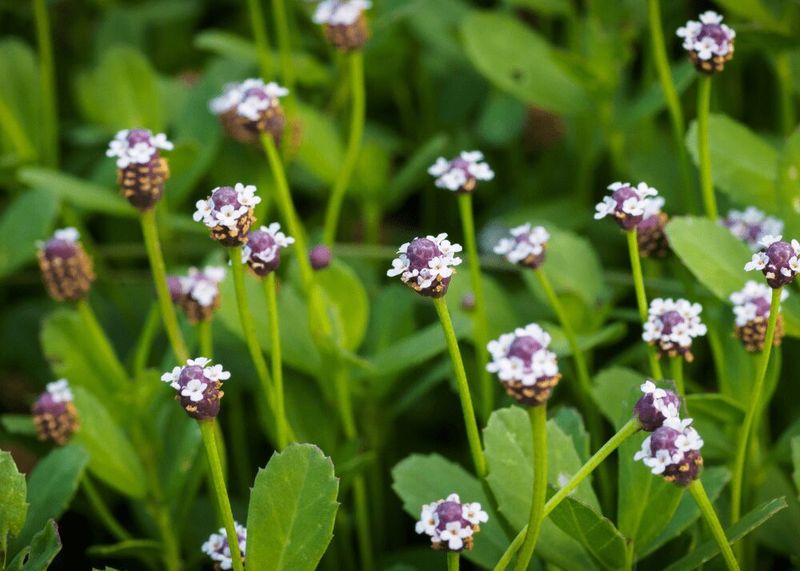
Phyla nodiflora goes by several common names, including frogfruit, fogfruit, and turkey-tangle fogfruit, and that variety of names is exactly why the scientific name matters. If you walk into a nursery asking for “frogfruit” or search online for “lippia,” you may encounter different plants or regional ecotypes that behave differently in your yard.
Using the name Phyla nodiflora when you shop or ask questions helps confirm you are getting the right species, though you should still ask whether the stock was sourced from Texas or a nearby region if local provenance matters to you.
As a plant, Phyla nodiflora is a prostrate or sprawling perennial in the verbena family. USDA NRCS plant-materials documentation describes it as a low-growing species that spreads by stolons, rooting at nodes as those stems travel across the soil.
In sunny, dry conditions it typically stays around 3 to 8 inches tall, though it can grow a bit taller when it receives more water or some shade. The overall effect in a well-established patch is a dense, soft mat that hugs the ground and produces clusters of small flowers through much of the warm season.
The corrected promise here is worth stating plainly. The Native Plant Society of Texas confirms that frogfruit tolerates drought and a range of site conditions once it is established, but new plantings require consistent watering until roots are well developed.
After that establishment period, the plant generally needs little supplemental irrigation under normal Texas conditions. Severe drought, however, can still reduce flowering, slow the patch’s spread, or push the plant into temporary dormancy.
Low water, not zero water, is the accurate promise, and UF/IFAS Gardening Solutions makes the same distinction for gardeners across the Gulf South region.
Its Flowers and Foliage Support Specific Pollinators
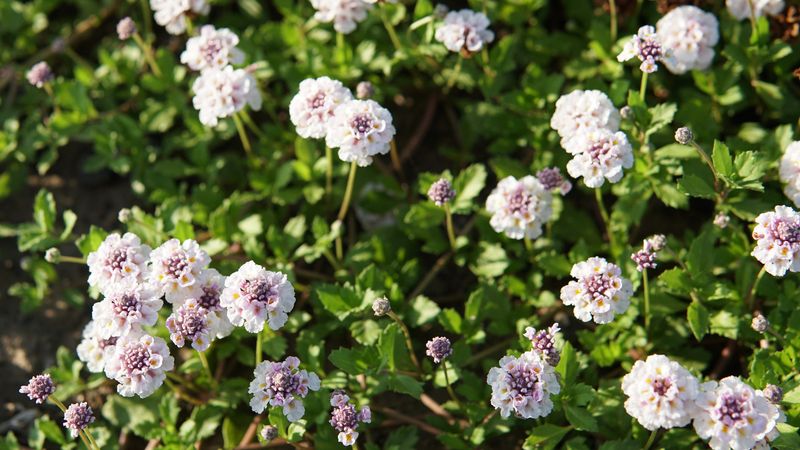
Frogfruit earns its reputation as a pollinator plant through two distinct roles: nectar source and larval host. The small, rounded flower heads, each made up of dozens of tiny individual blooms, open across much of the warm season, typically from spring through fall in Texas.
That extended window means bees and butterflies have repeated opportunities to visit the plant rather than a single short burst. The Native Plant Society of Texas profile for Phyla nodiflora confirms its value as both a nectar source and a host plant for multiple butterfly species.
Three butterflies in particular depend on frogfruit as a larval host: the Phaon crescent, the common buckeye, and the white peacock. Female butterflies lay eggs on the foliage, and the caterpillars feed on the leaves as they develop.
That relationship makes frogfruit more than a quick nectar stop. A patch in your yard can support an entire butterfly life cycle rather than just feeding adults passing through.
A fair reading of the evidence, though, means resisting the urge to call frogfruit a complete pollinator habitat. UF/IFAS notes that the plant provides documented value for bees and butterflies specifically, not for all pollinator groups equally.
Research on native plantings found that Phyla nodiflora tended to attract smaller bees and butterflies, meaning its visitor community differs from that of larger-flowered plants. Bloom timing also varies with moisture, temperature, and freeze exposure, so months of potential flowering does not mean every plant blooms continuously in every yard.
Texas Parks and Wildlife recommends diverse native plantings with nectar and pollen resources spread across seasons for the strongest pollinator support. Frogfruit fits well as the low-growing, warm-season flowering layer in that kind of planting, but it works best alongside other natives that bloom at different times and provide different flower shapes and sizes.
Think of it as one well-chosen piece of a larger habitat rather than the whole answer.
Choose Sun and Space Where a Spreading Mat Makes Sense
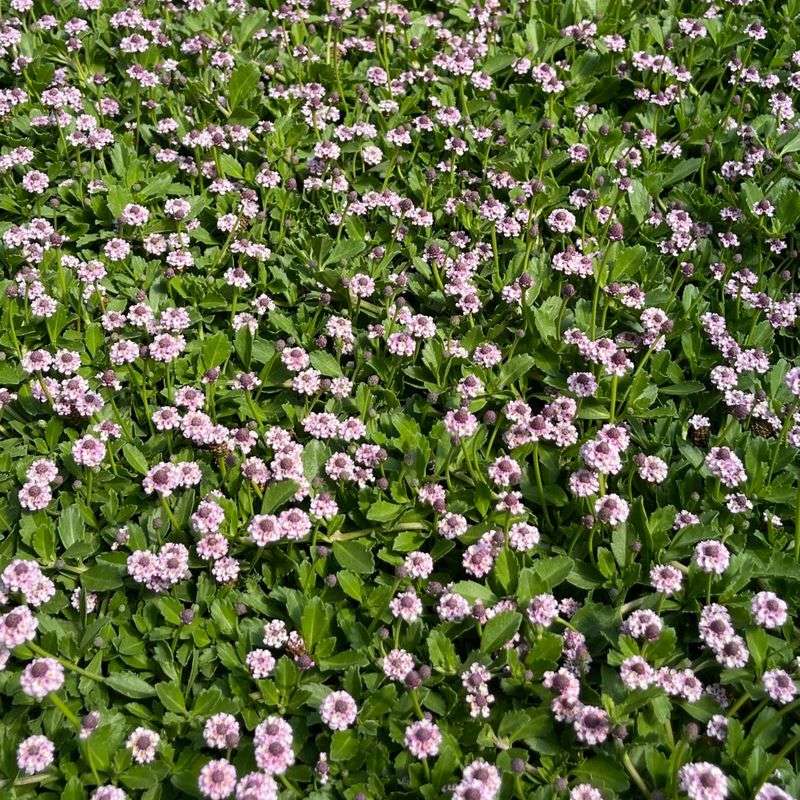
Full sun is where frogfruit performs best. Stronger light generally means denser growth, more flowers, and a tighter mat that fills in faster and holds together better.
Part shade is tolerable, and the plant will survive it, but flowering tends to be less prolific and the mat can be looser and patchier. If you are deciding between a shaded bed under a live oak and an open, south-facing border that bakes in summer heat, the open spot is the better fit for this plant.
Texas SmartScape and the Austin Watershed Protection plant guide both describe Phyla nodiflora as adaptable to a wide range of soil types, including sites with poor drainage that would challenge many other groundcovers. That flexibility makes it genuinely useful for Texas yards where soil quality varies across the property.
Rocky, compacted, or occasionally wet spots that defeat other plants can be reasonable candidates for frogfruit.
Where you site the plant matters as much as the sun exposure. A low-traffic border along a fence, an open yard section away from foot paths, a sunny median strip, or the edge of a native bed all suit frogfruit’s habit better than a play lawn or a busy walkway.
The plant spreads vigorously once it is established, so choosing a space where outward growth is welcome or easy to manage makes maintenance far simpler.
A dense carpet is not guaranteed regardless of location. USDA NRCS documentation notes that growth rate and density depend on consistent moisture during establishment, soil conditions, temperature, local plant material, and competition from existing turf or weeds.
UF/IFAS reinforces that point for Gulf South gardeners. Starting with a well-prepared planting area and keeping weeds managed early gives the patch its best chance to fill in solidly.
Water New Plants Consistently Before Cutting Back
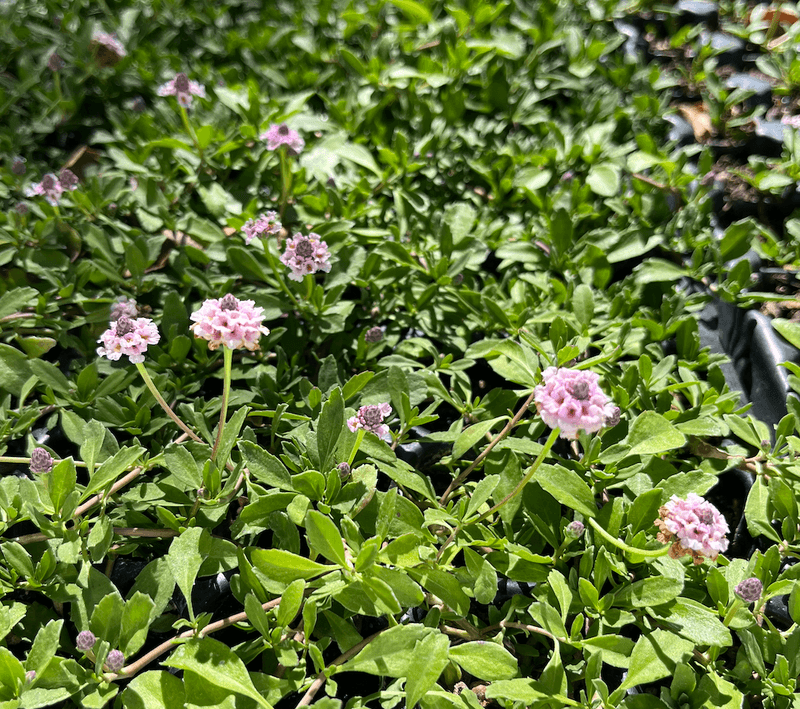
Plugs are the most practical way to start a frogfruit patch. You plant them into prepared soil, space them to allow spreading room, and water consistently while the roots develop and the stems begin creeping outward.
Node-bearing stem cuttings can also root successfully, and sections that already have some root development tend to establish more reliably than bare stem pieces. Either way, the establishment phase is when frogfruit is most vulnerable and when your irrigation attention matters most.
UF/IFAS Gardening Solutions is clear that consistent watering during establishment is necessary before you can rely on the plant’s drought tolerance. “Low water once established” is accurate; “no water ever” is not. How long establishment takes varies with soil, season, and planting size, but a reasonable general approach is to keep the soil from drying out completely until you see active spreading and healthy new growth, then gradually reduce supplemental irrigation and observe how the plant responds.
After establishment, frogfruit generally needs little additional water under typical Texas warm-season conditions. That reduced irrigation need is one of its genuine advantages over conventional turf, which often requires frequent watering through summer.
The USDA NRCS Texas plant-materials document describes the species as drought tolerant, but drought tolerance does not mean drought-proof. A prolonged stretch without rain during a severe Texas summer can reduce flowering noticeably, slow the pace of new growth, or cause the plant to go dormant and pull back.
Dormancy after extreme drought is not necessarily the end of the patch. Frogfruit can recover when conditions improve, but the plant may look brown and sparse before it bounces back.
Setting expectations honestly before planting helps avoid the frustration of assuming a dormant patch is a dead one. Supplemental irrigation during a genuine extended drought can help maintain appearance and reduce dieback risk, even in an otherwise established planting.
Contain Its Vigorous Spread With Simple Maintenance
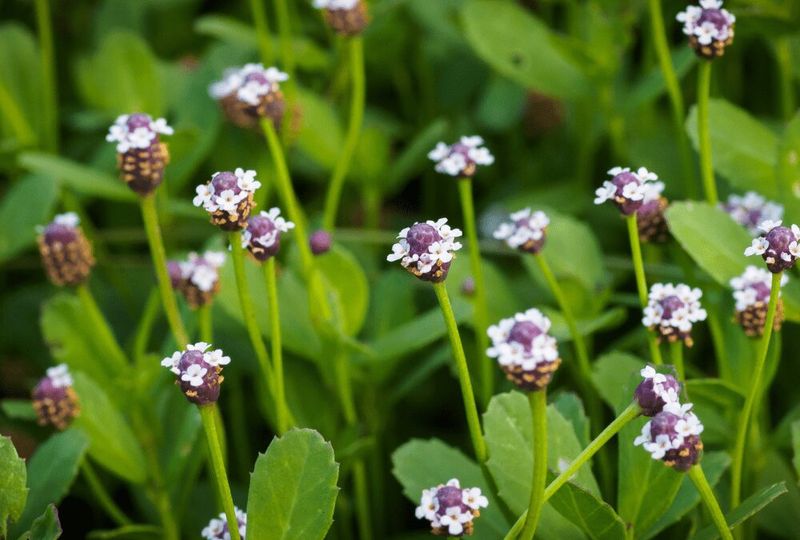
Frogfruit spreads by stolons, which are long stems that travel across the soil surface and root wherever a node makes contact with moist ground. That rooting habit is what allows the plant to fill in a bare area efficiently and form a dense mat over time.
The same mechanism, however, means the patch will keep moving outward unless you give it a defined edge to work within. A bed border, a mowing strip, a hardscape edge, or regular edging with a flat spade are all practical ways to keep the plant where you want it.
UF/IFAS describes frogfruit as vigorous and fast-spreading, which is an honest description of its growth habit rather than a condemnation. Vigorous spreading is an advantage when you want to cover ground quickly and a management task when you want it to stay put.
The USDA NRCS Texas plant-materials document explicitly notes that the species is vigorous but does not classify it as invasive in Texas. Calling it invasive without a specific legal or ecological basis for your region overstates the concern.
Monitoring and edging, done a few times a season, are usually enough to keep it in bounds.
Mowing is an option for keeping the patch looking neat, and frogfruit can tolerate an occasional pass with the mower set at a higher cut. The important tradeoff to understand is that mowing while the plant is flowering removes nectar resources and can interrupt pollinators actively foraging or laying eggs on the foliage.
If supporting bees and butterflies is a priority, hold off on mowing through the main bloom period and use edging instead to manage spread at the margins.
When mowing does make sense, timing it after the primary warm-season bloom period reduces the cost to wildlife. A late-season or early-spring cut can tidy the patch and remove old growth without cutting into peak pollinator activity.
Edge the perimeter whenever stems are creeping into spaces you want to keep clear, and check a few times per season rather than waiting until the spread becomes a bigger project to address.
Know Where Frogfruit Cannot Replace Turf
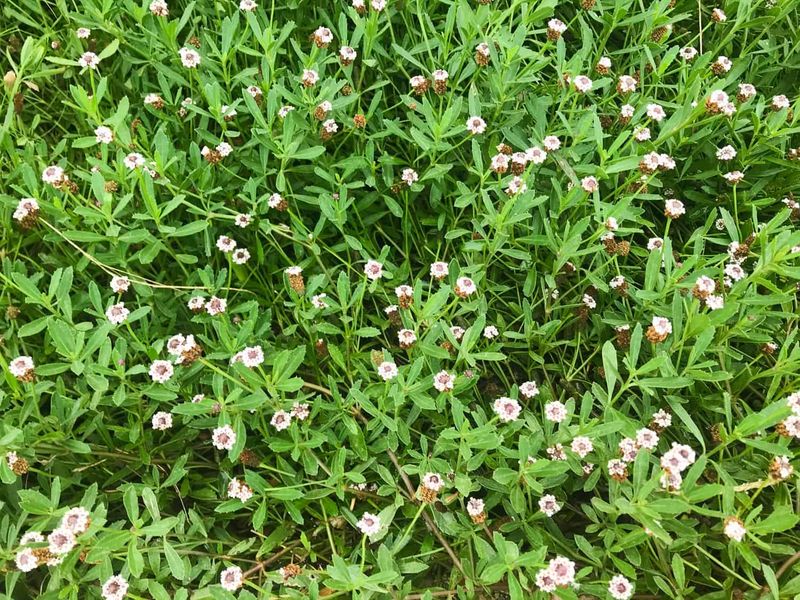
Frogfruit handles light or moderate occasional foot traffic reasonably well in some settings, which is one reason it can work as a lawn companion or alternative in low-use areas. What it cannot do is hold up under heavy, repeated foot traffic.
UF/IFAS specifically cautions that Phyla nodiflora cannot withstand heavy foot traffic, which makes it a poor choice as the primary surface for a children’s play area, a busy path between structures, or a dog run where pets move through the same route daily. Placing it in those spots sets the planting up to fail and leaves you with a patchy, worn-out groundcover that is neither turf nor a flowering mat.
Seasonal appearance is the other honest limitation to set expectations around. In warmer or well-protected parts of Texas, frogfruit may stay evergreen or semi-evergreen through mild winters, maintaining a green mat year-round with minimal dieback.
The Native Plant Society of Texas notes that freezes can cause dieback or push the plant into dormancy, with recovery following once sustained warmth returns. For gardeners in North and Central Texas, a hard freeze can turn a lush green mat brown in a matter of days.
That dormancy or dieback is temporary for an established plant in most cases, but it does mean your yard may go through a period that looks rough before the patch recovers. USDA NRCS documentation confirms the species’ general resilience, but resilience and instant recovery are different things.
Drought and freezes together can extend the recovery window. Understanding that seasonal variability before you plant helps you choose the right location and set realistic expectations for how the patch will look across a full Texas year.
Use Frogfruit as One Layer in a Safer Pollinator Planting
A single groundcover, no matter how well it performs, cannot supply everything a pollinator community needs across an entire year. Bees and butterflies need nectar and pollen sources that bloom at different times, plants at different heights, and in some cases very specific host plants for their larvae.
Texas Parks and Wildlife recommends building diverse native plantings that provide resources across seasons rather than relying on any single species to carry the habitat. Frogfruit fills the low-growing, warm-season flowering layer well, but it works best alongside taller native wildflowers, shrubs, and grasses that extend the season and serve different visitor groups.
The TPWD Native Pollinator Management guidance frames habitat as a system of overlapping resources rather than a single-plant solution. Placing frogfruit at the base of a planting that also includes mid-height nectar plants and at least one or two species that bloom in early spring or late fall extends the window of support for the pollinators using your yard.
That kind of layered design makes the frogfruit patch more valuable, not less, because it is part of something larger.
Pesticide use near blooming frogfruit deserves careful attention. Insecticides applied to or near a flowering patch can reach pollinators directly through contact or indirectly through contaminated nectar, pollen, and foliage.
The EPA’s pollinator protection guidance recommends avoiding pesticide applications when flowers are open and pollinators are actively foraging. If a pest problem makes treatment unavoidable, follow the product label carefully, choose a formulation with lower pollinator risk when options exist, and avoid spraying directly on flowers or during peak foraging hours in the morning and afternoon.
Keeping the patch free of insecticide exposure during bloom is one of the simplest things you can do to make frogfruit’s nectar and host-plant value count. A flowering mat covered in bees and butterflies only delivers that benefit if the visitors survive their visit.
Choose Frogfruit for the Yard It Can Actually Serve
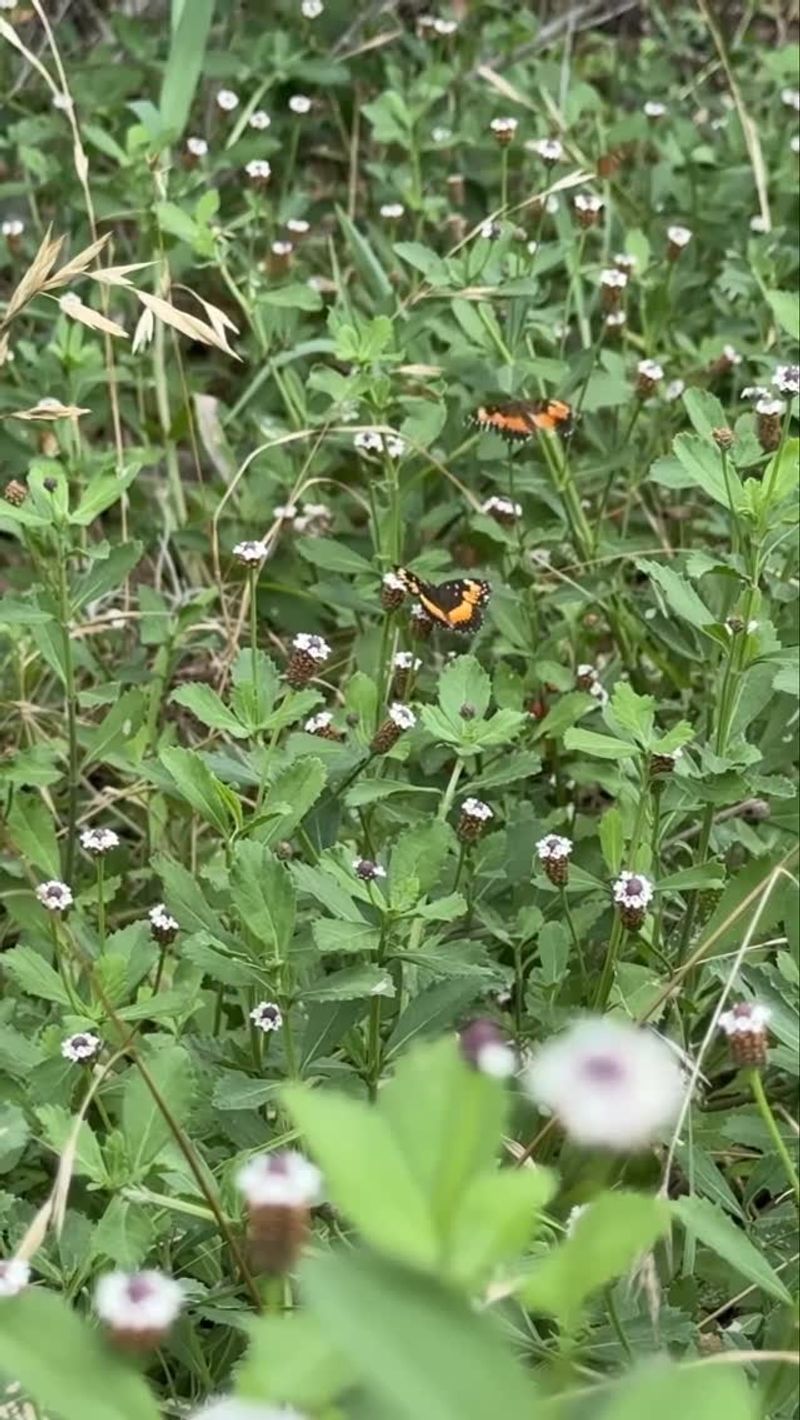
Phyla nodiflora earns a place in a Texas yard when the conditions match what it actually does well. A sunny, low-traffic area where outward spread is welcome or manageable is the right fit.
The Native Plant Society of Texas and UF/IFAS both support it as a low-water, flowering groundcover that provides documented warm-season nectar for bees and butterflies and serves as a larval host for the Phaon crescent, common buckeye, and white peacock butterflies. Those are real, specific benefits that hold up under honest scrutiny.
The practical framework is straightforward: water it consistently through establishment, reduce supplemental irrigation once the patch is actively spreading, and contain the edges a few times per season. Expect bloom across much of the warm season under good conditions, and understand that severe drought or a hard freeze can temporarily change the patch’s appearance before it recovers.
Avoid heavy traffic areas, and mow or edge on a schedule that protects peak pollinator activity rather than simply tidying the yard on a fixed calendar.
Frogfruit is not a perfect plant or a maintenance-free turf replacement, but it is a genuinely useful one. A yard that includes it gains a flowering, low-growing native that uses far less water than conventional grass and supports real wildlife in a documented way.
That combination is rare enough in Texas landscapes to make it worth planting in the spots where it can actually thrive.