
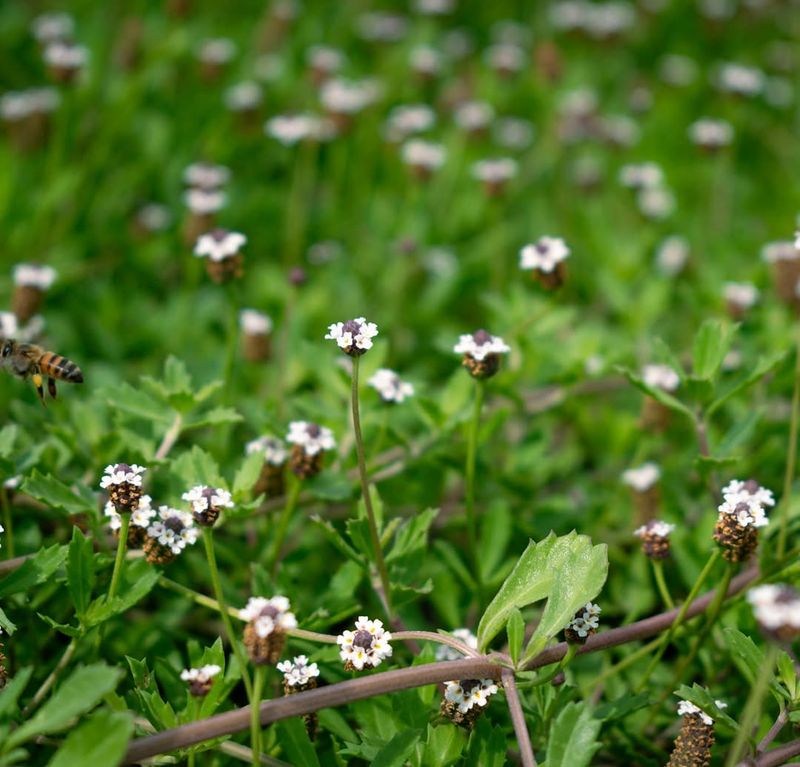
When that August heat dome parks itself over Texas and the temperature climbs past 100 for days on end, St. Augustine grass starts crisping up and begging for water your city may not let you use. The good news is that Texas already grows tough native ground covers that shrug off the heat, sip far less water, and stay green while the neighbor’s lawn turns brown. These plants evolved right here in our hard clay, sandy loam, and cracked summer soil, so they know how to take the punishment. Here are ten native ground covers that keep your yard alive and covered when the worst of summer hits.
1. Frogfruit (Phyla nodiflora)
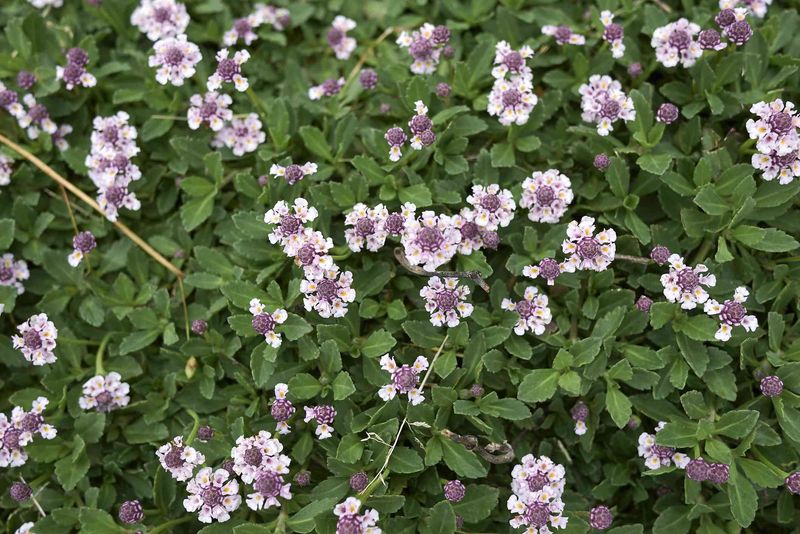
Ask any Texas gardener who has given up on grass, and frogfruit usually comes up first. It creeps along the ground in a tight green mat, throwing out tiny white and lavender flowers that pollinators absolutely swarm.
What sets it apart from everything else on this list is its willingness to grow almost anywhere. Full sun, part shade, soggy low spots, dry cracked clay, foot traffic near the sidewalk, it handles all of them without complaint. When the heat dome settles in and your St. Augustine goes crispy, frogfruit stays a cool green.
It also doubles as a host plant for several butterfly species, including the phaon crescent and the buckeye, so you are feeding wildlife while you cut your water bill. Mow it a couple times a year if you want it tidy, or let it run wild and bloom.
Fun bit of Texas trivia: the flowers look like miniature fireworks, which is how it earned the nickname “fogfruit” in some parts of the state. It roots as it spreads, so a few plugs in spring can cover a bare patch by the time real heat arrives.
2. Horseherb (Calyptocarpus vialis)
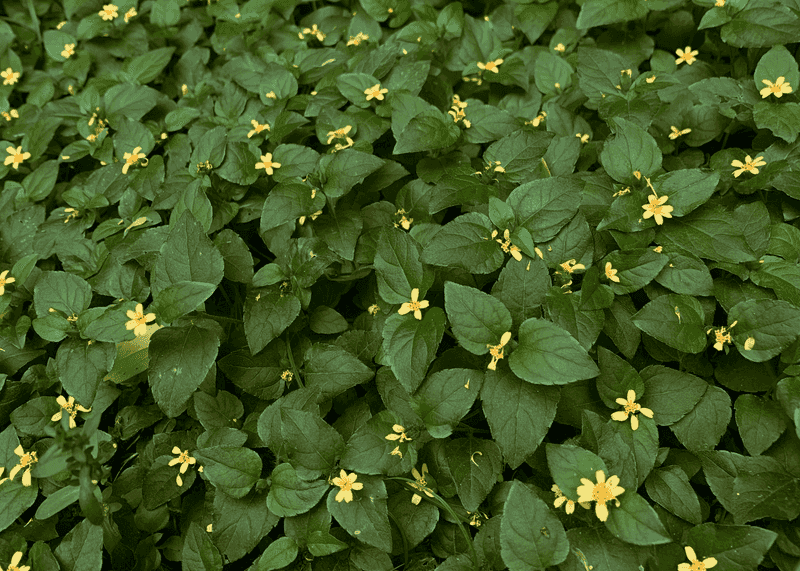
Some folks call it a weed, but horseherb is the quiet hero of shady Texas yards where grass refuses to fill in. It spreads a soft, low carpet of bright green leaves dotted with small yellow flowers, and it does it in the exact dry shade under live oaks where St. Augustine thins out and dies.
Its claim to fame is shade tolerance combined with drought toughness, a combination that is genuinely hard to find. During a brutal August, horseherb may brown back a little if it gets completely bone dry, but it bounces back fast the moment a rain shower rolls through.
Because it stays low, you can mow it or leave it alone entirely. Bees and small butterflies work the little yellow blooms all season, adding a hum of life to the shaded corners of the yard.
Native across Central and South Texas, it asks for almost nothing and gives back a green, walkable surface where most turf simply gives up.
3. Silver Ponyfoot (Dichondra argentea)
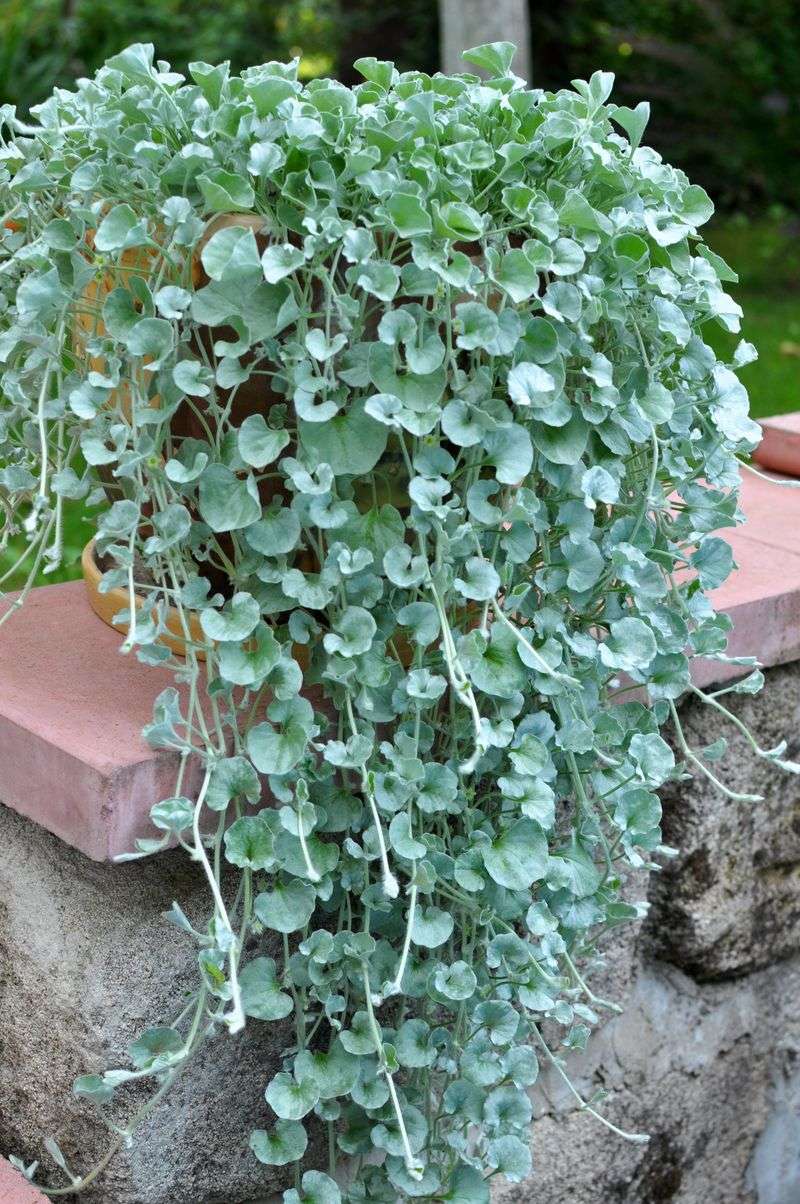
Picture a river of silver running across your flower bed, and you have silver ponyfoot. Its fan-shaped leaves shimmer with a soft, felt-like sheen that reflects the harsh Texas sun instead of soaking it up, which is a big part of why it laughs at heat.
That silvery color is the whole reason to plant it. In a landscape full of green, this ground cover gives you contrast and drama while using barely a trickle of water. It trails beautifully over rocks, out of containers, and along the edges of walkways, softening hard lines with cool metallic foliage.
Native to the rocky, sun-baked soils of West and Central Texas, it wants excellent drainage and hates wet feet. Give it a gravelly spot with blazing sun and it thrives exactly where thirstier plants melt.
During a water restriction summer, silver ponyfoot may look practically untouched while everything around it wilts. It is proof that a drought-tough plant can also be genuinely gorgeous.
4. Texas Frog Fruit vs. Snake Herb (Dyschoriste linearis)
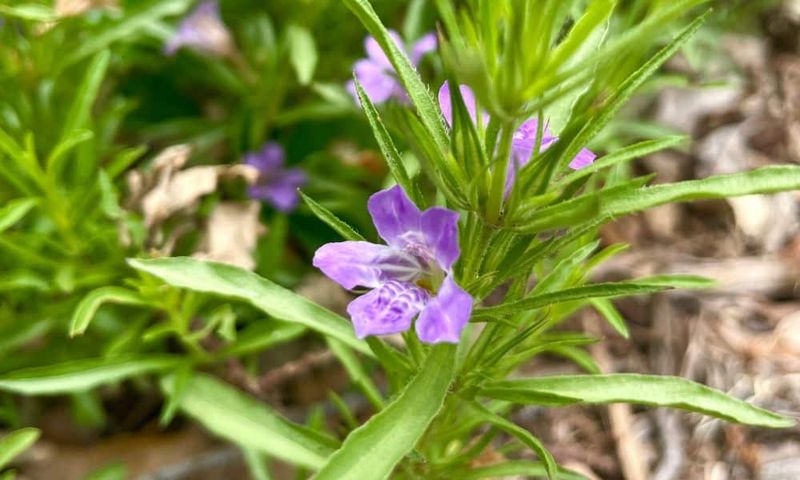
Meet snake herb, the sleeper pick that seasoned native gardeners quietly swear by. It forms a low, spreading clump of narrow leaves topped with lavender-purple trumpet flowers that keep coming through the hottest stretch of the year.
What makes it earn a spot here is bloom power under pressure. While many ground covers just survive August, snake herb actually flowers through it, giving pollinators nectar when little else is blooming in the heat.
Found naturally across Central and South Texas prairies and rocky slopes, it is built for lean, well-drained soil and full sun. Once it settles in, its taproot lets it pull through dry spells that would flatten a lawn.
It stays polite, spreading steadily without bullying its neighbors, so it plays well mixed into a native bed or used as a low filler. For anyone who wants color and coverage at the same time, this understated Texan delivers both.
5. Gregg’s Mistflower (Conoclinium greggii)
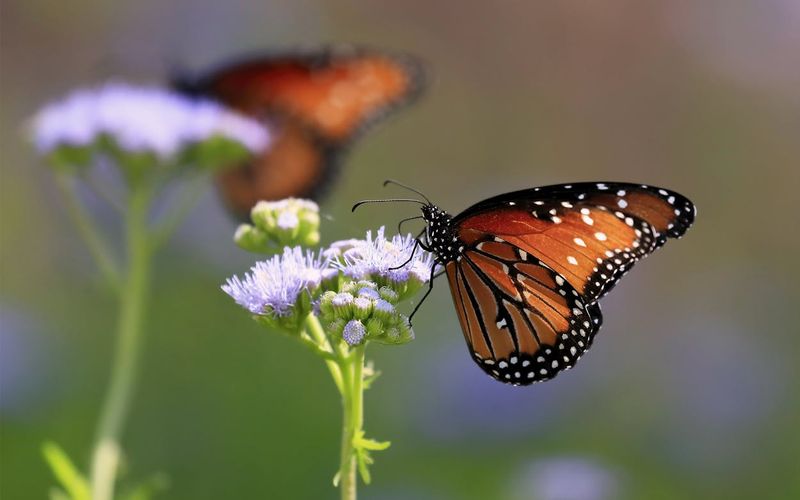
If you want your ground cover to double as a butterfly magnet, Gregg’s mistflower is hard to beat. It spreads by underground runners into a soft blue-purple cloud of fuzzy flowers that queen butterflies and monarchs cannot resist.
Its standout trait is that wildlife pull. During fall migration, a patch of Gregg’s mistflower can look like it is covered in a living, fluttering blanket of orange and black wings, and it holds up through the brutal late-summer heat that leads into that season.
Native to West and Southwest Texas, it thrives in full sun to part shade and asks for very little water once established. It dies back in winter and returns each spring, filling in a little more territory every year.
Plant it where you can watch it, because the show it puts on is one of the best reasons to trade thirsty turf for natives. Few ground covers give you this much motion and color for so little effort.
6. Prairie Verbena (Glandularia bipinnatifida)
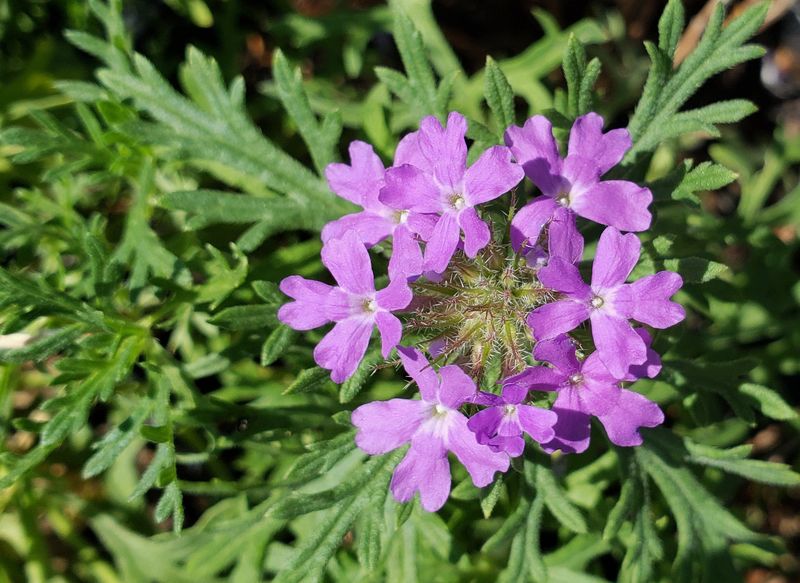
Drive any Texas back road in summer and you will spot sweeps of purple hugging the ground: that is prairie verbena doing its thing. It forms low, ferny mats topped with clusters of bright rose-purple flowers that bloom from spring straight through the dog days.
Long bloom time in punishing heat is its signature. When most flowers have called it quits by August, prairie verbena keeps pushing color, attracting butterflies and native bees to your yard when they need forage the most.
A true child of the Texas prairie, it wants full sun and fast-draining soil, and it reseeds itself freely so new plants pop up to fill gaps. It is short-lived as an individual plant but essentially permanent as a colony.
Use it along a hot, dry border or spilling over a rock wall where irrigation never reaches. It turns the harshest corner of the yard into a purple carpet.
7. Sedges (Carex texensis and Carex perdentata)
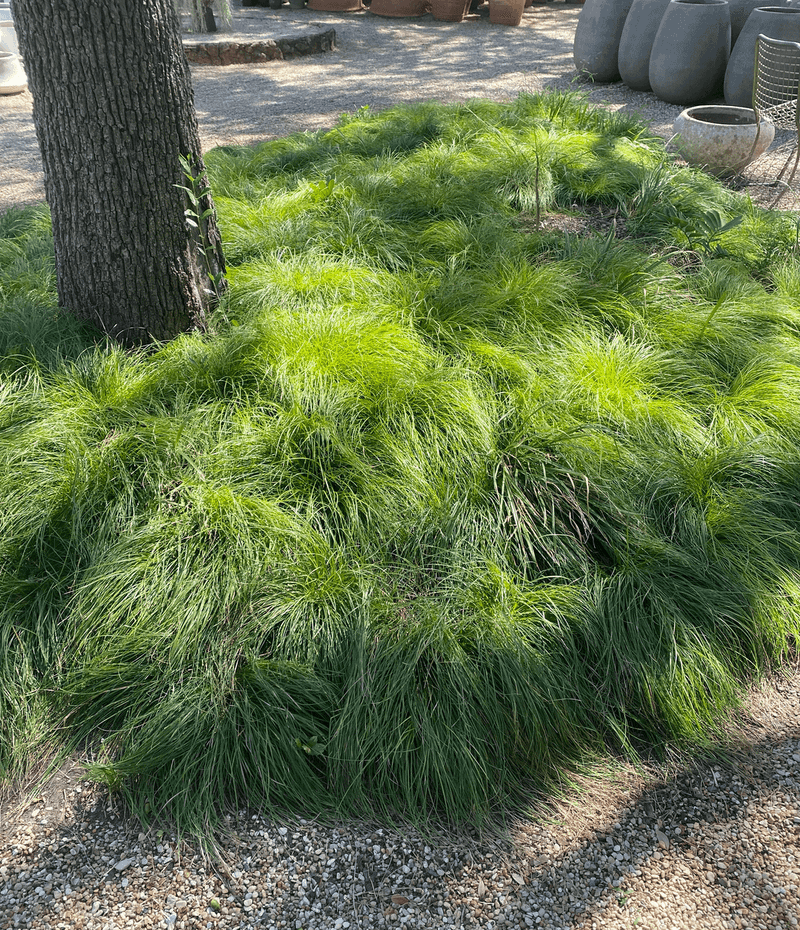
For anyone who misses the look of an actual lawn, native Texas sedges are the closest swap. Carex texensis and Carex perdentata form soft, fine-textured green tufts that read like grass but demand a fraction of the water and mowing.
The reason they belong here is that they replace turf function, not just fill a bed. You can walk on them, mow them a few times a year, and use them across a big open area the way you would St. Augustine, only without the chinch bugs, the fungus, and the constant sprinkler schedule.
Texas sedge handles more sun, while Meadow sedge (perdentata) prefers a bit of shade, so between the two you can cover most yards. Both stay green longer into drought and green up fast after rain.
They clump and slowly spread, knitting together into a meadow-like surface that feels cool and looks tidy. When the heat dome breaks records, these quiet workhorses barely notice.
8. Wooly Stemodia (Stemodia lanata)
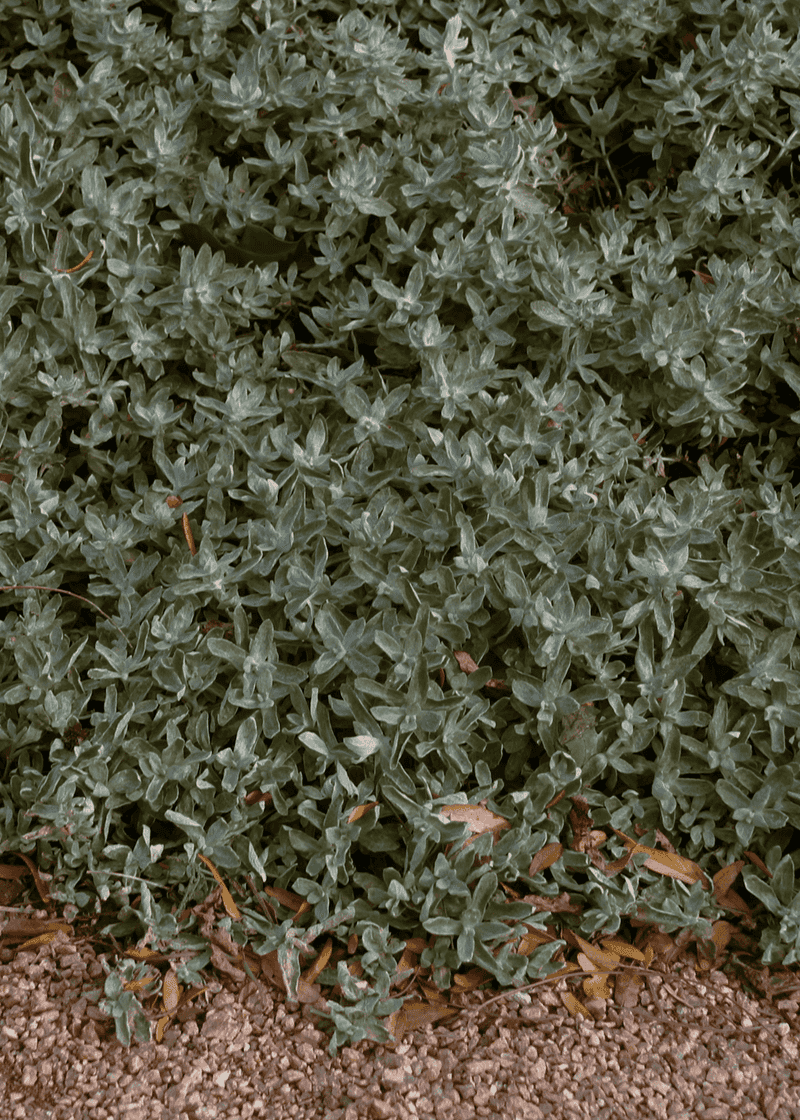
Native to the sandy dunes and hot flats of deep South Texas, wooly stemodia is basically built for the beach, which means your inland heat dome barely fazes it. It spreads a fuzzy silver-gray mat that feels soft to the touch and stays cool-toned even under blistering sun.
Extreme heat and sand tolerance is what makes it special. Where the ground bakes and reflects heat like an oven, this ground cover forms a living carpet that holds soil in place and shrugs off conditions that would fry almost anything green.
It loves fast drainage and full sun, and once rooted it wants almost no supplemental water at all. Small blue-purple flowers pop up among the silvery leaves, adding a subtle touch of color to the texture.
For Gulf Coast gardeners fighting sandy soil and salt spray, or anyone with a scorching problem spot, wooly stemodia is a specialist that turns a liability into a soft silver feature.
9. Zexmenia (Wedelia acapulcensis var. hispida)
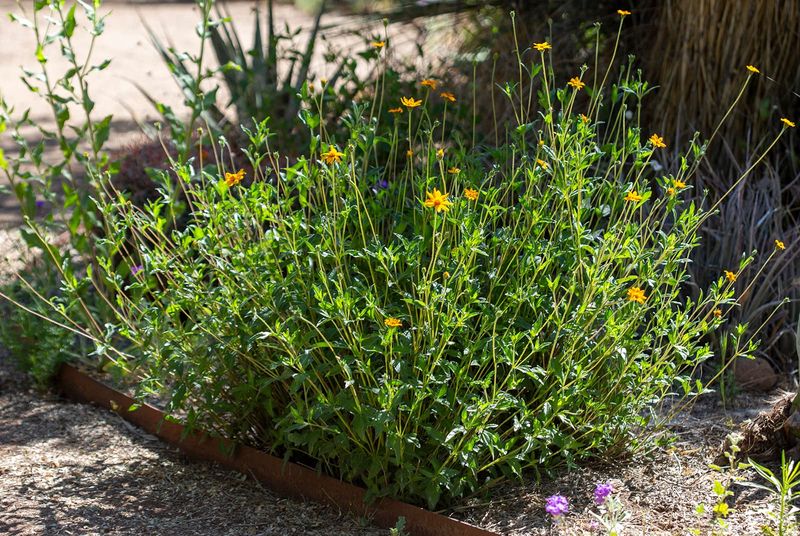
Tough as nails and cheerful about it, zexmenia keeps pumping out golden-yellow daisy flowers no matter how ugly the weather gets. It grows as a low, mounding sub-shrub that fills space and blooms from spring until frost with almost no encouragement.
Nonstop cheerful color through record heat is its calling card. When the August heat dome flattens everything else, zexmenia just keeps flowering, feeding butterflies and bees while barely sipping from the hose.
Rooted in the rocky soils of Central and South Texas, it wants full sun and sharp drainage and rewards neglect better than pampering. Overwater it and it sulks; leave it alone in a hot dry spot and it flourishes.
Did you know it is sometimes called “orange zexmenia” even though the blooms lean bright yellow? Use it to anchor the middle of a low native planting, where its steady mound of gold ties the whole bed together and never asks for a rescue.
10. Pigeonberry (Rivina humilis)
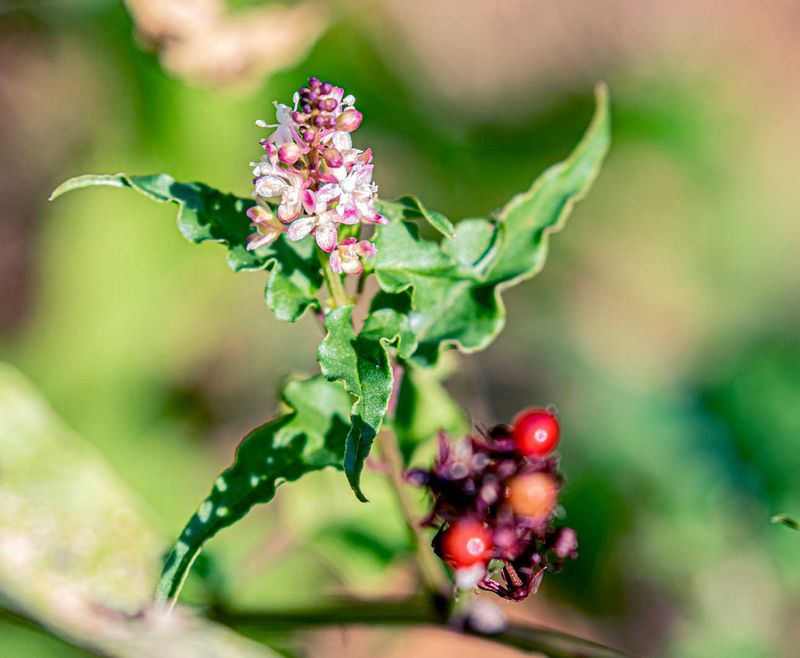
Saving a shade-lover for last, pigeonberry brings something no other plant here can match: flowers and fruit at the same time. Delicate pink flower spikes dangle right alongside clusters of glossy red berries, all on a soft, low mound of green.
Its edge is beauty in the dry shade, the tough spot under trees where St. Augustine struggles and most bloomers refuse to grow. Through the heat of a Texas summer, pigeonberry keeps flowering and fruiting in filtered light, feeding mockingbirds and other songbirds that come for the berries.
Native across Central and South Texas woodlands, it spreads politely by seed and rhizome to fill in shady beds without taking over. It dies back in a hard winter and returns reliably each spring.
Tuck it beneath a live oak or along a north-facing fence where nothing else thrives. It turns the yard’s darkest, driest corner into a quiet little scene of pink, red, and green, alive with birds even when the heat dome is at its worst.